Goulash
Goulash has been one of those comforting, stick to your ribs meals that shows up in my kitchen whenever I crave something warm and unpretentious. I remember the first time I made it for a blustery winter evening, the house smelling like slow simmered tomatoes and sweet sautéed onions. That night a few friends dropped by unexpectedly, and the pot stretched to feed everyone, which felt like a small culinary victory.
Over the years I have adjusted the balance of spices and textures so the dish stays homey, but never bland. The combination of browned ground beef and tender pasta creates a satisfying contrast with molten cheddar cheese folded in at the end. I like that it is practical enough for busy weeknights, yet special enough to plate for guests, paired with a crisp green salad. When I make Goulash I lean into simple techniques that maximize flavor without fuss, and I always pause to taste as it simmers so I can nudge the seasoning just right.
Recipe Snapshot
50 mins
10 mins
40 mins
Medium
450 kcal
American
Keto, Gluten-Free
Dinner
Large stockpot, Wooden spoon, Can opener
Why This Goulash Is a Winner
Hearty comfort with minimal fuss
I adore how Goulash feels like a hug in a bowl, yet it does not demand complicated steps or rare ingredients. The method is forgiving, so I can adapt quantities and still get a deeply flavored result. For busy evenings this is the kind of recipe I turn to, because it rewards patience with rich, layered taste rather than trickery.
Layered tomato richness
The trio of tomato products in this version gives a complexity that single cans rarely achieve. The tomato sauce makes the base silky, diced tomatoes bring bright bursts, and the stewed tomatoes add a softened, slightly sweet depth. I love how these layers mingle as the pot simmers and reduce just enough to coat the pasta beautifully.
Meat and veg harmony
The marriage of browned ground beef with sautéed onions and green bell pepper creates a savory backbone. Those vegetables contribute aromatic sweetness and a tender bite that keeps the dish from feeling one dimensional. I always sauté until the vegetables are translucent and the meat has a little color for added flavor.
Cheesy finishing touch
Stirring in shredded cheddar cheese at the end gives the sauce a creamy, slightly tangy finish that clings to each forkful of elbow macaroni. It turns a stew into something spoonable and decadent, without being fussy. I prefer to let the cheese melt gently off heat to avoid graininess and ensure silkiness.
Flexible and crowd friendly
I love that Goulash scales easily. Whether I am feeding a family or a small gathering, the pot accommodates volume without losing its charm. Leftovers rehearse into something even more cohesive, which makes this a favorite make ahead solution.
Goulash Ingredients
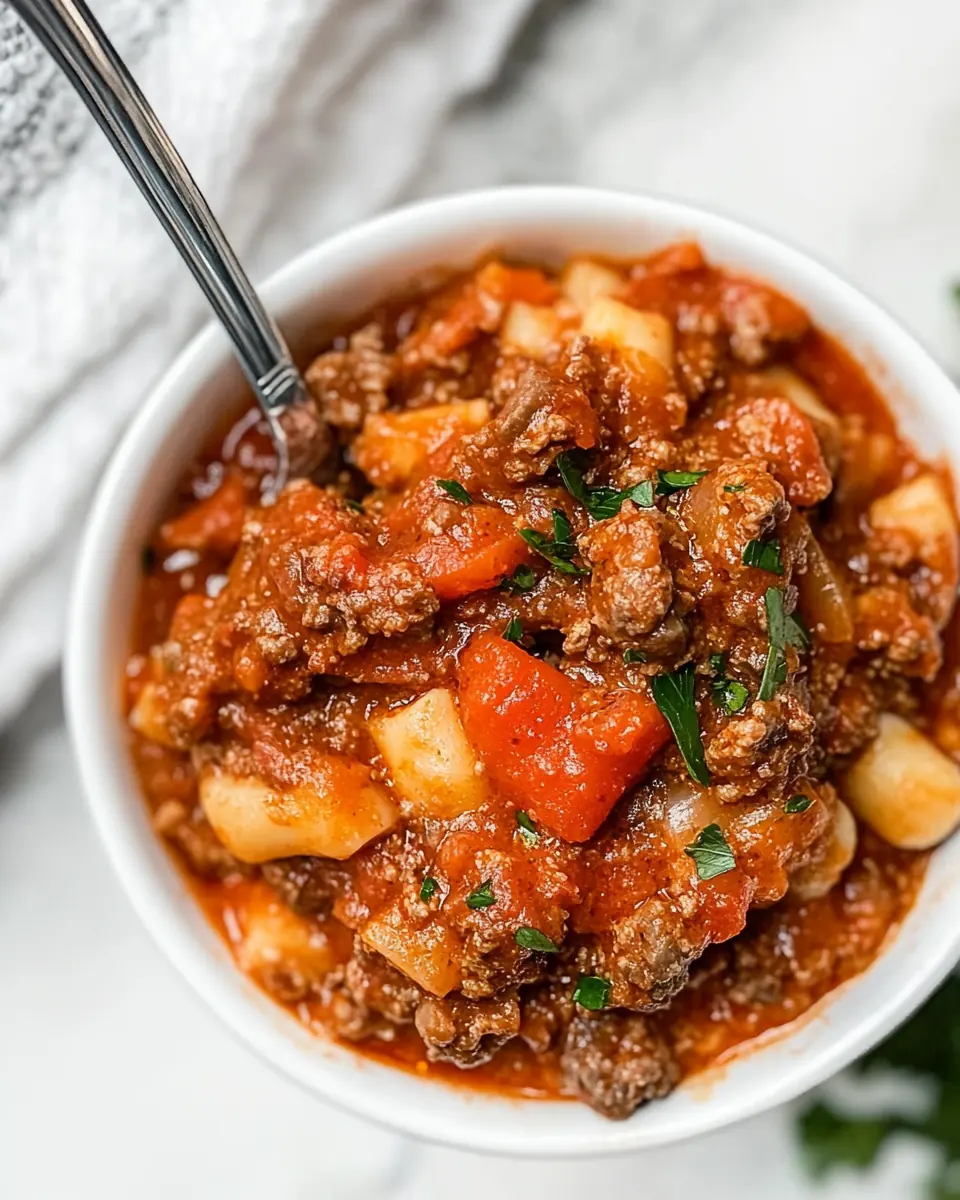
These ingredients are straightforward pantry and fridge staples that come together to form a balanced, robust dish. The key players are the ground beef for savory depth, the tomato trio for layered acidity and sweetness, and the elbow macaroni which soaks up the sauce for comfort in every bite. Aromatics like onions, garlic, and green bell pepper build flavor early, while herbs and condiments round out the profile.
- 2 lb ground beef: Brown and crumble to develop rich savory flavor; provides the primary protein and hearty base for the goulash and renders fat to sauté aromatics.
- 2 onions chopped: Chop finely and sauté until translucent to build sweetness and depth; contributes texture and a mild aromatic backbone that complements the beef.
- 1 green bell pepper chopped: Chop and cook with onions to add brightness and a slightly vegetal, peppery flavor; balances richness and adds color to the dish.
- 2 tsp garlic minced: Mince and add early to infuse garlic aroma throughout the sauce; enhances savory umami and layers subtle pungency into the goulash.
- 2 cup beef broth: Simmer to deepen flavor and provide a beefy liquid base; helps meld tomato components and keeps the sauce rich and savory.
- 1 cup water: Combine with broth to adjust consistency and control cooking liquid; ensures the pasta has enough moisture to cook properly without diluting flavor.
- 15 oz tomato sauce: Pour into the pot to contribute concentrated tomato flavor and body; helps create a smooth, cohesive sauce that clings to the pasta.
- 14.5 oz diced tomatoes: Add for tomato texture and acidity; offers small tomato pieces that introduce bursts of flavor and balance the sauce's richness.
- 15 oz can stewed tomatoes: Stir in to provide tender tomato chunks and a slightly different texture and sweetness; complements other tomato elements for complexity.
- 6 oz can tomato paste: Spoon in to intensify tomato richness and thicken the sauce; supplies concentrated tomato flavor and helps bind ingredients together.
- 2 tbsp Worcestershire sauce: Measure and stir into the sauce for savory depth and a hint of tang; enhances meaty flavors and balances tomato acidity.
- 2 tsp Italian seasoning: Sprinkle in to introduce an herbal, slightly earthy blend; contributes Italian herb notes that complement tomatoes and beef.
- 1 tsp paprika: Season to add warmth and a touch of smoky sweetness; pairs well with beef and tomatoes to round out the overall flavor profile.
- salt and pepper to taste: Season generously to taste for basic seasoning; balances flavors and lifts the dish when adjusted during cooking and before serving.
- 2 bay leaves: Tuck into the simmering pot to infuse subtle bay leaf aroma and a mildly floral, herbal complexity; remove before serving for a finished flavor.
- 16 oz elbow macaroni uncooked: Add uncooked to the simmering sauce to absorb flavors and provide the classic pasta element; yields tender, comforting bites when cooked through.
- 2 cup cheddar cheese shredded: Sprinkle shredded over the hot goulash to melt and create a creamy, savory finish; adds richness and a cheesy contrast to the tomato-based sauce.
- parsley for garnish: Garnish chopped to add a fresh, bright herbal note and visual contrast; provides a light finish that complements the heavier components.
Preparation Steps for Goulash
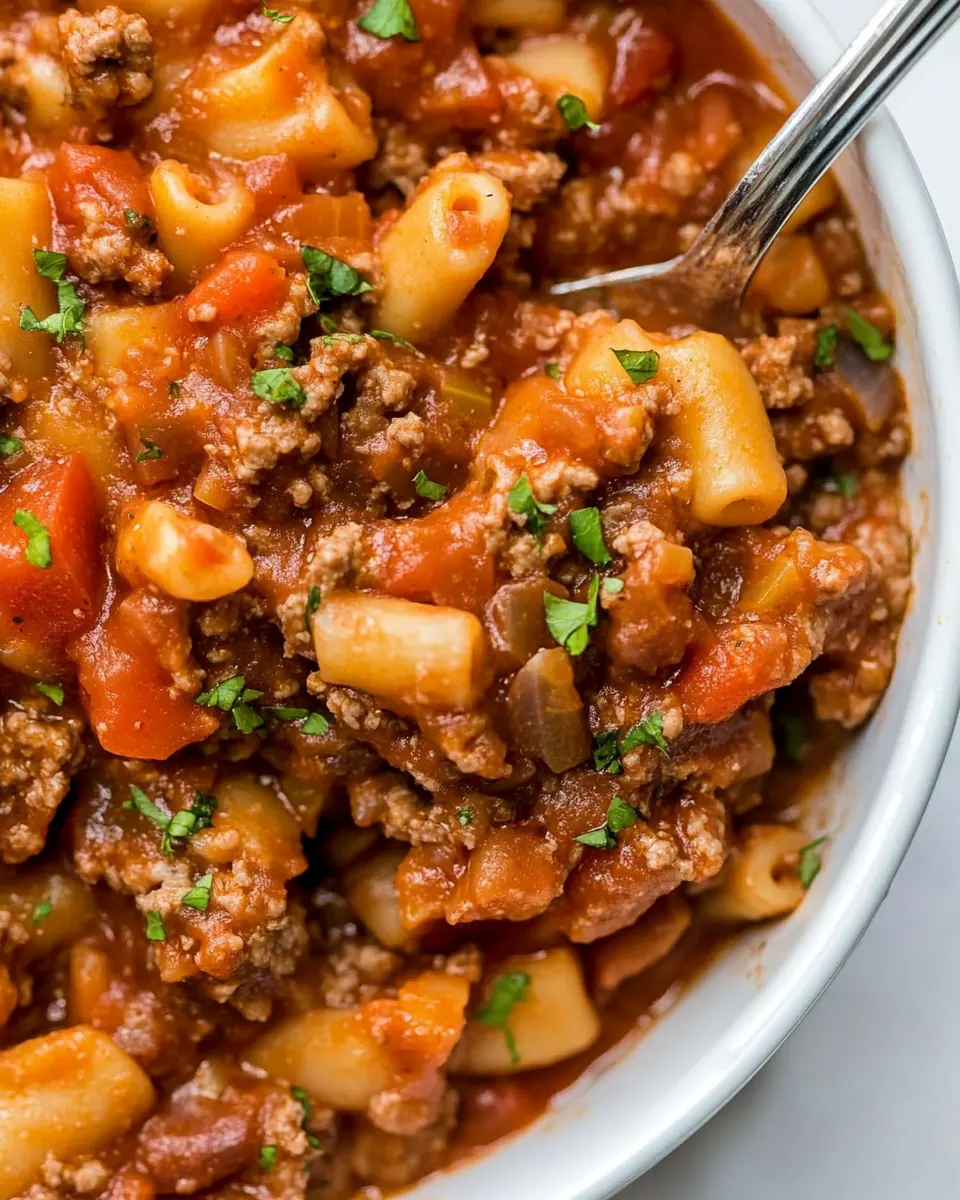
This is a hands on, stove top meal that asks for attention during the browning and simmering stages. I like to organize my mise en place first, then cook in a single large stockpot so flavors concentrate and meld. Below I expand each direction into sensory rich guidance to help you get the perfect texture and taste.
- Add ground beef, onions, bell pepper, and garlic to a large stockpot and on medium-high heat cook until meat is no longer pink. Drain any excess fat.: You will hear an energetic sizzle as the ground beef hits the hot pot, and the aroma of browning meat and softened onions will fill the kitchen. As the meat cooks, use a sturdy spoon to break it into small pieces so each morsel browns evenly, creating caramelized bits that boost flavor. The peppers should soften and the garlic will become fragrant after about a minute of stirring, releasing a warm, savory scent. Visually, look for an even deepening of color on the meat rather than pale gray patches, which indicate incomplete browning. Stir periodically to prevent sticking, and maintain medium high heat to get that Maillard reaction without burning the aromatics. One common mistake is overcrowding the pot which causes steaming instead of browning, so if your pot is small brown in batches or increase the heat briefly to promote evaporation. Drain any pooled fat once the meat looks nicely seared to prevent a greasy sauce, but leave a bit of fond on the bottom to deglaze later.
- Add broth, water, tomato sauce, diced tomatoes, stewed tomatoes, tomato paste, Worcestershire sauce, Italian seasoning, bay leaves, paprika, salt, and pepper. Then bring to a boil. Once boiling, reduce the heat and simmer with a cover on for 15 minutes.: You will notice a sheen of rendered fat pooling around the browned meat, which can dull the final texture if left in excess. Carefully tilt the pot and spoon off or pour the fat into a heat safe container, keeping the browned bits clinging to the bottom intact for flavor. The surface of the meat should look moist but not slick, and the aromatics will continue to smell deep and nutty. Removing too much fat, however, can strip flavor, so leave a small amount to help coat and carry the seasonings. A typical error is to rush and remove all the fond, which reduces the depth in the ensuing sauce; instead preserve those browned bits to deglaze with the liquids that follow.
- Add the macaroni and stir well. Cover and simmer an additional 20 minutes stirring occasionally.: As you pour in the liquids, you will hear a softer simmer that tames the initial sizzle, and steam will rise with a tomato forward aroma. Stir thoroughly to dissolve the concentrated tomato paste into the liquids so there are no raw pockets, and use a wooden spoon to scrape up any fond from the pot base, which dissolves into the sauce and deepens the flavor. The Worcestershire will add an almost imperceptible umami lift to the simmering mix while the Italian seasoning and paprika perfume the steam. At this stage, taste cautiously for salt because the broth and canned tomatoes already contribute sodium. Avoid adding too much salt early since reduction concentrates flavors; instead adjust near the end. Bring the pot to a gentle boil so the surface shows active bubbles, then reduce to a simmer and cover to create steady heat for even melding of flavors.
- Remove from heat and remove bay leaves.: When the mixture reaches a boil you will see vigorous bubbling and a rising steam that smells of cooked tomatoes and spices. Boiling helps the ingredients come together, and the agitation releases more aroma from the seasonings. Once the boil is established, reduce the heat so that the pot returns to a gentle simmer; this prevents aggressive evaporation which might dry out the dish. A common slip is to keep it at a rolling boil which can over reduce the sauce and toughen some ingredients. Simmering instead allows flavors to integrate slowly and keeps the texture tender.
- Stir in shredded cheddar cheese.: As the pot simmers covered you will notice the sauce soften and thicken slightly, and the steam trapped by the lid will circulate flavors back into the mix. This quiet cooking time lets the aromatics mellow and the various tomato components harmonize without aggressive evaporation. Listen for a gentle, rhythmic whisper of simmering instead of a roar; that is the right cadence. A typical error is leaving the lid off which can concentrate the liquid too quickly, leading to uneven cooking of the pasta later. Use this time to stir once or twice and check seasoning, but avoid frequent lid lifts which bleed heat.
- Garnish with parsley.: When you stir in the uncooked elbow macaroni , you will feel the sauce thicken slightly around the pasta shapes as they begin to absorb liquid. The sound shifts to a soft bubbling with intermittent clinks as pasta moves in the pot. Stirring ensures the pasta does not clump and gets even exposure to the simmering sauce. Because pasta soaks up liquid while cooking, the sauce will concentrate around each piece, which enhances mouthfeel. A common mistake is adding too much pasta at once which lowers the pot temperature drastically; add it evenly and return to a gentle simmer promptly.
- Cover and simmer an additional 20 minutes stirring occasionally: During this period the elbow macaroni will soften and the sauce will reduce to a clingy consistency. Expect the texture to transform from firm to tender, with the pot releasing a rich, tomato and beef scented steam. Stir every few minutes to prevent sticking or uneven cooking, paying attention to the pasta center to ensure it cooks through without turning mushy. If you hear a hollow sounding simmer or see the sauce thickness spike sharply, reduce heat and add a splash of water or broth. Overcooking is an easy misstep, so start checking the pasta for doneness around 15 minutes into this stage.
- Remove from heat and remove bay leaves: When you take the pot off the stove the steam will slow and the surface will settle into a glossy topping, signaling the end of active cooking. Fish out and discard the bay leaves to avoid any unpleasant mouthfeel or bitter pockets. Leaving them in can lead to an unwelcome leathery texture, so be thorough when removing. After removing the leaves, give the sauce a gentle stir to reincorporate any surface liquids.
- Stir in shredded cheddar cheese: As you fold in the shredded cheddar cheese , it will melt into smooth ribbons, softening the sauce and adding a creamy, slightly sharp note. The bowl will steam gently while the cheese integrates, and the texture will shift to luscious and clingy, coating the pasta. For the best melt, allow the pot to cool for a moment so the cheese blends without seizing. A common error is adding cold cheese to a piping hot pot which can cause oil separation; temper slightly by letting the temperature settle.
- Garnish with parsley: Finish by scattering fresh parsley across the surface for a burst of color and a subtle herbaceous lift. The bright green contrasts with the warm tomato hue and adds a clean, vegetal note on the palate. Garnish just before serving so the herb keeps its freshness. Adding it too early will cause it to wilt into the sauce and lose its visual impact.
Recipe Notes about Goulash
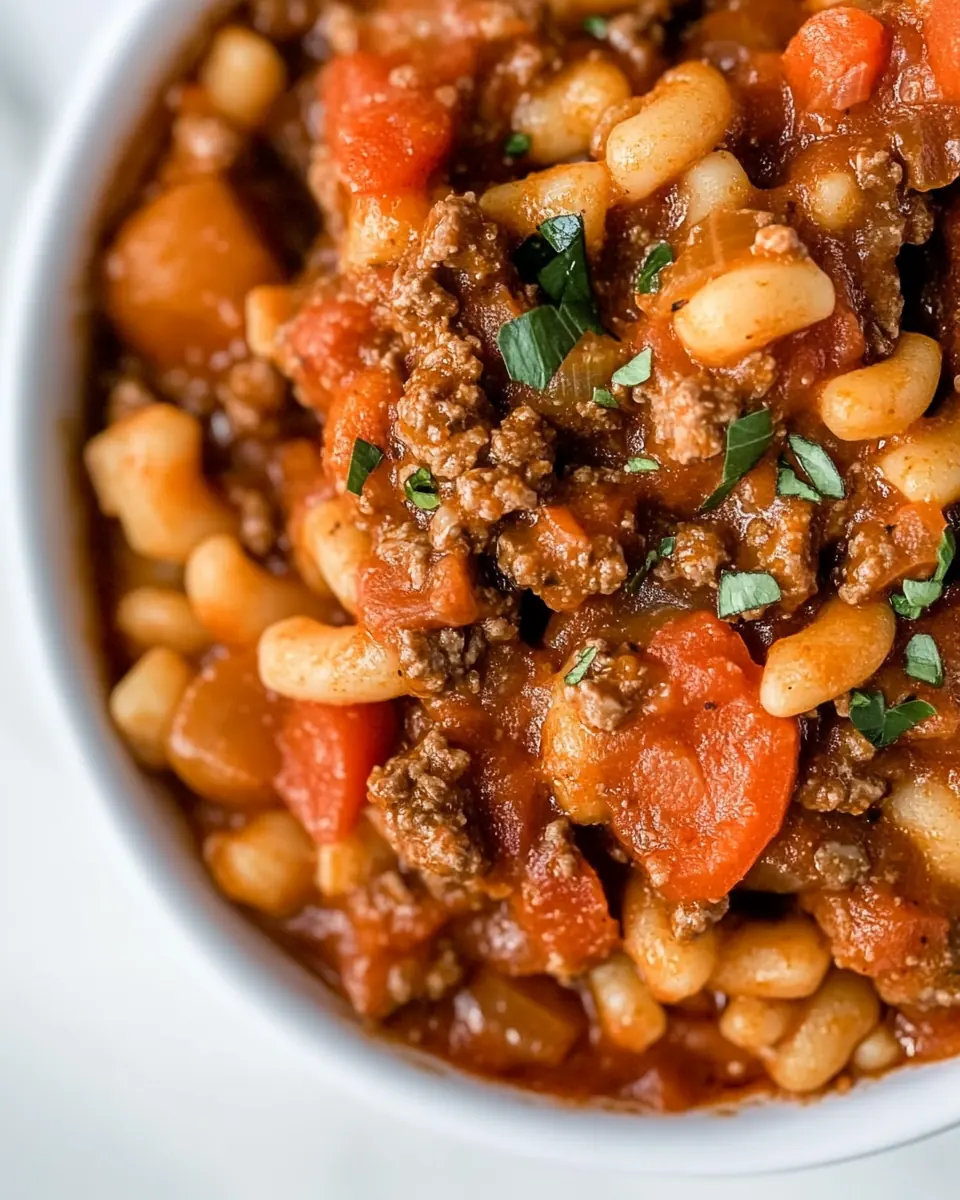
This section contains practical, hands on notes to help you execute the recipe with confidence. I wrote these tips based on things I learned from repeated home cooks and a few small mistakes that taught me better habits.
- Brown in batches: If your pot is crowded, brown the ground beef in two batches to ensure proper searing and avoid steaming, which reduces flavor.
- Reserve a bit of pasta water: If the sauce tightens too much after the elbow macaroni absorbs liquid, stir in a few tablespoons of the cooking liquid to loosen and maintain a glossy texture.
- Adjust salt late: Because the canned tomatoes and beef broth contain sodium, wait until the end to finish seasoning so you can avoid oversalting after reduction.
- Melt cheese gently: Turn off the heat and let the pot cool slightly before adding the shredded cheddar cheese to prevent grainy or separated melted cheese.
- Storage tips: Cool completely before refrigerating in an airtight container, and refresh leftovers with a splash of water and a gentle reheat to return the sauce to a spoonable consistency.
Serving This Goulash
This dish is ideal for casual family dinners and winter gatherings where a warm, filling meal is appreciated. Serve it straight from the pot with a scattering of fresh parsley for color. It pairs well with simple sides that provide contrast in texture and brightness.
- Family dinner: Serve bowls of hot Goulash with extra shredded cheddar cheese on the side so family members can add more if desired.
- Casual gatherings: Present the pot on the table with a small bowl of chopped parsley and allow guests to ladle their portions, making it easy and friendly.
- Storage: Refrigerate leftovers in an airtight container for up to three days, and reheat gently with a splash of water to prevent the pasta from drying out.
- Occasions: This suits weeknight comfort meals or a cozy winter supper, especially when you want something filling and low fuss.
- Portioning: Since the recipe yields ample servings, portion into shallow containers for faster cooling when storing, which helps food safety and preserves texture.
FAQ
Conclusion
Goulash stands out for its straightforward, robust flavors and its ability to comfort a crowd with minimal fuss. Give this version a try when you want a reliable, satisfying meal that warms the kitchen and feeds plenty. It rewards patient simmering and simple ingredients, so set aside an evening to enjoy the cozy results and share with friends or family.
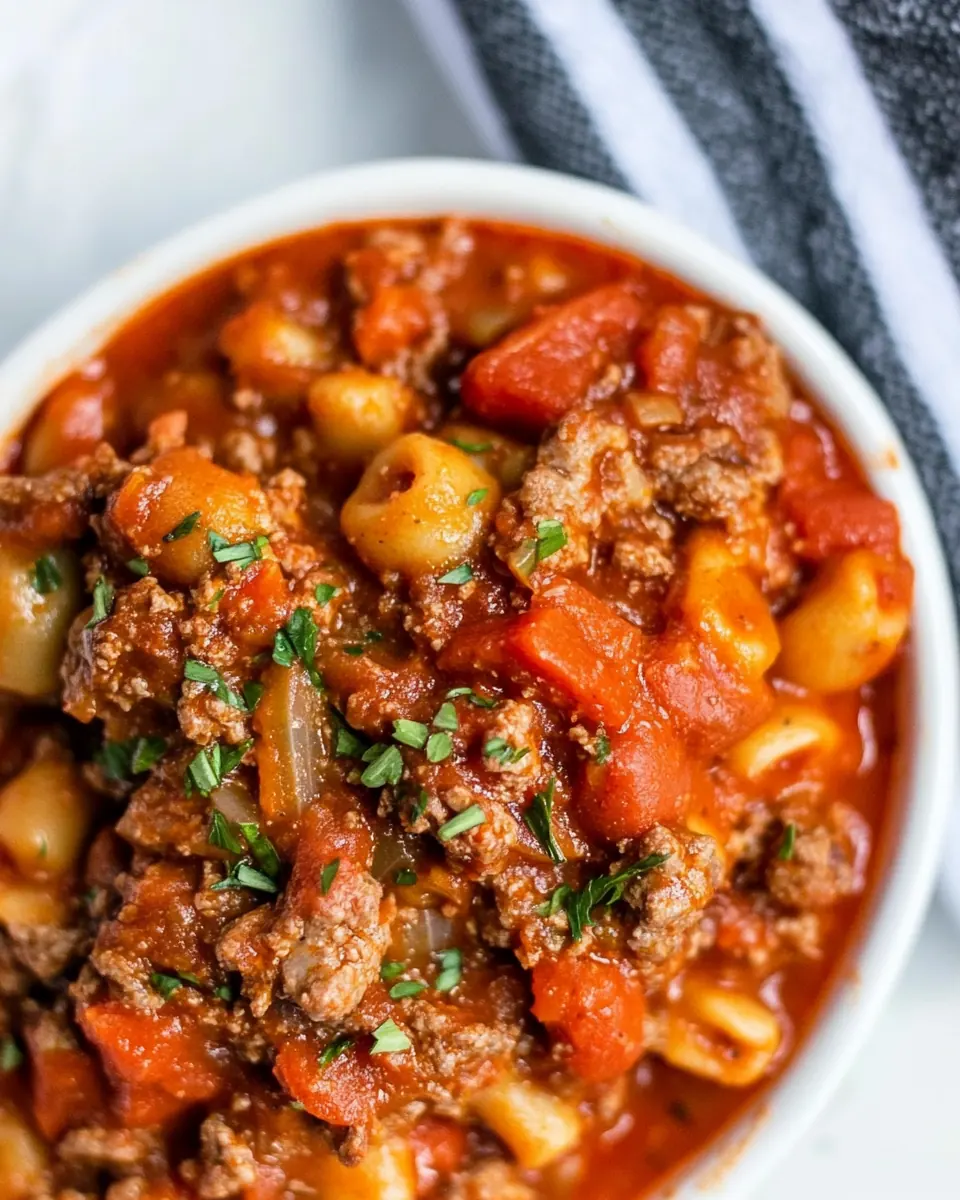
Goulash
Ingredients
Equipment
Method
- Add ground beef, onions, bell pepper, and garlic to a large stockpot and on medium-high heat cook until meat is no longer pink. Drain any excess fat.: You will hear an energetic sizzle as the ground beef hits the hot pot, and the aroma of browning meat and softened onions will fill the kitchen. As the meat cooks, use a sturdy spoon to break it into small pieces so each morsel browns evenly, creating caramelized bits that boost flavor. The peppers should soften and the garlic will become fragrant after about a minute of stirring, releasing a warm, savory scent. Visually, look for an even deepening of color on the meat rather than pale gray patches, which indicate incomplete browning. Stir periodically to prevent sticking, and maintain medium high heat to get that Maillard reaction without burning the aromatics. One common mistake is overcrowding the pot which causes steaming instead of browning, so if your pot is small brown in batches or increase the heat briefly to promote evaporation. Drain any pooled fat once the meat looks nicely seared to prevent a greasy sauce, but leave a bit of fond on the bottom to deglaze later.
- Add broth, water, tomato sauce, diced tomatoes, stewed tomatoes, tomato paste, Worcestershire sauce, Italian seasoning, bay leaves, paprika, salt, and pepper. Then bring to a boil. Once boiling, reduce the heat and simmer with a cover on for 15 minutes.: You will notice a sheen of rendered fat pooling around the browned meat, which can dull the final texture if left in excess. Carefully tilt the pot and spoon off or pour the fat into a heat safe container, keeping the browned bits clinging to the bottom intact for flavor. The surface of the meat should look moist but not slick, and the aromatics will continue to smell deep and nutty. Removing too much fat, however, can strip flavor, so leave a small amount to help coat and carry the seasonings. A typical error is to rush and remove all the fond, which reduces the depth in the ensuing sauce; instead preserve those browned bits to deglaze with the liquids that follow.
- Add the macaroni and stir well. Cover and simmer an additional 20 minutes stirring occasionally.: As you pour in the liquids, you will hear a softer simmer that tames the initial sizzle, and steam will rise with a tomato forward aroma. Stir thoroughly to dissolve the concentrated tomato paste into the liquids so there are no raw pockets, and use a wooden spoon to scrape up any fond from the pot base, which dissolves into the sauce and deepens the flavor. The Worcestershire will add an almost imperceptible umami lift to the simmering mix while the Italian seasoning and paprika perfume the steam. At this stage, taste cautiously for salt because the broth and canned tomatoes already contribute sodium. Avoid adding too much salt early since reduction concentrates flavors; instead adjust near the end. Bring the pot to a gentle boil so the surface shows active bubbles, then reduce to a simmer and cover to create steady heat for even melding of flavors.
- Remove from heat and remove bay leaves.: When the mixture reaches a boil you will see vigorous bubbling and a rising steam that smells of cooked tomatoes and spices. Boiling helps the ingredients come together, and the agitation releases more aroma from the seasonings. Once the boil is established, reduce the heat so that the pot returns to a gentle simmer; this prevents aggressive evaporation which might dry out the dish. A common slip is to keep it at a rolling boil which can over reduce the sauce and toughen some ingredients. Simmering instead allows flavors to integrate slowly and keeps the texture tender.
- Stir in shredded cheddar cheese.: As the pot simmers covered you will notice the sauce soften and thicken slightly, and the steam trapped by the lid will circulate flavors back into the mix. This quiet cooking time lets the aromatics mellow and the various tomato components harmonize without aggressive evaporation. Listen for a gentle, rhythmic whisper of simmering instead of a roar; that is the right cadence. A typical error is leaving the lid off which can concentrate the liquid too quickly, leading to uneven cooking of the pasta later. Use this time to stir once or twice and check seasoning, but avoid frequent lid lifts which bleed heat.
- Garnish with parsley.: When you stir in the uncooked elbow macaroni , you will feel the sauce thicken slightly around the pasta shapes as they begin to absorb liquid. The sound shifts to a soft bubbling with intermittent clinks as pasta moves in the pot. Stirring ensures the pasta does not clump and gets even exposure to the simmering sauce. Because pasta soaks up liquid while cooking, the sauce will concentrate around each piece, which enhances mouthfeel. A common mistake is adding too much pasta at once which lowers the pot temperature drastically; add it evenly and return to a gentle simmer promptly.
- Cover and simmer an additional 20 minutes stirring occasionally: During this period the elbow macaroni will soften and the sauce will reduce to a clingy consistency. Expect the texture to transform from firm to tender, with the pot releasing a rich, tomato and beef scented steam. Stir every few minutes to prevent sticking or uneven cooking, paying attention to the pasta center to ensure it cooks through without turning mushy. If you hear a hollow sounding simmer or see the sauce thickness spike sharply, reduce heat and add a splash of water or broth. Overcooking is an easy misstep, so start checking the pasta for doneness around 15 minutes into this stage.
- Remove from heat and remove bay leaves: When you take the pot off the stove the steam will slow and the surface will settle into a glossy topping, signaling the end of active cooking. Fish out and discard the bay leaves to avoid any unpleasant mouthfeel or bitter pockets. Leaving them in can lead to an unwelcome leathery texture, so be thorough when removing. After removing the leaves, give the sauce a gentle stir to reincorporate any surface liquids.
- Stir in shredded cheddar cheese: As you fold in the shredded cheddar cheese , it will melt into smooth ribbons, softening the sauce and adding a creamy, slightly sharp note. The bowl will steam gently while the cheese integrates, and the texture will shift to luscious and clingy, coating the pasta. For the best melt, allow the pot to cool for a moment so the cheese blends without seizing. A common error is adding cold cheese to a piping hot pot which can cause oil separation; temper slightly by letting the temperature settle.
- Garnish with parsley: Finish by scattering fresh parsley across the surface for a burst of color and a subtle herbaceous lift. The bright green contrasts with the warm tomato hue and adds a clean, vegetal note on the palate. Garnish just before serving so the herb keeps its freshness. Adding it too early will cause it to wilt into the sauce and lose its visual impact.
Notes
- Brown in batches: If your pot is crowded, brown the ground beef in two batches to ensure proper searing and avoid steaming, which reduces flavor.
- Reserve a bit of pasta water: If the sauce tightens too much after the elbow macaroni absorbs liquid, stir in a few tablespoons of the cooking liquid to loosen and maintain a glossy texture.
- Adjust salt late: Because the canned tomatoes and beef broth contain sodium, wait until the end to finish seasoning so you can avoid oversalting after reduction.
- Melt cheese gently: Turn off the heat and let the pot cool slightly before adding the shredded cheddar cheese to prevent grainy or separated melted cheese.
- Storage tips: Cool completely before refrigerating in an airtight container, and refresh leftovers with a splash of water and a gentle reheat to return the sauce to a spoonable consistency.