S’mores Bars
S’mores Bars have been my go to for easy gatherings ever since a summer potluck convinced me that nostalgia can be baked into squares.
One afternoon I discovered a stash of childhood candy and graham crumbs in my pantry, and I decided to build something that captured that campfire feeling without leaving the kitchen. I mixed up a buttery crumb base, melted sweet, sticky caramel, and layered on tiny toasted clouds, crunchy nuts, and glossy chocolate until the pan looked like a playground of textures. Friends came over that night and kept asking if I made them from a box, because they were that familiar and comforting.
Over the years I learned subtle tricks that keep the centers gooey while the marshmallows toast just right, and I love serving these for dessert when company drops by unexpectedly. They travel well to picnics and potlucks, and they cut into neat bars that please both kids and grown ups. Whenever I bake a pan, I find myself hovering by the counter, sneaking a fingertip of warm caramel or a piece of slightly melted chocolate, grinning at how a few simple components can evoke such big memories.
Recipe Snapshot
35 mins
10 mins
25 mins
Easy
200 kcal
American
Gluten-Free, Low FODMAP
Desserts
13 x 9 inch baking pan, Foil, Microwave safe bowl, Wire rack, Measuring cups
Why Try This S’mores Bars
Classic Campfire Flavor in Bar Form
I love how S’mores Bars capture the same smoky sweet notes you get around a campfire, without needing a match. The buttery crumb base gives structure while letting the gooey caramel and marshmallows shine. This portability makes them ideal when I want that nostalgic taste but need to feed a small crowd quickly.
Textural Contrast That Keeps You Coming Back
The combination of crunchy graham crackers, chewy caramel, pillowy marshmallows, and melty chocolate creates a textural conversation in every bite. I find those contrasts make each mouthful interesting, and guests always comment on the layers working so well together.
Quick to Pull Together, Big on Impact
Even on busy days I can assemble the pan in minutes, and a short bake time does the rest. That efficiency is why I keep the ingredients on hand. You can have dessert on the table with minimal fuss and maximum reward, which I appreciate after a long day.
Flexible and Crowd Friendly
I often tweak the nut selection or chocolate mix based on who is coming over, and the recipe holds up well to small changes. It is forgiving when you press things into the caramel a bit unevenly, and it still cuts into tidy bars for serving. That reliability makes it my go to for casual gatherings.
Comfort Food with a Slightly Grown Up Twist
Adding coarsely chopped nuts gives a grown up counterpoint to the childhood flavors, and I love that balance. It elevates the treat without complicating the method, so you get something both familiar and a little more interesting at the same time.
Ingredients Required for S’mores Bars
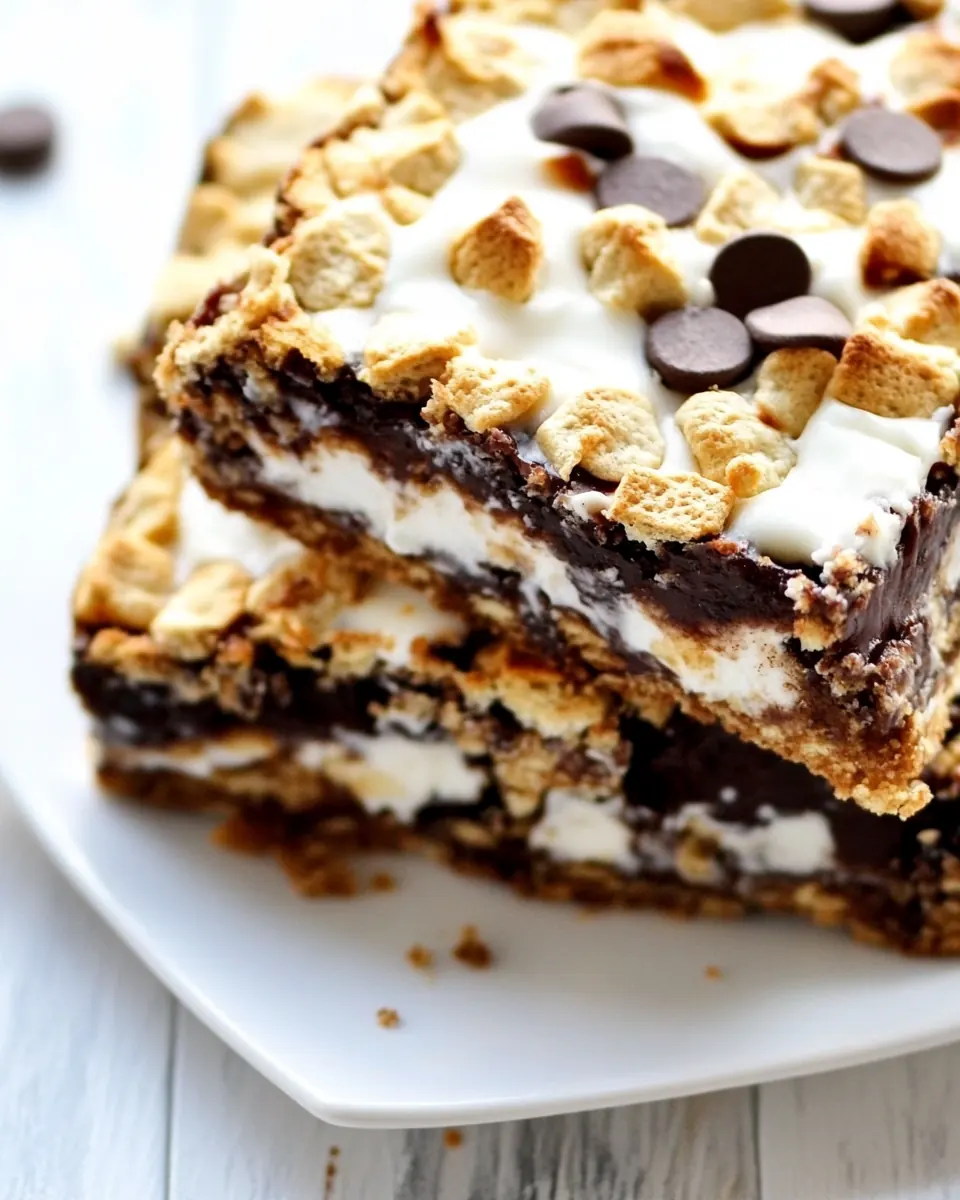
These ingredients are deliberately simple, each playing a clear role. The crumbly base gives structure and a toasty backbone, the butter binds and enriches, the caramel provides chew and sweetness, and the marshmallows and chocolate deliver the iconic s’mores finish. Nuts introduce textural contrast and a hint of savory balance. Together they create a layered bar that slices neatly but stays wonderfully gooey inside.
- 2 cups graham crackers, finely crushed: Provide a crunchy, lightly sweet base when finely crushed, helping form the bar crust that holds together after mixing with melted butter and baking or chilling. Add a toasty, slightly honeyed flavor that complements the sweet caramel and chocolate layers for balanced texture contrast in each bite.
- 1/2 cup butter, melted: Melted to bind the crushed crackers into a cohesive crust, allowing the base to set firmly while adding a rich, creamy mouthfeel. Contribute a subtle savory note that enhances overall flavor depth and prevents the crust from becoming dry or crumbly.
- 2 tablespoons brown sugar: Add a touch of molasses-sweetened caramelization that intensifies overall sweetness and helps balance the buttery crust with the filling. Sprinkle into the crust or caramel layer to boost flavor complexity and encourage a slightly chewy texture when baked or chilled.
- 112 oz . pkg. soft caramel candies (I use Kraft): Melted to create a thick, chewy caramel layer that blankets the crust and melds other toppings together when warmed and poured. Provide deep, sweet, buttery notes and a smooth consistency that contrasts with crunchy nuts and soft marshmallows for classic s'mores character.
- 1/3 cup heavy cream: Enrich the caramel when combined, helping thin it slightly for easier pouring and producing a lusher, creamier texture in the filling. Contribute a subtle dairy richness that smooths the caramel’s sweetness and improves overall mouthfeel and spreadability.
- 2 cups tiny marshmallows: Contribute soft, pillowy sweetness that replicates campfire marshmallow topping within each bar, offering small pockets of chewiness when briefly toasted or warmed. Provide light airiness that contrasts with the dense caramel and crunchy base while enhancing the nostalgic s'mores profile.
- 1 1/2 cups combination desired nuts coarsely chopped (I use cashews, peanuts, and pecans): Offer a crunchy, savory-sweet element with coarsely chopped pieces that add texture and nutty flavor throughout the bars. Contribute contrast to the sweet caramel and chocolate layers and introduce varied toasty notes depending on the nut combination used.
- 1 cup semi-sweet chocolate chips (I used a mixture of regular and mini chocolate chips): Deliver concentrated bursts of chocolate flavor distributed across the bars, melting into pockets of sweet, semi–sweet richness when warmed or bitten. Balance the caramel’s sweetness with slight bitterness and provide a smooth, indulgent finish that ties the s'mores components together.
How to Prepare S’mores Bars
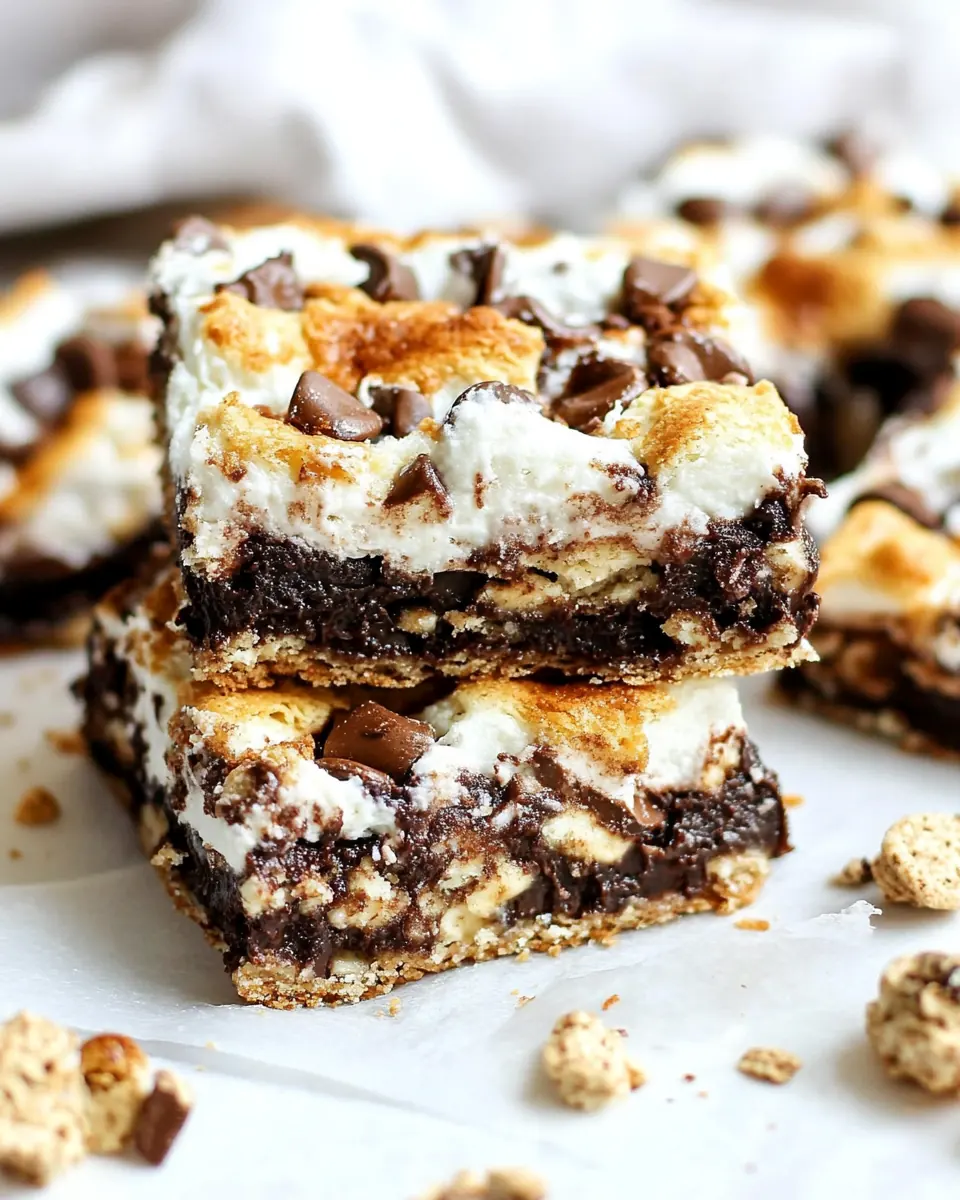
These steps turn simple ingredients into a crowd pleasing tray bake. Follow each stage for the best texture balance, and take your time pressing and spreading so the layers set and cut cleanly. The directions below expand on the original steps so you can nail the sensory cues and avoid common hiccups.
- Preheat oven to 325 degrees F. Line a 13 x 9 inch baking pan with foil extending over the sides. Spray lightly with nonstick cooking spray. Set aside.: Warm, slightly sweet air from the oven signals the right environment for the crust to crisp while remaining tender, and lining the pan with foil makes lifting the bars out effortless once cooled. You should feel the kitchen warm as the oven approaches temperature, and the foil edges will glint when you check the pan. Using a cold pan or skipping the spray can cause the crust to stick, making it hard to remove the bars cleanly. A common mistake at this stage is not pressing the foil into corners, which creates gaps and leads to uneven baking along the edges.
- In a large bowl, combine graham cracker crumbs, melted butter and brown sugar. Stir until evenly combined then press mixture firmly and evenly into the bottom of the prepared pan. Bake for 12 minutes. Cool crust in pan on a wire rack for 5 minutes.: The aroma of toasted crumbs and warm butter becomes noticeable as you blend the dry and wet components, and pressing firmly creates a compact, cohesive base that will hold the gooey layers. You want the crust to be even in thickness so it bakes uniformly and supports the toppings; use flat bottom of a measuring cup to pack it. If you under-press, the crust can crumble when sliced, and over-pressing can make it too dense. Watch for a faint golden rim around the pan to know it is ready.
- Meanwhile, microwave caramels and heavy cream together in a medium bowl until smooth, stirring every 30 seconds until melted, about 2 minutes. Pour caramel mixture over crust and spread evenly.: When melting the caramel with heavy cream , you will see a glossy, velvety sauce form, and its warm scent will remind you of toffee. Stirring frequently yields a silky texture and prevents hot spots that scorch. Pouring while still fluid helps the caramel sink into the crust slightly, creating a bonded center. A typical error is overheating the caramel, which can seize and become grainy, so use short bursts and stir between intervals.
- Sprinkle caramel with marshmallows, nuts and chocolate, slightly pressing them into the caramel.: As you scatter the tiny marshmallows , chopped nuts , and chocolate chips , you should hear a soft pat as pieces meet the warm caramel, and the contrast of matte marshmallows and shiny chocolate looks inviting. Slightly pressing them in secures them so they do not slide during baking, and it helps the layers fuse. Avoid piling items too densely, which can prevent even browning and make cutting messy later.
- Bake at 325 degrees F for 12 minutes then broil just until marshmallows begin to brown. Cool in pan on a wire rack. Use foil to lift uncut bars out of pan and onto a cutting board. Cut into bars and enjoy!: The oven time lets the caramel set and the chocolate soften, while a quick broil gives the marshmallows a toasty top, producing that campfire aroma and little browned peaks. Watch closely under the broiler; marshmallows can go from golden to charred in seconds. Once cooled on a wire rack, lifting the foil brings the whole slab out intact, and the visual of clean edges makes cutting satisfying. Cutting while overly warm can smear the layers, so let the pan rest until the caramel firms slightly for neat bars.
How to Switch It Up
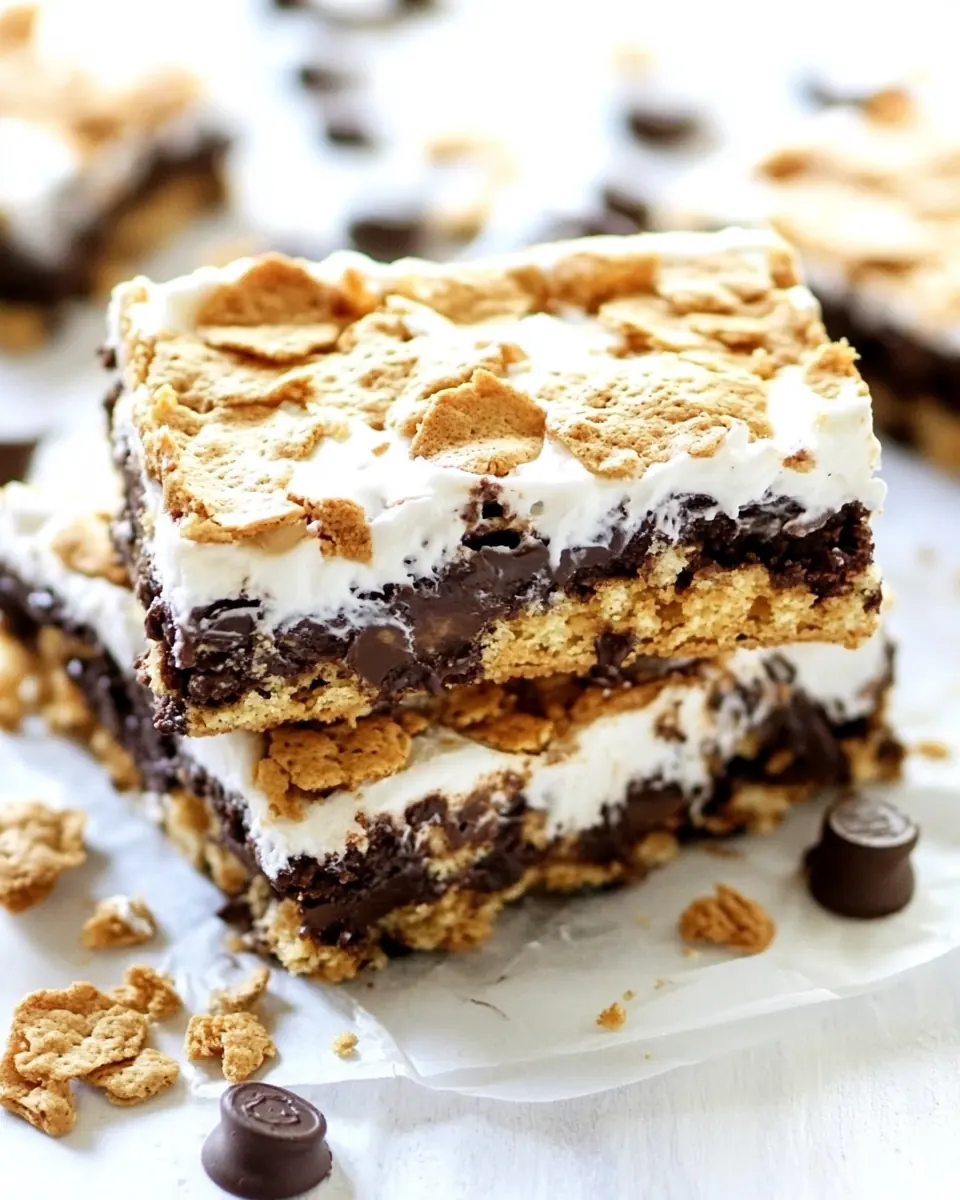
These suggestions help you tweak the bars while keeping the core structure intact. Small swaps can shift texture, flavor, or presentation, and each tip here explains the reasoning so you get consistent results.
- Change the nuts to vary crunch and aroma, try walnuts or almonds instead of the suggested mix for a different toasty accent that complements the caramel.
- Mix chocolate types by using dark and milk chips to balance sweetness and give deeper chocolate notes without altering the base technique.
- Use mini marshmallows only for faster, more uniform toasting and a smoother surface when broiled briefly.
- Press toppings gently so they adhere to the warm caramel, ensuring they do not slide off during baking or when lifting the slab from the pan.
- Cool longer before cutting to let the caramel firm up, which creates cleaner slices and prevents sticky edges on your serving board.
Great Combinations for S’mores Bars
These serving ideas help you pair the bars for occasions or storage. Think about textures and temperatures to create enjoyable combinations whether you serve them at a party or pack them for later.
- Casual parties serve bars on a platter with napkins, letting guests pick their piece, ideal for game nights or potlucks.
- Picnic friendly wrap individual bars in parchment for easy transport and less mess outdoors.
- After dinner dessert pair a warm slice with a scoop of cold treat for contrast, which guests love at relaxed dinners.
- Holiday trays place bars alongside cookies and brownies for a mixed dessert offering during family gatherings or festive events.
- Storage tips keep bars in an airtight container at room temperature for up to three days, or refrigerate to firm the caramel for neater slicing.
- Seasonal pairing these bars are great year round, especially for summer gatherings and cozy winter treats where the toasted marshmallow vibe is welcome.
FAQ
Conclusion
S’mores Bars are special because they turn a handful of pantry staples into a nostalgic, shareable dessert with layered textures and classic flavors. Try a pan the next time you need a quick, crowd pleasing sweet that travels well and delights both kids and adults. These bars are forgiving, adaptable, and reliably delicious, so give them a go and enjoy the smiles they bring around any table.
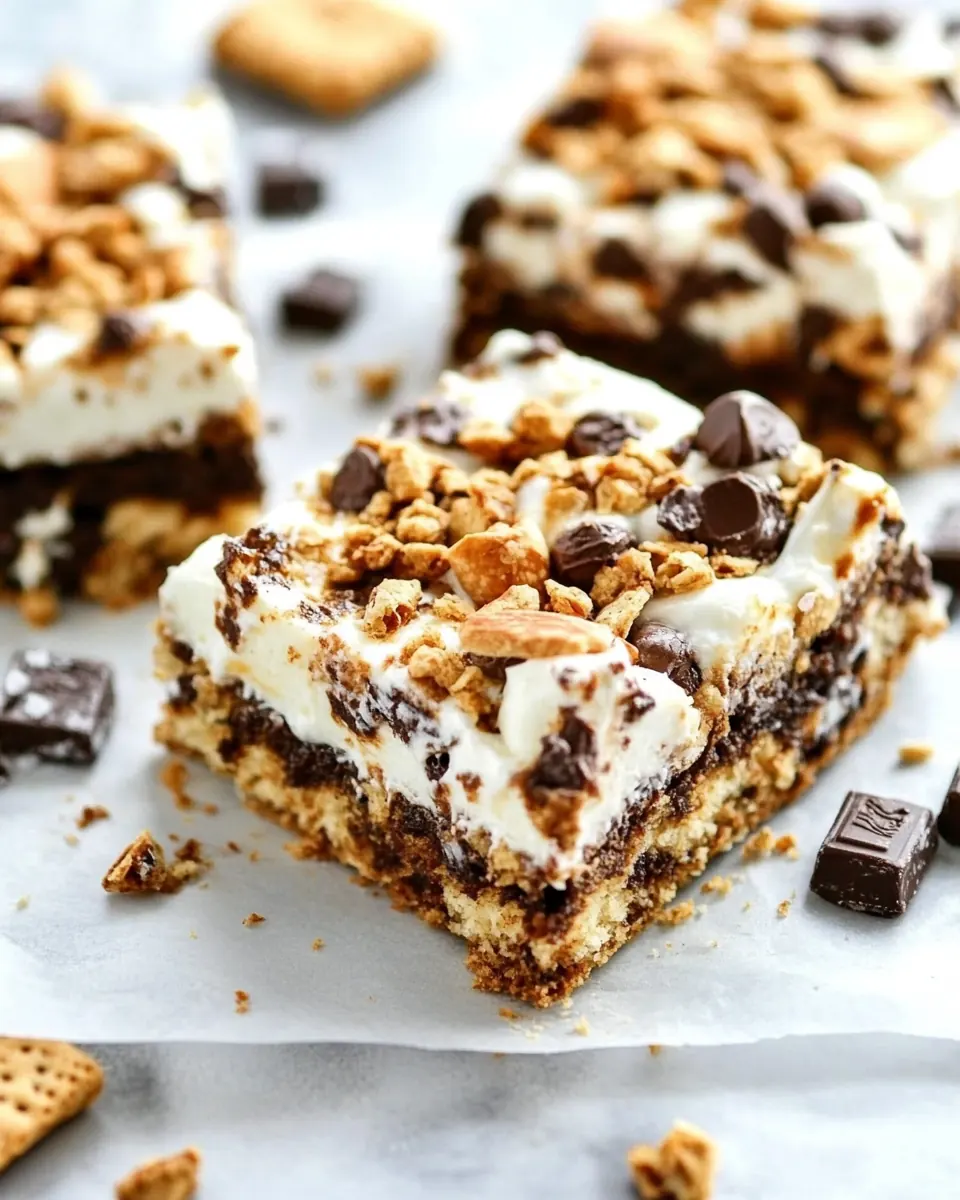
S'mores Bars
Ingredients
Equipment
Method
- Preheat oven to 325 degrees F. Line a 13 x 9 inch baking pan with foil extending over the sides. Spray lightly with nonstick cooking spray. Set aside.: Warm, slightly sweet air from the oven signals the right environment for the crust to crisp while remaining tender, and lining the pan with foil makes lifting the bars out effortless once cooled. You should feel the kitchen warm as the oven approaches temperature, and the foil edges will glint when you check the pan. Using a cold pan or skipping the spray can cause the crust to stick, making it hard to remove the bars cleanly. A common mistake at this stage is not pressing the foil into corners, which creates gaps and leads to uneven baking along the edges.
- In a large bowl, combine graham cracker crumbs, melted butter and brown sugar. Stir until evenly combined then press mixture firmly and evenly into the bottom of the prepared pan. Bake for 12 minutes. Cool crust in pan on a wire rack for 5 minutes.: The aroma of toasted crumbs and warm butter becomes noticeable as you blend the dry and wet components, and pressing firmly creates a compact, cohesive base that will hold the gooey layers. You want the crust to be even in thickness so it bakes uniformly and supports the toppings; use flat bottom of a measuring cup to pack it. If you under-press, the crust can crumble when sliced, and over-pressing can make it too dense. Watch for a faint golden rim around the pan to know it is ready.
- Meanwhile, microwave caramels and heavy cream together in a medium bowl until smooth, stirring every 30 seconds until melted, about 2 minutes. Pour caramel mixture over crust and spread evenly.: When melting the caramel with heavy cream , you will see a glossy, velvety sauce form, and its warm scent will remind you of toffee. Stirring frequently yields a silky texture and prevents hot spots that scorch. Pouring while still fluid helps the caramel sink into the crust slightly, creating a bonded center. A typical error is overheating the caramel, which can seize and become grainy, so use short bursts and stir between intervals.
- Sprinkle caramel with marshmallows, nuts and chocolate, slightly pressing them into the caramel.: As you scatter the tiny marshmallows , chopped nuts , and chocolate chips , you should hear a soft pat as pieces meet the warm caramel, and the contrast of matte marshmallows and shiny chocolate looks inviting. Slightly pressing them in secures them so they do not slide during baking, and it helps the layers fuse. Avoid piling items too densely, which can prevent even browning and make cutting messy later.
- Bake at 325 degrees F for 12 minutes then broil just until marshmallows begin to brown. Cool in pan on a wire rack. Use foil to lift uncut bars out of pan and onto a cutting board. Cut into bars and enjoy!: The oven time lets the caramel set and the chocolate soften, while a quick broil gives the marshmallows a toasty top, producing that campfire aroma and little browned peaks. Watch closely under the broiler; marshmallows can go from golden to charred in seconds. Once cooled on a wire rack, lifting the foil brings the whole slab out intact, and the visual of clean edges makes cutting satisfying. Cutting while overly warm can smear the layers, so let the pan rest until the caramel firms slightly for neat bars.
Notes
- Change the nuts to vary crunch and aroma, try walnuts or almonds instead of the suggested mix for a different toasty accent that complements the caramel.
- Mix chocolate types by using dark and milk chips to balance sweetness and give deeper chocolate notes without altering the base technique.
- Use mini marshmallows only for faster, more uniform toasting and a smoother surface when broiled briefly.
- Press toppings gently so they adhere to the warm caramel, ensuring they do not slide off during baking or when lifting the slab from the pan.
- Cool longer before cutting to let the caramel firm up, which creates cleaner slices and prevents sticky edges on your serving board.