Smothered Chicken and Rice
Smothered Chicken and Rice learned its place in my rotation on a snowy evening when I needed something comforting, unfussy, and deeply satisfying. I remember pulling a battered skillet from the cabinet, the kind with a few scars that tell stories, and deciding to turn humble pantry staples into a meal that felt like a warm hug. From the first sizzle of butter and oil to the final sprinkle of cheese, this dish felt like home in a bowl.
I like how this recipe folds in simple techniques that elevate the ordinary. The way the chicken browns around the edges, how the onion softens and sweetens, and how rice soaks up the barely thickened sauce all combine into a texture that surprises you with each bite. Over time I tweaked the seasoning and timing to make sure the rice is tender without losing structure, and I always keep some extra sour cream on hand for serving because it brightens the whole plate.
Making Smothered Chicken and Rice is one of those weekends or weeknight wins, depending on what your schedule looks like. I’ve made it for friends who needed comfort after a long day, and for quiet family dinners where we lingered over seconds. It’s forgiving, which means you can chat while it simmers and still end up with food that tastes deliberate. When the weather is cold, this is my go to for a shallow, creamy casserole straight from the skillet.
Recipe Snapshot
40 mins
20 mins
20 mins
Medium
550 kcal
American
Gluten-Free, Low FODMAP
Dinner
Large skillet non stick with a fitted lid
Why This Smothered Chicken and Rice Shines
Rich, approachable flavor
One of the first reasons I love Smothered Chicken and Rice is its deep, layered taste profile. The combination of sautéed onion and garlic with browned chicken and a milk and broth based sauce creates savory comfort that is unmistakable. You get both creamy body and savory notes without anything fussy, which makes every spoonful satisfying.
Comforting texture contrast
The interplay between the tender, bite size chicken pieces and the slightly al dente rice gives the dish a comforting mouthfeel. The melted Cheddar cheese folded in at the end creates pockets of creamy, gooey richness while the resting time lets the rice absorb just enough sauce so you don’t end up with a soupy mess. I find that this balance keeps the dish hearty but never heavy.
Weeknight friendly technique
I often reach for this recipe when time is tight because it cooks in one skillet and uses straightforward steps. There’s no hauling out multiple pots, and the method relies on simple, reliable techniques like searing, deglazing, and gentle simmering. That means I can prep, chat with family, and still deliver a meal that tastes like I spent more time than I actually did.
Flexible and forgiving
Whether you like mushrooms or want it extra creamy, Smothered Chicken and Rice adapts. You can omit the optional items or add the cream for silkier texture. The basic scaffolding of milk and chicken broth plus rice supports small shifts in timing and ingredients, which is great when pantry contents vary.
Feeds a crowd without fuss
This recipe multiplies easily and keeps well in the refrigerator, so it’s one I use for casual gatherings. It reheats neatly with a splash of milk or broth and still tastes fresh the next day. Because it feels homely and substantial, it’s perfect for family dinners or when you want to bring a warm dish to someone’s table.
Ingredients for Smothered Chicken and Rice
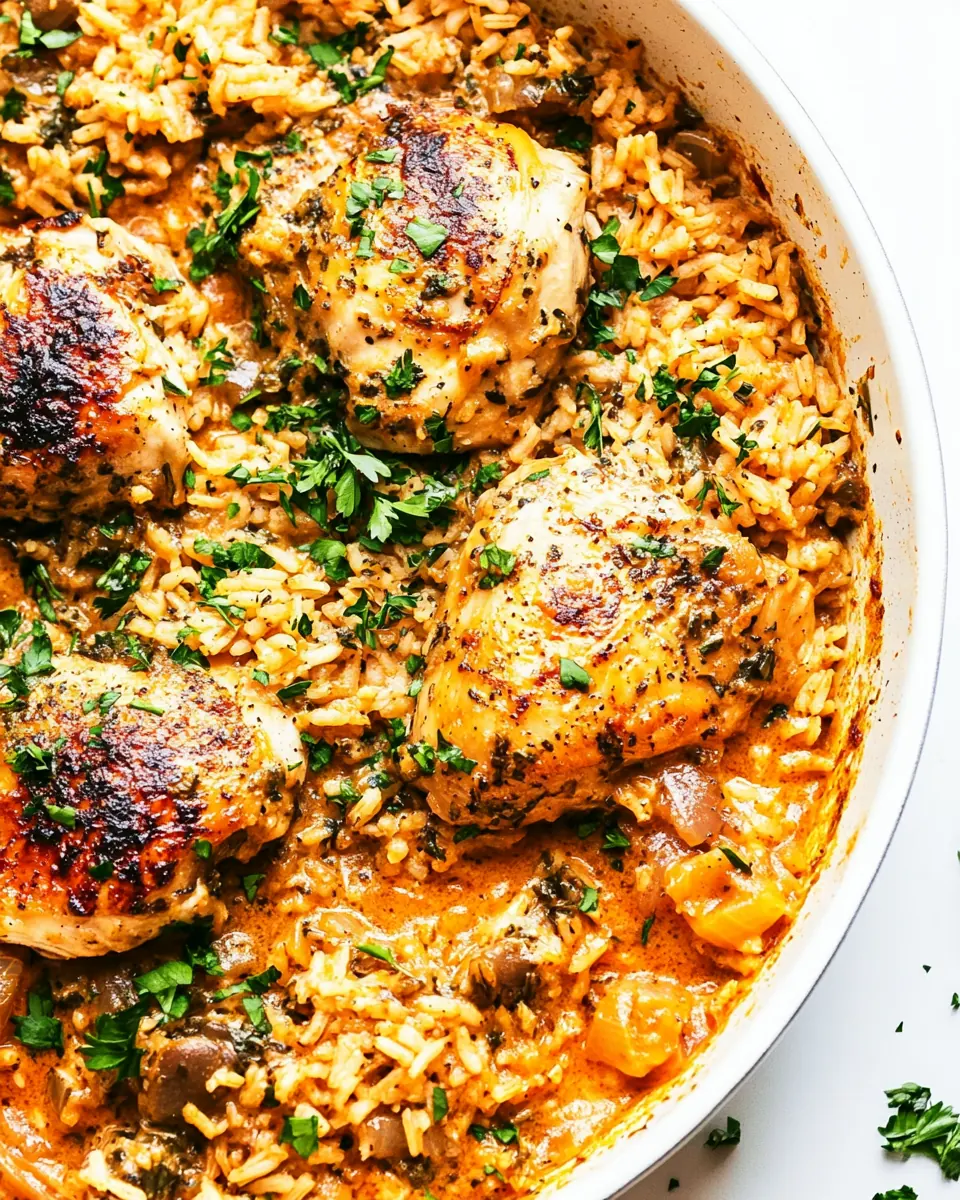
These ingredients come together to make a cozy, balanced skillet dinner. The key players are the chicken for protein, the rice for body, and the milk and chicken broth for a lightly creamy base. Aromatics and seasonings pull the flavors into harmony while optional add ins like mushrooms and sour cream let you dial up earthiness or tang.
- 2 tablespoons unsalted butter: Melted to enrich the dish with a silky, savory base and help sauté aromatics; contributes a subtle, creamy flavor that balances the acidity of other components.
- 1 tablespoon olive oil: Used to sauté and brown ingredients while adding a fruity, slightly peppery note; helps prevent butter from burning during higher-heat steps.
- 1 large yellow onion finely chopped (1-1/2 cups): Finely chopped to provide sweet, aromatic depth and moisture; softens during cooking and forms the flavor foundation for the sauce and rice.
- 2 large garlic cloves minced (1 tbsp): Minced to add pungent, savory complexity and fragrance; releases oils when cooked to enhance overall aroma and meld flavors together.
- 1 cup sliced mushrooms (I use baby bella) (optional): Sliced to contribute an earthy, umami note and tender texture; browns slightly to add color and deepen the savory profile of the dish.
- 1 pound boneless skinless chicken thighs cut into bite-size pieces, see note 1: Cut into bite–size pieces to supply rich, moist protein and absorb surrounding flavors; thighs stay tender and juicy through simmering.
- 2 1/2 tablespoons flour: Sprinkled to thicken pan juices into a creamy sauce and help bind dairy and broth; creates body and a slightly silky mouthfeel when cooked.
- 2 cups milk I use whole: Added to create a creamy, rich sauce and mellow spices; milk provides fat and liquid that helps cook the rice and form a velvety texture.
- 2 cups chicken broth: Poured in to build savory depth, boost umami, and supply necessary liquid for cooking rice; balances dairy and seasons the dish.
- 1 1/4 cups uncooked rice I use basmati, see note 2: Measured as the starch component to absorb cooking liquid and become tender; rice yields structure and heartiness, making the meal substantial.
- Salt and pepper: Seasoned to adjust and enhance all flavors by brightening, balancing, and intensifying savory and sweet elements throughout cooking.
- 1 gently packed cup freshly shredded sharp Cheddar cheese: Shredded to add sharp, melty richness and a tangy, savory finish; folds into the hot rice mixture to create a creamy, cheesy consistency.
- 1/4 cup finely chopped parsley , for topping (optional): Finely chopped and sprinkled as a fresh, herbaceous finish that brightens the plate and adds a pop of color and mild peppery flavor.
- 1/2 cup heavy cream , for serving (optional): Stirred in or drizzled for extra richness and a luxurious mouthfeel; heavy cream deepens the sauce and makes the texture more decadent.
- 1/2 cup sour cream , for serving (optional): Dolloped to contribute tangy creaminess and cool contrast that lightens richness; sour cream can be swirled in at serving for brightness.
- 1 teaspoon garlic powder: Sprinkled to reinforce savory, roasted garlic flavors and harmonize with fresh garlic; provides a convenient way to boost garlic presence evenly.
- 1 teaspoon onion powder: Sprinkled to enhance savory-sweet onion notes and deepen overall aromatics; helps round out flavors when fresh onion is already present.
- 1 teaspoon dried thyme: Added to impart warm, herbal complexity and slight earthiness; thyme pairs well with poultry and supports savory undertones in the sauce.
- 1 teaspoon paprika: Sprinkled to lend smoky warmth and color while enhancing overall depth; paprika contributes mild sweetness and visual appeal.
- 1/4 teaspoon cayenne pepper (optional): Used sparingly to introduce a bright, lingering heat that wakes the palate; cayenne offers optional spiciness without overwhelming other flavors.
Preparation Steps for Smothered Chicken and Rice
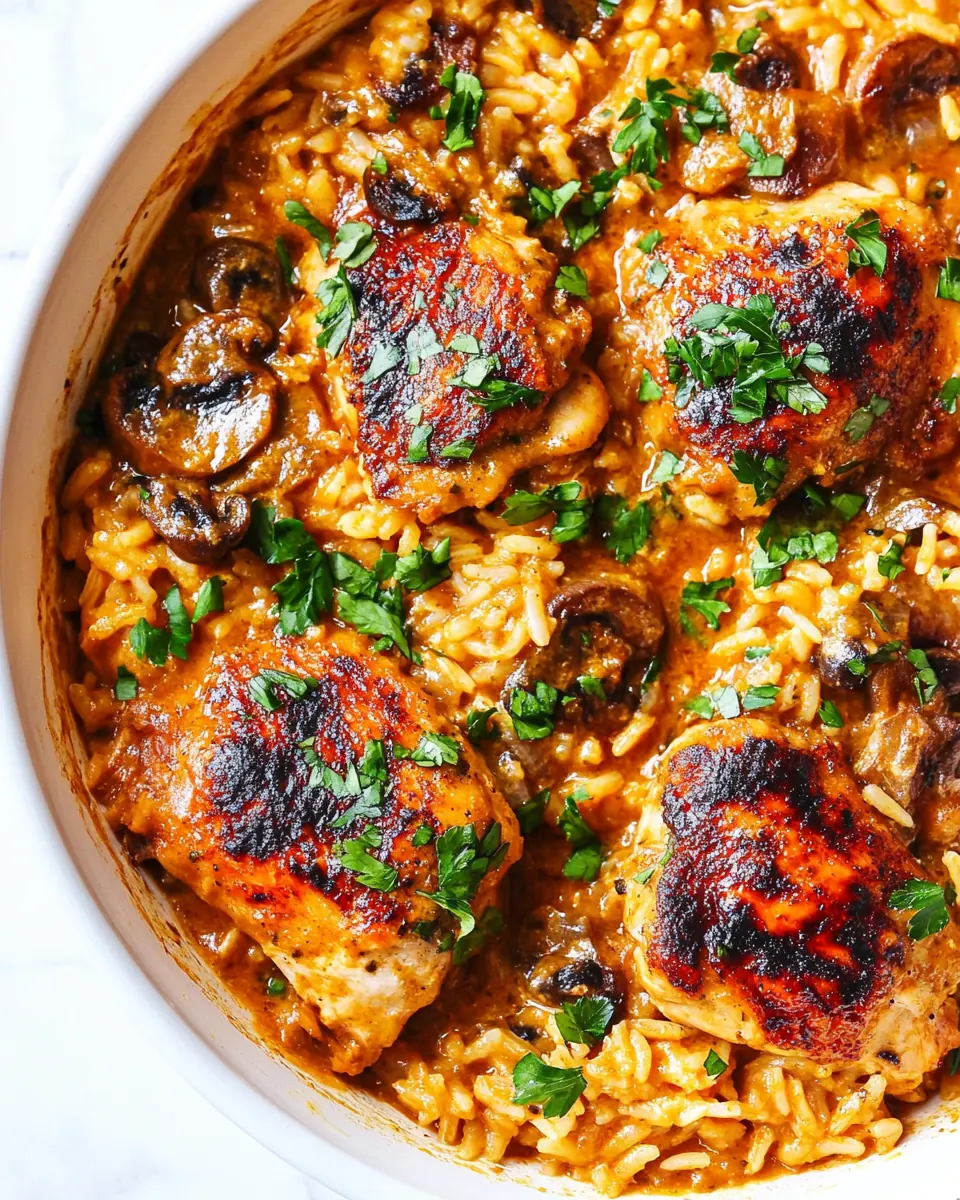
I like to approach the stove with patience and sensory focus so nothing gets overcooked. These steps are written to guide you through sizzle, simmer, and resting so the texture and flavor hit just right. Keep a wooden spoon and a whisk nearby, and taste as you go so adjustments feel natural.
- Melt butter and heat oil in a large skillet over high heat. Add onion and cook 3–5 minutes, until golden. Add mushrooms and cook 2–3 minutes more, stirring occasionally.: As the fats meet the pan you should hear a gentle shimmer and see the surface ripple, which tells you the pan is ready; this combination raises the smoke threshold and creates a glossy base that helps the onion and chicken brown without burning. You want the oil to shimmer but not smoke, a common mistake is overheating which will scorch the butter and leave a bitter note, so dial back the heat if the butter darkens too quickly.
- Stir in cubed chicken and garlic. Season to taste (I add 1/2 teaspoon each of salt & pepper). Cook, stirring only occasionally, until chicken turns white on the outside, about 5 minutes (it doesn’t need to be cooked through yet).: The onion will soften and begin to caramelize, releasing a sweet, savory aroma and turning translucent then golden at the edges; you'll notice a gentle scent of sweetness in the air. Stir occasionally to ensure even color, and avoid crowding the pan which traps steam and prevents browning, resulting in a bland, soft texture instead of those flavorful browned bits.
- Stir in the rice and all seasonings. Cook, stirring constantly, for 2 minutes.: When the mushrooms hit the hot pan they will release moisture and then concentrate in flavor as that moisture evaporates, producing a deeper, woodsy smell; you'll see them reduce in size and pick up browned edges. A typical pitfall is adding them too early or stirring constantly, which can prevent caramelization and make them soggy, so let them sit briefly between stirs to brown.
- Reduce heat to medium. Sprinkle in flour and stir constantly for 1 minute. Gradually whisk in half the milk until smooth, then add the rest. Stir in broth while whisking constantly.: The moment the bite size chicken pieces meet the pan you should hear a lively sizzle and see the edges begin to turn opaque; this initial sear locks in juices and builds savory fond on the pan surface that flavors the sauce. The minced garlic will become fragrant almost immediately, so keep it moving to avoid burning; burned garlic tastes acrid, so lower heat if it browns too fast.
- Bring to a simmer. Cover, reduce heat to medium-low, and cook 10–12 minutes.: After the early sear season with salt and pepper and the dry spices such as paprika , garlic powder , and onion powder , which will bloom briefly in the hot pan and deepen their aroma. Proper seasoning at this stage helps the flavors carry through the entire dish; a common error is under seasoned protein at the start, which creates a flat final dish, so be confident but measured when salting.
- Remove lid. The rice should be tender and the liquid mostly absorbed (you should see a small amount of liquid around the rice that will absorb during resting; see note 3 for trouble-shooting). Quickly cover again and let stand off heat for 10 minutes (see note 4).: As the chicken cooks you will notice the outside losing its translucence and the pieces developing light browning; this visual cue means the exterior proteins have coagulated and the interior is starting to cook. Avoid constant stirring which prevents browning and causes uneven texture, and do not fully cook through at this stage because the chicken will finish when the rice simmers, overcooking here leads to dry meat.
- Stir in half the cheese. Smooth the surface, sprinkle with the remaining cheese, cover, and let stand until melted. Stir gently and if you'd like a creamier consistency, add in heavy cream gradually while stirring gently. Serve hot, topped with parsley and scoops of sour cream if desired.: Adding the uncooked rice right into the pan lets the grains toast slightly, producing a nutty fragrance and helping them stay distinct once cooked. Stirring constantly for a short time distributes flavors evenly and prevents sticking; forgetting to coat the rice will yield uneven seasoning and occasional clumps in the final dish.
- Cook, stirring constantly, for 2 minutes: During this brief toast you'll smell a toasty nuttiness as the starches loosen from the grains, which helps the rice absorb liquid more consistently. Keep the motion steady so nothing browns unevenly, and watch the pan because burnt bits can form quickly if left unattended, giving an unpleasant bitter undertone.
- Reduce heat to medium: Lowering the heat prepares the pan for sauce building, preventing the milk and broth from catching and scorching while you thicken the base. The goal is gentle heat that will coax the starches out of the rice without aggressive boiling; too high a heat will evaporate liquids too fast, leaving undercooked rice or burned sauce.
- Sprinkle in flour and stir constantly for 1 minute: The short cooking of flour eliminates its raw mouthfeel and creates a roux like base that helps the final sauce cling to the rice and chicken . Stir constantly to cook the flour evenly; undercooked flour tastes pasty, and lumps form easily if you add the liquid too quickly, so keep the movement steady.
- Gradually whisk in half the milk until smooth, then add the rest: Pouring milk in slowly and whisking prevents lumps and yields a silky emulsion; you'll see the mixture transition from a paste to a smooth, creamy liquid, and the aroma will shift to a rich, dairy sweetness. Adding all the milk at once invites clumps, and insufficient whisking can leave raw pockets of flour texture that detract from the smooth sauce.
- Stir in broth while whisking constantly: Incorporating the chicken broth thins the sauce to a cooking liquid that will properly hydrate the rice and carry flavor. The combined liquids should look glossy and pourable; if the mixture seems too thick it will not distribute through the rice evenly, so thin gently with additional broth if needed.
- Bring to a simmer: Watch for gentle, sustained bubbles around the edges and occasional movement across the surface, which indicates a proper simmer. A vigorous boil will agitate the rice and can cause breakage or uneven cooking, while a too low heat will not activate the rice's absorption, resulting in firm, undercooked grains.
- Cover, reduce heat to medium low, and cook 10 to 12 minutes: Covered cooking traps steam and ensures the rice absorbs the flavorful liquid evenly; you will hear a soft whisper of steam and the pan may occasionally murmur as bubbles rise. Lifting the lid too often releases heat and lengthens the cook, so resist checking frequently, and if the rice is still firm after the time, increase the heat slightly and continue cooking a couple of minutes.
- Remove lid: After cooking, uncover to inspect the rice and sauce; the surface should show mostly absorbed liquid with a small glossy ring of moisture remaining. If everything looks good, proceed quickly; leaving it uncovered too long will cool it and can thicken the sauce unevenly, making stirring more difficult.
- The rice should be tender and the liquid mostly absorbed: Tender rice should give slightly when bitten and not be chalky in the center; you'll notice the flavors have mellowed and integrated. If it's not tender, add a splash of broth and cook a few minutes more, if it’s too soft you likely overcooked it and there is little recovery, so aim for that tender but intact grain.
- Quickly cover again and let stand off heat for 10 minutes: Resting allows residual heat to finish cooking and lets the remaining liquid absorb, producing a more cohesive dish. The skillet will retain warmth and the steam will even out texture, while skipping this step often results in inconsistent moisture and potentially mushy rice if you try to force the heat to finish cooking.
- Stir in half the cheese: Folding in part of the shredded Cheddar cheese at this point yields creamy pockets and an even cheesy base; the cheese will melt into ribbons and add a sharp tang. If you add all at once the top can congeal into a dense layer, so reserve some for a finishing touch.
- Smooth the surface, sprinkle with the remaining cheese, cover, and let stand until melted: Creating a smooth surface and topping with the remaining cheese lets it melt into a glossy, attractive finish while the residual heat warms it through. A common misstep is uncovering too soon which prevents even melting and causes the top layer to cool and clump rather than forming a cohesive cheesy top.
- Stir gently and if you'd like a creamier consistency, add in heavy cream gradually while stirring gently: Adding heavy cream at the end softens the texture and creates a luxurious mouthfeel, integrated by gentle stirring to avoid breaking the rice grains. Overdoing the cream can mask the seasoning, so add little by little and taste as you go to maintain balance.
- Serve hot, topped with parsley and scoops of sour cream if desired: The final garnish of parsley and sour cream cuts through richness and brightens the plate, offering color and a cool contrast. Serve immediately while the cheese is gooey; letting it sit too long before plating causes the texture to firm and the sauce to settle, so plan to bring the skillet to the table when it's at its peak.
Tips for Success
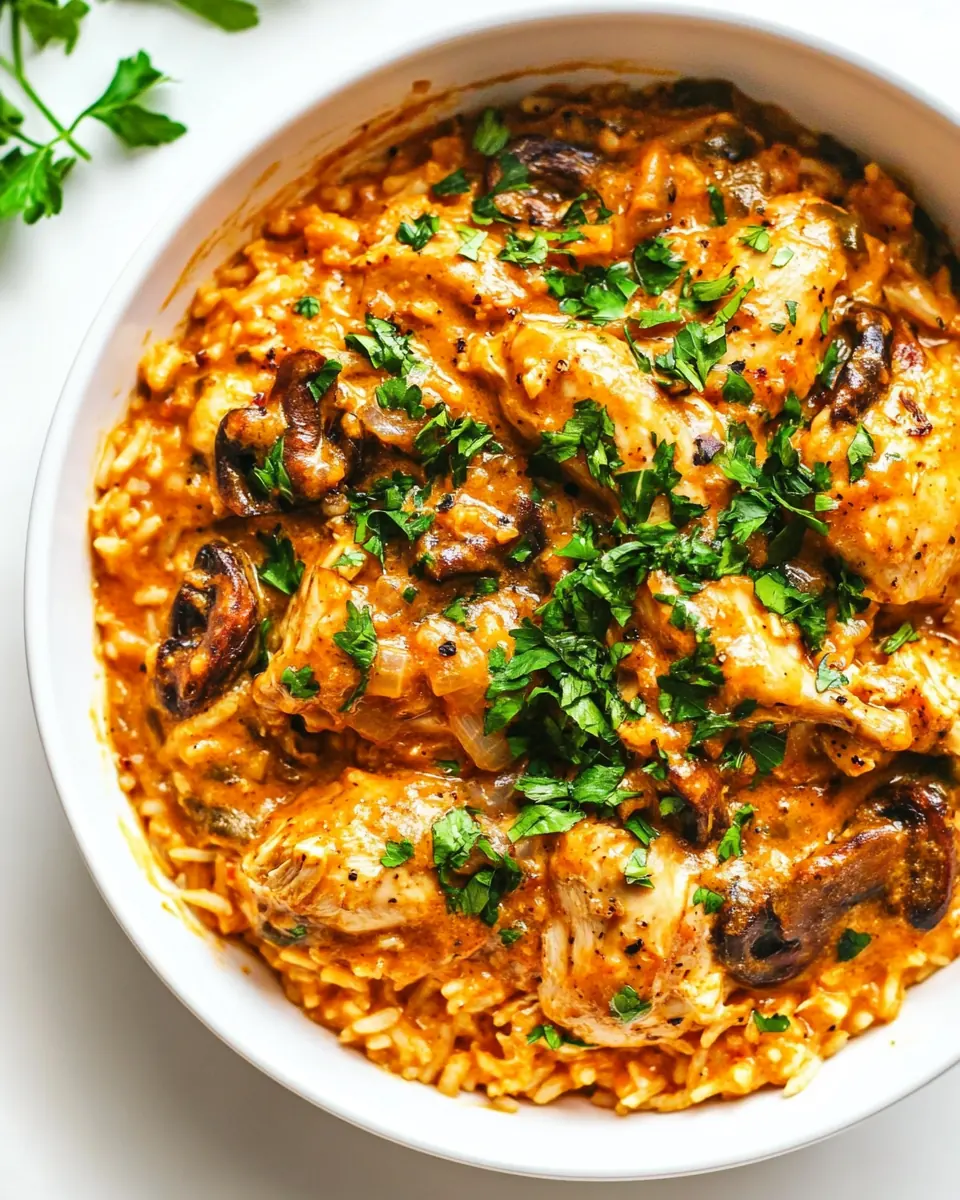
These tips will help you get the best texture and flavor from Smothered Chicken and Rice. Pay attention to pacing, seasoning, and finishing techniques so the dish comes together with minimal stress. Use them as a checklist while you cook.
- Start with an evenly heated pan so the butter and oil combine properly and the chicken gets a good sear without burning the butter; uneven heat leads to patchy browning which affects base flavor.
- Dont skip the flour step because it creates the sauce body that clings to the rice and chicken; undercooked flour will taste pasty, so cook it briefly until it smells toasty.
- Use room temperature milk to reduce the risk of curdling when you add it to the hot pan; adding cold milk can temporarily lower heat and create lumps if not whisked vigorously.
- Measure your rice accurately since too much or too little will change the liquid ratio and texture; use the exact uncooked rice amount called for for best results.
- Reserve some cheese for the top so you get both melted pockets inside and a glossy finish on top; adding it all at once can lead to a dense cheesy layer rather than melted ribbons.
- Rest off heat for 10 minutes to let the rice absorb the remaining liquid and settle, skipping this will make the texture uneven and potentially mushy.
Pairing Suggestions for Smothered Chicken and Rice
When serving Smothered Chicken and Rice, think about balance and contrast. I like to pair it with crisp vegetables or a bright salad to cut through the creaminess. It works for family dinners and casual gatherings alike. Keep portions generous and offer simple garnishes that freshen each bite.
- Light green salad, such as baby spinach with lemon vinaigrette, provides a crisp, acidic contrast to the creamy skillet which brightens the palate and balances richness.
- Steamed green vegetables, like broccoli or green beans, add a firm texture and verdant flavor that pairs well with the cheesy sauce and tender chicken.
- Roasted root vegetables such as carrots or parsnips work for colder months because their caramelized sweetness complements the savory, comforting notes of the dish.
- Occasions, this is ideal for cozy weeknight dinners, family Sunday meals, or winter gatherings where guests want a stick to your ribs sort of meal without fuss.
- Storage tips, cool completely then store in an airtight container for up to three to four days in the refrigerator; reheat gently on the stove with a splash of broth to re loosen the sauce.
- Seasonal pairing, in winter serve with roasted vegetables and a crisp salad for contrast; in milder months choose lighter sides like a simple herb salad and steamed asparagus.
- Serving styles, offer sour cream and chopped parsley at the table so diners can customize texture and brightness to their taste.
FAQ
Conclusion
This Smothered Chicken and Rice stands out for its cozy textures and layered savory flavor, delivering a homey, satisfying meal without fuss. I encourage you to give it a try on a weeknight or a chilly weekend when you want something comforting but not complicated. It rewards modest effort with big flavor, and the leftovers reheat beautifully for easy second meals. Enjoy making it your own with small tweaks to seasoning and texture.
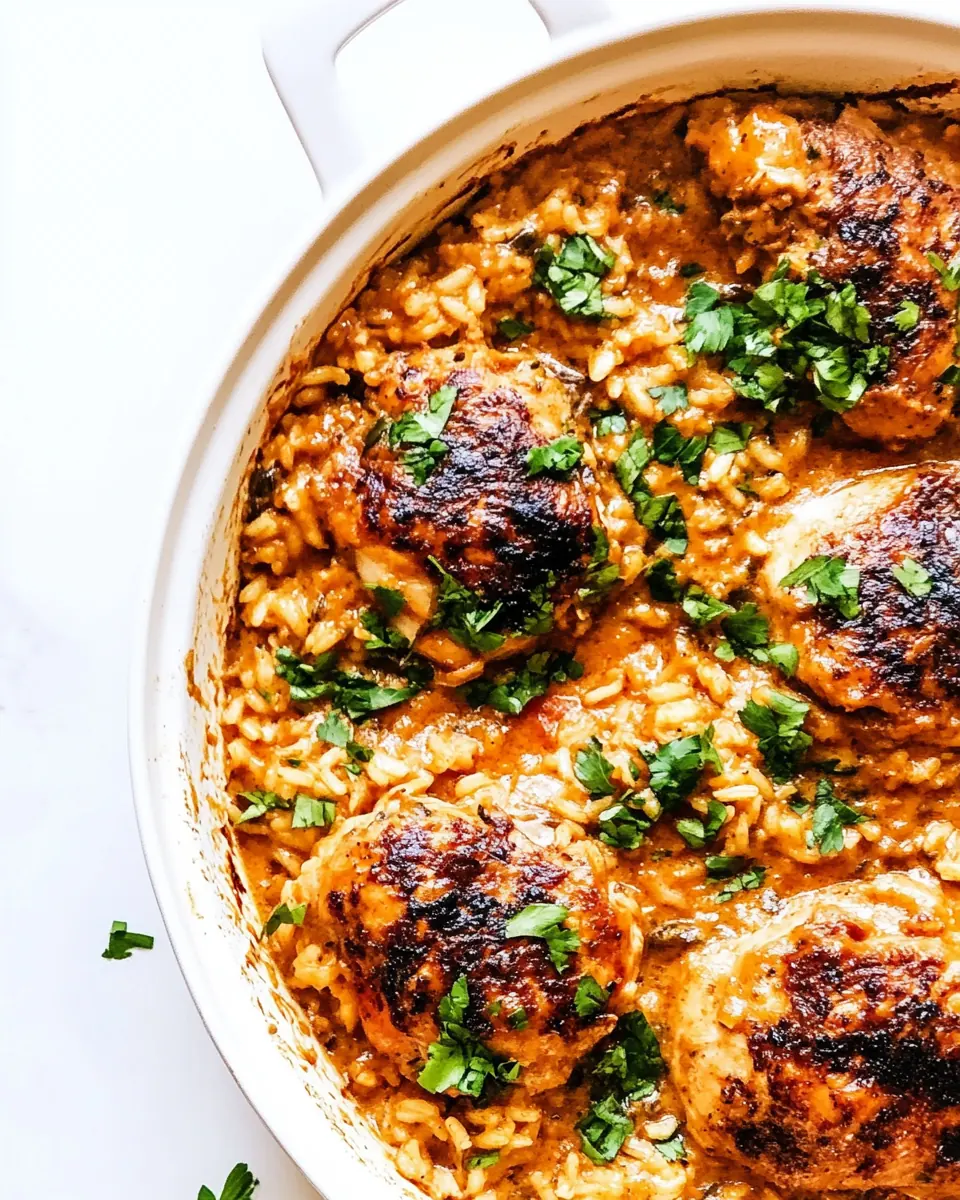
Smothered Chicken and Rice
Ingredients
Equipment
Method
- Melt butter and heat oil in a large skillet over high heat. Add onion and cook 3–5 minutes, until golden. Add mushrooms and cook 2–3 minutes more, stirring occasionally.: As the fats meet the pan you should hear a gentle shimmer and see the surface ripple, which tells you the pan is ready; this combination raises the smoke threshold and creates a glossy base that helps the onion and chicken brown without burning. You want the oil to shimmer but not smoke, a common mistake is overheating which will scorch the butter and leave a bitter note, so dial back the heat if the butter darkens too quickly.
- Stir in cubed chicken and garlic. Season to taste (I add 1/2 teaspoon each of salt & pepper). Cook, stirring only occasionally, until chicken turns white on the outside, about 5 minutes (it doesn’t need to be cooked through yet).: The onion will soften and begin to caramelize, releasing a sweet, savory aroma and turning translucent then golden at the edges; you'll notice a gentle scent of sweetness in the air. Stir occasionally to ensure even color, and avoid crowding the pan which traps steam and prevents browning, resulting in a bland, soft texture instead of those flavorful browned bits.
- Stir in the rice and all seasonings. Cook, stirring constantly, for 2 minutes.: When the mushrooms hit the hot pan they will release moisture and then concentrate in flavor as that moisture evaporates, producing a deeper, woodsy smell; you'll see them reduce in size and pick up browned edges. A typical pitfall is adding them too early or stirring constantly, which can prevent caramelization and make them soggy, so let them sit briefly between stirs to brown.
- Reduce heat to medium. Sprinkle in flour and stir constantly for 1 minute. Gradually whisk in half the milk until smooth, then add the rest. Stir in broth while whisking constantly.: The moment the bite size chicken pieces meet the pan you should hear a lively sizzle and see the edges begin to turn opaque; this initial sear locks in juices and builds savory fond on the pan surface that flavors the sauce. The minced garlic will become fragrant almost immediately, so keep it moving to avoid burning; burned garlic tastes acrid, so lower heat if it browns too fast.
- Bring to a simmer. Cover, reduce heat to medium-low, and cook 10–12 minutes.: After the early sear season with salt and pepper and the dry spices such as paprika , garlic powder , and onion powder , which will bloom briefly in the hot pan and deepen their aroma. Proper seasoning at this stage helps the flavors carry through the entire dish; a common error is under seasoned protein at the start, which creates a flat final dish, so be confident but measured when salting.
- Remove lid. The rice should be tender and the liquid mostly absorbed (you should see a small amount of liquid around the rice that will absorb during resting; see note 3 for trouble-shooting). Quickly cover again and let stand off heat for 10 minutes (see note 4).: As the chicken cooks you will notice the outside losing its translucence and the pieces developing light browning; this visual cue means the exterior proteins have coagulated and the interior is starting to cook. Avoid constant stirring which prevents browning and causes uneven texture, and do not fully cook through at this stage because the chicken will finish when the rice simmers, overcooking here leads to dry meat.
- Stir in half the cheese. Smooth the surface, sprinkle with the remaining cheese, cover, and let stand until melted. Stir gently and if you'd like a creamier consistency, add in heavy cream gradually while stirring gently. Serve hot, topped with parsley and scoops of sour cream if desired.: Adding the uncooked rice right into the pan lets the grains toast slightly, producing a nutty fragrance and helping them stay distinct once cooked. Stirring constantly for a short time distributes flavors evenly and prevents sticking; forgetting to coat the rice will yield uneven seasoning and occasional clumps in the final dish.
- Cook, stirring constantly, for 2 minutes: During this brief toast you'll smell a toasty nuttiness as the starches loosen from the grains, which helps the rice absorb liquid more consistently. Keep the motion steady so nothing browns unevenly, and watch the pan because burnt bits can form quickly if left unattended, giving an unpleasant bitter undertone.
- Reduce heat to medium: Lowering the heat prepares the pan for sauce building, preventing the milk and broth from catching and scorching while you thicken the base. The goal is gentle heat that will coax the starches out of the rice without aggressive boiling; too high a heat will evaporate liquids too fast, leaving undercooked rice or burned sauce.
- Sprinkle in flour and stir constantly for 1 minute: The short cooking of flour eliminates its raw mouthfeel and creates a roux like base that helps the final sauce cling to the rice and chicken . Stir constantly to cook the flour evenly; undercooked flour tastes pasty, and lumps form easily if you add the liquid too quickly, so keep the movement steady.
- Gradually whisk in half the milk until smooth, then add the rest: Pouring milk in slowly and whisking prevents lumps and yields a silky emulsion; you'll see the mixture transition from a paste to a smooth, creamy liquid, and the aroma will shift to a rich, dairy sweetness. Adding all the milk at once invites clumps, and insufficient whisking can leave raw pockets of flour texture that detract from the smooth sauce.
- Stir in broth while whisking constantly: Incorporating the chicken broth thins the sauce to a cooking liquid that will properly hydrate the rice and carry flavor. The combined liquids should look glossy and pourable; if the mixture seems too thick it will not distribute through the rice evenly, so thin gently with additional broth if needed.
- Bring to a simmer: Watch for gentle, sustained bubbles around the edges and occasional movement across the surface, which indicates a proper simmer. A vigorous boil will agitate the rice and can cause breakage or uneven cooking, while a too low heat will not activate the rice's absorption, resulting in firm, undercooked grains.
- Cover, reduce heat to medium low, and cook 10 to 12 minutes: Covered cooking traps steam and ensures the rice absorbs the flavorful liquid evenly; you will hear a soft whisper of steam and the pan may occasionally murmur as bubbles rise. Lifting the lid too often releases heat and lengthens the cook, so resist checking frequently, and if the rice is still firm after the time, increase the heat slightly and continue cooking a couple of minutes.
- Remove lid: After cooking, uncover to inspect the rice and sauce; the surface should show mostly absorbed liquid with a small glossy ring of moisture remaining. If everything looks good, proceed quickly; leaving it uncovered too long will cool it and can thicken the sauce unevenly, making stirring more difficult.
- The rice should be tender and the liquid mostly absorbed: Tender rice should give slightly when bitten and not be chalky in the center; you'll notice the flavors have mellowed and integrated. If it's not tender, add a splash of broth and cook a few minutes more, if it’s too soft you likely overcooked it and there is little recovery, so aim for that tender but intact grain.
- Quickly cover again and let stand off heat for 10 minutes: Resting allows residual heat to finish cooking and lets the remaining liquid absorb, producing a more cohesive dish. The skillet will retain warmth and the steam will even out texture, while skipping this step often results in inconsistent moisture and potentially mushy rice if you try to force the heat to finish cooking.
- Stir in half the cheese: Folding in part of the shredded Cheddar cheese at this point yields creamy pockets and an even cheesy base; the cheese will melt into ribbons and add a sharp tang. If you add all at once the top can congeal into a dense layer, so reserve some for a finishing touch.
- Smooth the surface, sprinkle with the remaining cheese, cover, and let stand until melted: Creating a smooth surface and topping with the remaining cheese lets it melt into a glossy, attractive finish while the residual heat warms it through. A common misstep is uncovering too soon which prevents even melting and causes the top layer to cool and clump rather than forming a cohesive cheesy top.
- Stir gently and if you'd like a creamier consistency, add in heavy cream gradually while stirring gently: Adding heavy cream at the end softens the texture and creates a luxurious mouthfeel, integrated by gentle stirring to avoid breaking the rice grains. Overdoing the cream can mask the seasoning, so add little by little and taste as you go to maintain balance.
- Serve hot, topped with parsley and scoops of sour cream if desired: The final garnish of parsley and sour cream cuts through richness and brightens the plate, offering color and a cool contrast. Serve immediately while the cheese is gooey; letting it sit too long before plating causes the texture to firm and the sauce to settle, so plan to bring the skillet to the table when it's at its peak.
Notes
- Start with an evenly heated pan so the butter and oil combine properly and the chicken gets a good sear without burning the butter; uneven heat leads to patchy browning which affects base flavor.
- Dont skip the flour step because it creates the sauce body that clings to the rice and chicken; undercooked flour will taste pasty, so cook it briefly until it smells toasty.
- Use room temperature milk to reduce the risk of curdling when you add it to the hot pan; adding cold milk can temporarily lower heat and create lumps if not whisked vigorously.
- Measure your rice accurately since too much or too little will change the liquid ratio and texture; use the exact uncooked rice amount called for for best results.
- Reserve some cheese for the top so you get both melted pockets inside and a glossy finish on top; adding it all at once can lead to a dense cheesy layer rather than melted ribbons.
- Rest off heat for 10 minutes to let the rice absorb the remaining liquid and settle, skipping this will make the texture uneven and potentially mushy.