French Onion Chicken
French Onion Chicken is one of those weeknight dishes that feels like a warm dinner party on a plate. I remember the first time I made it, coming home after a long day and craving something comforting but not fussy, and this recipe answered that call with caramelized onions, savory broth, and gooey cheese all crowning tender chicken.
That evening I labored a little over the onions, coaxing them into deep golden ribbons while the whole kitchen filled with an onion sweetness that smelled almost like childhood. I felt proud as I browned the chicken, hearing the satisfying sizzle that promised crisp edges and juicy centers. Each ingredient played its part, and the result was better than I expected, a rustic dinner that made me slow down and savor the moment.
Over time I tweaked the seasoning and timing, learning how to pull the best flavor from simple pantry items. Now when friends drop by, I reach for this recipe because it is easy to scale and it shows care without a ton of fuss. The melted Gruy8e cheese on top always earns an audible comment, and the small garnish of thyme turns a humble plate into something I’m genuinely excited to serve.
Recipe Snapshot
45 mins
10 mins
35 mins
Medium
450 kcal
French
Gluten-Free, Low FODMAP
Dinner
Large skillet, Tongs, Knife, Cutting board, Spatula
The Best Thing About This French Onion Chicken
Rich, layered flavor that feels fancy but is easy
I love that French Onion Chicken gives you deep, caramelized onion flavor without long, complicated techniques. The combination of slowly cooked onions, savory beef broth, and a touch of Worcestershire creates a sauce with real depth. It tastes like something you might order at a bistro, yet it comes together on a weeknight. I often tell friends this is my secret for making dinner feel special with minimal effort.
Comforting textures from crisp to gooey
What draws me back to this recipe is the contrast. The seared exterior of the chicken gives a pleasant crust, while the interior stays tender and juicy. Then the shredded Gruy8e cheese melts into a luscious blanket, finishing with a slightly browned edge when broiled. Those textures make every bite satisfying, and I always find myself reaching for another piece.
Versatile enough for family dinners or small gatherings
I appreciate how adaptable French Onion Chicken is. It serves beautifully for a cozy family dinner, yet it is refined enough for guests when paired with a simple salad or roasted vegetables. I’ve made it for birthdays and casual get togethers, and people always ask for the recipe. It travels well too, so it makes a great dish to bring to a friend who needs a comforting meal.
Comfort food that uses straightforward pantry staples
You do not need exotic items to pull this off. The ingredient list relies on pantry staples like flour and olive oil, plus a few fresh items like onions and thyme. That simplicity makes it approachable for cooks at any level. When I teach others, they are surprised at how impressive the end result looks, given how few moving parts there are.
Small technique tips that make a big difference
Finally, the method rewards a little attention. Taking the time to properly caramelize the onions and scrape the pan to build the sauce creates massive flavor payoff. I always remind myself to resist higher heat and rush. That patience is what elevates French Onion Chicken from ordinary to memorable.
What to Buy for French Onion Chicken
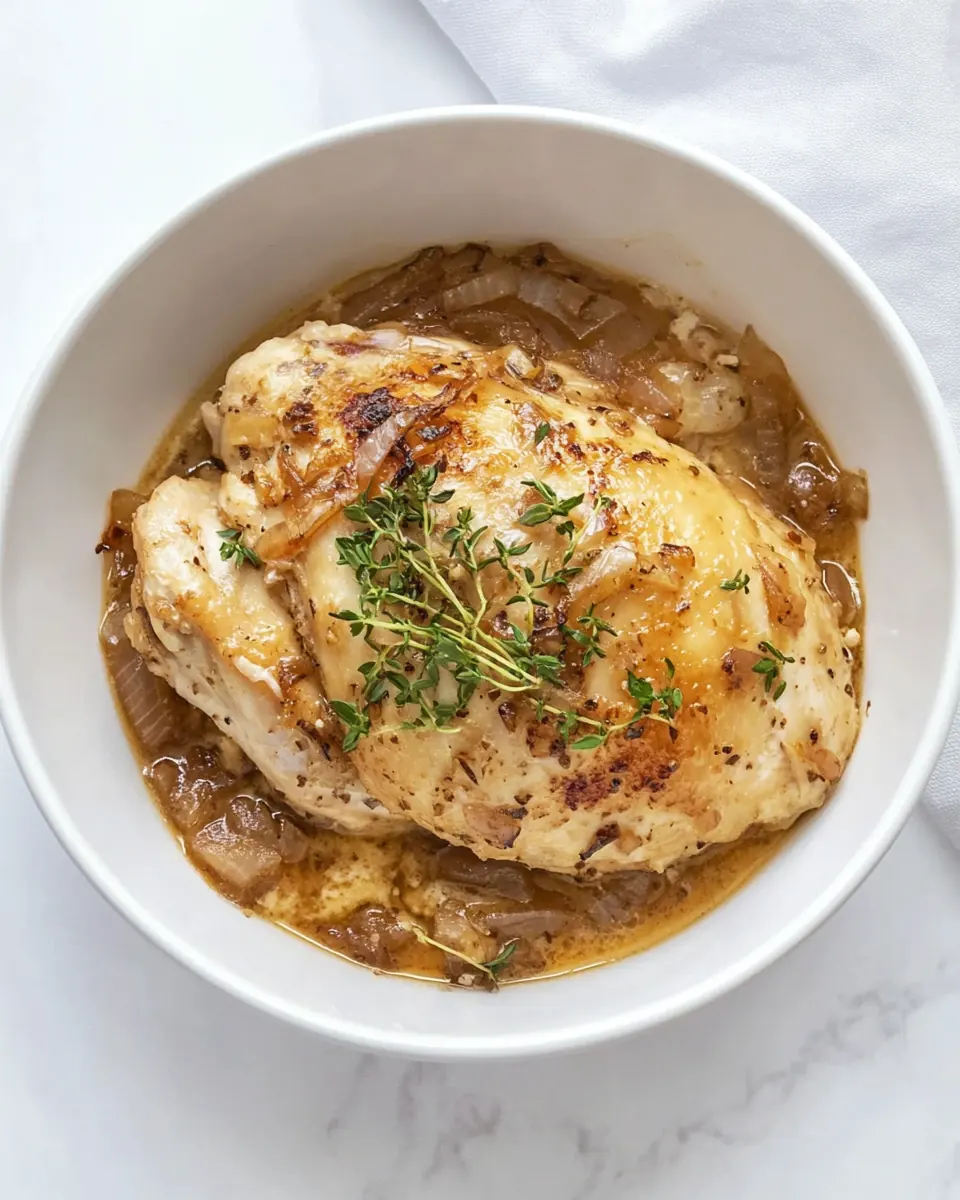
The ingredients for French Onion Chicken focus on layering savory and sweet notes so they sing together. You will see the onions and beef broth build a rich base, while simple pantry items like flour and olive oil create texture and a silky sauce. The Gruy8e cheese is the finishing touch that brings everything together with a creamy, browned top.
- 2 boneless, skinless chicken breasts about 1.75 pounds: Trimmed and boneless, provide a lean protein base that soaks up the rich onion gravy while staying moist when cooked properly. Pound or even thickness for even cooking and slice after resting to retain juices. Can be seasoned and dredged before searing to build a flavorful crust that complements the caramelized onions.
- Salt and pepper to taste: Balanced seasoning that enhances the natural flavors of the chicken and sauce while controlling overall taste. Sprinkle evenly before and after cooking as needed to bring out savory notes. Use to taste to avoid over-salting the finished dish, especially with broth and cheese present.
- 1/2 cup all-purpose flour: Lightly coats the chicken to create a thin, crisp crust that helps brown and protect the meat during searing. Dredge the breasts in flour and shake off excess to prevent clumping and ensure even browning. Works with the oil and butter to produce a fond for deglazing and building the pan sauce.
- 2 tablespoons olive oil divided: Divided to provide both high-heat browning and gentle flavor development; olive oil tolerates searing temperatures while contributing fruitier notes. Use most oil for searing the floured chicken and reserve a small amount for softening the onions later if desired. Adds healthy monounsaturated fats and aids in achieving a golden exterior.
- 1 tablespoon unsalted butter: Adds a rich, savory base fat that promotes deeper browning of onions and chicken and imparts a slightly nutty, creamy mouthfeel. Melt with oil to start caramelizing onions and to pick up browned bits from the pan for the sauce. Use wisely to balance richness without overwhelming the dish.
- 2 medium yellow onions thinly sliced: Thinly sliced to maximize surface area for caramelization, producing sweet, complex flavors that define the French onion profile. Cook slowly until deep golden brown to develop those sweet, savory notes that marry with the beefy sauce. Provide bulk and texture to the finished dish, layering flavor over the chicken.
- 3 cloves garlic minced: Mildly pungent and aromatic when minced, contributes bright, savory undertones that round out the caramelized onion flavor. Add toward the end of onion cooking to avoid burning and to release fresh garlicky fragrance. Enhances depth and complexity in the pan sauce without dominating.
- 1 1/2 cups low-sodium beef broth: Low-sodium beef broth supplies a rich, meaty base for the pan sauce that echoes classic French onion flavors without excessive salt. Deglaze the pan with the broth to dissolve browned bits and create a silky sauce to simmer the chicken in. Choose low-sodium to control seasoning when combined with Worcestershire and cheese.
- 2 1/4 teaspoons Worcestershire sauce: Umami-forward and tangy, Worcestershire sauce deepens the savory profile and introduces subtle sweetness and acidity that complements caramelized onions. Stir into the sauce to layer complex flavor and boost overall depth. Use measured amounts to avoid overpowering the delicate herb notes.
- 1/2 teaspoon dried rosemary: Aromatic and resinous in small amount, dried rosemary offers piney, savory notes that pair with beefy sauce elements and roasted chicken. Crumble before adding to distribute flavor evenly and avoid woody pieces. Use sparingly so it enhances without overshadowing thyme and cheese.
- 3/4 teaspoon chopped fresh thyme leaves plus more for garnish: Fresh and herbaceous when chopped, thyme imparts subtle floral and savory tones that harmonize with caramelized onions and beef broth. Add during simmering to infuse the sauce, and reserve a pinch for garnish to brighten the finished plate. Provides classic herb character typical of French onion preparations.
- 4 ounces Gruyère cheese shredded: Melty and nutty when shredded, Gruyère crowns the dish with a creamy, slightly salty finish that binds with the sauce and creates a luscious topping. Sprinkle over the chicken near the end of cooking and broil briefly if desired to achieve a browned, gooey layer. Complements the caramelized onions and beefy sauce with rich, savory complexity.
How to Make French Onion Chicken
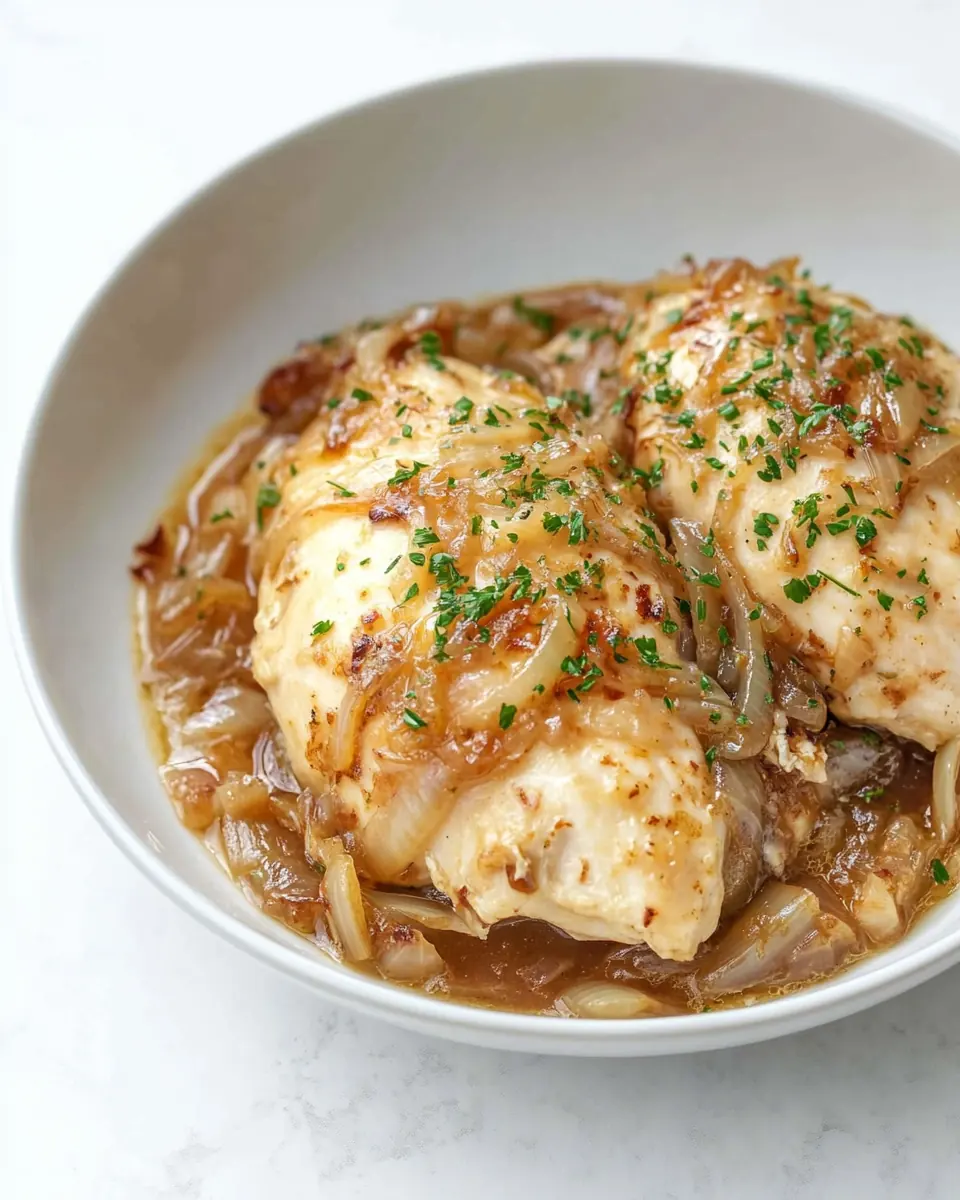
When I cook French Onion Chicken I aim for steady, confident steps rather than rushing. This method builds flavor through a balance of searing, slow caramelization, and careful simmering so every component contributes to a cohesive dish.
- Pound the chicken breasts evenly to about 1/2-inch thickness. Season both sides with salt and pepper. Lightly dredge the chicken in flour, shaking off any excess.: The aroma of freshly seasoned chicken feels promising before cooking, and you should notice the flour creating a faintly dusty coating that will crisp as it hits the hot pan. This step evens the thickness so the meat cooks uniformly, avoiding dry edges and underdone centers, and the flour helps the sauce cling later. A common mistake is pounding too hard, which can tear the chicken ; aim for gentle, even pressure. If you see clumps of flour, brush them off to prevent gummy patches while searing.
- Heat 1 tablespoon of olive oil in a large skillet over medium-high heat. Place the chicken cutlets in the skillet and sear for about 3-4 minutes on each side until they are golden. Remove the chicken and set aside.: Listen for a lively sizzle as the chicken meets the pan, and watch the edges take on a deep golden color, which signals a flavorful crust. This Maillard browning adds complexity to the final plate, and searing seals juices inside. If the pan is too crowded, the meat will steam instead of sear, so leave space between pieces. If the oil starts smoking, reduce the heat slightly to avoid burning and bitter flavors.
- Lower the heat to medium and add the butter along with the remaining 1 tablespoon of olive oil. Add the sliced onions and cook, stirring frequently, until they become soft and caramelized (about 15 minutes).: As the onions soften, the kitchen will fill with sweet, savory perfume and they will turn a deep golden brown with translucent edges. This patient cooking releases sugars and creates the signature flavor of the dish, and using both butter and olive oil provides a balanced richness that prevents the butter from burning. Stir often to avoid sticking, and resist the urge to crank up the heat which can make the onions char instead of caramelize. If they start to scorch, lower the heat and add a splash of broth to loosen the fond.
- Stir in the minced garlic and cook for 1 minute more. Pour in the beef broth, add Worcestershire sauce, rosemary, and thyme, and bring the mixture to a simmer while scraping up any browned bits from the pan.: When you stir in the garlic , a sharp, fragrant note will bloom, so keep it moving to prevent bitterness. Adding the beef broth deglazes the pan, dissolving those caramelized bits into the sauce and creating a deep, savory base. You should see steam rise and hear a gentle simmer; that is the signal to let flavors meld. The herbs and Worcestershire enrich the sauce, and scraping the pan captures concentrated flavor. A typical error is boiling vigorously which reduces too quickly and concentrates saltiness, so maintain a gentle simmer instead.
- Return the chicken to the skillet and spoon some of the sauce over each piece. Cook until the chicken is cooked through. Top each chicken cutlet with shredded Gruyère cheese, cover, and cook until the cheese melts (about 3-5 minutes). For a bubbly cheese finish, you may broil the skillet for an additional 2 minutes. Garnish with additional fresh thyme.: As the chicken returns to the pan, you will notice the sauce cling to its surface, making each bite more flavorful. The gentle simmer finishes the cooking, and you should test the doneness so the interior remains juicy. When you add the shredded Gruy 8e cheese , it will begin to soften and create a creamy layer; covering the skillet helps steam the cheese into a smooth blanket. A mistake to avoid is leaving the skillet uncovered in a dry oven, which can let the meat dry. If the cheese does not melt evenly, a quick move under the broiler for a minute or two will bubble it, but watch carefully to prevent burning.
- For a bubbly cheese finish, you may broil the skillet for an additional 2 minutes. Garnish with additional fresh thyme.: Broiling creates a golden, slightly blistered top that adds an irresistible texture and aroma; the cheese will brown and bubble, producing a toasty, savory fragrance. Use a broiler safe skillet and position it near the broiler element, watching it the entire time because the transformation happens rapidly. Garnishing with fresh thyme brightens each serving with a fragrant herbal lift. Avoid leaving the skillet unattended under the broiler since cheese can go from perfectly browned to burned in moments.
Ways to Adapt This Recipe
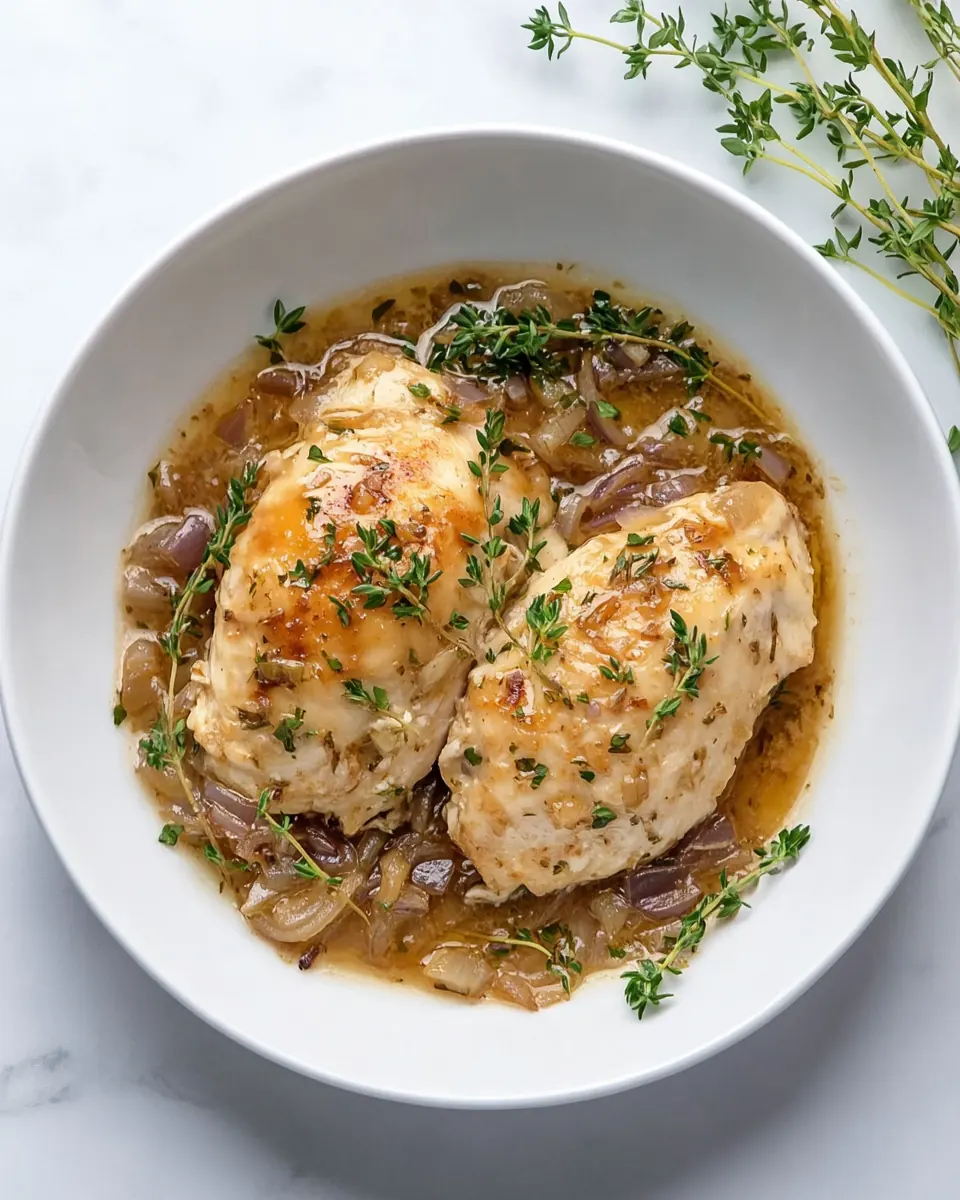
There are a few simple adaptations that keep the heart of French Onion Chicken intact while tailoring it to what you have on hand or the occasion. Below are practical variations and small swaps that preserve the core flavor profile.
- Make it dairy lighter: Use a smaller amount of shredded Gruy8e cheese or swap for a milder melting cheese if you prefer a less rich finish, while keeping the caramelized onions and sauce the same.
- Boost the herbs: Increase the fresh thyme garnish and add a few extra pinches during simmering to make the dish more herb forward without changing the technique.
- Thicken the sauce: If you prefer a thicker gravy, mix a small slurry of flour and cold water and whisk it into the simmering beef broth slowly, watching for your desired consistency.
- Swap the pan finish: Instead of broiling at the end, you can cover the skillet with a lid for a few minutes to encourage the Gruy8e cheese to melt gently using steam.
- Make ahead: Cook through the caramelization and sauce stage, then cool and refrigerate. Reheat, return the chicken to the sauce, and finish with cheese when ready to serve.
How to Serve French Onion Chicken
French Onion Chicken pairs beautifully with a variety of simple sides and works for many occasions. Whether it is a cozy weeknight meal or part of a small celebration, the presentation is easy and inviting. Serve warm so the melted Gruy8e cheese stays gooey and aromatic.
- Classic plated dinner: Arrange each chicken piece on a warmed plate, spooning extra sauce and caramelized onions over the top for maximum flavor.
- With starches: Serve alongside mashed potatoes, creamy polenta, or buttered noodles to soak up the rich sauce and create a hearty meal.
- Vegetable sides: Offer roasted root vegetables or a simple green salad to balance the richness with bright, crisp textures.
- Occasions: Great for family dinners, weekend entertaining, or a special autumn meal when you want comfort food with style.
- Storage tips: Refrigerate leftovers in an airtight container up to four days, reheating gently in a skillet or oven to preserve texture and melt the cheese anew.
FAQ
Conclusion
French Onion Chicken stands out because it combines deeply caramelized onions, a savory broth, and melted Gruy8e into a comforting, restaurant worthy dish that is still simple to make. I encourage you to try it when you want a cozy, impressive meal without complicated steps. It rewards a little patience at the stovetop and delivers warm, layered flavors that make weeknight dinners feel special.
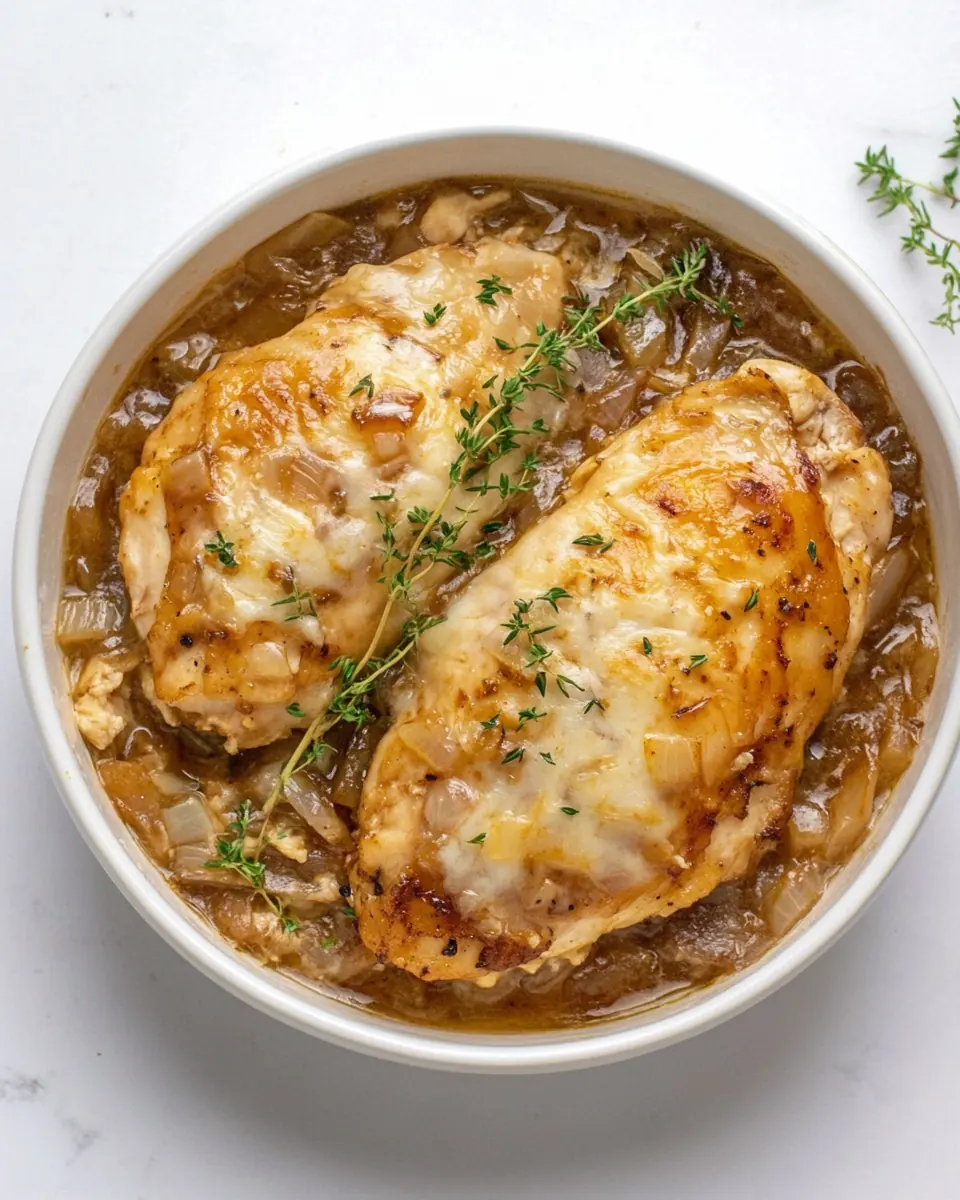
French Onion Chicken
Ingredients
Equipment
Method
- Pound the chicken breasts evenly to about 1/2-inch thickness. Season both sides with salt and pepper. Lightly dredge the chicken in flour, shaking off any excess.: The aroma of freshly seasoned chicken feels promising before cooking, and you should notice the flour creating a faintly dusty coating that will crisp as it hits the hot pan. This step evens the thickness so the meat cooks uniformly, avoiding dry edges and underdone centers, and the flour helps the sauce cling later. A common mistake is pounding too hard, which can tear the chicken ; aim for gentle, even pressure. If you see clumps of flour, brush them off to prevent gummy patches while searing.
- Heat 1 tablespoon of olive oil in a large skillet over medium-high heat. Place the chicken cutlets in the skillet and sear for about 3-4 minutes on each side until they are golden. Remove the chicken and set aside.: Listen for a lively sizzle as the chicken meets the pan, and watch the edges take on a deep golden color, which signals a flavorful crust. This Maillard browning adds complexity to the final plate, and searing seals juices inside. If the pan is too crowded, the meat will steam instead of sear, so leave space between pieces. If the oil starts smoking, reduce the heat slightly to avoid burning and bitter flavors.
- Lower the heat to medium and add the butter along with the remaining 1 tablespoon of olive oil. Add the sliced onions and cook, stirring frequently, until they become soft and caramelized (about 15 minutes).: As the onions soften, the kitchen will fill with sweet, savory perfume and they will turn a deep golden brown with translucent edges. This patient cooking releases sugars and creates the signature flavor of the dish, and using both butter and olive oil provides a balanced richness that prevents the butter from burning. Stir often to avoid sticking, and resist the urge to crank up the heat which can make the onions char instead of caramelize. If they start to scorch, lower the heat and add a splash of broth to loosen the fond.
- Stir in the minced garlic and cook for 1 minute more. Pour in the beef broth, add Worcestershire sauce, rosemary, and thyme, and bring the mixture to a simmer while scraping up any browned bits from the pan.: When you stir in the garlic , a sharp, fragrant note will bloom, so keep it moving to prevent bitterness. Adding the beef broth deglazes the pan, dissolving those caramelized bits into the sauce and creating a deep, savory base. You should see steam rise and hear a gentle simmer; that is the signal to let flavors meld. The herbs and Worcestershire enrich the sauce, and scraping the pan captures concentrated flavor. A typical error is boiling vigorously which reduces too quickly and concentrates saltiness, so maintain a gentle simmer instead.
- Return the chicken to the skillet and spoon some of the sauce over each piece. Cook until the chicken is cooked through. Top each chicken cutlet with shredded Gruyère cheese, cover, and cook until the cheese melts (about 3-5 minutes). For a bubbly cheese finish, you may broil the skillet for an additional 2 minutes. Garnish with additional fresh thyme.: As the chicken returns to the pan, you will notice the sauce cling to its surface, making each bite more flavorful. The gentle simmer finishes the cooking, and you should test the doneness so the interior remains juicy. When you add the shredded Gruy 8e cheese , it will begin to soften and create a creamy layer; covering the skillet helps steam the cheese into a smooth blanket. A mistake to avoid is leaving the skillet uncovered in a dry oven, which can let the meat dry. If the cheese does not melt evenly, a quick move under the broiler for a minute or two will bubble it, but watch carefully to prevent burning.
- For a bubbly cheese finish, you may broil the skillet for an additional 2 minutes. Garnish with additional fresh thyme.: Broiling creates a golden, slightly blistered top that adds an irresistible texture and aroma; the cheese will brown and bubble, producing a toasty, savory fragrance. Use a broiler safe skillet and position it near the broiler element, watching it the entire time because the transformation happens rapidly. Garnishing with fresh thyme brightens each serving with a fragrant herbal lift. Avoid leaving the skillet unattended under the broiler since cheese can go from perfectly browned to burned in moments.
Notes
- Make it dairy lighter: Use a smaller amount of shredded Gruy8e cheese or swap for a milder melting cheese if you prefer a less rich finish, while keeping the caramelized onions and sauce the same.
- Boost the herbs: Increase the fresh thyme garnish and add a few extra pinches during simmering to make the dish more herb forward without changing the technique.
- Thicken the sauce: If you prefer a thicker gravy, mix a small slurry of flour and cold water and whisk it into the simmering beef broth slowly, watching for your desired consistency.
- Swap the pan finish: Instead of broiling at the end, you can cover the skillet with a lid for a few minutes to encourage the Gruy8e cheese to melt gently using steam.
- Make ahead: Cook through the caramelization and sauce stage, then cool and refrigerate. Reheat, return the chicken to the sauce, and finish with cheese when ready to serve.