Go Back
French Onion Chicken

French Onion Chicken

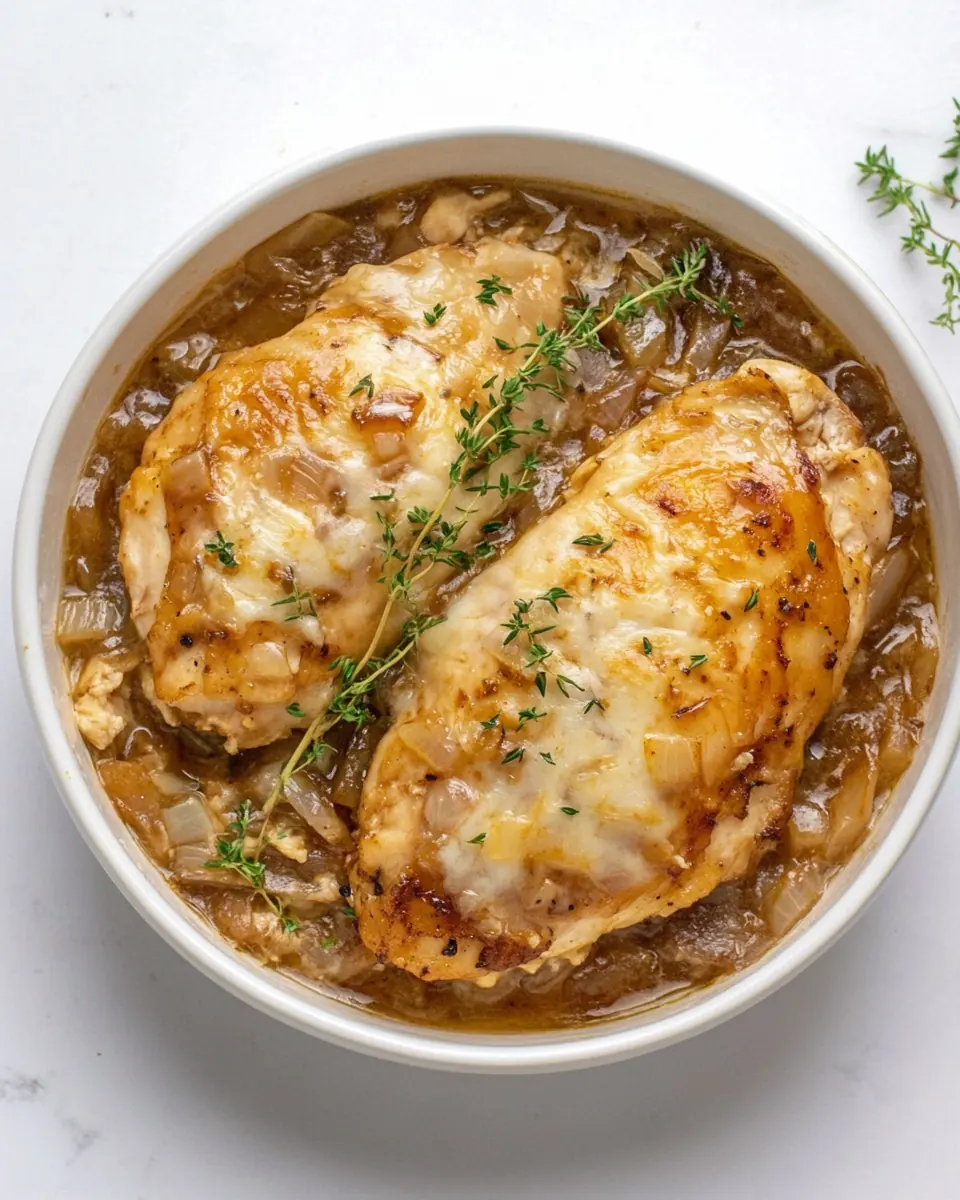
French Onion Chicken is a savory, comforting dish featuring caramelized onions, tender chicken, and melted Gruy8e for a creamy, golden finish. It offers rich umami from beef broth and Worcestershire, perfect for an easy weeknight dinner that tastes upscale. Make this when you want a cozy, crowd pleasing meal that feels indulgent without a lot of fuss.
Prep Time 10 minutes
Cook Time 35 minutes
Total Time 45 minutes
Servings: 4 servings
Course: Dinner
Cuisine: French
Calories: 450

Ingredients
  

  • 2 boneless, skinless chicken breasts about 1.75 pounds Trimmed and boneless, provide a lean protein base that soaks up the rich onion gravy while staying moist when cooked properly. Pound or even thickness for even cooking and slice after resting to retain juices. Can be seasoned and dredged before searing to build a flavorful crust that complements the caramelized onions.
  • Salt and pepper to taste Balanced seasoning that enhances the natural flavors of the chicken and sauce while controlling overall taste. Sprinkle evenly before and after cooking as needed to bring out savory notes. Use to taste to avoid over-salting the finished dish, especially with broth and cheese present.
  • 1/2 cup all-purpose flour Lightly coats the chicken to create a thin, crisp crust that helps brown and protect the meat during searing. Dredge the breasts in flour and shake off excess to prevent clumping and ensure even browning. Works with the oil and butter to produce a fond for deglazing and building the pan sauce.
  • 2 tablespoons olive oil divided Divided to provide both high-heat browning and gentle flavor development; olive oil tolerates searing temperatures while contributing fruitier notes. Use most oil for searing the floured chicken and reserve a small amount for softening the onions later if desired. Adds healthy monounsaturated fats and aids in achieving a golden exterior.
  • 1 tablespoon unsalted butter Adds a rich, savory base fat that promotes deeper browning of onions and chicken and imparts a slightly nutty, creamy mouthfeel. Melt with oil to start caramelizing onions and to pick up browned bits from the pan for the sauce. Use wisely to balance richness without overwhelming the dish.
  • 2 medium yellow onions thinly sliced Thinly sliced to maximize surface area for caramelization, producing sweet, complex flavors that define the French onion profile. Cook slowly until deep golden brown to develop those sweet, savory notes that marry with the beefy sauce. Provide bulk and texture to the finished dish, layering flavor over the chicken.
  • 3 cloves garlic minced Mildly pungent and aromatic when minced, contributes bright, savory undertones that round out the caramelized onion flavor. Add toward the end of onion cooking to avoid burning and to release fresh garlicky fragrance. Enhances depth and complexity in the pan sauce without dominating.
  • 1 1/2 cups low-sodium beef broth Low-sodium beef broth supplies a rich, meaty base for the pan sauce that echoes classic French onion flavors without excessive salt. Deglaze the pan with the broth to dissolve browned bits and create a silky sauce to simmer the chicken in. Choose low-sodium to control seasoning when combined with Worcestershire and cheese.
  • 2 1/4 teaspoons Worcestershire sauce Umami-forward and tangy, Worcestershire sauce deepens the savory profile and introduces subtle sweetness and acidity that complements caramelized onions. Stir into the sauce to layer complex flavor and boost overall depth. Use measured amounts to avoid overpowering the delicate herb notes.
  • 1/2 teaspoon dried rosemary Aromatic and resinous in small amount, dried rosemary offers piney, savory notes that pair with beefy sauce elements and roasted chicken. Crumble before adding to distribute flavor evenly and avoid woody pieces. Use sparingly so it enhances without overshadowing thyme and cheese.
  • 3/4 teaspoon chopped fresh thyme leaves plus more for garnish Fresh and herbaceous when chopped, thyme imparts subtle floral and savory tones that harmonize with caramelized onions and beef broth. Add during simmering to infuse the sauce, and reserve a pinch for garnish to brighten the finished plate. Provides classic herb character typical of French onion preparations.
  • 4 ounces Gruyère cheese shredded Melty and nutty when shredded, Gruyère crowns the dish with a creamy, slightly salty finish that binds with the sauce and creates a luscious topping. Sprinkle over the chicken near the end of cooking and broil briefly if desired to achieve a browned, gooey layer. Complements the caramelized onions and beefy sauce with rich, savory complexity.

Equipment

  • Large Skillet
  • Tongs
  • Knife
  • Cutting Board
  • Spatula

Method
 

  1. Pound the chicken breasts evenly to about 1/2-inch thickness. Season both sides with salt and pepper. Lightly dredge the chicken in flour, shaking off any excess.: The aroma of freshly seasoned chicken feels promising before cooking, and you should notice the flour creating a faintly dusty coating that will crisp as it hits the hot pan. This step evens the thickness so the meat cooks uniformly, avoiding dry edges and underdone centers, and the flour helps the sauce cling later. A common mistake is pounding too hard, which can tear the chicken ; aim for gentle, even pressure. If you see clumps of flour, brush them off to prevent gummy patches while searing.
  2. Heat 1 tablespoon of olive oil in a large skillet over medium-high heat. Place the chicken cutlets in the skillet and sear for about 3-4 minutes on each side until they are golden. Remove the chicken and set aside.: Listen for a lively sizzle as the chicken meets the pan, and watch the edges take on a deep golden color, which signals a flavorful crust. This Maillard browning adds complexity to the final plate, and searing seals juices inside. If the pan is too crowded, the meat will steam instead of sear, so leave space between pieces. If the oil starts smoking, reduce the heat slightly to avoid burning and bitter flavors.
  3. Lower the heat to medium and add the butter along with the remaining 1 tablespoon of olive oil. Add the sliced onions and cook, stirring frequently, until they become soft and caramelized (about 15 minutes).: As the onions soften, the kitchen will fill with sweet, savory perfume and they will turn a deep golden brown with translucent edges. This patient cooking releases sugars and creates the signature flavor of the dish, and using both butter and olive oil provides a balanced richness that prevents the butter from burning. Stir often to avoid sticking, and resist the urge to crank up the heat which can make the onions char instead of caramelize. If they start to scorch, lower the heat and add a splash of broth to loosen the fond.
  4. Stir in the minced garlic and cook for 1 minute more. Pour in the beef broth, add Worcestershire sauce, rosemary, and thyme, and bring the mixture to a simmer while scraping up any browned bits from the pan.: When you stir in the garlic , a sharp, fragrant note will bloom, so keep it moving to prevent bitterness. Adding the beef broth deglazes the pan, dissolving those caramelized bits into the sauce and creating a deep, savory base. You should see steam rise and hear a gentle simmer; that is the signal to let flavors meld. The herbs and Worcestershire enrich the sauce, and scraping the pan captures concentrated flavor. A typical error is boiling vigorously which reduces too quickly and concentrates saltiness, so maintain a gentle simmer instead.
  5. Return the chicken to the skillet and spoon some of the sauce over each piece. Cook until the chicken is cooked through. Top each chicken cutlet with shredded Gruyère cheese, cover, and cook until the cheese melts (about 3-5 minutes). For a bubbly cheese finish, you may broil the skillet for an additional 2 minutes. Garnish with additional fresh thyme.: As the chicken returns to the pan, you will notice the sauce cling to its surface, making each bite more flavorful. The gentle simmer finishes the cooking, and you should test the doneness so the interior remains juicy. When you add the shredded Gruy 8e cheese , it will begin to soften and create a creamy layer; covering the skillet helps steam the cheese into a smooth blanket. A mistake to avoid is leaving the skillet uncovered in a dry oven, which can let the meat dry. If the cheese does not melt evenly, a quick move under the broiler for a minute or two will bubble it, but watch carefully to prevent burning.
  6. For a bubbly cheese finish, you may broil the skillet for an additional 2 minutes. Garnish with additional fresh thyme.: Broiling creates a golden, slightly blistered top that adds an irresistible texture and aroma; the cheese will brown and bubble, producing a toasty, savory fragrance. Use a broiler safe skillet and position it near the broiler element, watching it the entire time because the transformation happens rapidly. Garnishing with fresh thyme brightens each serving with a fragrant herbal lift. Avoid leaving the skillet unattended under the broiler since cheese can go from perfectly browned to burned in moments.
Notes

  • Make it dairy lighter: Use a smaller amount of shredded Gruy8e cheese or swap for a milder melting cheese if you prefer a less rich finish, while keeping the caramelized onions and sauce the same.
  • Boost the herbs: Increase the fresh thyme garnish and add a few extra pinches during simmering to make the dish more herb forward without changing the technique.
  • Thicken the sauce: If you prefer a thicker gravy, mix a small slurry of flour and cold water and whisk it into the simmering beef broth slowly, watching for your desired consistency.
  • Swap the pan finish: Instead of broiling at the end, you can cover the skillet with a lid for a few minutes to encourage the Gruy8e cheese to melt gently using steam.
  • Make ahead: Cook through the caramelization and sauce stage, then cool and refrigerate. Reheat, return the chicken to the sauce, and finish with cheese when ready to serve.