Chicken Pot Pie with Biscuit Topping
Chicken Pot Pie with Biscuit Topping is a childhood comfort that still surprises me every time I spoon into it, warm steam curling up and biscuit edges flaking into buttery clouds. Growing up, my family kept a tried and true version of this pie on the table for cold evenings, and over the years I nudged and adjusted it until the biscuit topping was as beloved as the creamy filling. I still remember the first time I swapped a traditional crust for tender drop biscuits, and the whole room fell quiet while forks scraped plates clean.
When I make Chicken Pot Pie with Biscuit Topping now, it is less about strict technique and more about rhythm. I love the moment the onion and celery soften in butter, the kitchen filling with a savory perfume that promises warmth. Sometimes I hum an old tune while stirring the gravy, other times I get lost in how the steam puffs the biscuits just right. The dish has a way of gathering people, whether it is a weeknight family supper or a small winter celebration.
Recipe Snapshot
55 mins
25 mins
30 mins
Medium
400 kcal
American
Gluten-Free, Low FODMAP
Dinner
Large skillet or Dutch oven, 3 quart casserole dish, Mixing bowl, Measuring cups and spoons
What You’ll Enjoy About This Chicken Pot Pie with Biscuit Topping
Comforting Texture Contrast
I adore how the creamy filling and the slightly crisp, tender biscuits play off each other. The filling clings to the chicken and vegetables, while the biscuit topping adds a light, buttery counterpoint. When you break into the top, that sigh of steam and the soft crumb beneath make every spoonful satisfying.
Flavor Built on Simple Staples
There is something direct and honest about using pantry mainstays like butter, all purpose flour, and chicken broth. Each ingredient has a clear job, and together they create a rounded, savory sauce that tastes like home. I like recipes that don’t hide behind complicated steps, and this one rewards you for careful, straightforward cooking.
Flexible and Family Friendly
I often tweak quantities for what I have on hand, and it still turns out great. The recipe scales well, and kids usually eat the filling first, then the biscuit, which is a sure sign of success in my kitchen. It feels like a dish you can hand down, with room for personal touches without breaking the fundamental balance.
Seasonal and Soulful
On chilly evenings, Chicken Pot Pie with Biscuit Topping hits the spot like nothing else. The warming spices, the velvety sauce, and the heat from the oven make it inherently cozy. I reach for it in winter because it feels nourishing and festive without being fussy.
Doable Techniques That Reward Attention
While the method is approachable, paying attention to small things like browning the vegetables properly and ensuring the gravy thickens before baking makes a big difference. These steps are small investments that pay off in flavor and texture, and I love sharing those little wins with home cooks.
Recipe Ingredients for Chicken Pot Pie with Biscuit Topping
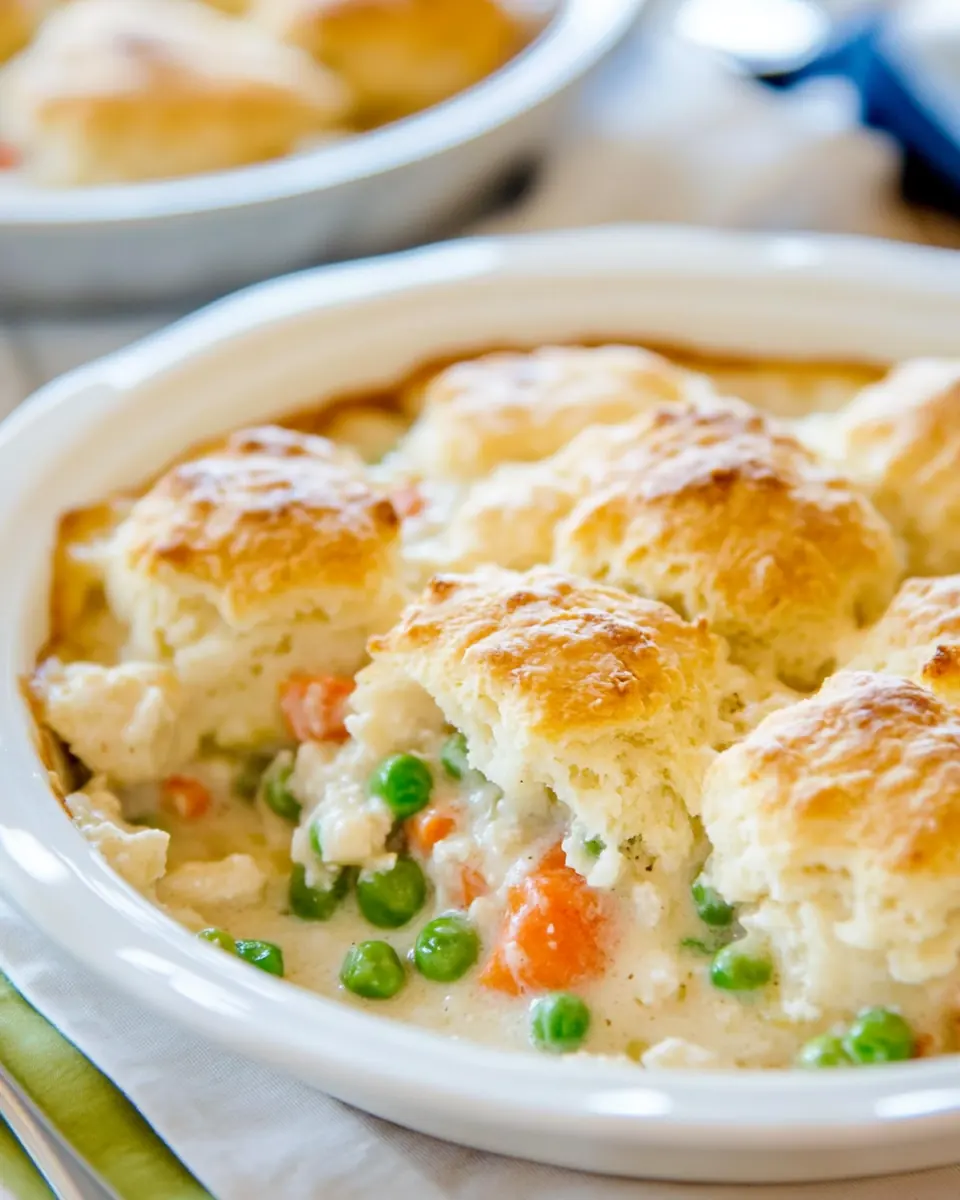
These ingredients form a classic framework where each player supports the others. The filling relies on a simple roux with butter and all purpose flour to produce a silky sauce that carries the savory notes of chicken, chicken broth, and herbs. The biscuit topping is intentionally tender, using cold butter, leaveners, and buttermilk to create lift and a golden finish. Together, the filling and topping balance creamy, salty, and buttery elements into a single comforting bite.
- 1/2 cup butter, (1 stick): Melted and rich, provides a silky base for the roux and adds depth to both the filling and biscuit topping; ensures a glossy mouthfeel and carries fat-soluble flavors throughout the pot pie.
- 1 medium sweet onion, chopped: Sautéed until translucent, lends natural sweetness and aromatic complexity to the filling; softens to release moisture and layers of savory flavor that balance the creaminess.
- 1 stalk celery, chopped: Cooked briefly to retain slight texture, contributes subtle vegetal flavor and aromatic freshness; helps build a classic pot pie vegetable profile and adds bite to each spoonful.
- 2 cloves garlic, minced: Minced finely and cooked until fragrant, imparts a pungent, savory note that enhances overall aroma; blends into the filling to boost savory depth without overwhelming other flavors.
- 1/2 cup all-purpose flour: Toasted into the fat to make a roux, thickens the filling by absorbing liquid and creating a velvety sauce; provides body and stabilizes the mixture so it doesn’t become watery.
- 3 1/2 cups chicken broth: Simmered into the roux to create the filling’s base, supplies savory liquid and depth; dissolves the flour to form a smooth, flavorful gravy that melds the ingredients.
- 3/4 cup heavy cream: Stirred in near the end for richness and creaminess, adds luxurious mouthfeel and smooth texture; balances the broth’s savory edge with a hint of dairy sweetness.
- 2 cups heaping frozen peas and carrots, defrosted: Defrosted and incorporated for color and sweetness, offers tender vegetable bites and a pleasant pop in texture; contributes familiar pot pie flavor and visual appeal.
- 4 cups shredded, cooked chicken from a rotisserie chicken: Shredded and folded into the filling as the primary protein, supplies hearty substance and savory character; absorbs the sauce flavors and makes the dish satisfying and substantial.
- 1/4 teaspoon dried thyme: Sprinkled in dried and cooked with the filling, provides herbal warmth and subtle earthiness; complements chicken and vegetables without overpowering delicate flavors.
- salt and pepper: Seasoned to taste during and after cooking, enhances and balances all elements of the dish; adjusts saltiness and rounds out flavors for a finished, well-seasoned pot pie.
- 2 1/4 cups White Lily flour, or 2 cups all-purpose flour: Used as the primary flour option for the biscuit dough, forms the structural base and determines texture; yields tender, soft biscuits while offering gluten necessary for rise.
- 2 teaspoons baking powder: Measured into the biscuit mixture to leaven and lift the dough, creates light, fluffy biscuits by releasing gas when baked; ensures a pleasing airy crumb on the topping.
- 1 teaspoon baking soda: Added to the biscuit dough to support rise and neutralize acidity, promotes even leavening and contributes to tender texture; works with baking powder for reliable lift.
- 3/4 teaspoons salt: Mixed into the biscuit ingredients for seasoning and control of saltiness, enhances flavor and balances the leavening agents; helps define the biscuit’s savory profile.
- 6 tablespoons very cold butter, cut into 1/2-inch cubes: Cut in cold and worked briefly into the flour to create flaky layers, supplies steam-driven lift and rich pockets of butter throughout the biscuits; crucial for a tender, layered crumb.
- 3/4 to 1 cup buttermilk: Poured gradually to bring the biscuit dough together, hydrates the flour and activates leavening agents; adjustable amount ensures proper dough consistency for a tender topping.
- 2 tablespoons melted butter: Brushed over the baked biscuits to impart shine and additional buttery flavor, adds a golden finish and helps toppings adhere; enhances visual appeal and surface richness.
- 2 tablespoons freshly grated Parmesan cheese: Sprinkled on top of the biscuit finish for a savory, nutty accent, contributes umami and a delicate salty note; elevates appearance and final flavor with a subtle cheesy crunch.
Making Chicken Pot Pie with Biscuit Topping
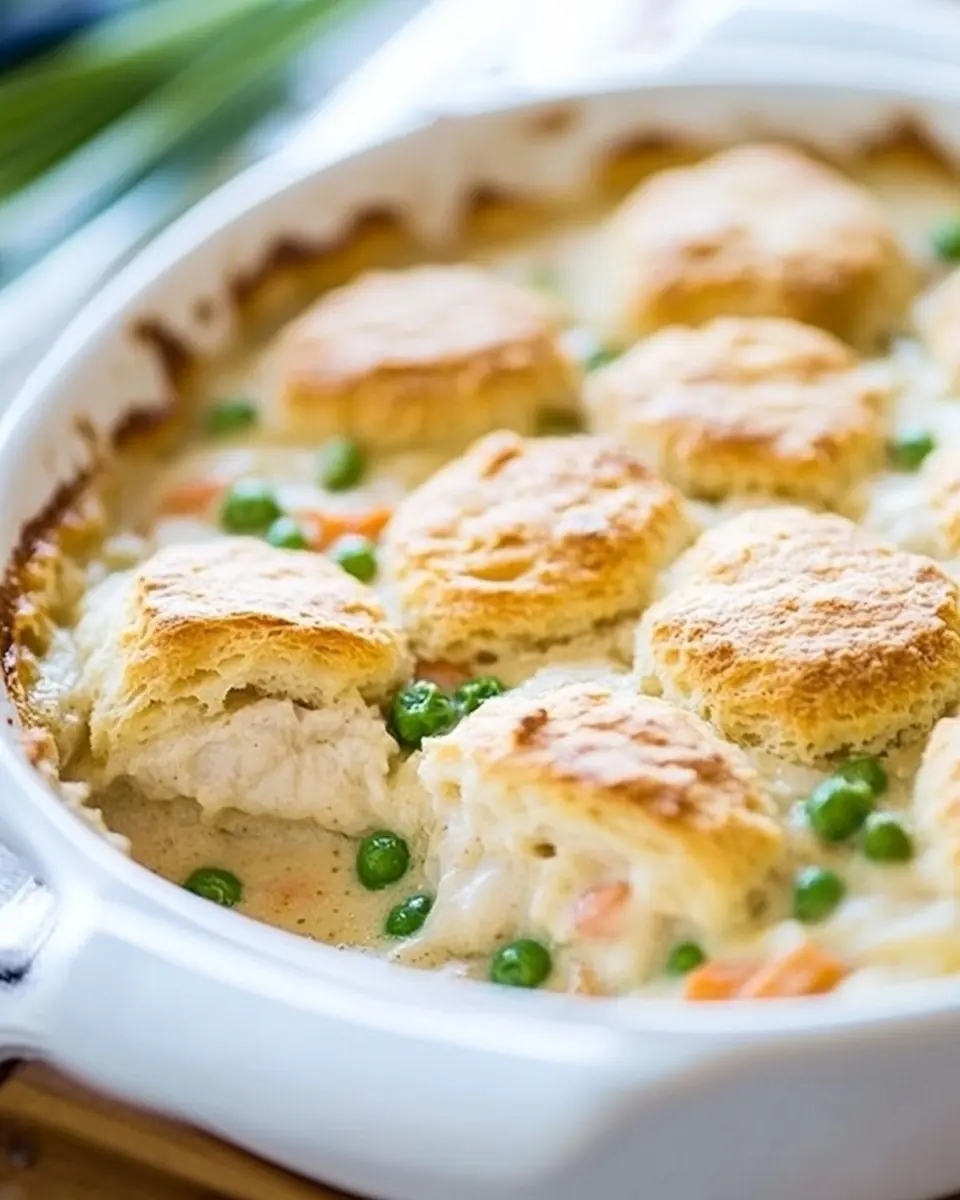
We are about to walk through the recipe in a way that keeps things approachable while leaving room for sensory cues. I like to think of this as a rhythm you fall into, from sweating aromatics to the satisfying moment the biscuits come out golden. Read each step fully so you can follow the sights, smells, and little checks that mean success.
- Preheat oven to 375 degrees and grease a 3-quart casserole dish.: The kitchen should feel warm from the oven as it reaches 375 degrees , and the even heat helps the filling bubble gently while the biscuits brown on top. You want a well greased dish so the finished casserole releases cleanly, creating a neat presentation and easier serving. If the oven is not fully preheated you might end up with uneven baking, where the biscuits brown before the filling bubbles. A common misstep is rushing this step, so wait until the oven signals it is at temperature.
- Melt the butter in a large skillet with high sides or a Dutch oven. Add onion and celery and cook until soft, about 6 to 8 minutes. Add garlic and cook 1 more minute. Season with salt and pepper.: As the butter melts, it will smell rich and nutty, and the diced onion and celery will begin to soften and release sweet scents. You will hear a gentle sizzle and see the vegetables turn translucent, which signals readiness. Stir frequently to prevent browning, because you want tenderness rather than caramelization here. If the heat is too high the garlic can burn in seconds, tasting bitter, so lower the heat as you add it. Seasoning early layers the dish with balanced flavor, but wait to finalize salt levels until the sauce reduces.
- Sprinkle the 1/2 cup flour over onion and celery and stir for 1-2 minutes.: The all purpose flour will absorb the melted butter and vegetable juices, forming a roux that looks dusty at first then smooths out into a paste. Stirring for 1 to 2 minutes cooks the raw flour flavor away and gives a faint, toasty aroma that deepens the sauce. You should see the roux cling to the vegetables, not pool as separate flour. If you skip this quick cook, the finished sauce may taste floury, so resist the urge to add liquid immediately.
- Gradually whisk in chicken broth and then heavy cream. Bring to a boil and add peas and carrots, chicken and thyme.: When you whisk in the chicken broth slowly, the mixture will loosen into a smooth sauce, and you will hear a soft simmer as it heats. Adding the heavy cream rounds the flavor and makes the texture silky; the sauce should move like velvet when you stir. As it approaches a boil you will smell the savory broth deepen, and when you add the peas , carrots , shredded chicken , and thyme the steam will carry a garden like aroma. Adding the ingredients when the base is hot helps them warm through without turning mushy.
- Simmer until thickened. Season to taste with salt and pepper. Pour into prepared casserole dish.: As the sauce simmers it will become glossy and coat the back of a spoon; that cling is the cue that it is ready. You should see gentle bubbling at the edges, and the filling will smell rounded and savory. Taste and adjust salt and pepper carefully because reduction concentrates flavors. A common mistake is undercooking the roux, which leaves the sauce thin after baking, so simmer until confident thickness is reached before transferring to the dish.
- To make biscuit topping, stir together flour, baking powder, baking soda, and salt. Cut the butter into the flour mixture using your hands until there are no pieces bigger than a small pea. Stir in buttermilk just until combined. You may not need all of it. You just need enough for all of the flour to be incorporated.: The dry mix will smell faintly yeasty and bready, and cutting the cold butter in by hand leaves visible flakes in the dough, which become tender pockets when baked. Use a light touch with the buttermilk to avoid an overly sticky dough, adding only until the mixture holds together. If you overwork the dough it can develop toughness, so stop once the pieces cling. A common error is using warm butter , which dissolves and prevents proper flakiness.
- Drop biscuit dough evenly over top of casserole. Drizzle with melted butter and sprinkle with Parmesan.: As you drop spoonfuls of dough across the filling, notice how they sit in soft mounds; they will spread slightly as they bake. Drizzling the melted butter gives a glossy sheen and helps create that irresistible browned edge, while the grated Parmesan adds a savory spark on the surface. Work quickly so the cold bits in the dough remain, which yields lift. Avoid smoothing the dough flat, because that flattens the biscuits and reduces the contrast between topping and filling.
- Bake for 30 to 35 minutes.: During baking the kitchen will fill with an enticing aroma, the filling bubbling at the edges and the biscuits turning a golden brown. You should hear a light crackle as the top browns, and a knife inserted into the center of a biscuit should come out clean. If the top browns too quickly, tent with foil to avoid burning while the filling continues to heat through. Pull the casserole when the filling is bubbling and the biscuits are a warm, golden color.
Making Adjustments
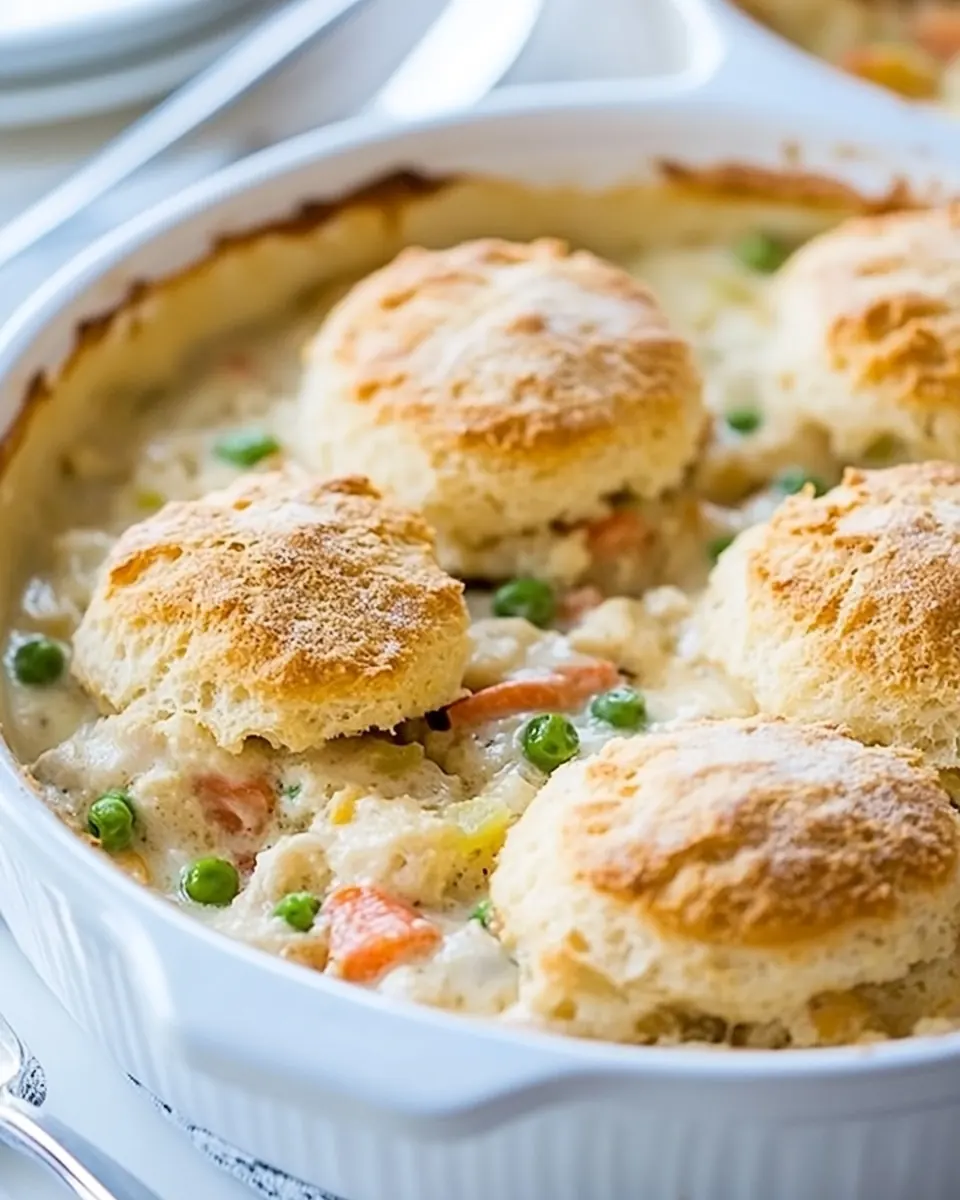
This section offers practical adjustments and ideas to tailor the recipe to your pantry and preferences. Each tip begins with a clear phrase so you can scan for the change you want, then reads like a short, helpful note from someone who has learned the tricks by doing.
- Swap flours carefully Use White Lily if you have it for a softer biscuit, but standard all purpose flour works well and yields reliable structure.
- Control biscuit rise If you want taller biscuits, keep your butter extra cold and bake immediately so the steam creates lift rather than melting into the dough.
- Reduce sodium safely Use a low sodium chicken broth and adjust salt at the end to prevent the filling from becoming too salty after reduction.
- Make ahead components Prepare the filling a day ahead and refrigerate, then add the biscuit topping and bake when ready for fresher texture.
- Manage excess moisture If the frozen peas and carrots seem watery, drain and gently pat dry to keep the filling from thinning.
Serving This Chicken Pot Pie with Biscuit Topping
This dish is sturdy and welcoming, fitting a range of occasions from casual family dinners to cozy winter gatherings. Below are serving ideas that consider sides, timing, and practical storage, each presented as a clear option to pair with the pie.
- Family dinner centerpiece Serve the casserole straight from the oven with a simple green salad to add freshness and crunch alongside the rich pie.
- Weeknight comfort For easy weeknight meals, plate generous scoops with crusty bread for soaking up any extra gravy.
- Holiday or special meal This recipe scales well for a small holiday table, offering comforting familiarity without overt formality.
- Leftover storage Cool completely before covering and refrigerating in an airtight container for up to three days, then reheat portions in the oven to revive the biscuit texture.
- Seasonal pairing In winter, pair with roasted root vegetables or a warm grain salad to extend the hearty theme and balance the creamy filling.
FAQ
Conclusion
Chicken Pot Pie with Biscuit Topping shines because it unites creamy, savory filling with tender, buttery biscuits for a reliably comforting meal. It is a dish that welcomes improvisation while rewarding attention to small techniques, like properly thickening the sauce and keeping the biscuit butter cold. Try it when you want a warming, homey dinner that feels a little special without requiring complicated steps. Share it with family or friends and enjoy how quickly it becomes a favorite at your table.
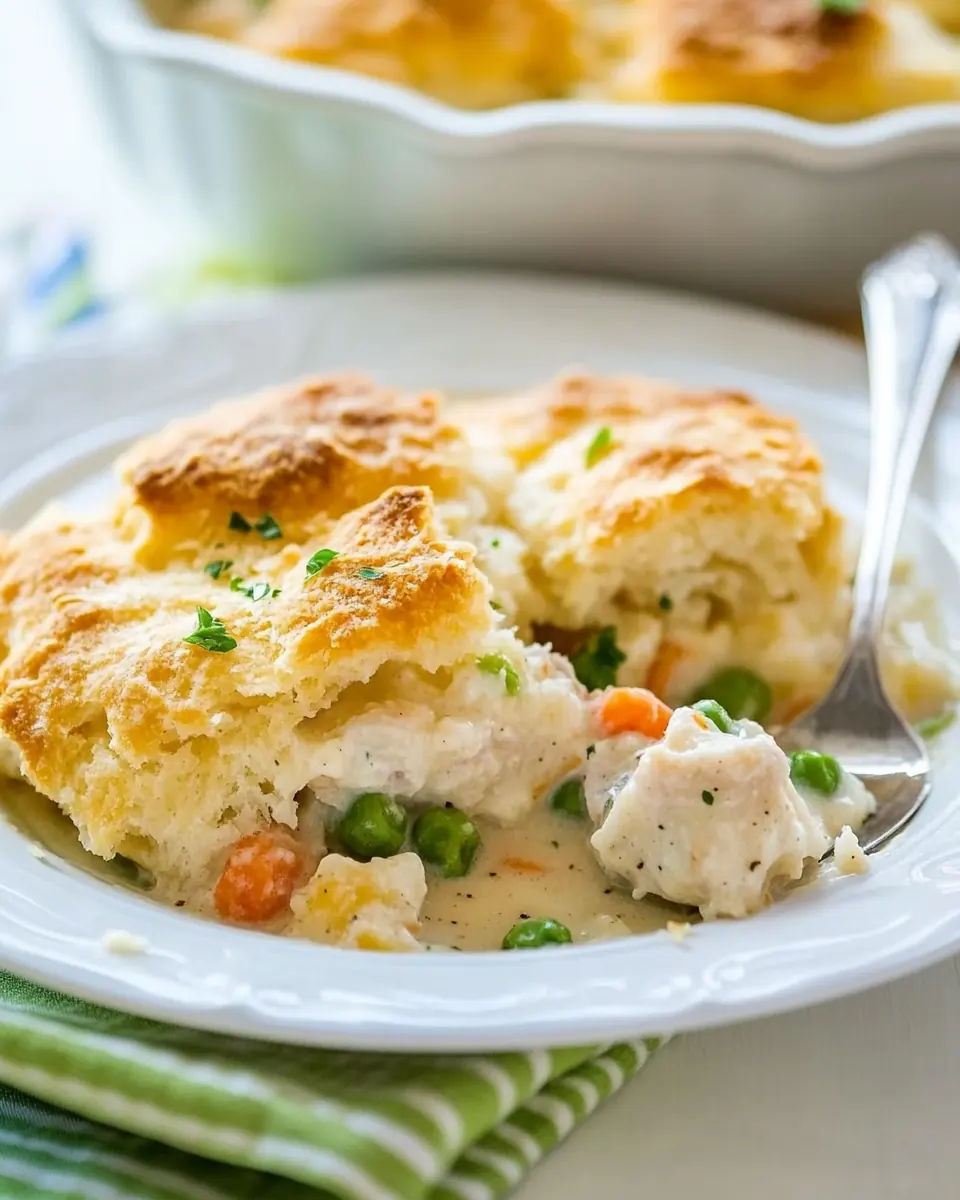
Chicken Pot Pie with Biscuit Topping
Ingredients
Equipment
Method
- Preheat oven to 375 degrees and grease a 3-quart casserole dish.: The kitchen should feel warm from the oven as it reaches 375 degrees , and the even heat helps the filling bubble gently while the biscuits brown on top. You want a well greased dish so the finished casserole releases cleanly, creating a neat presentation and easier serving. If the oven is not fully preheated you might end up with uneven baking, where the biscuits brown before the filling bubbles. A common misstep is rushing this step, so wait until the oven signals it is at temperature.
- Melt the butter in a large skillet with high sides or a Dutch oven. Add onion and celery and cook until soft, about 6 to 8 minutes. Add garlic and cook 1 more minute. Season with salt and pepper.: As the butter melts, it will smell rich and nutty, and the diced onion and celery will begin to soften and release sweet scents. You will hear a gentle sizzle and see the vegetables turn translucent, which signals readiness. Stir frequently to prevent browning, because you want tenderness rather than caramelization here. If the heat is too high the garlic can burn in seconds, tasting bitter, so lower the heat as you add it. Seasoning early layers the dish with balanced flavor, but wait to finalize salt levels until the sauce reduces.
- Sprinkle the 1/2 cup flour over onion and celery and stir for 1-2 minutes.: The all purpose flour will absorb the melted butter and vegetable juices, forming a roux that looks dusty at first then smooths out into a paste. Stirring for 1 to 2 minutes cooks the raw flour flavor away and gives a faint, toasty aroma that deepens the sauce. You should see the roux cling to the vegetables, not pool as separate flour. If you skip this quick cook, the finished sauce may taste floury, so resist the urge to add liquid immediately.
- Gradually whisk in chicken broth and then heavy cream. Bring to a boil and add peas and carrots, chicken and thyme.: When you whisk in the chicken broth slowly, the mixture will loosen into a smooth sauce, and you will hear a soft simmer as it heats. Adding the heavy cream rounds the flavor and makes the texture silky; the sauce should move like velvet when you stir. As it approaches a boil you will smell the savory broth deepen, and when you add the peas , carrots , shredded chicken , and thyme the steam will carry a garden like aroma. Adding the ingredients when the base is hot helps them warm through without turning mushy.
- Simmer until thickened. Season to taste with salt and pepper. Pour into prepared casserole dish.: As the sauce simmers it will become glossy and coat the back of a spoon; that cling is the cue that it is ready. You should see gentle bubbling at the edges, and the filling will smell rounded and savory. Taste and adjust salt and pepper carefully because reduction concentrates flavors. A common mistake is undercooking the roux, which leaves the sauce thin after baking, so simmer until confident thickness is reached before transferring to the dish.
- To make biscuit topping, stir together flour, baking powder, baking soda, and salt. Cut the butter into the flour mixture using your hands until there are no pieces bigger than a small pea. Stir in buttermilk just until combined. You may not need all of it. You just need enough for all of the flour to be incorporated.: The dry mix will smell faintly yeasty and bready, and cutting the cold butter in by hand leaves visible flakes in the dough, which become tender pockets when baked. Use a light touch with the buttermilk to avoid an overly sticky dough, adding only until the mixture holds together. If you overwork the dough it can develop toughness, so stop once the pieces cling. A common error is using warm butter , which dissolves and prevents proper flakiness.
- Drop biscuit dough evenly over top of casserole. Drizzle with melted butter and sprinkle with Parmesan.: As you drop spoonfuls of dough across the filling, notice how they sit in soft mounds; they will spread slightly as they bake. Drizzling the melted butter gives a glossy sheen and helps create that irresistible browned edge, while the grated Parmesan adds a savory spark on the surface. Work quickly so the cold bits in the dough remain, which yields lift. Avoid smoothing the dough flat, because that flattens the biscuits and reduces the contrast between topping and filling.
- Bake for 30 to 35 minutes.: During baking the kitchen will fill with an enticing aroma, the filling bubbling at the edges and the biscuits turning a golden brown. You should hear a light crackle as the top browns, and a knife inserted into the center of a biscuit should come out clean. If the top browns too quickly, tent with foil to avoid burning while the filling continues to heat through. Pull the casserole when the filling is bubbling and the biscuits are a warm, golden color.
Notes
- Swap flours carefully Use White Lily if you have it for a softer biscuit, but standard all purpose flour works well and yields reliable structure.
- Control biscuit rise If you want taller biscuits, keep your butter extra cold and bake immediately so the steam creates lift rather than melting into the dough.
- Reduce sodium safely Use a low sodium chicken broth and adjust salt at the end to prevent the filling from becoming too salty after reduction.
- Make ahead components Prepare the filling a day ahead and refrigerate, then add the biscuit topping and bake when ready for fresher texture.
- Manage excess moisture If the frozen peas and carrots seem watery, drain and gently pat dry to keep the filling from thinning.