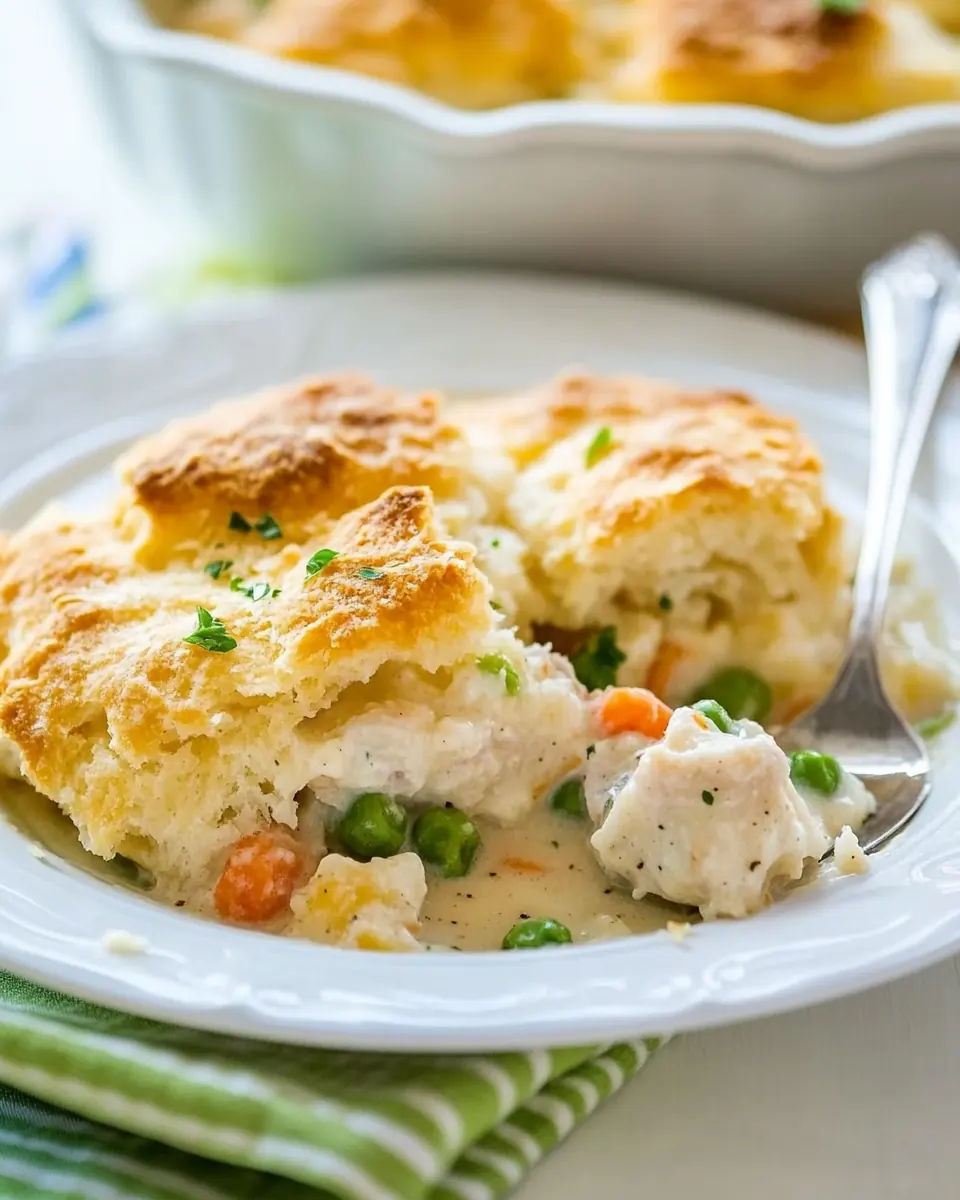
Preheat oven to 375 degrees and grease a 3-quart casserole dish.: The kitchen should feel warm from the oven as it reaches 375 degrees , and the even heat helps the filling bubble gently while the biscuits brown on top. You want a well greased dish so the finished casserole releases cleanly, creating a neat presentation and easier serving. If the oven is not fully preheated you might end up with uneven baking, where the biscuits brown before the filling bubbles. A common misstep is rushing this step, so wait until the oven signals it is at temperature.
Melt the butter in a large skillet with high sides or a Dutch oven. Add onion and celery and cook until soft, about 6 to 8 minutes. Add garlic and cook 1 more minute. Season with salt and pepper.: As the butter melts, it will smell rich and nutty, and the diced onion and celery will begin to soften and release sweet scents. You will hear a gentle sizzle and see the vegetables turn translucent, which signals readiness. Stir frequently to prevent browning, because you want tenderness rather than caramelization here. If the heat is too high the garlic can burn in seconds, tasting bitter, so lower the heat as you add it. Seasoning early layers the dish with balanced flavor, but wait to finalize salt levels until the sauce reduces.
Sprinkle the 1/2 cup flour over onion and celery and stir for 1-2 minutes.: The all purpose flour will absorb the melted butter and vegetable juices, forming a roux that looks dusty at first then smooths out into a paste. Stirring for 1 to 2 minutes cooks the raw flour flavor away and gives a faint, toasty aroma that deepens the sauce. You should see the roux cling to the vegetables, not pool as separate flour. If you skip this quick cook, the finished sauce may taste floury, so resist the urge to add liquid immediately.
Gradually whisk in chicken broth and then heavy cream. Bring to a boil and add peas and carrots, chicken and thyme.: When you whisk in the chicken broth slowly, the mixture will loosen into a smooth sauce, and you will hear a soft simmer as it heats. Adding the heavy cream rounds the flavor and makes the texture silky; the sauce should move like velvet when you stir. As it approaches a boil you will smell the savory broth deepen, and when you add the peas , carrots , shredded chicken , and thyme the steam will carry a garden like aroma. Adding the ingredients when the base is hot helps them warm through without turning mushy.
Simmer until thickened. Season to taste with salt and pepper. Pour into prepared casserole dish.: As the sauce simmers it will become glossy and coat the back of a spoon; that cling is the cue that it is ready. You should see gentle bubbling at the edges, and the filling will smell rounded and savory. Taste and adjust salt and pepper carefully because reduction concentrates flavors. A common mistake is undercooking the roux, which leaves the sauce thin after baking, so simmer until confident thickness is reached before transferring to the dish.
To make biscuit topping, stir together flour, baking powder, baking soda, and salt. Cut the butter into the flour mixture using your hands until there are no pieces bigger than a small pea. Stir in buttermilk just until combined. You may not need all of it. You just need enough for all of the flour to be incorporated.: The dry mix will smell faintly yeasty and bready, and cutting the cold butter in by hand leaves visible flakes in the dough, which become tender pockets when baked. Use a light touch with the buttermilk to avoid an overly sticky dough, adding only until the mixture holds together. If you overwork the dough it can develop toughness, so stop once the pieces cling. A common error is using warm butter , which dissolves and prevents proper flakiness.
Drop biscuit dough evenly over top of casserole. Drizzle with melted butter and sprinkle with Parmesan.: As you drop spoonfuls of dough across the filling, notice how they sit in soft mounds; they will spread slightly as they bake. Drizzling the melted butter gives a glossy sheen and helps create that irresistible browned edge, while the grated Parmesan adds a savory spark on the surface. Work quickly so the cold bits in the dough remain, which yields lift. Avoid smoothing the dough flat, because that flattens the biscuits and reduces the contrast between topping and filling.
Bake for 30 to 35 minutes.: During baking the kitchen will fill with an enticing aroma, the filling bubbling at the edges and the biscuits turning a golden brown. You should hear a light crackle as the top browns, and a knife inserted into the center of a biscuit should come out clean. If the top browns too quickly, tent with foil to avoid burning while the filling continues to heat through. Pull the casserole when the filling is bubbling and the biscuits are a warm, golden color.