Southern Style Biscuits and Gravy
Southern Style Biscuits and Gravy has been the kind of kitchen hug I reach for on slow weekend mornings, the recipe I turn to when weather outside demands comfort and a chat over the table. Growing up, my earliest memory of this dish was the way the house smelled when my aunt slid a tray of steaming biscuits from the oven, then spooned creamy sausage gravy over the split rounds while we argued over who got the biggest one. Those noisy mornings felt like a warm blanket, and that scent stuck with me.
I still make Southern Style Biscuits and Gravy when I want company, or when I need to coax someone into conversation. There is something unpretentious about the recipe, something honest, and it always draws a crowd. Over time I have learned little habits that make a big difference, like chilling the butter until the last possible second, and stirring the gravy slowly so it thickens without clumping. These tiny rituals are as much a part of the recipe as the ingredients themselves, and they make the process feel special.
What I love most is how versatile the dish can be. I serve it for lazy brunches, quick dinners, and when friends need cheering up. The biscuits are pillowy and tender, while the gravy is rich and peppery, each bite a neat balance of texture and flavor. Every cook will bring a personal touch, and that is part of the fun for me. When the first biscuit is split and the gravy pools into the soft interior, I know we are in for a meal that comforts and satisfies in equal measure.
Recipe Snapshot
55 mins
15 mins
40 mins
Medium
350 kcal
American
Gluten-Free, Low FODMAP
Breakfast
Large bowl, Pastry blender, Rubber spatula, 2 1/2 inch round biscuit cutter, Baking sheet, Large skillet
The Best Thing About This Southern Style Biscuits and Gravy
Classic Comfort Food That Feels Like Home
I make Southern Style Biscuits and Gravy because it taps into nostalgia with every spoonful. The combination of warm, tender biscuits and creamy, peppery gravy brings back family breakfasts. For me, this is not fancy food, it is identity on a plate, and I lean on it when I want to reconnect with simpler times.
Textural Contrast That Keeps You Coming Back
The recipe nails texture. The flaky layers of the biscuits give way to soft interiors that soak up the glossy gravy without turning mushy. The breakfast sausage in the gravy adds small bursts of savory, meaty texture that prevent monotony. I always notice how guests instinctively cut thicker pieces to scoop up more gravy.
Techniques That Reward Careful Attention
A few mindful moves change everything. Chilling the unsalted butter and cutting it into the flour until you see pea sized bits creates steam pockets that make the biscuits rise. When making the gravy, dissolving the flour into the rendered fat before adding milk prevents lumps and builds a silky mouthfeel. I appreciate recipes that teach small skills while delivering a great meal.
Flexible and Crowd Friendly
Southern Style Biscuits and Gravy scales easily, which is why I bring it to potlucks. The biscuit dough doubles well and the gravy can be kept warm in a low oven or a double boiler. It is forgiving too, so if timing is off, you can reheat gently and still keep a good texture. I often cook a large batch and stash leftovers, because this dish reheats beautifully when treated kindly.
Budget Friendly Without Compromise
This recipe shines because the ingredients are simple and accessible, but the result feels indulgent. All purpose flour, butter, buttermilk, and milk are pantry staples, while breakfast sausage gives big flavor for the cost. I love serving something that tastes rich while being economical, especially when feeding a family or a group of friends.
Ingredients Overview for Southern Style Biscuits and Gravy
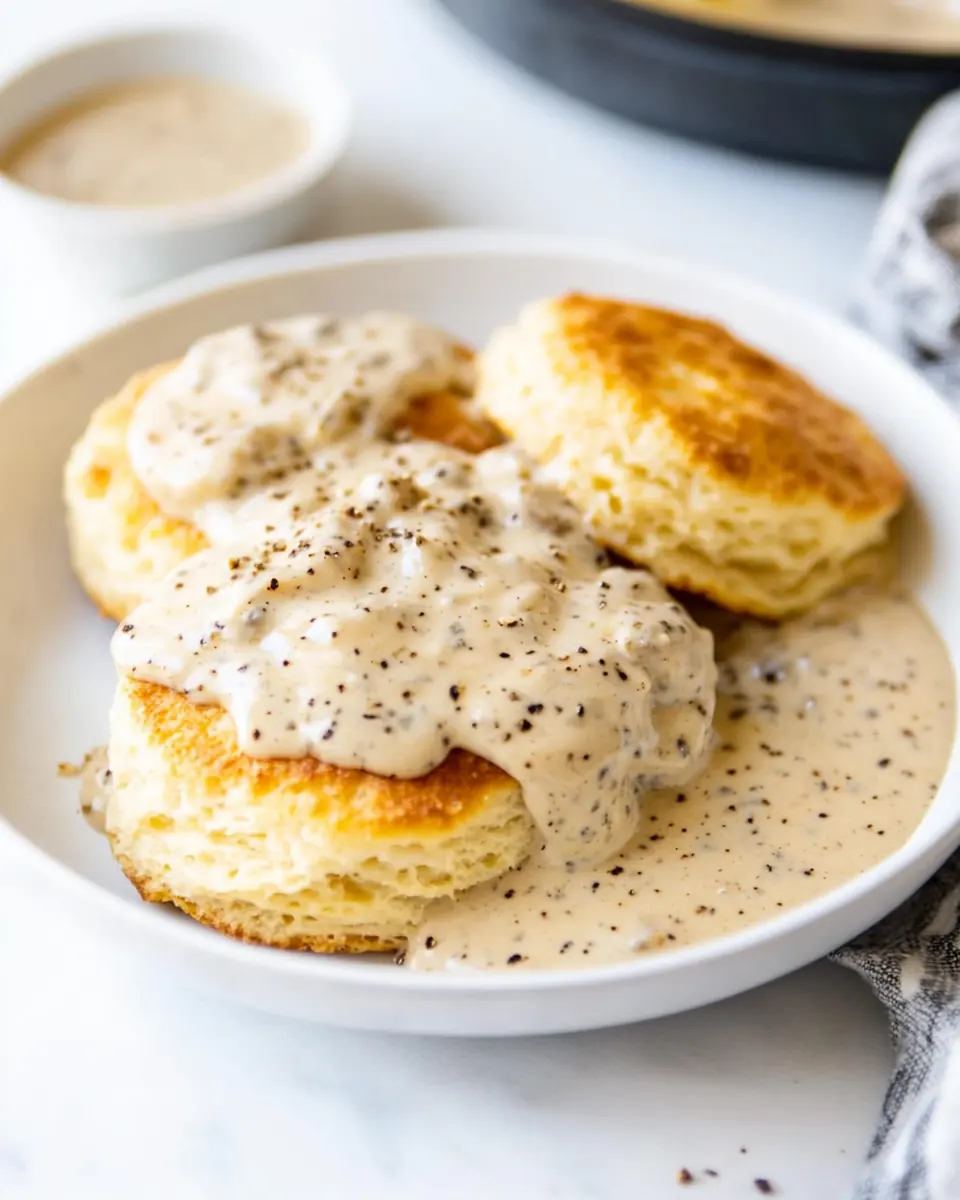
This ingredient list is built for a balance of tender, flaky biscuits and a creamy, savory gravy. The key players are the all purpose flour and chilled butter for structure and lift, buttermilk for tang and tenderness, and the breakfast sausage with milk to make a rich, seasoned gravy. These components work in harmony to create contrast in texture and a comforting flavor profile.
Below are the exact ingredients from the recipe, followed by a short description for each to explain its role and handling tips.
- 21/2 cup (300 g) all-purpose flour: Measure and combine to form the biscuit dough base, providing structure and tender crumb through gluten development when mixed with liquids and fat. Use spoon-and-level to ensure accurate volume; too much flour yields dry, dense biscuits while too little causes excess spread. Sift or whisk before measuring to remove lumps and ensure even incorporation with leavening agents.
- 2 tablespoons baking powder: Lightly aerate and activate the biscuit rise by releasing carbon dioxide when moistened and heated, creating lift for fluffy layers. Carefully distribute throughout the dry mix to avoid uneven rising pockets; fresh baking powder offers the best oven spring. Balance with acid and sugar in the recipe to control flavor and texture.
- 2 teaspoons granulated sugar: Contribute mild sweetness and help balance savory flavors, subtly promoting browning of biscuit surfaces during baking. Sprinkle into the dry mix to integrate evenly and prevent localized sweet spots. Keep amount modest to maintain traditional savory character of Southern biscuits and gravy.
- 1 teaspoon salt: Enhance overall flavor and control seasoning level, helping to highlight the butter and sausage notes while regulating the dough's saltiness. Dissolve into the dry ingredients to ensure even distribution and avoid pockets of concentrated salt. Adjust slightly if using salted butter or very savory sausage.
- 1/2 cup (113 g) unsalted butter, chilled, cut into 1/4-inch cubes: Cut into the dry ingredients to create flaky layers by coating flour with fat, which inhibits gluten formation and yields tender, laminated texture. Keep chilled and handle minimally to preserve pockets of solid butter that steam during baking, producing lift and flakiness. Use a pastry cutter or fingertips quickly to avoid warming the cubes.
- 1 cup (240 ml) buttermilk, cold: Provide liquid and acid to hydrate the dough, activate leavening agents, and contribute a tangy note that tenderizes the biscuit crumb. Keep cold to minimize butter melting before baking, which preserves flaky layers and prevents dense texture. Add gradually until dough just comes together to avoid overworking.
- 1/4 cup unsalted butter, melted, for brushing: Brush onto baked biscuits to add shine, enrich flavor, and keep crust soft by adding immediate buttery moisture. Apply while biscuits are hot to allow the butter to soak into the crust and enhance overall richness. Use high-quality unsalted butter for a clean, buttery finish.
- 1 pound (454 g) breakfast sausage: Brown and crumble into the skillet to form the savory base of the gravy, releasing fat and Maillard flavors that deepen the sauce. Cook thoroughly until well-browned to develop complex, savory notes, then break into small pieces to ensure even distribution in the gravy. Choose breakfast sausage with preferred seasoning level to control final taste.
- 1/3 cup (40 g) all-purpose flour: Whisk into the cooked sausage fat to absorb rendered fat and thicken the gravy into a smooth, velvety sauce. Cook the flour briefly to eliminate raw taste before gradually adding milk to prevent lumps. Measure accurately to achieve the desired gravy consistency without becoming gluey or too thin.
- 4 cups (960 ml) whole milk: Gradually add to the roux while whisking to create a creamy, cohesive gravy and provide body and a rich dairy backbone. Warm gently to prevent scalding and settle for a smooth finish; whole milk yields a richer texture than lower-fat alternatives. Adjust heat and stirring to reach a silky, pourable consistency suitable for biscuits.
- 2 teaspoons black pepper: Season the gravy with a pungent, warming spice that complements sausage and enhances overall flavor with a subtle peppery bite. Add incrementally and taste as you go to avoid overpowering the sauce. Freshly ground black pepper offers brighter, more aromatic heat than pre-ground options.
- 1/2 teaspoon (0.5 teaspoon) seasoned salt: Provide a mild savory-salty boost with blended herbs and spices to round out the gravy's seasoning profile and complement the sausage. Sprinkle sparingly and adjust to taste, especially if the sausage is already heavily seasoned. Use measured amounts to maintain balance without masking other flavors.
How to Assemble Southern Style Biscuits and Gravy
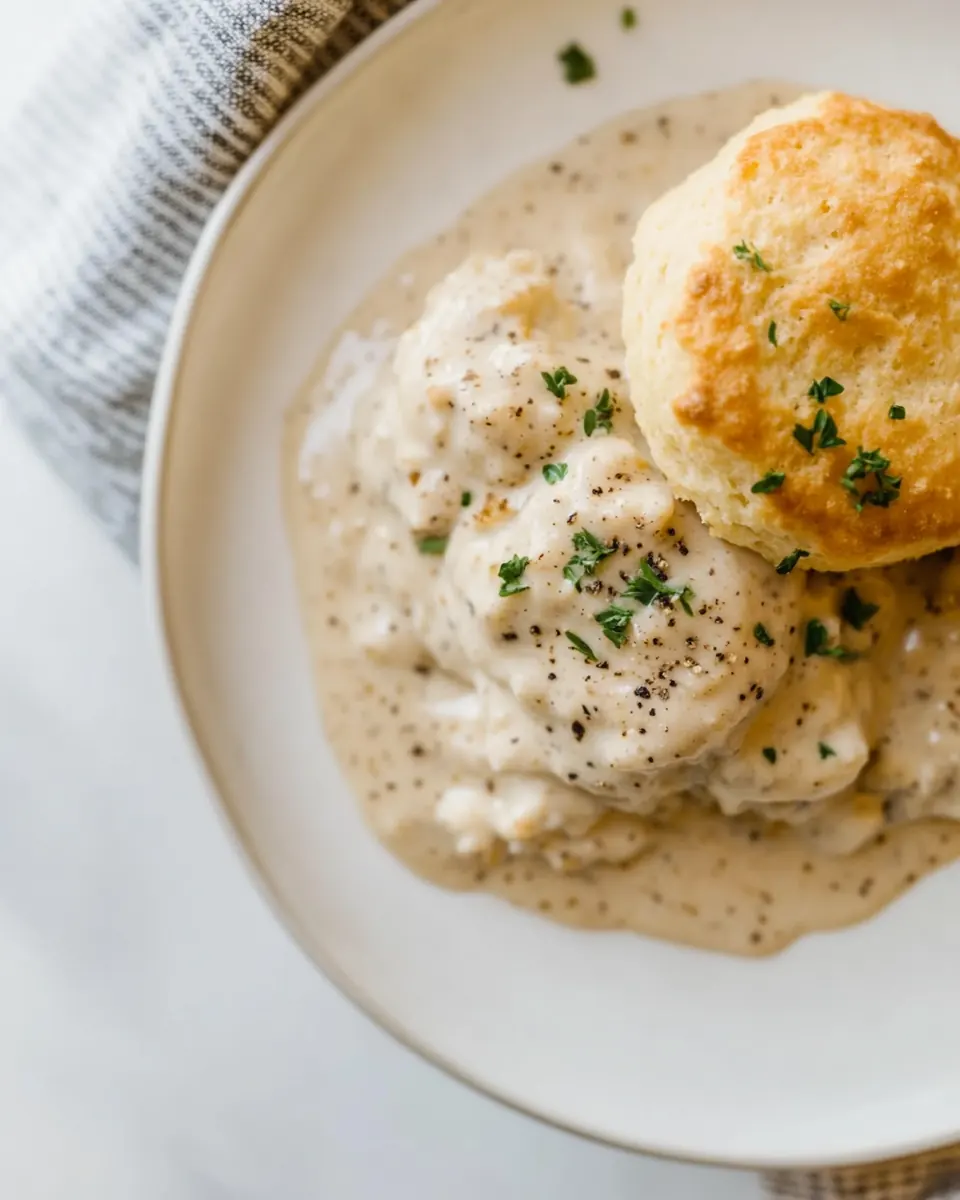
This recipe unfolds in two main parts, the biscuits and the sausage gravy. Work methodically so the dough stays cold and the gravy develops a smooth, creamy texture. Below are the cleaned steps from the recipe, expanded with sensory cues, reasons behind each action, and troubleshooting pointers to help you get it right.
- Make the Biscuits: Preheat oven to 425 degrees F. Line a baking sheet with parchment paper or a silicone baking mat.: You will notice the warm, dry blast from the oven as it reaches 425 degrees F, which is perfect for creating immediate steam in the biscuits for lift. Preheating ensures the butter pockets vaporize quickly, giving flaky layers and a golden exterior. Lining the baking sheet prevents sticking and promotes even browning. A common mistake is underpreheating the oven, which leads to flat, dense biscuits, so always wait until the temperature is steady. If you smell a slight toasted scent from the oven as it finishes preheating, you are good to go.
- In a large bowl, whisk together the flour, baking powder, sugar and salt.: The dry ingredients smell faintly of wholesome grain and a bit of baking powder tang. Whisking evenly distributes the baking powder so every biscuit receives consistent lift. This step prevents uneven pockets of leavening that cause irregular rise. A common pitfall is scooping flour directly with the measuring cup packed, which overloads the mix and yields heavy dough; spoon flour into the cup and level for accuracy.
- Using a pastry blender (or two knives or your fingertips), quickly cut the butter into the flour mixture until the mixture resembles coarse meal with a few slightly larger butter lumps.: As you work, you will feel the cold butter collapsing into small pieces surrounded by flour, and the aroma will be faintly buttery. Those pea sized bits are critical because they melt in the oven to form steam pockets, producing flaky layers. Work quickly so your hands do not warm the butter too much. Overworking here yields a tough texture, while undercutting leaves big lumps that can create greasy spots. If the dough looks sandy with visible butter dots, you are in the right place.
- Using a rubber spatula or fork, stir in the buttermilk until the mixture forms a soft, slightly sticky ball.: The cold buttermilk brings a tang and hydrates the flour into a cohesive dough. You will sense the mixture come together, slightly tacky but not wet, and the scent will shift to a mild dairy note. Stir just until combined to avoid developing gluten which causes chewiness. A common error is adding too much liquid, so stop when a soft ball forms. If the dough feels too crumbly, add a teaspoon of buttermilk at a time.
- Transfer the dough to a lightly floured surface and quickly form into a rough square. Be careful not to overmix. Pat the dough into a 1-inch-thick rectangle. Fold the dough letter-style into thirds, then lightly pat the dough back out into another 1-inch rectangle. Try to handle the dough as quickly and lightly as possible. Repeat the folding 2 more times; after the final fold, press or lightly roll the dough into a 1/2-inch-thick rectangle.: Working the dough gently creates layered structure. Each fold traps air and distributes butter pockets, and you will see distinct layers when you slice into the finished biscuit. The tactile cue to watch for is a springy dough that holds folds without sticking. If you overwork it, the dough warms and the butter melts, which prevents those layers from forming. A misstep here is rolling too thin from the start, so follow the thickness progression: one inch, fold, then 1/2 inch. The surface should feel cool to the touch throughout.
- Using a 21/2-inch round biscuit or cookie cutter, cut out the dough rounds and place on the prepared baking sheet. Pat and roll the remaining scraps to cut out more rounds. Brush with the melted butter and bake until the biscuit tops are light golden brown, 10 to 15 minutes.: As you press out rounds, you will see layers on the sides where the folds met, and the raw dough should have a slight sheen from the chilled butter . Placing the rounds close but not touching encourages height while allowing heat circulation. Brushing with the melted butter adds a glossy, slightly crisp top and a rich aroma as they bake. Watch for a light golden brown top and the sound of faint crackling edges; underbaking yields pale, doughy centers. If your biscuits brown too quickly, tent with foil and finish baking until cooked through.
- Make the Sausage Gravy: Cook the sausage in a large skillet over medium-high heat until no longer pink, crumbling it into bite-size pieces as it cooks.: As the breakfast sausage hits the hot pan you will hear urgent sizzling and smell that meaty, spiced aroma that defines the gravy. Browning builds deep flavor through caramelization, and the rendered fat is what you need to start the roux. Crumble the sausage into consistent bite size pieces so they distribute evenly in the gravy. A common mistake is crowding the skillet, which steams rather than browns the meat. Use a large skillet and let the meat develop deep brown bits for complexity.
- Reduce the heat to medium and sprinkle half of the flour over the sausage, stirring to dissolve it. Add the rest of the flour and again stir for about 1 minute, until all of the flour has been dissolved.: The moment you add the flour you will see it absorb the fat and thicken slightly into a paste, and that smell of toasty cooked flour signals the start of a smooth roux. Dissolving the flour prevents graininess when the liquid is added, and cooking it briefly eliminates a raw flour taste. Stir constantly to avoid sticking or burning. If you skip this step, the gravy can taste floury or develop lumps when liquid is introduced.
- Slowly pour in the milk, stirring constantly as it is added. Cook the gravy, stirring frequently, until it begins to thicken (10 to 15 minutes). Season the gravy with the black pepper and seasoned salt and continue to cook until it is very thick. Spoon the gravy over the buttermilk biscuits to serve. Leftover gravy can be stored in an airtight container in the refrigerator. If it is too thick when reheated, simply add a splash or two of milk to thin it out a bit.: Adding the whole milk slowly while stirring encourages a silky, lump free texture. As it warms you will notice the sauce transforming from opaque to glossy and beginning to coat the back of a spoon. The smell will be creamy and comforting. Patience is essential here because rapid boiling or adding cold milk too quickly can create separation or lumps. If it becomes too thick, add a splash of milk and whisk until smooth.
- Season the gravy with the black pepper and seasoned salt and continue to cook until it is very thick Spoon the gravy over the buttermilk biscuits to serve Leftover gravy can be stored in an airtight container in the refrigerator If it is too thick when reheated simply add a splash or two of milk to thin it out a bit.: The addition of black pepper and seasoned salt wakes up the gravy, releasing a warm, peppery aroma. Continue cooking to concentrate flavors and reach a spoonable, velvety thickness that clings to the biscuits . Taste and adjust, because sausage salt content varies. A typical issue is overseasoning early; add salt cautiously and finish by tasting with a bite of biscuit. When serving, spoon the hot gravy generously over split biscuits so the interiors soak up the sauce for ultimate comfort.
Change It Up
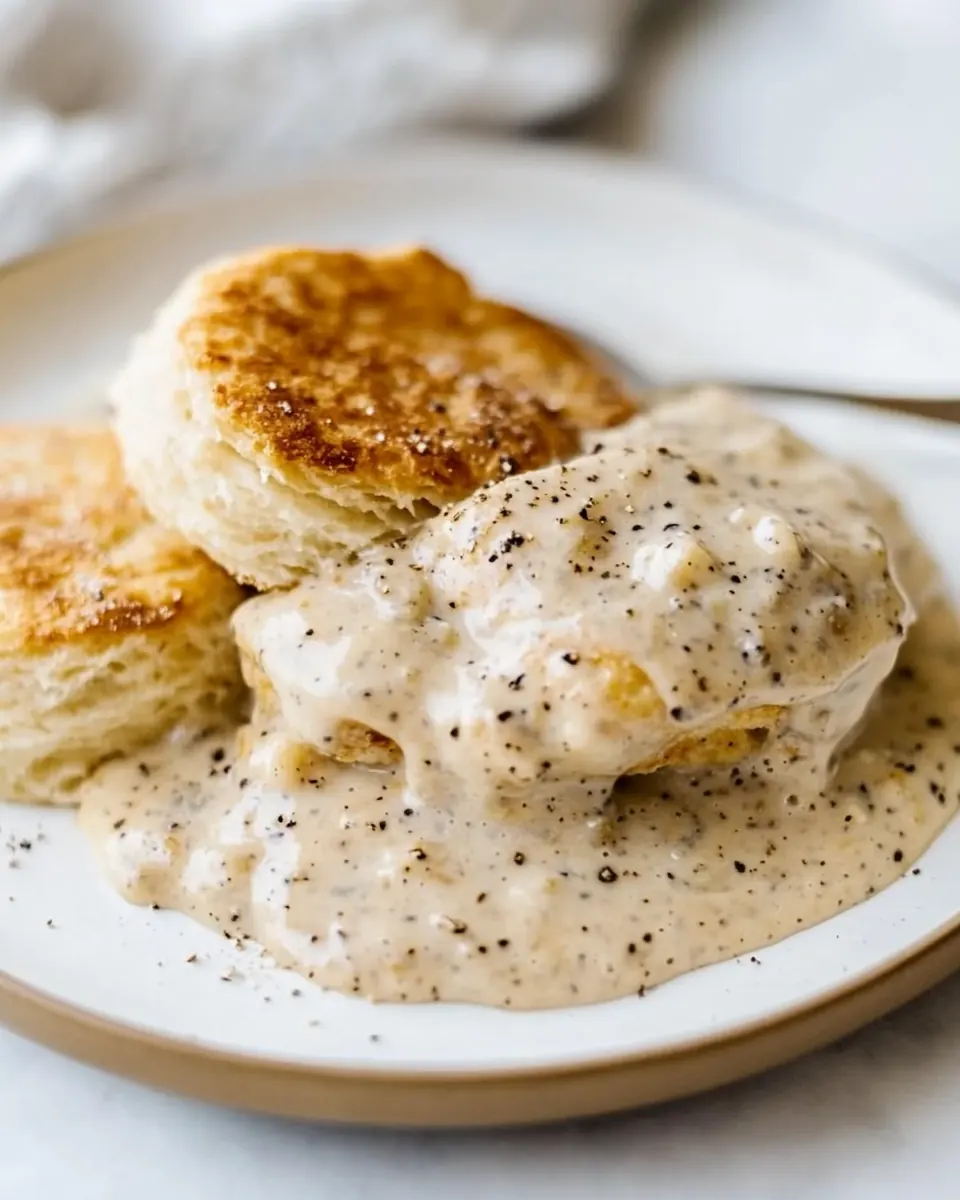
This recipe is forgiving and invites small tweaks to suit your kitchen and crowd. Below are practical tips and variations to help you adjust texture, timing, and flavor while keeping the heart of the dish intact.
- Chill the butter thoroughly before cutting it into the flour to ensure distinct layers in the biscuits, which yields flakier results after baking.
- Use cold buttermilk to keep the dough cool while you handle it, helping the butter remain solid until it hits the oven, which improves rise and texture.
- Don’t overwork the dough; fold gently and stop once layers form, because excessive handling develops gluten and makes the biscuits tough instead of tender.
- Brown the sausage well for deeper gravy flavor, allowing little crispy bits to form, which dissolve into the sauce and add savory complexity.
- Add milk slowly to the roux while stirring constantly to prevent lumps and achieve a silky, smooth gravy that clings to the biscuits.
- Store properly by cooling baked biscuits fully before sealing in an airtight container to preserve texture up to two days, or freeze for longer storage.
- Reheat gently on a low oven setting for biscuits, and warm gravy slowly on the stove, adding milk as needed to restore the desired consistency.
Serving This Southern Style Biscuits and Gravy
This dish is wonderful for cozy breakfasts and casual dinners, and it pairs well with simple sides. Below are serving suggestions, occasion ideas, and storage notes presented in a practical list format so you can plan meals and presentation easily.
- Classic Breakfast Spread Serve split and buttered biscuits topped with a generous ladle of hot gravy for a hearty morning meal, alongside coffee and fresh fruit to balance richness.
- Brunch Hosting Offer a platter of biscuits and a warming pot of gravy so guests can serve themselves, which keeps the table relaxed and sociable.
- Casual Dinner Present the dish with simple sautéed greens or a crisp green salad to add brightness and contrast to the creamy gravy.
- Feeding a Crowd Double or triple the recipe and keep gravy warm in a slow cooker on low, stirring occasionally, so people can help themselves throughout the meal.
- Storage Tips Cool baked biscuits before sealing in an airtight container for up to two days, or freeze for up to three months; reheat biscuits in a 350 F oven for about five minutes to refresh texture.
- Leftover Gravy Store in an airtight container in the refrigerator for about four days; reheat gently and add a splash of milk if the sauce becomes too thick after cooling.
- Seasonal Pairings In colder months, serve this dish for warming brunches or weekend dinners when you want comforting, stick to the ribs food that feels thoughtful and satisfying.
FAQ
Conclusion
This recipe stands out because it pairs flaky, buttery biscuits with a rich, peppery sausage gravy that comforts and satisfies. Try it for a weekend brunch or a cozy dinner, and you will see how simple pantry ingredients transform into something memorable. Making Southern Style Biscuits and Gravy invites small rituals like keeping the butter cold and stirring the gravy slowly, and those little efforts pay off in texture and flavor. Invite friends or family, serve warm, and enjoy the uncomplicated joy that comes from a bowl of warm gravy over a split biscuit.
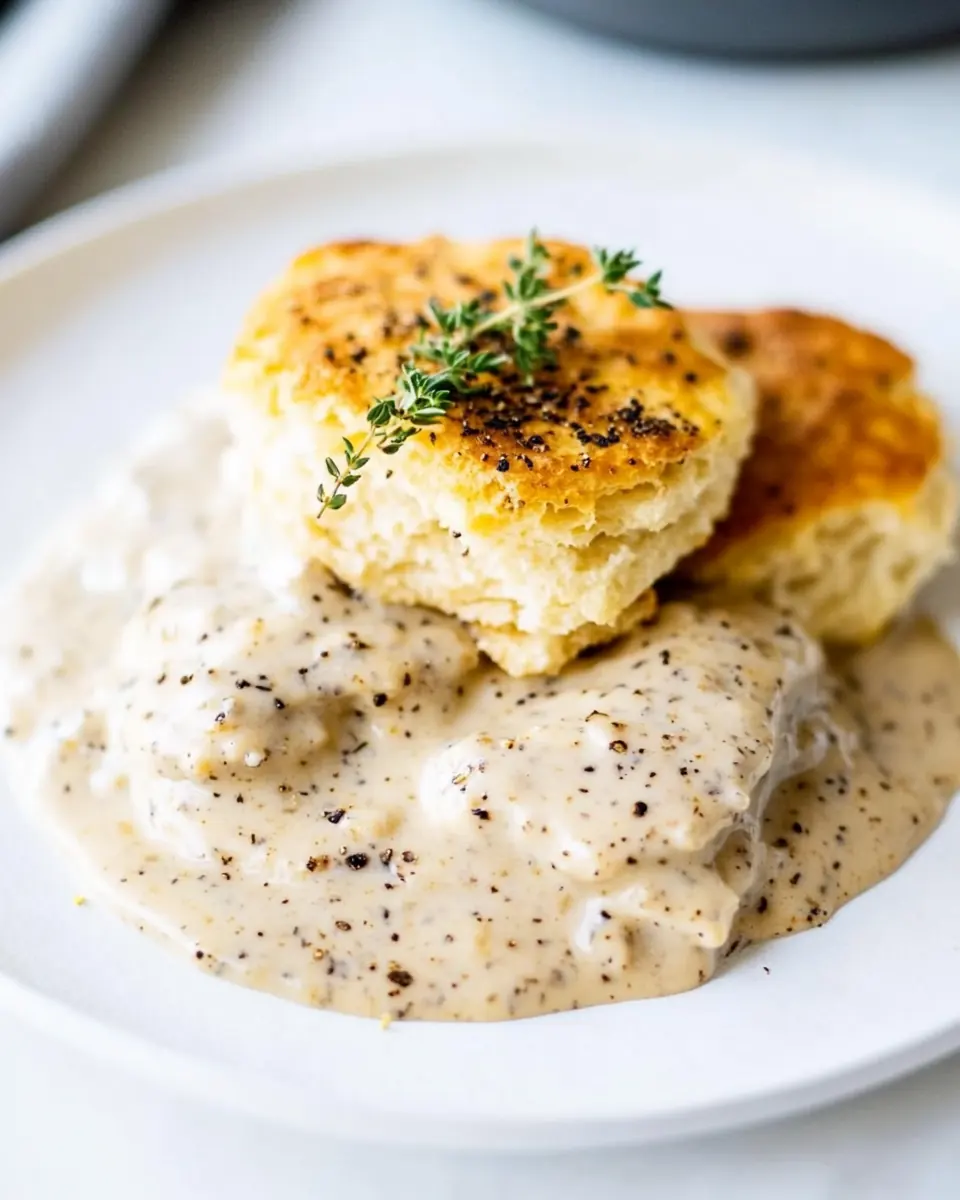
Southern Style Biscuits and Gravy
Ingredients
Equipment
Method
- Make the Biscuits: Preheat oven to 425 degrees F. Line a baking sheet with parchment paper or a silicone baking mat.: You will notice the warm, dry blast from the oven as it reaches 425 degrees F, which is perfect for creating immediate steam in the biscuits for lift. Preheating ensures the butter pockets vaporize quickly, giving flaky layers and a golden exterior. Lining the baking sheet prevents sticking and promotes even browning. A common mistake is underpreheating the oven, which leads to flat, dense biscuits, so always wait until the temperature is steady. If you smell a slight toasted scent from the oven as it finishes preheating, you are good to go.
- In a large bowl, whisk together the flour, baking powder, sugar and salt.: The dry ingredients smell faintly of wholesome grain and a bit of baking powder tang. Whisking evenly distributes the baking powder so every biscuit receives consistent lift. This step prevents uneven pockets of leavening that cause irregular rise. A common pitfall is scooping flour directly with the measuring cup packed, which overloads the mix and yields heavy dough; spoon flour into the cup and level for accuracy.
- Using a pastry blender (or two knives or your fingertips), quickly cut the butter into the flour mixture until the mixture resembles coarse meal with a few slightly larger butter lumps.: As you work, you will feel the cold butter collapsing into small pieces surrounded by flour, and the aroma will be faintly buttery. Those pea sized bits are critical because they melt in the oven to form steam pockets, producing flaky layers. Work quickly so your hands do not warm the butter too much. Overworking here yields a tough texture, while undercutting leaves big lumps that can create greasy spots. If the dough looks sandy with visible butter dots, you are in the right place.
- Using a rubber spatula or fork, stir in the buttermilk until the mixture forms a soft, slightly sticky ball.: The cold buttermilk brings a tang and hydrates the flour into a cohesive dough. You will sense the mixture come together, slightly tacky but not wet, and the scent will shift to a mild dairy note. Stir just until combined to avoid developing gluten which causes chewiness. A common error is adding too much liquid, so stop when a soft ball forms. If the dough feels too crumbly, add a teaspoon of buttermilk at a time.
- Transfer the dough to a lightly floured surface and quickly form into a rough square. Be careful not to overmix. Pat the dough into a 1-inch-thick rectangle. Fold the dough letter-style into thirds, then lightly pat the dough back out into another 1-inch rectangle. Try to handle the dough as quickly and lightly as possible. Repeat the folding 2 more times; after the final fold, press or lightly roll the dough into a 1/2-inch-thick rectangle.: Working the dough gently creates layered structure. Each fold traps air and distributes butter pockets, and you will see distinct layers when you slice into the finished biscuit. The tactile cue to watch for is a springy dough that holds folds without sticking. If you overwork it, the dough warms and the butter melts, which prevents those layers from forming. A misstep here is rolling too thin from the start, so follow the thickness progression: one inch, fold, then 1/2 inch. The surface should feel cool to the touch throughout.
- Using a 21/2-inch round biscuit or cookie cutter, cut out the dough rounds and place on the prepared baking sheet. Pat and roll the remaining scraps to cut out more rounds. Brush with the melted butter and bake until the biscuit tops are light golden brown, 10 to 15 minutes.: As you press out rounds, you will see layers on the sides where the folds met, and the raw dough should have a slight sheen from the chilled butter . Placing the rounds close but not touching encourages height while allowing heat circulation. Brushing with the melted butter adds a glossy, slightly crisp top and a rich aroma as they bake. Watch for a light golden brown top and the sound of faint crackling edges; underbaking yields pale, doughy centers. If your biscuits brown too quickly, tent with foil and finish baking until cooked through.
- Make the Sausage Gravy: Cook the sausage in a large skillet over medium-high heat until no longer pink, crumbling it into bite-size pieces as it cooks.: As the breakfast sausage hits the hot pan you will hear urgent sizzling and smell that meaty, spiced aroma that defines the gravy. Browning builds deep flavor through caramelization, and the rendered fat is what you need to start the roux. Crumble the sausage into consistent bite size pieces so they distribute evenly in the gravy. A common mistake is crowding the skillet, which steams rather than browns the meat. Use a large skillet and let the meat develop deep brown bits for complexity.
- Reduce the heat to medium and sprinkle half of the flour over the sausage, stirring to dissolve it. Add the rest of the flour and again stir for about 1 minute, until all of the flour has been dissolved.: The moment you add the flour you will see it absorb the fat and thicken slightly into a paste, and that smell of toasty cooked flour signals the start of a smooth roux. Dissolving the flour prevents graininess when the liquid is added, and cooking it briefly eliminates a raw flour taste. Stir constantly to avoid sticking or burning. If you skip this step, the gravy can taste floury or develop lumps when liquid is introduced.
- Slowly pour in the milk, stirring constantly as it is added. Cook the gravy, stirring frequently, until it begins to thicken (10 to 15 minutes). Season the gravy with the black pepper and seasoned salt and continue to cook until it is very thick. Spoon the gravy over the buttermilk biscuits to serve. Leftover gravy can be stored in an airtight container in the refrigerator. If it is too thick when reheated, simply add a splash or two of milk to thin it out a bit.: Adding the whole milk slowly while stirring encourages a silky, lump free texture. As it warms you will notice the sauce transforming from opaque to glossy and beginning to coat the back of a spoon. The smell will be creamy and comforting. Patience is essential here because rapid boiling or adding cold milk too quickly can create separation or lumps. If it becomes too thick, add a splash of milk and whisk until smooth.
- Season the gravy with the black pepper and seasoned salt and continue to cook until it is very thick Spoon the gravy over the buttermilk biscuits to serve Leftover gravy can be stored in an airtight container in the refrigerator If it is too thick when reheated simply add a splash or two of milk to thin it out a bit.: The addition of black pepper and seasoned salt wakes up the gravy, releasing a warm, peppery aroma. Continue cooking to concentrate flavors and reach a spoonable, velvety thickness that clings to the biscuits . Taste and adjust, because sausage salt content varies. A typical issue is overseasoning early; add salt cautiously and finish by tasting with a bite of biscuit. When serving, spoon the hot gravy generously over split biscuits so the interiors soak up the sauce for ultimate comfort.
Notes
- Chill the butter thoroughly before cutting it into the flour to ensure distinct layers in the biscuits, which yields flakier results after baking.
- Use cold buttermilk to keep the dough cool while you handle it, helping the butter remain solid until it hits the oven, which improves rise and texture.
- Don’t overwork the dough; fold gently and stop once layers form, because excessive handling develops gluten and makes the biscuits tough instead of tender.
- Brown the sausage well for deeper gravy flavor, allowing little crispy bits to form, which dissolve into the sauce and add savory complexity.
- Add milk slowly to the roux while stirring constantly to prevent lumps and achieve a silky, smooth gravy that clings to the biscuits.
- Store properly by cooling baked biscuits fully before sealing in an airtight container to preserve texture up to two days, or freeze for longer storage.
- Reheat gently on a low oven setting for biscuits, and warm gravy slowly on the stove, adding milk as needed to restore the desired consistency.