Make the Biscuits: Preheat oven to 425 degrees F. Line a baking sheet with parchment paper or a silicone baking mat.: You will notice the warm, dry blast from the oven as it reaches 425 degrees F, which is perfect for creating immediate steam in the biscuits for lift. Preheating ensures the butter pockets vaporize quickly, giving flaky layers and a golden exterior. Lining the baking sheet prevents sticking and promotes even browning. A common mistake is underpreheating the oven, which leads to flat, dense biscuits, so always wait until the temperature is steady. If you smell a slight toasted scent from the oven as it finishes preheating, you are good to go.
In a large bowl, whisk together the flour, baking powder, sugar and salt.: The dry ingredients smell faintly of wholesome grain and a bit of baking powder tang. Whisking evenly distributes the baking powder so every biscuit receives consistent lift. This step prevents uneven pockets of leavening that cause irregular rise. A common pitfall is scooping flour directly with the measuring cup packed, which overloads the mix and yields heavy dough; spoon flour into the cup and level for accuracy.
Using a pastry blender (or two knives or your fingertips), quickly cut the butter into the flour mixture until the mixture resembles coarse meal with a few slightly larger butter lumps.: As you work, you will feel the cold butter collapsing into small pieces surrounded by flour, and the aroma will be faintly buttery. Those pea sized bits are critical because they melt in the oven to form steam pockets, producing flaky layers. Work quickly so your hands do not warm the butter too much. Overworking here yields a tough texture, while undercutting leaves big lumps that can create greasy spots. If the dough looks sandy with visible butter dots, you are in the right place.
Using a rubber spatula or fork, stir in the buttermilk until the mixture forms a soft, slightly sticky ball.: The cold buttermilk brings a tang and hydrates the flour into a cohesive dough. You will sense the mixture come together, slightly tacky but not wet, and the scent will shift to a mild dairy note. Stir just until combined to avoid developing gluten which causes chewiness. A common error is adding too much liquid, so stop when a soft ball forms. If the dough feels too crumbly, add a teaspoon of buttermilk at a time.
Transfer the dough to a lightly floured surface and quickly form into a rough square. Be careful not to overmix. Pat the dough into a 1-inch-thick rectangle. Fold the dough letter-style into thirds, then lightly pat the dough back out into another 1-inch rectangle. Try to handle the dough as quickly and lightly as possible. Repeat the folding 2 more times; after the final fold, press or lightly roll the dough into a 1/2-inch-thick rectangle.: Working the dough gently creates layered structure. Each fold traps air and distributes butter pockets, and you will see distinct layers when you slice into the finished biscuit. The tactile cue to watch for is a springy dough that holds folds without sticking. If you overwork it, the dough warms and the butter melts, which prevents those layers from forming. A misstep here is rolling too thin from the start, so follow the thickness progression: one inch, fold, then 1/2 inch. The surface should feel cool to the touch throughout.
Using a 21/2-inch round biscuit or cookie cutter, cut out the dough rounds and place on the prepared baking sheet. Pat and roll the remaining scraps to cut out more rounds. Brush with the melted butter and bake until the biscuit tops are light golden brown, 10 to 15 minutes.: As you press out rounds, you will see layers on the sides where the folds met, and the raw dough should have a slight sheen from the chilled butter . Placing the rounds close but not touching encourages height while allowing heat circulation. Brushing with the melted butter adds a glossy, slightly crisp top and a rich aroma as they bake. Watch for a light golden brown top and the sound of faint crackling edges; underbaking yields pale, doughy centers. If your biscuits brown too quickly, tent with foil and finish baking until cooked through.
Make the Sausage Gravy: Cook the sausage in a large skillet over medium-high heat until no longer pink, crumbling it into bite-size pieces as it cooks.: As the breakfast sausage hits the hot pan you will hear urgent sizzling and smell that meaty, spiced aroma that defines the gravy. Browning builds deep flavor through caramelization, and the rendered fat is what you need to start the roux. Crumble the sausage into consistent bite size pieces so they distribute evenly in the gravy. A common mistake is crowding the skillet, which steams rather than browns the meat. Use a large skillet and let the meat develop deep brown bits for complexity.
Reduce the heat to medium and sprinkle half of the flour over the sausage, stirring to dissolve it. Add the rest of the flour and again stir for about 1 minute, until all of the flour has been dissolved.: The moment you add the flour you will see it absorb the fat and thicken slightly into a paste, and that smell of toasty cooked flour signals the start of a smooth roux. Dissolving the flour prevents graininess when the liquid is added, and cooking it briefly eliminates a raw flour taste. Stir constantly to avoid sticking or burning. If you skip this step, the gravy can taste floury or develop lumps when liquid is introduced.
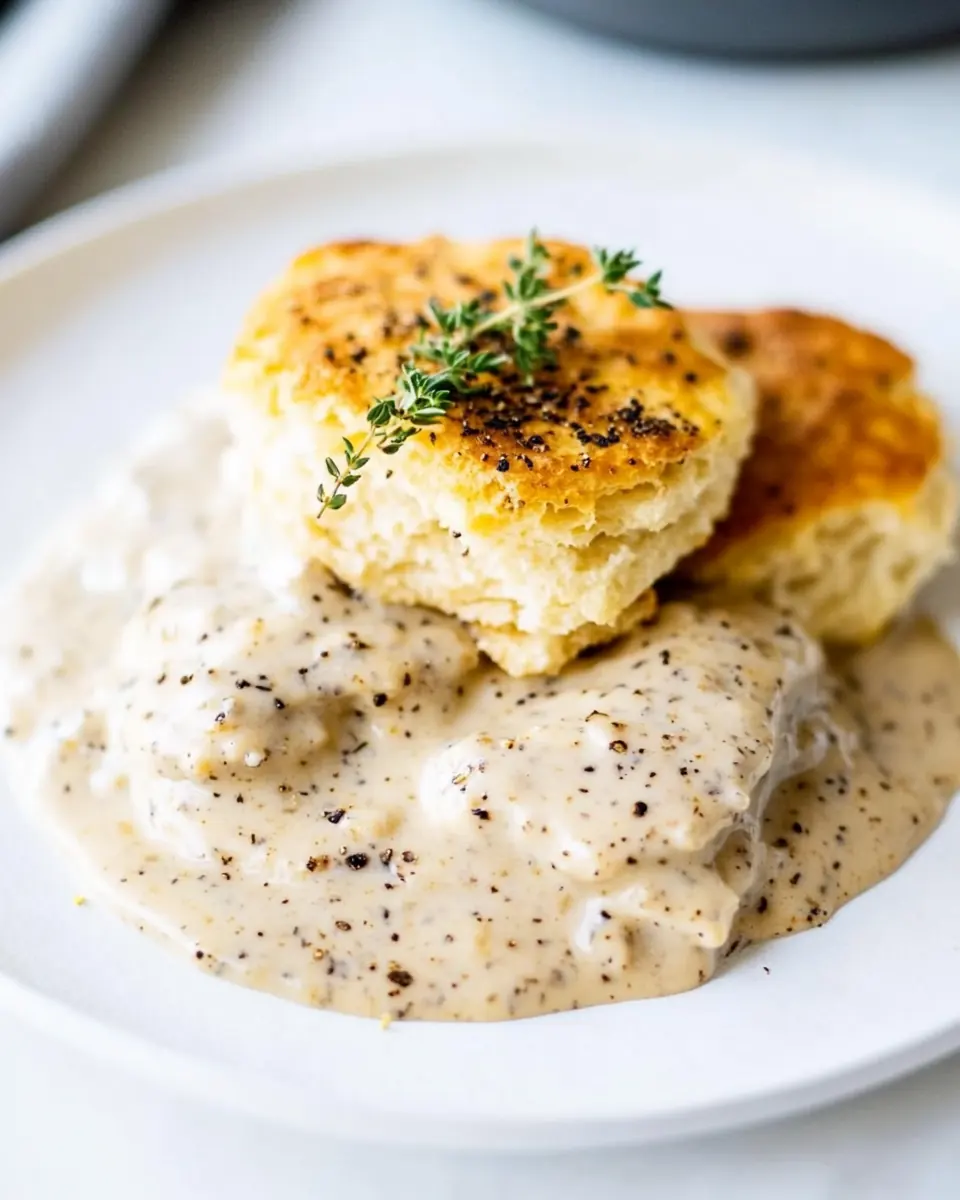
Slowly pour in the milk, stirring constantly as it is added. Cook the gravy, stirring frequently, until it begins to thicken (10 to 15 minutes). Season the gravy with the black pepper and seasoned salt and continue to cook until it is very thick. Spoon the gravy over the buttermilk biscuits to serve. Leftover gravy can be stored in an airtight container in the refrigerator. If it is too thick when reheated, simply add a splash or two of milk to thin it out a bit.: Adding the whole milk slowly while stirring encourages a silky, lump free texture. As it warms you will notice the sauce transforming from opaque to glossy and beginning to coat the back of a spoon. The smell will be creamy and comforting. Patience is essential here because rapid boiling or adding cold milk too quickly can create separation or lumps. If it becomes too thick, add a splash of milk and whisk until smooth.
Season the gravy with the black pepper and seasoned salt and continue to cook until it is very thick Spoon the gravy over the buttermilk biscuits to serve Leftover gravy can be stored in an airtight container in the refrigerator If it is too thick when reheated simply add a splash or two of milk to thin it out a bit.: The addition of black pepper and seasoned salt wakes up the gravy, releasing a warm, peppery aroma. Continue cooking to concentrate flavors and reach a spoonable, velvety thickness that clings to the biscuits . Taste and adjust, because sausage salt content varies. A typical issue is overseasoning early; add salt cautiously and finish by tasting with a bite of biscuit. When serving, spoon the hot gravy generously over split biscuits so the interiors soak up the sauce for ultimate comfort.