Sushi Bowl
Sushi Bowl has been my go to when I need a fast, colorful meal that feels special without a lot of fuss. The first time I put one together I was coming home after a long day and wanted something fresh, textural, and comforting, and assembling a bowl let me treat every bite differently. I love how the rice holds warm, the avocado adds cream, and the spicy salmon brings the kick, all in one bowl that looks like a small celebration.
Over the years I have learned little rituals that lift a simple Sushi Bowl into something I crave. I slice the mango a certain way so it balances sweetness against the heat, and I always scatter sesame seeds last so they pop and smell toasty. Sometimes I make extra sushi rice so I have the base ready, and other times I swap the protein but keep the same assembly rhythm. It’s a ritual that is forgiving and personal, and that is why I return to this bowl again and again.
Recipe Snapshot
15 mins
15 mins
0 mins
Hard
500 kcal
Japanese
Vegan, Gluten-Free
Dinner
Small bowl, Cutting board, Sharp knife, Rice paddle or spoon, Mixing spoon
Why This Sushi Bowl Is a Winner
Bright, Balanced Flavors
I love how the Sushi Bowl layers contrasting tastes, from the rich, silky avocado to the vinegary warmth of the sushi rice. Each component brings a clear role, so you get an evolving mouthful rather than one flat flavor. That balance makes this a bowl you want more than once in a week.
Speed Without Sacrifice
One reason I keep this recipe on repeat is speed. You can pull everything together in a short time, and the parts that take the longest, like cooking the sushi rice, can be prepped ahead. That saves the day when you need an easy weeknight dinner that still feels thoughtful.
Textural Variety
Crunch from the cucumber and edamame meets creamy avocado and tender, spicy salmon. I particularly enjoy the way nori sheets add a faint briny crispness, and the sesame seeds give a toasty finish. Textures keep each forkful interesting, and that makes the bowl satisfying.
Flexible and Friendly
What I adore is how adaptable the Sushi Bowl is. You can swap proteins, increase vegetables, or make it vegetarian, and it will still read as the same comforting bowl. That flexibility makes it great for feeding different palates without changing the soul of the dish.
Visually Inviting
I find plating matters. The bright green of the avocado, orange of the mango, and pale pink of the salmon create a bowl that invites you in. It’s the kind of meal you want to photograph, share, and eat slowly.
Sushi Bowl Shopping List
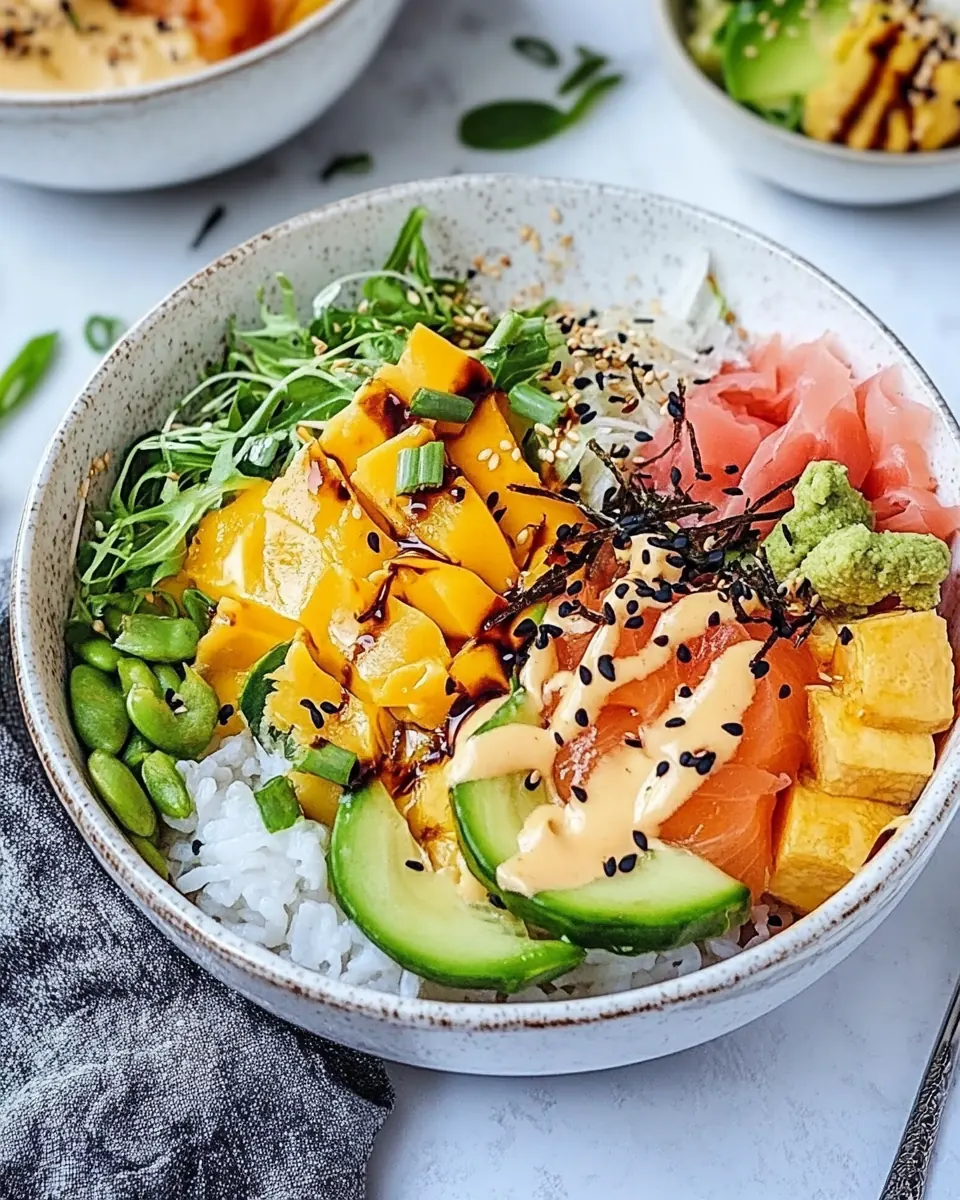
These ingredients are deliberately chosen to create harmony. The sushi rice is the foundation, sticky enough to hold yet light. The protein, salmon fillet, brings richness and a savory edge when matched with a little spicy mayo. Fresh produce like mango, cucumber, avocado, and steamed edamame supply brightness and textural contrast. Small accents such as pickled ginger, torn nori seaweed sheets, and sesame seeds lift the bowl into something layered and balanced.
- 2 cups sushi rice cooked: Provide a sticky, slightly sweet base that helps hold the bowl together and soaks up flavors; serve warm or chilled depending on preference. Rinse and season well with vinegar to achieve authentic sushi rice texture and shine.
- 1 cup salmon fillet cut up into cubes: Add a rich, fatty protein element that contributes umami and hearty texture; keep cubed for easy bites and even distribution. Use fresh, sushi-grade salmon and marinate briefly if desired to enhance flavor and safety.
- 1/4 cup spicy mayo: Contribute a creamy, spicy element that coats other components and ties flavors together; drizzle or dollop to control heat. Use a balanced ratio of mayonnaise and chili sauce to achieve smoothness without overpowering.
- 1 cup edamame: Bring a tender-crisp, protein-rich green that adds color, texture, and a pop of freshness; serve shelled for convenience. Lightly blanch if preferred to soften while preserving bright color and nutrients.
- 1 mango sliced: Deliver a sweet, juicy contrast that brightens the bowl and complements savory elements; slice for easy picking and even distribution. Choose ripe but firm fruit to avoid mushiness and ensure clean, refreshing bites.
- 1 cup cucumber cut into sticks: Offer a cool, crunchy, hydrating component that balances richer items and adds crisp texture; cut into sticks for uniform mouthfeel. Peel or seed as preferred and lightly season or dress for extra flavor if desired.
- 1/4 cup pickled ginger: Provide a sharp, vinegary palate cleanser that cuts through richness and refreshes between bites; serve sparingly to avoid overwhelming. Rinse if overly pungent and arrange so diners can add according to taste.
- 2 avocados sliced: Supply a creamy, buttery texture and mild flavor that enriches the bowl and adds richness; slice for attractive presentation. Use ripe avocados and toss with a little acid to prevent browning if prepping ahead.
- 2 nori seaweed sheets cut up: Introduce a briny, umami-packed sea element that adds crunch and savory depth when cut into strips; sprinkle across the bowl for texture. Toast briefly if preferred to enhance crispness and aroma.
- 1/4 cup spicy mayo: Repeat the creamy, spicy element to ensure consistent flavor distribution throughout the bowl; add in separate spots for balanced heat. Measure portions to maintain desired spice level without overwhelming other flavors.
- 1 tablespoon mixed sesame seeds: Add a nutty, toasty finishing touch that enhances aroma, mouthfeel, and visual appeal; sprinkle over the completed bowl. Use a mix of black and white seeds for contrast and lightly toast to heighten flavor.
How to Assemble Sushi Bowl
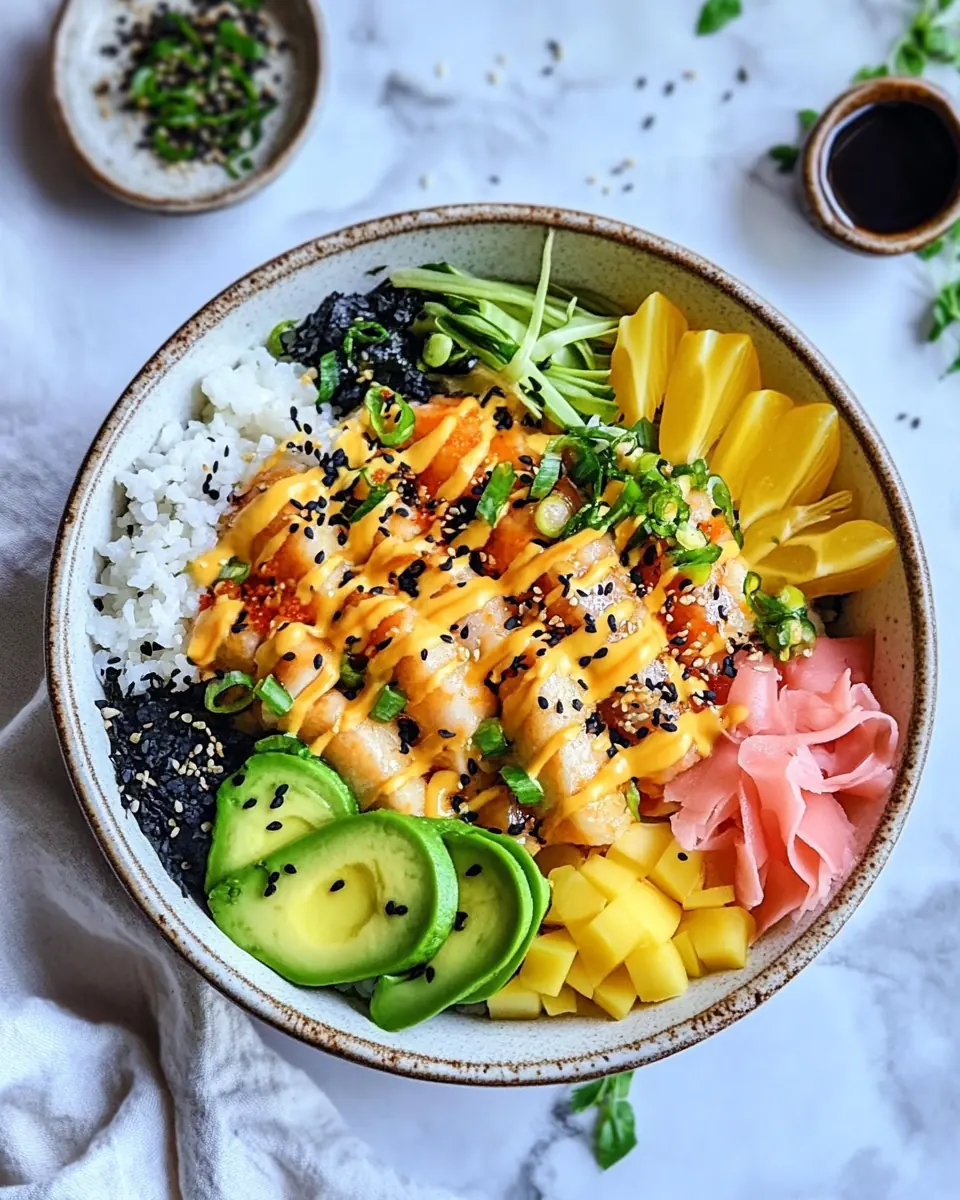
Assembling this bowl is where the magic happens. I like to work in an assembly line, starting with warm sushi rice and adding each component with intention. That way every bowl looks balanced and tastes layered.
- Prepare the sushi rice–recipe in the sushi burrito post: The warm, slightly vinegared sushi rice should feel tender and glossy, releasing a faint sweet vinegar aroma that signals proper seasoning. You want individual grains that cling lightly together, so the bowl has cohesion without being pasty. If the rice feels gummy, it was likely overworked or too hot when seasoned. A common troubleshooting tip is to let the rice cool slightly before spreading, and use a gentle cutting motion with a paddle to avoid crushing grains. Why this matters, the right rice texture makes every bite feel authentic and allows sauces to marry without turning watery.
- Prepare the sushi rice–recipe in the sushi burrito post: When you spread the rice into bowls, notice how it settles, forming a warm base that holds ingredients. The slight steam rising should carry the vinegary scent, which contrasts with cooler toppings. If the rice sticks to tools, wet them with water to prevent tearing. Avoid compacting the rice too densely, because dense rice will compete with delicate toppings rather than complement them. Visual cue, the rice should be glossy but not shiny with moisture.
- In a small bowl, mix the raw salmon and the 1/4 cup of spicy mayo. Set it aside.: The marriage of salmon and spicy mayo creates a silky, slightly spicy mixture that should glisten without being greasy. Smell for freshness, and fold gently so the cubes stay defined. If the mix seems watery, pat the fish dry before combining to maintain the right consistency. A frequent mistake is overmassing the fish, which can make it overly soft; gentle folding preserves texture. This step builds the bowl’s savory heart, so keep things cool and clean.
- In a small bowl, mix the raw salmon and the 1/4 cup of spicy mayo. Set it aside.: Placing the salmon mix in a small bowl helps the flavors meld while you prepare other components; a gentle rest lets heat from the rice integrate with the sauce when assembled. Visually, the salmon should retain its bright color, and the mayo should cling to each cube. If it darkens or smells off, discard and use fresh fish. The why is simple, gentle handling preserves texture and food safety.
- Slice and prepare the veggies.: As you cut the mango , cucumber , and avocado , pay attention to sizes so each bite includes a mix of textures. The cucumber should have a crisp snap, mango should be tender and sweet, and avocado smooth and buttery. If the avocado is too soft, slice more thickly to keep integrity. A common error is uneven cutting, which makes bites inconsistent; take a moment to make uniform pieces for the best eating experience.
- Slice and prepare the veggies.: Arrange these elements on a tray so assembly is quick. The sound of a crisp cucumber against the board, or the soft give of a ripe mango, helps you judge ripeness. If you find one ingredient too watery, pat it dry with a paper towel to avoid diluting the bowl. This organization reduces stress during plating and ensures freshness.
- Start assembling the sushi bowl by placing the sushi rice at the bottom.: When the sushi rice meets the bowl, it creates the warm anchor. Spread it to cover the bottom evenly so the toppings sit on a stable layer. The rice should be warm but not steaming hot, or it will soften chilled ingredients. A common misstep is adding hot rice on top of delicate toppings, which wilts them; allow rice to cool slightly for balance.
- Start assembling the sushi bowl by placing the sushi rice at the bottom.: Press lightly so the rice fills the base, creating a bed for the rest. You'll notice the bowl feels balanced when rim space is visible for arranging other ingredients. If the rice slips from the bowl while serving, you may have used too little rice or an incorrectly shaped vessel. Proper base distribution supports neat presentation.
- Arrange the spicy salmon mix on the side.: Place the spicy salmon mix thoughtfully so each diner can scoop it into bites. The salmon should glisten and maintain cube integrity. Smell and texture are your guides, and the spicy mayo should feel creamy without pooling. A common mistake is piling it too high, which can overwhelm smaller bowls; spread it in a neat cluster.
- Arrange the spicy salmon mix on the side.: Positioning the salmon beside other items keeps flavors distinct until combined on the fork. This preserves the bright heat while allowing the diner to control spice. If the salmon seems unevenly coated, gently fold to redistribute sauce. The arrangement also influences how the bowl photographs, so spacing matters.
- Arrange the remaining ingredients around the sushi rice.: Now add edamame , mango , cucumber , pickled ginger , and sliced avocado around the rice, creating color sections. Each component should look fresh and textured, with complementary shapes. If something looks soggy, omit or drain it to preserve overall crispness. This step is about balance and visual appeal, and it builds layered flavor profiles.
- Arrange the remaining ingredients around the sushi rice.: Seat the torn nori and reserved sauces in open spaces so they can be combined dynamically during eating. The arrangement should invite mixing but still allow individual tastes to shine. Avoid overcrowding, as crowded bowls become muddled in texture and temperature.
- Drizzle spicy mayo over the bowls.: A final drizzle of spicy mayo should perfume the bowl with heat and creaminess. The sound is silent but the visual streaks add contrast. Start with a light hand, then add more where needed. Too much will overpower subtle ingredients like mango , so taste as you go. The drizzle ties components together without making them uniform.
- Drizzle spicy mayo over the bowls.: After drizzling, step back and check distribution so each section gets a touch. The mayo should cling to toppings and slightly sink into the rice, creating pockets of flavor. If it pools, blot gently; if it disappears, add another light drizzle. Proper distribution ensures even flavor in every bite.
- Finish off with the sesame seeds and serve.: Sprinkle the toasted sesame seeds , and you will smell their nutty warmth immediately, which signals readiness. They add a delicate crunch that completes the bowl. Serve promptly so the nori remains crisp and the avocado stays fresh. A typical mistake is letting the bowl sit, which dulls textures and temperature contrasts.
- Finish off with the sesame seeds and serve.: Final garnishing is your last chance to tune the bowl, so adjust salt or any small element sparingly. Present with confidence, and encourage mixing at the table. Serving right away preserves the contrasting temperatures and textures that make this bowl memorable.
Ways to Customize
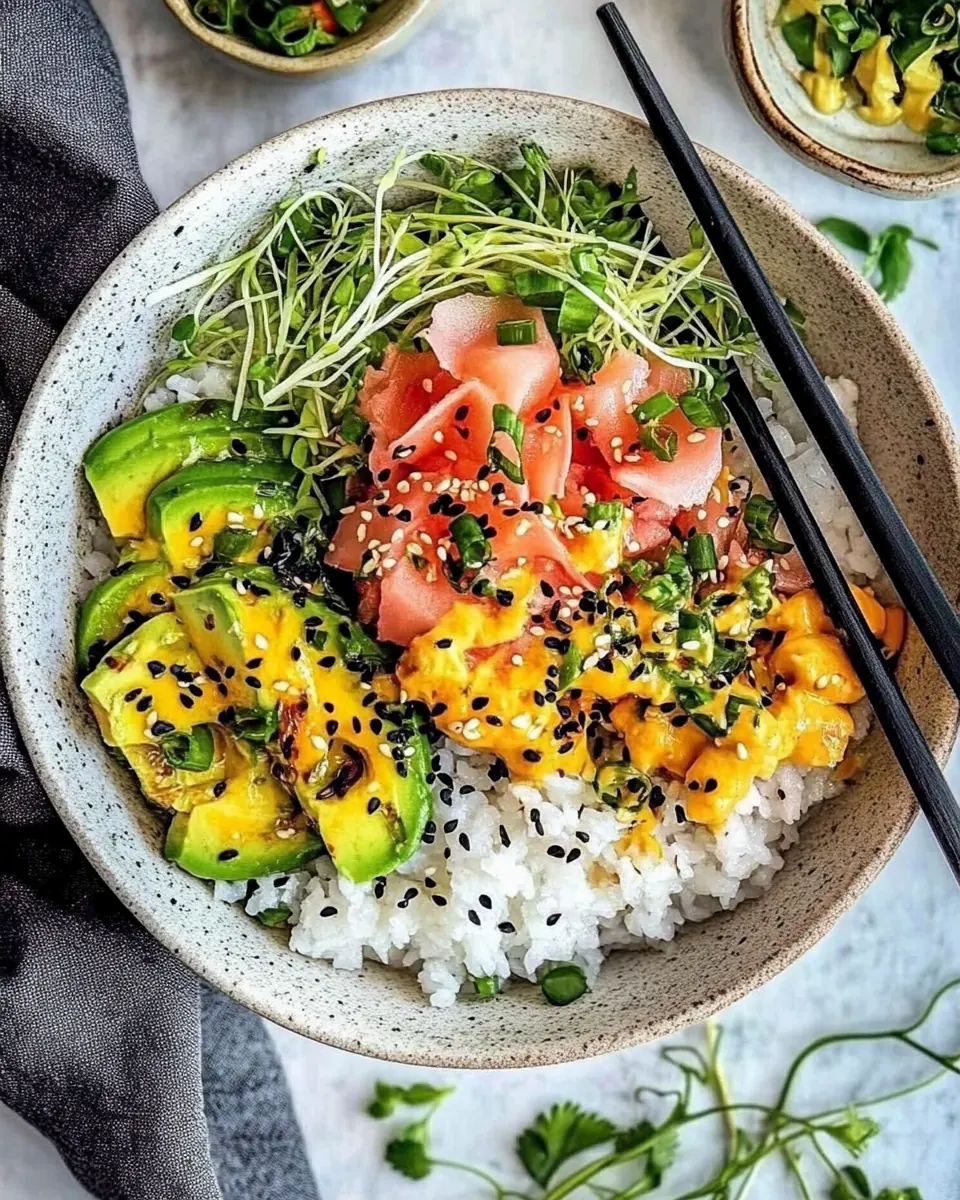
This Sushi Bowl is a template, not a set of chains, so feel free to personalize it while keeping the structure intact. Below are practical, creative directions you can take to make the bowl your own.
- Switch the protein: Try sushi grade tuna or cooked shrimp for a different texture, ensuring food safety and similar cubing for even bites.
- Make it vegetarian: Replace the salmon with seasoned tofu or roasted sweet potato, keeping the same spicy mayo to preserve the flavor profile.
- Adjust the heat: Tweak the amount of spicy mayo or add a touch of sriracha to control the spice without changing other components.
- Prep ahead: Cook a larger batch of sushi rice and refrigerate so assembly takes minutes on busy days, rewarming gently before serving.
- Double the crunch: Add toasted seeds or a few extra torn nori pieces at the end to boost texture and umami presence.
- Play with citrus: A light squeeze of lemon or lime over the avocado can brighten the whole bowl without overpowering the core flavors.
How to Serve Sushi Bowl
Serving a Sushi Bowl is about letting guests customize and enjoy contrasts. I usually present bowls with small spoons of extra spicy mayo and plates of extra nori, so people can top as they like. Serve promptly for best texture.
- Family style bowls: Place large bowls in the center with small plates so everyone can assemble their portion, ideal for casual lunches or dinners.
- Individual portions: Serve each bowl fully assembled for a composed presentation, great for dinner parties or photographed meals.
- Occasions: This dish works well for summer lunches, light dinners, and festive gatherings where fresh flavors are welcome.
- Storage tips: Keep components separate when storing, especially the sushi rice and sliced avocado, and consume within a day for best quality.
- Pairings: Offer simple sides like extra pickled ginger or steamed vegetables so guests can adjust textures and temperatures.
- Presentation: Use shallow bowls so toppings are visible and arrange colors in sections to highlight variety and freshness.
- Make ahead: You can assemble most components a day ahead, but slice the avocado and dress the salmon close to serving time.
- Serving style: Encourage mixing at the table so guests can control spice and texture, making each bite personal.
- Best vessels: Shallow, wide bowls showcase ingredients and make it easier to get a balanced bite every time.
- Temperature: Aim for warm rice with cool toppings to preserve the contrast that defines the bowl.
FAQ
Conclusion
This Sushi Bowl stands out for its bright contrasts, balanced textures, and quick assembly, making it both practical and celebratory. Try it the next time you want a fresh meal that feels composed and satisfying without a big time commitment. Play with components within the framework, and you will find your own favorite rhythm for building this bowl again and again.
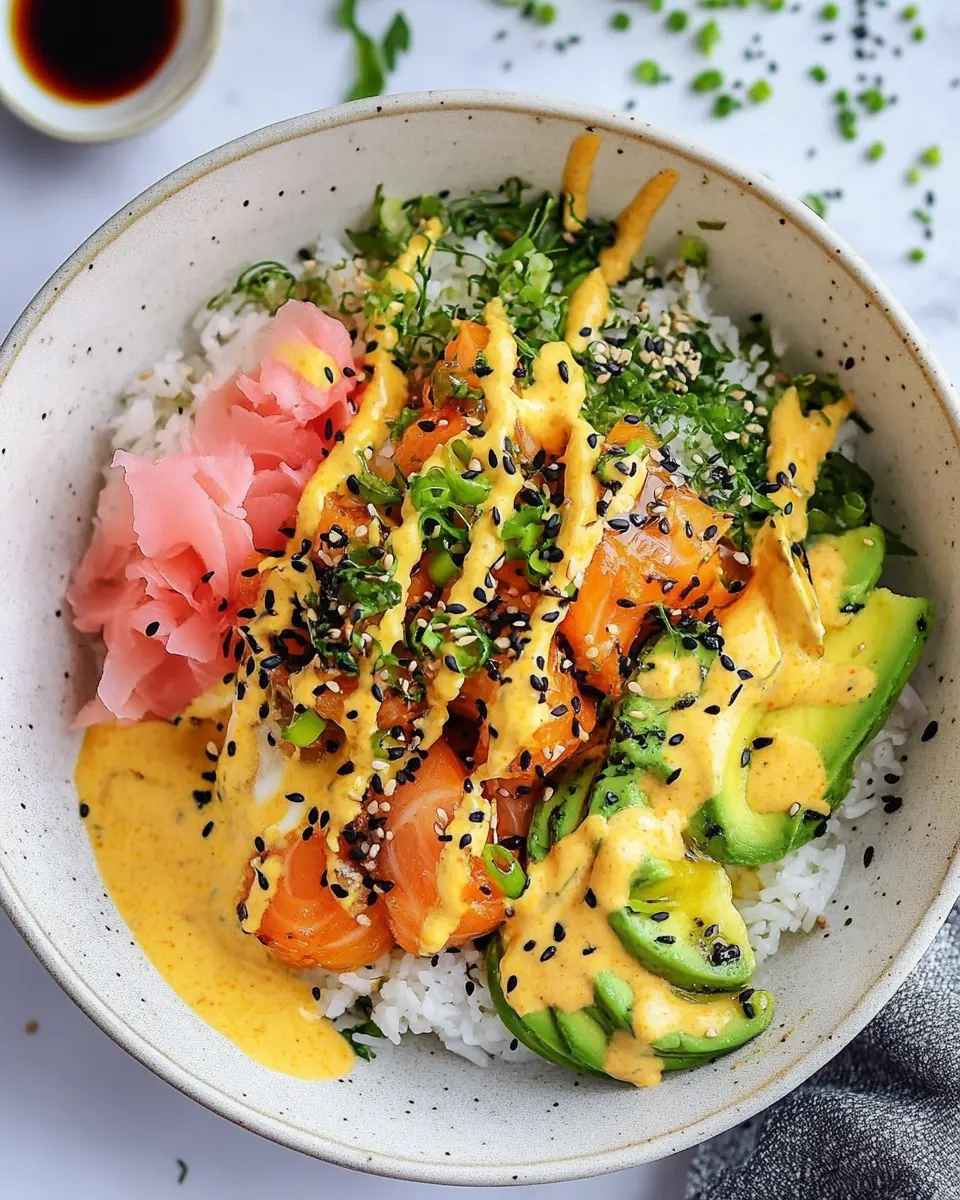
Sushi Bowl
Ingredients
Equipment
Method
- Prepare the sushi rice--recipe in the sushi burrito post: The warm, slightly vinegared sushi rice should feel tender and glossy, releasing a faint sweet vinegar aroma that signals proper seasoning. You want individual grains that cling lightly together, so the bowl has cohesion without being pasty. If the rice feels gummy, it was likely overworked or too hot when seasoned. A common troubleshooting tip is to let the rice cool slightly before spreading, and use a gentle cutting motion with a paddle to avoid crushing grains. Why this matters, the right rice texture makes every bite feel authentic and allows sauces to marry without turning watery.
- Prepare the sushi rice--recipe in the sushi burrito post: When you spread the rice into bowls, notice how it settles, forming a warm base that holds ingredients. The slight steam rising should carry the vinegary scent, which contrasts with cooler toppings. If the rice sticks to tools, wet them with water to prevent tearing. Avoid compacting the rice too densely, because dense rice will compete with delicate toppings rather than complement them. Visual cue, the rice should be glossy but not shiny with moisture.
- In a small bowl, mix the raw salmon and the 1/4 cup of spicy mayo. Set it aside.: The marriage of salmon and spicy mayo creates a silky, slightly spicy mixture that should glisten without being greasy. Smell for freshness, and fold gently so the cubes stay defined. If the mix seems watery, pat the fish dry before combining to maintain the right consistency. A frequent mistake is overmassing the fish, which can make it overly soft; gentle folding preserves texture. This step builds the bowl’s savory heart, so keep things cool and clean.
- In a small bowl, mix the raw salmon and the 1/4 cup of spicy mayo. Set it aside.: Placing the salmon mix in a small bowl helps the flavors meld while you prepare other components; a gentle rest lets heat from the rice integrate with the sauce when assembled. Visually, the salmon should retain its bright color, and the mayo should cling to each cube. If it darkens or smells off, discard and use fresh fish. The why is simple, gentle handling preserves texture and food safety.
- Slice and prepare the veggies.: As you cut the mango , cucumber , and avocado , pay attention to sizes so each bite includes a mix of textures. The cucumber should have a crisp snap, mango should be tender and sweet, and avocado smooth and buttery. If the avocado is too soft, slice more thickly to keep integrity. A common error is uneven cutting, which makes bites inconsistent; take a moment to make uniform pieces for the best eating experience.
- Slice and prepare the veggies.: Arrange these elements on a tray so assembly is quick. The sound of a crisp cucumber against the board, or the soft give of a ripe mango, helps you judge ripeness. If you find one ingredient too watery, pat it dry with a paper towel to avoid diluting the bowl. This organization reduces stress during plating and ensures freshness.
- Start assembling the sushi bowl by placing the sushi rice at the bottom.: When the sushi rice meets the bowl, it creates the warm anchor. Spread it to cover the bottom evenly so the toppings sit on a stable layer. The rice should be warm but not steaming hot, or it will soften chilled ingredients. A common misstep is adding hot rice on top of delicate toppings, which wilts them; allow rice to cool slightly for balance.
- Start assembling the sushi bowl by placing the sushi rice at the bottom.: Press lightly so the rice fills the base, creating a bed for the rest. You'll notice the bowl feels balanced when rim space is visible for arranging other ingredients. If the rice slips from the bowl while serving, you may have used too little rice or an incorrectly shaped vessel. Proper base distribution supports neat presentation.
- Arrange the spicy salmon mix on the side.: Place the spicy salmon mix thoughtfully so each diner can scoop it into bites. The salmon should glisten and maintain cube integrity. Smell and texture are your guides, and the spicy mayo should feel creamy without pooling. A common mistake is piling it too high, which can overwhelm smaller bowls; spread it in a neat cluster.
- Arrange the spicy salmon mix on the side.: Positioning the salmon beside other items keeps flavors distinct until combined on the fork. This preserves the bright heat while allowing the diner to control spice. If the salmon seems unevenly coated, gently fold to redistribute sauce. The arrangement also influences how the bowl photographs, so spacing matters.
- Arrange the remaining ingredients around the sushi rice.: Now add edamame , mango , cucumber , pickled ginger , and sliced avocado around the rice, creating color sections. Each component should look fresh and textured, with complementary shapes. If something looks soggy, omit or drain it to preserve overall crispness. This step is about balance and visual appeal, and it builds layered flavor profiles.
- Arrange the remaining ingredients around the sushi rice.: Seat the torn nori and reserved sauces in open spaces so they can be combined dynamically during eating. The arrangement should invite mixing but still allow individual tastes to shine. Avoid overcrowding, as crowded bowls become muddled in texture and temperature.
- Drizzle spicy mayo over the bowls.: A final drizzle of spicy mayo should perfume the bowl with heat and creaminess. The sound is silent but the visual streaks add contrast. Start with a light hand, then add more where needed. Too much will overpower subtle ingredients like mango , so taste as you go. The drizzle ties components together without making them uniform.
- Drizzle spicy mayo over the bowls.: After drizzling, step back and check distribution so each section gets a touch. The mayo should cling to toppings and slightly sink into the rice, creating pockets of flavor. If it pools, blot gently; if it disappears, add another light drizzle. Proper distribution ensures even flavor in every bite.
- Finish off with the sesame seeds and serve.: Sprinkle the toasted sesame seeds , and you will smell their nutty warmth immediately, which signals readiness. They add a delicate crunch that completes the bowl. Serve promptly so the nori remains crisp and the avocado stays fresh. A typical mistake is letting the bowl sit, which dulls textures and temperature contrasts.
- Finish off with the sesame seeds and serve.: Final garnishing is your last chance to tune the bowl, so adjust salt or any small element sparingly. Present with confidence, and encourage mixing at the table. Serving right away preserves the contrasting temperatures and textures that make this bowl memorable.
Notes
- Switch the protein: Try sushi grade tuna or cooked shrimp for a different texture, ensuring food safety and similar cubing for even bites.
- Make it vegetarian: Replace the salmon with seasoned tofu or roasted sweet potato, keeping the same spicy mayo to preserve the flavor profile.
- Adjust the heat: Tweak the amount of spicy mayo or add a touch of sriracha to control the spice without changing other components.
- Prep ahead: Cook a larger batch of sushi rice and refrigerate so assembly takes minutes on busy days, rewarming gently before serving.
- Double the crunch: Add toasted seeds or a few extra torn nori pieces at the end to boost texture and umami presence.
- Play with citrus: A light squeeze of lemon or lime over the avocado can brighten the whole bowl without overpowering the core flavors.