Strawberry Cake
Strawberry Cake has always been the recipe that takes me back to sunlit kitchens and birthday parties with sticky fingers.
As a kid I watched my grandmother fold simple ingredients into a bowl while humming, and that memory lives inside every tender crumb of this cake. Over the years I have tweaked small things, like the way I mash the berries and the moment I reserve a few for the frosting, and those tiny choices make the difference between a good cake and one that people ask for seconds of. When I serve Strawberry Cake I love how the aroma of warm strawberries and sweet butter fills the room, drawing everyone to the table without a word.
Making this cake feels like a comforting ritual, where you can chat with a friend while mixing, or take a quiet hour to yourself. I often think about textures as I work, picturing the soft crumb and the silky frosting meeting in the middle. The recipe is forgiving, which is why I reach for it when I want something special without fuss. Once cooled and frosted, the cake becomes a centerpiece that invites conversation and slow, appreciative bites. I hope this version of Strawberry Cake becomes a small tradition in your kitchen too.
Recipe Snapshot
55 mins
30 mins
25 mins
Medium
250 kcal
American
Gluten-Free, Low FODMAP
Desserts
9 inch round cake pans, Large mixing bowl, Mixer, Wire rack, Small bowl or food processor, Offset spatula
What’s Great About This Strawberry Cake
Bright natural strawberry flavor
I love that this cake leans on real strawberries to anchor the taste, not just artificial flavors. The frozen berries, when thawed and mashed, bring a lively fruitiness that sings through the batter and the frosting. That genuine fruit note keeps each slice feeling fresh, not overly sweet, and it pairs beautifully with the tender crumb.
Simple pantry friendly technique
This cake shows how accessible baking can be. With a box of white cake mix, a packet of strawberry Jell O mix, and a handful of common ingredients like egg whites and butter, you get reliable results. I appreciate recipes that respect both time and flavor, and this one delivers both.
Light frosting that complements, not overwhelms
The frosting uses softened butter and reserved mashed strawberries, so it enhances the cake rather than smothering it. The fruit in the icing adds color and a tender tang, and the powdered sugar whips in to create a silky texture that spreads like a dream. I always set aside a few berries for the frosting to ensure that bright strawberry note stays prominent.
Great for gatherings and make ahead
I often bake this for potlucks because it travels well when chilled and sliced. The cake holds up under frosting and can be stored in the refrigerator, which means you can prepare parts ahead to save time on the day you serve it. That convenience is one reason I reach for this recipe when hosting.
Kid friendly and nostalgic
There is something comforting about Strawberry Cake that appeals to all ages. Kids love the color and sweetness, while adults appreciate the familiar, homemade fruit flavor. For me, it’s the kind of cake that sparks stories and memories around the table.
Main Ingredients for Strawberry Cake
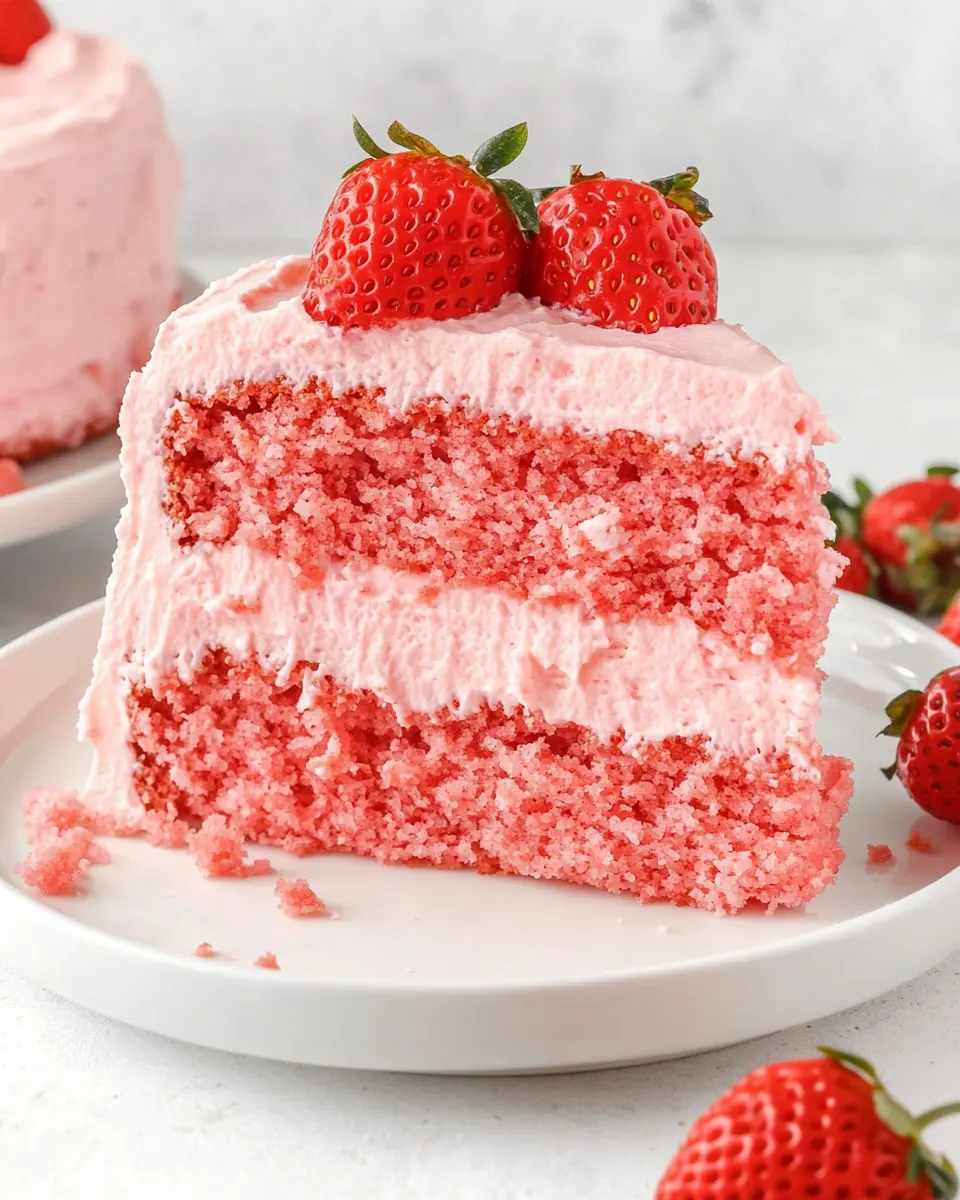
These ingredients come together to create a light, fruit forward cake. The boxed white cake mix provides a consistent structure while the strawberries and strawberry Jell O bring layered flavor. Simple fats like canola oil and butter keep the crumb tender and the frosting spreadable, and the powdered sugar pulls the whole dessert into a smooth, sweet finish.
- 15.25 ounces white cake mix: Adds structure, sweetness, and bulk to the cake batter; contains flour, sugar, and leaveners to ensure proper rise and texture. Provides a neutral base that carries strawberry flavor and supports moisture from liquids and fats. Helps create a consistent crumb when combined with eggs, oil, and other wet ingredients.
- 3 ounces sugar-free strawberry jello (1 package): Imparts concentrated strawberry flavor without added sugar and helps set a subtle fruity taste throughout the cake. Enhances aroma and color while keeping overall sweetness controlled for a less sugary dessert. Dissolves easily into wet ingredients to distribute flavor evenly.
- 4 egg whites: Contributes lift, structure, and stability while reducing fat compared to whole eggs; egg whites trap air when beaten and help create a light crumb. Adds protein which coagulates during baking to firm the cake. Helps emulsify and bind ingredients for uniform texture.
- 1/3 cup canola oil: Provides moisture and tenderness while assisting in emulsifying the batter for a smoother texture. Adds lightness and helps distribute fat-soluble flavors throughout the cake. Can tolerate moderate oven heat without significantly altering flavor.
- 1 cup frozen unsweetened strawberries thawed: Supplies fresh strawberry flavor and natural moisture; thawed frozen strawberries integrate fruit pulp and juices into the batter. Adds small bits of fruit and a subtle tartness that balances sweetness. Enhances natural color and provides real fruit presence in each bite.
- 1/2 cup water: Adjusts batter consistency and activates dry ingredients, ensuring proper hydration and dissolution of flavors. Controls overall moisture level for desired cake density and assists in gelatin mix dispersion. Helps create the correct baking environment for even heat transfer.
- 1/3 cup butter softened: Adds richness, creaminess, and flavor to the cake, contributing to tenderness and a softer crumb when creamed into sugar or blended with other fats. Provides melt-in-the-mouth texture and enhances overall mouthfeel. Can also impart subtle buttery aroma during baking.
- 2 1/3 cup powdered sugar: Sweetens and stabilizes frostings or glazes while adding body and smoothness to any finishing layer; powdered texture dissolves easily for lump-free icings. Helps control sweetness intensity and creates a silky consistency when combined with fats or liquids. Also aids in achieving a pipeable, spreadable finish.
The Process for Making Strawberry Cake
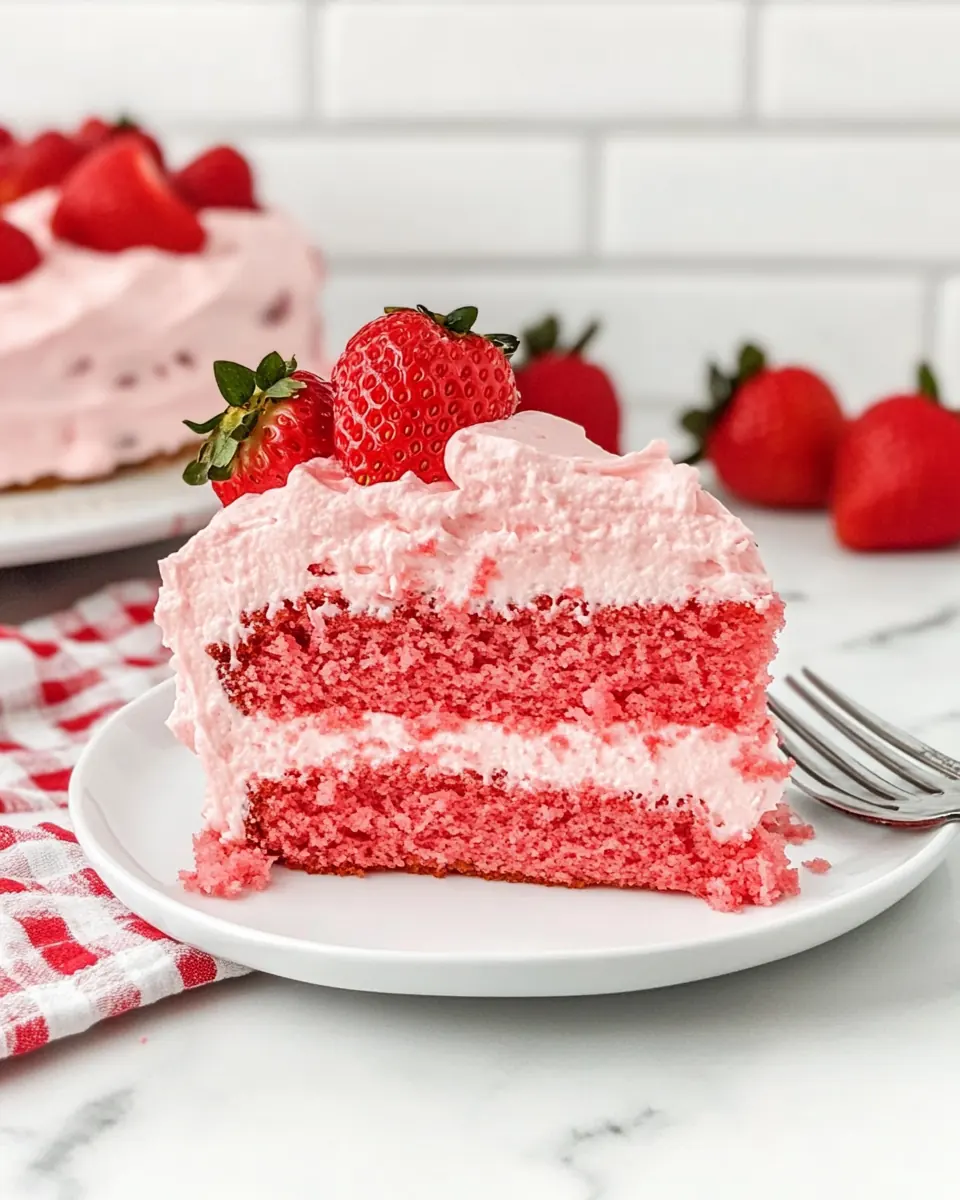
Below I break the directions into clear, sensory steps you can follow while you bake. The goal is to give practical cues so you know when the batter feels right, how the cakes should smell and look coming out of the oven, and how to avoid common pitfalls.
- Grease & flour two 9 inch round pans, set aside. Preheat oven to 350 degrees Fahrenheit.: You will notice a faint waxy scent from the greased pans and the warmth of the oven beginning to circulate, which signals readiness. Greasing and flouring creates a thin barrier between the cake and pan, preventing sticking and ensuring smooth release when you invert the pans. Use a pastry brush or paper towel to press a thin even layer of oil or shortening in the pan, then dust with flour and tap out the excess. If you skip this step or do it unevenly, the cake can cling and tear when unmolding. A common mistake is using too much grease, which can create an oily ring on the cake edges; use just enough for coverage. Aim for an even coating and place the pans on a middle rack so heat circulates evenly. You should hear a quiet hum as the oven stabilizes and see the oven thermometer reach a steady 350 F if you use one. This preparation also helps the bottoms brown uniformly.
- In a large bowl combine cake mix and strawberry Jell-O mix until completely mixed. Then add egg whites, & oil. Beat until well blended.: The dry powders will first give off a sweet, slightly floral strawberry scent when combined. Mixing the white cake mix and the strawberry Jell O thoroughly ensures the fruit flavor distributes evenly. When you add the egg whites and canola oil , the batter will turn glossy and smoother in texture. Beat on medium speed until you see no streaks of dry mix, scraping the bowl once or twice to incorporate everything. Overbeating at this stage can introduce too much air and create tunnels in the crumb, so stop once the batter is uniform. A frequent error is adding ingredients out of order, which can lead to lumps; follow the sequence so the batter forms correctly. The batter should be smooth and slightly thick, not runny or clumpy.
- In a small bowl or food processor, mash strawberries. Set aside 3 Tablespoons for icing. Add water and remaining berries to batter and mix. Pour into prepared pans.: Once mashed, the strawberries will release a bright, tangy aroma and a rosy color. Reserving 3 tablespoons keeps the frosting vibrant while folding the rest into the batter gives the cake an authentic fruit presence. Adding the water after mashing loosens the berry bits so they distribute without sinking to the bottom of the pans. When you stir them into the batter, you should see flecks of pink swirl through, and the mixture will smell slightly jammy. Pour the batter carefully into the prepared pans, filling each about three quarters full to allow room for rise. A common issue is overcrowding the pan, which creates uneven baking, so stick to two 9 inch pans. After pouring, tap the pans lightly on the counter to release any trapped air bubbles, which helps avoid large holes in the finished crumb.
- Bake in preheated oven at 350 degrees Fahrenheit for 20-25 minutes or until toothpick comes out clean when inserted into the middle of the cake. Cool for 10 minutes. Remove from pans to wire rack and cool completely.: The oven will transform the batter into sponge, releasing a warm sweet scent of strawberries and baked sugar. Around 20 minutes you should see the edges pull slightly away from the pan and the top become springy to the touch. The toothpick test is a reliable signal; a few moist crumbs are fine, but batter on the pick means it needs more time. Letting the cake rest for 10 minutes in the pans lets steam release gradually, reducing the chance of cracking when flipping out. When you invert onto a wire rack, the bottom should be pale golden and slightly springy. Cooling completely before frosting is critical; a warm cake will melt the frosting and produce a sloppy finish. A frequent mistake is rushing this step, which leads to sliding layers and a messy exterior. Aim for a completely cool cake for neat assembly and a steady frosting surface.
- To make frosting combine softened butter and 3 Tablespoons reserved strawberries in small bowl. Gradually beat in powdered sugar until light and fluffy.: When you begin beating the softened butter with the reserved mashed strawberries , the bowl will release a fragrant, buttery berry scent. The little flecks of fruit give the frosting a pretty pink hue and a natural tang that cuts the sweetness of the powdered sugar. Add the powdered sugar gradually, letting it incorporate so the frosting becomes airy rather than dense. The texture should turn from glossy to cloudlike, and the sound at the mixer lowers as the mixture becomes thicker. If the frosting seems too thin, add a touch more powdered sugar; if it is too stiff, a teaspoon of water can soften it. A common error is adding all the sugar at once, which can create lumps and an overly dry texture. Beat until the icing spreads smoothly but still holds soft peaks.
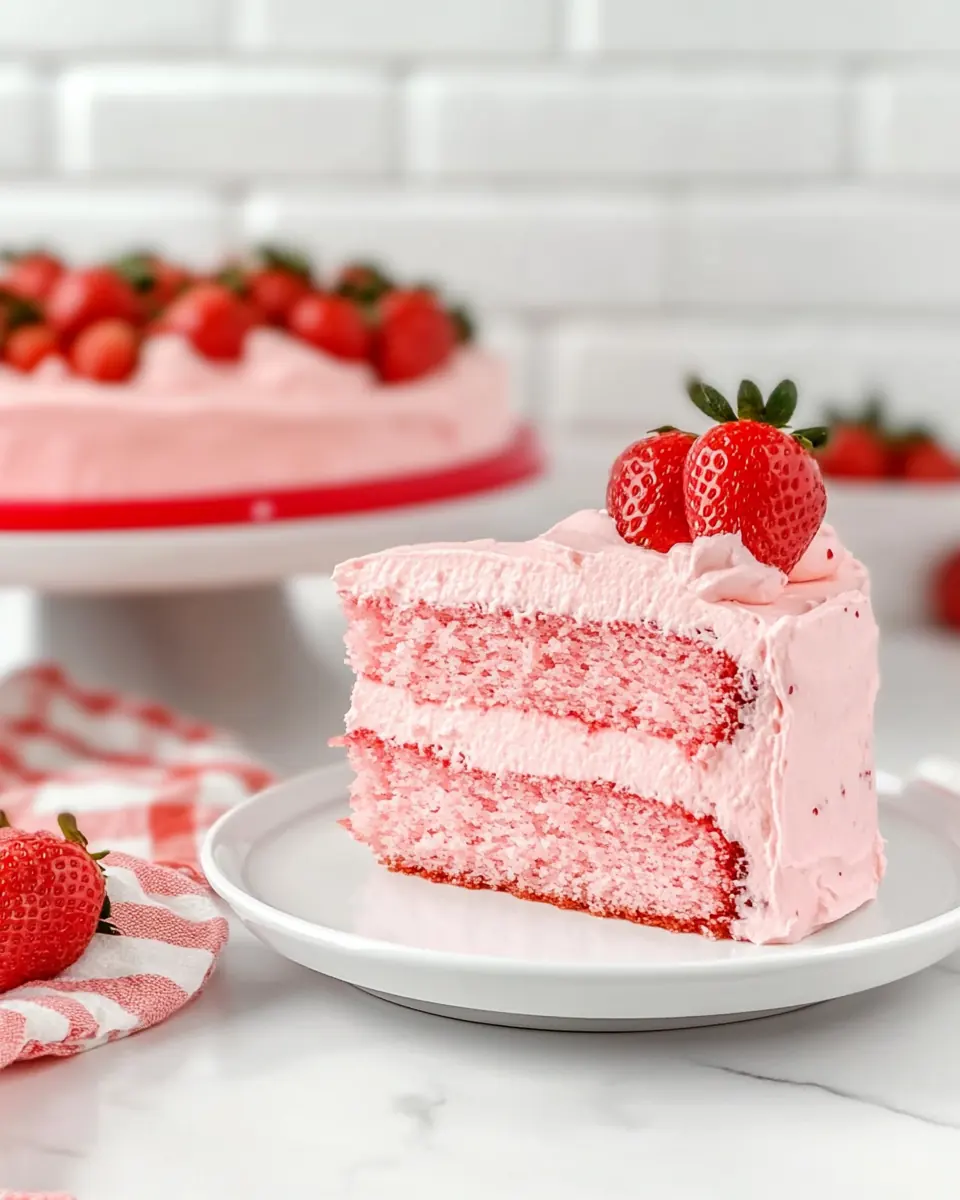
- Place one of the cooled round cakes on serving platter. Top the cake with half of the icing. Then place the other round cake on top of the frosting. Finish frosting the outside of the cake.: As you assemble, the scent of strawberries and butter melds into a welcoming aroma. The first layer of frosting should be a thin, even coat that acts as a crumb coat, sealing loose crumbs so the final layer looks clean. Spread the filling gently, feeling for an even thickness with the back of a spoon or an offset spatula. When you add the second layer and finish the sides, move slowly to create smooth planes and soft swirls. If crumbs appear in the frosting, chill the cake briefly and apply a final thin layer to achieve a neat surface. A frequent mistake is overworking the frosting, which can warm it and make it too soft; if that happens, refrigerate for 10 to 15 minutes to firm it up before finishing. The finished cake should look cohesive, with a silky frosting texture and a subtle pink tint from the reserved berries.
Recipe Variations about Strawberry Cake
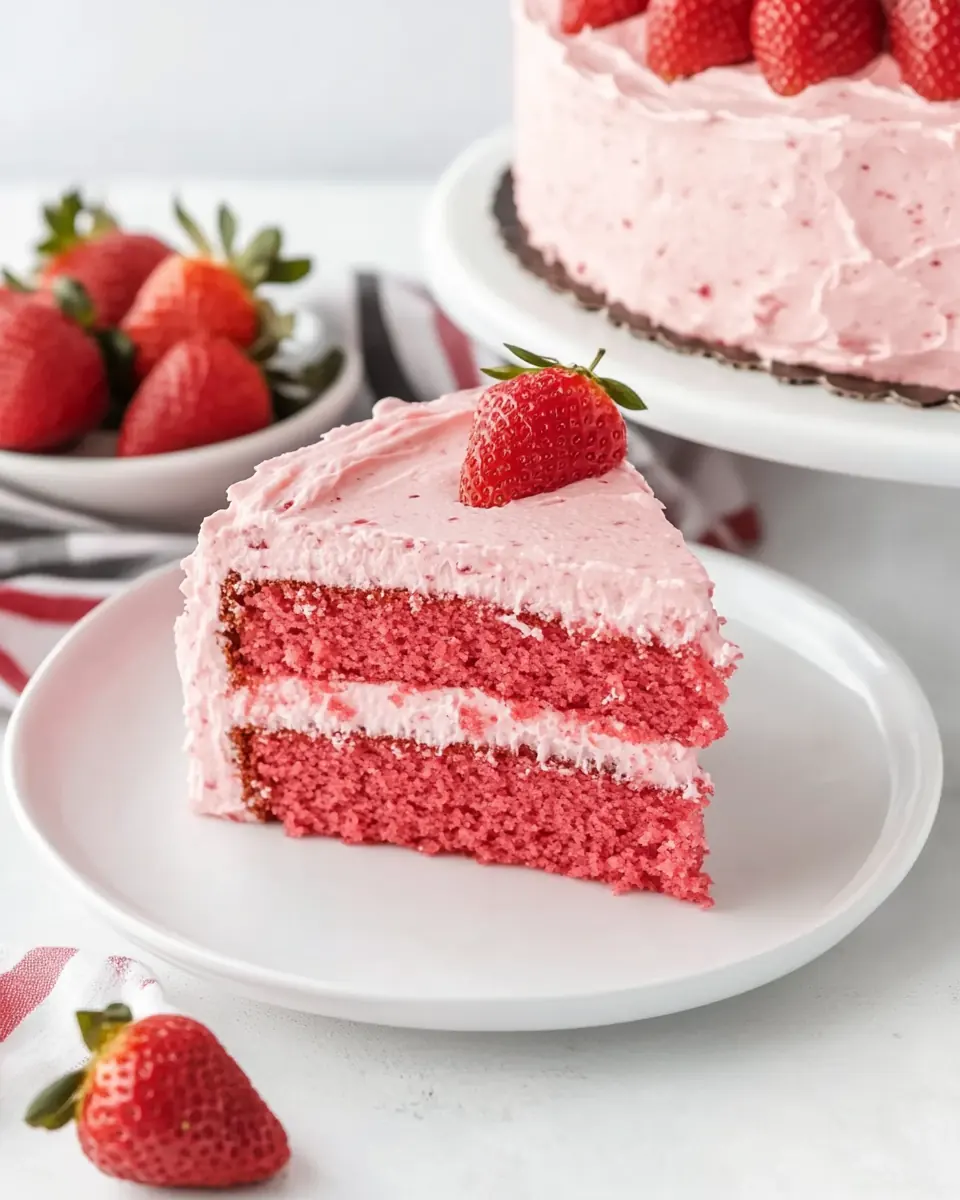
I like to keep variations simple so the core strawberry flavor stays front and center. Below are ideas you can try to adapt the cake to different occasions while preserving its tender crumb and fresh frosting.
- Make it decorative Use fresh sliced strawberries on top for a pretty finish, arranging them in a concentric pattern for a celebratory look.
- Adjust sweetness If you prefer a less sweet cake, reduce the powdered sugar in the frosting slightly and let the fruit shine through more.
- Layer mini cakes Bake the batter in smaller pans to create mini layer cakes, which are great for individual servings at parties.
- Use different pans Try a bundt pan for a single ring cake that makes slicing easy and adds visual interest without altering the recipe proportions.
- Chill before serving Refrigerate the frosted cake for an hour to let the frosting set, which helps when transporting or slicing neatly.
What to Serve Alongside Strawberry Cake
This cake pairs well with light accompaniments that complement the strawberry notes and creamy frosting. Think simple, seasonal additions that enhance texture and contrast without overpowering the dessert.
- Whipped cream A dollop of lightly sweetened whipped cream adds airiness and is perfect for those who want an even lighter bite.
- Fresh berries Serve a small bowl of mixed fresh berries to echo the strawberry flavor and add a fresh, juicy contrast to the sweet cake.
- Tea or coffee A hot cup of tea or coffee balances the sweetness and makes the cake ideal for afternoon gatherings or a relaxed brunch.
- Light fruit salad A citrusy fruit salad provides bright acidity and a refreshing counterpoint for larger slices at summertime events.
- Storage tips Store leftover slices in an airtight container in the refrigerator for up to five days, or freeze individual slices in freezer safe containers for up to three months; allow to thaw in the refrigerator before serving.
- Occasions This cake is appropriate for birthdays, springtime celebrations, baby showers, or any casual get together where you want a comforting, nostalgic dessert.
FAQ
Conclusion
What makes this Strawberry Cake special is its balance of real fruit flavor and a tender, moist crumb that feels both nostalgic and fresh. The recipe is forgiving and approachable, yet the reserved mashed strawberries in the frosting elevate it into something worth serving for celebrations or quiet weekend treats. I encourage you to give it a try, taking your time with the cooling and frosting steps so the final cake looks as lovely as it tastes. Share a slice with someone you care about and notice how a simple dessert can create a warm moment in any gathering.
Strawberry Cake
Ingredients
Equipment
Method
- Grease & flour two 9 inch round pans, set aside. Preheat oven to 350 degrees Fahrenheit.: You will notice a faint waxy scent from the greased pans and the warmth of the oven beginning to circulate, which signals readiness. Greasing and flouring creates a thin barrier between the cake and pan, preventing sticking and ensuring smooth release when you invert the pans. Use a pastry brush or paper towel to press a thin even layer of oil or shortening in the pan, then dust with flour and tap out the excess. If you skip this step or do it unevenly, the cake can cling and tear when unmolding. A common mistake is using too much grease, which can create an oily ring on the cake edges; use just enough for coverage. Aim for an even coating and place the pans on a middle rack so heat circulates evenly. You should hear a quiet hum as the oven stabilizes and see the oven thermometer reach a steady 350 F if you use one. This preparation also helps the bottoms brown uniformly.
- In a large bowl combine cake mix and strawberry Jell-O mix until completely mixed. Then add egg whites, & oil. Beat until well blended.: The dry powders will first give off a sweet, slightly floral strawberry scent when combined. Mixing the white cake mix and the strawberry Jell O thoroughly ensures the fruit flavor distributes evenly. When you add the egg whites and canola oil , the batter will turn glossy and smoother in texture. Beat on medium speed until you see no streaks of dry mix, scraping the bowl once or twice to incorporate everything. Overbeating at this stage can introduce too much air and create tunnels in the crumb, so stop once the batter is uniform. A frequent error is adding ingredients out of order, which can lead to lumps; follow the sequence so the batter forms correctly. The batter should be smooth and slightly thick, not runny or clumpy.
- In a small bowl or food processor, mash strawberries. Set aside 3 Tablespoons for icing. Add water and remaining berries to batter and mix. Pour into prepared pans.: Once mashed, the strawberries will release a bright, tangy aroma and a rosy color. Reserving 3 tablespoons keeps the frosting vibrant while folding the rest into the batter gives the cake an authentic fruit presence. Adding the water after mashing loosens the berry bits so they distribute without sinking to the bottom of the pans. When you stir them into the batter, you should see flecks of pink swirl through, and the mixture will smell slightly jammy. Pour the batter carefully into the prepared pans, filling each about three quarters full to allow room for rise. A common issue is overcrowding the pan, which creates uneven baking, so stick to two 9 inch pans. After pouring, tap the pans lightly on the counter to release any trapped air bubbles, which helps avoid large holes in the finished crumb.
- Bake in preheated oven at 350 degrees Fahrenheit for 20-25 minutes or until toothpick comes out clean when inserted into the middle of the cake. Cool for 10 minutes. Remove from pans to wire rack and cool completely.: The oven will transform the batter into sponge, releasing a warm sweet scent of strawberries and baked sugar. Around 20 minutes you should see the edges pull slightly away from the pan and the top become springy to the touch. The toothpick test is a reliable signal; a few moist crumbs are fine, but batter on the pick means it needs more time. Letting the cake rest for 10 minutes in the pans lets steam release gradually, reducing the chance of cracking when flipping out. When you invert onto a wire rack, the bottom should be pale golden and slightly springy. Cooling completely before frosting is critical; a warm cake will melt the frosting and produce a sloppy finish. A frequent mistake is rushing this step, which leads to sliding layers and a messy exterior. Aim for a completely cool cake for neat assembly and a steady frosting surface.
- To make frosting combine softened butter and 3 Tablespoons reserved strawberries in small bowl. Gradually beat in powdered sugar until light and fluffy.: When you begin beating the softened butter with the reserved mashed strawberries , the bowl will release a fragrant, buttery berry scent. The little flecks of fruit give the frosting a pretty pink hue and a natural tang that cuts the sweetness of the powdered sugar. Add the powdered sugar gradually, letting it incorporate so the frosting becomes airy rather than dense. The texture should turn from glossy to cloudlike, and the sound at the mixer lowers as the mixture becomes thicker. If the frosting seems too thin, add a touch more powdered sugar; if it is too stiff, a teaspoon of water can soften it. A common error is adding all the sugar at once, which can create lumps and an overly dry texture. Beat until the icing spreads smoothly but still holds soft peaks.
- Place one of the cooled round cakes on serving platter. Top the cake with half of the icing. Then place the other round cake on top of the frosting. Finish frosting the outside of the cake.: As you assemble, the scent of strawberries and butter melds into a welcoming aroma. The first layer of frosting should be a thin, even coat that acts as a crumb coat, sealing loose crumbs so the final layer looks clean. Spread the filling gently, feeling for an even thickness with the back of a spoon or an offset spatula. When you add the second layer and finish the sides, move slowly to create smooth planes and soft swirls. If crumbs appear in the frosting, chill the cake briefly and apply a final thin layer to achieve a neat surface. A frequent mistake is overworking the frosting, which can warm it and make it too soft; if that happens, refrigerate for 10 to 15 minutes to firm it up before finishing. The finished cake should look cohesive, with a silky frosting texture and a subtle pink tint from the reserved berries.
Notes
- Make it decorative Use fresh sliced strawberries on top for a pretty finish, arranging them in a concentric pattern for a celebratory look.
- Adjust sweetness If you prefer a less sweet cake, reduce the powdered sugar in the frosting slightly and let the fruit shine through more.
- Layer mini cakes Bake the batter in smaller pans to create mini layer cakes, which are great for individual servings at parties.
- Use different pans Try a bundt pan for a single ring cake that makes slicing easy and adds visual interest without altering the recipe proportions.
- Chill before serving Refrigerate the frosted cake for an hour to let the frosting set, which helps when transporting or slicing neatly.