Raspberry Breakfast Braid
Raspberry Breakfast Braid is the kind of morning treat I reach for when I want something that feels fancy but comes together fast. The first time I made this, I was feeding a small group of sleepy friends after an early hike, and the braid arrived warm, glossy with glaze, and full of that sweet tart raspberry pie filling contrast against creamy cream cheese. I remember laughing because everyone kept apologizing for being so quiet, only to inhale their slices with delighted murmurs.
I often keep a can of raspberry pie filling and a sheet of store bought crescent roll sheet on hand for quick weekend breakfasts. There is something comforting about the ritual of softening the cream cheese, zesting a lemon, and braiding the dough while the house fills with a warm, sweet aroma. The glaze, made with powdered sugar and a splash of heavy cream and lemon juice, becomes that glossy final touch that makes each slice look bakery ready.
On busy mornings I scale this up or down easily, and I love how the components play together: the silky cream cheese base, the jammy raspberry pockets, and the buttery, slightly flaky crescent roll sheet. Each bite gives a contrast of textures and bright citrus notes from the lemon zest that keep it from ever feeling too sweet. Over the years I have learned little timing tricks that keep the braid tidy and prevent the filling from seeping out, and those are exactly the kinds of tips I like to share when friends ask for the recipe.
Recipe Snapshot
35 mins
10 mins
25 mins
Medium
300 kcal
American
Gluten-Free, Low FODMAP
Breakfast
Baking sheet, Parchment paper, Handheld mixer, Mixing bowl, Pizza cutter or sharp knife, Spatula
Why You’ll Love This Raspberry Breakfast Braid
Easy elegance for mornings
What I love most about Raspberry Breakfast Braid is how effortlessly it turns an ordinary morning into something celebratory. You do not need masterful dough skills, just a few confident folds, and the result feels like a special occasion. I often bring this to casual brunches, because it looks impressive while still being approachable.
Flavor balance that sings
The pairing of creamy cream cheese with tangy raspberry pie filling and bright lemon zest creates a lively flavor profile. I like that the crescent roll sheet provides a buttery backdrop without competing with the fillings. Each component supports the others, so the braid never tastes flat or one dimensional.
Speed without sacrifice
I often need something fast but satisfying, and this braid delivers in under an hour. From softening the cream cheese to the glossy glaze finish, the timeline is friendly for busy households. I appreciate recipes that respect time and still give a homemade taste, and this one consistently does.
Great for sharing
The presentation is a winner. When I bring a warm Raspberry Breakfast Braid to a table, people gather around it. It slices neatly into portions, which makes serving simple and sociable. It is a dish that invites conversation and second helpings.
Accessible ingredients
Everything here is easy to find: cream cheese, granulated sugar, a can of raspberry pie filling, and a crescent roll sheet. I like recipes that do not require specialty shopping, and this braid fits that ethos perfectly. You can make small swaps in technique, but the core elements remain familiar and dependable.
What to Buy for Raspberry Breakfast Braid
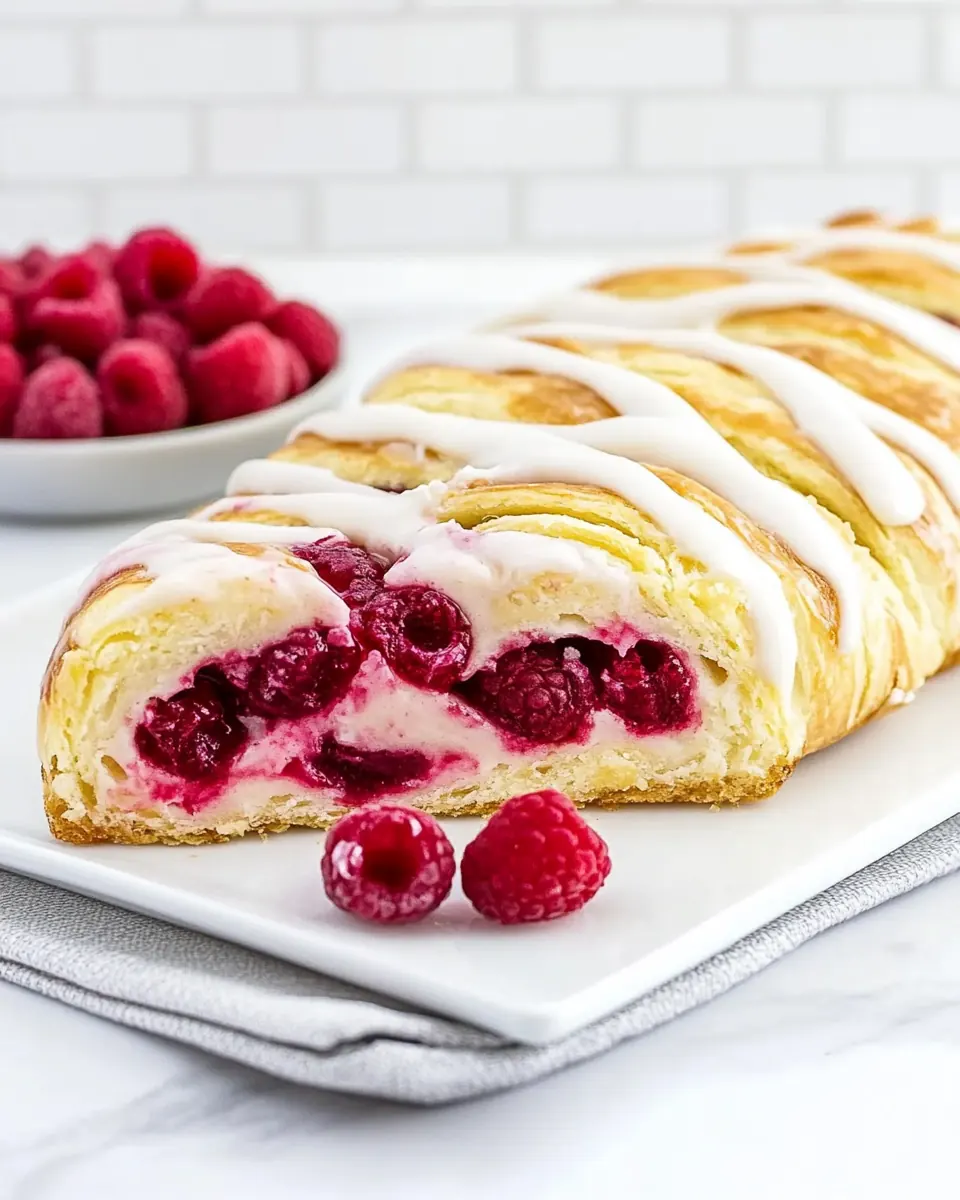
These ingredients come together with a clear purpose: the soft, tangy filling anchors the sweetness of the raspberry pie filling, while the crescent roll sheet gives a tender, flaky vessel. The cream cheese adds richness and a custardy texture, and bright notes from the lemon keep the overall profile lively. Everything here is about contrast and simplicity.
- 4 ounces cream cheese (softened): Softened to a spreadable consistency and whipped with sugar and egg yolk to create a smooth, tangy cream cheese filling that lends richness to the braid.
- 1/4 cup granulated sugar: Granulated sugar dissolves into the cream cheese mixture to sweeten and balance the tartness, providing structure and a tender bite when baked.
- 1 egg yolk: Separated egg yolk enriches the filling with fat, contributing silkiness and aiding browning on the surface for an appealing golden color.
- 1/2 teaspoon vanilla extract: Vanilla extract adds warm, aromatic depth to the cream cheese filling, enhancing the overall flavor profile without overpowering the fruit.
- 1/4 teaspoons salt: Finely measured salt brightens and balances the sweet components, sharpening the flavors and preventing the filling from tasting flat.
- 1 small lemon zest: Zested lemon delivers bright citrus oils that infuse the filling with fresh, fragrant notes and cut through the richness of the cream cheese.
- 3/4 cup raspberry pie filling: Raspberry pie filling supplies sweet-tart fruitiness and a jammy texture, acting as the primary fruity component that sits atop the cream cheese layer.
- 8 ounces crescent roll sheet: Crescent roll sheet provides an easy, flaky pastry base that wraps around the fillings to form the braid and bakes to a golden, layered crust.
- Glaze: Glaze designation indicates a final sweet coating that adds sheen and extra sweetness, finishing the braid with a glossy, appealing touch.
- 1 1/2 cups powdered sugar: Powdered sugar forms the base of the glaze, dissolving into cream to create a smooth, sweet icing that complements the tart lemon and raspberries.
- 2 tablespoons heavy cream: Heavy cream gives the glaze a rich, silky texture and helps achieve a pourable consistency while adding a subtle creaminess to the icing.
- 1 tablespoon lemon juice (from the zested lemon): Lemon juice from the zested lemon introduces bright acidity to the glaze, balancing sweetness and reinforcing the lemon flavor throughout the braid.
Step by Step Guide for Raspberry Breakfast Braid
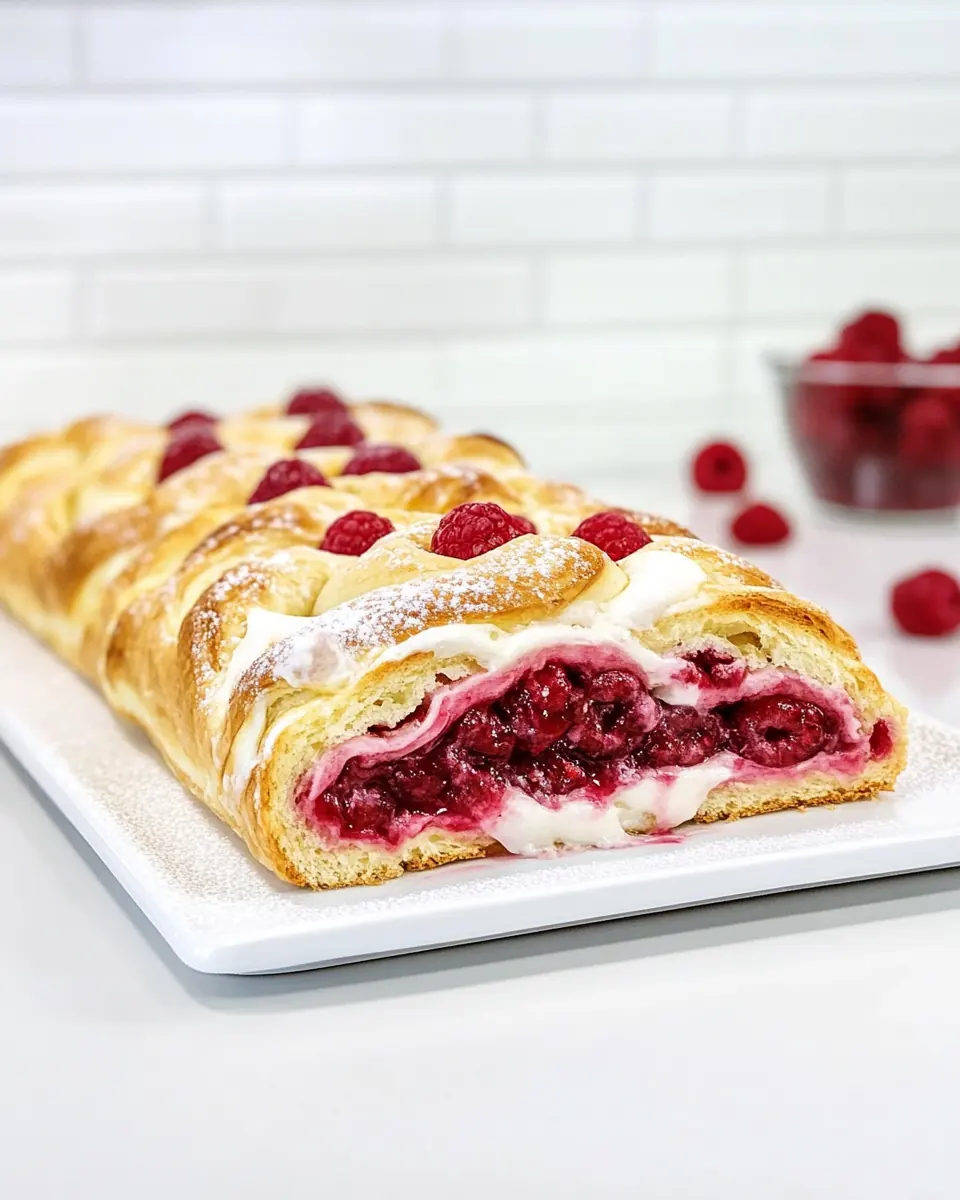
I like to approach the braiding process as a calm assembly, focusing on texture and timing so nothing spills and the bake is even. Follow each step deliberately and you will end up with a glossy, structured braid. Keep tools nearby and work on a lightly floured or parchment lined surface if you need extra control.
- Preheat the oven to 375°F. Line a large rimmed baking sheet with parchment paper or a silicone mat. Set aside.: As you preheat, notice the warm, dry scent that signals the oven is coming to life; this makes the final bake crisp up beautifully. Doing this early ensures the crescent roll sheet goes into a fully preheated environment so it bakes uniformly, creating golden edges and a flaky texture. A common mistake is waiting to preheat until the braid is assembled, which can lead to underbaked dough or an uneven crumb. Make sure the rack is centered so heat circulates around the braid evenly.
- In a medium mixing bowl, using a handheld mixer on medium-low speed, beat together the softened cream cheese, granulated sugar, egg yolk, vanilla extract, salt, and lemon zest until smooth.: You will feel the cream cheese transform under the beaters into a silky spread, and the aroma of lemon zest and vanilla extract will brighten the mixture. The texture should be glossy and free of lumps; this matters because a smooth filling spreads evenly and bakes to a custardy finish. If the mixture is cold and lumpy, warm the bowl slightly or continue beating at low speed to avoid a curdled texture. Overbeating at high speed can incorporate too much air, causing the filling to puff and crack during baking, so keep the speed moderate.
- Unroll the crescent roll sheet onto the prepared baking sheet and gently flatten it to a rough 8×14-inch rectangle.: As you unroll, the pastry will have a soft, slightly tacky feel; pressing gently evens out seams without compressing the layers. This rectangle is your canvas, so aim for uniform thickness so it bakes with consistent color and texture. A frequent error is stretching the dough too thin, which can cause tears and leakage of filling. If seams are visible, press them lightly to seal and restore an even surface.
- Using a pizza cutter or sharp knife, cut 10 (1 1/2-inch) strips, at a diagonal, on each side. You want to leave the center solid (about 3 to 4 inches wide) because that is where you will place your filling.: The satisfying sound of the cutter moving through the dough is a good cue that your strips will braid neatly. The diagonal cuts create longer strips that cross over cleanly and cradle the filling. If you cut too close to the center, there will not be enough space for the filling, while cuts too shallow can cause uneven braiding. Keep the center uncut so the filling has a stable base and cannot seep through the cuts.
- Evenly spread your cream cheese mixture onto the center of your cut crescent roll sheet, careful not to get it on the cut strips.: Use a spatula and feel the weight as you spread; a smooth layer about a quarter inch thick is ideal so the braid holds together without bulging. The fragrance of lemon zest will lift as you smooth it on, and the gloss of the filling shows you it is properly mixed. Getting filling onto the cut strips can prevent clean overlaps and cause leakage, so keep the spread confined to the center. If the filling seems runny, scrape and chill briefly before continuing.
- Spoon your raspberry pie filling onto the top of the cream cheese filling.: As you dollop the raspberry pie filling , you will notice the jewel like sheen and deep color; gently spread it into an even layer, leaving a small border so it does not ooze. The contrast of the jam against the pale filling is visually appealing and helps you judge even distribution. Overfilling is a common trap, leading to seepage during baking; use the suggested amount and keep the filling centered.
- Fold the ends of the crescent dough up and over the top of the cream cheese and cherries. This helps the filling to stay nice and neat inside the ends of the raspberry breakfast braid when baked.: Tucking the ends creates a neat enclosure and prevents early leakage, and the soft tear resistance of the dough will let you mold without tearing. Press gently to form a clean edge that will brown attractively. If you skip this step, filling can escape from the ends and burn on the baking sheet, making cleanup harder and leading to uneven filling retention.
- Starting at one end, fold one strip across to the other side of the filling. Then take one strip from the opposite side and cross it over the top of the strip you just placed. Repeat until you have made a criss-cross (braid) pattern on the top of your crescent and fillings. You want to make sure that you go all the way across to the other side when placing your strips. This ensures that your filling does not seep out the sides when baked.: The tactile rhythm of alternating strips creates a woven top that traps steam and forms attractive pockets of golden dough. Working steadily, make sure each strip overlaps cleanly so the braid holds together during baking. Rushing can leave loose strips that open as it bakes; if a strip resists, nudge it gently rather than stretching it forcefully, which could tear the dough.
- Bake for 20 to 25 minutes or until golden.: As the braid bakes, the kitchen will fill with a warm, buttery aroma and the top will turn a deep golden brown, signaling caramelization of the dough edges. The filling will bubble gently under the braid where it peeks through, and the crust should be crisp to the touch. A common mistake is underbaking; if the center still feels soft or the dough is pale, give it a few extra minutes and watch closely. Avoid opening the oven repeatedly, which can drop the temperature and affect rise.
- In a medium bowl, combine the powdered sugar, heavy cream, and lemon juice. Whisk until smooth. If your glaze is too thick, you can add a small amount of additional lemon juice to thin it. Be careful not to add too much liquid.: The glaze should be glossy and pourable, with bright citrus notes from the lemon juice . Whisking creates a silky texture that will set into a thin shell on the warm braid. If the glaze becomes too thin, it will run off the pastry, so add liquid cautiously. Conversely, a glaze that is too thick will clump and not drizzle attractively; adjust the consistency one small splash at a time.
- Allow your baked raspberry breakfast braid to cool on the counter for 30 minutes before adding the glaze and serving.: Cooling helps the filling set so slices keep their shape and the glaze will adhere rather than melt away. You will notice residual warmth that gently releases steam, and once cooled slightly, the braid slices cleanly with less squishing. Cutting too soon can cause the filling to spill and the glaze to run, so patience here yields neat slices and beautiful presentation.
Make It Your Own
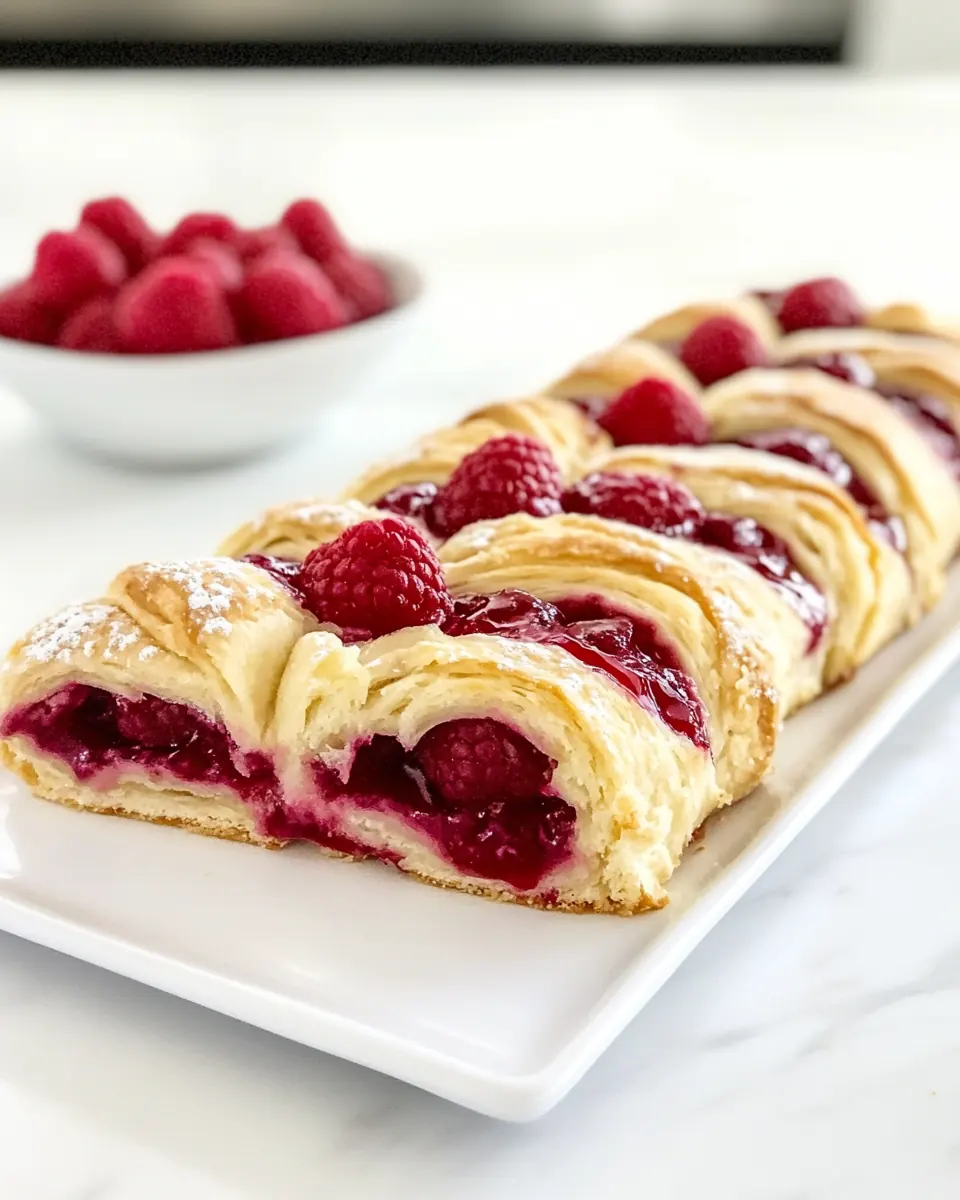
I like to offer a few ways you can personalize this braid while keeping the structure intact. These small adjustments let you tailor flavor and presentation without changing the core technique. Below are practical ideas that have worked well for my brunches and morning gatherings.
- Swap timing: If you prefer a cooler filling, chill the mixed cream cheese for 10 minutes before spreading; it holds shape better and reduces seepage while braiding.
- Glaze texture: For a thicker glaze, add less heavy cream and whisk until glossy; for a thinner sheen add lemon juice in tiny amounts to reach the perfect pourable consistency.
- Neat slices: Use a sharp serrated knife and a gentle sawing motion after the braid has cooled for 30 minutes to get tidy portions without dragging the filling.
- Folding finesse: Tuck the ends firmly and overlap each strip fully across the filling so the braid seals and the filling stays put while baking.
- Storage: Keep leftovers covered at room temperature for up to 24 hours or refrigerate for longer storage, bringing to room temperature before serving to restore tenderness.
Side Dish Ideas for Raspberry Breakfast Braid
This braid pairs beautifully with simple sides and fits many occasions, from casual brunch to special holiday mornings. Below are serving suggestions, pairing ideas, and storage tips to help you present it in the best possible way.
- Simple beverage pairings: Serve with brewed coffee or a mild tea to balance the sweetness, offering guests a warm, comforting counterpoint.
- Fresh fruit: A bowl of sliced seasonal fruit complements the braid’s jammy center and adds a fresh contrast on the plate.
- Brunch occasions: Bring this to weekend gatherings, baby showers, or holiday breakfasts where a slice friendly, shareable pastry is ideal for groups.
- Storage notes: Store the braid in an airtight container in the refrigerator for up to three days; rewarm briefly in a low oven to restore flakiness before serving.
- Seasonal pairing: In spring, pair with citrus salads or light yogurt bowls to echo the lemon zest in the filling and keep the meal bright and fresh.
FAQ
Conclusion
This Raspberry Breakfast Braid shines because it combines simple store bought ingredients with a technique that yields a bakery style result. The interplay of creamy cream cheese, bright lemon zest, and jammy raspberry pie filling makes every slice sing, while the buttery crescent roll sheet keeps the process approachable. Try it for your next weekend brunch or special morning when you want something that looks polished but comes together quickly. Serve warm with a glossy glaze, and enjoy the smiles as people reach for seconds.
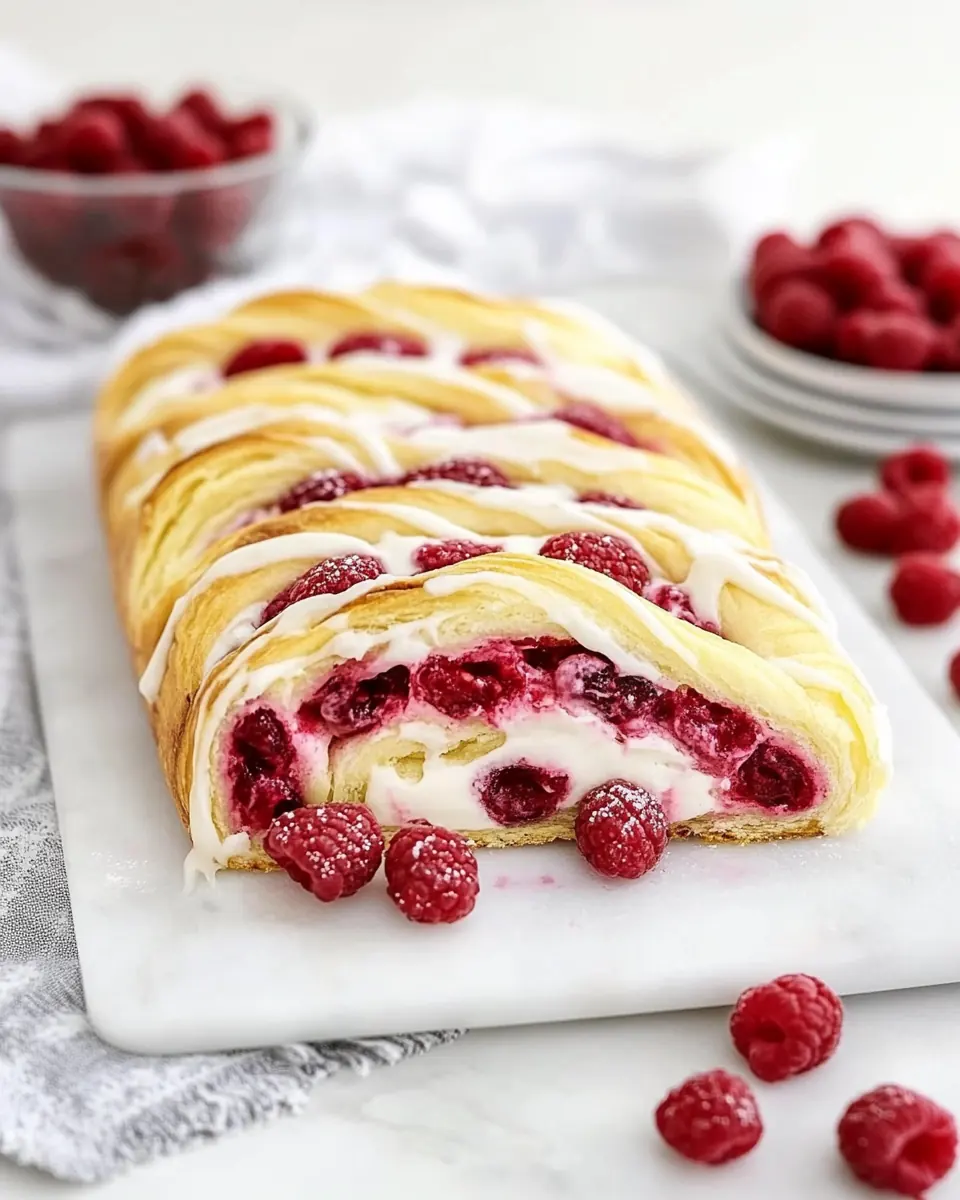
Raspberry Breakfast Braid
Ingredients
Equipment
Method
- Preheat the oven to 375°F. Line a large rimmed baking sheet with parchment paper or a silicone mat. Set aside.: As you preheat, notice the warm, dry scent that signals the oven is coming to life; this makes the final bake crisp up beautifully. Doing this early ensures the crescent roll sheet goes into a fully preheated environment so it bakes uniformly, creating golden edges and a flaky texture. A common mistake is waiting to preheat until the braid is assembled, which can lead to underbaked dough or an uneven crumb. Make sure the rack is centered so heat circulates around the braid evenly.
- In a medium mixing bowl, using a handheld mixer on medium-low speed, beat together the softened cream cheese, granulated sugar, egg yolk, vanilla extract, salt, and lemon zest until smooth.: You will feel the cream cheese transform under the beaters into a silky spread, and the aroma of lemon zest and vanilla extract will brighten the mixture. The texture should be glossy and free of lumps; this matters because a smooth filling spreads evenly and bakes to a custardy finish. If the mixture is cold and lumpy, warm the bowl slightly or continue beating at low speed to avoid a curdled texture. Overbeating at high speed can incorporate too much air, causing the filling to puff and crack during baking, so keep the speed moderate.
- Unroll the crescent roll sheet onto the prepared baking sheet and gently flatten it to a rough 8×14-inch rectangle.: As you unroll, the pastry will have a soft, slightly tacky feel; pressing gently evens out seams without compressing the layers. This rectangle is your canvas, so aim for uniform thickness so it bakes with consistent color and texture. A frequent error is stretching the dough too thin, which can cause tears and leakage of filling. If seams are visible, press them lightly to seal and restore an even surface.
- Using a pizza cutter or sharp knife, cut 10 (1 1/2-inch) strips, at a diagonal, on each side. You want to leave the center solid (about 3 to 4 inches wide) because that is where you will place your filling.: The satisfying sound of the cutter moving through the dough is a good cue that your strips will braid neatly. The diagonal cuts create longer strips that cross over cleanly and cradle the filling. If you cut too close to the center, there will not be enough space for the filling, while cuts too shallow can cause uneven braiding. Keep the center uncut so the filling has a stable base and cannot seep through the cuts.
- Evenly spread your cream cheese mixture onto the center of your cut crescent roll sheet, careful not to get it on the cut strips.: Use a spatula and feel the weight as you spread; a smooth layer about a quarter inch thick is ideal so the braid holds together without bulging. The fragrance of lemon zest will lift as you smooth it on, and the gloss of the filling shows you it is properly mixed. Getting filling onto the cut strips can prevent clean overlaps and cause leakage, so keep the spread confined to the center. If the filling seems runny, scrape and chill briefly before continuing.
- Spoon your raspberry pie filling onto the top of the cream cheese filling.: As you dollop the raspberry pie filling , you will notice the jewel like sheen and deep color; gently spread it into an even layer, leaving a small border so it does not ooze. The contrast of the jam against the pale filling is visually appealing and helps you judge even distribution. Overfilling is a common trap, leading to seepage during baking; use the suggested amount and keep the filling centered.
- Fold the ends of the crescent dough up and over the top of the cream cheese and cherries. This helps the filling to stay nice and neat inside the ends of the raspberry breakfast braid when baked.: Tucking the ends creates a neat enclosure and prevents early leakage, and the soft tear resistance of the dough will let you mold without tearing. Press gently to form a clean edge that will brown attractively. If you skip this step, filling can escape from the ends and burn on the baking sheet, making cleanup harder and leading to uneven filling retention.
- Starting at one end, fold one strip across to the other side of the filling. Then take one strip from the opposite side and cross it over the top of the strip you just placed. Repeat until you have made a criss-cross (braid) pattern on the top of your crescent and fillings. You want to make sure that you go all the way across to the other side when placing your strips. This ensures that your filling does not seep out the sides when baked.: The tactile rhythm of alternating strips creates a woven top that traps steam and forms attractive pockets of golden dough. Working steadily, make sure each strip overlaps cleanly so the braid holds together during baking. Rushing can leave loose strips that open as it bakes; if a strip resists, nudge it gently rather than stretching it forcefully, which could tear the dough.
- Bake for 20 to 25 minutes or until golden.: As the braid bakes, the kitchen will fill with a warm, buttery aroma and the top will turn a deep golden brown, signaling caramelization of the dough edges. The filling will bubble gently under the braid where it peeks through, and the crust should be crisp to the touch. A common mistake is underbaking; if the center still feels soft or the dough is pale, give it a few extra minutes and watch closely. Avoid opening the oven repeatedly, which can drop the temperature and affect rise.
- In a medium bowl, combine the powdered sugar, heavy cream, and lemon juice. Whisk until smooth. If your glaze is too thick, you can add a small amount of additional lemon juice to thin it. Be careful not to add too much liquid.: The glaze should be glossy and pourable, with bright citrus notes from the lemon juice . Whisking creates a silky texture that will set into a thin shell on the warm braid. If the glaze becomes too thin, it will run off the pastry, so add liquid cautiously. Conversely, a glaze that is too thick will clump and not drizzle attractively; adjust the consistency one small splash at a time.
- Allow your baked raspberry breakfast braid to cool on the counter for 30 minutes before adding the glaze and serving.: Cooling helps the filling set so slices keep their shape and the glaze will adhere rather than melt away. You will notice residual warmth that gently releases steam, and once cooled slightly, the braid slices cleanly with less squishing. Cutting too soon can cause the filling to spill and the glaze to run, so patience here yields neat slices and beautiful presentation.
Notes
- Swap timing: If you prefer a cooler filling, chill the mixed cream cheese for 10 minutes before spreading; it holds shape better and reduces seepage while braiding.
- Glaze texture: For a thicker glaze, add less heavy cream and whisk until glossy; for a thinner sheen add lemon juice in tiny amounts to reach the perfect pourable consistency.
- Neat slices: Use a sharp serrated knife and a gentle sawing motion after the braid has cooled for 30 minutes to get tidy portions without dragging the filling.
- Folding finesse: Tuck the ends firmly and overlap each strip fully across the filling so the braid seals and the filling stays put while baking.
- Storage: Keep leftovers covered at room temperature for up to 24 hours or refrigerate for longer storage, bringing to room temperature before serving to restore tenderness.