Spring Rolls with Peanut Sauce
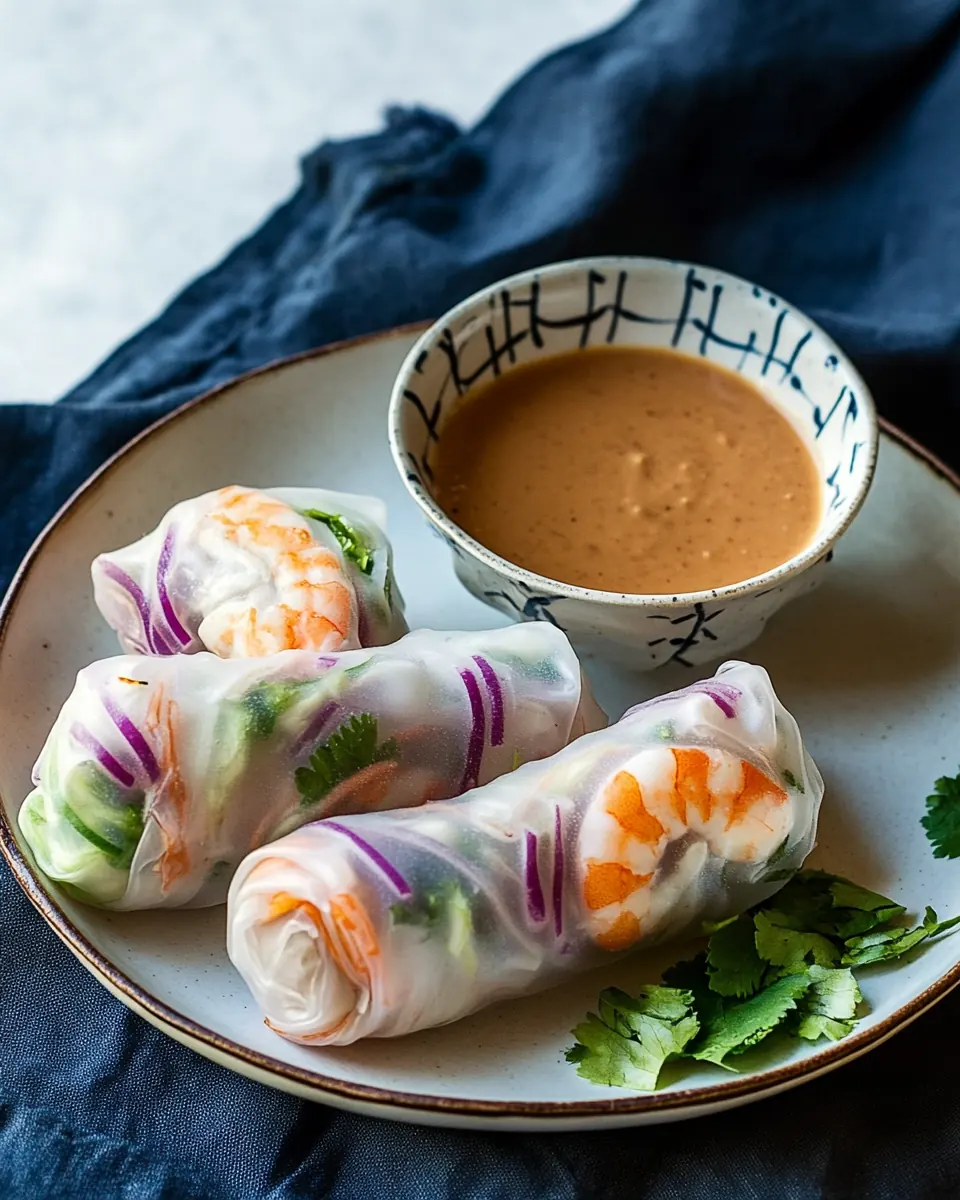
Spring Rolls with Peanut Sauce are one of those dishes I turn to when I want something fresh, colorful, and a little playful on the plate. I first learned to assemble them at a bustling farmers market demo, where a vendor with a sun-faded apron handed me a perfectly wrapped roll and told me that balance is everything, from the soft chew of vermicelli to the bright snap of Thai basil. That first bite hooked me, and I started playing with fillings at home until I landed on this version that highlights tender shrimp, creamy avocado, crisp carrot, and herbal pops of cilantro or mint.
Over the years, these Spring Rolls with Peanut Sauce have become my go-to for potlucks and weeknight dinners. I love that they are hands-on, which turns a simple meal into a communal activity, and I get a little thrill from teaching friends how to hydrate the rice wrappers just right. The magic really happens with the dipping sauce, where smooth peanut butter meets creamy coconut milk and a touch of sweet and salty to make every bite sing. You will notice the textures contrast in a way that keeps every mouthful interesting.
Recipe Snapshot
30 mins
20 mins
10 mins
Medium
150 kcal
Asian
Gluten-Free, Low FODMAP
Appetizers
Small bowl, Pot, Strainer, Wide-mouth saucepan or large bowl, Plate or cutting board
Why Try This Spring Rolls with Peanut Sauce
Fresh, vibrant ingredients
I adore how these rolls use bright, raw components like purple cabbage, shredded carrot, and fresh herbs to provide contrast against the soft vermicelli rice noodles and delicate spring roll rice wrappers. The result is a lively bite that feels light and nourishing.
Customizable and forgiving
One of the reasons I keep coming back to Spring Rolls with Peanut Sauce is how forgiving they are. I often vary the herbs between Thai basil and cilantro, and swapping textures or quantities is simple without breaking the dish. This flexibility makes them perfect for cooks at any skill level.
Perfect party food
These rolls work as a shared appetizer or a full meal, because they are visually attractive and easy to assemble in batches. Guests love the interactivity, and the dipping sauce elevates each roll so it feels special. I enjoy laying them out on a platter for buffet situations.
Balanced flavors in the sauce
The peanut sauce blends creamy peanut butter with the slight richness of coconut milk, brightened by a hint of sweet pure maple syrup and the savory lift from liquid aminos. That balance is why I think the sauce is central to the recipe, it ties every texture and flavor together.
Healthy but satisfying
Finally, I appreciate how these rolls deliver satisfaction without heaviness. With protein from shrimp, healthy fats from avocado, and plenty of crunchy vegetables, they feel like a smart, tasty choice any night of the week.
Main Ingredients for Spring Rolls with Peanut Sauce
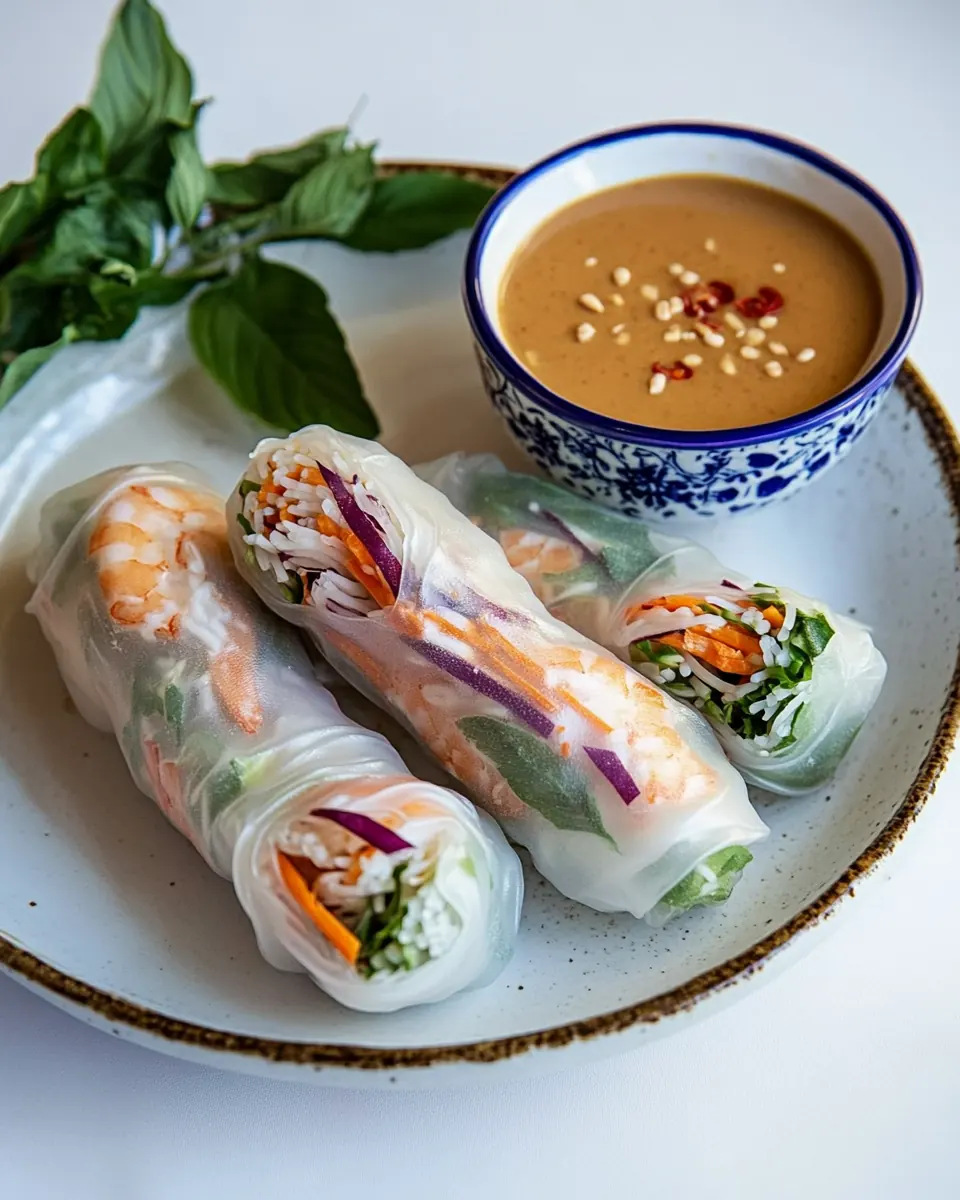
These ingredients are chosen to create contrast and harmony. The rice wrappers and vermicelli provide a soft, neutral base that lets the flavors of the fillings shine. The key players are the herbs and vegetables that add freshness, the shrimp for protein, and the peanut sauce to bring everything together with creaminess and a sweet salty kick.
- 1 Spring roll rice wrappers: Soften and provide the delicate edible wrapper that holds all fillings together for fresh spring rolls; hydrate briefly to become pliable and translucent, allowing easy rolling without tearing. Offer a neutral rice flavor that lets the fillings shine while contributing a light, gluten-free base suitable for dipping.
- 1 (8-oz) package vermicelli rice noodles: Cook and offer tender, slightly chewy noodles that add bulk and texture to the rolls; briefly soak or boil according to package directions and drain well to prevent sogginess. Absorb flavors from accompanying herbs and sauces while harmonizing with the other components for a balanced bite.
- 1 lbs teamed shrimp sliced in half length-wise, cooked: Slice and contribute lean, savory protein with a subtle sweetness that complements the fresh herbs and vegetables; use cooked shrimp halved lengthwise for an attractive presentation and easy rolling. Provide a satisfying contrast of texture and boost the dish's protein content for a more complete appetizer or light meal.
- 15 leaves Thai Basil: Add aromatic, peppery leaves that impart a distinctive Southeast Asian herbal note and bright fragrance to each bite; tuck whole or torn leaves inside the roll for bursts of flavor. Enhance overall freshness and balance richer elements like peanut sauce while pairing well with cilantro or mint.
- 1 cup shredded carrot: Shred and supply a crisp, slightly sweet vegetable component with vibrant color and a pleasant crunch; distribute evenly to add texture and visual appeal. Contribute natural sweetness that contrasts with savory and tangy flavors, while holding up well inside the moist roll.
- 1/3 cup unsweetened creamy peanut butter: Blend and form the creamy, nutty base of the dipping sauce, delivering richness and body while binding other liquid ingredients; whisk with coconut milk and seasonings until smooth. Offer protein and healthy fats that make the sauce satisfying and help carry bold flavors like chili and aminos.
- 1/3 cup full-fat canned coconut milk: Enrich and thin the peanut sauce while adding a subtle coconut creaminess and tropical depth; stir together with peanut butter to achieve a silky consistency. Provide additional fat for mouthfeel and help mellow salty and acidic elements for a rounded sauce.
- 1 tbsp liquid aminos: Season and introduce a savory, slightly salty umami note to the sauce as a gluten-free alternative to soy sauce; mix in small amounts to balance sweetness and acidity. Enhance overall depth of flavor without overpowering the delicate herbs and vegetables inside the rolls.
- 1 tbsp pure maple syrup: Sweeten and balance salty, tangy, and spicy components in the sauce with a warm, caramel-like sweetness; stir in to adjust overall taste and add complexity. Also help thin the sauce slightly and round out the peanut and coconut flavors.
- 1 tbsp sweet chili sauce: Flavor and contribute a bright, sweet-heat element to the dipping sauce that complements creamy peanut and coconut notes; fold in to add a gentle chili kick and glossy texture. Bring an approachable level of spice that ties together the fresh and rich components of the dish.
- 1 to 2 cups purple cabbage shredded: Shred and provide crunchy, colorful bulk with a mildly peppery taste that holds up well against moist fillings; include to add both texture and visual contrast. Supply antioxidant-rich vegetables and a satisfying snap that complements softer ingredients like avocado and noodles.
- 1 to 2 large avocado sliced: Slice and supply creamy, rich mouthfeel and healthy fats that contrast with crunchy vegetables and chewy noodles; add slices just before serving to prevent browning and maintain texture. Contribute buttery flavor and satiety, elevating each roll to more substantial fare.
- 1 cup fresh cilantro or mint loosely packed: Loosely pack and deliver bright, citrusy herbal notes—either fresh cilantro or mint—to uplift the rolls with freshness and aromatic complexity; add sprigs or chopped leaves for bursts of flavor. Serve as a flavor-brightening element that cuts through richer sauce components and refreshes the palate.
Instructions for Spring Rolls with Peanut Sauce
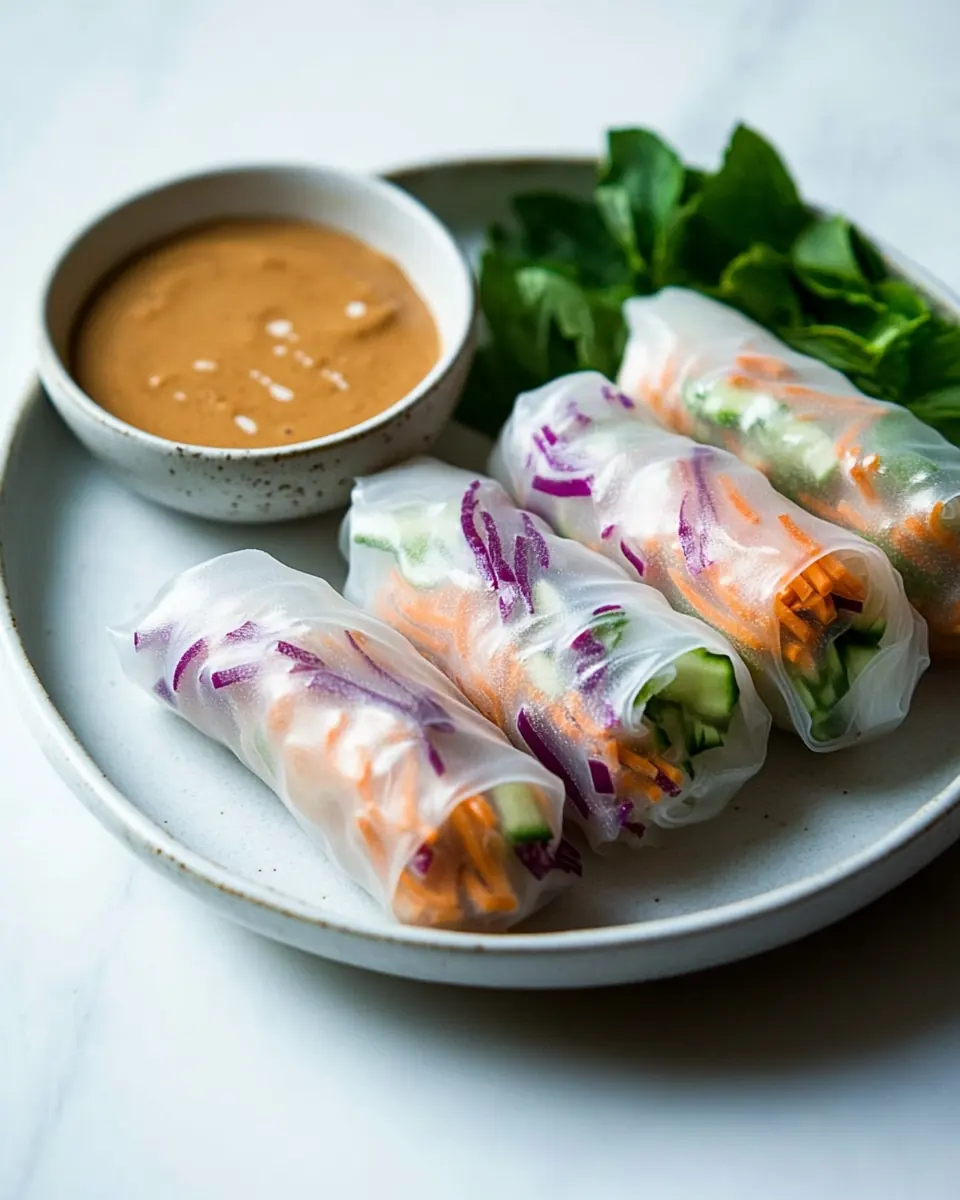
These steps will guide you through making the sauce, preparing the noodles and shrimp, and assembling the rolls. Work methodically and keep your fillings close at hand for an efficient assembly line.
- In a small bowl, stir together all of the ingredients until well-combined. Taste the sauce for flavor and add more pure maple syrup to your personal taste. Set aside (or refrigerate) until ready to use.: The first sensory cue you will notice is the aroma of nutty peanut butter softened by the warm, coconut scent of coconut milk . Vigorously whisking or stirring creates a glossy, smooth sauce, and the texture should be velvety not grainy. If the mixture seems thick, a tablespoon of warm water or more coconut milk helps thin it to a dippable consistency. Why this matters: a smooth sauce clings to the rolls instead of pooling on the plate, which gives every bite a balanced flavor. Common mistake to avoid: under-stirring can leave clumps of peanut butter , which makes the sauce uneven. If the sauce tastes too salty or flat, add a splash more pure maple syrup or a squeeze of citrus if available to brighten it.
- Bring a small pot of water to a boil, then remove it from the burner. Add the vermicelli rice noodles and allow them to sit for 5 minutes, stirring occasionally. Strain the noodles, put them in a bowl, and refrigerate until cool.: Start with a small spoonful of the sauce on the tip of your finger so the sweetness registers without overwhelming your palate. You should perceive a round nutty base with gentle sweetness and a hint of umami from the liquid aminos . The sauce must taste a touch bolder than you want on its own, because it will mellow when paired with the fresh fillings. Why this matters: calibrating sweetness ensures harmony with the herbal and acidic notes in the rolls. Common mistake to avoid: over-sweetening can mask the herbaceousness of Thai basil and cilantro .
- Slice the shrimp down the center lengthwise and cut in half so that they lay flat in the spring rolls instead of puffing out.: When you refrigerate the sauce, the texture firms slightly and the aroma becomes subtler; allow it to sit at room temperature briefly and stir before serving to restore silkiness. Storing it in a covered container keeps it from absorbing other fridge odors. Why this matters: chilling helps the flavors meld, giving a more integrated taste when dipped. Common mistake to avoid: leaving it un-covered can form skin on the surface, which will need to be re-whisked away.
- Add hot water to a wide-mouth saucepan or large bowl. Lay one spring roll skin (wrapper) flat on the hot water just until wet. Place it on a flat surface (such as a plate, cutting board or piece of parchment paper).: The sound of the water reaching a rolling boil and then calming when removed signals the correct temperature for the vermicelli rice noodles . You want the water hot but not actively boiling when you add the noodles so they soften evenly without breaking down. Why this matters: over-boiling makes rice noodles mushy, losing their pleasant tender chew. Common mistake to avoid: adding noodles to vigorously boiling water, which can cause them to disintegrate into a sticky mass.
- Lay three to four shrimp slices on the center of the rehydrated rice paper. Add your desired amount of vermicelli noodles, one basil leaf (or cilantro or mint), shredded carrot, red cabbage, avocado slices, and any other add-ins you fancy.: After a few minutes the noodles will loosen and become translucent, and their delicate fragrance will come forward. Stirring gently keeps them from clumping as they hydrate. Why this matters: resting instead of boiling preserves the noodles' body and prevents a gluey texture. Common mistake to avoid: skipping the occasional stir, which can leave clumps in the center that remain under-hydrated.
- Wrap the stuffing just as you would a burrito, making sure to wrap tightly. First, fold up the bottom of the rice wrapper, covering some of the ingredients in the center. Then, fold in the sides. Finally, fold down the top of the spring roll wrapper, covering the rest of the ingredients in the center.: Once strained, the noodles should feel springy and separate easily. Spreading them briefly on a shallow plate helps them cool faster and keeps them from sticking together. Why this matters: cooling stops carryover cooking, maintaining texture and making them easier to arrange in the rolls. Common mistake to avoid: packing them hot into the rolls, which will steam the wrappers and make them too soft.
- Serve immediately with homemade peanut sauce!: The sound is minimal here, but visually you will notice the shrimp open and flatten, revealing their pink interior and glossy surface. Laying the halves flat prevents a bulging roll and ensures even bites of protein. Why this matters: flat shrimp create a neat presentation and comfortable chew. Common mistake to avoid: leaving whole shrimp which can cause the rice wrapper to tear or create uneven bites.
- Add hot water to a wide-mouth saucepan or large bowl: The hot water will steam slightly and give off a faint mineral scent depending on your water, and it should be hot enough to soften the wrapper quickly. Use a rimmed bowl large enough to accommodate a wrapper without crumpling it. Why this matters: the right bowl and water temperature allow controlled hydration of the wrappers. Common mistake to avoid: using a shallow dish that forces you to bend the wrapper and leads to tears.
- Lay one spring roll skin wrapper flat on the hot water just until wet: You will feel it soften in seconds, going from rigid to pliable, and its surface becomes semi-translucent. Work quickly, because once hydrated the wrapper continues to soften. Why this matters: a brief dunk keeps the wrapper supple but intact, reducing the chance of tearing. Common mistake to avoid: over-soaking, which makes the wrapper sticky and prone to ripping during wrapping.
- Place it on a flat surface such as a plate, cutting board or piece of parchment paper: The hydrated wrapper should feel cool enough to touch and lay flat without folding. Using a clean, dry surface keeps excess water from making the roll soggy. Why this matters: a stable surface helps you assemble with control and precision. Common mistake to avoid: placing the wrapper on a wet surface which can cause the bottom to become waterlogged.
- Lay three to four shrimp slices on the center of the rehydrated rice paper: You will notice the bright pink of the shrimp against the translucent wrapper, which makes for a beautiful presentation. Arranging them in a row keeps the protein evenly distributed in each bite. Why this matters: consistent placement ensures every roll has the same balance of protein and vegetables. Common mistake to avoid: overcrowding with shrimp, which can cause tearing or uneven rolling.
- Add your desired amount of vermicelli noodles, one basil leaf or cilantro or mint, shredded carrot, red cabbage, avocado slices, and any other add-ins you fancy: As you layer, pay attention to texture contrast: tender noodles, crisp cabbage, and creamy avocado. You will hear a faint rustle as the cabbage and carrot nestle together, and the aroma of herbs will be most pronounced at this stage. Why this matters: thoughtful layering prevents gaps and ensures a balanced bite. Common mistake to avoid: overfilling, which makes the wrapper difficult to seal.
- Wrap the stuffing just as you would a burrito, making sure to wrap tightly: You should feel resistance as you tuck and roll, and a gentle pressing sound as the roll firms up. A tight roll holds together when dipped in sauce and during serving. Why this matters: tight wrapping preserves shape and prevents the roll from unraveling. Common mistake to avoid: rolling loosely, which leads to spills and soggy edges.
- First, fold up the bottom of the rice wrapper covering some of the ingredients in the center: This step anchors the filling and creates a secure base. You will notice the wrapper stretches slightly but should not tear if it was properly hydrated. Why this matters: a stable base ensures the sides can be folded neatly. Common mistake to avoid: folding too soon before compressing the filling, which can trap air pockets that cause gaps.
- Then, fold in the sides: Folding the sides creates a tidy rectangular shape and prevents fillings from escaping. The tactile feedback is a gentle snugness as the ingredients are enclosed. Why this matters: side folds are crucial for a compact roll that holds up during handling. Common mistake to avoid: leaving the sides open, which will let the roll unfurl.
- Finally, fold down the top of the spring roll wrapper covering the rest of the ingredients in the center: The final fold seals everything together and gives the roll its finished look. You should feel a slight friction as the wrapper layers adhere to each other. Why this matters: sealing the top locks in moisture and keeps the roll intact. Common mistake to avoid: sealing with a dry wrapper edge, which can prevent adhesion; lightly dampening the edge helps it stick.
- Serve immediately with homemade peanut sauce: When you dip a freshly made roll into the sauce, you will notice the creamy coating that clings to the wrapper and the burst of herbal scent. Serve on a platter so guests can enjoy the contrast of textures. Why this matters: immediate service preserves the wrapper's ideal chew and the fillings' crispness. Common mistake to avoid: making too far in advance without proper wrapping, which causes the wrappers to dry out or become gummy.
Tips for Success
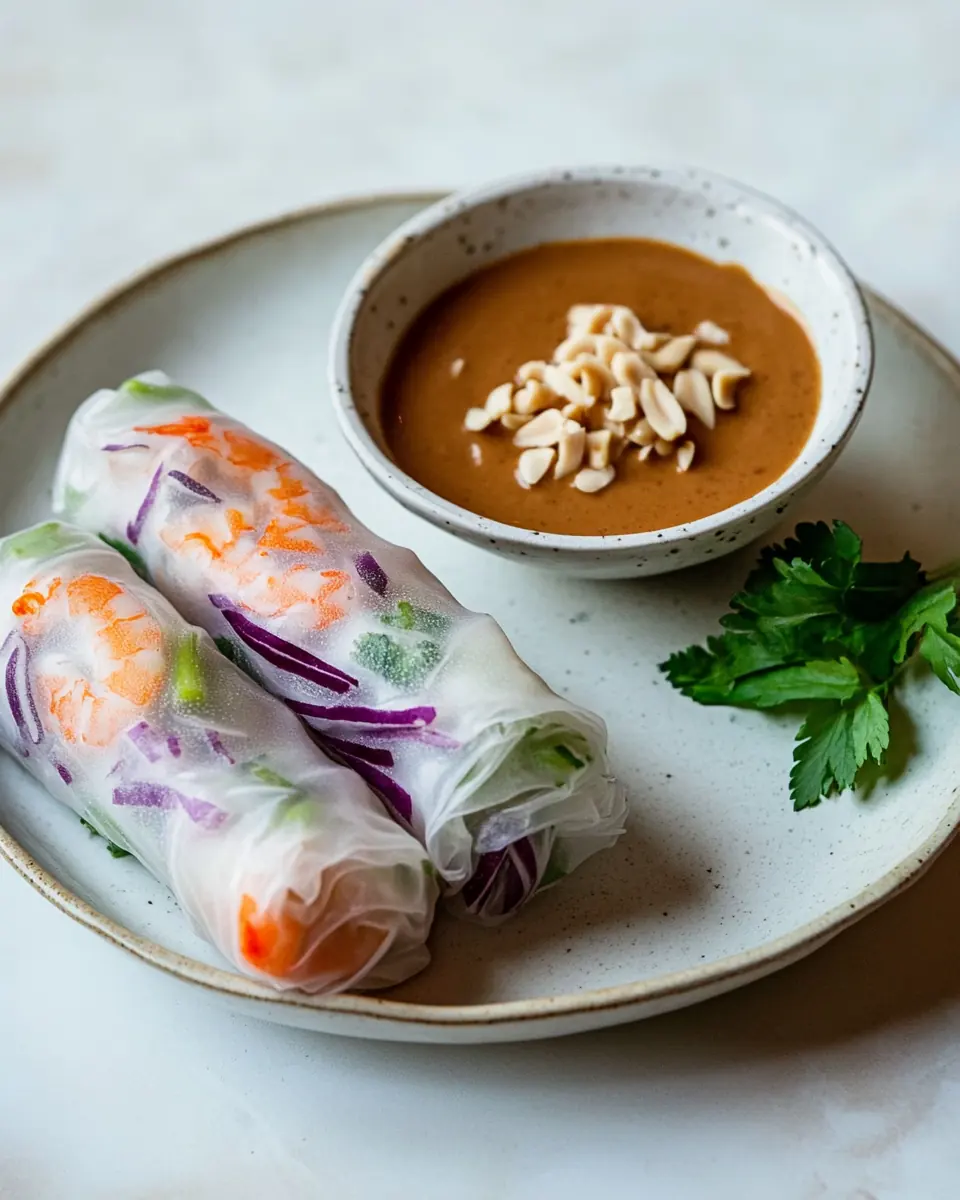
I like to collect small bowls for each ingredient so assembly becomes almost meditative. These tips will help you avoid common pitfalls and get consistently beautiful, tasty Spring Rolls with Peanut Sauce.
- Prepare a clean assembly station with plates, a damp towel, and a shallow bowl of hot water so you can hydrate wrappers efficiently and keep the workflow smooth.
- Thin the sauce gradually by adding warm water or extra coconut milk one teaspoon at a time until it reaches a dippable consistency, because a sauce that is too thick will not coat the rolls evenly.
- Use slightly firm avocado sliced thin so it keeps its shape inside the roll rather than becoming mushy when pressed during wrapping.
- Work in small batches to maintain wrapper quality, because hydrated wrappers dry quickly and assembling too many at once can lead to tears and uneven texture.
- Keep a damp cloth over completed rolls to preserve moisture if you are assembling them ahead of time, this prevents them from forming a dry skin on the exterior.
Serving Ideas for Spring Rolls with Peanut Sauce
These rolls are versatile enough for many occasions, from casual lunches to Ramadan iftar spreads. Below are ideas for pairing, plating, and storing so your presentation feels thoughtful and practical.
- As an appetizer arrange the rolls on a large platter with small bowls of peanut sauce for dipping at the center, and garnish with extra herbs for color.
- For lunch serve two to three rolls with a crisp side salad and a wedge of lime for brightness, which makes the meal feel balanced and fresh.
- Party platter mix rolls with a few vegetarian versions and label each variety so guests can choose, placing the peanut sauce alongside a soy or chili alternate for dietary preferences.
- Storage tip if refrigerating, wrap each roll tightly with plastic wrap and store them snugly in an airtight container to prevent drying; consume within 24 hours for best texture.
- Seasonal pairings in spring and early summer, pair the rolls with light iced green tea or a citrusy mocktail, while in cooler months consider warm broths or heartier side salads to complement them.
FAQ
Conclusion
These Spring Rolls with Peanut Sauce stand out because they balance fresh vegetables, tender protein, and a rich, creamy dipping sauce in every bite. I encourage you to try them when you want a hands-on, colorful meal that travels well and feeds a crowd. They are easy to customize, enjoyable to build with friends, and rewarding to eat, offering lively textures and a satisfying flavor harmony that keeps everyone coming back for another roll.
Spring Rolls with Peanut Sauce
Ingredients
Equipment
Method
- In a small bowl, stir together all of the ingredients until well-combined. Taste the sauce for flavor and add more pure maple syrup to your personal taste. Set aside (or refrigerate) until ready to use.: The first sensory cue you will notice is the aroma of nutty peanut butter softened by the warm, coconut scent of coconut milk . Vigorously whisking or stirring creates a glossy, smooth sauce, and the texture should be velvety not grainy. If the mixture seems thick, a tablespoon of warm water or more coconut milk helps thin it to a dippable consistency. Why this matters: a smooth sauce clings to the rolls instead of pooling on the plate, which gives every bite a balanced flavor. Common mistake to avoid: under-stirring can leave clumps of peanut butter , which makes the sauce uneven. If the sauce tastes too salty or flat, add a splash more pure maple syrup or a squeeze of citrus if available to brighten it.
- Bring a small pot of water to a boil, then remove it from the burner. Add the vermicelli rice noodles and allow them to sit for 5 minutes, stirring occasionally. Strain the noodles, put them in a bowl, and refrigerate until cool.: Start with a small spoonful of the sauce on the tip of your finger so the sweetness registers without overwhelming your palate. You should perceive a round nutty base with gentle sweetness and a hint of umami from the liquid aminos . The sauce must taste a touch bolder than you want on its own, because it will mellow when paired with the fresh fillings. Why this matters: calibrating sweetness ensures harmony with the herbal and acidic notes in the rolls. Common mistake to avoid: over-sweetening can mask the herbaceousness of Thai basil and cilantro .
- Slice the shrimp down the center lengthwise and cut in half so that they lay flat in the spring rolls instead of puffing out.: When you refrigerate the sauce, the texture firms slightly and the aroma becomes subtler; allow it to sit at room temperature briefly and stir before serving to restore silkiness. Storing it in a covered container keeps it from absorbing other fridge odors. Why this matters: chilling helps the flavors meld, giving a more integrated taste when dipped. Common mistake to avoid: leaving it un-covered can form skin on the surface, which will need to be re-whisked away.
- Add hot water to a wide-mouth saucepan or large bowl. Lay one spring roll skin (wrapper) flat on the hot water just until wet. Place it on a flat surface (such as a plate, cutting board or piece of parchment paper).: The sound of the water reaching a rolling boil and then calming when removed signals the correct temperature for the vermicelli rice noodles . You want the water hot but not actively boiling when you add the noodles so they soften evenly without breaking down. Why this matters: over-boiling makes rice noodles mushy, losing their pleasant tender chew. Common mistake to avoid: adding noodles to vigorously boiling water, which can cause them to disintegrate into a sticky mass.
- Lay three to four shrimp slices on the center of the rehydrated rice paper. Add your desired amount of vermicelli noodles, one basil leaf (or cilantro or mint), shredded carrot, red cabbage, avocado slices, and any other add-ins you fancy.: After a few minutes the noodles will loosen and become translucent, and their delicate fragrance will come forward. Stirring gently keeps them from clumping as they hydrate. Why this matters: resting instead of boiling preserves the noodles' body and prevents a gluey texture. Common mistake to avoid: skipping the occasional stir, which can leave clumps in the center that remain under-hydrated.
- Wrap the stuffing just as you would a burrito, making sure to wrap tightly. First, fold up the bottom of the rice wrapper, covering some of the ingredients in the center. Then, fold in the sides. Finally, fold down the top of the spring roll wrapper, covering the rest of the ingredients in the center.: Once strained, the noodles should feel springy and separate easily. Spreading them briefly on a shallow plate helps them cool faster and keeps them from sticking together. Why this matters: cooling stops carryover cooking, maintaining texture and making them easier to arrange in the rolls. Common mistake to avoid: packing them hot into the rolls, which will steam the wrappers and make them too soft.
- Serve immediately with homemade peanut sauce!: The sound is minimal here, but visually you will notice the shrimp open and flatten, revealing their pink interior and glossy surface. Laying the halves flat prevents a bulging roll and ensures even bites of protein. Why this matters: flat shrimp create a neat presentation and comfortable chew. Common mistake to avoid: leaving whole shrimp which can cause the rice wrapper to tear or create uneven bites.
- Add hot water to a wide-mouth saucepan or large bowl: The hot water will steam slightly and give off a faint mineral scent depending on your water, and it should be hot enough to soften the wrapper quickly. Use a rimmed bowl large enough to accommodate a wrapper without crumpling it. Why this matters: the right bowl and water temperature allow controlled hydration of the wrappers. Common mistake to avoid: using a shallow dish that forces you to bend the wrapper and leads to tears.
- Lay one spring roll skin wrapper flat on the hot water just until wet: You will feel it soften in seconds, going from rigid to pliable, and its surface becomes semi-translucent. Work quickly, because once hydrated the wrapper continues to soften. Why this matters: a brief dunk keeps the wrapper supple but intact, reducing the chance of tearing. Common mistake to avoid: over-soaking, which makes the wrapper sticky and prone to ripping during wrapping.
- Place it on a flat surface such as a plate, cutting board or piece of parchment paper: The hydrated wrapper should feel cool enough to touch and lay flat without folding. Using a clean, dry surface keeps excess water from making the roll soggy. Why this matters: a stable surface helps you assemble with control and precision. Common mistake to avoid: placing the wrapper on a wet surface which can cause the bottom to become waterlogged.
- Lay three to four shrimp slices on the center of the rehydrated rice paper: You will notice the bright pink of the shrimp against the translucent wrapper, which makes for a beautiful presentation. Arranging them in a row keeps the protein evenly distributed in each bite. Why this matters: consistent placement ensures every roll has the same balance of protein and vegetables. Common mistake to avoid: overcrowding with shrimp, which can cause tearing or uneven rolling.
- Add your desired amount of vermicelli noodles, one basil leaf or cilantro or mint, shredded carrot, red cabbage, avocado slices, and any other add-ins you fancy: As you layer, pay attention to texture contrast: tender noodles, crisp cabbage, and creamy avocado. You will hear a faint rustle as the cabbage and carrot nestle together, and the aroma of herbs will be most pronounced at this stage. Why this matters: thoughtful layering prevents gaps and ensures a balanced bite. Common mistake to avoid: overfilling, which makes the wrapper difficult to seal.
- Wrap the stuffing just as you would a burrito, making sure to wrap tightly: You should feel resistance as you tuck and roll, and a gentle pressing sound as the roll firms up. A tight roll holds together when dipped in sauce and during serving. Why this matters: tight wrapping preserves shape and prevents the roll from unraveling. Common mistake to avoid: rolling loosely, which leads to spills and soggy edges.
- First, fold up the bottom of the rice wrapper covering some of the ingredients in the center: This step anchors the filling and creates a secure base. You will notice the wrapper stretches slightly but should not tear if it was properly hydrated. Why this matters: a stable base ensures the sides can be folded neatly. Common mistake to avoid: folding too soon before compressing the filling, which can trap air pockets that cause gaps.
- Then, fold in the sides: Folding the sides creates a tidy rectangular shape and prevents fillings from escaping. The tactile feedback is a gentle snugness as the ingredients are enclosed. Why this matters: side folds are crucial for a compact roll that holds up during handling. Common mistake to avoid: leaving the sides open, which will let the roll unfurl.
- Finally, fold down the top of the spring roll wrapper covering the rest of the ingredients in the center: The final fold seals everything together and gives the roll its finished look. You should feel a slight friction as the wrapper layers adhere to each other. Why this matters: sealing the top locks in moisture and keeps the roll intact. Common mistake to avoid: sealing with a dry wrapper edge, which can prevent adhesion; lightly dampening the edge helps it stick.
- Serve immediately with homemade peanut sauce: When you dip a freshly made roll into the sauce, you will notice the creamy coating that clings to the wrapper and the burst of herbal scent. Serve on a platter so guests can enjoy the contrast of textures. Why this matters: immediate service preserves the wrapper's ideal chew and the fillings' crispness. Common mistake to avoid: making too far in advance without proper wrapping, which causes the wrappers to dry out or become gummy.
Notes
- Prepare a clean assembly station with plates, a damp towel, and a shallow bowl of hot water so you can hydrate wrappers efficiently and keep the workflow smooth.
- Thin the sauce gradually by adding warm water or extra coconut milk one teaspoon at a time until it reaches a dippable consistency, because a sauce that is too thick will not coat the rolls evenly.
- Use slightly firm avocado sliced thin so it keeps its shape inside the roll rather than becoming mushy when pressed during wrapping.
- Work in small batches to maintain wrapper quality, because hydrated wrappers dry quickly and assembling too many at once can lead to tears and uneven texture.
- Keep a damp cloth over completed rolls to preserve moisture if you are assembling them ahead of time, this prevents them from forming a dry skin on the exterior.