In a small bowl, stir together all of the ingredients until well-combined. Taste the sauce for flavor and add more pure maple syrup to your personal taste. Set aside (or refrigerate) until ready to use.: The first sensory cue you will notice is the aroma of nutty peanut butter softened by the warm, coconut scent of coconut milk . Vigorously whisking or stirring creates a glossy, smooth sauce, and the texture should be velvety not grainy. If the mixture seems thick, a tablespoon of warm water or more coconut milk helps thin it to a dippable consistency. Why this matters: a smooth sauce clings to the rolls instead of pooling on the plate, which gives every bite a balanced flavor. Common mistake to avoid: under-stirring can leave clumps of peanut butter , which makes the sauce uneven. If the sauce tastes too salty or flat, add a splash more pure maple syrup or a squeeze of citrus if available to brighten it.
Bring a small pot of water to a boil, then remove it from the burner. Add the vermicelli rice noodles and allow them to sit for 5 minutes, stirring occasionally. Strain the noodles, put them in a bowl, and refrigerate until cool.: Start with a small spoonful of the sauce on the tip of your finger so the sweetness registers without overwhelming your palate. You should perceive a round nutty base with gentle sweetness and a hint of umami from the liquid aminos . The sauce must taste a touch bolder than you want on its own, because it will mellow when paired with the fresh fillings. Why this matters: calibrating sweetness ensures harmony with the herbal and acidic notes in the rolls. Common mistake to avoid: over-sweetening can mask the herbaceousness of Thai basil and cilantro .
Slice the shrimp down the center lengthwise and cut in half so that they lay flat in the spring rolls instead of puffing out.: When you refrigerate the sauce, the texture firms slightly and the aroma becomes subtler; allow it to sit at room temperature briefly and stir before serving to restore silkiness. Storing it in a covered container keeps it from absorbing other fridge odors. Why this matters: chilling helps the flavors meld, giving a more integrated taste when dipped. Common mistake to avoid: leaving it un-covered can form skin on the surface, which will need to be re-whisked away.
Add hot water to a wide-mouth saucepan or large bowl. Lay one spring roll skin (wrapper) flat on the hot water just until wet. Place it on a flat surface (such as a plate, cutting board or piece of parchment paper).: The sound of the water reaching a rolling boil and then calming when removed signals the correct temperature for the vermicelli rice noodles . You want the water hot but not actively boiling when you add the noodles so they soften evenly without breaking down. Why this matters: over-boiling makes rice noodles mushy, losing their pleasant tender chew. Common mistake to avoid: adding noodles to vigorously boiling water, which can cause them to disintegrate into a sticky mass.
Lay three to four shrimp slices on the center of the rehydrated rice paper. Add your desired amount of vermicelli noodles, one basil leaf (or cilantro or mint), shredded carrot, red cabbage, avocado slices, and any other add-ins you fancy.: After a few minutes the noodles will loosen and become translucent, and their delicate fragrance will come forward. Stirring gently keeps them from clumping as they hydrate. Why this matters: resting instead of boiling preserves the noodles' body and prevents a gluey texture. Common mistake to avoid: skipping the occasional stir, which can leave clumps in the center that remain under-hydrated.
Wrap the stuffing just as you would a burrito, making sure to wrap tightly. First, fold up the bottom of the rice wrapper, covering some of the ingredients in the center. Then, fold in the sides. Finally, fold down the top of the spring roll wrapper, covering the rest of the ingredients in the center.: Once strained, the noodles should feel springy and separate easily. Spreading them briefly on a shallow plate helps them cool faster and keeps them from sticking together. Why this matters: cooling stops carryover cooking, maintaining texture and making them easier to arrange in the rolls. Common mistake to avoid: packing them hot into the rolls, which will steam the wrappers and make them too soft.
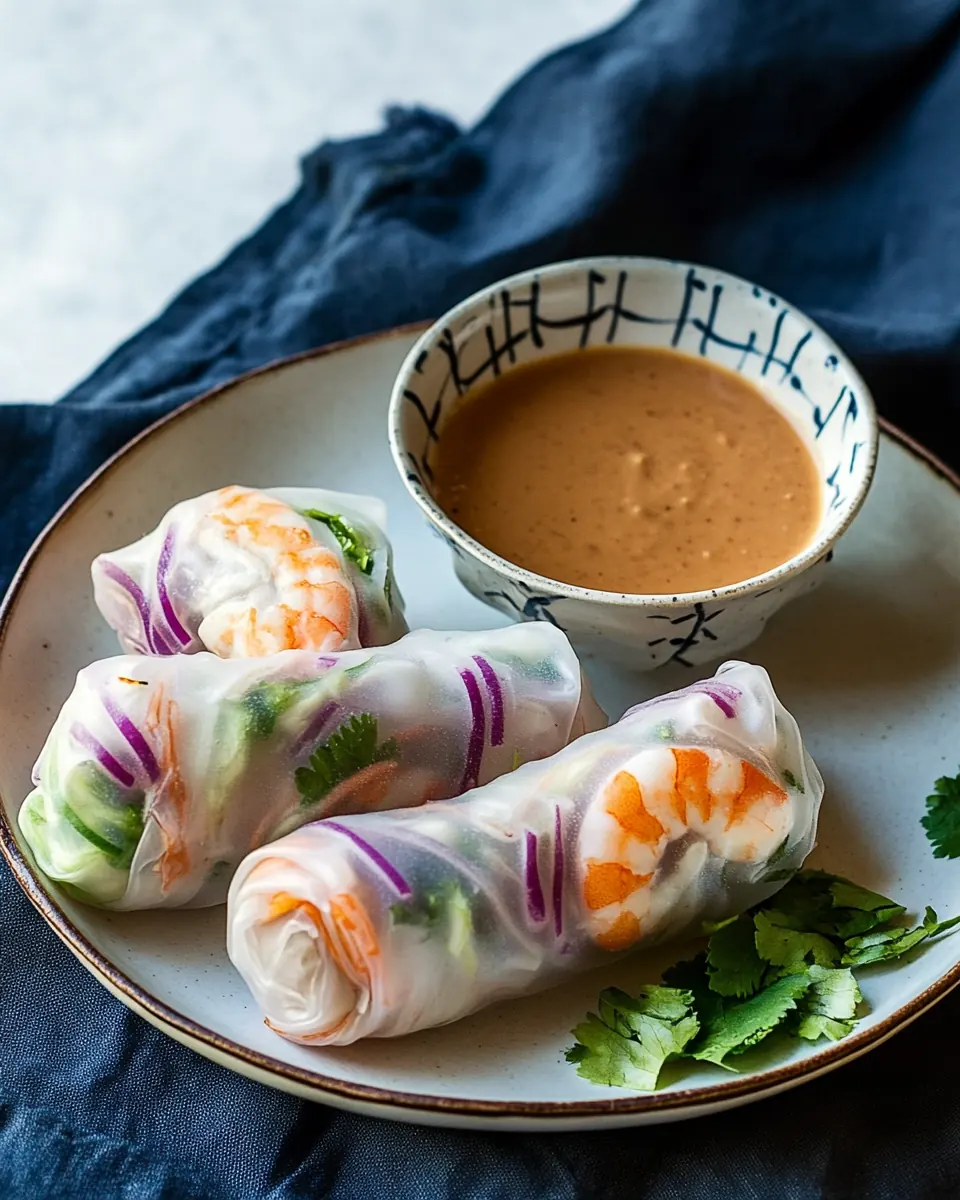
Serve immediately with homemade peanut sauce!: The sound is minimal here, but visually you will notice the shrimp open and flatten, revealing their pink interior and glossy surface. Laying the halves flat prevents a bulging roll and ensures even bites of protein. Why this matters: flat shrimp create a neat presentation and comfortable chew. Common mistake to avoid: leaving whole shrimp which can cause the rice wrapper to tear or create uneven bites.
Add hot water to a wide-mouth saucepan or large bowl: The hot water will steam slightly and give off a faint mineral scent depending on your water, and it should be hot enough to soften the wrapper quickly. Use a rimmed bowl large enough to accommodate a wrapper without crumpling it. Why this matters: the right bowl and water temperature allow controlled hydration of the wrappers. Common mistake to avoid: using a shallow dish that forces you to bend the wrapper and leads to tears.
Lay one spring roll skin wrapper flat on the hot water just until wet: You will feel it soften in seconds, going from rigid to pliable, and its surface becomes semi-translucent. Work quickly, because once hydrated the wrapper continues to soften. Why this matters: a brief dunk keeps the wrapper supple but intact, reducing the chance of tearing. Common mistake to avoid: over-soaking, which makes the wrapper sticky and prone to ripping during wrapping.
Place it on a flat surface such as a plate, cutting board or piece of parchment paper: The hydrated wrapper should feel cool enough to touch and lay flat without folding. Using a clean, dry surface keeps excess water from making the roll soggy. Why this matters: a stable surface helps you assemble with control and precision. Common mistake to avoid: placing the wrapper on a wet surface which can cause the bottom to become waterlogged.
Lay three to four shrimp slices on the center of the rehydrated rice paper: You will notice the bright pink of the shrimp against the translucent wrapper, which makes for a beautiful presentation. Arranging them in a row keeps the protein evenly distributed in each bite. Why this matters: consistent placement ensures every roll has the same balance of protein and vegetables. Common mistake to avoid: overcrowding with shrimp, which can cause tearing or uneven rolling.
Add your desired amount of vermicelli noodles, one basil leaf or cilantro or mint, shredded carrot, red cabbage, avocado slices, and any other add-ins you fancy: As you layer, pay attention to texture contrast: tender noodles, crisp cabbage, and creamy avocado. You will hear a faint rustle as the cabbage and carrot nestle together, and the aroma of herbs will be most pronounced at this stage. Why this matters: thoughtful layering prevents gaps and ensures a balanced bite. Common mistake to avoid: overfilling, which makes the wrapper difficult to seal.
Wrap the stuffing just as you would a burrito, making sure to wrap tightly: You should feel resistance as you tuck and roll, and a gentle pressing sound as the roll firms up. A tight roll holds together when dipped in sauce and during serving. Why this matters: tight wrapping preserves shape and prevents the roll from unraveling. Common mistake to avoid: rolling loosely, which leads to spills and soggy edges.
First, fold up the bottom of the rice wrapper covering some of the ingredients in the center: This step anchors the filling and creates a secure base. You will notice the wrapper stretches slightly but should not tear if it was properly hydrated. Why this matters: a stable base ensures the sides can be folded neatly. Common mistake to avoid: folding too soon before compressing the filling, which can trap air pockets that cause gaps.
Then, fold in the sides: Folding the sides creates a tidy rectangular shape and prevents fillings from escaping. The tactile feedback is a gentle snugness as the ingredients are enclosed. Why this matters: side folds are crucial for a compact roll that holds up during handling. Common mistake to avoid: leaving the sides open, which will let the roll unfurl.
Finally, fold down the top of the spring roll wrapper covering the rest of the ingredients in the center: The final fold seals everything together and gives the roll its finished look. You should feel a slight friction as the wrapper layers adhere to each other. Why this matters: sealing the top locks in moisture and keeps the roll intact. Common mistake to avoid: sealing with a dry wrapper edge, which can prevent adhesion; lightly dampening the edge helps it stick.
Serve immediately with homemade peanut sauce: When you dip a freshly made roll into the sauce, you will notice the creamy coating that clings to the wrapper and the burst of herbal scent. Serve on a platter so guests can enjoy the contrast of textures. Why this matters: immediate service preserves the wrapper's ideal chew and the fillings' crispness. Common mistake to avoid: making too far in advance without proper wrapping, which causes the wrappers to dry out or become gummy.