Roasted Radishes with Onions
Roasted Radishes with Onions became one of my favorite quick vegetable turns after a spring farmers market run left me with an abundance of radishes and a few bundles of tender spring onions. I remember walking home with the peppery bunches tucked under my arm, thinking they were destined for a salad, until a memory of caramelized edges and sweet onion saved the day.
That afternoon I tossed the trimmed roots and wedges of onion with a little extra virgin olive oil, salt, and pepper and slid the pan into the oven. The house filled with an inviting, toasty aroma that felt both rustic and refined, and by the time I scraped the browned pieces from the skillet, I was sold. The radishes had shed their sharpness and turned buttery, the onions had melted into pockets of savory sweetness, and every bite offered a contrast of tender interior and crisped exterior.
I like to serve this when friends drop by unexpectedly, since the prep is forgiving and the result reads like something fancier than the effort required. It also pairs beautifully with simple proteins or a grain bowl, and leftover pieces are fantastic tossed into warm salads. Over the years I have tweaked the timing and the toss technique so the vegetables caramelize evenly, and that little attention makes all the difference in texture and flavor.
Recipe Snapshot
40 mins
10 mins
30 mins
Medium
120 kcal
American
Paleo, Whole30
Side Dishes
Rimmed cookie sheet, Cast iron skillet, Mixing bowl
The Charm of This Roasted Radishes with Onions
Simple ingredients, big transformation
I love how Roasted Radishes with Onions takes humble produce and turns it into something brilliant. The combination of radishes and onions lets heat coax out sugars, giving a sweet, nutty finish that counters the radishes natural bite. I often tell guests this dish proves vegetables can be the star without fuss.
Fast and flexible cooking
This recipe is one of those weeknight heroes where timing and technique matter more than a long ingredient list. You can get the vegetables well caramelized in under an hour, and I frequently adjust roasting times depending on how much color I want. That flexibility makes it perfect when you need something quick but memorable.
Texture play and contrasts
One reason I return to Roasted Radishes with Onions is the textural contrast. The outside crisps, while the interior becomes tender, offering a bite that feels deliberate. The spring onions break down into ribbons of sweetness, creating a balance I never tire of.
Great for seasonal menus
Because radishes are at their peak in spring, this dish feels timely and fresh. I use it to highlight market finds and to keep menus anchored in seasonal produce. It brightens a plate and reminds people how satisfying simple vegetables can be when treated with care.
Low waste, high reward
I also appreciate how economical this is. A small handful of pantry staples delivers a dish that looks and tastes like effort. I encourage you to experiment with quantities and savor the little moments of transformation during roasting.
Ingredients for Roasted Radishes with Onions
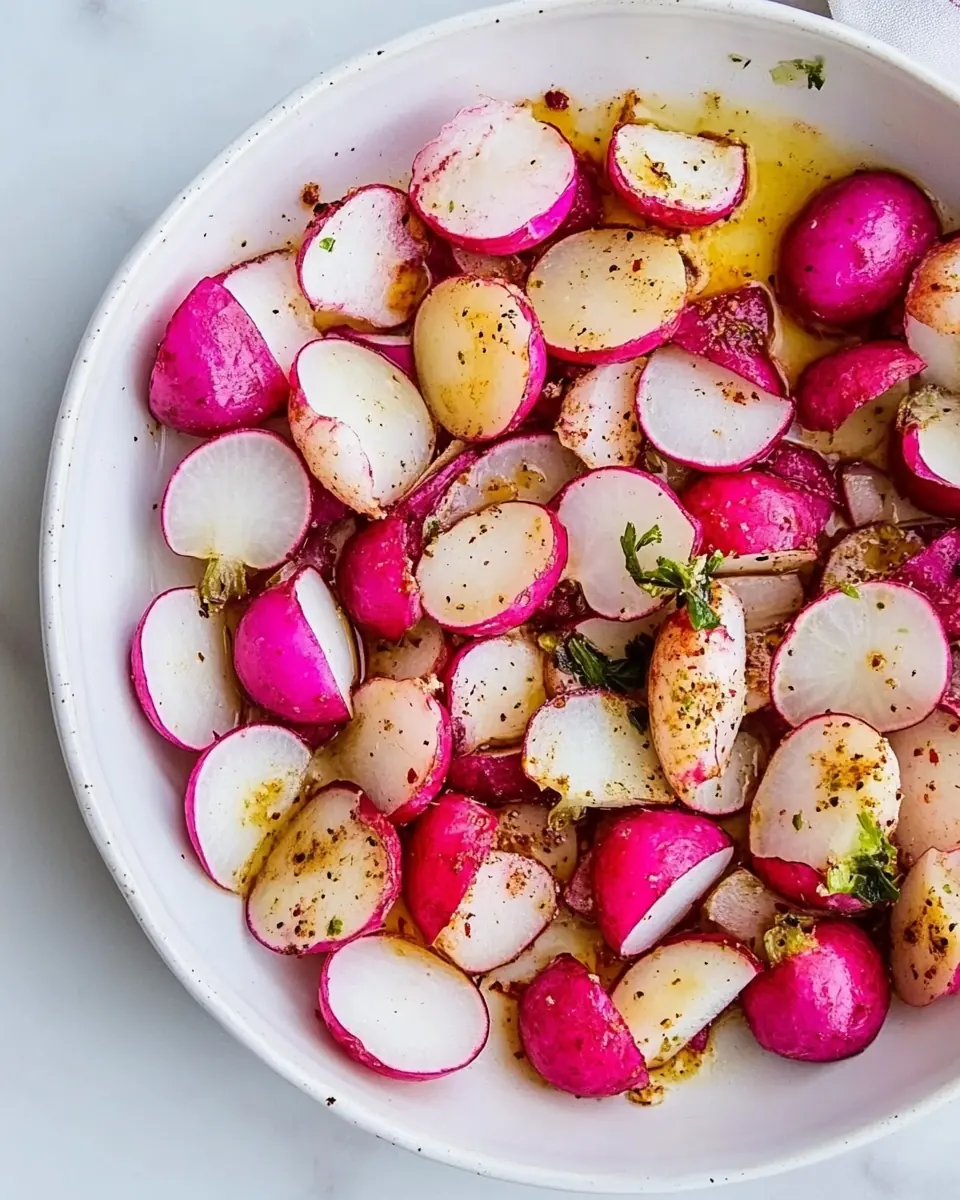
These ingredients are straightforward, intentional, and designed to complement each other. The star is the radishes, which start with a peppery snap and become mellow and sweet when roasted. The spring onions or shallots add depth and savory richness, while the extra virgin olive oil helps with browning and mouthfeel. A touch of kosher salt and coarsely ground black pepper lifts the flavors without masking the vegetables natural character. Together, they create a concise flavor profile built on heat driven caramelization.
- 2 large bunches radishes, about 1 pound each trimmed of the greens: Trimmed and roasted to develop a sweet, mellow flavor while retaining a pleasant bite; provides bulk and a slightly peppery note that becomes nutty when caramelized. Pairing with onions brings balance and visual contrast on the plate.
- 1 pound spring onions or shallots: Sliced or halved and roasted until soft and golden to lend a sweet, aromatic base; offers depth and savory contrast that complements the radishes' bite. Use spring onions for a milder, fresher finish or shallots for a richer, more complex sweetness.
- 1 tablespoon extra virgin olive oil: Drizzled over the vegetables before roasting to help conduct heat and promote even browning; adds a fruity, slightly peppery richness that enhances other flavors without overwhelming them. Choose high-quality extra virgin olive oil for the best aroma and mouthfeel.
- 1/2 teaspoon kosher salt, plus more to taste: Sprinkled lightly to season the dish and enhance the natural flavors; helps balance sweetness and bitterness while drawing out moisture for better caramelization. Adjust to taste after roasting to ensure the right level of seasoning.
- 1/2 teaspoon coarsely ground black pepper: Cracked over the vegetables to introduce a sharp, warm heat that brightens the overall flavor profile; enhances savory notes and contrasts with the natural sweetness developed during roasting. Add a final pinch if needed to taste.
Step by Step Guide for Roasted Radishes with Onions
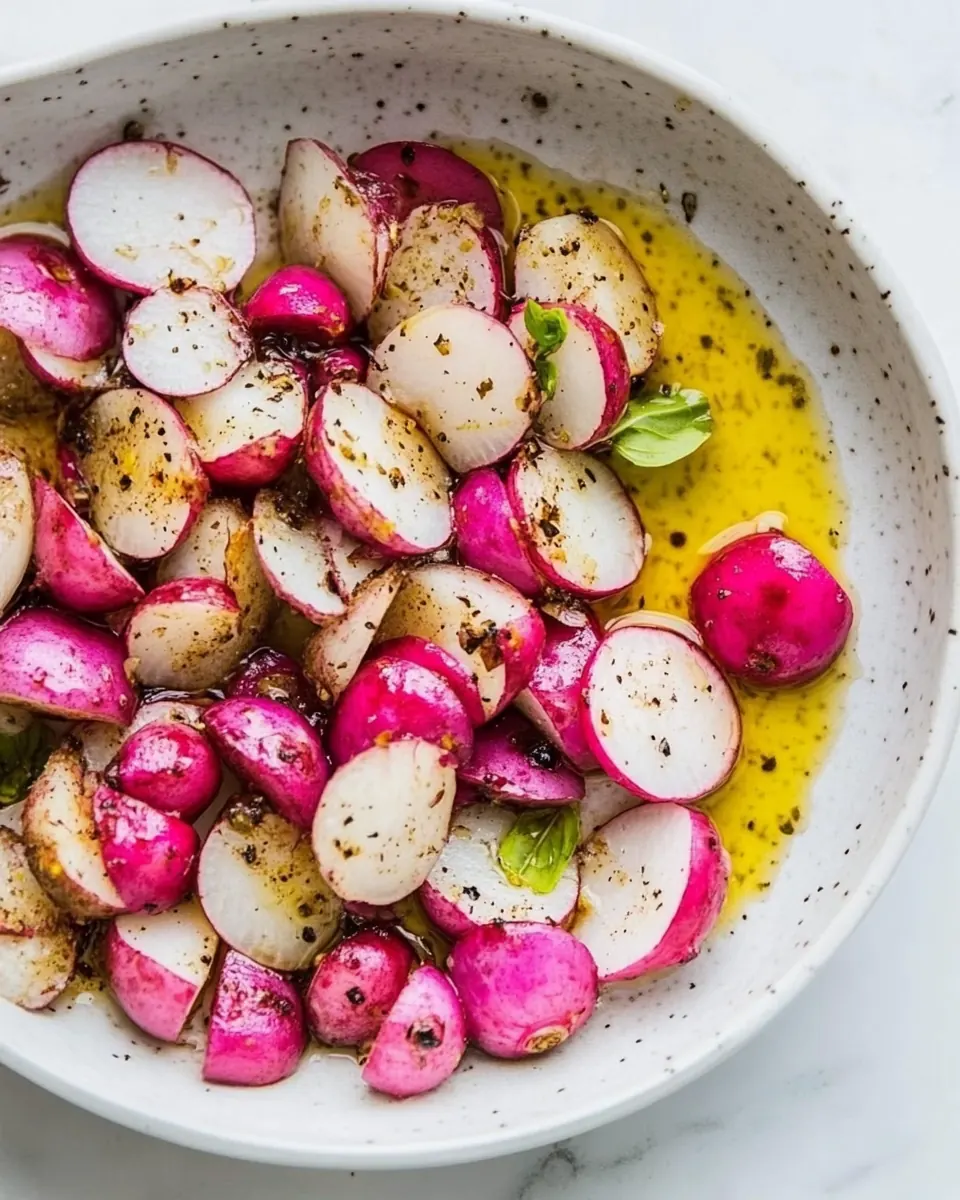
These directions are straightforward but benefit from mindful attention to timing and texture. Below I walk through each step with sensory cues, reasons behind the technique, and common pitfalls to avoid so your vegetables brown evenly and taste balanced.
- Preheat oven to 425°F.: You should feel the kitchen warm and smell a faint toasty scent in the air when the oven reaches temperature, which helps the exterior of the radishes start to blister quickly. This higher initial heat creates Maillard reaction on the surface, giving deep flavor. A common mistake is putting vegetables into a cold oven, which produces steaming rather than roasting, leaving them pale and soft instead of caramelized.
- Halve the radishes or quarter any that are larger than a half dollar.: When you slice the roots, aim for pieces that are uniform so they roast evenly and the exposed surfaces can brown. The cut faces should glisten slightly with their fresh juices, and you will notice edges that will brown first. Be careful not to cut pieces too thin, which can lead to drying out, or too large, which can leave them undercooked inside.
- Cut the onions or shallots into wedges the size of the radish pieces.: Matching sizes ensures synchronous cooking. As you slice, the layers will separate a bit and start to show softer interiors that will later collapse into silky ribbons. Avoid making the wedges too large, as the centers may remain underdone while the radishes caramelize.
- Pile onto a rimmed cookie sheet or cast-iron skillet.: Spread the pieces into a bowl or directly onto the pan for tossing, then spread them out on the rimmed sheet. A rimmed sheet captures any roasting juices while allowing air circulation for crisping. Overcrowding the pan traps steam and prevents browning, so use two pans if needed to give pieces breathing room.
- Drizzle the oil over the vegetables, sprinkle the salt and black pepper over the top and toss to coat, spreading the radishes and onions out into a single layer.: The oil should lightly coat each piece, giving them a sheen that signals even coverage. Tossing helps distribute the seasoning so every bite is seasoned. If you skip this step or under oil, you might end up with dry patches and uneven coloring, so be thorough but moderate.
- Roast for 10 minutes, lower the heat to 350°F, stir the vegetables, and roast for 20 to 30 more minutes, stirring every 10 minutes, or until the vegetables are deeply caramelized on the outside and tender on the inside.: At first you will hear a gentle sizzle and see edges take on golden color, which signals the sugars starting to caramelize. Reducing the oven temperature prevents the outsides from burning while allowing the interior to become tender and buttery. Stirring periodically encourages even browning and exposes new surfaces to the heat. A common misstep is leaving them untouched the whole time, which can cause uneven spots of char or pieces that remain raw in the center.
- Adjust salt as needed.: Once the vegetables are out of the oven you will notice an intensified sweetness and concentrated savory notes. Taste a warm piece and add a pinch more kosher salt if it needs brightness. The wrong move here is over salting at the outset, which can make the finished dish taste flat as moisture concentrates, so season gently and adjust at the finish.
Recipe Variations about Roasted Radishes with Onions
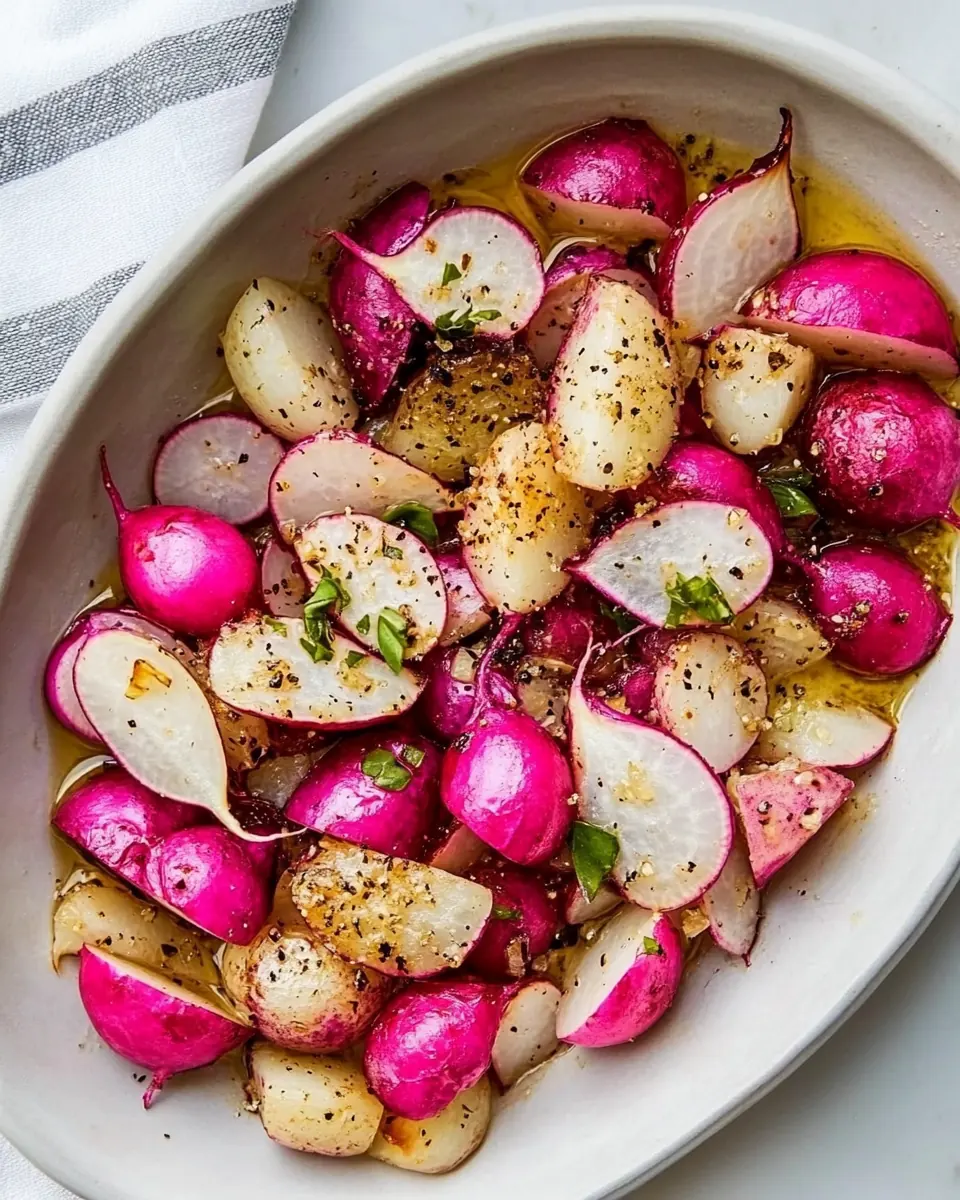
This section explores different ways to adapt the base recipe while keeping the core technique intact. Below are helpful variations and serving ideas that honor the original flavors while offering new textures or seasonings.
- Herb finish: Toss warm vegetables with chopped fresh herbs right after roasting to add a fragrant lift and bright color contrast.
- Spice twist: Sprinkle a pinch of your favorite ground spice after roasting to introduce a warm note without altering the roasting process.
- Crisp edge focus: For more crunch, roast at the higher temperature for a few extra minutes under close watch until edges are deeply brown.
- Make ahead: Roast as directed, then gently reheat in a moderate oven to refresh texture and color before serving.
- Serving shift: Serve warm straight from the pan for a rustic presentation, or cool slightly and include in composed salads for texture contrast.
Serving Ideas for Roasted Radishes with Onions
This dish is versatile and works in many settings, from casual weeknight dinners to seasonal gatherings. Below are detailed serving suggestions and storage notes to help you pair and preserve it well.
- As a side for weeknight dinners: Serve alongside grilled or roasted proteins for a bright, slightly peppery side that adds freshness and texture to the plate.
- On a seasonal vegetable board: Include with other roasted vegetables to create a spring-focused board that highlights market produce and encourages sharing.
- In grain bowls: Add to bowls with warm rice or quinoa for a textural contrast and a pop of roasted flavor that stands up to dressings.
- For casual lunches: Toss with a simple vinaigrette and serve over greens for a warm salad that travels well and keeps its character.
- Storage tips: Refrigerate leftovers in an airtight container for up to three days. Reheat gently in a moderate oven to refresh texture, avoid microwaving which can make them soggy.
- Seasonal pairing: Highlight this in spring menus when radishes and spring onions are at their peak, pairing with light proteins and fresh herbs for a balanced plate.
FAQ
Conclusion
Roasted Radishes with Onions shines because it turns a humble bunch of market vegetables into something complex and comforting through simple roasting techniques. The transformation from peppery and crisp to sweet, tender, and caramelized is what makes this dish special. Give it a try the next time you have fresh radishes and onions on hand, and enjoy how a little heat and patience can make seasonal produce sing. I hope this becomes one of your quick go to sides that you bring out again and again for weeknight dinners and small gatherings.
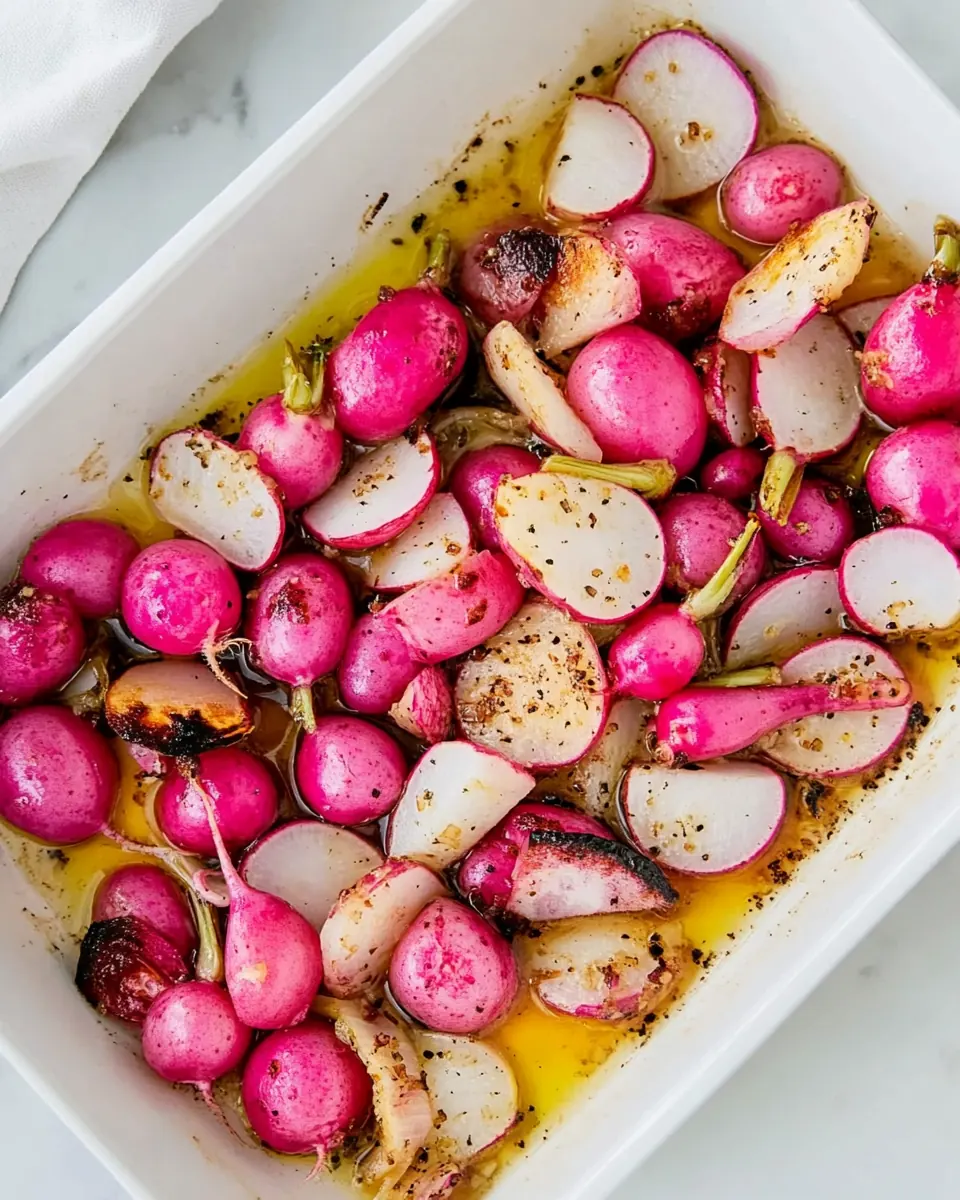
Roasted Radishes with Onions
Ingredients
Equipment
Method
- Preheat oven to 425°F.: You should feel the kitchen warm and smell a faint toasty scent in the air when the oven reaches temperature, which helps the exterior of the radishes start to blister quickly. This higher initial heat creates Maillard reaction on the surface, giving deep flavor. A common mistake is putting vegetables into a cold oven, which produces steaming rather than roasting, leaving them pale and soft instead of caramelized.
- Halve the radishes or quarter any that are larger than a half dollar.: When you slice the roots, aim for pieces that are uniform so they roast evenly and the exposed surfaces can brown. The cut faces should glisten slightly with their fresh juices, and you will notice edges that will brown first. Be careful not to cut pieces too thin, which can lead to drying out, or too large, which can leave them undercooked inside.
- Cut the onions or shallots into wedges the size of the radish pieces.: Matching sizes ensures synchronous cooking. As you slice, the layers will separate a bit and start to show softer interiors that will later collapse into silky ribbons. Avoid making the wedges too large, as the centers may remain underdone while the radishes caramelize.
- Pile onto a rimmed cookie sheet or cast-iron skillet.: Spread the pieces into a bowl or directly onto the pan for tossing, then spread them out on the rimmed sheet. A rimmed sheet captures any roasting juices while allowing air circulation for crisping. Overcrowding the pan traps steam and prevents browning, so use two pans if needed to give pieces breathing room.
- Drizzle the oil over the vegetables, sprinkle the salt and black pepper over the top and toss to coat, spreading the radishes and onions out into a single layer.: The oil should lightly coat each piece, giving them a sheen that signals even coverage. Tossing helps distribute the seasoning so every bite is seasoned. If you skip this step or under oil, you might end up with dry patches and uneven coloring, so be thorough but moderate.
- Roast for 10 minutes, lower the heat to 350°F, stir the vegetables, and roast for 20 to 30 more minutes, stirring every 10 minutes, or until the vegetables are deeply caramelized on the outside and tender on the inside.: At first you will hear a gentle sizzle and see edges take on golden color, which signals the sugars starting to caramelize. Reducing the oven temperature prevents the outsides from burning while allowing the interior to become tender and buttery. Stirring periodically encourages even browning and exposes new surfaces to the heat. A common misstep is leaving them untouched the whole time, which can cause uneven spots of char or pieces that remain raw in the center.
- Adjust salt as needed.: Once the vegetables are out of the oven you will notice an intensified sweetness and concentrated savory notes. Taste a warm piece and add a pinch more kosher salt if it needs brightness. The wrong move here is over salting at the outset, which can make the finished dish taste flat as moisture concentrates, so season gently and adjust at the finish.
Notes
- Herb finish: Toss warm vegetables with chopped fresh herbs right after roasting to add a fragrant lift and bright color contrast.
- Spice twist: Sprinkle a pinch of your favorite ground spice after roasting to introduce a warm note without altering the roasting process.
- Crisp edge focus: For more crunch, roast at the higher temperature for a few extra minutes under close watch until edges are deeply brown.
- Make ahead: Roast as directed, then gently reheat in a moderate oven to refresh texture and color before serving.
- Serving shift: Serve warm straight from the pan for a rustic presentation, or cool slightly and include in composed salads for texture contrast.