Preheat oven to 425°F.: You should feel the kitchen warm and smell a faint toasty scent in the air when the oven reaches temperature, which helps the exterior of the radishes start to blister quickly. This higher initial heat creates Maillard reaction on the surface, giving deep flavor. A common mistake is putting vegetables into a cold oven, which produces steaming rather than roasting, leaving them pale and soft instead of caramelized.
Halve the radishes or quarter any that are larger than a half dollar.: When you slice the roots, aim for pieces that are uniform so they roast evenly and the exposed surfaces can brown. The cut faces should glisten slightly with their fresh juices, and you will notice edges that will brown first. Be careful not to cut pieces too thin, which can lead to drying out, or too large, which can leave them undercooked inside.
Cut the onions or shallots into wedges the size of the radish pieces.: Matching sizes ensures synchronous cooking. As you slice, the layers will separate a bit and start to show softer interiors that will later collapse into silky ribbons. Avoid making the wedges too large, as the centers may remain underdone while the radishes caramelize.
Pile onto a rimmed cookie sheet or cast-iron skillet.: Spread the pieces into a bowl or directly onto the pan for tossing, then spread them out on the rimmed sheet. A rimmed sheet captures any roasting juices while allowing air circulation for crisping. Overcrowding the pan traps steam and prevents browning, so use two pans if needed to give pieces breathing room.
Drizzle the oil over the vegetables, sprinkle the salt and black pepper over the top and toss to coat, spreading the radishes and onions out into a single layer.: The oil should lightly coat each piece, giving them a sheen that signals even coverage. Tossing helps distribute the seasoning so every bite is seasoned. If you skip this step or under oil, you might end up with dry patches and uneven coloring, so be thorough but moderate.
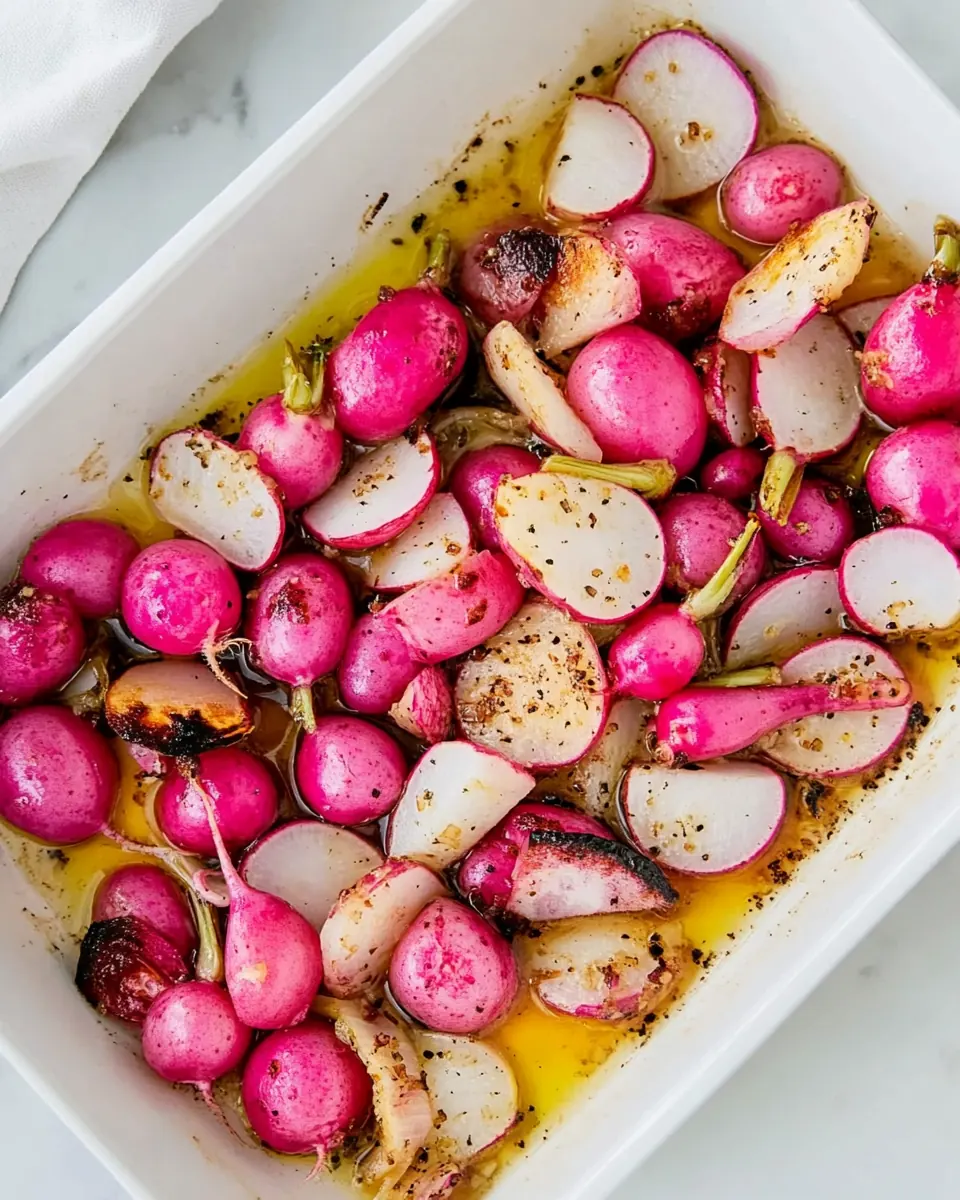
Roast for 10 minutes, lower the heat to 350°F, stir the vegetables, and roast for 20 to 30 more minutes, stirring every 10 minutes, or until the vegetables are deeply caramelized on the outside and tender on the inside.: At first you will hear a gentle sizzle and see edges take on golden color, which signals the sugars starting to caramelize. Reducing the oven temperature prevents the outsides from burning while allowing the interior to become tender and buttery. Stirring periodically encourages even browning and exposes new surfaces to the heat. A common misstep is leaving them untouched the whole time, which can cause uneven spots of char or pieces that remain raw in the center.
Adjust salt as needed.: Once the vegetables are out of the oven you will notice an intensified sweetness and concentrated savory notes. Taste a warm piece and add a pinch more kosher salt if it needs brightness. The wrong move here is over salting at the outset, which can make the finished dish taste flat as moisture concentrates, so season gently and adjust at the finish.