Rainbow Ice Cream
Rainbow Ice Cream has been my go to for summer gatherings ever since I discovered how simple and joyful homemade frozen treats can be. The first time I made it, my niece insisted on choosing the colors, and watching her mix each bowl felt like watching a small, edible art project come together. I love that this recipe turns ordinary ingredients into something playful, and it always sparks conversation when guests lift the lid and find layers of bright color waiting inside.
There is something deeply satisfying about the ritual of whipping cold cream, folding in sweetened condensed milk, and tinting the mixture into joyful hues. Over the years I have learned small tricks that make the texture silkier and the colors more vivid, so this version reflects that experience. When friends ask for an easy party dessert that looks impressive without a lot of fuss, I hand them this recipe and a whisk, and they leave feeling confident and delighted.
Recipe Snapshot
8 hr 15 mins
15 mins
480 mins
Hard
250 kcal
American
Keto, Gluten-Free
Desserts
Loaf pan or container, Large bowl, Medium bowl, Whisk, Spatula
Why This Rainbow Ice Cream Stands Out
1. Stunning visual appeal that needs almost no effort
When I serve Rainbow Ice Cream, people react before they taste it. The layered colors catch the eye, and because you make each hue separately, you can control how bold or soft each band appears. I like to let the colors contrast so the final loaf is a little dramatic, but you can tone it down for a subtle pastel effect.
2. Simple, pantry friendly ingredients
I always appreciate recipes that rely on a few dependable items. With Rainbow Ice Cream, the stars are heavy whipping cream and sweetened condensed milk. They are easy to source year round, and they do the heavy lifting for texture and sweetness. Because the method does not require an ice cream maker, you can make this in any kitchen, even when you are short on time or space.
3. Kid friendly and customizable
Kids and adults alike love adding color, and this recipe gives you the freedom to pick six shades or fewer if you prefer. I enjoy involving helpers, because stirring in food coloring is a safe, low stakes task for little hands. You can also adapt the intensity of each color, so everyone gets exactly what they like.
4. Texture that feels creamy even without churning
What impresses me most is how creamy the finished ice cream feels, despite skipping a machine. The whipped heavy whipping cream creates volume and airiness, and folding in the condensed milk ensures the base stays smooth and scoopable after freezing. The result is a pleasantly dense, scoopable treat that melts gently on the tongue.
5. Make ahead convenience
For busy hosts, this recipe is a blessing. You can prepare the colored layers in advance, assemble the loaf, and leave it to freeze overnight. I often make it a day before an event, then cover the top with plastic to keep it fresh. That way, serving feels effortless and relaxed.
What You’ll Need for Rainbow Ice Cream
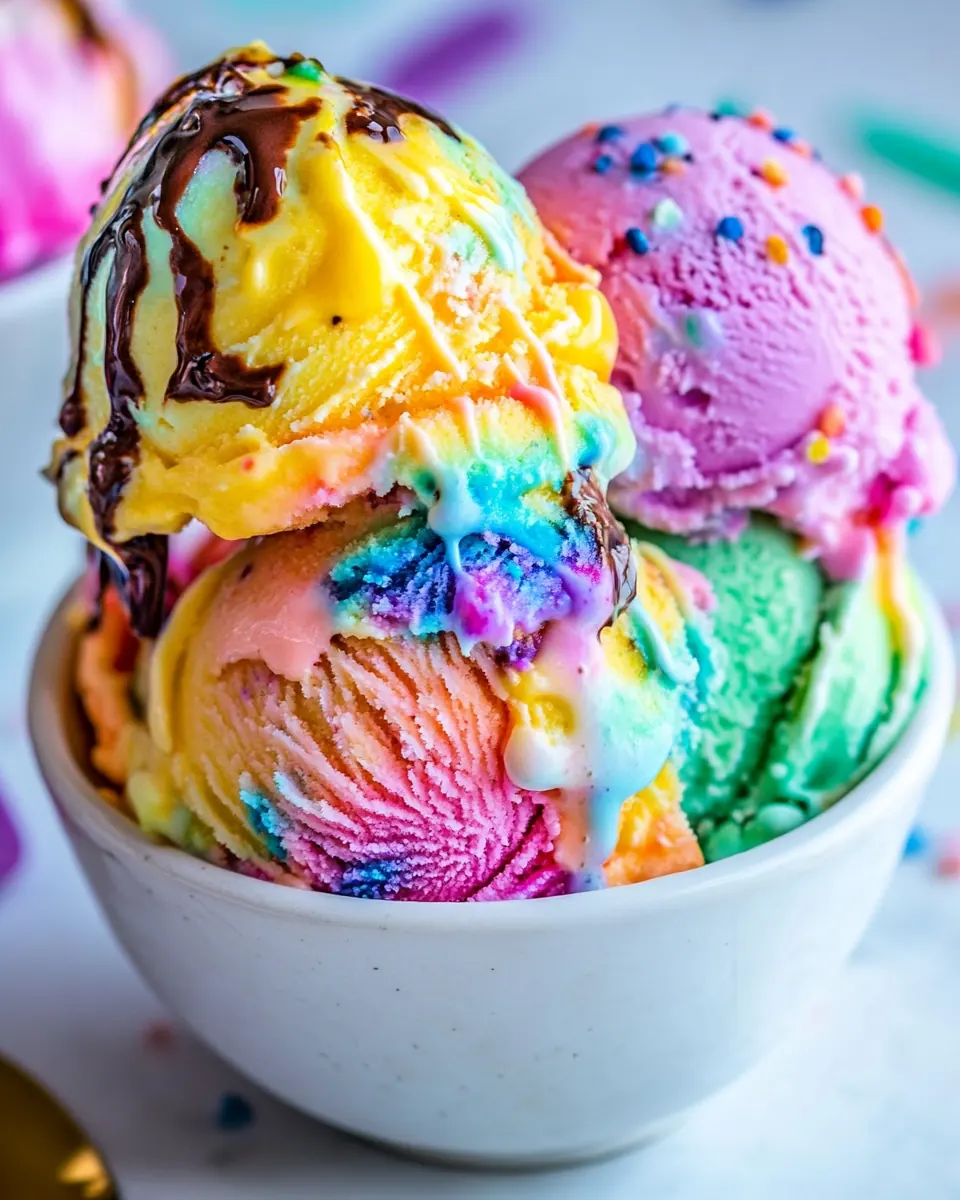
These ingredients form a simple, effective trio that creates creamy texture, sweetness, and color. The heavy whipping cream supplies air and body when whipped, the sweetened condensed milk binds everything with velvety sweetness, and food coloring brings the visual magic. Together they make a stable no churn base that freezes smoothly and looks wonderful sliced from a loaf pan.
- 2 c. very cold heavy whipping cream: Whipped to stiff peaks, provides the light, airy base and creamy texture essential for a scoopable frozen dessert; also helps incorporate air so the ice cream remains soft straight from the freezer.
- 14 oz can sweetened condensed milk: Sweetens and adds rich, milky body while preventing excessive ice crystallization thanks to its sugar and milk solids; contributes smoothness and shelf stability without churning.
- 2 tsp pure vanilla extract: Adds a warm, familiar flavor note that enhances the overall profile and rounds out sweetness; a small amount balances the dairy richness without overpowering the mixture.
- Food coloring – 6 colors: Split into portions and tinted individually, supply vibrant colors to create visually appealing layers or swirls; safe, concentrated pigments that do not alter texture when used sparingly.
Rainbow Ice Cream Instructions
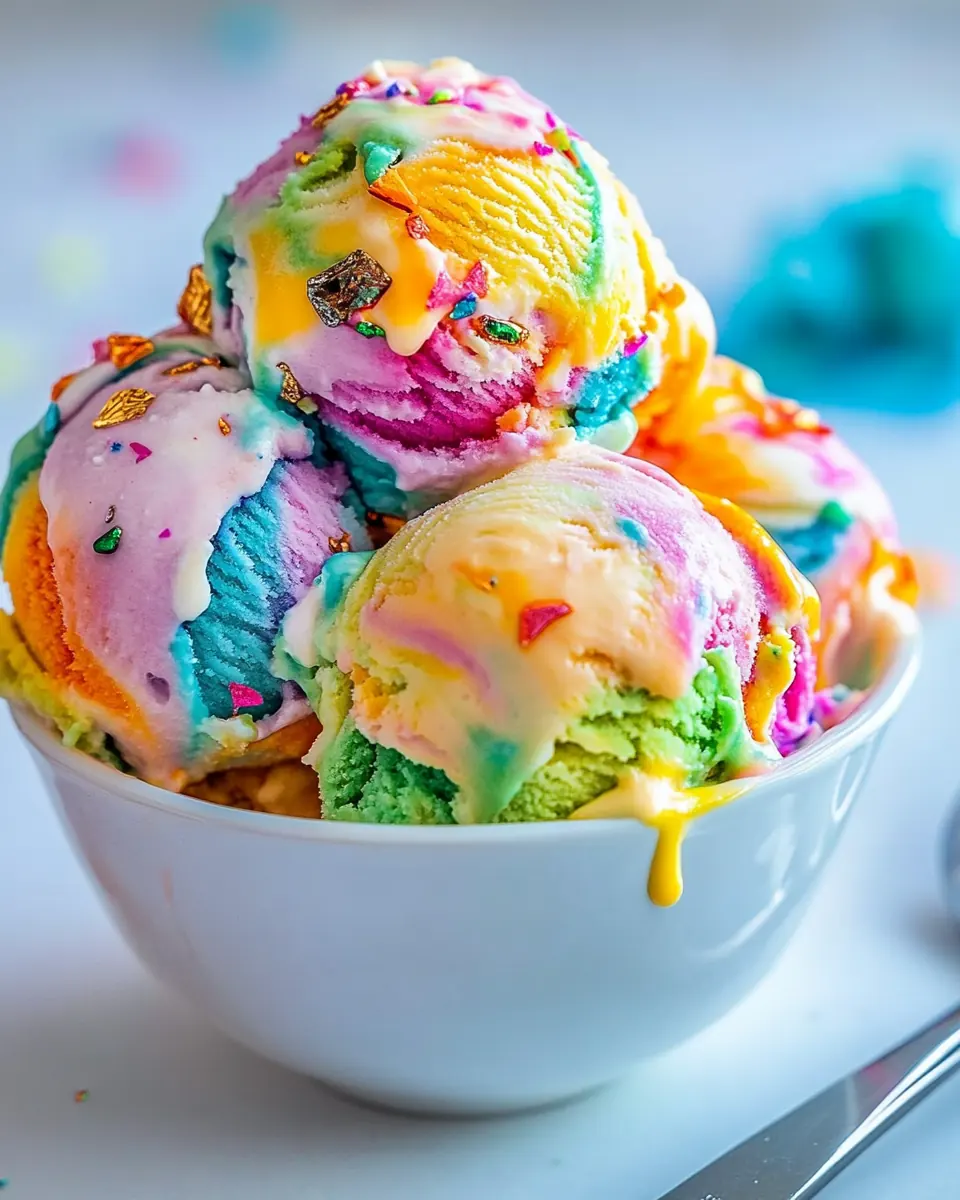
These steps guide you from chilling bowls to a beautifully layered, frozen loaf. I find it helpful to prep my freezer space and utensils first so the process feels smooth and joyful. Take your time when folding, the gentle technique preserves volume and guarantees the signature creamy texture.
- Place loaf pan or container in freezer at least 30 minutes: The first sensory cue is the faint hiss of cold as the metal or glass chills, which helps the ice cream begin freezing the moment it touches the surface. Chilling the container prevents the outer layer from melting and reforming with icy crystals, ensuring a smoother finish. A common error is skipping this step, and that can lead to a thin frozen shell and a grainy edge. If your freezer is crowded, clear a spot so cold air circulates around the pan.
- Place bowl and whisk in freezer at least 30 minutes: You will feel a crisp coolness when you retrieve the bowl, and working with chilled equipment keeps the heavy whipping cream cold while you whip. Cold tools maintain peak stability and speed up whipping, meaning less time at the mixer and less chance of overwhipping. Avoid using warm utensils, as they will slow down aeration; if the whisk warms up, chill it again briefly.
- Be sure whipping cream and condensed milk are really cold: When you touch the carton or can, it should feel distinctly chilled, this is key for achieving stiff peaks and a cohesive fold. Cold ingredients perform more predictably, producing a glossy whipped cream and a dense yet tender base. A mistake is to leave these on the counter to warm, which makes whipping take longer and can cause collapse. If items feel lukewarm, refrigerate them for a bit before proceeding.
- In a large bowl, beat whipping cream until stiff peaks form: You will watch clouds of cream thicken and hear a change in the mixer tone as it gains volume, culminating in peaks that hold their shape when the whisk is lifted. This airy texture is what gives the ice cream its pleasant mouthfeel, so stop whipping exactly at stiff peaks to avoid buttering. Overwhipping leads to grainy lumps and separation, so pause frequently to check for the right texture.
- In a medium bowl, combine the sweetened condensed milk and vanilla until smooth: The sweetened condensed milk will glisten as you stir, releasing a dense, syrupy aroma that signals even sweetness. Mixing the vanilla in at this stage allows the flavor to integrate uniformly, preventing pockets of flavor later. Rushing this step can leave streaks of unmixed milk, so stir until the surface looks completely homogenous.
- Gradually add milk mixture to whipping cream by GENTLY folding into whipped cream: You will notice a softening of the whipped cream as the condensed milk blends in, but the goal is to maintain as much trapped air as possible, which translates to a light final texture. Use broad strokes and lift from the bottom, turning the bowl as you fold in, and pause if the mixture seems to deflate too quickly. A frequent mistake is stirring aggressively, which flattens the peaks and yields denser ice cream.
- Divide mixture into 6 separate bowls (it will be about 1 cup each): As you portion the base, it should look billowy and hold its shape in each bowl, making it easy to tint. Dividing evenly ensures uniform layers and balanced servings, so aim for consistent volumes. If you eyeball and create uneven amounts, some colors may dominate the loaf; use a measuring cup to keep portions equal.
- Color each bowl with a different color by GENTLY folding the coloring into the mixture: The colors will streak at first, then settle into smooth, vivid hues if you fold gently. Listen for the soft scraping of the spatula and watch how the tint disperses, stopping as soon as the shade is even. Overmixing can deflate the air you worked to build, while under mixing leaves marbled streaks unless that is your intention.
- Remove container from freezer and drop ice cream mixture by spoonfuls into the container: As you drop spoonfuls, you will feel the cold contact and hear the quiet thud as each scoop lands, creating a mosaic of color. Use a gently pressing motion to nestle the dollops together, but avoid heavy packing which can push out air and create dense sections. A common error is to smooth aggressively between additions, which blends the colors rather than preserving distinct bands.
- Freeze overnight: The quiet hum of the freezer is your cue that crystallization is happening slowly, which yields a smooth texture. Freezing overnight allows the loaf to set fully and the flavors to harmonize, giving you a scoopable consistency the next day. Do not rush by freezing at very low temperatures for a short time, because rapid freezing can create larger ice crystals and a coarse texture. Leave it undisturbed and covered to prevent freezer burn.
Substitutions and Tips
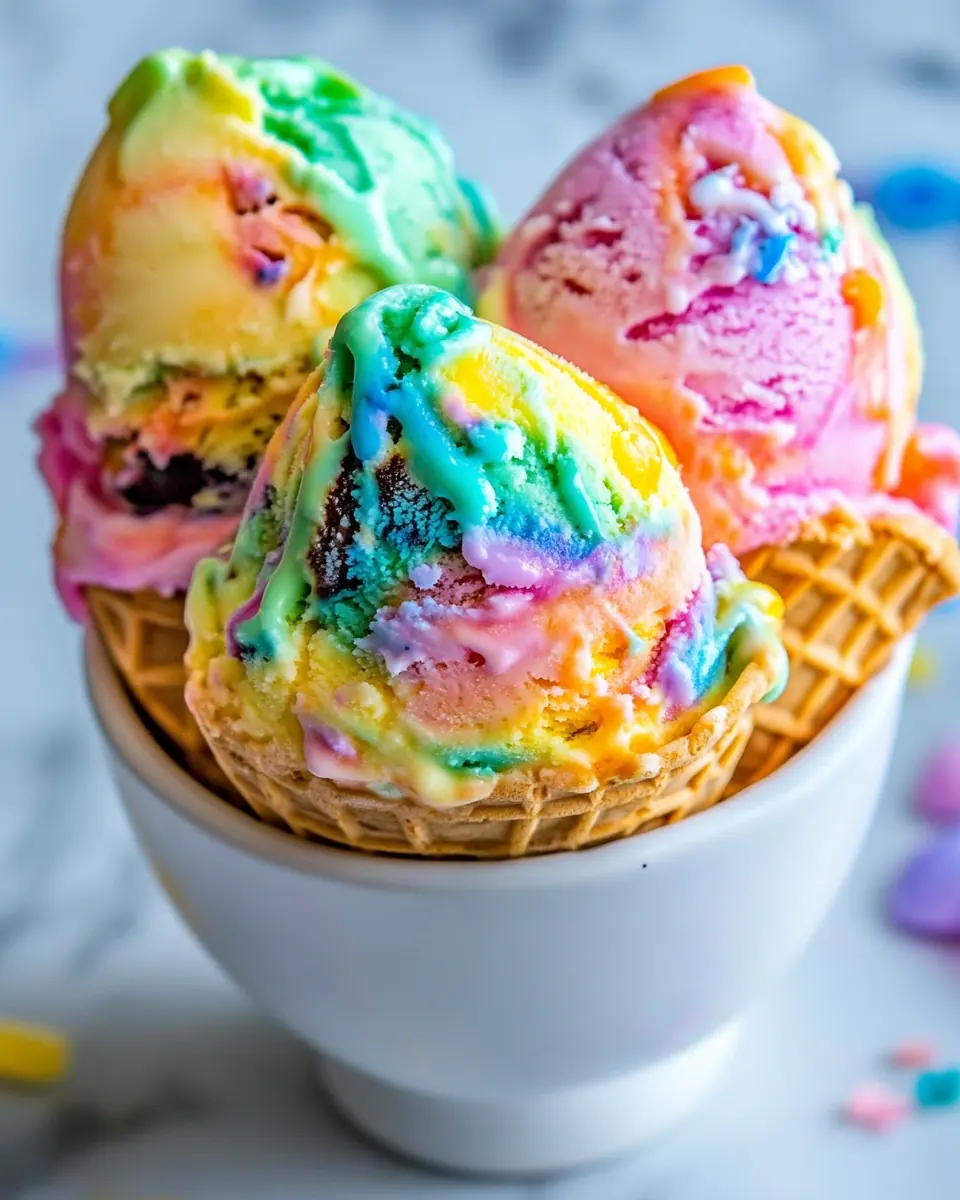
This section helps you adapt and perfect Rainbow Ice Cream while keeping the core technique intact. I include practical notes I have learned from multiple batches, and I emphasize small adjustments that have big results. Read each tip and apply the ones that match your kitchen and schedule.
- Chill everything: Make it a habit to chill bowls, whisks, and the loaf pan for at least 30 minutes to help the heavy whipping cream reach stiff peaks faster and with better stability.
- Measure portions: Use a 1 cup measuring cup to divide the base into six equal portions, which makes the layered appearance balanced and ensures consistent serving sizes.
- Choose gel coloring: Gel or paste food coloring yields brighter shades with minimal added liquid, preserving the whipped texture while delivering vibrant bands.
- Fold with care: Employ a gentle folding motion to combine the sweetened condensed milk with the whipped cream, because vigorous stirring will deflate the mixture and produce a denser final texture.
- Cover the surface: Lay plastic wrap or parchment directly on the ice cream surface before sealing the container to reduce air exposure and slow ice crystal formation.
- Freeze undisturbed: Let the loaf freeze overnight in the coldest part of the freezer for the smoothest texture; avoid opening the door frequently during this time.
Serving Options for Rainbow Ice Cream
Rainbow Ice Cream works as a festive finale for casual barbecues, birthday parties, or summer afternoons when you want something playful and cool. Its colorful presentation makes it ideal for celebrations and family gatherings, and the make ahead nature means you can focus on other dishes. Below are ideas for serving styles, occasions, and storage tips written as practical options.
- Sliced loaf style: Serve thick slices straight from the loaf for an impressive, colorful presentation that is easy to portion. Use a warm knife and wipe between cuts for clean edges.
- Scooped into bowls: Scoop generous portions into bowls for a casual serving, adding a mint leaf or a sprinkle of edible glitter if you want to elevate the look without changing flavor.
- Party centerpiece: Place the loaf on a decorated board surrounded by berries or cookie pieces for a kid friendly party table that invites guests to help themselves.
- Occasions: This is perfect for summer gatherings, pool parties, birthdays, and Ramadan if you seek a chilled sweet for iftar. Its no churn method means you can prepare ahead of time and keep it frozen until serving.
- Storage tips: Keep the ice cream in the coldest part of the freezer. Lay plastic wrap on the surface before sealing to minimize ice crystals and maintain a creamy texture for weeks.
- Seasonal pairings: Pair with fresh summer fruit for added brightness, or serve with small cookies for textural contrast if you want a bit of crunch alongside the creamy scoop.
FAQ
Conclusion
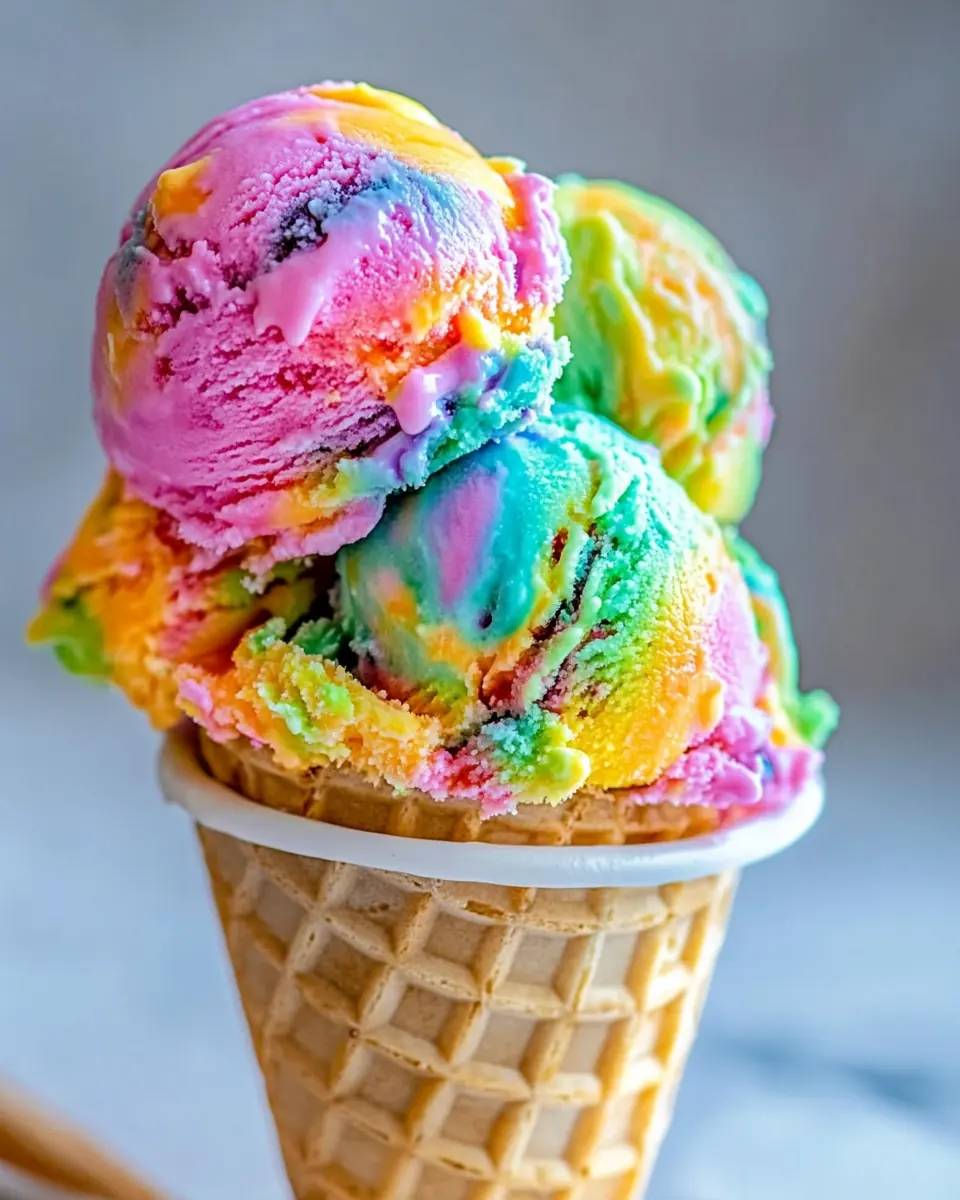
What makes this recipe special is its combination of simplicity and show stopping presentation, creating creamy, colorful slices with minimal equipment. Give it a try when you want a make ahead dessert that delights both kids and adults, and enjoy the playful process of creating each colored layer. I hope this encourages you to experiment with shades and serving styles, and that it becomes a repeat favorite at your summer gatherings.
Rainbow Ice Cream
Ingredients
Equipment
Method
- Place loaf pan or container in freezer at least 30 minutes: The first sensory cue is the faint hiss of cold as the metal or glass chills, which helps the ice cream begin freezing the moment it touches the surface. Chilling the container prevents the outer layer from melting and reforming with icy crystals, ensuring a smoother finish. A common error is skipping this step, and that can lead to a thin frozen shell and a grainy edge. If your freezer is crowded, clear a spot so cold air circulates around the pan.
- Place bowl and whisk in freezer at least 30 minutes: You will feel a crisp coolness when you retrieve the bowl, and working with chilled equipment keeps the heavy whipping cream cold while you whip. Cold tools maintain peak stability and speed up whipping, meaning less time at the mixer and less chance of overwhipping. Avoid using warm utensils, as they will slow down aeration; if the whisk warms up, chill it again briefly.
- Be sure whipping cream and condensed milk are really cold: When you touch the carton or can, it should feel distinctly chilled, this is key for achieving stiff peaks and a cohesive fold. Cold ingredients perform more predictably, producing a glossy whipped cream and a dense yet tender base. A mistake is to leave these on the counter to warm, which makes whipping take longer and can cause collapse. If items feel lukewarm, refrigerate them for a bit before proceeding.
- In a large bowl, beat whipping cream until stiff peaks form: You will watch clouds of cream thicken and hear a change in the mixer tone as it gains volume, culminating in peaks that hold their shape when the whisk is lifted. This airy texture is what gives the ice cream its pleasant mouthfeel, so stop whipping exactly at stiff peaks to avoid buttering. Overwhipping leads to grainy lumps and separation, so pause frequently to check for the right texture.
- In a medium bowl, combine the sweetened condensed milk and vanilla until smooth: The sweetened condensed milk will glisten as you stir, releasing a dense, syrupy aroma that signals even sweetness. Mixing the vanilla in at this stage allows the flavor to integrate uniformly, preventing pockets of flavor later. Rushing this step can leave streaks of unmixed milk, so stir until the surface looks completely homogenous.
- Gradually add milk mixture to whipping cream by GENTLY folding into whipped cream: You will notice a softening of the whipped cream as the condensed milk blends in, but the goal is to maintain as much trapped air as possible, which translates to a light final texture. Use broad strokes and lift from the bottom, turning the bowl as you fold in, and pause if the mixture seems to deflate too quickly. A frequent mistake is stirring aggressively, which flattens the peaks and yields denser ice cream.
- Divide mixture into 6 separate bowls (it will be about 1 cup each): As you portion the base, it should look billowy and hold its shape in each bowl, making it easy to tint. Dividing evenly ensures uniform layers and balanced servings, so aim for consistent volumes. If you eyeball and create uneven amounts, some colors may dominate the loaf; use a measuring cup to keep portions equal.
- Color each bowl with a different color by GENTLY folding the coloring into the mixture: The colors will streak at first, then settle into smooth, vivid hues if you fold gently. Listen for the soft scraping of the spatula and watch how the tint disperses, stopping as soon as the shade is even. Overmixing can deflate the air you worked to build, while under mixing leaves marbled streaks unless that is your intention.
- Remove container from freezer and drop ice cream mixture by spoonfuls into the container: As you drop spoonfuls, you will feel the cold contact and hear the quiet thud as each scoop lands, creating a mosaic of color. Use a gently pressing motion to nestle the dollops together, but avoid heavy packing which can push out air and create dense sections. A common error is to smooth aggressively between additions, which blends the colors rather than preserving distinct bands.
- Freeze overnight: The quiet hum of the freezer is your cue that crystallization is happening slowly, which yields a smooth texture. Freezing overnight allows the loaf to set fully and the flavors to harmonize, giving you a scoopable consistency the next day. Do not rush by freezing at very low temperatures for a short time, because rapid freezing can create larger ice crystals and a coarse texture. Leave it undisturbed and covered to prevent freezer burn.
Notes
- Chill everything: Make it a habit to chill bowls, whisks, and the loaf pan for at least 30 minutes to help the heavy whipping cream reach stiff peaks faster and with better stability.
- Measure portions: Use a 1 cup measuring cup to divide the base into six equal portions, which makes the layered appearance balanced and ensures consistent serving sizes.
- Choose gel coloring: Gel or paste food coloring yields brighter shades with minimal added liquid, preserving the whipped texture while delivering vibrant bands.
- Fold with care: Employ a gentle folding motion to combine the sweetened condensed milk with the whipped cream, because vigorous stirring will deflate the mixture and produce a denser final texture.
- Cover the surface: Lay plastic wrap or parchment directly on the ice cream surface before sealing the container to reduce air exposure and slow ice crystal formation.
- Freeze undisturbed: Let the loaf freeze overnight in the coldest part of the freezer for the smoothest texture; avoid opening the door frequently during this time.