Fluffy Pancakes With Birthday Sprinkles
Fluffy Pancakes With Birthday Sprinkles have been my go to weekend treat ever since I discovered how a simple batter and a scattering of colorful sprinkles can turn an ordinary morning into a celebration. The first time I made these I was chasing the memory of a diner but wanted something homier, something that would make the kitchen smell like warm comfort and childhood. I remember the soft hiss as batter hit the skillet, the tiny islands of bubbles that promised a perfect flip, and the grin that spread when the first pancake landed on the plate, dotted with rainbow confetti.
I like to think of these pancakes as a little ritual. I whisk the dry ingredients in one bowl, fold the wet ones in another, and then bring them together in a way that keeps the batter tender and airy. There is an ease to the process that makes me reach for this recipe when I am hosting a casual brunch or when I want to surprise someone with a sweet, nostalgic breakfast. Every batch comes with its own personality, sometimes more brown around the edges, sometimes fluffier in the center, but always reliably joyful when glazed and finished with extra sprinkles.
What I love most about Fluffy Pancakes With Birthday Sprinkles is how adaptable they are. You can keep them simple, or make a little ceremony of the glaze, spreading a soft, tangy cream cheese icing across warm stacks. Kids and grownups both linger at the table, trading stories over syrup soaked edges and sticky fingers. Cooking them feels unfussy and immediate, and the payoff is instant smiles and leftover pancakes for a second breakfast. These are the kind of pancakes I make when I want an uncomplicated win, and they never disappoint.
Recipe Snapshot
22 mins
2 mins
20 mins
Medium
250 kcal
American
Gluten-Free, Low FODMAP
Breakfast
Non stick skillet, Electric griddle, Mixing bowls, Whisk, Spatula, Measuring scoop 1/4 cup
Why This Fluffy Pancakes With Birthday Sprinkles Is a Winner
They are irresistibly tender
I find the texture of these pancakes to be the main reason I keep coming back to this recipe. The combination of Flour, a little baking powder, and just enough baking soda creates a lift that yields a soft, pillowy interior. When you cut into one you should notice a delicate crumb that springs back slightly, which tells me the batter was mixed gently and the leavening did its job.
Yogurt adds gentle tang and moisture
Using Yogurt in the batter gives a subtle tang and added moisture without making the pancakes heavy. I prefer Greek or regular based on what I have, and the acidity also helps activate the baking soda for extra lift. The result is a pancake that stays soft as it cools, not a dry slab that needs drowning in syrup.
The glaze is simple but transformative
The cream cheese and confectioner sugar glaze elevates these pancakes from casual to celebratory. With just a few whisk strokes you get a glossy, smooth topping that clings to the warm surface, melting slightly and adding a lush, creamy contrast to the airy cakes. That tiny chemistry between fat and sugar is what makes every bite multidimensional.
Sprinkles deliver nostalgia and fun
Adding Rainbow sprinkles is more than decoration, it sets the mood. They add playful bursts of color and a faint crunchy pop, which is especially fun for birthdays or weekend gatherings. I like to add a few more after glazing so they stick and look intentional.
Quick and reliable technique
This recipe moves fast from bowl to plate, which is great on busy mornings. The instructions are forgiving, allowing a few small lumps in the batter, so you do not need to stress about perfect mixing. I rely on this recipe when I want consistent results with minimal fuss.
What You Need for Fluffy Pancakes With Birthday Sprinkles
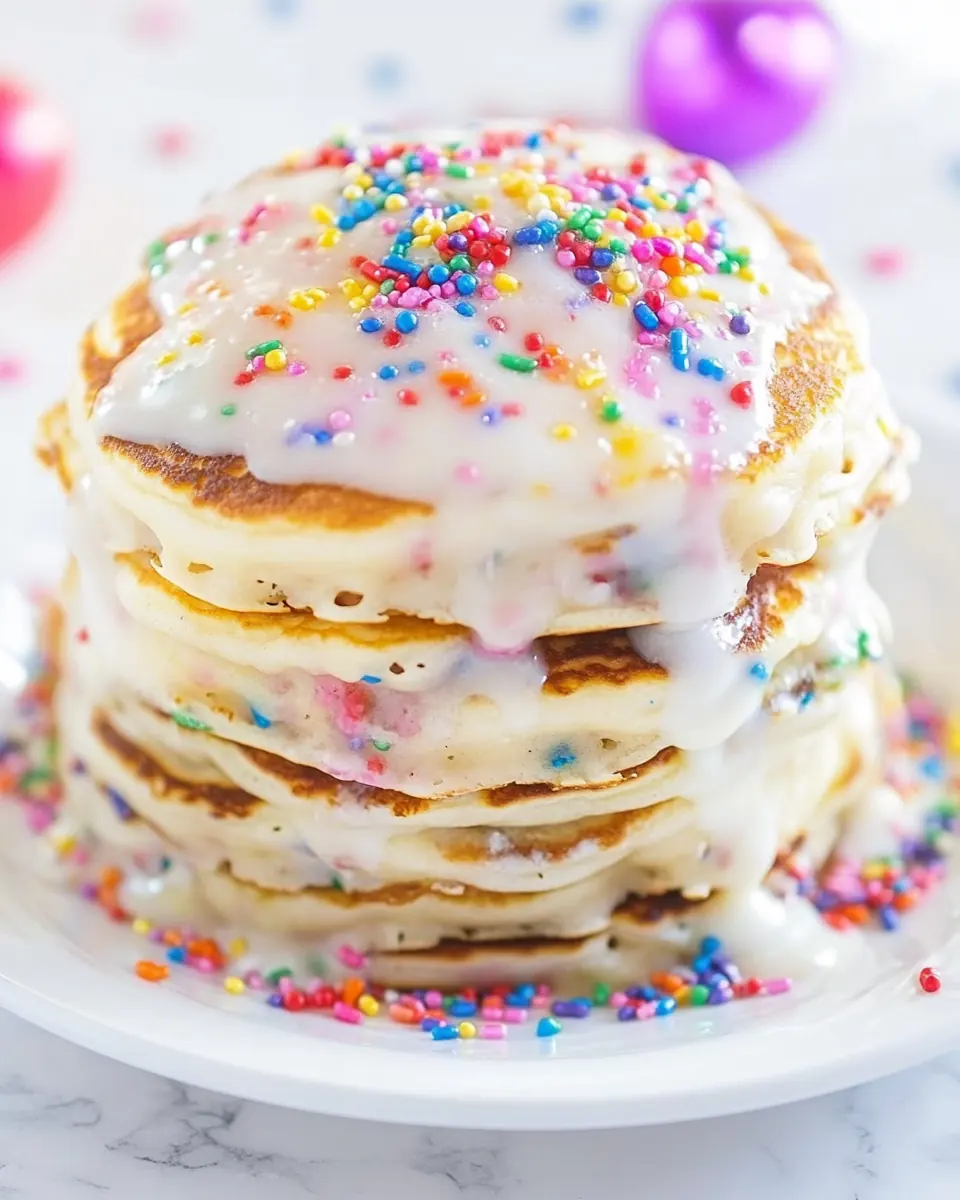
These ingredients are straightforward pantry staples that play friendly roles. The dry items provide structure, the wet ones supply moisture and lift, and the small finishing elements bring personality. Together they balance texture and flavor so each pancake is soft, slightly tangy, and properly sweet without being cloying.
- 1 cup of Flour: Sifted to remove lumps and aerated to create a light pancake batter; provides structure and bulk when combined with the wet ingredients and leavens gently with the chemical agents.
- 1/2 teaspoon of baking powder: Leavening to introduce air and lift, reacting with moisture and heat to help pancakes become fluffy and tender; use measured amount to avoid metallic taste.
- 1/4 teaspoon of baking soda: Leavening to react with acidic components in the batter and work with baking powder to enhance rise and create a fine crumb for soft pancakes.
- pinch of salt: Seasoning to balance sweetness and enhance other flavors; a small pinch intensifies overall taste without making the batter salty.
- 1 egg: Beaten to bind ingredients and add moisture and richness; contributes to structure through protein coagulation and helps pancakes brown.
- 2 tablespoons of melted butter or neutral tasting oil: Melted to add fat for tenderness and flavor; choose butter for richness or neutral oil for a lighter taste and consistent texture.
- 1 cup of Yogurt Greek or regular, any fat concentration you prefer: Creamy to tenderize the batter and add tangy moisture; Greek or regular yogurt contributes acidity that reacts with baking soda for extra lift.
- 2 tablespoons of sugar: Sweetening to provide flavor and aid browning; dissolves into the wet mixture to evenly sweeten the pancakes.
- 1 teaspoon of vanilla: Flavoring to add aromatic depth and enhance the overall profile; vanilla pairs with dairy and sugar to create a warm backdrop.
- Rainbow sprinkles to your taste — about 3 tablespoons: Decoration and texture to add color, fun, and a slight crunch; stir into batter or sprinkle on top for a festive appearance.
- Oil for greasing the skillet as needed: Lubricant to prevent sticking and promote even browning; lightly grease the hot skillet before pouring each pancake.
- 2 ounces of room temperature softened cream cheese full fat, low fat or fat free – your preference: Softened to create a creamy spread or swirl for serving; full-fat or lower-fat versions affect richness but all add tang and smoothness.
- 1/2 cup of confectioner’s sugar: Sweetening to smooth and thicken the cream cheese mixture; dissolves into frosting or filling to create a silky finish.
- 1 teaspoon of vanilla extract: Flavoring to enhance the cream cheese mixture with a sweet, aromatic note; use measured amount to avoid overwhelming the filling.
- 2 tablespoons of milk any type: Thinning to adjust consistency of the cream cheese frosting or filling; any milk type will loosen and create a spreadable texture.
How to Make Fluffy Pancakes With Birthday Sprinkles
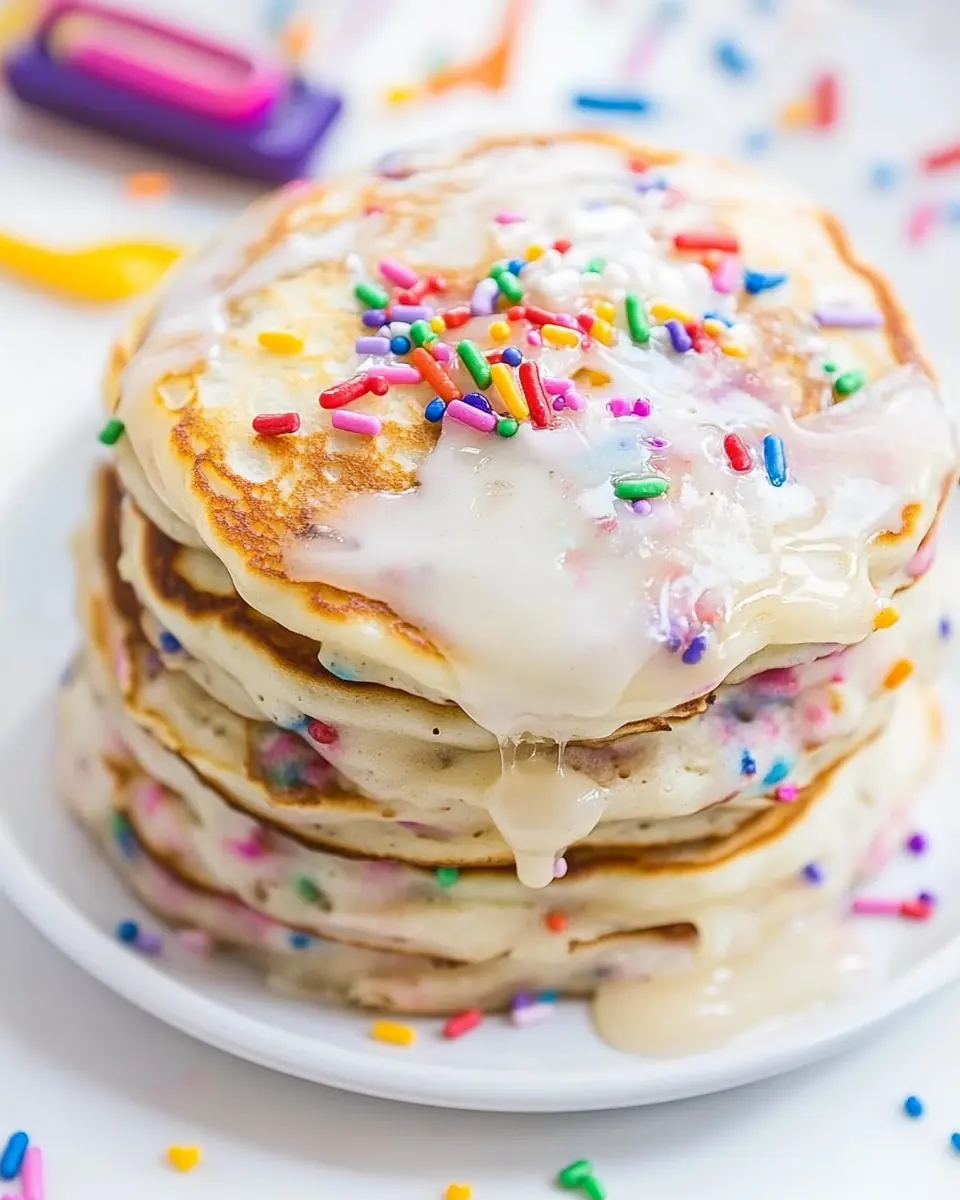
These instructions walk you from warming the skillet to glazing the stacked cakes. I like to keep the rhythm steady, heating the pan, mixing in stages, and giving each pancake the right cues before flipping. Read each step slowly and rely on the sensory signals outlined below.
- Preheat a non stick skillet over medium low heat or an electric griddle. Brush the surface with the oil and then use a tissue to gently wipe the excess oil.: You will notice a gentle, even sheen of warmth when the cooking surface reaches the right temperature, not smoking or scorching. This careful medium low heat helps the pancakes cook through without burning, allowing the centers to stay tender while the edges set. If the pan is too hot the exterior will brown too quickly and the inside will remain undercooked, so test by dropping a small dollop of batter first. A lightly oiled surface should sizzle softly, not roar, which tells you the heat is correct.
- In a small bowl, mix the dry ingredients together. Set aside.: The tactile action of brushing and wiping leaves a whisper of lubrication that prevents sticking while avoiding greasy pancakes. You should see a faint sheen on the skillet and feel almost nothing when you glide the paper towel across it. Leaving too much oil will make the pancakes fry at the edge and become heavy instead of airy. The wipe keeps the surface uniform so each pancake browns evenly.
- In a bigger bowl, mix the wet ingredients together and set aside.: As you stir, inhale the faint scent of flour and the subtle aroma of baking powder and baking soda as they blend. This step ensures the leaveners are evenly distributed so pockets of lift appear consistently across every cake. A uniform dry mix prevents uneven rising and odd metallic notes from concentrated leavening. Whisk lightly to break up clumps and lend air to the Flour , which aids tenderness.
- Take a spatula and then add the dry ingredients bowl to the wet ingredients bowl. Mix until they blend together. Avoid over mixing the batter, a few lumps are ok to remain.: Letting the mixed dry ingredients rest briefly allows you to prepare the wet ingredients without rushing, and it gives a moment for any stray lumps to settle. This pause is practical and helps you stay organized. Avoid leaving the mixture exposed to moist air for too long, which could cause premature activation of the leaveners.
- Take a 1/4 cup measuring scoop and fill it with the batter, then pour that over the preheated skillet or griddle. Wait for a few seconds until the edges start to bubble, then gently flip the pancake and cook for another 30 seconds or so until golden. Repeat with the remaining batter, oiling the skillet and swiping any excess oil after each pancake.: When you blend the egg , melted butter or oil , Yogurt , sugar , and vanilla , the kitchen will fill with a warm, creamy aroma. The wet mix should be smooth and homogenous so it can hydrate the dry ingredients evenly. If the Yogurt is very thick, give it a quick whisk with a splash of milk to loosen it. Overworking this mix is unnecessary; gentle motion yields the best final texture.
- Stack your pancakes in two's, three's or more and glaze with the cream cheese vanilla glaze, adding extra sprinkles if you like 🙂 Enjoy!: Combine with a spatula by folding the dry into the wet, and you will see the batter thicken into a pale, lumpy mass. These few lumps are good, they indicate minimal gluten development which keeps the pancakes tender. Avoid aggressive stirring which creates a dense, chewy interior. If the batter feels too stiff, a tablespoon of milk will loosen it without diluting the structure.
- For the Cream Cheese Glaze: Place all the ingredients in a bowl and whisk them up. If the icing feels too thick, add milk a little bit at a time and whisk to make sure it doesn’t thin out. If you feel the icing is too thin, add a tablespoon of cream cheese with a tablespoon of confectioner sugar and whisk it in. For the citrus flavours, add the zest of 1 citrus of your choice and substitute the milk with the juice of that citrus.: The sound here is quiet, a soft scraping as the spatula moves through the batter and the mixture becomes uniform. You are aiming for a batter that is cohesive but still slightly lumpy, which yields the best crumb after cooking. A common mistake is overmixing, which tightens the gluten and produces rubbery pancakes, so stop when the major dry streaks are gone but small lumps remain.
- Avoid over mixing the batter, a few lumps are ok to remain: Trust the texture, not perfection. Those tiny lumps relax during cooking and result in a tender interior. If you find the batter overly lumpy from clumps of Flour , press them through a sieve before combining, but otherwise accept gentle imperfection for better mouthfeel. Overhandling here is the fastest route to dense cakes.
- Take a 1/4 cup measuring scoop and fill it with the batter, then pour that over the preheated skillet or griddle: As the batter hits the hot surface you will hear a faint, pleasant hiss and see the batter spread into a neat round. The 1/4 cup gives consistent size for even cooking across batches. If you pour too much, the center may stay raw when the edges finish, so keep to the measure for predictable results. Watch how the batter behaves; a slow spread is a sign the pan is at good temperature.
- Wait for a few seconds until the edges start to bubble, then gently flip the pancake and cook for another 30 seconds or so until golden: Tiny bubbles forming at the edges are your cue that the interior is setting and it is ready to flip. After turning, the surface should take on an even golden tone in roughly 30 seconds, depending on your heat. The smell will shift from raw batter to a warm, toasty aroma. Flipping too early yields a gummy center, while flipping too late risks overbrowning, so trust the bubbles and the feel of the pancake when you nudge it with a spatula.
- Repeat with the remaining batter, oiling the skillet and swiping any excess oil after each pancake: Each new pancake may cook slightly differently as the pan temperature settles, so refresh that thin layer of Oil and wipe excess to maintain balance. You should notice consistent browning and a soft interior as you continue. A common error is letting the surface get oily between batches, which causes uneven frying; wiping keeps the finish light and consistent.
- Stack your pancakes in two's, three's or more and glaze with the cream cheese vanilla glaze, adding extra sprinkles if you like 🙂 Enjoy!: When the pancakes are warm the glaze will melt just enough to coat and cling, producing a glossy finish and a slightly tangy sweetness. The contrast between the warm cake and the cool, creamy glaze is delightful, and the extra Rainbow sprinkles add playful texture. Serve immediately for the best mouthfeel, as pancakes lose their airy charm when left to sit for too long.
- For the Cream Cheese Glaze: Place all the ingredients in a bowl and whisk them up : As you whisk softened cream cheese with confectioner s sugar , vanilla extract , and milk , the mixture will transform from lumpy to silky. This process releases a subtle dairy perfume and creates a thick but pourable glaze. If it seems too thick add milk a bit at a time, and if too thin, stir in a little more confectioner s sugar or cream cheese to rebalance. The right texture clings without sliding right off.
- If the icing feels too thick, add milk a little bit at a time and whisk to make sure it does not thin out: The consistency should be glossy and able to drizzle slowly. Adding milk slowly helps you hit the sweet spot between spreadable and runny. A common mistake is dumping too much liquid at once, which forces you to overcorrect and can lead to a sugary or overly thin finish.
- If you feel the icing is too thin, add a tablespoon of cream cheese with a tablespoon of confectioner sugar and whisk it in: This small adjustment brings body back to the glaze and deepens its flavor. Work it in thoroughly until the mixture smooths out and gains structure. Avoid adding too much powdered sugar which can make the glaze grainy; incremental adjustments maintain balance.
- For the citrus flavours, add the zest of 1 citrus of your choice and substitute the milk with the juice of that citrus: Incorporating citrus zest and juice brightens the glaze and adds a lively counterpoint to the sweet base. You will smell a fresh, vibrant aroma that complements the pancakes without overwhelming them. Be cautious using too much juice, as it can thin the glaze excessively; a little goes a long way.
Ways to Customize
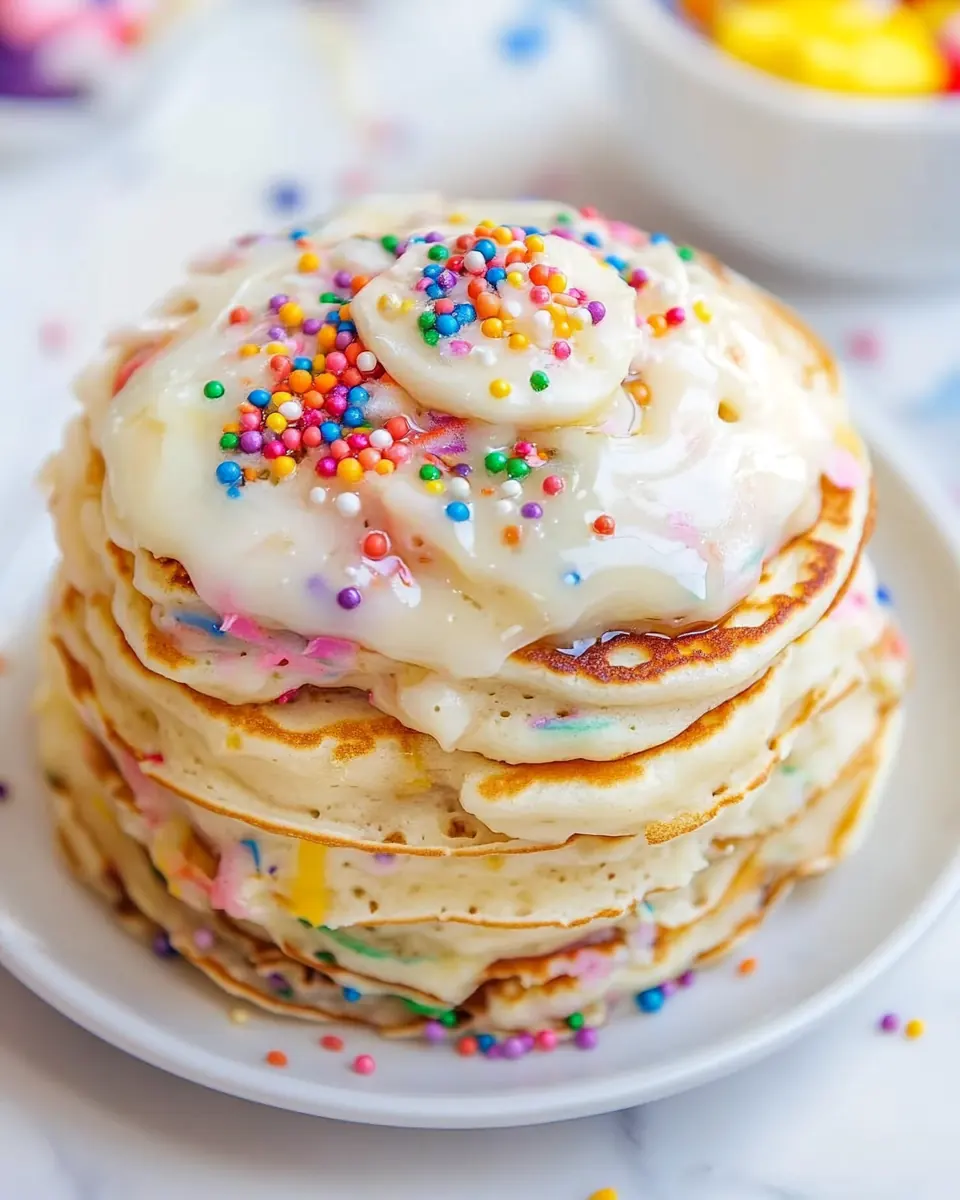
There are several fun ways to personalize these pancakes while keeping the core technique intact. Below I outline options that change flavor, texture, or visual impact, with ideas that work whether you want a simple tweak or a bolder twist.
- Add mashed fruit: Fold a couple of tablespoons of mashed banana or pureed berries into the wet ingredients for a fruity note, but reduce additional milk slightly to keep the batter from becoming too loose.
- Swap the dairy: Use a plant based yogurt and plant milk to make the pancakes dairy free, which will change the tang slightly but still yield tender results.
- Flavor the glaze: Stir in a small amount of citrus zest or a teaspoon of a complementary extract to the glaze to give it a bright lift without changing the base texture.
- Boost the crunch: Toss a small handful of sprinkles into the batter and reserve extra for topping; for more texture, add a couple tablespoons of finely chopped nuts, if desired and allowed.
- Adjust sweetness: Reduce the sugar in the batter if you plan to use a very sweet glaze, or increase it slightly for a sweeter cake that pairs well with plain yogurt or fruit.
What Goes Well With This Fluffy Pancakes With Birthday Sprinkles
These pancakes pair well with light sides and celebratory accompaniments. Think about texture contrasts, seasonal additions, and easy beverages that complement rather than compete. The list below provides serving ideas, occasions, and storage pointers so you can present the pancakes in a way that suits your gathering.
- Fresh fruit plates: Sliced berries, bananas, or stone fruit offer a refreshing acidity that balances the sweet glaze and enhances the colorful presentation for brunch or a birthday breakfast.
- Yogurt bowls: A small bowl of plain or lightly sweetened Yogurt complements the pancakes texturally and can be used as a lighter topping or dip for guests who prefer less glaze.
- Casual brunch occasions: These pancakes are perfect for weekend breakfasts, birthday mornings, or relaxed gatherings where small plates and coffee create a cozy vibe.
- Storage tips: Keep leftover pancakes in an airtight container in the refrigerator for up to two days, and reheat gently in a low oven or toaster to preserve texture; the glaze is best added fresh before serving.
- Seasonal pairings: In warmer months pair with bright summer fruit and chilled beverages, while in cooler months serve with spiced compotes or warmed fruit preserves for a comforting contrast.
FAQ
Conclusion
These pancakes are special because they combine a tender, yogurt enriched batter with a creamy glaze and playful sprinkles for an uplifting breakfast experience. Give them a try the next time you want a simple yet festive meal that feels like a small celebration. You will find the method forgiving and the results reliably comforting, a perfect excuse to gather and share a warm stack.
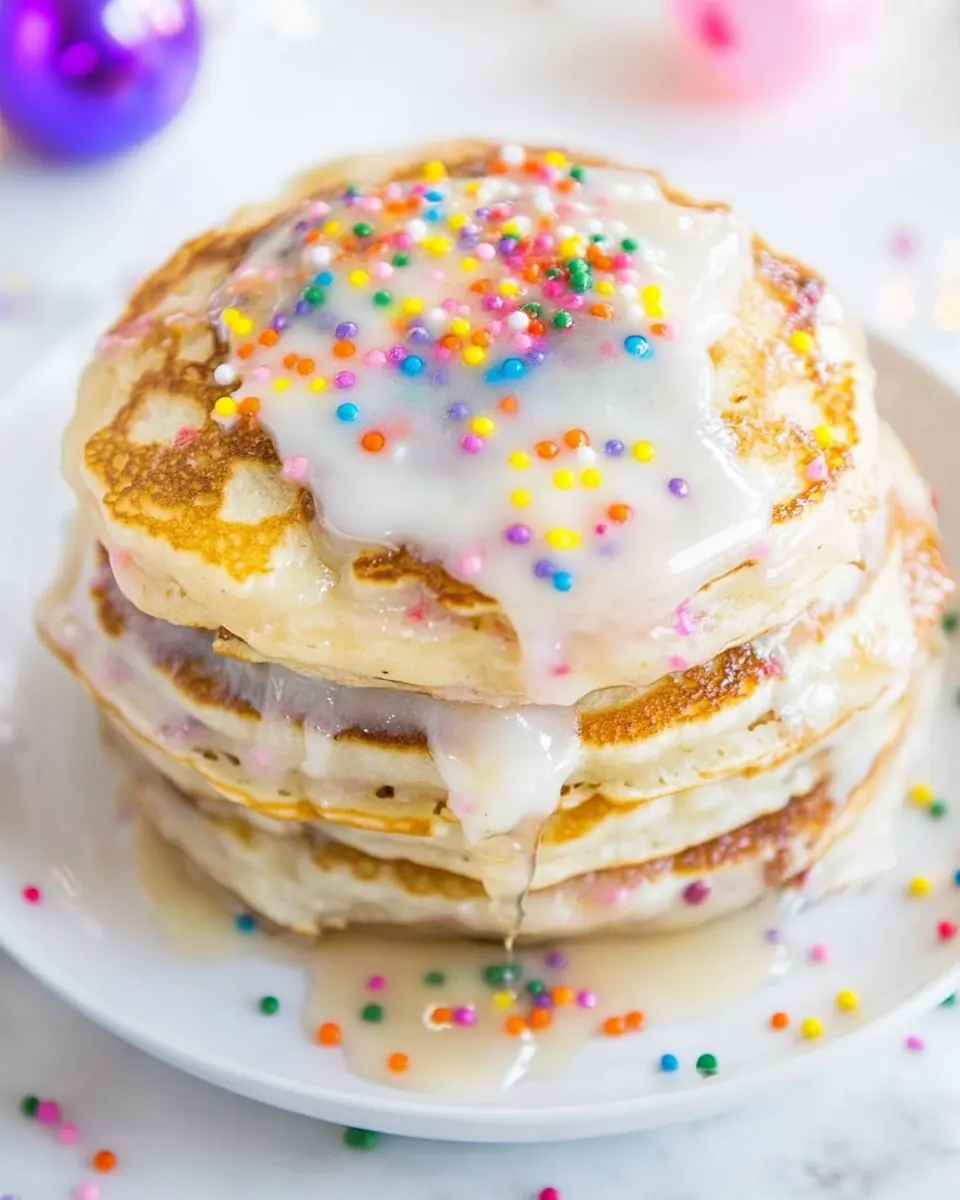
Fluffy Pancakes With Birthday Sprinkles
Ingredients
Equipment
Method
- Preheat a non stick skillet over medium low heat or an electric griddle. Brush the surface with the oil and then use a tissue to gently wipe the excess oil.: You will notice a gentle, even sheen of warmth when the cooking surface reaches the right temperature, not smoking or scorching. This careful medium low heat helps the pancakes cook through without burning, allowing the centers to stay tender while the edges set. If the pan is too hot the exterior will brown too quickly and the inside will remain undercooked, so test by dropping a small dollop of batter first. A lightly oiled surface should sizzle softly, not roar, which tells you the heat is correct.
- In a small bowl, mix the dry ingredients together. Set aside.: The tactile action of brushing and wiping leaves a whisper of lubrication that prevents sticking while avoiding greasy pancakes. You should see a faint sheen on the skillet and feel almost nothing when you glide the paper towel across it. Leaving too much oil will make the pancakes fry at the edge and become heavy instead of airy. The wipe keeps the surface uniform so each pancake browns evenly.
- In a bigger bowl, mix the wet ingredients together and set aside.: As you stir, inhale the faint scent of flour and the subtle aroma of baking powder and baking soda as they blend. This step ensures the leaveners are evenly distributed so pockets of lift appear consistently across every cake. A uniform dry mix prevents uneven rising and odd metallic notes from concentrated leavening. Whisk lightly to break up clumps and lend air to the Flour , which aids tenderness.
- Take a spatula and then add the dry ingredients bowl to the wet ingredients bowl. Mix until they blend together. Avoid over mixing the batter, a few lumps are ok to remain.: Letting the mixed dry ingredients rest briefly allows you to prepare the wet ingredients without rushing, and it gives a moment for any stray lumps to settle. This pause is practical and helps you stay organized. Avoid leaving the mixture exposed to moist air for too long, which could cause premature activation of the leaveners.
- Take a 1/4 cup measuring scoop and fill it with the batter, then pour that over the preheated skillet or griddle. Wait for a few seconds until the edges start to bubble, then gently flip the pancake and cook for another 30 seconds or so until golden. Repeat with the remaining batter, oiling the skillet and swiping any excess oil after each pancake.: When you blend the egg , melted butter or oil , Yogurt , sugar , and vanilla , the kitchen will fill with a warm, creamy aroma. The wet mix should be smooth and homogenous so it can hydrate the dry ingredients evenly. If the Yogurt is very thick, give it a quick whisk with a splash of milk to loosen it. Overworking this mix is unnecessary; gentle motion yields the best final texture.
- Stack your pancakes in two's, three's or more and glaze with the cream cheese vanilla glaze, adding extra sprinkles if you like 🙂 Enjoy!: Combine with a spatula by folding the dry into the wet, and you will see the batter thicken into a pale, lumpy mass. These few lumps are good, they indicate minimal gluten development which keeps the pancakes tender. Avoid aggressive stirring which creates a dense, chewy interior. If the batter feels too stiff, a tablespoon of milk will loosen it without diluting the structure.
- For the Cream Cheese Glaze: Place all the ingredients in a bowl and whisk them up. If the icing feels too thick, add milk a little bit at a time and whisk to make sure it doesn’t thin out. If you feel the icing is too thin, add a tablespoon of cream cheese with a tablespoon of confectioner sugar and whisk it in. For the citrus flavours, add the zest of 1 citrus of your choice and substitute the milk with the juice of that citrus.: The sound here is quiet, a soft scraping as the spatula moves through the batter and the mixture becomes uniform. You are aiming for a batter that is cohesive but still slightly lumpy, which yields the best crumb after cooking. A common mistake is overmixing, which tightens the gluten and produces rubbery pancakes, so stop when the major dry streaks are gone but small lumps remain.
- Avoid over mixing the batter, a few lumps are ok to remain: Trust the texture, not perfection. Those tiny lumps relax during cooking and result in a tender interior. If you find the batter overly lumpy from clumps of Flour , press them through a sieve before combining, but otherwise accept gentle imperfection for better mouthfeel. Overhandling here is the fastest route to dense cakes.
- Take a 1/4 cup measuring scoop and fill it with the batter, then pour that over the preheated skillet or griddle: As the batter hits the hot surface you will hear a faint, pleasant hiss and see the batter spread into a neat round. The 1/4 cup gives consistent size for even cooking across batches. If you pour too much, the center may stay raw when the edges finish, so keep to the measure for predictable results. Watch how the batter behaves; a slow spread is a sign the pan is at good temperature.
- Wait for a few seconds until the edges start to bubble, then gently flip the pancake and cook for another 30 seconds or so until golden: Tiny bubbles forming at the edges are your cue that the interior is setting and it is ready to flip. After turning, the surface should take on an even golden tone in roughly 30 seconds, depending on your heat. The smell will shift from raw batter to a warm, toasty aroma. Flipping too early yields a gummy center, while flipping too late risks overbrowning, so trust the bubbles and the feel of the pancake when you nudge it with a spatula.
- Repeat with the remaining batter, oiling the skillet and swiping any excess oil after each pancake: Each new pancake may cook slightly differently as the pan temperature settles, so refresh that thin layer of Oil and wipe excess to maintain balance. You should notice consistent browning and a soft interior as you continue. A common error is letting the surface get oily between batches, which causes uneven frying; wiping keeps the finish light and consistent.
- Stack your pancakes in two's, three's or more and glaze with the cream cheese vanilla glaze, adding extra sprinkles if you like 🙂 Enjoy!: When the pancakes are warm the glaze will melt just enough to coat and cling, producing a glossy finish and a slightly tangy sweetness. The contrast between the warm cake and the cool, creamy glaze is delightful, and the extra Rainbow sprinkles add playful texture. Serve immediately for the best mouthfeel, as pancakes lose their airy charm when left to sit for too long.
- For the Cream Cheese Glaze: Place all the ingredients in a bowl and whisk them up : As you whisk softened cream cheese with confectioner s sugar , vanilla extract , and milk , the mixture will transform from lumpy to silky. This process releases a subtle dairy perfume and creates a thick but pourable glaze. If it seems too thick add milk a bit at a time, and if too thin, stir in a little more confectioner s sugar or cream cheese to rebalance. The right texture clings without sliding right off.
- If the icing feels too thick, add milk a little bit at a time and whisk to make sure it does not thin out: The consistency should be glossy and able to drizzle slowly. Adding milk slowly helps you hit the sweet spot between spreadable and runny. A common mistake is dumping too much liquid at once, which forces you to overcorrect and can lead to a sugary or overly thin finish.
- If you feel the icing is too thin, add a tablespoon of cream cheese with a tablespoon of confectioner sugar and whisk it in: This small adjustment brings body back to the glaze and deepens its flavor. Work it in thoroughly until the mixture smooths out and gains structure. Avoid adding too much powdered sugar which can make the glaze grainy; incremental adjustments maintain balance.
- For the citrus flavours, add the zest of 1 citrus of your choice and substitute the milk with the juice of that citrus: Incorporating citrus zest and juice brightens the glaze and adds a lively counterpoint to the sweet base. You will smell a fresh, vibrant aroma that complements the pancakes without overwhelming them. Be cautious using too much juice, as it can thin the glaze excessively; a little goes a long way.
Notes
- Add mashed fruit: Fold a couple of tablespoons of mashed banana or pureed berries into the wet ingredients for a fruity note, but reduce additional milk slightly to keep the batter from becoming too loose.
- Swap the dairy: Use a plant based yogurt and plant milk to make the pancakes dairy free, which will change the tang slightly but still yield tender results.
- Flavor the glaze: Stir in a small amount of citrus zest or a teaspoon of a complementary extract to the glaze to give it a bright lift without changing the base texture.
- Boost the crunch: Toss a small handful of sprinkles into the batter and reserve extra for topping; for more texture, add a couple tablespoons of finely chopped nuts, if desired and allowed.
- Adjust sweetness: Reduce the sugar in the batter if you plan to use a very sweet glaze, or increase it slightly for a sweeter cake that pairs well with plain yogurt or fruit.