Strawberry Rhubarb Buckwheat Bars
Strawberry Rhubarb Buckwheat Bars have been one of those recipes I reach for when I want something that tastes like a sun warmed kitchen, even on a busy week. The first time I made these bars I was chasing spring produce at a farmer market, lugging home a fragrant bundle of rhubarb and a basket of strawberries, and craving something that felt rustic but not fussy. I loved the idea of pairing the tartness of the rhubarb with the sweet, jammy notes of the strawberries, and using buckwheat flour to add that toasty, nutty backbone that keeps the bars from feeling too sweet.
I remember pressing the crumbly dough into a pan while the house smelled faintly of browned butter, and thinking how the simple ingredients were quietly doing all the heavy lifting. The texture sits somewhere between a shortbread and a fruit tart, with a tender crust that gives way to a bubbling, slightly jammy filling. Friends always ask if there is a secret ingredient, and I tell them the secret is patience, and letting the filling bubble and thicken so every bite has that glossy, jam like quality. Sharing these bars has become my go to for potlucks and afternoon tea, because they travel well, slice neatly, and carry the bright flavors of early berries wonderfully.
Recipe Snapshot
45 mins
15 mins
30 mins
Medium
200 kcal
American
Gluten-Free, Vegan
Desserts
Oven, 9 X 13 inch baking pan, Food processor, Small saucepan
Why This Strawberry Rhubarb Buckwheat Bars Stands Out
Bright seasonal flavor that sings
I love how Strawberry Rhubarb Buckwheat Bars capture the essence of spring. The tart rhubarb balances the sweet strawberries, and that contrast keeps each bite lively. When I serve these, people always comment on the fresh, clean fruit notes that cut through the slightly rich crust.
Nutty, wholesome texture
The addition of buckwheat flour lends a warm, nutty undertone that makes the bars feel rustic yet sophisticated. I prefer it to plain white flour here because it adds complexity without masking the fruit. The result is a crumbly, buttery base that supports the filling without becoming soggy.
Versatile and shareable
I often bring these bars to gatherings because they slice into tidy portions, and they travel well. They are forgiving to make, and you can easily scale the recipe up for a crowd. For casual brunches, they pair nicely with coffee; for an afternoon event, they feel elevated yet approachable.
Simple technique, big payoff
The method is straightforward, but a few small steps make a huge difference. I love pulsing the dough to create coarse crumbs, reserving some to crumble on top, and cooking the preserves mixture until it becomes glossy and thick. Those small efforts ensure the filling sets properly and the top browns beautifully.
Ingredient driven and wholesome
There is a comfort in knowing every element has a purpose. The whole wheat flour and buckwheat flour add structure and flavor, the coconut sugar and honey provide nuanced sweetness, and the unsalted butter gives that tender, shortbread like crumb. I appreciate recipes where each ingredient is a key player, not filler.
Ingredients to Make Strawberry Rhubarb Buckwheat Bars
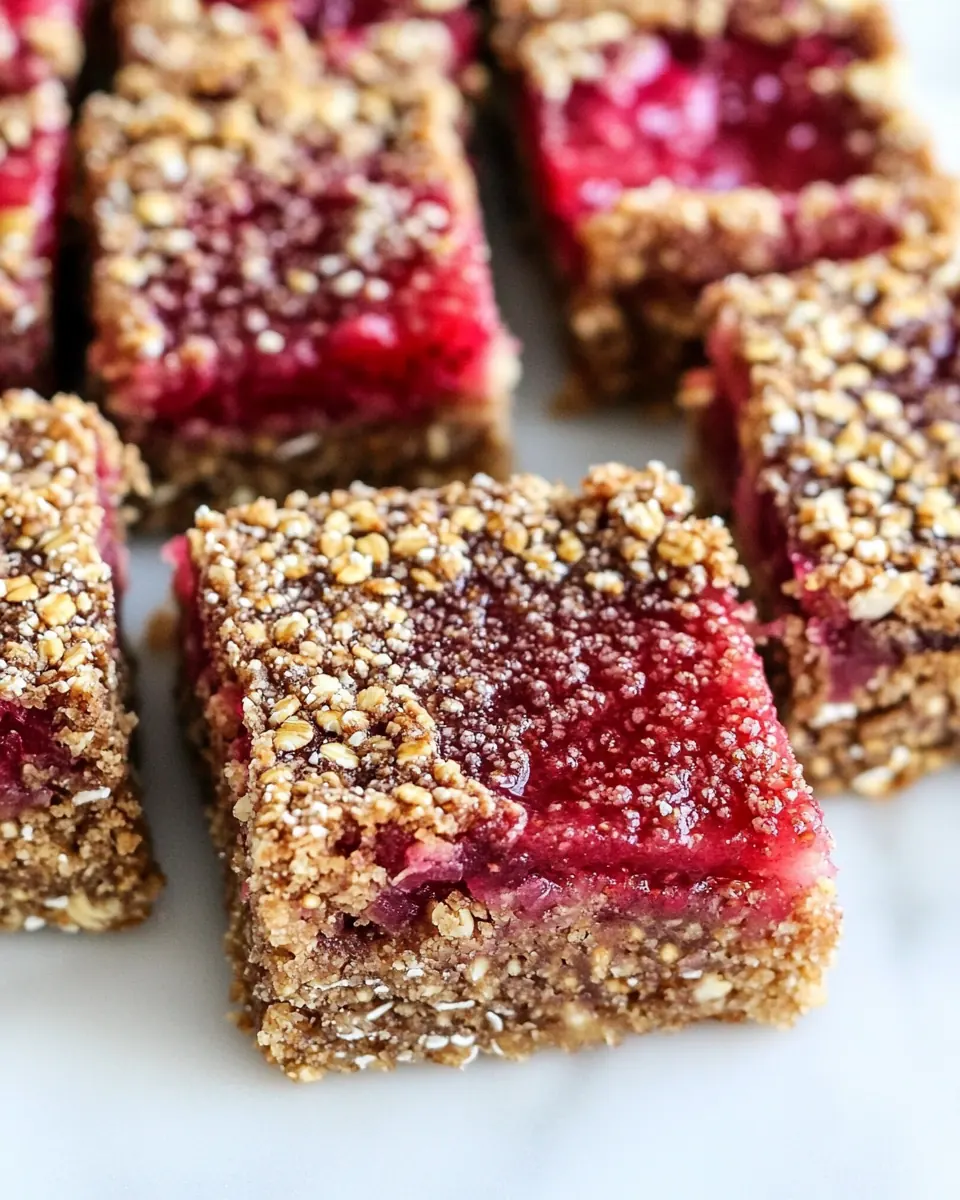
These ingredients work together to create a balanced bar that is both rustic and refined. The flours build a sturdy, flavorful crust, while the sweeteners and small amount of fat create a tender, shortbread like texture. The fruit elements provide brightness and an appealing, slightly tangy filling. The key players are the flours for texture, the unsalted butter for richness, and the fruit preserves plus fresh produce for depth of flavor.
- 2 1/4 cups whole-wheat flour: Provide structure and whole-grain nuttiness to the bars, contributing fiber and a hearty crumb; combines with other flours for balance and chewiness. Use measured cups to ensure proper dough hydration and texture during mixing and baking.
- 3/4 cup buckwheat flour: Add earthy, gluten-free flavor and depth while complementing the whole–wheat flour; helps create a tender crumb and slightly nutty aroma. Use to balance the blend of flours so the bars retain moisture without becoming dense.
- 1/2 cup coconut sugar: Sweeten the dough with a less-refined sugar that adds caramel-like notes and moistness; helps tenderize the pastry and enhance overall flavor. Measure precisely to control sweetness and brownness during baking.
- 1 teaspoon kosher salt: Enhance overall flavor and balance sweetness by emphasizing savory elements; aids in strengthening gluten slightly when combined with flours. Use kosher salt to season the dough evenly for a well-rounded taste.
- 1 teaspoon baking powder: Provide lift and lightness to the baked bars by producing carbon dioxide when heated; helps offset density from whole-grain flours. Measure accurately and mix evenly into dry ingredients to ensure uniform rise.
- 1 cup unsalted butter cold, cut into cubes: Contribute richness, moisture, and flakiness to the crust while solid when cold to create a crumbly texture when cut; butter provides flavor and aids browning. Keep cold and cut into cubes to incorporate into the dough properly for tender layers.
- 1 egg: Bind ingredients and add moisture and a bit of richness, helping to create a cohesive dough; egg contributes to structure and slight chew. Beat lightly before adding to ensure even distribution throughout the batter.
- 2 tablespoons honey: Add mild floral sweetness and help tenderize the dough while enhancing flavor complexity; honey also helps retain moisture and adds a subtle glaze. Measure in tablespoons and stir in with wet ingredients for even sweetness.
- 3 tablespoons molasses: Contribute deep, robust sweetness and molasses undertones that complement whole grains and fruit; adds color and moistness to the bars. Use sparingly to avoid overpowering delicate fruit flavors while enhancing caramel notes.
- 2 cups strawberries tops removed: Provide fresh fruity sweetness and juiciness with tart accents; strawberries add texture and bright flavor to the filling. Hull and roughly chop or slice to blend with rhubarb and preserves for a balanced fruit layer.
- 2 cups rhubarb chopped: Offer pronounced tartness and firm texture that contrasts strawberry sweetness, creating classic strawberry–rhubarb balance; chopped rhubarb releases juices during baking. Cut into uniform pieces to ensure even cooking and distribution in the filling.
- 12 ounces strawberry preserves jar, no sugar added: Deliver concentrated fruit flavor and spreadable texture, helping the filling set and intensify strawberry notes; no-sugar–added preserves provide sweetness from fruit rather than added sugars. Spoon or gently warm to incorporate with fresh fruit for a cohesive filling.
- 1 tablespoon cornstarch: Thicken the fruit filling by absorbing excess juices released during baking, helping the bars hold together when sliced; cornstarch forms a clear, stable gel with heat. Dissolve in a small amount of cold liquid before adding to prevent lumps and ensure even thickening.
- 2 teaspoons lemon juice: Brighten fruit flavors and balance sweetness with acidity, enhancing freshness in the filling; lemon juice helps preserve color and lift the taste profile. Add a measured amount to the fruit mixture to adjust tartness and enhance overall flavor.
Making Strawberry Rhubarb Buckwheat Bars
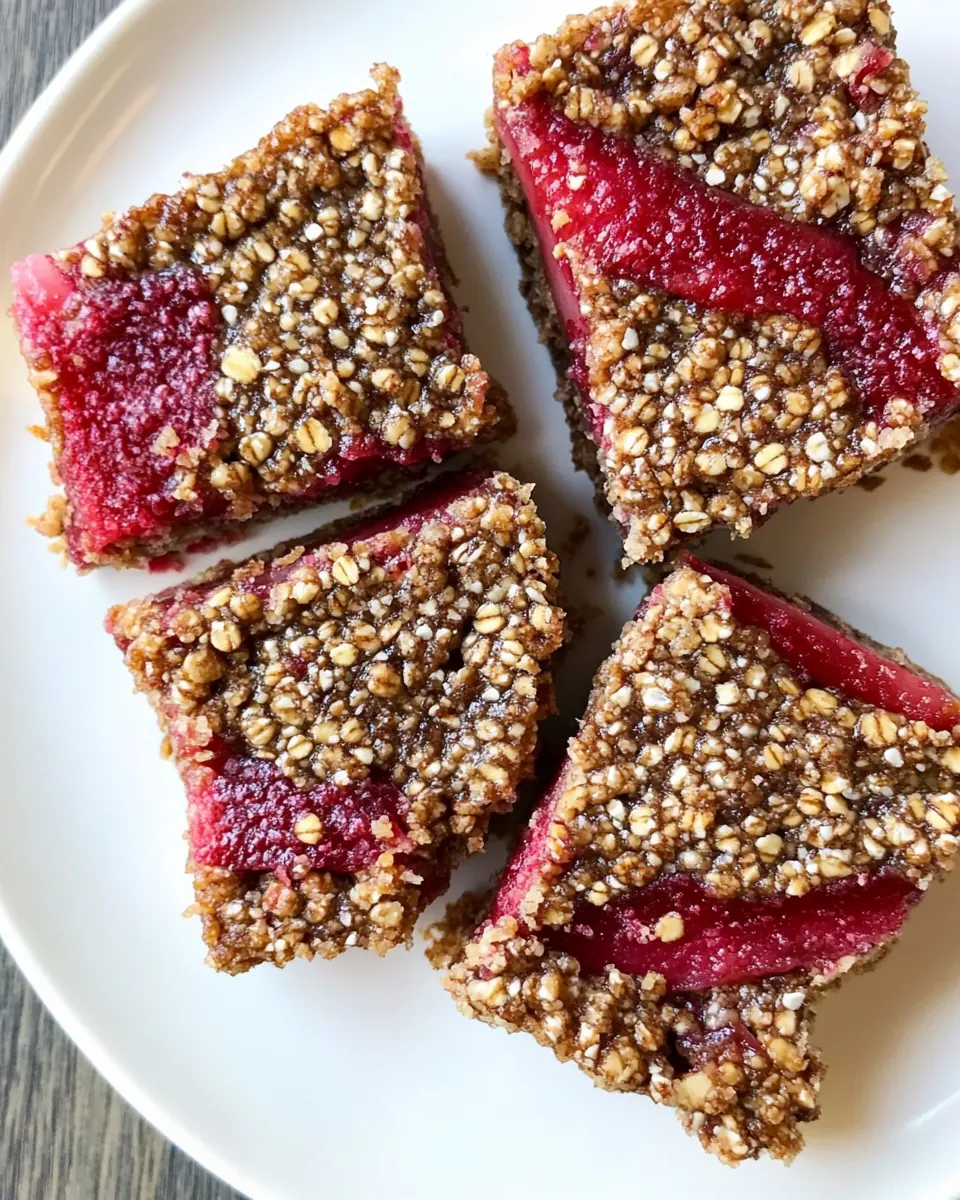
These directions are straightforward, but I like to treat each stage like a small ritual. The dough benefits from short pulses, the filling needs gentle heat and attention, and watching for visual cues will ensure a perfect texture. Read through the full process so you know what to expect at each moment.
- Preheat oven to 375°F. Lightly spray a 9 X 13-inch baking pan.: The aroma of a warm oven signals the start of transformation, and preheating to 375°F ensures the crust begins to set immediately when it hits the oven, producing a tender interior and slightly crisp edges. Prepare the pan with a light spray so the crust releases cleanly after baking, and consider lining the pan with parchment for easier removal. A common mistake is placing the pan in a not fully heated oven, which leads to a crust that spreads instead of setting quickly. Listen for the quiet hum of the oven stabilizing, and if your oven runs hot or cool, use an oven thermometer to confirm the target temperature.
- In a food processor, pulse whole wheat flour, buckwheat flour, coconut sugar, salt, and baking powder in a food processor until well combined. Add butter cubes and pulse until the mixture is crumbly. Add egg, honey, and molasses and pulse until well combined and large clumps form. Reserve 1/2 cup of the mixture and pour the remainder into a prepared baking pan and press into the bottom and slightly up the sides to form a crust.: As you pulse, the dry mixture forms a uniform base, smelling faintly nutty from the buckwheat flour . This step ensures even distribution of leavening and salt, which is vital for consistent texture and lift. The sound will be a quick, rhythmic chop, and the mixture should look homogeneous with no streaks. Avoid over processing here; excessive pulsing can warm the flours and alter texture. If you do not have a food processor, whisk vigorously in a bowl until combined, but be mindful that hand mixing may produce a looser crumb.
- Bake for 10 minutes, remove from oven and cool.: Cold unsalted butter hitting the dry mix will create a coarse, sandy texture dotted with pea sized butter bits, a key visual cue. Those cold pockets of butter steam during baking and create a flaky, tender crust. The mixture should resemble coarse crumbs rather than a paste. If the butter melts too much while handling, chill the mixture briefly, because warm butter will produce a greasy, dense crust. A frequent misstep is over pulsing until it becomes too fine, which reduces flakiness.
- Combine all ingredients in a food processor and lightly pulse together just to combine ingredients. Pour into a small saucepan and heat on medium heat until preserves had melted and a sauce begins to form. Pour over cooled crust and crumble reserved 1/2 cup of crust mixture on top.: Adding the egg , honey , and molasses brings the dough together into cohesive clumps that are slightly sticky to the touch. The molasses deepens the aroma, and the dough will take on a richer color. These clumps make it easy to press an even crust into the pan. Be careful not to overwork the dough in the processor because over mixing develops gluten and yields a tougher bite. If the dough seems too wet, chill it briefly; if too dry, a teaspoon of cold water can help, added sparingly.
- Bake for about 20 minutes until filling is bubbly and top begins to lightly brown. Cool completely before cutting and serving. If desired, sprinkle with powdered sugar.: Pressing the dough into the pan should feel satisfying, the crumb compressing into a dense, even layer that will bake into a sturdy base. Use the back of a measuring cup for a smooth finish and ensure the edges are pressed slightly up to contain the filling. The reserved 1/2 cup will become the crumble topping, adding texture contrast after baking. A frequent error is pressing unevenly, which creates thin spots that brown too quickly, so aim for consistent thickness across the pan.
- Bake for 10 minutes, remove from oven and cool.: As the pan bakes, the kitchen will fill with a toasty, buttery scent and the crust edges will begin to take on a pale golden hue. This brief par bake firms the structure so the filling does not make the crust soggy. Remove as soon as it shows a light color change, and let it cool slightly before adding the filling so the preserves do not liquefy the crust. Overbaking at this stage can dry the base, making it crumbly when sliced.
- Combine all ingredients in a food processor and lightly pulse together just to combine ingredients.: The preserves, chopped strawberries , chopped rhubarb , cornstarch , and lemon juice come together into a mosaic of color, and pulsing briefly ensures pieces remain visible for texture. This gentle blending lets the fruit keep structure while the preserves provide stickiness. Avoid over processing to keep chunks intact; over blending produces a homogenous jam that lacks the satisfying bits of fruit.
- Pour into a small saucepan and heat on medium heat until preserves had melted and a sauce begins to form.: Heating the mixture on medium coaxes out the fruit juices and melts the preserves, creating a glossy filling that thickens as the cornstarch activates. Stir frequently so the mixture does not scorch, and watch as it shifts from dull to shiny, bubbling gently around the edges. Once you see a syrupy sheen and small, steady bubbles, the filling is ready. A common pitfall is letting the mixture boil vigorously, which can break down the fruit and create a too loose filling.
- Pour over cooled crust and crumble reserved 1/2 cup of crust mixture on top.: Pouring the warm filling over the slightly cooled crust produces a satisfying sizzle and the filling will start to settle into the base. The reserved crumb sprinkled on top will toast in the oven, creating contrast between jammy center and crunchy topping. Distribute the crumble evenly so every piece has a balanced amount of filling and crust. If you add the filling while the crust is hot, it can soak in and become soggy, so allow that brief cooling period.
- Bake for about 20 minutes until filling is bubbly and top begins to lightly brown. Cool completely before cutting and serving. If desired, sprinkle with powdered sugar.: During this final bake the filling will bubble energetically around the edges and give off a warm, fruity perfume. The top should take on a soft golden tinge while the centers set; this is your cue to remove the pan. Cooling completely is crucial, it helps the filling firm so slices hold their shape. Sprinkling with powdered sugar is optional, adding a pretty finish and a touch of sweetness. Cutting too soon will yield messy slices, so patience here rewards you with neat, beautiful bars.
Recipe Notes about Strawberry Rhubarb Buckwheat Bars
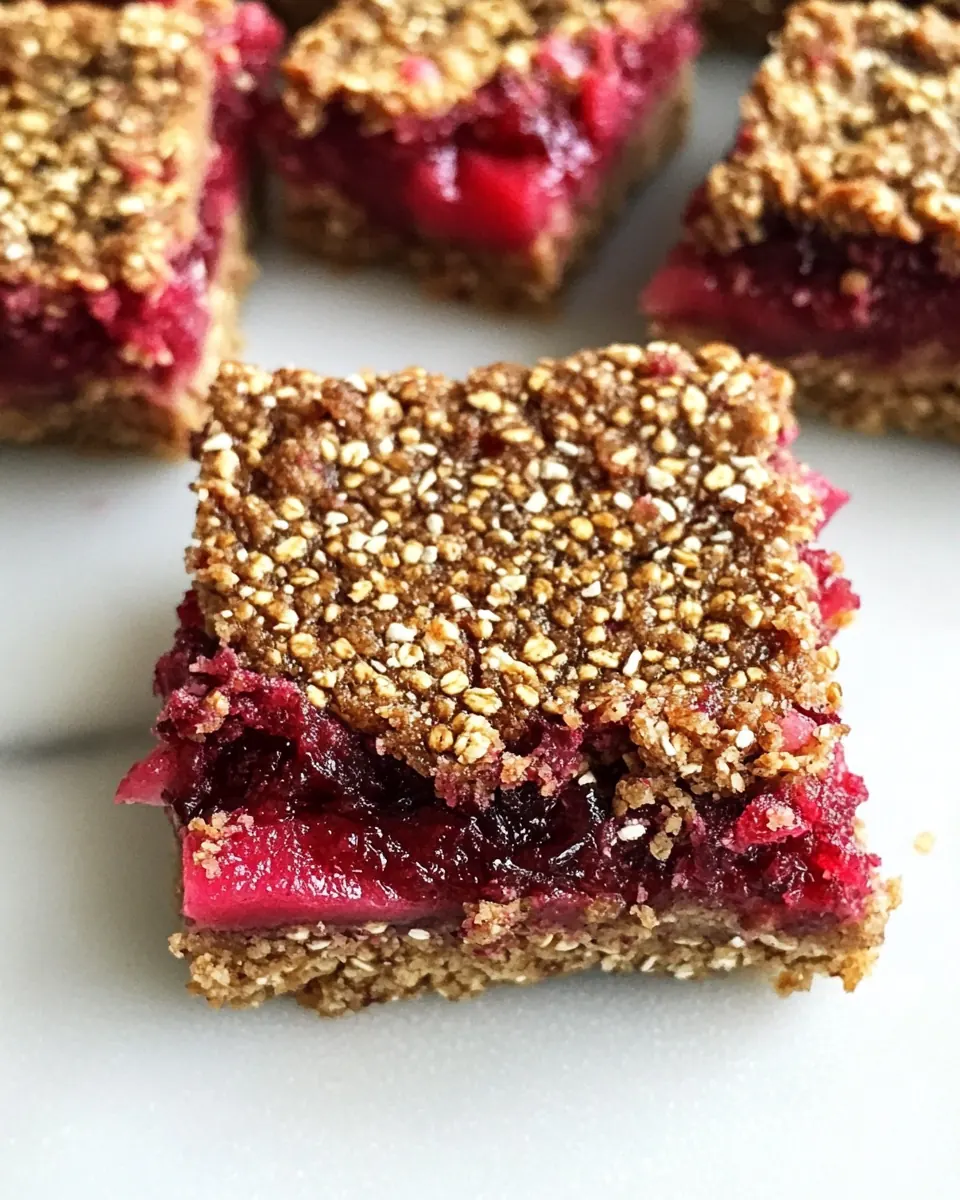
These notes will help you get consistently great results and offer options for small adjustments I use in my kitchen. I expand each point so you can rely on technique more than guesswork.
- Chill the butter: Always cut the unsalted butter into small cubes and keep it cold until the moment you pulse it into the dry ingredients. Cold butter yields flaky pockets that make the crust tender and shortbread like.
- Pulse don’t overmix: When combining dry ingredients and butter, use short pulses so the mixture becomes coarse crumbs. Overprocessing creates a paste and results in a dense crust rather than a delicate one.
- Control the filling temperature: Heat the fruit and preserves on medium until glossy and gently bubbling, stirring frequently. If it boils too hard it can break down the fruit and make the filling too loose when baked.
- Even pressing matters: Press the crust evenly into the pan and slightly up the sides to contain the filling. Thin spots will brown too quickly and cause uneven baking, so check thickness before parbaking.
- Cool fully before slicing: After the final bake, let the bars cool to room temperature, or chill briefly in the refrigerator for the cleanest slices. Cutting hot may result in a runny filling and ragged edges.
What to Serve With Strawberry Rhubarb Buckwheat Bars
These bars are flexible and suit many occasions from casual brunch to celebratory gatherings. They pair well with warm beverages, light creams, or a scoop of something chilled. Use the suggestions below to plan how to present them for different settings and seasons.
- For breakfast or brunch: Serve slices with a mug of coffee or a pot of tea, the bars make a satisfying, not overly sweet morning treat.
- For afternoon gatherings: Pair with a light whipped cream or a dollop of plain yogurt to balance the sweetness and add a creamy element.
- For potlucks and parties: Slice into small squares and arrange on a platter for easy grab and go portions that travel well and keep their shape.
- Seasonal occasions: These bars are lovely in spring, highlighting fresh strawberries and rhubarb, and would work for a Mother’s Day brunch or a springtime picnic.
- Storage tips: Store cooled bars in an airtight container at room temperature for up to two days, or refrigerate up to five days for longer keeping. For best texture, bring chilled bars to room temperature before serving.
- Serving style: For a rustic presentation, leave the top crumble visible and dust lightly with powdered sugar just before serving to add a pretty, finished look.
FAQ
Conclusion
These Strawberry Rhubarb Buckwheat Bars stand out for their balance of nutty, toasty crust and bright, jammy fruit filling. They are approachable to make, yet distinct enough to feel special at any gathering. I hope you give them a try, because the contrast of textures and spring flavors makes them one of my most requested treats. Enjoy the process, and don’t be surprised if they become a favorite in your baking rotation.
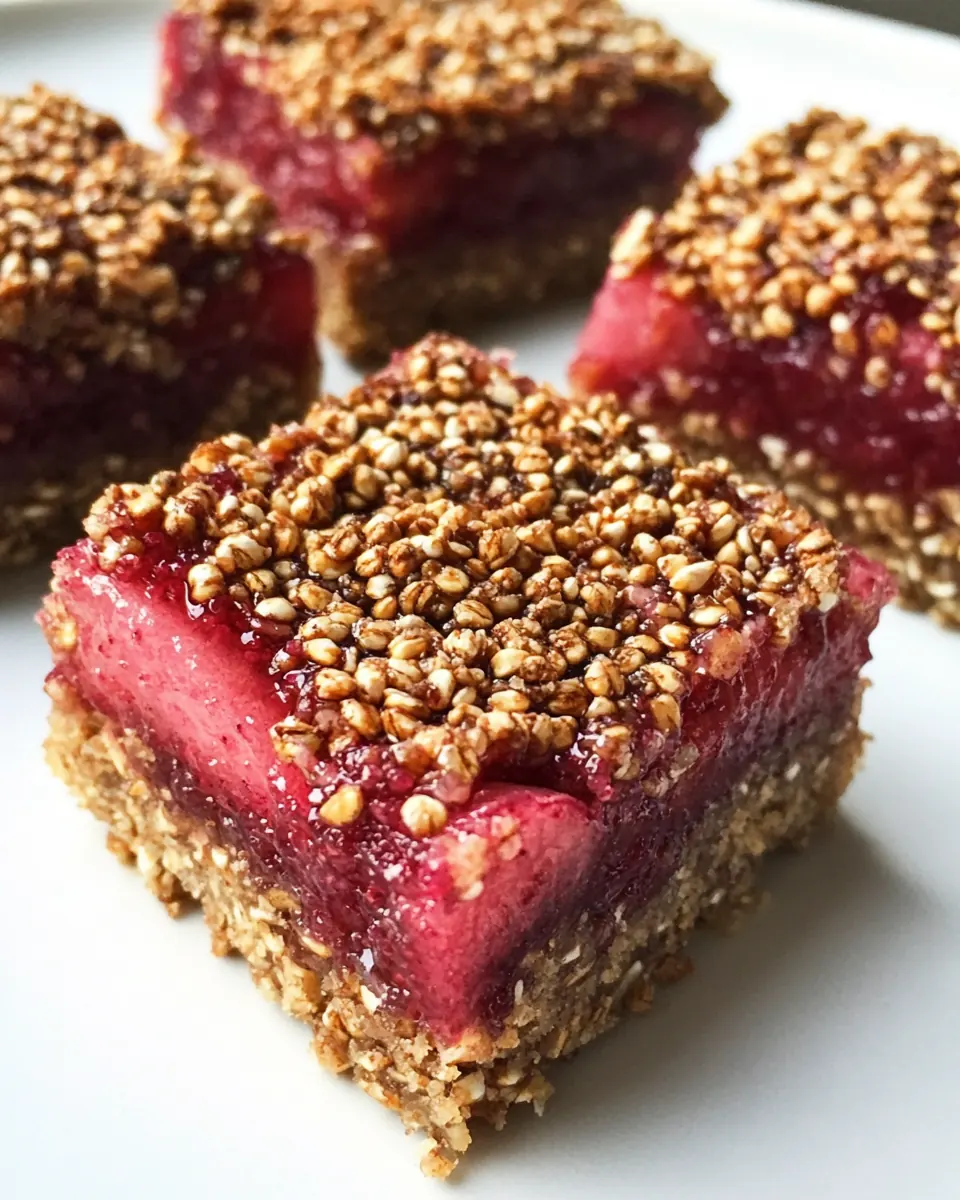
Strawberry Rhubarb Buckwheat Bars
Ingredients
Equipment
Method
- Preheat oven to 375°F. Lightly spray a 9 X 13-inch baking pan.: The aroma of a warm oven signals the start of transformation, and preheating to 375°F ensures the crust begins to set immediately when it hits the oven, producing a tender interior and slightly crisp edges. Prepare the pan with a light spray so the crust releases cleanly after baking, and consider lining the pan with parchment for easier removal. A common mistake is placing the pan in a not fully heated oven, which leads to a crust that spreads instead of setting quickly. Listen for the quiet hum of the oven stabilizing, and if your oven runs hot or cool, use an oven thermometer to confirm the target temperature.
- In a food processor, pulse whole wheat flour, buckwheat flour, coconut sugar, salt, and baking powder in a food processor until well combined. Add butter cubes and pulse until the mixture is crumbly. Add egg, honey, and molasses and pulse until well combined and large clumps form. Reserve 1/2 cup of the mixture and pour the remainder into a prepared baking pan and press into the bottom and slightly up the sides to form a crust.: As you pulse, the dry mixture forms a uniform base, smelling faintly nutty from the buckwheat flour . This step ensures even distribution of leavening and salt, which is vital for consistent texture and lift. The sound will be a quick, rhythmic chop, and the mixture should look homogeneous with no streaks. Avoid over processing here; excessive pulsing can warm the flours and alter texture. If you do not have a food processor, whisk vigorously in a bowl until combined, but be mindful that hand mixing may produce a looser crumb.
- Bake for 10 minutes, remove from oven and cool.: Cold unsalted butter hitting the dry mix will create a coarse, sandy texture dotted with pea sized butter bits, a key visual cue. Those cold pockets of butter steam during baking and create a flaky, tender crust. The mixture should resemble coarse crumbs rather than a paste. If the butter melts too much while handling, chill the mixture briefly, because warm butter will produce a greasy, dense crust. A frequent misstep is over pulsing until it becomes too fine, which reduces flakiness.
- Combine all ingredients in a food processor and lightly pulse together just to combine ingredients. Pour into a small saucepan and heat on medium heat until preserves had melted and a sauce begins to form. Pour over cooled crust and crumble reserved 1/2 cup of crust mixture on top.: Adding the egg , honey , and molasses brings the dough together into cohesive clumps that are slightly sticky to the touch. The molasses deepens the aroma, and the dough will take on a richer color. These clumps make it easy to press an even crust into the pan. Be careful not to overwork the dough in the processor because over mixing develops gluten and yields a tougher bite. If the dough seems too wet, chill it briefly; if too dry, a teaspoon of cold water can help, added sparingly.
- Bake for about 20 minutes until filling is bubbly and top begins to lightly brown. Cool completely before cutting and serving. If desired, sprinkle with powdered sugar.: Pressing the dough into the pan should feel satisfying, the crumb compressing into a dense, even layer that will bake into a sturdy base. Use the back of a measuring cup for a smooth finish and ensure the edges are pressed slightly up to contain the filling. The reserved 1/2 cup will become the crumble topping, adding texture contrast after baking. A frequent error is pressing unevenly, which creates thin spots that brown too quickly, so aim for consistent thickness across the pan.
- Bake for 10 minutes, remove from oven and cool.: As the pan bakes, the kitchen will fill with a toasty, buttery scent and the crust edges will begin to take on a pale golden hue. This brief par bake firms the structure so the filling does not make the crust soggy. Remove as soon as it shows a light color change, and let it cool slightly before adding the filling so the preserves do not liquefy the crust. Overbaking at this stage can dry the base, making it crumbly when sliced.
- Combine all ingredients in a food processor and lightly pulse together just to combine ingredients.: The preserves, chopped strawberries , chopped rhubarb , cornstarch , and lemon juice come together into a mosaic of color, and pulsing briefly ensures pieces remain visible for texture. This gentle blending lets the fruit keep structure while the preserves provide stickiness. Avoid over processing to keep chunks intact; over blending produces a homogenous jam that lacks the satisfying bits of fruit.
- Pour into a small saucepan and heat on medium heat until preserves had melted and a sauce begins to form.: Heating the mixture on medium coaxes out the fruit juices and melts the preserves, creating a glossy filling that thickens as the cornstarch activates. Stir frequently so the mixture does not scorch, and watch as it shifts from dull to shiny, bubbling gently around the edges. Once you see a syrupy sheen and small, steady bubbles, the filling is ready. A common pitfall is letting the mixture boil vigorously, which can break down the fruit and create a too loose filling.
- Pour over cooled crust and crumble reserved 1/2 cup of crust mixture on top.: Pouring the warm filling over the slightly cooled crust produces a satisfying sizzle and the filling will start to settle into the base. The reserved crumb sprinkled on top will toast in the oven, creating contrast between jammy center and crunchy topping. Distribute the crumble evenly so every piece has a balanced amount of filling and crust. If you add the filling while the crust is hot, it can soak in and become soggy, so allow that brief cooling period.
- Bake for about 20 minutes until filling is bubbly and top begins to lightly brown. Cool completely before cutting and serving. If desired, sprinkle with powdered sugar.: During this final bake the filling will bubble energetically around the edges and give off a warm, fruity perfume. The top should take on a soft golden tinge while the centers set; this is your cue to remove the pan. Cooling completely is crucial, it helps the filling firm so slices hold their shape. Sprinkling with powdered sugar is optional, adding a pretty finish and a touch of sweetness. Cutting too soon will yield messy slices, so patience here rewards you with neat, beautiful bars.
Notes
- Chill the butter: Always cut the unsalted butter into small cubes and keep it cold until the moment you pulse it into the dry ingredients. Cold butter yields flaky pockets that make the crust tender and shortbread like.
- Pulse don’t overmix: When combining dry ingredients and butter, use short pulses so the mixture becomes coarse crumbs. Overprocessing creates a paste and results in a dense crust rather than a delicate one.
- Control the filling temperature: Heat the fruit and preserves on medium until glossy and gently bubbling, stirring frequently. If it boils too hard it can break down the fruit and make the filling too loose when baked.
- Even pressing matters: Press the crust evenly into the pan and slightly up the sides to contain the filling. Thin spots will brown too quickly and cause uneven baking, so check thickness before parbaking.
- Cool fully before slicing: After the final bake, let the bars cool to room temperature, or chill briefly in the refrigerator for the cleanest slices. Cutting hot may result in a runny filling and ragged edges.