Preheat oven to 375°F. Lightly spray a 9 X 13-inch baking pan.: The aroma of a warm oven signals the start of transformation, and preheating to 375°F ensures the crust begins to set immediately when it hits the oven, producing a tender interior and slightly crisp edges. Prepare the pan with a light spray so the crust releases cleanly after baking, and consider lining the pan with parchment for easier removal. A common mistake is placing the pan in a not fully heated oven, which leads to a crust that spreads instead of setting quickly. Listen for the quiet hum of the oven stabilizing, and if your oven runs hot or cool, use an oven thermometer to confirm the target temperature.
In a food processor, pulse whole wheat flour, buckwheat flour, coconut sugar, salt, and baking powder in a food processor until well combined. Add butter cubes and pulse until the mixture is crumbly. Add egg, honey, and molasses and pulse until well combined and large clumps form. Reserve 1/2 cup of the mixture and pour the remainder into a prepared baking pan and press into the bottom and slightly up the sides to form a crust.: As you pulse, the dry mixture forms a uniform base, smelling faintly nutty from the buckwheat flour . This step ensures even distribution of leavening and salt, which is vital for consistent texture and lift. The sound will be a quick, rhythmic chop, and the mixture should look homogeneous with no streaks. Avoid over processing here; excessive pulsing can warm the flours and alter texture. If you do not have a food processor, whisk vigorously in a bowl until combined, but be mindful that hand mixing may produce a looser crumb.
Bake for 10 minutes, remove from oven and cool.: Cold unsalted butter hitting the dry mix will create a coarse, sandy texture dotted with pea sized butter bits, a key visual cue. Those cold pockets of butter steam during baking and create a flaky, tender crust. The mixture should resemble coarse crumbs rather than a paste. If the butter melts too much while handling, chill the mixture briefly, because warm butter will produce a greasy, dense crust. A frequent misstep is over pulsing until it becomes too fine, which reduces flakiness.
Combine all ingredients in a food processor and lightly pulse together just to combine ingredients. Pour into a small saucepan and heat on medium heat until preserves had melted and a sauce begins to form. Pour over cooled crust and crumble reserved 1/2 cup of crust mixture on top.: Adding the egg , honey , and molasses brings the dough together into cohesive clumps that are slightly sticky to the touch. The molasses deepens the aroma, and the dough will take on a richer color. These clumps make it easy to press an even crust into the pan. Be careful not to overwork the dough in the processor because over mixing develops gluten and yields a tougher bite. If the dough seems too wet, chill it briefly; if too dry, a teaspoon of cold water can help, added sparingly.
Bake for about 20 minutes until filling is bubbly and top begins to lightly brown. Cool completely before cutting and serving. If desired, sprinkle with powdered sugar.: Pressing the dough into the pan should feel satisfying, the crumb compressing into a dense, even layer that will bake into a sturdy base. Use the back of a measuring cup for a smooth finish and ensure the edges are pressed slightly up to contain the filling. The reserved 1/2 cup will become the crumble topping, adding texture contrast after baking. A frequent error is pressing unevenly, which creates thin spots that brown too quickly, so aim for consistent thickness across the pan.
Bake for 10 minutes, remove from oven and cool.: As the pan bakes, the kitchen will fill with a toasty, buttery scent and the crust edges will begin to take on a pale golden hue. This brief par bake firms the structure so the filling does not make the crust soggy. Remove as soon as it shows a light color change, and let it cool slightly before adding the filling so the preserves do not liquefy the crust. Overbaking at this stage can dry the base, making it crumbly when sliced.
Combine all ingredients in a food processor and lightly pulse together just to combine ingredients.: The preserves, chopped strawberries , chopped rhubarb , cornstarch , and lemon juice come together into a mosaic of color, and pulsing briefly ensures pieces remain visible for texture. This gentle blending lets the fruit keep structure while the preserves provide stickiness. Avoid over processing to keep chunks intact; over blending produces a homogenous jam that lacks the satisfying bits of fruit.
Pour into a small saucepan and heat on medium heat until preserves had melted and a sauce begins to form.: Heating the mixture on medium coaxes out the fruit juices and melts the preserves, creating a glossy filling that thickens as the cornstarch activates. Stir frequently so the mixture does not scorch, and watch as it shifts from dull to shiny, bubbling gently around the edges. Once you see a syrupy sheen and small, steady bubbles, the filling is ready. A common pitfall is letting the mixture boil vigorously, which can break down the fruit and create a too loose filling.
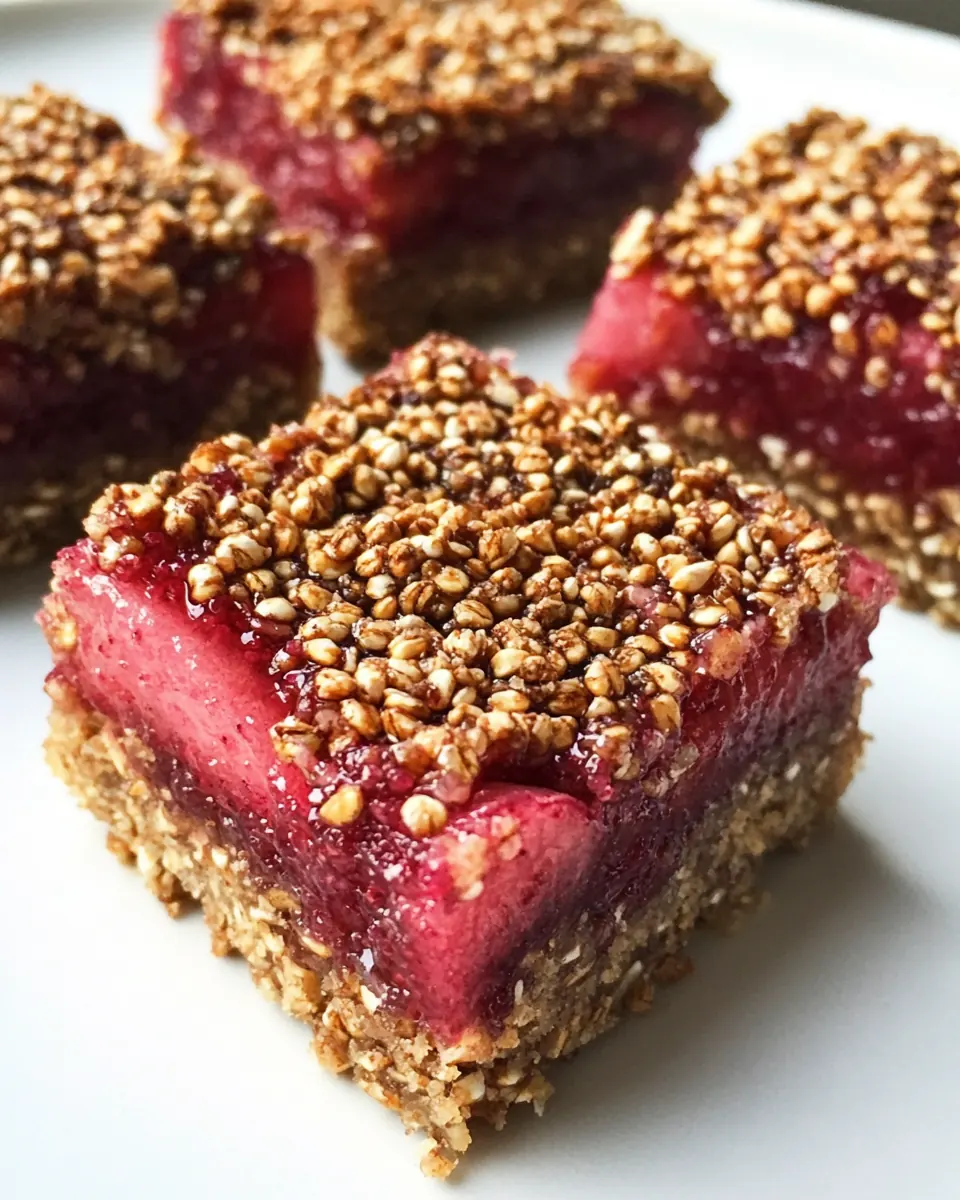
Pour over cooled crust and crumble reserved 1/2 cup of crust mixture on top.: Pouring the warm filling over the slightly cooled crust produces a satisfying sizzle and the filling will start to settle into the base. The reserved crumb sprinkled on top will toast in the oven, creating contrast between jammy center and crunchy topping. Distribute the crumble evenly so every piece has a balanced amount of filling and crust. If you add the filling while the crust is hot, it can soak in and become soggy, so allow that brief cooling period.
Bake for about 20 minutes until filling is bubbly and top begins to lightly brown. Cool completely before cutting and serving. If desired, sprinkle with powdered sugar.: During this final bake the filling will bubble energetically around the edges and give off a warm, fruity perfume. The top should take on a soft golden tinge while the centers set; this is your cue to remove the pan. Cooling completely is crucial, it helps the filling firm so slices hold their shape. Sprinkling with powdered sugar is optional, adding a pretty finish and a touch of sweetness. Cutting too soon will yield messy slices, so patience here rewards you with neat, beautiful bars.