Strawberry Danish
Strawberry Danish has a way of turning ordinary mornings into something a little theatrical, and the first time I made these they disappeared faster than I could plate them. I remember pulling a warm tray from the oven, the air filling with the scent of butter and sweet fruit, and a neighbor knocking because the smell had lured them to my door. That moment, trading warm pastries through the doorway, is why I keep this recipe in heavy rotation, especially on slow, sunlit weekends.
What I love about Strawberry Danish is how approachable it feels, even though the result looks bakery level. I learned to make them on a rainy afternoon, experimenting with twists of puff pastry until I found a shape that held a little pocket of cream cheese and jam without leaking. Between the first bite of flaky pastry and the bright pop of fresh strawberry, there is a balance of textures and flavors that always makes people smile. Over time I adjusted the filling proportions so the center is creamy but not soggy, and the glaze just thin enough to shine without hiding the strawberries.
Recipe Snapshot
26 mins
8 mins
18 mins
Medium
250 kcal
American
Gluten-Free, Low FODMAP
Desserts
Mixing bowl, Whisk, Baking sheet, Oven, Microplane or grater, Knife
Why You’ll Love This Strawberry Danish
1. Bakery quality at home
I adore that Strawberry Danish delivers a professional looking pastry without a pastry chef’s apprenticeship. The combination of store bought puff pastry and a simple cream cheese filling means you get laminated layers that puff and separate in the oven, creating flakiness that wows guests. I value techniques that are forgiving yet yield beautiful texture, and this one does just that.
2. Bright, balanced flavor
The interplay of tangy cream cheese, bright lemon zest, and sweet strawberry jam keeps each bite lively. I like desserts that do not feel cloying, and the modest sugar in the filling plus fresh sliced strawberry on top provides fresh acidity to balance the buttery pastry. When I serve these, people always comment on that clean, fruity finish.
3. Textural contrast
Flaky layers of puff pastry contrasted with smooth, velvety cream cheese and jewel like sliced strawberry create a satisfying mouthfeel. I often tell friends that texture is flavor’s partner, and here it is undeniable. The glaze adds a soft sheen, and a slight chew from the fruit completes every bite.
4. Make ahead friendly
I appreciate recipes that adapt to my schedule, and these can be shaped and chilled ahead. I often prepare the rounds the night before and bake them in the morning, which saves precious time while still giving freshly baked appeal. That flexibility makes Strawberry Danish my go to for brunches or busy holiday mornings.
5. Crowd pleaser
Whether I bring these to a potluck or a quiet brunch, the visual charm is a big part of the appeal. Guests are drawn to the glossy glaze and neat layers, and the recipe scales easily. I like dishes that gather people around the table, and few things do that better than warm, fruit topped pastries that smell like a bakery.
Key Ingredients for Strawberry Danish
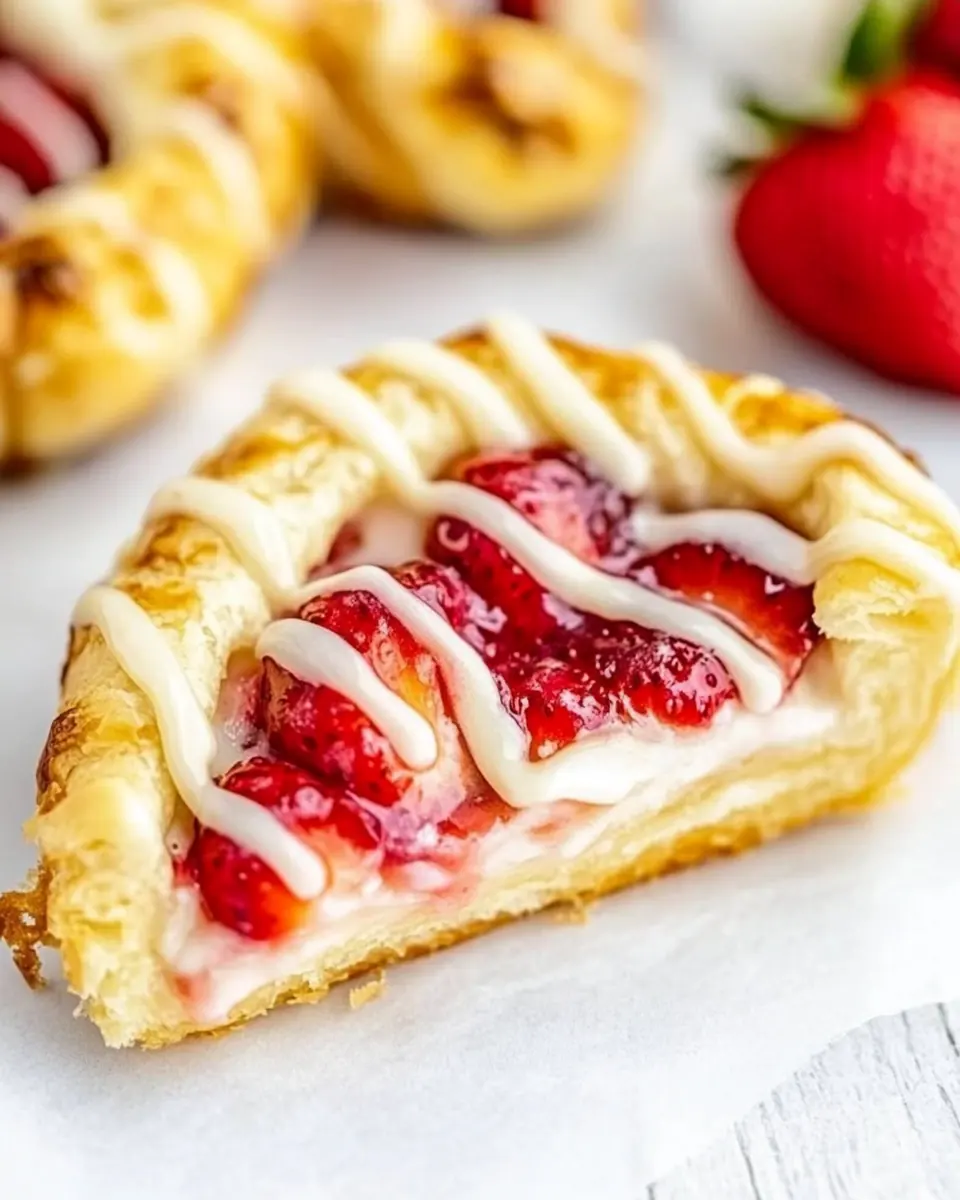
These ingredients are the architecture of the pastry, chosen for their roles in flavor, structure, and texture. The key players are the flaky puff pastry which provides lift and crisp layers, the creamy cream cheese mixture that gives a tangy, rich center, and the fresh strawberry and jam which add brightness. Simple pantry items like granulated sugar and powdered sugar bring balance and the glaze ties everything together, giving shine and sweetness without masking the fruit.
- 8 ounces cream cheese at room temperature: Soften and beat until smooth to create a rich, creamy base for the filling that adds tang and moisture to the Danish. Blend thoroughly with sugar and vanilla to ensure a silky texture that bakes evenly without becoming grainy.
- 3 tablespoons granulated sugar: Sweeten and balance the cream cheese filling by dissolving into the mixture for a pleasant, lightly sweet taste. Sprinkle in gradually while mixing to control sweetness and prevent a gritty mouthfeel.
- lemon zest zest of one lemon: Grate finely and fold into the filling to introduce bright citrus aroma and subtle acidity that cuts through the richness. Use only the fragrant outer zest to avoid bitterness from the pith.
- 1 teaspoon vanilla extract: Add for warm aromatic depth and to amplify the cream cheese’s sweetness; whisk into the filling until evenly distributed. Use pure extract sparingly to avoid overpowering the delicate fruit flavors.
- 17.25 ounces puff pastry 17.25-ounce package frozen puff pastry sheets, thawed: Thaw and unfold sheets gently to form the flaky pastry base that provides structure and crisp, buttery layers. Cut and score as directed to create pockets for filling and ensure proper puffing during baking.
- 1 large egg beaten (for egg wash): Beat and brush over pastry edges and surface to promote glossy, golden-brown color and help toppings adhere during baking. Apply sparingly to avoid soggy areas while still ensuring an even bake.
- 16 teaspoons strawberry jam divided: Spoon and divide into pastry wells to deliver concentrated strawberry flavor and additional sweetness; reserve portions for layering. Warm slightly if too thick to make spreading easier and to integrate with fresh fruit.
- 1 cup powdered sugar: Sift and whisk into a smooth glaze to provide a sweet, matte finish that sets on the Danish and adds a tender bite. Adjust quantity to reach a pourable consistency that drizzles cleanly over the baked pastries.
- 2 tablespoons milk or heavy cream: Whisk in to loosen the powdered sugar into a smooth icing, contributing to a silky texture and slight creaminess depending on choice. Choose milk for a thinner glaze or heavy cream for a richer, glossier finish.
- 1/2 teaspoon vanilla extract: Add for gentle vanilla warmth in the glaze, enhancing overall flavor harmony without overwhelming the strawberry components. Stir until fully incorporated to maintain a uniform color and taste.
- 16 strawberries sliced: Slice and arrange atop each Danish to offer fresh strawberry flavor, bright color, and pleasing texture contrast. Place uniformly for visual appeal and to ensure each bite includes fruit with jam and cream cheese.
Making Strawberry Danish
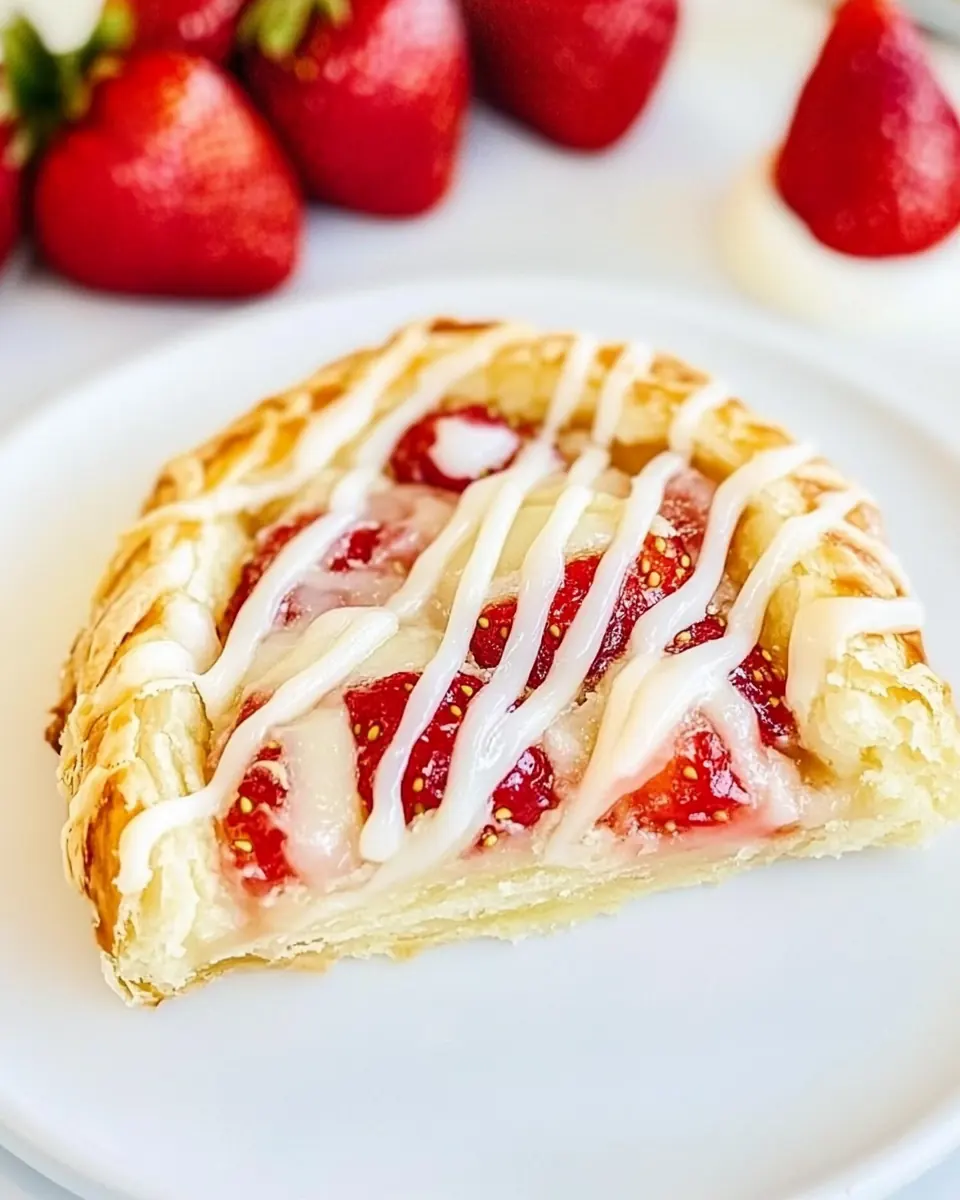
These steps walk you from mixing to serving, and I like to remind people that patience with chilled pastry and careful assembly make a big difference. Read each step fully before you start, and set up your ingredients so you can move smoothly through shaping, chilling, and baking. A little organization yields beautifully puffed, glossy pastries.
- To a large mixing bowl, add the cream cheese, sugar, lemon zest and vanilla extract. Beat until completely combined then set aside.: The moment you begin beating the cream cheese with granulated sugar , the texture changes from chalky to silky, releasing a gentle tang and sweet aroma that tells you it is coming together. As you mix, you should see the mixture become glossy and smooth, with no visible lumps of cream cheese . This smoothness is what gives the filling its luxurious mouthfeel once baked, so take the extra minute to scrape down the bowl and continue beating until it is homogenous. A common mistake is starting with cold cream cheese , which leads to small lumps and an uneven filling, so always ensure it is at room temperature before you begin. If you notice lumps that resist mixing, let the bowl sit at room temperature for a few more minutes and then rebeat gently to avoid over aerating.
- Lay out a sheet of puff pastry in front of you, gently roll it out to remove the creases. Cut the sheet lengthways into strips one inch thick. Repeat with the second sheet.: When you unroll the thawed puff pastry , it will feel cool and slightly tacky, with visible folded layers. Rolling it lightly evens the surface while keeping the laminated layers intact, which is key for a strong rise. As you cut one inch strips, use a sharp knife or pizza cutter to get clean edges that puff evenly in the oven. You should hear a faint, almost silky sound as the blade slices through, and the strips should lay flat without tearing. Avoid stretching the pastry while cutting, which can distort the layers and reduce the dramatic puff in the oven.
- Pick a strip up with one end in each hand. Twist opposite ways to form a loose ribbon then place one end of the strip in front of you to act as the center point of the pastry and lightly coil the strip around it so you have a round shape. Repeat with the remaining strips of pastry.: As you twist, the puff pastry will reveal its layers, and arranging the strip into a coil creates pockets that catch steam and expand during baking. The twist should be gentle to keep the layers distinct, and the coil should be snug but not compressed, allowing air to circulate as it puffs. Visual cues include seeing separated ridges and a neat round shape. If you coil too tightly, the pastry may not fully expand, resulting in denser texture, so maintain a light touch when coiling.
- Transfer the pastry rounds on to two baking sheets leaving a small amount of space in-between.: When placing the rounds on the baking sheets, give each piece room to puff, spacing them so the edges have at least an inch between them. The pastry will more than double in height, so crowding leads to merged edges and uneven browning. The sheets should feel cold to the touch, and I often use sheet pans straight from the fridge to keep the pastry chilled. A frequent error is using a warm baking tray which can start melting the butter layers prematurely, so always use cool pans for predictable puff.
- Put the baking sheets into the refrigerator for 15 minutes.: Chilling the shaped rounds firms up the butter and relaxes the gluten, which helps the layers separate and puff when they hit the oven's heat. During this rest you will notice the pastry firms and becomes easier to handle, and this brief cooling prevents the butter from melting too fast while baking. If you skip this step the pastry can flatten and lose flakiness, so resist the urge to bake immediately. Set a timer so you do not forget them in the fridge, which could dry the edges if left too long.
- Preheat the oven to 400°F.: Preheating to the correct temperature ensures the moisture in the pastry turns to steam quickly, forcing the layers apart for that signature rise. You'll know the oven is ready when it reaches 400°F and holds steady, providing an immediate burst of heat that creates lift. Using a thermometer to verify accuracy helps, since oven temps can vary and a cooler oven will produce a denser result. Avoid opening the door frequently during baking, which lets heat escape and reduces the oven's ability to create steam for puff.
- Remove the chilled pastry from the refrigerator. Use your thumb to press a groove into the center of each pastry then prick it with a fork.: Pressing a shallow groove into the center creates a nest for the fillings and keeps the edges free to puff and color. The fork pricks allow steam to escape from the very center so the filling has a stable base rather than forcing the pastry to balloon unpredictably. You should feel the pastry give slightly under your thumb, indicating the layers are set but still pliable. Be careful not to press too deep, which can compress layers and inhibit rise, and avoid over pricking which could tear the pastry and let the filling leak during baking.
- Egg wash the pastry avoiding the very center. Add half a teaspoon of jam to the center of each pastry.: Brushing with beaten egg creates a glossy, golden finish and seals the outer layers slightly so they brown evenly. Apply sparingly around the edges, steering clear of the center groove so it does not become soggy. When you add half a teaspoon of strawberry jam , it should sit like a small jewel in the middle, providing concentrated fruit flavor without running. If you use too much jam, it can melt and spread, so measure carefully to keep the pastry neat.
- Next, add one scant tablespoon of the cream cheese mixture on top of the jam. Add another half teaspoon of jam on top of the cream cheese mixture.: The layering sequence of jam , then cream cheese , then a dab of jam on top ensures a bright fruit note both beneath and above the filling. When applied, the filling should look creamy and slightly domed, not overflowing, and you will hear a soft, tactile give as you place it. This order also helps trap juices so they do not seep into the pastry. Overfilling is a common pitfall, which leads to leaks and soggy pastry, so keep to the recommended scant tablespoon sized portions.
- Bake in the preheated oven for 18 minutes or until the pastry has puffed up and is golden brown then remove from the oven.: As the pastries bake, you will see dramatic vertical lift as steam expands the butter layers, and the surface will turn an even golden brown, exuding a warm, toasty aroma. The edges should be crisp and hollow sounding if tapped lightly, which indicates good puff. Rotate the sheets once if your oven has hot spots to ensure even browning. If pastries are pale at the 18 minute mark, give them a couple more minutes but watch closely so they do not overbrown and become dry.
- In a large mixing bowl, add the powdered sugar, milk or cream and vanilla extract. Beat until completely smooth. The glaze should be runny enough to pour. If it is too thick add a little more milk or cream, if it’s too thin add a little more powdered sugar.: The glaze should pour like silk and catch the light when drizzled, adding a glossy finish that brightens the presentation. When mixing, you will notice it transform from gritty to smooth, then to a ribbon like pour when you lift the whisk. The consistency is key, because too thin a glaze will pool and drown the fruit, while too thick will sit like a heavy blob. Adjust slowly and test by letting a drop run off a spoon to see how it sets on a cool plate.
- Add the sliced strawberries to the top of each danish pastry.: Place the sliced strawberry pieces gently atop the cream cheese, arranging them for an attractive, overlapping pattern that showcases their color. The fruit should look fresh and glossy, and placing it on slightly cooled pastry keeps the slices from wilting and releasing juice. If the pastry is piping hot the strawberries can soften quickly, so allow the pastries to cool for a few minutes before topping. Overcrowding with slices can make the pastry soggy, so use the recommended amount for balance.
- Pour the glaze over the top. Serve and enjoy!: Drizzling the glaze should feel effortless, as a thin stream that veils the strawberry slices with a luminous sheen. The final aroma of warm butter, sweet glaze, and fresh fruit is instantly appetizing. Serve while the pastries are warm or at room temperature for the best textural contrast. If you store them, the glaze helps protect the fruit a bit, but know that the pastry is best enjoyed within a day for optimal flakiness.
Tips and Tricks about Strawberry Danish
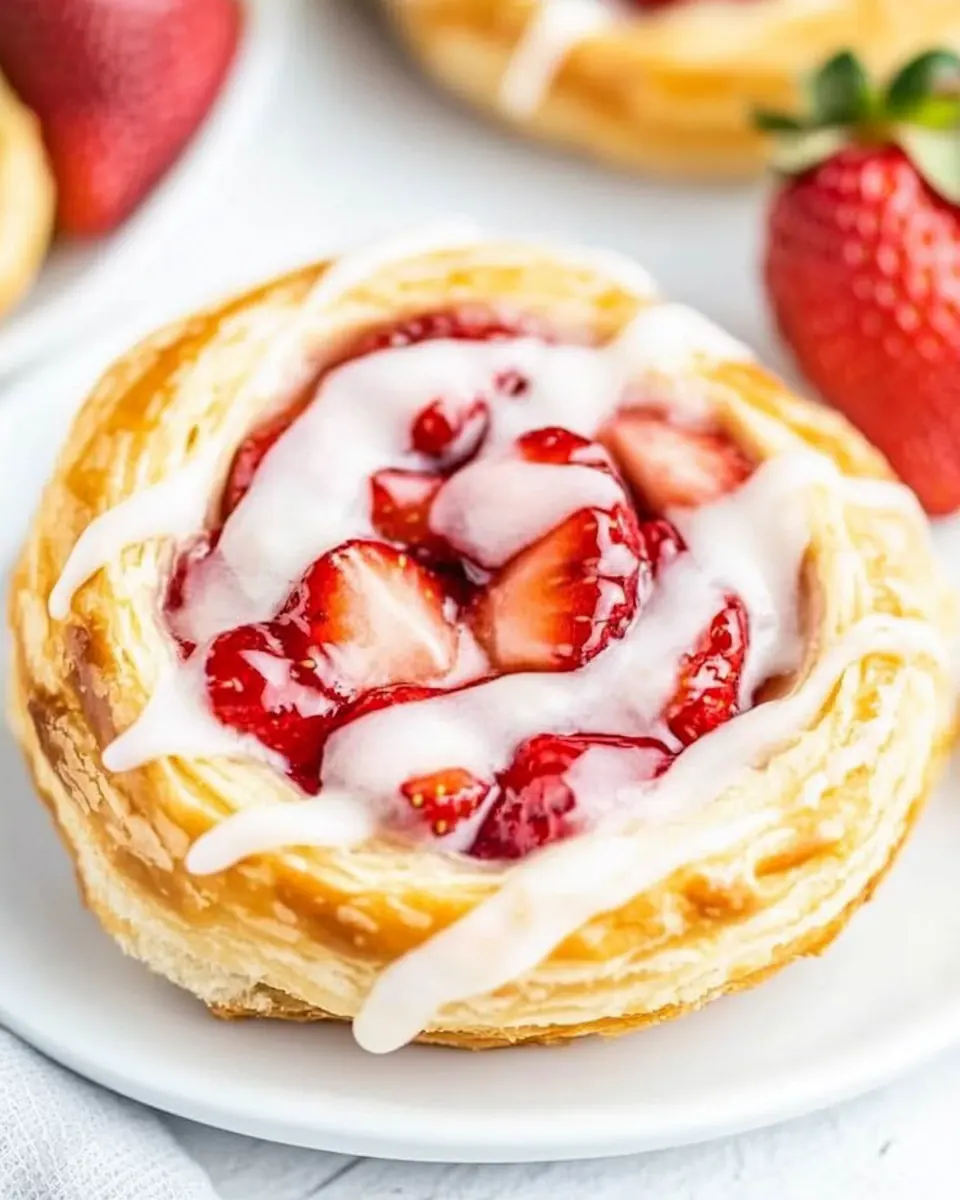
This box of tips collects practical ideas I use every time I make Strawberry Danish. They save time and improve texture and presentation, whether you are baking for a few people or a crowd. Read them and pick a couple to try on your next bake.
- Keep everything cool, especially the puff pastry and baking sheets, to maintain distinct butter layers for optimal puff.
- Room temperature filling makes the cream cheese blend silky, so take it out of the fridge a half hour before you start.
- Use thick jam or preserves to prevent watery centers, spooning measured dollops to control moisture.
- Chill shaped danishes for at least 15 minutes to avoid spread and to boost flakiness when baking.
- Test oven temperature with an oven thermometer, 400°F accuracy ensures consistent puff and color.
What Goes Well With This Strawberry Danish
Strawberry Danish pairs beautifully with light beverages and simple accompaniments that complement its sweet and fruity character. For a relaxed brunch or special occasion, consider a range of side items and serving approaches that highlight the pastry without overpowering it. Presentation matters, so serve on warm plates or a wooden board for a cozy feel.
- Light hot drinks, such as coffee or a mild tea, balance the sweetness and emphasize the pastry‘s buttery notes, making them ideal companions for breakfast or brunch.
- Fresh fruit salad with citrus segments provides a refreshing contrast and adds color to a brunch spread, pairing well with the strawberry topping.
- Yogurt bar with plain or lightly sweetened yogurt offers a creamy, tangy option that harmonizes with the cream cheese center, suitable for a leisurely morning gathering.
- Casual gathering serving is perfect for baby showers or neighborhood brunches, where the pastries can be set on platters and replenished as guests arrive, keeping the experience sociable and relaxed.
- Storage tips include keeping leftovers in an airtight container at room temperature for one day or refrigerated up to three days, and freezing unbaked shaped pastries on a tray before transferring to a bag for longer storage.
- Seasonal pairing suggestion: Serve during spring and early summer when strawberry season is at its peak for the freshest flavor and brightest color.
FAQ
Conclusion
What makes this recipe special is the harmony of flaky, buttery puff pastry, tangy cream cheese, and fresh strawberry brightness finished with a glossy glaze. Give these a try for a weekend brunch or special morning, because they bring bakery quality with minimal fuss and a lot of charm. I hope you enjoy the ritual of shaping and the reward of that first warm bite, served to friends or enjoyed quietly with your favorite cup of coffee.
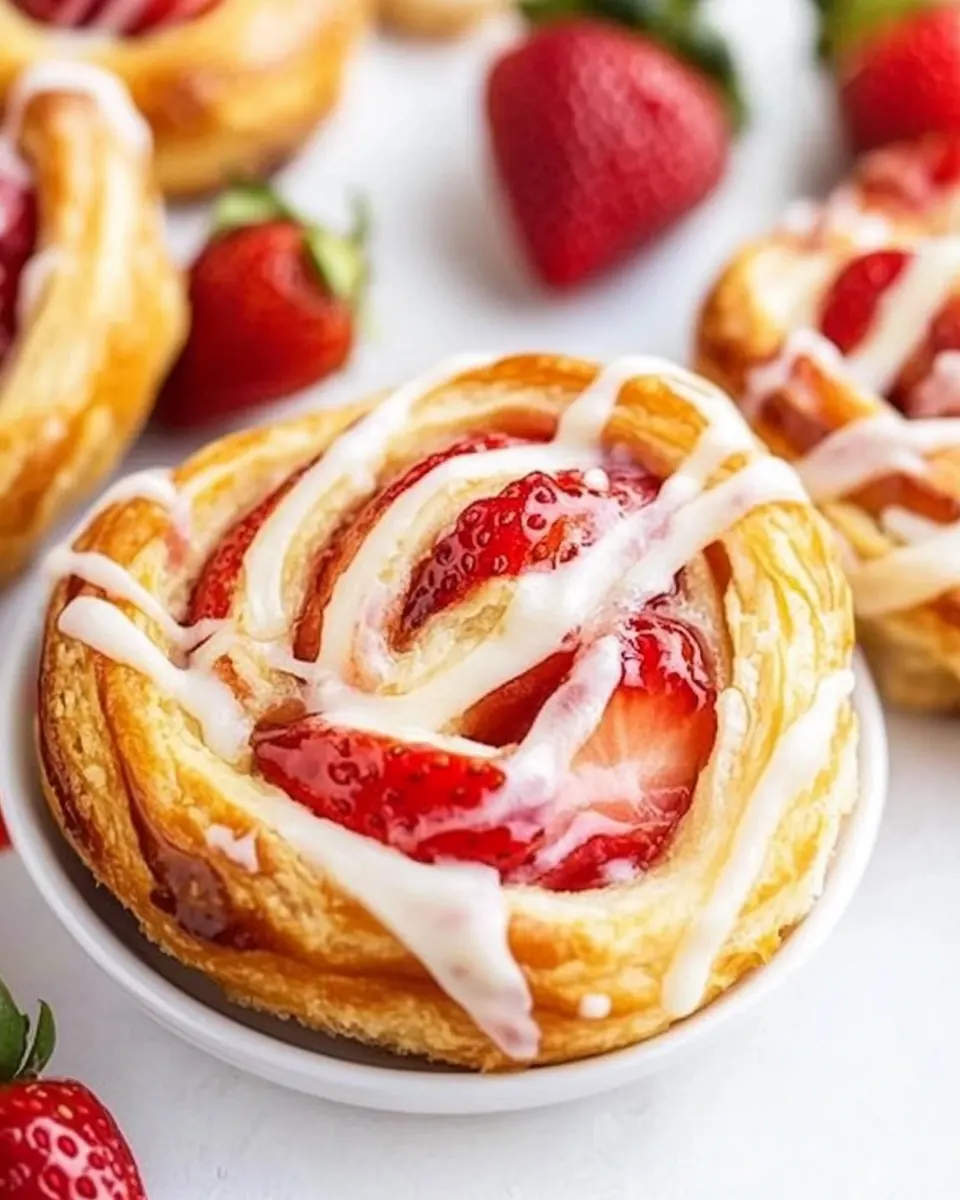
Strawberry Danish
Ingredients
Equipment
Method
- To a large mixing bowl, add the cream cheese, sugar, lemon zest and vanilla extract. Beat until completely combined then set aside.: The moment you begin beating the cream cheese with granulated sugar , the texture changes from chalky to silky, releasing a gentle tang and sweet aroma that tells you it is coming together. As you mix, you should see the mixture become glossy and smooth, with no visible lumps of cream cheese . This smoothness is what gives the filling its luxurious mouthfeel once baked, so take the extra minute to scrape down the bowl and continue beating until it is homogenous. A common mistake is starting with cold cream cheese , which leads to small lumps and an uneven filling, so always ensure it is at room temperature before you begin. If you notice lumps that resist mixing, let the bowl sit at room temperature for a few more minutes and then rebeat gently to avoid over aerating.
- Lay out a sheet of puff pastry in front of you, gently roll it out to remove the creases. Cut the sheet lengthways into strips one inch thick. Repeat with the second sheet.: When you unroll the thawed puff pastry , it will feel cool and slightly tacky, with visible folded layers. Rolling it lightly evens the surface while keeping the laminated layers intact, which is key for a strong rise. As you cut one inch strips, use a sharp knife or pizza cutter to get clean edges that puff evenly in the oven. You should hear a faint, almost silky sound as the blade slices through, and the strips should lay flat without tearing. Avoid stretching the pastry while cutting, which can distort the layers and reduce the dramatic puff in the oven.
- Pick a strip up with one end in each hand. Twist opposite ways to form a loose ribbon then place one end of the strip in front of you to act as the center point of the pastry and lightly coil the strip around it so you have a round shape. Repeat with the remaining strips of pastry.: As you twist, the puff pastry will reveal its layers, and arranging the strip into a coil creates pockets that catch steam and expand during baking. The twist should be gentle to keep the layers distinct, and the coil should be snug but not compressed, allowing air to circulate as it puffs. Visual cues include seeing separated ridges and a neat round shape. If you coil too tightly, the pastry may not fully expand, resulting in denser texture, so maintain a light touch when coiling.
- Transfer the pastry rounds on to two baking sheets leaving a small amount of space in-between.: When placing the rounds on the baking sheets, give each piece room to puff, spacing them so the edges have at least an inch between them. The pastry will more than double in height, so crowding leads to merged edges and uneven browning. The sheets should feel cold to the touch, and I often use sheet pans straight from the fridge to keep the pastry chilled. A frequent error is using a warm baking tray which can start melting the butter layers prematurely, so always use cool pans for predictable puff.
- Put the baking sheets into the refrigerator for 15 minutes.: Chilling the shaped rounds firms up the butter and relaxes the gluten, which helps the layers separate and puff when they hit the oven's heat. During this rest you will notice the pastry firms and becomes easier to handle, and this brief cooling prevents the butter from melting too fast while baking. If you skip this step the pastry can flatten and lose flakiness, so resist the urge to bake immediately. Set a timer so you do not forget them in the fridge, which could dry the edges if left too long.
- Preheat the oven to 400°F.: Preheating to the correct temperature ensures the moisture in the pastry turns to steam quickly, forcing the layers apart for that signature rise. You'll know the oven is ready when it reaches 400°F and holds steady, providing an immediate burst of heat that creates lift. Using a thermometer to verify accuracy helps, since oven temps can vary and a cooler oven will produce a denser result. Avoid opening the door frequently during baking, which lets heat escape and reduces the oven's ability to create steam for puff.
- Remove the chilled pastry from the refrigerator. Use your thumb to press a groove into the center of each pastry then prick it with a fork.: Pressing a shallow groove into the center creates a nest for the fillings and keeps the edges free to puff and color. The fork pricks allow steam to escape from the very center so the filling has a stable base rather than forcing the pastry to balloon unpredictably. You should feel the pastry give slightly under your thumb, indicating the layers are set but still pliable. Be careful not to press too deep, which can compress layers and inhibit rise, and avoid over pricking which could tear the pastry and let the filling leak during baking.
- Egg wash the pastry avoiding the very center. Add half a teaspoon of jam to the center of each pastry.: Brushing with beaten egg creates a glossy, golden finish and seals the outer layers slightly so they brown evenly. Apply sparingly around the edges, steering clear of the center groove so it does not become soggy. When you add half a teaspoon of strawberry jam , it should sit like a small jewel in the middle, providing concentrated fruit flavor without running. If you use too much jam, it can melt and spread, so measure carefully to keep the pastry neat.
- Next, add one scant tablespoon of the cream cheese mixture on top of the jam. Add another half teaspoon of jam on top of the cream cheese mixture.: The layering sequence of jam , then cream cheese , then a dab of jam on top ensures a bright fruit note both beneath and above the filling. When applied, the filling should look creamy and slightly domed, not overflowing, and you will hear a soft, tactile give as you place it. This order also helps trap juices so they do not seep into the pastry. Overfilling is a common pitfall, which leads to leaks and soggy pastry, so keep to the recommended scant tablespoon sized portions.
- Bake in the preheated oven for 18 minutes or until the pastry has puffed up and is golden brown then remove from the oven.: As the pastries bake, you will see dramatic vertical lift as steam expands the butter layers, and the surface will turn an even golden brown, exuding a warm, toasty aroma. The edges should be crisp and hollow sounding if tapped lightly, which indicates good puff. Rotate the sheets once if your oven has hot spots to ensure even browning. If pastries are pale at the 18 minute mark, give them a couple more minutes but watch closely so they do not overbrown and become dry.
- In a large mixing bowl, add the powdered sugar, milk or cream and vanilla extract. Beat until completely smooth. The glaze should be runny enough to pour. If it is too thick add a little more milk or cream, if it’s too thin add a little more powdered sugar.: The glaze should pour like silk and catch the light when drizzled, adding a glossy finish that brightens the presentation. When mixing, you will notice it transform from gritty to smooth, then to a ribbon like pour when you lift the whisk. The consistency is key, because too thin a glaze will pool and drown the fruit, while too thick will sit like a heavy blob. Adjust slowly and test by letting a drop run off a spoon to see how it sets on a cool plate.
- Add the sliced strawberries to the top of each danish pastry.: Place the sliced strawberry pieces gently atop the cream cheese, arranging them for an attractive, overlapping pattern that showcases their color. The fruit should look fresh and glossy, and placing it on slightly cooled pastry keeps the slices from wilting and releasing juice. If the pastry is piping hot the strawberries can soften quickly, so allow the pastries to cool for a few minutes before topping. Overcrowding with slices can make the pastry soggy, so use the recommended amount for balance.
- Pour the glaze over the top. Serve and enjoy!: Drizzling the glaze should feel effortless, as a thin stream that veils the strawberry slices with a luminous sheen. The final aroma of warm butter, sweet glaze, and fresh fruit is instantly appetizing. Serve while the pastries are warm or at room temperature for the best textural contrast. If you store them, the glaze helps protect the fruit a bit, but know that the pastry is best enjoyed within a day for optimal flakiness.
Notes
- Keep everything cool, especially the puff pastry and baking sheets, to maintain distinct butter layers for optimal puff.
- Room temperature filling makes the cream cheese blend silky, so take it out of the fridge a half hour before you start.
- Use thick jam or preserves to prevent watery centers, spooning measured dollops to control moisture.
- Chill shaped danishes for at least 15 minutes to avoid spread and to boost flakiness when baking.
- Test oven temperature with an oven thermometer, 400°F accuracy ensures consistent puff and color.