To a large mixing bowl, add the cream cheese, sugar, lemon zest and vanilla extract. Beat until completely combined then set aside.: The moment you begin beating the cream cheese with granulated sugar , the texture changes from chalky to silky, releasing a gentle tang and sweet aroma that tells you it is coming together. As you mix, you should see the mixture become glossy and smooth, with no visible lumps of cream cheese . This smoothness is what gives the filling its luxurious mouthfeel once baked, so take the extra minute to scrape down the bowl and continue beating until it is homogenous. A common mistake is starting with cold cream cheese , which leads to small lumps and an uneven filling, so always ensure it is at room temperature before you begin. If you notice lumps that resist mixing, let the bowl sit at room temperature for a few more minutes and then rebeat gently to avoid over aerating.
Lay out a sheet of puff pastry in front of you, gently roll it out to remove the creases. Cut the sheet lengthways into strips one inch thick. Repeat with the second sheet.: When you unroll the thawed puff pastry , it will feel cool and slightly tacky, with visible folded layers. Rolling it lightly evens the surface while keeping the laminated layers intact, which is key for a strong rise. As you cut one inch strips, use a sharp knife or pizza cutter to get clean edges that puff evenly in the oven. You should hear a faint, almost silky sound as the blade slices through, and the strips should lay flat without tearing. Avoid stretching the pastry while cutting, which can distort the layers and reduce the dramatic puff in the oven.
Pick a strip up with one end in each hand. Twist opposite ways to form a loose ribbon then place one end of the strip in front of you to act as the center point of the pastry and lightly coil the strip around it so you have a round shape. Repeat with the remaining strips of pastry.: As you twist, the puff pastry will reveal its layers, and arranging the strip into a coil creates pockets that catch steam and expand during baking. The twist should be gentle to keep the layers distinct, and the coil should be snug but not compressed, allowing air to circulate as it puffs. Visual cues include seeing separated ridges and a neat round shape. If you coil too tightly, the pastry may not fully expand, resulting in denser texture, so maintain a light touch when coiling.
Transfer the pastry rounds on to two baking sheets leaving a small amount of space in-between.: When placing the rounds on the baking sheets, give each piece room to puff, spacing them so the edges have at least an inch between them. The pastry will more than double in height, so crowding leads to merged edges and uneven browning. The sheets should feel cold to the touch, and I often use sheet pans straight from the fridge to keep the pastry chilled. A frequent error is using a warm baking tray which can start melting the butter layers prematurely, so always use cool pans for predictable puff.
Put the baking sheets into the refrigerator for 15 minutes.: Chilling the shaped rounds firms up the butter and relaxes the gluten, which helps the layers separate and puff when they hit the oven's heat. During this rest you will notice the pastry firms and becomes easier to handle, and this brief cooling prevents the butter from melting too fast while baking. If you skip this step the pastry can flatten and lose flakiness, so resist the urge to bake immediately. Set a timer so you do not forget them in the fridge, which could dry the edges if left too long.
Preheat the oven to 400°F.: Preheating to the correct temperature ensures the moisture in the pastry turns to steam quickly, forcing the layers apart for that signature rise. You'll know the oven is ready when it reaches 400°F and holds steady, providing an immediate burst of heat that creates lift. Using a thermometer to verify accuracy helps, since oven temps can vary and a cooler oven will produce a denser result. Avoid opening the door frequently during baking, which lets heat escape and reduces the oven's ability to create steam for puff.
Remove the chilled pastry from the refrigerator. Use your thumb to press a groove into the center of each pastry then prick it with a fork.: Pressing a shallow groove into the center creates a nest for the fillings and keeps the edges free to puff and color. The fork pricks allow steam to escape from the very center so the filling has a stable base rather than forcing the pastry to balloon unpredictably. You should feel the pastry give slightly under your thumb, indicating the layers are set but still pliable. Be careful not to press too deep, which can compress layers and inhibit rise, and avoid over pricking which could tear the pastry and let the filling leak during baking.
Egg wash the pastry avoiding the very center. Add half a teaspoon of jam to the center of each pastry.: Brushing with beaten egg creates a glossy, golden finish and seals the outer layers slightly so they brown evenly. Apply sparingly around the edges, steering clear of the center groove so it does not become soggy. When you add half a teaspoon of strawberry jam , it should sit like a small jewel in the middle, providing concentrated fruit flavor without running. If you use too much jam, it can melt and spread, so measure carefully to keep the pastry neat.
Next, add one scant tablespoon of the cream cheese mixture on top of the jam. Add another half teaspoon of jam on top of the cream cheese mixture.: The layering sequence of jam , then cream cheese , then a dab of jam on top ensures a bright fruit note both beneath and above the filling. When applied, the filling should look creamy and slightly domed, not overflowing, and you will hear a soft, tactile give as you place it. This order also helps trap juices so they do not seep into the pastry. Overfilling is a common pitfall, which leads to leaks and soggy pastry, so keep to the recommended scant tablespoon sized portions.
Bake in the preheated oven for 18 minutes or until the pastry has puffed up and is golden brown then remove from the oven.: As the pastries bake, you will see dramatic vertical lift as steam expands the butter layers, and the surface will turn an even golden brown, exuding a warm, toasty aroma. The edges should be crisp and hollow sounding if tapped lightly, which indicates good puff. Rotate the sheets once if your oven has hot spots to ensure even browning. If pastries are pale at the 18 minute mark, give them a couple more minutes but watch closely so they do not overbrown and become dry.
In a large mixing bowl, add the powdered sugar, milk or cream and vanilla extract. Beat until completely smooth. The glaze should be runny enough to pour. If it is too thick add a little more milk or cream, if it’s too thin add a little more powdered sugar.: The glaze should pour like silk and catch the light when drizzled, adding a glossy finish that brightens the presentation. When mixing, you will notice it transform from gritty to smooth, then to a ribbon like pour when you lift the whisk. The consistency is key, because too thin a glaze will pool and drown the fruit, while too thick will sit like a heavy blob. Adjust slowly and test by letting a drop run off a spoon to see how it sets on a cool plate.
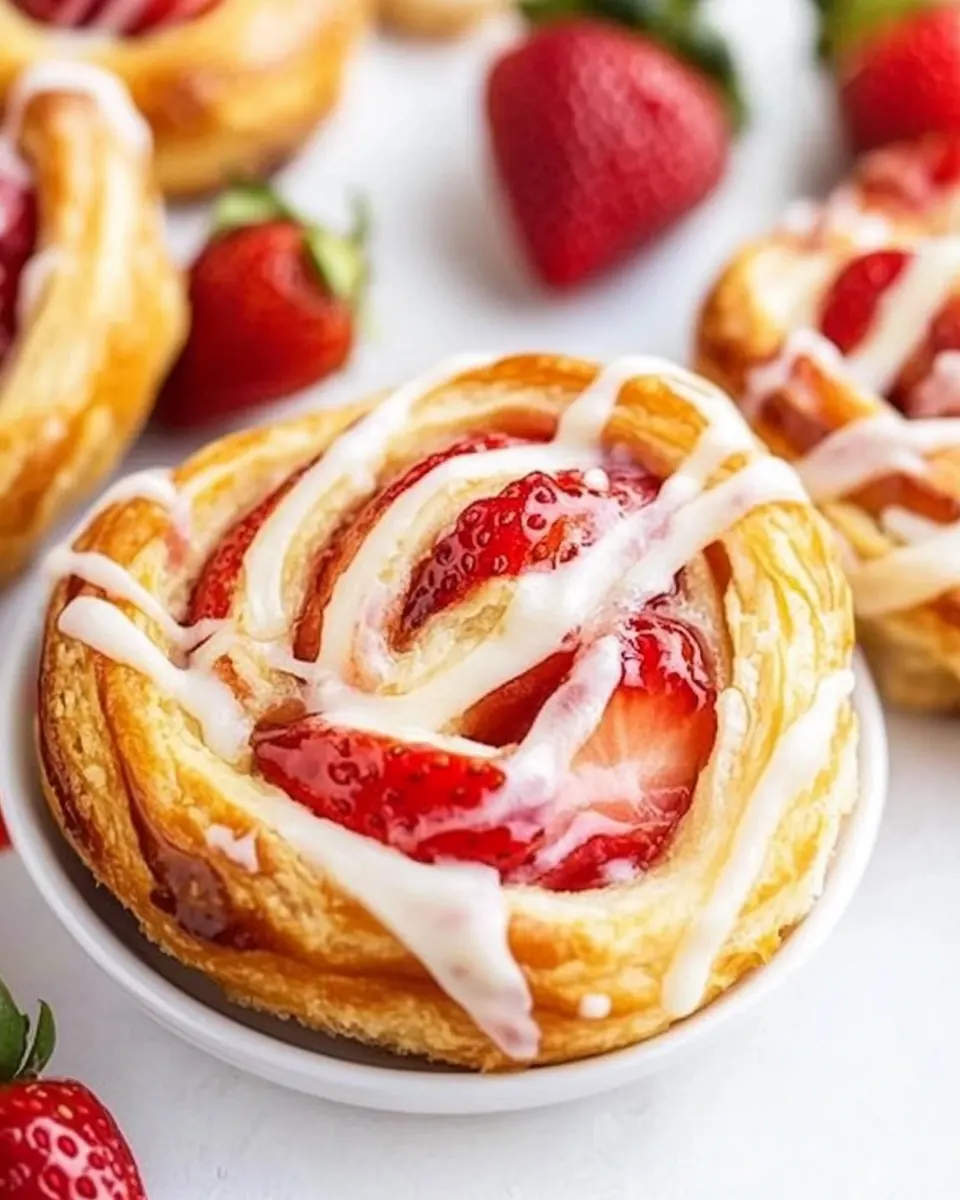
Add the sliced strawberries to the top of each danish pastry.: Place the sliced strawberry pieces gently atop the cream cheese, arranging them for an attractive, overlapping pattern that showcases their color. The fruit should look fresh and glossy, and placing it on slightly cooled pastry keeps the slices from wilting and releasing juice. If the pastry is piping hot the strawberries can soften quickly, so allow the pastries to cool for a few minutes before topping. Overcrowding with slices can make the pastry soggy, so use the recommended amount for balance.
Pour the glaze over the top. Serve and enjoy!: Drizzling the glaze should feel effortless, as a thin stream that veils the strawberry slices with a luminous sheen. The final aroma of warm butter, sweet glaze, and fresh fruit is instantly appetizing. Serve while the pastries are warm or at room temperature for the best textural contrast. If you store them, the glaze helps protect the fruit a bit, but know that the pastry is best enjoyed within a day for optimal flakiness.