Asian Style Shrimp and Noodle Soup
Asian Style Shrimp and Noodle Soup came into my weeknight rotation the moment I needed something bright, fast, and comforting all at once. I remember the first time I made it after a rainy market run, my hands still smelling faintly of basil and ginger. The bowl warmed me from the inside out, and the combination of fragrant herbs with the gentle snap of shrimp felt like a small celebration after a long day. I loved how approachable it was, while still tasting like something you might order at a favorite neighborhood spot.
That evening I chopped herbs on my tiny counter while the broth came to a lively boil, and I realized how much a few fresh ingredients can transform a simple pantry. The noodles soaked up the savory, slightly sweet broth, and the shrimp cooked in just moments, remaining tender and poppable. I often make a double batch of the broth, because the next-day leftovers taste even better as the flavors meld.
Recipe Snapshot
30 mins
15 mins
15 mins
Easy
300 kcal
Asian
Keto, Paleo
Soups
Large pot, Knife, Cutting board, Ladle
What’s Great About This Asian Style Shrimp and Noodle Soup
Fast Comfort Without Sacrifice
I love that Asian Style Shrimp and Noodle Soup gives you a full flavored bowl in under 30 minutes, so you do not compromise on taste when time is tight. The broth is layered with umami from chicken broth and soy sauce, brightened by citrus, and finished with fresh herbs, which keeps it lively rather than heavy. When I am juggling work and dinner, this recipe feels like a cheat code for satisfying food.
Herbs That Sing
The fresh basil, mint, and cilantro are not just garnishes, they are front and center. I add them early so their oils infuse the broth, creating an aromatic lift that changes a plain soup into something memorable. I find that the blend of herbs gives a layered complexity that makes each spoonful interesting.
Textural Balance
Soft noodles paired with slightly firm shrimp makes every bite enjoyable. The noodles soak up the savory liquid, while the shrimp provides that satisfying bite. I always watch the cooking window carefully because overcooked shrimp becomes rubbery, and that single change ruins the harmony of textures.
Family Friendly and Customizable
This soup adapts easily to heat levels and pantry variations. I often skip the chili for kids, and add more spring onions and herbs for grown ups. It is a simple template that welcomes tweaks, which is why it never feels repetitive in my kitchen. I like recipes that let everyone at the table personalize their bowl.
Minimal Equipment, Maximum Flavor
I appreciate recipes that do not require special tools. A sturdy pot and a good knife are enough here, which means I can make it even when I am traveling or short on space. The technique is straightforward, but the results are anything but basic.
Ingredients to Make Asian Style Shrimp and Noodle Soup
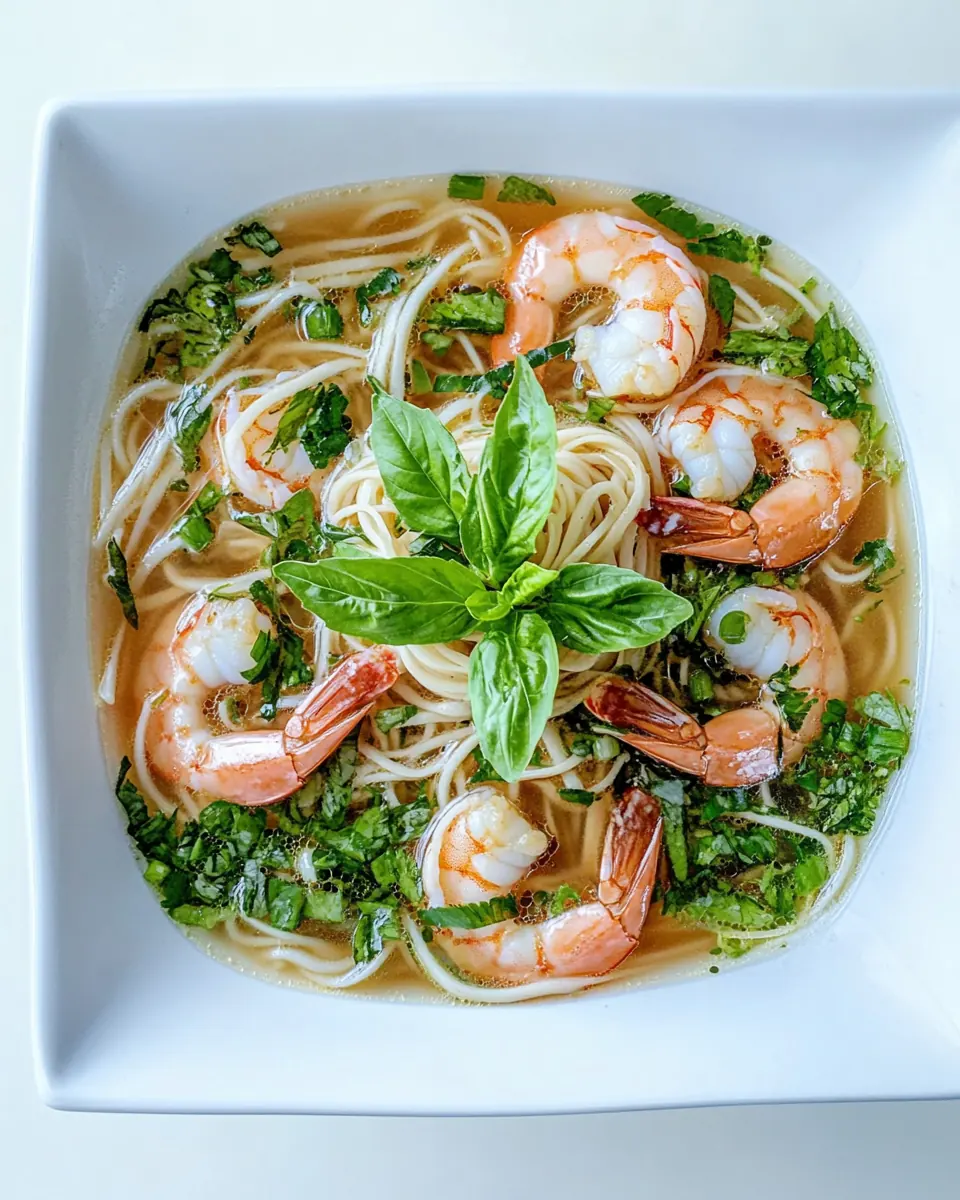
These ingredients are chosen to create a balanced, aromatic broth that supports tender protein and slurpable noodles. The key players are the savory base of chicken broth and the bright lift from citrus and fresh herbs. Umami from soy sauce and fish sauce gives depth, while aromatics like ginger and garlic add warmth and complexity.
- 6 cups water: Provide a flavorful cooking liquid and base for the soup, contributing volume and helping extract aromatics from spices and aromatics; simmer gently to meld flavors and create a light broth.
- 2 (10 fluid ounce) cans chicken broth: Add a savory, umami-rich backbone to deepen the stock, balancing the water and enhancing the overall complexity; pour in during simmering to build depth and body.
- Juice of 1/2 lime: Brighten and balance the broth with acidity, cutting through richness and lifting other flavors; squeeze in near the end to preserve freshness and aroma.
- 1 tablespoon fish sauce: Impart a distinct savory-salty-umami punch with subtle fishiness that enhances seafood and Southeast Asian flavors; stir in sparingly and taste to avoid overpowering.
- 1 tablespoon soy sauce: Introduce salty, savory umami and a mild fermentative note that rounds other flavors; add early for even distribution and adjust to taste.
- 1 teaspoon Chinese five spice: Provide warm, aromatic notes of star anise, cinnamon, cloves, fennel and Szechuan peppercorn blend that add depth and complexity; crush slightly and simmer to release oils.
- 1 peeled chunk of ginger (about the size of a teaspoon): Lend warm, peppery, slightly sweet and pungent aroma along with sharp freshness that brightens the broth; slice or bruise and simmer to infuse without overpowering.
- 1 teaspoon chili pepper () (optional): Contribute heat and a touch of color when desired, enhancing the soup’s spiciness and complexity; add according to heat preference and taste during cooking.
- 1 tablespoon fresh basil chopped: Offer sweet, slightly peppery herbal brightness with a fresh aroma that complements other herbs and seafood; chop and add near the end to preserve flavor.
- 1 tablespoon fresh mint chopped: Provide cool, minty freshness that adds brightness and contrast to the warm broth and seafood; chop and add just before serving for best aroma.
- 2 tablespoons fresh cilantro chopped: Add citrusy, slightly peppery, and aromatic herbal layers that unify Southeast Asian flavors and refresh the palate; chop and scatter on top as a finishing herb.
- 2 cloves garlic minced: Give pungent, savory depth and aromatic base notes that infuse the broth with garlic’s characteristic warmth; mince and sauté briefly or add to simmering liquid.
- 1 2 tablespoons spring onions chopped: Supply mild oniony sweetness and fresh green onion flavor that adds brightness and texture; chop and sprinkle as a garnish or stir in while cooking for subtle depth.
- 1/3 lb . Chinese style noodles (I used 1/3 of a package): Provide starchy, tender noodles that absorb the broth and add satisfying body and texture to the soup; cook until just tender and add to bowls or simmer briefly.
- 3/4 pound medium shrimp: Contribute sweet, delicate seafood flavor and protein, quickly cooking to tender perfection; peel and devein if needed and add toward the end to avoid toughness.
Preparation Steps for Asian Style Shrimp and Noodle Soup
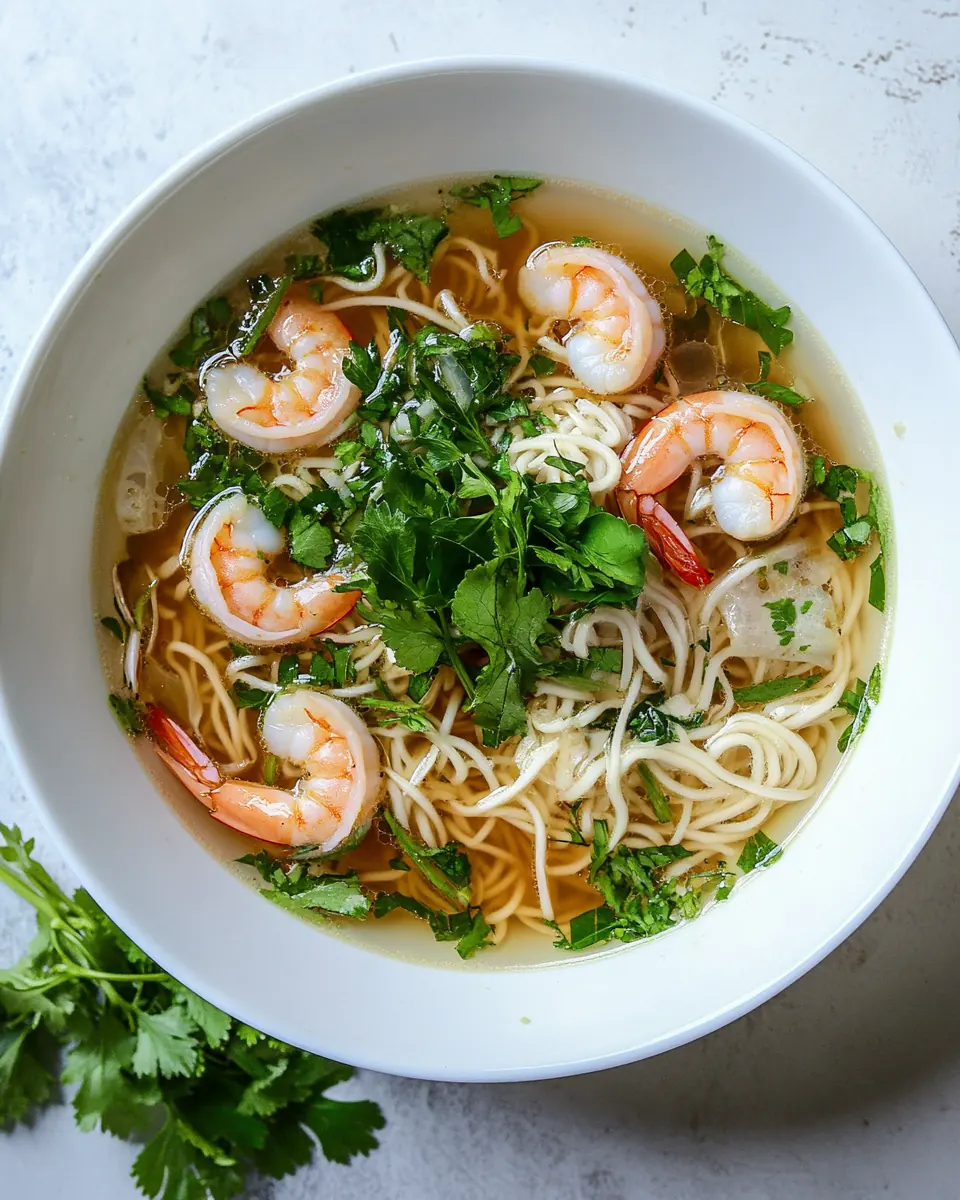
This recipe moves quickly once the liquid heats up, so have your herbs chopped and your shrimp prepped. The directions below expand each line into sensory rich guidance so you know what to expect at every moment.
- If shrimp are frozen, run them under cool water until thawed. Peel and devein. Set aside.: You will feel the slight chill of the shrimp as you rinse them under cool running water, and they will go from stiff to flexible when thawed enough to peel easily. Peeling reveals the delicate translucent flesh, and deveining prevents gritty texture and any unpleasant bites. A common mistake is using warm water which starts cooking the surface, so always use cool water. Pat the shrimp dry with a towel so they sizzle properly when they hit the broth, and keep them in a bowl in the fridge until ready to add.
- Add water, chicken broth, lime juice, fish sauce, soy sauce, Chinese five spice, ginger, and chili pepper to a pot on high heat.: As the pot heats, the aroma of ginger and Chinese five spice will blossom, and steam will carry those scents around your kitchen. You will hear a rising rumble as the liquid warms toward a boil. Adding the lime juice at this stage helps its bright notes to meld into the savory base, creating balance. Avoid rushing to a rolling boil so flavors can marry; a rapid boil can cause sharper, less integrated tastes. Stir once to combine and keep the pot uncovered so you can monitor the rising bubbles.
- Meanwhile, prepare herbs. Chop the basil, mint, and cilantro, and add to the pot. Mince the garlic into the pot. Chop spring onions and set aside.: When you chop the herbs, you will notice their oils releasing as they are torn and crushed, filling the air with fresh, green fragrance. Adding some herbs into the hot pot now extracts those oils into the broth for depth, while minced garlic brings savory warmth. The spring onions are set aside to provide crisp freshness at the end. A frequent oversight is overchopping the herbs into a paste, which can make the broth murky; aim for a coarse chop to preserve texture and aroma.
- When the broth starts to boil, reduce the heat to medium and add the noodles and cook for about five minutes, until noodles are soft.: As the broth comes to a gentle boil, you will hear the steady bubbling and see a thin veil of steam. Lowering to medium simmers the pot and creates a gentler environment for the noodles to hydrate evenly, absorbing the seasoned liquid. The noodles will change from stiff to supple and will float and ripple in the broth when nearly done. Stir occasionally to prevent sticking, and watch closely because overcooked noodles become gluey. A common mistake is adding too many noodles at once which lowers the temperature and leads to uneven cooking.
- Add the shrimp and cook for an additional 2-3 minutes.: Once the noodles are tender, slipping in the shrimp will cause the broth to come alive with a faint popping sound as proteins tighten. The shrimp will turn opaque and take on a firm, slightly springy texture when done, and their aroma will shift to a clean, briny note. Because shrimp cook very quickly, the sensory cue is visual change to pink and firmness; avoid leaving them in longer than necessary to prevent chewiness. If the broth returns to a vigorous boil, reduce heat to keep a gentle simmer.
- Take out ginger chunk then serve immediately and add spring onions on top. You can garnish it with extra mint and basil leaves if desired.: Removing the ginger chunk prevents ongoing strong spiciness and keeps the broth balanced. When you ladle the soup, the steam will carry a fragrant mix of herbs, citrus, and savory broth. Scatter the reserved spring onions on top to add a crisp contrast to the silky noodles and tender shrimp . A common serving mistake is letting the soup sit too long before plating, which softens the spring onion crunch and flattens the herbs; serve right away for the best textural experience.
Pro Tips and Tweaks
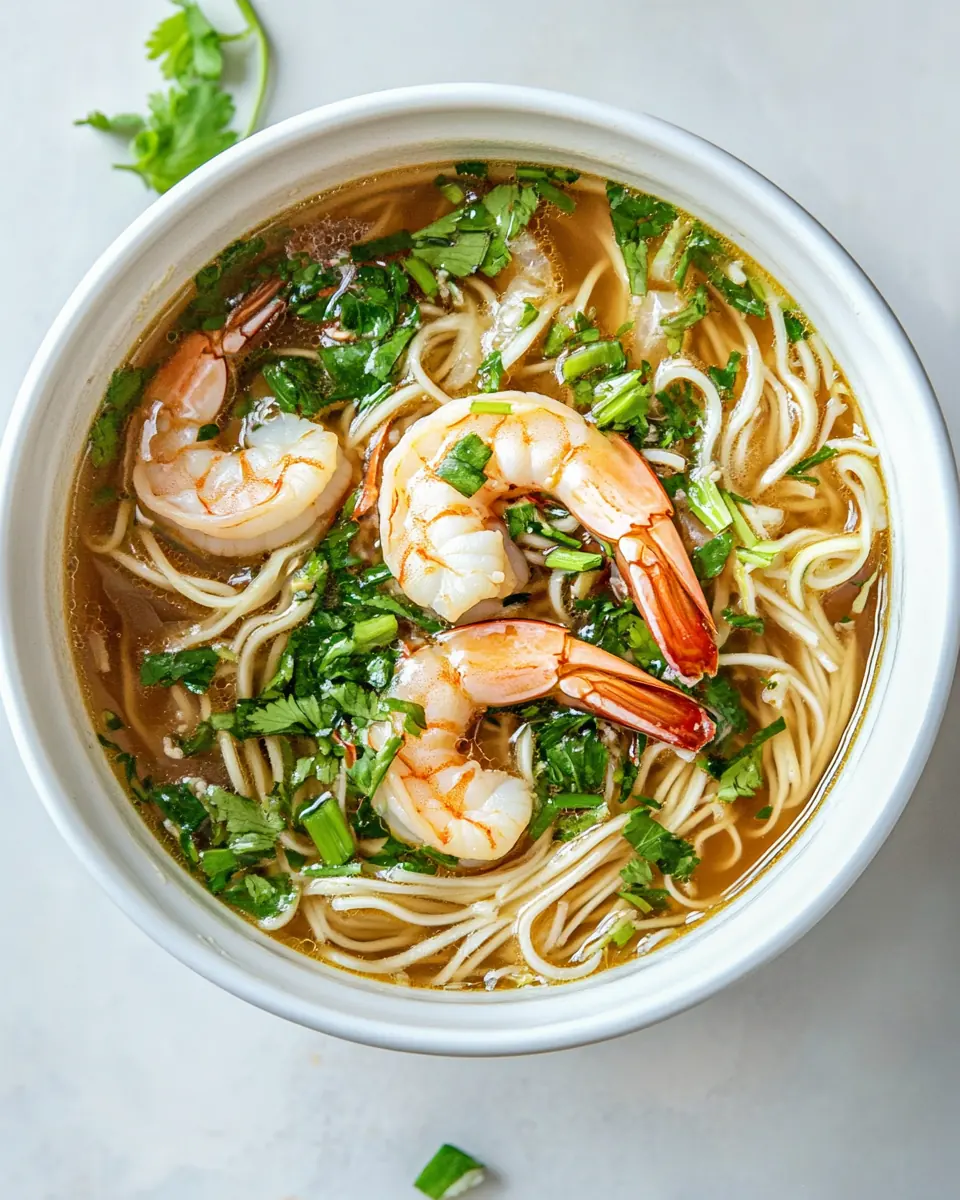
This bowl benefits from small adjustments more than major reworking. Below are practical tips that help you control texture, seasoning, and timing so each serving turns out just right.
- Control the heat: Keep the pot at a gentle simmer after it first boils to allow flavors to meld without overcooking delicate ingredients like shrimp.
- Layer the herbs: Add some herbs early for infused aroma and reserve fresh leaves to finish for vibrancy and texture.
- Mind the salt: Taste the broth before adding extra soy sauce or fish sauce, especially if your canned chicken broth is high in sodium.
- Quick chill for leftovers: If you save extra, cool the soup quickly and refrigerate within two hours to preserve freshness and herb color.
- Adjust heat at the table: Offer extra chili or chili pepper so diners can customize spice without changing the whole pot.
Pairing Suggestions for Asian Style Shrimp and Noodle Soup
This soup stands well on its own, but pairing it with the right sides and serving approach elevates the meal. Below are ways to present it for different occasions and how to store leftovers for best results.
- Light lunch pairing: Serve with a small side of lightly dressed greens to keep the meal balanced and bright for midday eating.
- Comforting dinner: Offer extra chopped herbs and spring onions so each guest customizes their bowl for a warm, communal dinner.
- Ramadan or special occasions: Present the soup with bowls of fresh herbs and lime wedges for easy sharing at iftar, since it is gentle on the stomach and hydrating.
- Storage tip: Store leftover broth and solids separately when possible, and reheat gently to avoid overcooking the shrimp or turning the noodles mushy.
- Seasonal pairing: In winter, pair it with a simple steamed vegetable side to add warmth; in warmer months, keep the side light and fresh to match the soup’s brightness.
FAQ
Conclusion
This recipe stands out for its speed, bright herbaceous flavors, and satisfying combination of tender shrimp and slurpable noodles. It is a bowl that feels both comforting and fresh, perfect for busy evenings when you want maximum flavor with minimal fuss. Try making it on a weeknight when you need something nourishing yet quick, and invite friends or family to customize their bowls with extra herbs and chilies. You may find it becomes one of your go to soups for its simplicity and depth.
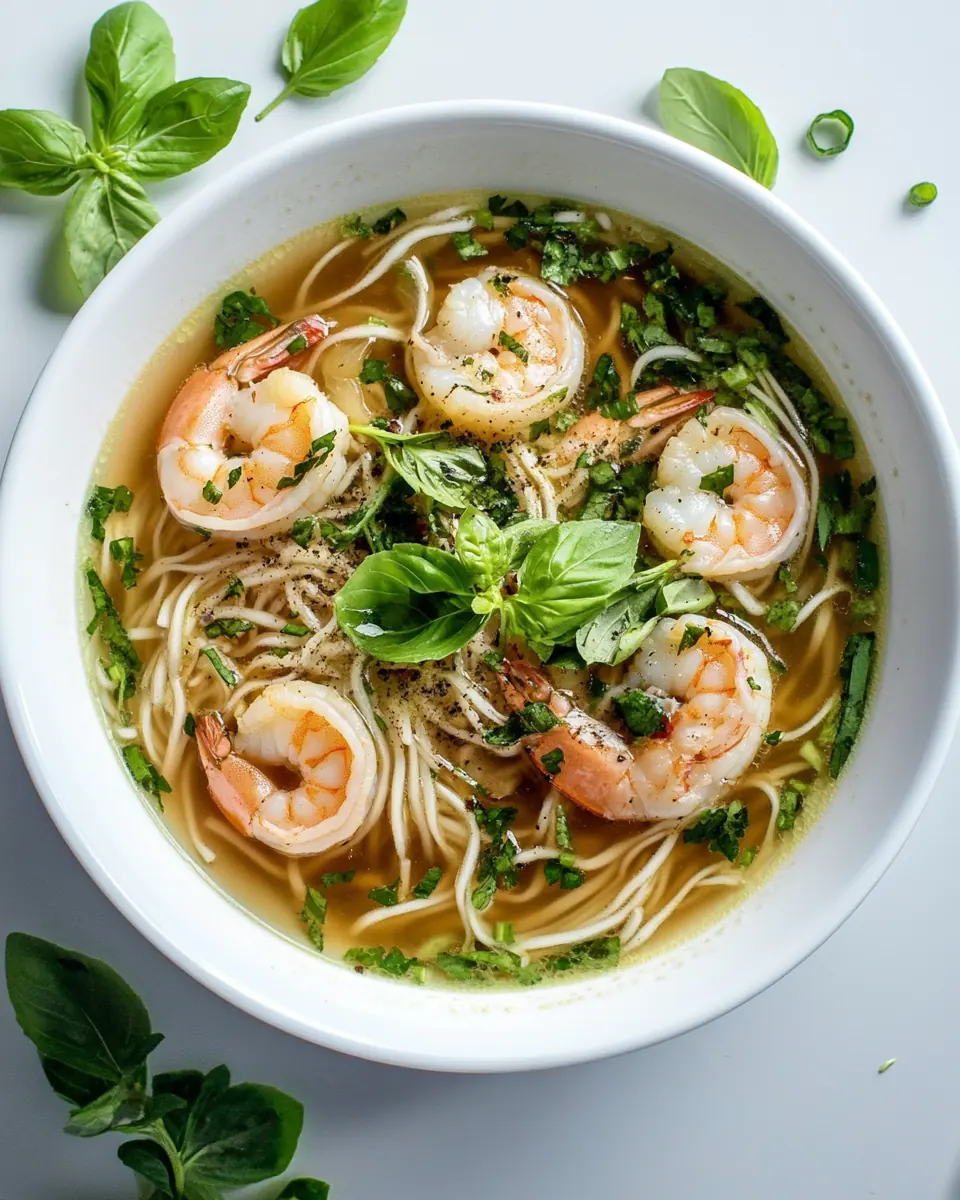
Asian Style Shrimp and Noodle Soup
Ingredients
Equipment
Method
- If shrimp are frozen, run them under cool water until thawed. Peel and devein. Set aside.: You will feel the slight chill of the shrimp as you rinse them under cool running water, and they will go from stiff to flexible when thawed enough to peel easily. Peeling reveals the delicate translucent flesh, and deveining prevents gritty texture and any unpleasant bites. A common mistake is using warm water which starts cooking the surface, so always use cool water. Pat the shrimp dry with a towel so they sizzle properly when they hit the broth, and keep them in a bowl in the fridge until ready to add.
- Add water, chicken broth, lime juice, fish sauce, soy sauce, Chinese five spice, ginger, and chili pepper to a pot on high heat.: As the pot heats, the aroma of ginger and Chinese five spice will blossom, and steam will carry those scents around your kitchen. You will hear a rising rumble as the liquid warms toward a boil. Adding the lime juice at this stage helps its bright notes to meld into the savory base, creating balance. Avoid rushing to a rolling boil so flavors can marry; a rapid boil can cause sharper, less integrated tastes. Stir once to combine and keep the pot uncovered so you can monitor the rising bubbles.
- Meanwhile, prepare herbs. Chop the basil, mint, and cilantro, and add to the pot. Mince the garlic into the pot. Chop spring onions and set aside.: When you chop the herbs, you will notice their oils releasing as they are torn and crushed, filling the air with fresh, green fragrance. Adding some herbs into the hot pot now extracts those oils into the broth for depth, while minced garlic brings savory warmth. The spring onions are set aside to provide crisp freshness at the end. A frequent oversight is overchopping the herbs into a paste, which can make the broth murky; aim for a coarse chop to preserve texture and aroma.
- When the broth starts to boil, reduce the heat to medium and add the noodles and cook for about five minutes, until noodles are soft.: As the broth comes to a gentle boil, you will hear the steady bubbling and see a thin veil of steam. Lowering to medium simmers the pot and creates a gentler environment for the noodles to hydrate evenly, absorbing the seasoned liquid. The noodles will change from stiff to supple and will float and ripple in the broth when nearly done. Stir occasionally to prevent sticking, and watch closely because overcooked noodles become gluey. A common mistake is adding too many noodles at once which lowers the temperature and leads to uneven cooking.
- Add the shrimp and cook for an additional 2-3 minutes.: Once the noodles are tender, slipping in the shrimp will cause the broth to come alive with a faint popping sound as proteins tighten. The shrimp will turn opaque and take on a firm, slightly springy texture when done, and their aroma will shift to a clean, briny note. Because shrimp cook very quickly, the sensory cue is visual change to pink and firmness; avoid leaving them in longer than necessary to prevent chewiness. If the broth returns to a vigorous boil, reduce heat to keep a gentle simmer.
- Take out ginger chunk then serve immediately and add spring onions on top. You can garnish it with extra mint and basil leaves if desired.: Removing the ginger chunk prevents ongoing strong spiciness and keeps the broth balanced. When you ladle the soup, the steam will carry a fragrant mix of herbs, citrus, and savory broth. Scatter the reserved spring onions on top to add a crisp contrast to the silky noodles and tender shrimp . A common serving mistake is letting the soup sit too long before plating, which softens the spring onion crunch and flattens the herbs; serve right away for the best textural experience.
Notes
- Control the heat: Keep the pot at a gentle simmer after it first boils to allow flavors to meld without overcooking delicate ingredients like shrimp.
- Layer the herbs: Add some herbs early for infused aroma and reserve fresh leaves to finish for vibrancy and texture.
- Mind the salt: Taste the broth before adding extra soy sauce or fish sauce, especially if your canned chicken broth is high in sodium.
- Quick chill for leftovers: If you save extra, cool the soup quickly and refrigerate within two hours to preserve freshness and herb color.
- Adjust heat at the table: Offer extra chili or chili pepper so diners can customize spice without changing the whole pot.