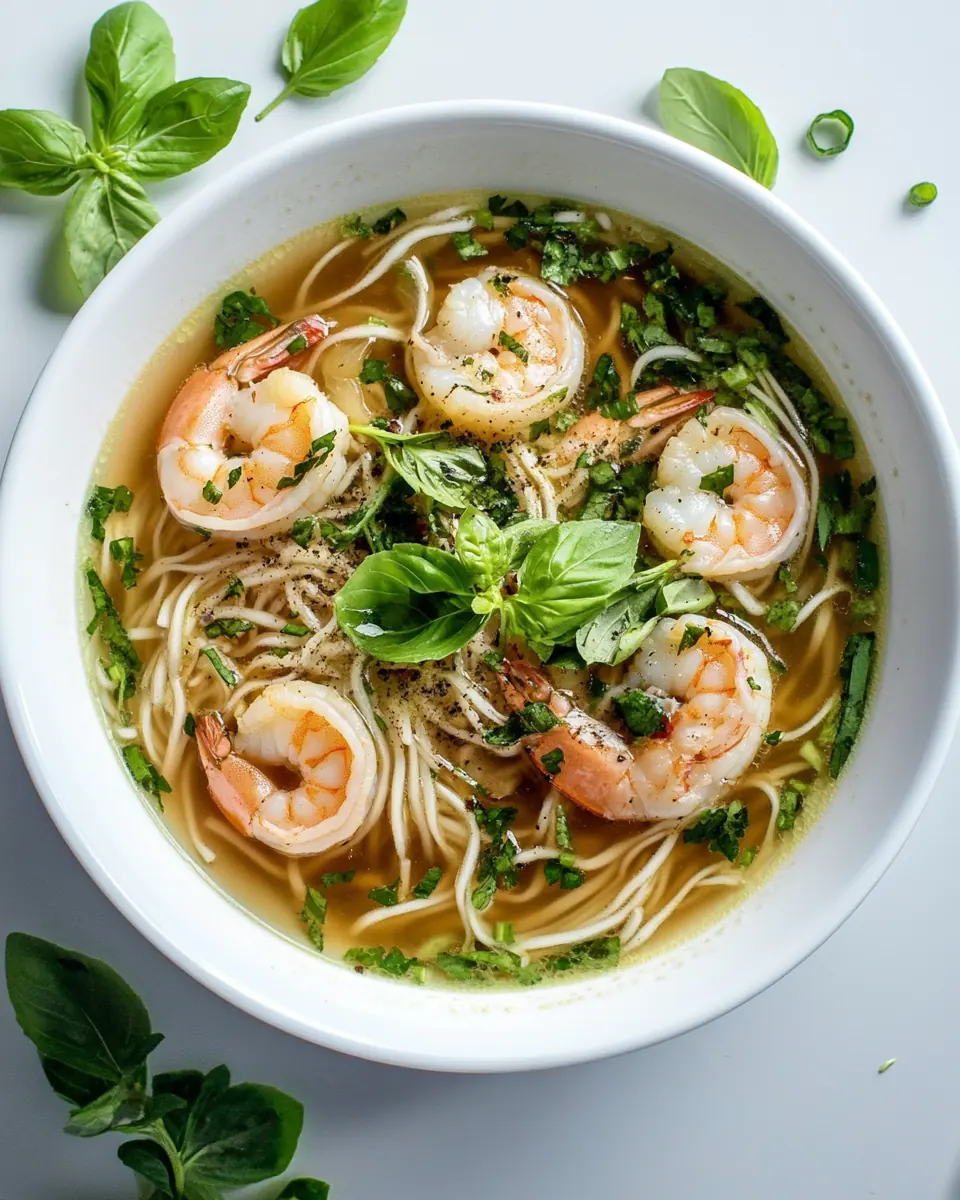
If shrimp are frozen, run them under cool water until thawed. Peel and devein. Set aside.: You will feel the slight chill of the shrimp as you rinse them under cool running water, and they will go from stiff to flexible when thawed enough to peel easily. Peeling reveals the delicate translucent flesh, and deveining prevents gritty texture and any unpleasant bites. A common mistake is using warm water which starts cooking the surface, so always use cool water. Pat the shrimp dry with a towel so they sizzle properly when they hit the broth, and keep them in a bowl in the fridge until ready to add.
Add water, chicken broth, lime juice, fish sauce, soy sauce, Chinese five spice, ginger, and chili pepper to a pot on high heat.: As the pot heats, the aroma of ginger and Chinese five spice will blossom, and steam will carry those scents around your kitchen. You will hear a rising rumble as the liquid warms toward a boil. Adding the lime juice at this stage helps its bright notes to meld into the savory base, creating balance. Avoid rushing to a rolling boil so flavors can marry; a rapid boil can cause sharper, less integrated tastes. Stir once to combine and keep the pot uncovered so you can monitor the rising bubbles.
Meanwhile, prepare herbs. Chop the basil, mint, and cilantro, and add to the pot. Mince the garlic into the pot. Chop spring onions and set aside.: When you chop the herbs, you will notice their oils releasing as they are torn and crushed, filling the air with fresh, green fragrance. Adding some herbs into the hot pot now extracts those oils into the broth for depth, while minced garlic brings savory warmth. The spring onions are set aside to provide crisp freshness at the end. A frequent oversight is overchopping the herbs into a paste, which can make the broth murky; aim for a coarse chop to preserve texture and aroma.
When the broth starts to boil, reduce the heat to medium and add the noodles and cook for about five minutes, until noodles are soft.: As the broth comes to a gentle boil, you will hear the steady bubbling and see a thin veil of steam. Lowering to medium simmers the pot and creates a gentler environment for the noodles to hydrate evenly, absorbing the seasoned liquid. The noodles will change from stiff to supple and will float and ripple in the broth when nearly done. Stir occasionally to prevent sticking, and watch closely because overcooked noodles become gluey. A common mistake is adding too many noodles at once which lowers the temperature and leads to uneven cooking.
Add the shrimp and cook for an additional 2-3 minutes.: Once the noodles are tender, slipping in the shrimp will cause the broth to come alive with a faint popping sound as proteins tighten. The shrimp will turn opaque and take on a firm, slightly springy texture when done, and their aroma will shift to a clean, briny note. Because shrimp cook very quickly, the sensory cue is visual change to pink and firmness; avoid leaving them in longer than necessary to prevent chewiness. If the broth returns to a vigorous boil, reduce heat to keep a gentle simmer.
Take out ginger chunk then serve immediately and add spring onions on top. You can garnish it with extra mint and basil leaves if desired.: Removing the ginger chunk prevents ongoing strong spiciness and keeps the broth balanced. When you ladle the soup, the steam will carry a fragrant mix of herbs, citrus, and savory broth. Scatter the reserved spring onions on top to add a crisp contrast to the silky noodles and tender shrimp . A common serving mistake is letting the soup sit too long before plating, which softens the spring onion crunch and flattens the herbs; serve right away for the best textural experience.