BBQ Salmon Curry with Mango Avocado Salsa
BBQ Salmon Curry with Mango Avocado Salsa came into my weeknight rotation the moment I realized bold flavors can coexist without drama. I remember the first time I combined smoky, charred salmon with a spiced coconut curry sauce and bright fruit salsa, I felt like I had discovered a shortcut to dinner happiness that still impresses guests. That evening I had a tired crew of friends show up hungry, and instead of fussing for hours, I relied on a few confident moves and fresh produce to pull everything together.
That night, the kitchen filled with a scent that was part seaside grill, part tropical market. I kept stealing little bites of the mango and avocado salsa while the salmon broiled, and I can still hear the gentle sizzle as the edges crisped. We ended up plating over simple bowls of rice, but you could serve this any number of ways. I love how the curry sauce is silky from the coconut milk, yet still anchored by savory notes like tamari and garlic.
Recipe Snapshot
45 mins
25 mins
20 mins
Medium
450 kcal
American
Gluten-Free, Paleo
Dinner
Baking sheet, Large skillet, Mixing bowl, Tongs
The Beauty of This BBQ Salmon Curry with Mango Avocado Salsa
Smoky and Tropical in One Bite
I adore how the BBQ Salmon Curry with Mango Avocado Salsa balances two seemingly different worlds. The salmon brings a smoky, caramelized edge, while the mango and avocado salsa refreshes the palate. I often say the contrast is what makes the dish sing; every forkful delivers a lively push and pull.
Speed without Sacrifice
We all crave fast dinners that still feel special. This recipe comes together quickly because the salmon cooks in minutes and the salsa requires no heat. I rely on simple techniques like broiling and quick skillet work to create complex flavors without a long timeline.
Layered, Not Overcomplicated
I like layers that are obvious but not fussy. The curry sauce is a short list of bold players, like Thai red curry paste and coconut milk, which develop depth in a few minutes of gentle simmering. A splash of tamari and a handful of herbs round things out, so you get pronounced taste without dozens of steps.
Flexible and Crowd Friendly
One thing I appreciate is how accommodating the recipe is. You can broil the salmon on a baking sheet, thread it on skewers, or grill it outside. The salsa scales easily for a gathering, and it brightens everything on the plate. I’ve brought this to potlucks and summer dinners, and it always disappears fast.
Freshness You Can Rely On
I love recipes that reward good produce. The mango, avocado, and herbs are the heroes of the finishing touch, and they make the whole dish feel seasonal and vibrant. When I shop with an eye for ripe fruit and firm avocado, the end result is consistently satisfying.
Essential Ingredients for BBQ Salmon Curry with Mango Avocado Salsa
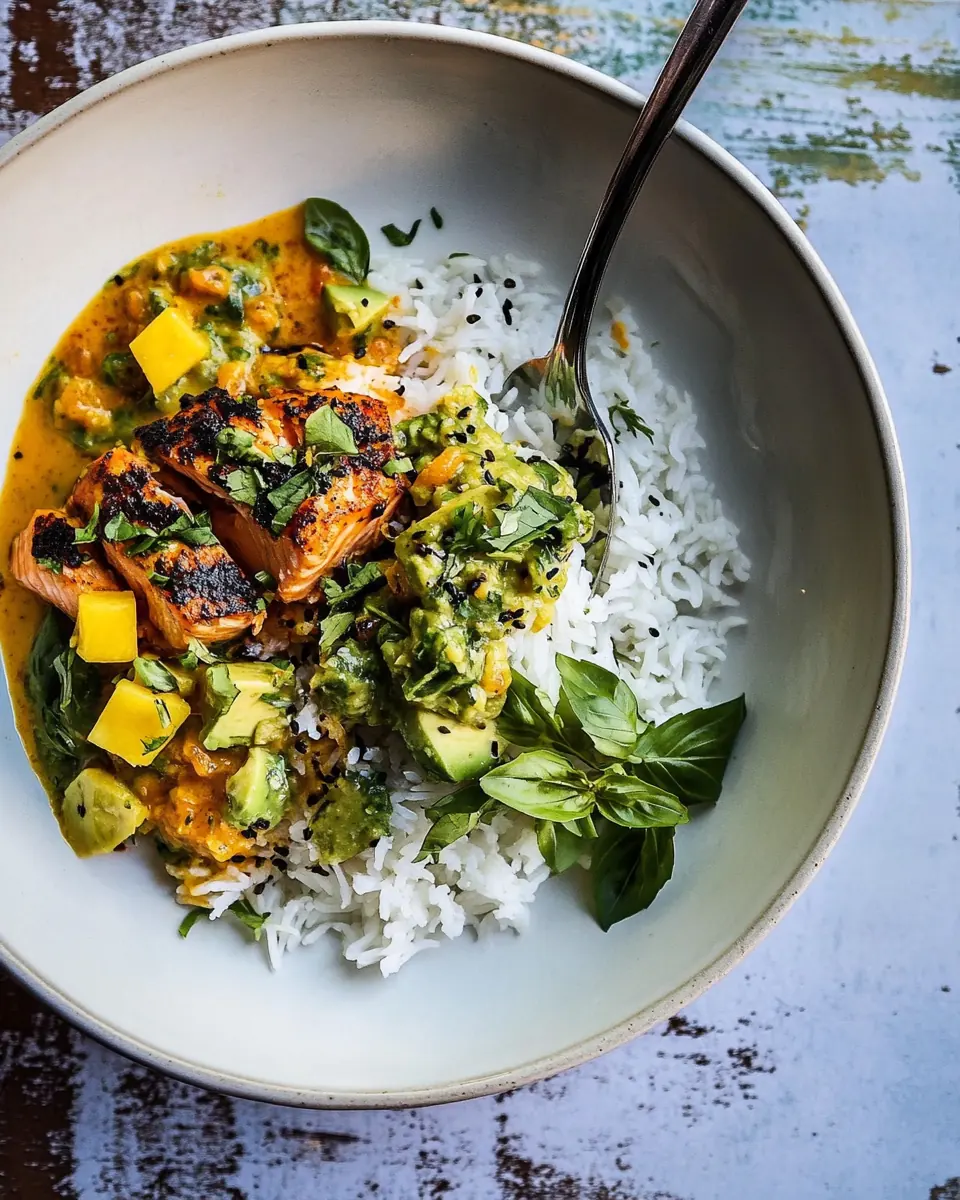
The philosophy here is straightforward: build a bold, layered plate from a handful of confident ingredients. The key players are the salmon for smoky richness, the coconut curry for cream and spice, and the mango avocado salsa for bright contrast. Each element plays a distinct role, and together they create a balanced meal that feels both indulgent and fresh.
- 1 pounds salmon, sliced into 1 inch long fillets: Slice into 1-inch fillets and cook evenly; provides the main protein and rich, flaky texture that carries the curry and salsa flavors.
- 1/4 cup extra virgin olive oil: Drizzle or brush to coat for cooking and grilling; adds healthy fat and helps distribute spices while contributing a mild, fruity aroma.
- 2 teaspoons smoked paprika: Sprinkle to impart a deep smoky warmth; enhances the barbecue character and complements the charred salmon without overpowering other spices.
- 1 teaspoon chili powder: Dust on for gentle heat and earthy warmth; balances sweetness in the mango salsa and deepens the overall spice profile.
- 1 teaspoon chipotle chili powder: Add for smoky, intense chili flavor; brings a layered heat that pairs well with smoked paprika and amplifies the BBQ sensation.
- 1 teaspoon garlic powder: Season to add savory, aromatic garlic notes; infuses the butter and oil with umami and enhances the curry base.
- 1 teaspoon onion powder: Season to contribute sweet, savory onion undertones; supports the aromatics in both the curry and the fresh salsa for depth.
- salt: Season to taste and balance flavors; crucial for enhancing natural sweetness, managing bitterness, and highlighting all other ingredients.
- 4 tablespoons salted butter: Melt for a rich, creamy base; provides a luxurious mouthfeel and helps brown aromatics while adding savory saltiness.
- 3 4 cloves garlic, chopped: Chop and sauté to release pungent, aromatic flavor; builds foundational savory depth in the curry and pairs well with butter.
- 1 can full fat coconut milk: Pour into the pan as the creamy liquid component; supplies richness, body, and subtle sweetness that melds spices into a cohesive sauce.
- 2 3 tablespoons Thai red curry paste: Spoon in to create depth and spicy complexity; forms the curry's backbone with tangy, umami, and chili notes that marry with coconut milk.
- 2 tablespoons tamari or soy sauce: Stir in for salty, savory umami; enhances the curry's depth and balances the sweetness of mango and coconut without soy overpowering.
- 1 1/2 cups diced mango: Dice for bright, sweet fruitiness; contributes refreshing contrast and tropical flavor to the salsa alongside creamy avocado.
- 1 avocado, cubed: Cube for creamy, buttery texture and mild flavor; adds richness and a cooling balance to spicy components in the salsa.
- 1 2 jalapeños, seeded, if desired, and chopped: Seed and chop to add fresh heat; provides vibrant, grassy spice that can be toned down by removing seeds if desired.
- 1 shallot, chopped: Chop finely to add mild oniony sweetness and delicate texture; integrates into the salsa and aromatics without overwhelming other flavors.
- 1/2 cup cilantro, chopped: Chop to provide herbaceous, citrusy notes; brightens both the salsa and curry with a fresh, slightly pungent lift.
- 1/2 cup basil, chopped: Chop to contribute sweet, peppery aroma; pairs with cilantro to add a basil-forward brightness that complements the curry's richness.
- 1 tablespoon lime zest, plus 1/4 cup lime juice: Zest and juice to supply bright citrus acidity; cuts through richness, elevates flavors, and ties the salsa and curry together with fresh lime brightness.
- 1 teaspoon honey: Add to balance flavors with subtle sweetness; harmonizes heat and acidity while rounding out the overall taste profile.
How to Cook BBQ Salmon Curry with Mango Avocado Salsa
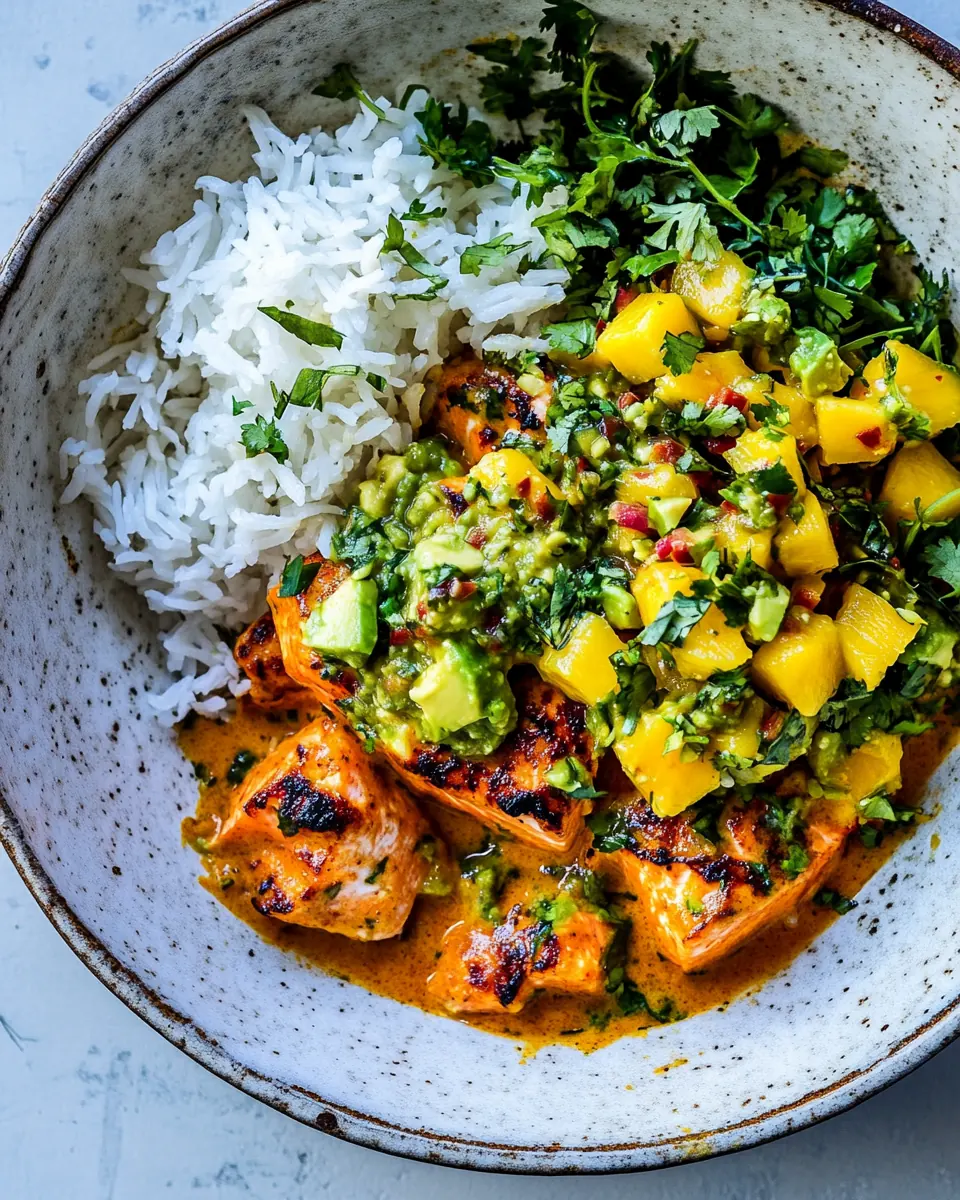
I like to approach cooking this dish like conducting a small orchestra. Each element plays its moment, and timing is what brings everything together. Below, I walk you step by step with sensory cues and troubleshooting so you can feel confident at the stove and at the broiler.
- Preheat the oven to 500° F or high broil. On a baking sheet, toss the salmon with olive oil, paprika, chili powder, chipotle chili powder, garlic powder, onion powder, and a pinch of salt. If desired, thread the salmon onto skewers. Arrange in a single layer. Broil until the salmon begins to crisp, 5-8 minutes, watch closely. In a large skillet over medium heat, melt together the butter, garlic, and curry paste. Cook for 2-3 minutes until very fragrant. Add the coconut milk and tamari. Mix in a handful of chopped cilantro and or basil. To make the salsa, combine all ingredients in a bowl. Serve the salmon and curry sauce over bowls of rice. Top with salsa.: When the oven reaches full heat, you'll know because the broiler element will glow and the interior will feel intensely hot, which is essential for quick, caramelizing action on the salmon . This intense heat creates immediate surface searing, locking in juices while forming a crisp exterior. If the oven is not fully preheated, the fish will cook more slowly and may release moisture, preventing that desirable crust. A common error is skipping the preheat; always allow the broiler a few minutes to reach temperature so you get direct, even browning.
- On a baking sheet, toss the salmon with olive oil, paprika, chili powder, chipotle chili powder, garlic powder, onion powder, and a pinch of salt: As you rub the spice mixture into the flesh, you should feel the fillets become lightly coated and fragrant, with aromas of smoked paprika and chili lifting immediately. The oil helps the spices adhere and encourages Maillard browning under the broiler, producing tiny golden edges and deeper color. If you try to rush this step or undercoat the fish, the spices will not develop as much warmth and surface texture. Avoid piling fillets on top of each other, which causes steaming rather than crisping.
- If desired, thread the salmon onto skewers: Threading gives you easy handling and even exposure to the broiler, and you will notice the fillets retain shape better on skewers. This also makes turning or transferring simpler when serving. Be careful to leave small gaps between pieces so heat circulates evenly. A mistake is crowding too many pieces on a single skewer, which interferes with uniform charring and can trap steam.
- Arrange in a single layer: Laying the fillets flat with space between them ensures the broiler can crisp each surface. Visually, you want edges beginning to turn opaque and slightly raised where the fish contracts. This signals that the surface is setting and will brown quickly. If pieces touch, they will steam and stay pale, losing that desirable texture. Avoid stacking or overlapping, since that robs you of caramelization.
- Broil until the salmon begins to crisp, 5 to 8 minutes, watch closely: The sound will be a gentle sizzle as proteins tighten and the edges caramelize, and the surface will transition to deeper color with tiny blistered spots. Internal opacity will move from translucent to pale and flakey at the thickest part. Because broilers vary, vigilance is crucial here, as a minute or two can be the difference between perfectly charred and overcooked. A common problem is leaving the fish unattended; keep the oven light on and check frequently.
- In a large skillet over medium heat, melt together the butter, garlic, and curry paste: As the butter melts, you will smell a nutty, toasty note, and the garlic will become fragrant in about 1 to 2 minutes, releasing savory steam. The curry paste will bloom in the fat, transforming into a concentrated aromatic base that smells deep, slightly sweet, and spicy. This step unlocks essential oils and flavors from the paste, which is why gentle heat is important. Avoid turning the heat too high, which can scorch the garlic and curry paste, producing bitterness.
- Cook for 2 to 3 minutes until very fragrant: During these minutes the skillet emits a warm, complex fragrance, with hints of chili, lemongrass, and toasted spices if the paste contains them. You should see the paste break down and meld with the butter into a glossy paste. This development is crucial so the eventual sauce tastes integrated rather than flat. If you rush it on higher heat, the aromatics may darken unevenly and taste burnt, so keep the pan moderate.
- Add the coconut milk and tamari: As you pour in the coconut milk , the sizzling will soften and the pan will emit a rich, creamy aroma. Whisk or stir to combine the coconut milk with the curry base, then add tamari for depth. The sauce should become silky and begin to glide on the spoon. This step creates body and umami that cling to the salmon . If your coconut milk separates or appears thin, simmer gently to encourage emulsification rather than boiling rapidly which can break the sauce.
- Mix in a handful of chopped cilantro and or basil: Adding herbs at this stage lets some oils release into the warm sauce without fully wilting them, infusing fresh herbal notes. You will notice a bright lift in aroma and a flecked green visual contrast. Herbs added too early will lose their vibrancy, and herbs added too late may feel disconnected, so aim to add them once the sauce has slightly cooled from its brief simmer.
- To make the salsa, combine all ingredients in a bowl: When you toss together the diced mango , cubed avocado , chopped jalapeño, shallot, chopped cilantro, chopped basil, lime zest, lime juice, and honey, the bowl will smell citrusy and fruity with a silky sheen from the avocado . Fold gently so the avocado keeps shape and the mango releases sweet juices that marry with the lime. Taste and adjust for acidity or sweetness, remembering that the salsa should be lively enough to cut the richness of the curry. A usual mistake is overmixing, which turns the salsa mushy rather than crisp.
- Serve the salmon and curry sauce over bowls of rice: Spoon warm rice into bowls, lay the broiled salmon on top, and ladle generous amounts of the curry sauce around and over the fish so it soaks into the rice. The contrast of textures is delightful, rice steaming, sauce glossy, and fish flakey. If you add sauce too early, you may lose the crispness of the salmon; serve promptly so textures remain distinct. Remember to provide extra sauce on the side for guests who want more.
- Top with salsa: Finish each bowl with a bright spoonful of the mango and avocado salsa, scattering extra herbs for color. The first bite should offer cool fruit against warm savory curry and tender fish. This finishing touch balances the plate and adds refreshing acidity and textural contrast. A common misstep is over-salting before adding the salsa; taste the assembled bowl first to avoid an overly salty combination.
Recipe Notes about BBQ Salmon Curry with Mango Avocado Salsa
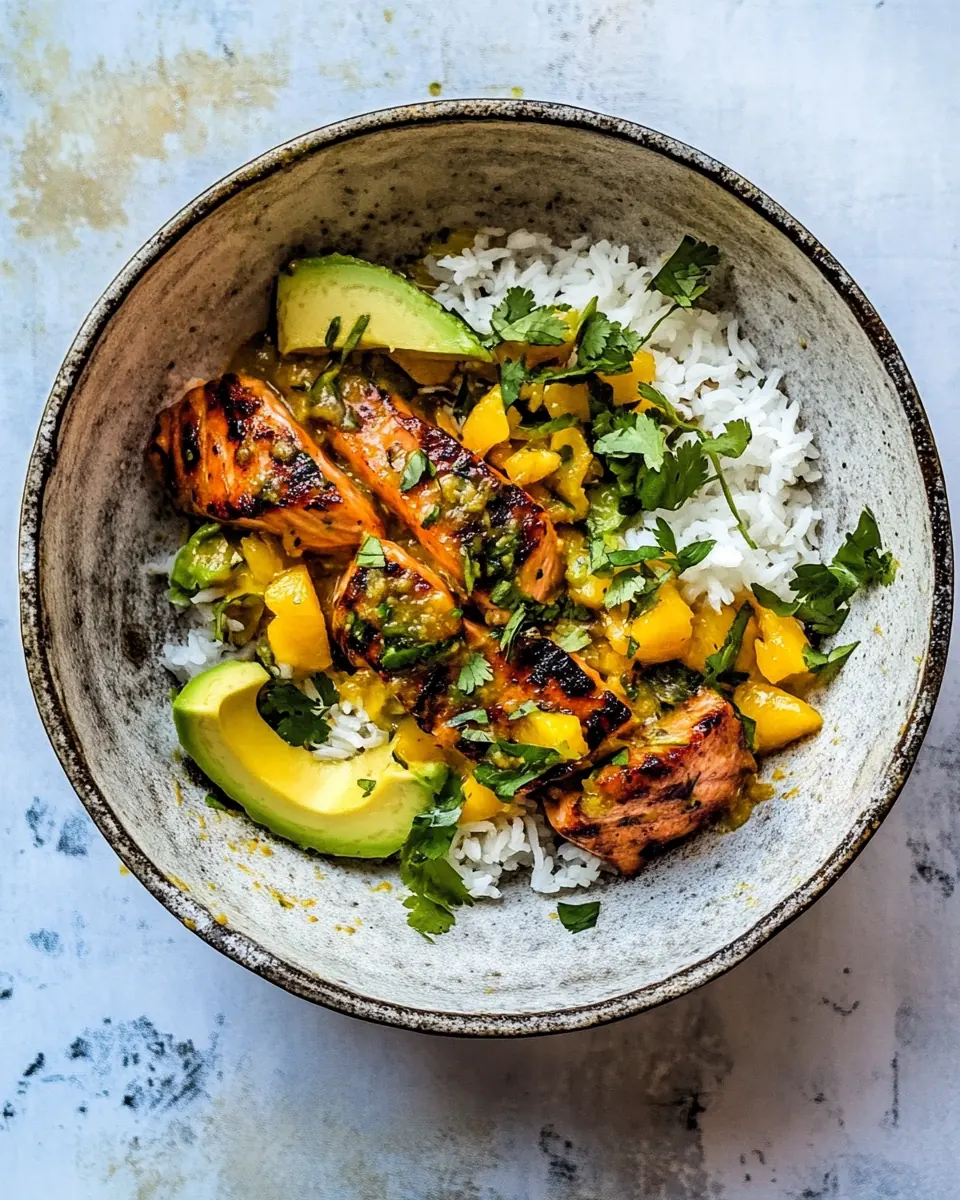
This recipe rewards attention to timing and ingredient quality. A few thoughtful practices make the difference between good and memorable. Below are detailed notes that expand on common variations, storage, and technique, each one meant to help you make the dish reliably delicious every time.
- Broiler Tip Use a rimmed baking sheet to catch any drips and position the rack about six to eight inches from the broiler element so the salmon gets intense, even heat for quick caramelization without burning.
- Curry Development Start by melting the butter and frying the garlic with the curry paste briefly to release aromatic oils; this blooming step deepens flavor far more than stirring paste into cold liquid.
- Salsa Timing Prepare the salsa last so the avocado stays fresh; mix lime zest and juice in just before serving to preserve brightness and prevent sogginess.
- Salt Awareness Because the recipe uses salted butter and tamari, season cautiously at each stage and taste before adding more salt to the final bowl to avoid over seasoning.
- Make Ahead You can prepare the curry sauce a day ahead and gently reheat, but keep the salsa separate and assemble at serving time to maintain texture and color.
Perfect Pairings for BBQ Salmon Curry with Mango Avocado Salsa
This dish works beautifully for relaxed dinners, summer gatherings, and occasions when you want something that feels special but not fussy. Below are thoughtful serving ideas, side pairings, and storage guidance written as helpful options, each one practical and approachable.
- Serve Over Rice The classic approach is to spoon warm jasmine or basmati rice into shallow bowls, top with the broiled salmon and spoon the curry sauce so the grains soak up the flavor, creating a comforting base that balances richness and acidity.
- Simple Greens Pair with a crisp green salad tossed lightly in lime vinaigrette for a refreshing contrast; this keeps the meal bright and is especially welcome on warm evenings when heavier sides feel too much.
- Casual Entertaining For a dinner party, offer extra bowls of the salsa and herbs so guests can customize each plate; this recipe scales well and allows people to dial heat and brightness to taste, which is great for mixed crowds.
- Occasions This is perfect for summer dinners, weekend lunches, or holiday gatherings where you want something different and colorful; the vibrant salsa makes it particularly suited to sunny outdoor meals and festive seasonal menus.
- Leftovers and Storage Store curry sauce and cooked salmon separately from the salsa in airtight containers. Keep salsa refrigerated and consume within a day to preserve the avocado. Reheat sauce gently and place fish briefly under warm oven to regain slight crispness rather than microwaving.
- Seasonal Pairings In summer, lean into ripe stone fruit and fresh herbs, while in cooler months consider serving with steamed greens and heartier rice to make the dish feel cozier.
FAQ
Conclusion
The BBQ Salmon Curry with Mango Avocado Salsa stands out for its vibrant combination of smoky, creamy, and fruity elements that come together quickly and confidently. Give it a try the next time you want a dinner that feels celebratory without hours of effort, and enjoy the lively contrasts of textures and flavors. I hope this recipe becomes a reliable favorite in your rotation, one that makes weeknights and gatherings feel a little more special and full of personality.
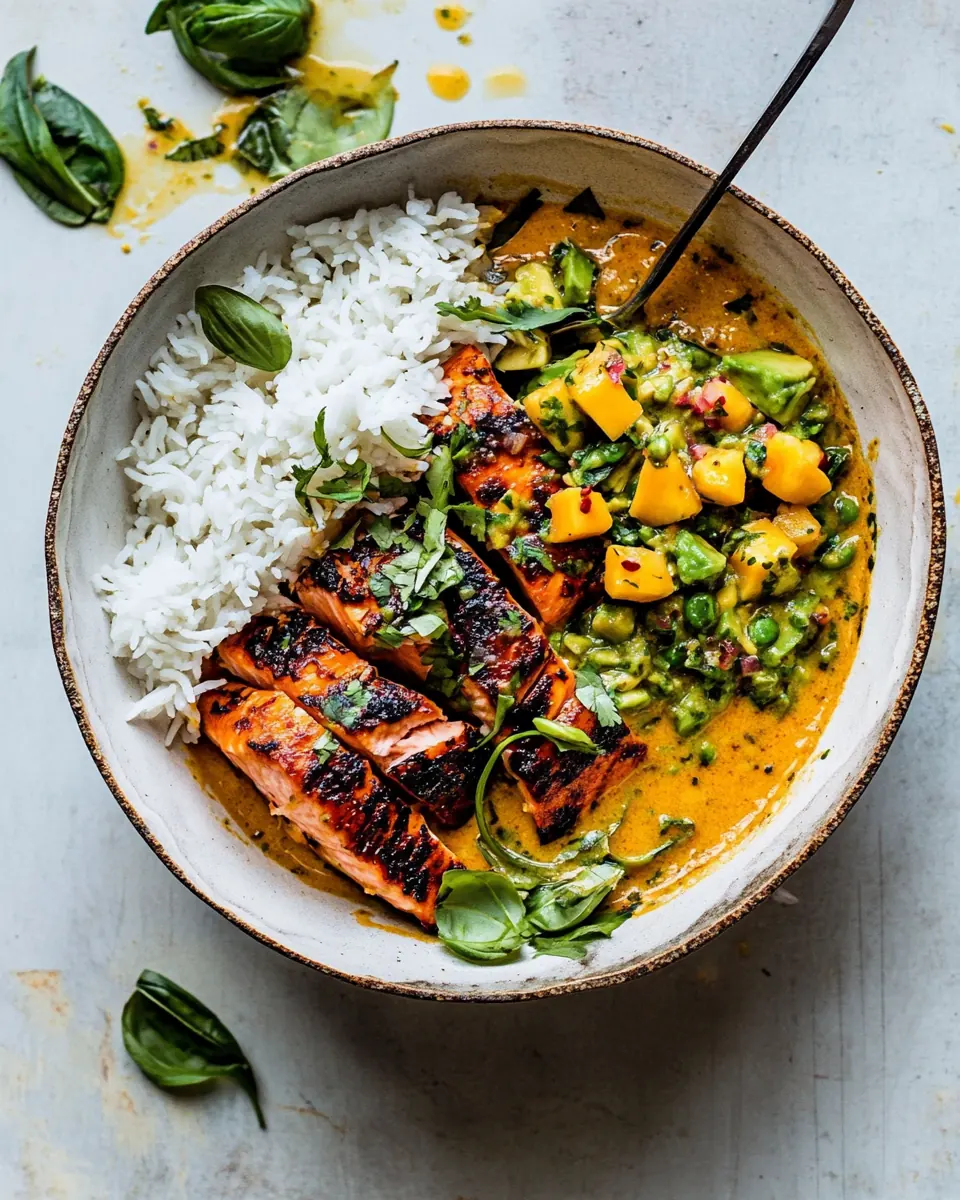
BBQ Salmon Curry with Mango Avocado Salsa
Ingredients
Equipment
Method
- Preheat the oven to 500° F or high broil. On a baking sheet, toss the salmon with olive oil, paprika, chili powder, chipotle chili powder, garlic powder, onion powder, and a pinch of salt. If desired, thread the salmon onto skewers. Arrange in a single layer. Broil until the salmon begins to crisp, 5-8 minutes, watch closely. In a large skillet over medium heat, melt together the butter, garlic, and curry paste. Cook for 2-3 minutes until very fragrant. Add the coconut milk and tamari. Mix in a handful of chopped cilantro and or basil. To make the salsa, combine all ingredients in a bowl. Serve the salmon and curry sauce over bowls of rice. Top with salsa.: When the oven reaches full heat, you'll know because the broiler element will glow and the interior will feel intensely hot, which is essential for quick, caramelizing action on the salmon . This intense heat creates immediate surface searing, locking in juices while forming a crisp exterior. If the oven is not fully preheated, the fish will cook more slowly and may release moisture, preventing that desirable crust. A common error is skipping the preheat; always allow the broiler a few minutes to reach temperature so you get direct, even browning.
- On a baking sheet, toss the salmon with olive oil, paprika, chili powder, chipotle chili powder, garlic powder, onion powder, and a pinch of salt: As you rub the spice mixture into the flesh, you should feel the fillets become lightly coated and fragrant, with aromas of smoked paprika and chili lifting immediately. The oil helps the spices adhere and encourages Maillard browning under the broiler, producing tiny golden edges and deeper color. If you try to rush this step or undercoat the fish, the spices will not develop as much warmth and surface texture. Avoid piling fillets on top of each other, which causes steaming rather than crisping.
- If desired, thread the salmon onto skewers: Threading gives you easy handling and even exposure to the broiler, and you will notice the fillets retain shape better on skewers. This also makes turning or transferring simpler when serving. Be careful to leave small gaps between pieces so heat circulates evenly. A mistake is crowding too many pieces on a single skewer, which interferes with uniform charring and can trap steam.
- Arrange in a single layer: Laying the fillets flat with space between them ensures the broiler can crisp each surface. Visually, you want edges beginning to turn opaque and slightly raised where the fish contracts. This signals that the surface is setting and will brown quickly. If pieces touch, they will steam and stay pale, losing that desirable texture. Avoid stacking or overlapping, since that robs you of caramelization.
- Broil until the salmon begins to crisp, 5 to 8 minutes, watch closely: The sound will be a gentle sizzle as proteins tighten and the edges caramelize, and the surface will transition to deeper color with tiny blistered spots. Internal opacity will move from translucent to pale and flakey at the thickest part. Because broilers vary, vigilance is crucial here, as a minute or two can be the difference between perfectly charred and overcooked. A common problem is leaving the fish unattended; keep the oven light on and check frequently.
- In a large skillet over medium heat, melt together the butter, garlic, and curry paste: As the butter melts, you will smell a nutty, toasty note, and the garlic will become fragrant in about 1 to 2 minutes, releasing savory steam. The curry paste will bloom in the fat, transforming into a concentrated aromatic base that smells deep, slightly sweet, and spicy. This step unlocks essential oils and flavors from the paste, which is why gentle heat is important. Avoid turning the heat too high, which can scorch the garlic and curry paste, producing bitterness.
- Cook for 2 to 3 minutes until very fragrant: During these minutes the skillet emits a warm, complex fragrance, with hints of chili, lemongrass, and toasted spices if the paste contains them. You should see the paste break down and meld with the butter into a glossy paste. This development is crucial so the eventual sauce tastes integrated rather than flat. If you rush it on higher heat, the aromatics may darken unevenly and taste burnt, so keep the pan moderate.
- Add the coconut milk and tamari: As you pour in the coconut milk , the sizzling will soften and the pan will emit a rich, creamy aroma. Whisk or stir to combine the coconut milk with the curry base, then add tamari for depth. The sauce should become silky and begin to glide on the spoon. This step creates body and umami that cling to the salmon . If your coconut milk separates or appears thin, simmer gently to encourage emulsification rather than boiling rapidly which can break the sauce.
- Mix in a handful of chopped cilantro and or basil: Adding herbs at this stage lets some oils release into the warm sauce without fully wilting them, infusing fresh herbal notes. You will notice a bright lift in aroma and a flecked green visual contrast. Herbs added too early will lose their vibrancy, and herbs added too late may feel disconnected, so aim to add them once the sauce has slightly cooled from its brief simmer.
- To make the salsa, combine all ingredients in a bowl: When you toss together the diced mango , cubed avocado , chopped jalapeño, shallot, chopped cilantro, chopped basil, lime zest, lime juice, and honey, the bowl will smell citrusy and fruity with a silky sheen from the avocado . Fold gently so the avocado keeps shape and the mango releases sweet juices that marry with the lime. Taste and adjust for acidity or sweetness, remembering that the salsa should be lively enough to cut the richness of the curry. A usual mistake is overmixing, which turns the salsa mushy rather than crisp.
- Serve the salmon and curry sauce over bowls of rice: Spoon warm rice into bowls, lay the broiled salmon on top, and ladle generous amounts of the curry sauce around and over the fish so it soaks into the rice. The contrast of textures is delightful, rice steaming, sauce glossy, and fish flakey. If you add sauce too early, you may lose the crispness of the salmon; serve promptly so textures remain distinct. Remember to provide extra sauce on the side for guests who want more.
- Top with salsa: Finish each bowl with a bright spoonful of the mango and avocado salsa, scattering extra herbs for color. The first bite should offer cool fruit against warm savory curry and tender fish. This finishing touch balances the plate and adds refreshing acidity and textural contrast. A common misstep is over-salting before adding the salsa; taste the assembled bowl first to avoid an overly salty combination.
Notes
- Broiler Tip Use a rimmed baking sheet to catch any drips and position the rack about six to eight inches from the broiler element so the salmon gets intense, even heat for quick caramelization without burning.
- Curry Development Start by melting the butter and frying the garlic with the curry paste briefly to release aromatic oils; this blooming step deepens flavor far more than stirring paste into cold liquid.
- Salsa Timing Prepare the salsa last so the avocado stays fresh; mix lime zest and juice in just before serving to preserve brightness and prevent sogginess.
- Salt Awareness Because the recipe uses salted butter and tamari, season cautiously at each stage and taste before adding more salt to the final bowl to avoid over seasoning.
- Make Ahead You can prepare the curry sauce a day ahead and gently reheat, but keep the salsa separate and assemble at serving time to maintain texture and color.