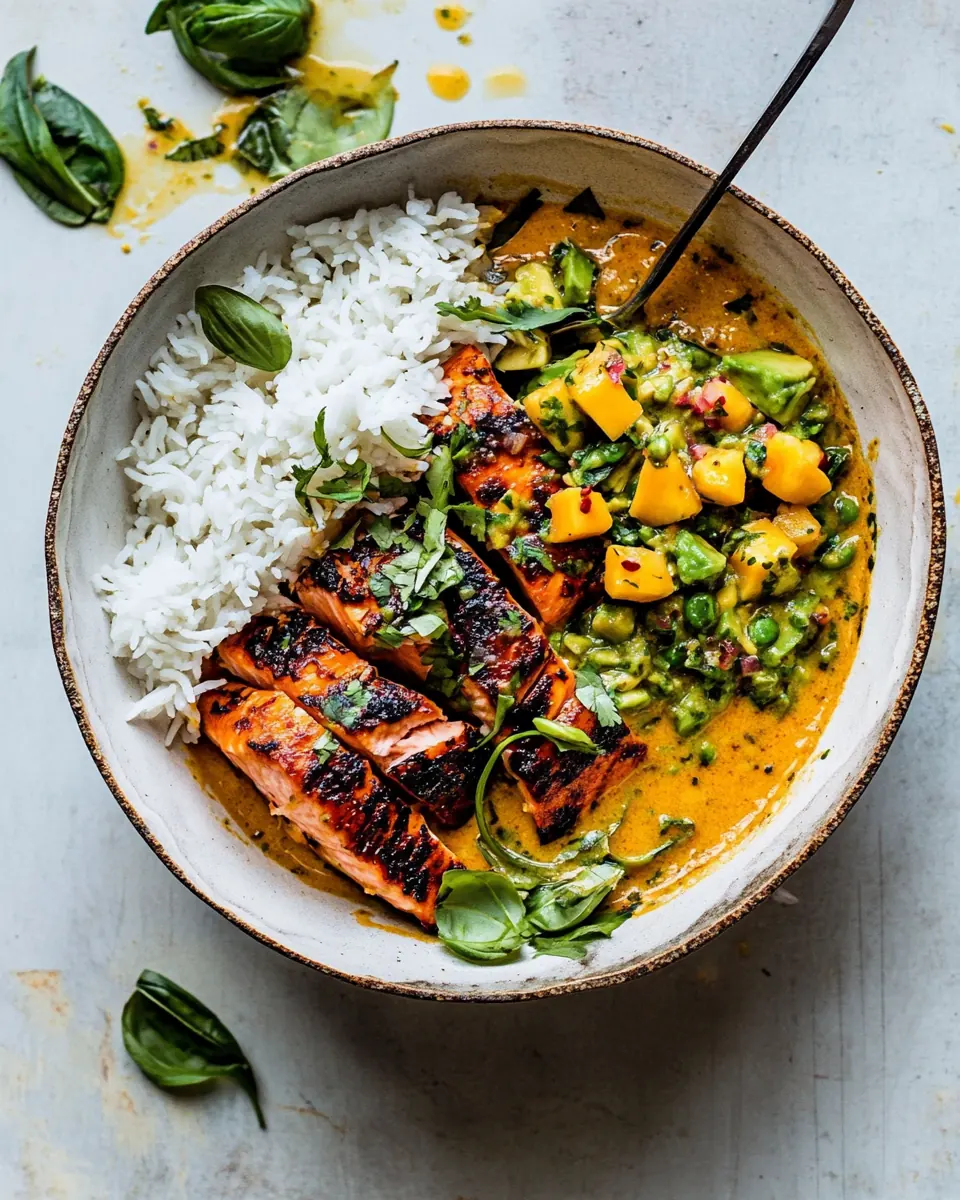
Preheat the oven to 500° F or high broil. On a baking sheet, toss the salmon with olive oil, paprika, chili powder, chipotle chili powder, garlic powder, onion powder, and a pinch of salt. If desired, thread the salmon onto skewers. Arrange in a single layer. Broil until the salmon begins to crisp, 5-8 minutes, watch closely. In a large skillet over medium heat, melt together the butter, garlic, and curry paste. Cook for 2-3 minutes until very fragrant. Add the coconut milk and tamari. Mix in a handful of chopped cilantro and or basil. To make the salsa, combine all ingredients in a bowl. Serve the salmon and curry sauce over bowls of rice. Top with salsa.: When the oven reaches full heat, you'll know because the broiler element will glow and the interior will feel intensely hot, which is essential for quick, caramelizing action on the salmon . This intense heat creates immediate surface searing, locking in juices while forming a crisp exterior. If the oven is not fully preheated, the fish will cook more slowly and may release moisture, preventing that desirable crust. A common error is skipping the preheat; always allow the broiler a few minutes to reach temperature so you get direct, even browning.
On a baking sheet, toss the salmon with olive oil, paprika, chili powder, chipotle chili powder, garlic powder, onion powder, and a pinch of salt: As you rub the spice mixture into the flesh, you should feel the fillets become lightly coated and fragrant, with aromas of smoked paprika and chili lifting immediately. The oil helps the spices adhere and encourages Maillard browning under the broiler, producing tiny golden edges and deeper color. If you try to rush this step or undercoat the fish, the spices will not develop as much warmth and surface texture. Avoid piling fillets on top of each other, which causes steaming rather than crisping.
If desired, thread the salmon onto skewers: Threading gives you easy handling and even exposure to the broiler, and you will notice the fillets retain shape better on skewers. This also makes turning or transferring simpler when serving. Be careful to leave small gaps between pieces so heat circulates evenly. A mistake is crowding too many pieces on a single skewer, which interferes with uniform charring and can trap steam.
Arrange in a single layer: Laying the fillets flat with space between them ensures the broiler can crisp each surface. Visually, you want edges beginning to turn opaque and slightly raised where the fish contracts. This signals that the surface is setting and will brown quickly. If pieces touch, they will steam and stay pale, losing that desirable texture. Avoid stacking or overlapping, since that robs you of caramelization.
Broil until the salmon begins to crisp, 5 to 8 minutes, watch closely: The sound will be a gentle sizzle as proteins tighten and the edges caramelize, and the surface will transition to deeper color with tiny blistered spots. Internal opacity will move from translucent to pale and flakey at the thickest part. Because broilers vary, vigilance is crucial here, as a minute or two can be the difference between perfectly charred and overcooked. A common problem is leaving the fish unattended; keep the oven light on and check frequently.
In a large skillet over medium heat, melt together the butter, garlic, and curry paste: As the butter melts, you will smell a nutty, toasty note, and the garlic will become fragrant in about 1 to 2 minutes, releasing savory steam. The curry paste will bloom in the fat, transforming into a concentrated aromatic base that smells deep, slightly sweet, and spicy. This step unlocks essential oils and flavors from the paste, which is why gentle heat is important. Avoid turning the heat too high, which can scorch the garlic and curry paste, producing bitterness.
Cook for 2 to 3 minutes until very fragrant: During these minutes the skillet emits a warm, complex fragrance, with hints of chili, lemongrass, and toasted spices if the paste contains them. You should see the paste break down and meld with the butter into a glossy paste. This development is crucial so the eventual sauce tastes integrated rather than flat. If you rush it on higher heat, the aromatics may darken unevenly and taste burnt, so keep the pan moderate.
Add the coconut milk and tamari: As you pour in the coconut milk , the sizzling will soften and the pan will emit a rich, creamy aroma. Whisk or stir to combine the coconut milk with the curry base, then add tamari for depth. The sauce should become silky and begin to glide on the spoon. This step creates body and umami that cling to the salmon . If your coconut milk separates or appears thin, simmer gently to encourage emulsification rather than boiling rapidly which can break the sauce.
Mix in a handful of chopped cilantro and or basil: Adding herbs at this stage lets some oils release into the warm sauce without fully wilting them, infusing fresh herbal notes. You will notice a bright lift in aroma and a flecked green visual contrast. Herbs added too early will lose their vibrancy, and herbs added too late may feel disconnected, so aim to add them once the sauce has slightly cooled from its brief simmer.
To make the salsa, combine all ingredients in a bowl: When you toss together the diced mango , cubed avocado , chopped jalapeño, shallot, chopped cilantro, chopped basil, lime zest, lime juice, and honey, the bowl will smell citrusy and fruity with a silky sheen from the avocado . Fold gently so the avocado keeps shape and the mango releases sweet juices that marry with the lime. Taste and adjust for acidity or sweetness, remembering that the salsa should be lively enough to cut the richness of the curry. A usual mistake is overmixing, which turns the salsa mushy rather than crisp.
Serve the salmon and curry sauce over bowls of rice: Spoon warm rice into bowls, lay the broiled salmon on top, and ladle generous amounts of the curry sauce around and over the fish so it soaks into the rice. The contrast of textures is delightful, rice steaming, sauce glossy, and fish flakey. If you add sauce too early, you may lose the crispness of the salmon; serve promptly so textures remain distinct. Remember to provide extra sauce on the side for guests who want more.
Top with salsa: Finish each bowl with a bright spoonful of the mango and avocado salsa, scattering extra herbs for color. The first bite should offer cool fruit against warm savory curry and tender fish. This finishing touch balances the plate and adds refreshing acidity and textural contrast. A common misstep is over-salting before adding the salsa; taste the assembled bowl first to avoid an overly salty combination.