Caprese Chicken Skillet
Caprese Chicken Skillet is one of those recipes I keep returning to on busy summer nights because it tastes like a celebration without a lot of fuss. The first time I made it, I remember juggling a pan full of bubbling tomatoes while the whole kitchen filled with a sweet balsamic perfume, and my partner declared it the best weeknight dinner we had in months. That memory is why this dish feels like home for me.
I also love how the combination of warm, juicy chicken with soft, milky mozzarella and bright, fragrant basil creates layers of texture and flavor that somehow feel both rustic and refined. I often halve the prep by using cherry tomatoes when they are at their peak because they burst and caramelize so beautifully, lending a natural sweetness that balances the tangy balsamic. Over the years I have tweaked small things, like the timing for melting the cheese, so the texture is always just right.
Recipe Snapshot
35 mins
15 mins
20 mins
Easy
400 kcal
Italian
Gluten-Free, Low FODMAP
Dinner
Small saucepan, Cutting board, Plastic wrap, Heavy-bottomed skillet, Instant-read thermometer, Wooden spoon
The Magic of This Caprese Chicken Skillet
It is fast but elegant
I love that Caprese Chicken Skillet shows up on my table looking restaurant worthy, yet it takes almost no elbow grease. The recipe moves quickly on the stove, and those short, decisive steps keep the flavors fresh and lively. I find this makes it perfect for a casual weeknight when you still want to impress.
Bright summer flavors
Tomatoes, basil, and mozzarella are the dream team of summer produce. When the tomatoes are ripe, they burst with juice and brightness that lifts the savory chicken. I always say season matters here, because peak tomatoes bring a sweetness that balances the balsamic tang.
Sweet and tangy contrast
The balsamic reduction adds a luxurious syrupy finish that makes every bite sing. I usually make a small batch of the glaze from the included ingredients, and watching it thicken into glossy syrup is oddly satisfying. That sticky sweetness pairs perfectly with the savory, seasoned chicken and the creamy mozzarella.
Comfort with fresh herbs
Finishing with thinly sliced fresh basil brings herbaceous perfume and a lift that keeps the dish from feeling heavy. I like how that bright green flecked over warm tomatoes signals freshness and invites folks to dig in immediately.
Simple techniques, big payoff
There are no complicated techniques, just basic pan searing and a short simmer for the tomato mixture. I appreciate recipes that trust good ingredients and straightforward technique to deliver a beautiful plate, and this one does that repeatedly.
What You’ll Need for Caprese Chicken Skillet
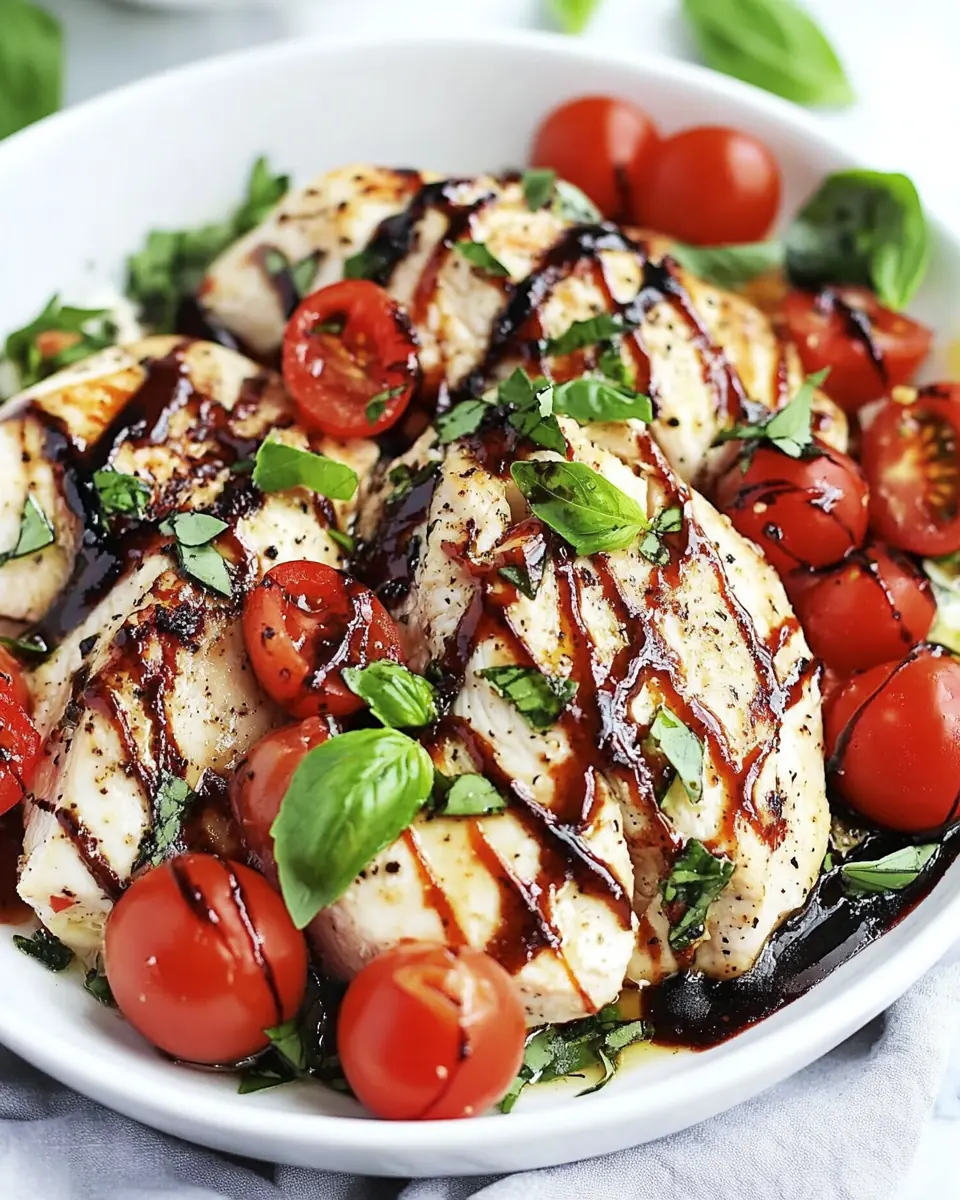
These ingredients are chosen to celebrate the classic Caprese trio alongside perfectly seared chicken. The key players are the acid of the balsamic, the natural sweetness of tomatoes, the creamy melting mozzarella, and the bright snap of fresh basil. Together they create balance, where each item supports the others rather than competing for attention.
- 1/2 cup plus 1 tablespoon balsamic vinegar, divided: Adds a tangy-sweet depth and helps create a glaze when reduced; used partly in a marinade and partly finished over the skillet to brighten flavors and balance richness.
- 1 tablespoon plus 1 teaspoon honey, divided: Provides natural sweetness and helps balance the acidity of the balsamic; divided between a marinade and a finishing sauce to enhance caramelization and flavor harmony.
- 1 1/2 pounds boneless, skinless chicken breasts (about 4 small or 3 medium): Supplies the main source of protein and texture for the dish; pounded or sliced evenly to ensure quick, uniform cooking in the skillet and to absorb the marinade.
- 1 1/4 teaspoons kosher salt, divided: Seasons the chicken and other components for balanced savory flavor; divided so some flavors penetrate during marination while more is added during cooking to taste.
- 1/2 teaspoon ground black pepper, divided: Adds mild heat and enhances aromatic complexity; divided to season both the chicken before cooking and the finished dish for consistent peppery notes.
- 2 tablespoons extra virgin olive oil, divided: Contributes a fruity, savory cooking fat and assists with searing; divided so some is used to brown the chicken and some to sauté vegetables without burning the olive oil.
- 1 small red onion, diced (about 1 cup): Provides a sweet and savory aromatic base when softened in the skillet; diced small to release natural sugars and meld with tomatoes and garlic during cooking.
- 4 cloves garlic, minced (about 4 teaspoons): Delivers pungent, aromatic warmth and depth; minced finely to distribute evenly and infuse the oil and tomatoes without overpowering the dish.
- 4 cups sliced tomatoes: halved cherry or grape tomatoes (2 pints) or 1/2-inch-diced peak season plum or other garden tomatoes: Creates the fresh, juicy body of the sauce and adds natural acidity and sweetness; sliced or diced to release juices that combine with vinegar and honey for a quick skillet caprese.
- 1/4 teaspoon dried thyme: Imparts a subtle earthy, savory undertone to bolster the tomato mixture; used sparingly to complement basil and tomatoes without dominating the bright flavors.
- 4 ounces part-skim mozzarella pearls (scant 1 cup) or 4 ounces block-style part-skim mozzarella cheese, cut into bite-sized cubes: Adds creamy, melty texture and mild milky flavor that defines the Caprese element; scattered over the hot skillet at the end so it softens and becomes slightly gooey.
- 1/4 cup tightly packed fresh basil leaves, thinly sliced: Brings fresh, aromatic herbal brightness and a classic Caprese finish; thinly sliced and sprinkled over the finished skillet to preserve delicate flavor and color.
Preparation Steps for Caprese Chicken Skillet
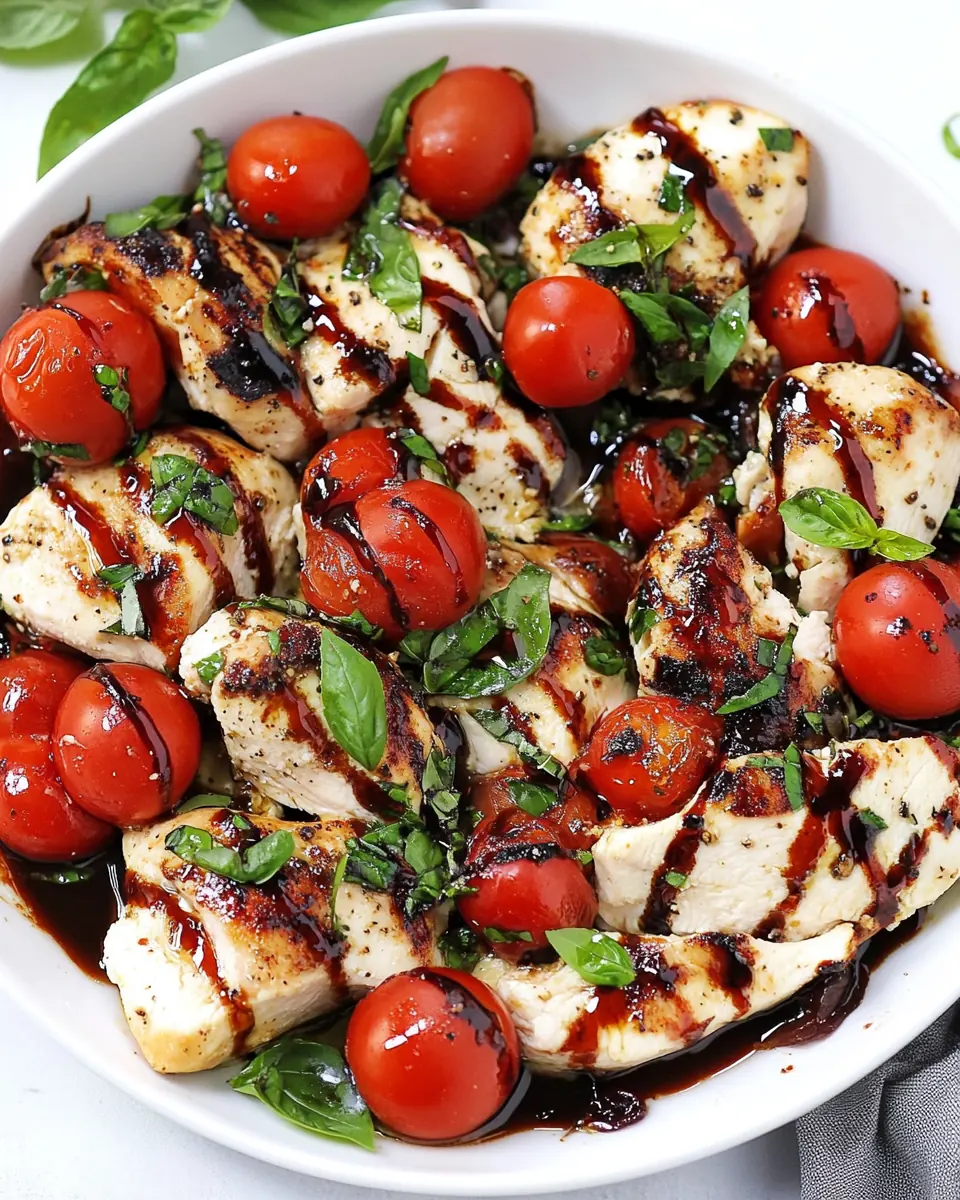
These directions walk you through making a silky balsamic reduction, building a flavorful tomato pan, and finishing with melty mozzarella and fresh basil. Read through the sequence so you can time the reduction while the chicken cooks. Keep your ingredients nearby to move quickly when the skillet is hot.
- In a small saucepan, combine 1/2 cup of the balsamic vinegar and 1 tablespoon of the honey. Gently simmer over medium-low heat, stirring occasionally, until thickened and reduced by a little more than half, about 15 minutes. Remove from the heat and set aside. If you're short on time you can buy a balsamic glaze instead of making it from scratch.: Close your eyes to the aroma as the glaze begins to warm, releasing sweet, vinegary steam that suggests depth is developing. You will notice tiny bubbles along the edge first, then a slow, steady simmer as the sugars concentrate and the vinegar’s sharpness mellows. This thickening process is essential because the reduction becomes a glossy, syrupy finish that clings to the tomatoes and chicken , adding sweetness and a complex tang. Stirring occasionally prevents scorching, and monitoring the simmer keeps it from boiling off too fast. A common mistake is to rush the heat, causing a bitter burnt edge, so keep it gentle and patient.
- While the balsamic reduces, arrange the chicken on a cutting board and stretch a large sheet of plastic wrap over the top. Lightly pound the chicken breasts into an even 1/2-inch thickness. Discard the plastic, then sprinkle the chicken with 3/4 teaspoon of the salt and 1/4 teaspoon of the pepper, seasoning both sides. You can also slice your chicken lengthwise if you have thick breasts and skip this step.: Pressing the chicken to an even thickness helps it cook evenly, which means the exterior will brown while the interior stays juicy. You will feel a slight resistance as the meat flattens, and the sound of the mallet or rolling pin meeting the plastic is reassuring. Evenness matters because uneven breasts lead to dry edges and undercooked centers. One trap is over pounding, which can make the meat mushy, so aim only for a consistent half inch thickness. Seasoning both sides at this stage allows the salt and pepper to penetrate and amplify natural flavors.
- In a large, heavy-bottomed skillet, heat 1 tablespoon of the oil over medium-high heat. Once the oil is hot but not smoking, add the chicken breasts top-sides down, being careful of oil that may splatter. Let cook undisturbed for 4 minutes, or until lightly browned. Flip and cook an additional 3 minutes. Check for doneness. The chicken should reach 165 degrees F at the thickest part when tested with an instant-read thermometer, and when sliced, the juices should run clear. If it needs additional time, flip again and continue cooking for a few minutes on each side, until done. The total cooking time will vary depending upon the size of your chicken. Remove to a plate and cover to keep warm.: When the oil shimmers and gives off a faint fruity scent, it is ready. Carefully add the seasoned chicken , laying it top-side down so you hear a clear sizzle that promises a golden crust. The pan should sound lively but not spit aggressively. Let the chicken cook undisturbed for 4 minutes to form that caramelized exterior, then flip to develop color on the other side. The visual cue is even browning and the tactile cue is a firmer feel when pressed. Cook until the thickest part reaches 165 degrees F, and watch for juices running clear when sliced. Rushing or flipping too often prevents proper browning and can lock in moisture poorly.
- Without wiping out the pan, reduce the skillet heat to medium. Add the remaining tablespoon of oil, swirl to coat the pan, then add the red onion and let cook until slightly softened, about 3 minutes, scraping the browned bits off the bottom of the pan as it cooks. Add the garlic and let cook 30 seconds, just until fragrant. Add the tomatoes, thyme, and remaining 1 tablespoon balsamic vinegar, 1 teaspoon honey, 1/2 teaspoon salt, and 1/4 teaspoon pepper. Increase the heat back to medium high and cook until the tomatoes begin to soften slightly, about 2 minutes.: Resting the chicken is essential because it lets the juices redistribute, yielding tender, moist meat. While covered, the residual heat continues gentle cooking, smoothing textures and preventing dryness. You might detect faint sizzling subsiding as the chicken relaxes. Avoid slicing immediately, since cutting too soon releases flavorful juices onto the plate rather than keeping them inside the meat.
- Return the chicken to the pan, nestling it into the tomatoes, and scatter the mozzarella throughout. Cover the pan and remove from the heat. Let stand for 1 to 2 minutes to allow the mozzarella to become soft and melty. Uncover, drizzle the balsamic reduction over the top, and sprinkle with the fresh basil. Serve warm.: That fond on the pan bottom holds concentrated flavor from the seared chicken , and a quick sauté of the onion helps to dissolve those browned bits into the sauce. You will see the onion soften and become translucent, releasing a sweet aroma that signals the next layer of flavor. Scraping the bottom with a wooden spoon integrates those browned pieces, which is why you should not discard them. Be careful not to let the onion burn, as bitter char will taint the sauce.
- Add the garlic and let cook 30 seconds: Garlic releases an immediate, pungent fragrance the moment it hits the warm oil, and that fleeting taste gives the tomato base an aromatic lift. Keep the heat moderate and stir constantly, because garlic can move from fragrant to bitter in a heartbeat. When the scent turns rich and nutty, you know it is time to add the tomatoes. A frequent error is overcooking the garlic, which produces unpleasant bitterness, so watch closely.
- Add the tomatoes, thyme, and remaining 1 tablespoon balsamic vinegar, 1 teaspoon honey, 1/2 teaspoon salt, and 1/4 teaspoon pepper: As the tomatoes hit the pan you will hear a lively hiss, then see them begin to release juice and soften. The thyme adds a subtle earthy aroma that blends with the tomato perfume, and the added balsamic and honey provide balance so the sauce does not taste flat. Increase heat slightly to encourage gentle bubbling and slight collapse of the tomatoes, creating a saucy bed that will cradle the chicken . If your tomatoes are not ripe, the sauce can taste tart, so use sweeter varieties when you can.
- Increase the heat back to medium high and cook until the tomatoes begin to soften slightly, about 2 minutes: This step concentrates the tomato flavors without turning them into a puree, so you still have texture and bright pockets of juice. You will see skins loosen and juices mingle, and the pan will smell vibrant and slightly caramelized. Quick, high heat helps the tomatoes blister and develop a hint of char, which adds complexity. Overcooking here will make the mixture watery and dull, so watch for just a gentle collapse.
- Return the chicken to the pan, nestling it into the tomatoes, and scatter the mozzarella throughout: The contact between hot tomatoes and warm chicken finishes the meat gently while the mozzarella softens into creamy pockets. You will notice steam rising and the cheese beginning to soften almost immediately, creating a pleasing contrast between savory meat and milky cheese. Nestling the chicken into the sauce helps infuse it with flavor. A common misstep is adding cold cheese straight from the fridge and leaving the pan uncovered too long, which can prevent even melting.
- Cover the pan and remove from the heat: Trapping the residual heat under the lid is a gentle way to coax the cheese into a soft, melty state without overcooking the chicken . You will see the cheese relax and slightly collapse into the tomato juices, forming pockets of creaminess. Let it stand 1 to 2 minutes so the textures settle. Leaving the lid on too long can over soften the cheese and wilt the basil later, so time this briefly.
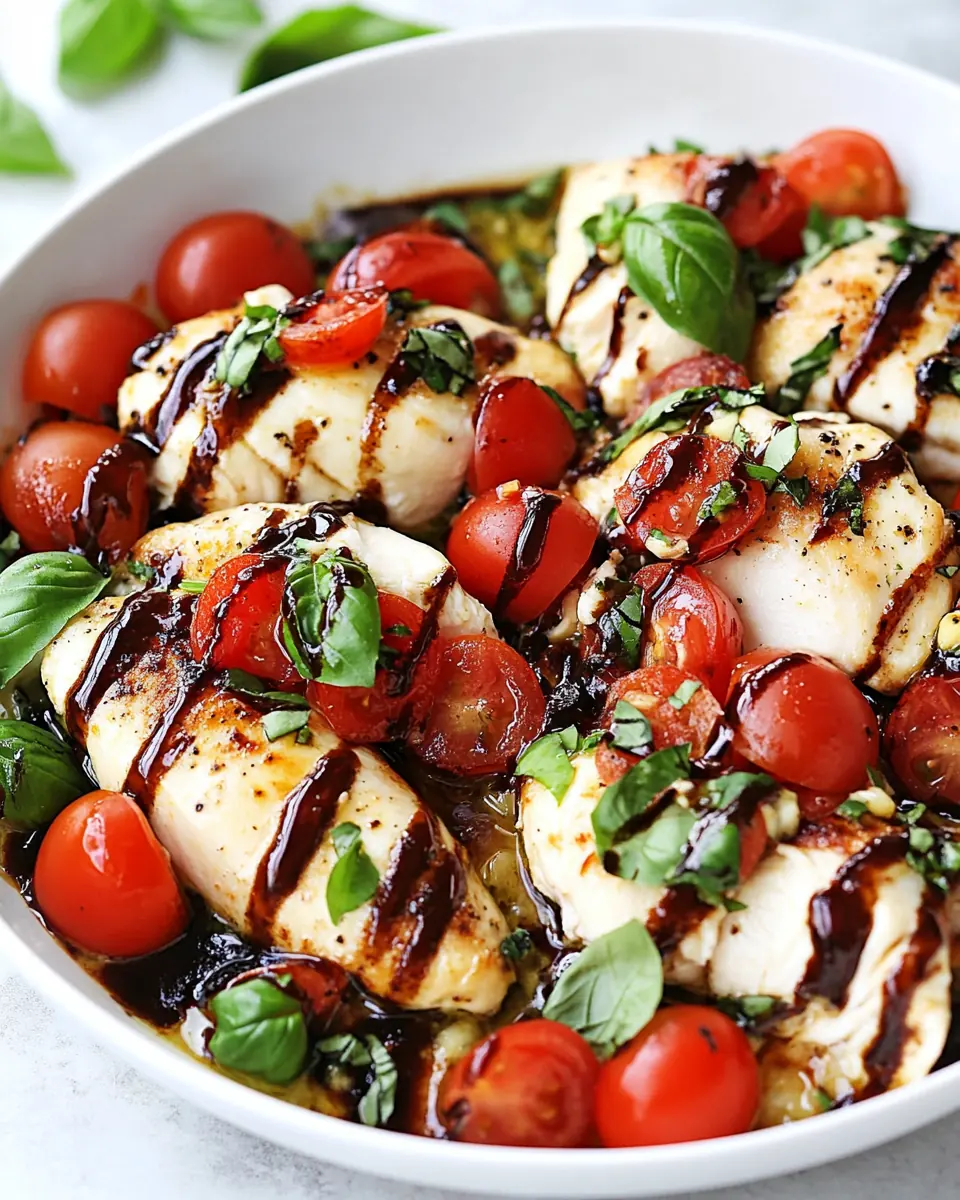
- Uncover, drizzle the balsamic reduction over the top, and sprinkle with the fresh basil: The final flourish is the glossy balsamic reduction, which adds a concentrated sweet tang that ties the dish together, and the thinly sliced fresh basil brings a bright, herbal snap. Visually the glaze creates dark ribbons, while the basil offers a fragrant finish. Drizzle just before serving so the basil retains some lift and the glaze stays glossy. Overdrizzling can overpower the delicate balance of flavors, so go light and taste as you go.
Ways to Customize
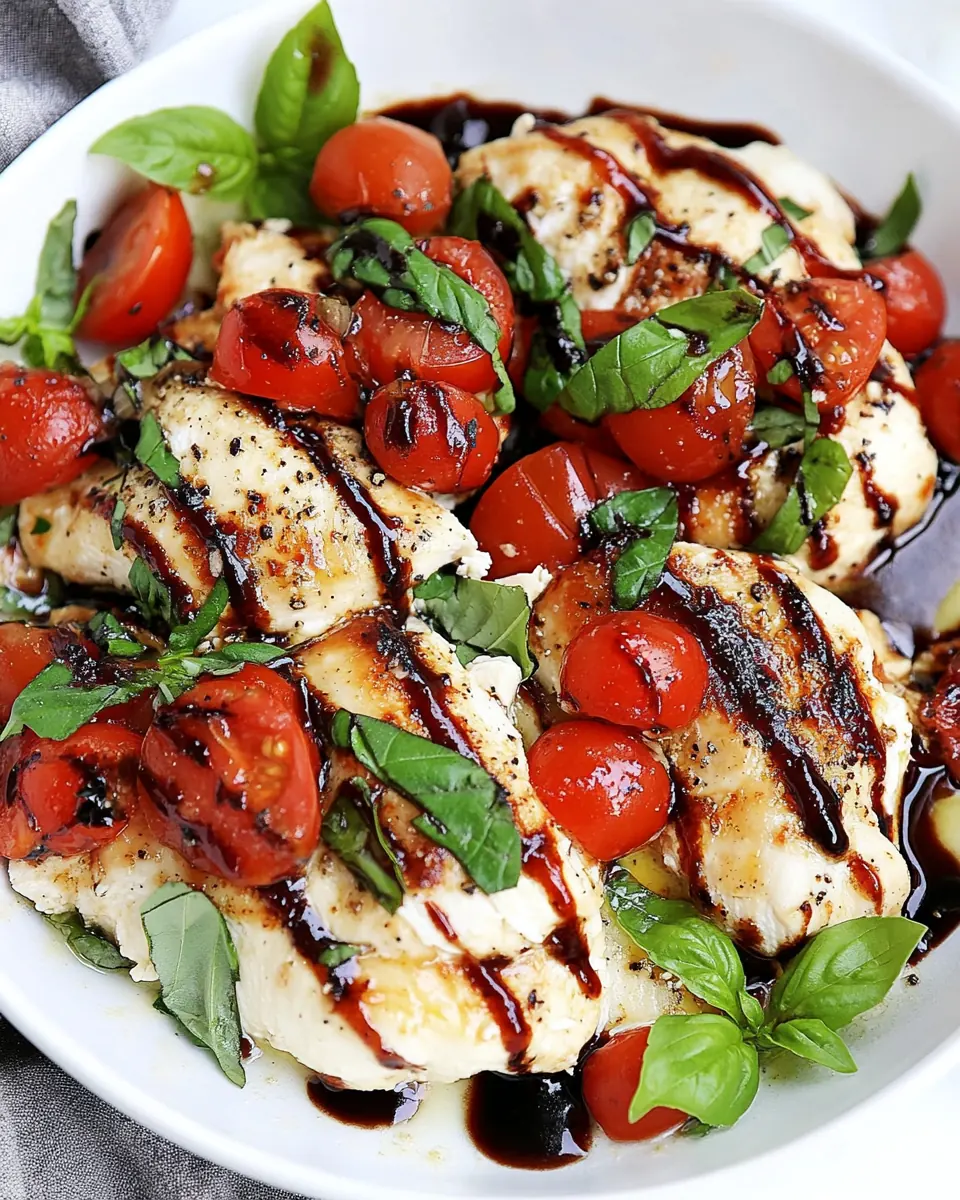
You can tweak small elements of Caprese Chicken Skillet to suit your pantry or preferences while keeping the central profile intact. Below are practical, tested variations that preserve the balance between savory chicken, sweet balsamic, melty mozzarella, and fresh basil.
- Use a store bought balsamic glaze if you are short on time, it saves the simmering step and still adds sweet tang.
- Swap tomato style by using halved cherry tomatoes for a burst texture or diced garden tomatoes for a saucier finish.
- Adjust cheese form by using pearls for ease or cubed block–style mozzarella for a more rustic melt.
- Slice thick breasts lengthwise instead of pounding, which gives you thinner cutlets that cook evenly without losing texture.
- Finish with extra basil torn at the last moment to preserve aroma and visual brightness on the warm skillet.
What to Serve Alongside Caprese Chicken Skillet
This dish is versatile enough for weeknight dinners and relaxed weekend meals, and it pairs nicely with simple sides that soak up the tomato juices. Below are thoughtful serving suggestions and storage ideas to help you plan the whole meal.
- Light green salad with a lemon vinaigrette provides a crisp counterpoint and keeps the meal fresh.
- Crusty bread to mop up the tomato and balsamic sauce, making every bite satisfyingly saucy.
- Steamed vegetables such as green beans or asparagus offer a lightly steamed, crunchy element to balance the soft cheese.
- Pasta or orzo tossed lightly with olive oil can be served under the skillet contents for a heartier plate suitable for dinner.
- Occasions this shines for casual dinners, summer gatherings, or a simple celebratory meal when you want food that looks special but is easy to execute.
- Storage tips refrigerate leftovers in an airtight container for up to three days, and reheat gently on the stove to preserve the texture of the chicken and avoid toughening.
- Seasonal pairing prefer this in summer when tomatoes are sweetest, as the fresh produce elevates the entire dish.
FAQ
Conclusion
Caprese Chicken Skillet stands out because it balances seared savory chicken, bright tomatoes, creamy mozzarella, and a glossy balsamic finish into a simple, satisfying plate. Give it a try on a busy evening when you want something that feels special without demanding time or technique. I hope this recipe becomes one of your go to dinners, offering fresh summer flavors and easy preparation whenever you crave a bright, comforting meal.
Caprese Chicken Skillet
Ingredients
Equipment
Method
- In a small saucepan, combine 1/2 cup of the balsamic vinegar and 1 tablespoon of the honey. Gently simmer over medium-low heat, stirring occasionally, until thickened and reduced by a little more than half, about 15 minutes. Remove from the heat and set aside. If you're short on time you can buy a balsamic glaze instead of making it from scratch.: Close your eyes to the aroma as the glaze begins to warm, releasing sweet, vinegary steam that suggests depth is developing. You will notice tiny bubbles along the edge first, then a slow, steady simmer as the sugars concentrate and the vinegar’s sharpness mellows. This thickening process is essential because the reduction becomes a glossy, syrupy finish that clings to the tomatoes and chicken , adding sweetness and a complex tang. Stirring occasionally prevents scorching, and monitoring the simmer keeps it from boiling off too fast. A common mistake is to rush the heat, causing a bitter burnt edge, so keep it gentle and patient.
- While the balsamic reduces, arrange the chicken on a cutting board and stretch a large sheet of plastic wrap over the top. Lightly pound the chicken breasts into an even 1/2-inch thickness. Discard the plastic, then sprinkle the chicken with 3/4 teaspoon of the salt and 1/4 teaspoon of the pepper, seasoning both sides. You can also slice your chicken lengthwise if you have thick breasts and skip this step.: Pressing the chicken to an even thickness helps it cook evenly, which means the exterior will brown while the interior stays juicy. You will feel a slight resistance as the meat flattens, and the sound of the mallet or rolling pin meeting the plastic is reassuring. Evenness matters because uneven breasts lead to dry edges and undercooked centers. One trap is over pounding, which can make the meat mushy, so aim only for a consistent half inch thickness. Seasoning both sides at this stage allows the salt and pepper to penetrate and amplify natural flavors.
- In a large, heavy-bottomed skillet, heat 1 tablespoon of the oil over medium-high heat. Once the oil is hot but not smoking, add the chicken breasts top-sides down, being careful of oil that may splatter. Let cook undisturbed for 4 minutes, or until lightly browned. Flip and cook an additional 3 minutes. Check for doneness. The chicken should reach 165 degrees F at the thickest part when tested with an instant-read thermometer, and when sliced, the juices should run clear. If it needs additional time, flip again and continue cooking for a few minutes on each side, until done. The total cooking time will vary depending upon the size of your chicken. Remove to a plate and cover to keep warm.: When the oil shimmers and gives off a faint fruity scent, it is ready. Carefully add the seasoned chicken , laying it top-side down so you hear a clear sizzle that promises a golden crust. The pan should sound lively but not spit aggressively. Let the chicken cook undisturbed for 4 minutes to form that caramelized exterior, then flip to develop color on the other side. The visual cue is even browning and the tactile cue is a firmer feel when pressed. Cook until the thickest part reaches 165 degrees F, and watch for juices running clear when sliced. Rushing or flipping too often prevents proper browning and can lock in moisture poorly.
- Without wiping out the pan, reduce the skillet heat to medium. Add the remaining tablespoon of oil, swirl to coat the pan, then add the red onion and let cook until slightly softened, about 3 minutes, scraping the browned bits off the bottom of the pan as it cooks. Add the garlic and let cook 30 seconds, just until fragrant. Add the tomatoes, thyme, and remaining 1 tablespoon balsamic vinegar, 1 teaspoon honey, 1/2 teaspoon salt, and 1/4 teaspoon pepper. Increase the heat back to medium high and cook until the tomatoes begin to soften slightly, about 2 minutes.: Resting the chicken is essential because it lets the juices redistribute, yielding tender, moist meat. While covered, the residual heat continues gentle cooking, smoothing textures and preventing dryness. You might detect faint sizzling subsiding as the chicken relaxes. Avoid slicing immediately, since cutting too soon releases flavorful juices onto the plate rather than keeping them inside the meat.
- Return the chicken to the pan, nestling it into the tomatoes, and scatter the mozzarella throughout. Cover the pan and remove from the heat. Let stand for 1 to 2 minutes to allow the mozzarella to become soft and melty. Uncover, drizzle the balsamic reduction over the top, and sprinkle with the fresh basil. Serve warm.: That fond on the pan bottom holds concentrated flavor from the seared chicken , and a quick sauté of the onion helps to dissolve those browned bits into the sauce. You will see the onion soften and become translucent, releasing a sweet aroma that signals the next layer of flavor. Scraping the bottom with a wooden spoon integrates those browned pieces, which is why you should not discard them. Be careful not to let the onion burn, as bitter char will taint the sauce.
- Add the garlic and let cook 30 seconds: Garlic releases an immediate, pungent fragrance the moment it hits the warm oil, and that fleeting taste gives the tomato base an aromatic lift. Keep the heat moderate and stir constantly, because garlic can move from fragrant to bitter in a heartbeat. When the scent turns rich and nutty, you know it is time to add the tomatoes. A frequent error is overcooking the garlic, which produces unpleasant bitterness, so watch closely.
- Add the tomatoes, thyme, and remaining 1 tablespoon balsamic vinegar, 1 teaspoon honey, 1/2 teaspoon salt, and 1/4 teaspoon pepper: As the tomatoes hit the pan you will hear a lively hiss, then see them begin to release juice and soften. The thyme adds a subtle earthy aroma that blends with the tomato perfume, and the added balsamic and honey provide balance so the sauce does not taste flat. Increase heat slightly to encourage gentle bubbling and slight collapse of the tomatoes, creating a saucy bed that will cradle the chicken . If your tomatoes are not ripe, the sauce can taste tart, so use sweeter varieties when you can.
- Increase the heat back to medium high and cook until the tomatoes begin to soften slightly, about 2 minutes: This step concentrates the tomato flavors without turning them into a puree, so you still have texture and bright pockets of juice. You will see skins loosen and juices mingle, and the pan will smell vibrant and slightly caramelized. Quick, high heat helps the tomatoes blister and develop a hint of char, which adds complexity. Overcooking here will make the mixture watery and dull, so watch for just a gentle collapse.
- Return the chicken to the pan, nestling it into the tomatoes, and scatter the mozzarella throughout: The contact between hot tomatoes and warm chicken finishes the meat gently while the mozzarella softens into creamy pockets. You will notice steam rising and the cheese beginning to soften almost immediately, creating a pleasing contrast between savory meat and milky cheese. Nestling the chicken into the sauce helps infuse it with flavor. A common misstep is adding cold cheese straight from the fridge and leaving the pan uncovered too long, which can prevent even melting.
- Cover the pan and remove from the heat: Trapping the residual heat under the lid is a gentle way to coax the cheese into a soft, melty state without overcooking the chicken . You will see the cheese relax and slightly collapse into the tomato juices, forming pockets of creaminess. Let it stand 1 to 2 minutes so the textures settle. Leaving the lid on too long can over soften the cheese and wilt the basil later, so time this briefly.
- Uncover, drizzle the balsamic reduction over the top, and sprinkle with the fresh basil: The final flourish is the glossy balsamic reduction, which adds a concentrated sweet tang that ties the dish together, and the thinly sliced fresh basil brings a bright, herbal snap. Visually the glaze creates dark ribbons, while the basil offers a fragrant finish. Drizzle just before serving so the basil retains some lift and the glaze stays glossy. Overdrizzling can overpower the delicate balance of flavors, so go light and taste as you go.
Notes
- Use a store bought balsamic glaze if you are short on time, it saves the simmering step and still adds sweet tang.
- Swap tomato style by using halved cherry tomatoes for a burst texture or diced garden tomatoes for a saucier finish.
- Adjust cheese form by using pearls for ease or cubed block-style mozzarella for a more rustic melt.
- Slice thick breasts lengthwise instead of pounding, which gives you thinner cutlets that cook evenly without losing texture.
- Finish with extra basil torn at the last moment to preserve aroma and visual brightness on the warm skillet.