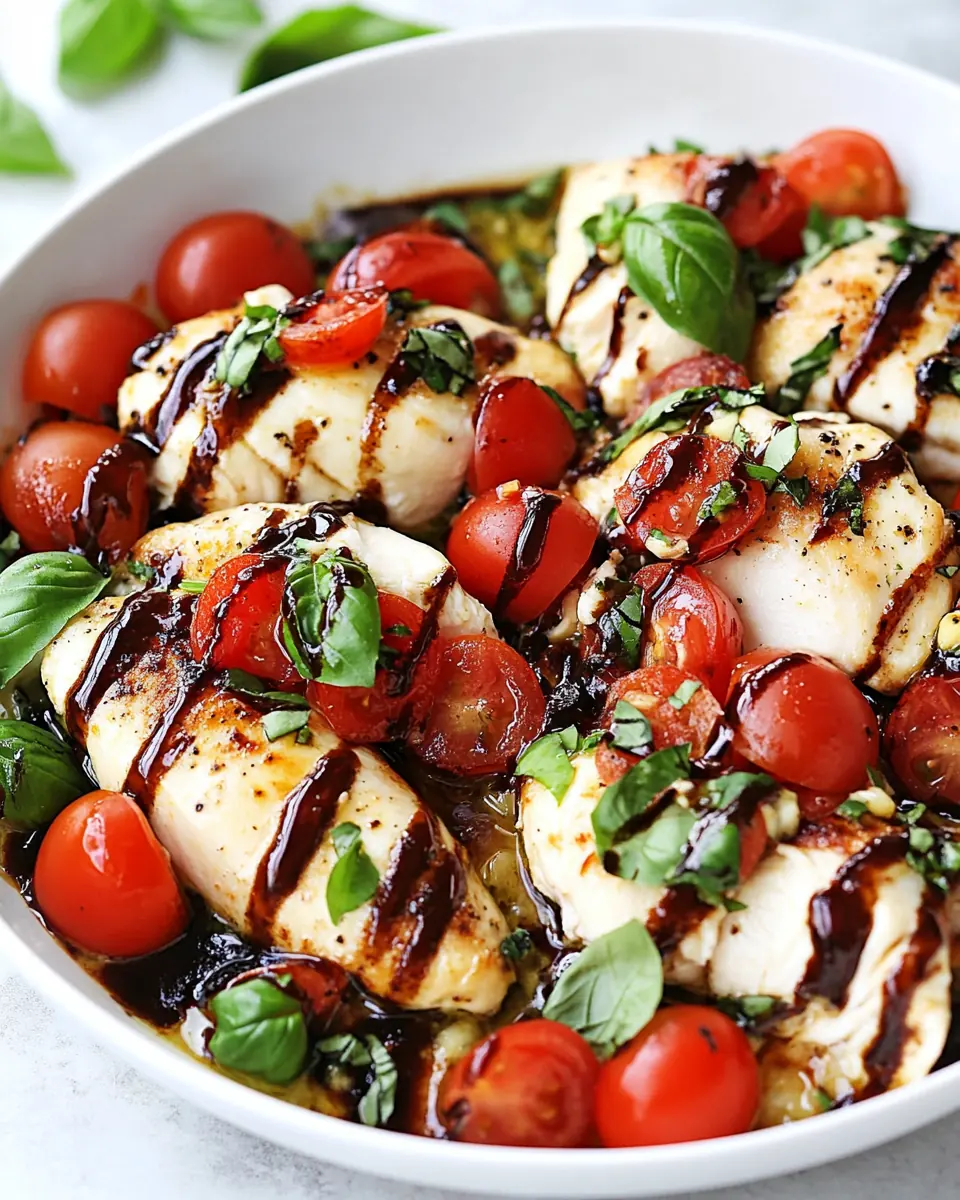
In a small saucepan, combine 1/2 cup of the balsamic vinegar and 1 tablespoon of the honey. Gently simmer over medium-low heat, stirring occasionally, until thickened and reduced by a little more than half, about 15 minutes. Remove from the heat and set aside. If you're short on time you can buy a balsamic glaze instead of making it from scratch.: Close your eyes to the aroma as the glaze begins to warm, releasing sweet, vinegary steam that suggests depth is developing. You will notice tiny bubbles along the edge first, then a slow, steady simmer as the sugars concentrate and the vinegar’s sharpness mellows. This thickening process is essential because the reduction becomes a glossy, syrupy finish that clings to the tomatoes and chicken , adding sweetness and a complex tang. Stirring occasionally prevents scorching, and monitoring the simmer keeps it from boiling off too fast. A common mistake is to rush the heat, causing a bitter burnt edge, so keep it gentle and patient.
While the balsamic reduces, arrange the chicken on a cutting board and stretch a large sheet of plastic wrap over the top. Lightly pound the chicken breasts into an even 1/2-inch thickness. Discard the plastic, then sprinkle the chicken with 3/4 teaspoon of the salt and 1/4 teaspoon of the pepper, seasoning both sides. You can also slice your chicken lengthwise if you have thick breasts and skip this step.: Pressing the chicken to an even thickness helps it cook evenly, which means the exterior will brown while the interior stays juicy. You will feel a slight resistance as the meat flattens, and the sound of the mallet or rolling pin meeting the plastic is reassuring. Evenness matters because uneven breasts lead to dry edges and undercooked centers. One trap is over pounding, which can make the meat mushy, so aim only for a consistent half inch thickness. Seasoning both sides at this stage allows the salt and pepper to penetrate and amplify natural flavors.
In a large, heavy-bottomed skillet, heat 1 tablespoon of the oil over medium-high heat. Once the oil is hot but not smoking, add the chicken breasts top-sides down, being careful of oil that may splatter. Let cook undisturbed for 4 minutes, or until lightly browned. Flip and cook an additional 3 minutes. Check for doneness. The chicken should reach 165 degrees F at the thickest part when tested with an instant-read thermometer, and when sliced, the juices should run clear. If it needs additional time, flip again and continue cooking for a few minutes on each side, until done. The total cooking time will vary depending upon the size of your chicken. Remove to a plate and cover to keep warm.: When the oil shimmers and gives off a faint fruity scent, it is ready. Carefully add the seasoned chicken , laying it top-side down so you hear a clear sizzle that promises a golden crust. The pan should sound lively but not spit aggressively. Let the chicken cook undisturbed for 4 minutes to form that caramelized exterior, then flip to develop color on the other side. The visual cue is even browning and the tactile cue is a firmer feel when pressed. Cook until the thickest part reaches 165 degrees F, and watch for juices running clear when sliced. Rushing or flipping too often prevents proper browning and can lock in moisture poorly.
Without wiping out the pan, reduce the skillet heat to medium. Add the remaining tablespoon of oil, swirl to coat the pan, then add the red onion and let cook until slightly softened, about 3 minutes, scraping the browned bits off the bottom of the pan as it cooks. Add the garlic and let cook 30 seconds, just until fragrant. Add the tomatoes, thyme, and remaining 1 tablespoon balsamic vinegar, 1 teaspoon honey, 1/2 teaspoon salt, and 1/4 teaspoon pepper. Increase the heat back to medium high and cook until the tomatoes begin to soften slightly, about 2 minutes.: Resting the chicken is essential because it lets the juices redistribute, yielding tender, moist meat. While covered, the residual heat continues gentle cooking, smoothing textures and preventing dryness. You might detect faint sizzling subsiding as the chicken relaxes. Avoid slicing immediately, since cutting too soon releases flavorful juices onto the plate rather than keeping them inside the meat.
Return the chicken to the pan, nestling it into the tomatoes, and scatter the mozzarella throughout. Cover the pan and remove from the heat. Let stand for 1 to 2 minutes to allow the mozzarella to become soft and melty. Uncover, drizzle the balsamic reduction over the top, and sprinkle with the fresh basil. Serve warm.: That fond on the pan bottom holds concentrated flavor from the seared chicken , and a quick sauté of the onion helps to dissolve those browned bits into the sauce. You will see the onion soften and become translucent, releasing a sweet aroma that signals the next layer of flavor. Scraping the bottom with a wooden spoon integrates those browned pieces, which is why you should not discard them. Be careful not to let the onion burn, as bitter char will taint the sauce.
Add the garlic and let cook 30 seconds: Garlic releases an immediate, pungent fragrance the moment it hits the warm oil, and that fleeting taste gives the tomato base an aromatic lift. Keep the heat moderate and stir constantly, because garlic can move from fragrant to bitter in a heartbeat. When the scent turns rich and nutty, you know it is time to add the tomatoes. A frequent error is overcooking the garlic, which produces unpleasant bitterness, so watch closely.
Add the tomatoes, thyme, and remaining 1 tablespoon balsamic vinegar, 1 teaspoon honey, 1/2 teaspoon salt, and 1/4 teaspoon pepper: As the tomatoes hit the pan you will hear a lively hiss, then see them begin to release juice and soften. The thyme adds a subtle earthy aroma that blends with the tomato perfume, and the added balsamic and honey provide balance so the sauce does not taste flat. Increase heat slightly to encourage gentle bubbling and slight collapse of the tomatoes, creating a saucy bed that will cradle the chicken . If your tomatoes are not ripe, the sauce can taste tart, so use sweeter varieties when you can.
Increase the heat back to medium high and cook until the tomatoes begin to soften slightly, about 2 minutes: This step concentrates the tomato flavors without turning them into a puree, so you still have texture and bright pockets of juice. You will see skins loosen and juices mingle, and the pan will smell vibrant and slightly caramelized. Quick, high heat helps the tomatoes blister and develop a hint of char, which adds complexity. Overcooking here will make the mixture watery and dull, so watch for just a gentle collapse.
Return the chicken to the pan, nestling it into the tomatoes, and scatter the mozzarella throughout: The contact between hot tomatoes and warm chicken finishes the meat gently while the mozzarella softens into creamy pockets. You will notice steam rising and the cheese beginning to soften almost immediately, creating a pleasing contrast between savory meat and milky cheese. Nestling the chicken into the sauce helps infuse it with flavor. A common misstep is adding cold cheese straight from the fridge and leaving the pan uncovered too long, which can prevent even melting.
Cover the pan and remove from the heat: Trapping the residual heat under the lid is a gentle way to coax the cheese into a soft, melty state without overcooking the chicken . You will see the cheese relax and slightly collapse into the tomato juices, forming pockets of creaminess. Let it stand 1 to 2 minutes so the textures settle. Leaving the lid on too long can over soften the cheese and wilt the basil later, so time this briefly.
Uncover, drizzle the balsamic reduction over the top, and sprinkle with the fresh basil: The final flourish is the glossy balsamic reduction, which adds a concentrated sweet tang that ties the dish together, and the thinly sliced fresh basil brings a bright, herbal snap. Visually the glaze creates dark ribbons, while the basil offers a fragrant finish. Drizzle just before serving so the basil retains some lift and the glaze stays glossy. Overdrizzling can overpower the delicate balance of flavors, so go light and taste as you go.