Chicken Alfredo Soup
Chicken Alfredo Soup has been my go to when a chilly evening calls for something rich, soothing, and a little indulgent without the fuss. The first time I made it, I remember stirring a pot while a storm rattled the windows, and the smell of garlic and butter felt like a warm blanket. That memory stuck, and now this bowl is my shortcut to comfort when I need something nourishing and a touch luxurious.
Every spoonful of Chicken Alfredo Soup balances creamy, savory broth with tender chicken and pillowy cheese tortellini, and I love how it transforms a simple weeknight into something memorable. I often make a double batch, because leftovers reheat beautifully, and the flavors meld overnight. Let me tell you how small techniques became my favorites and why you might fall for this recipe the same way I did.
Recipe Snapshot
50 mins
5 mins
45 mins
Medium
400 kcal
Italian
Gluten-Free, Low FODMAP
Soups
Skillet, Large pot, Whisk
Why This Chicken Alfredo Soup Shines
Hearty yet elegant
I adore how Chicken Alfredo Soup feels both comforting and a little special. The creamy base gives a luxurious mouthfeel, while the tortellini makes each bite feel substantial. When I serve it to friends, they always remark that it tastes like effort, even when it is straightforward to pull together.
Speed without sacrificing depth
We get rich flavor from simple building blocks. Browning the chicken and sweating the onion unlocks savory compounds, and the quick roux with butter and flour thickens the broth into a silky, clingy sauce. I appreciate meals that come together in under an hour yet still feel like something I might find in a favorite bistro.
Family friendly
If you have picky eaters, this recipe usually wins them over. The creamy broth and cheesy tortellini are familiar and comforting, while the diced chicken adds protein without being fussy. We can easily adjust the heat with or without the crushed red pepper flakes, so everyone at the table eats happily.
Very adaptable
I love recipes that welcome tweaks. Swap in different shaped pasta, change the cheese garnish, or make it lighter by using lower fat dairy, and you still end up with a great bowl. I often tailor it to what I have on hand, and that flexibility makes it a recipe I keep coming back to.
Great make ahead and leftovers
This soup rewards patience. Leftovers thicken and deepen in flavor, and reheating with a splash of broth brings it right back. For busy nights, I’ll double the batch and save time on subsequent dinners.
Main Ingredients for Chicken Alfredo Soup
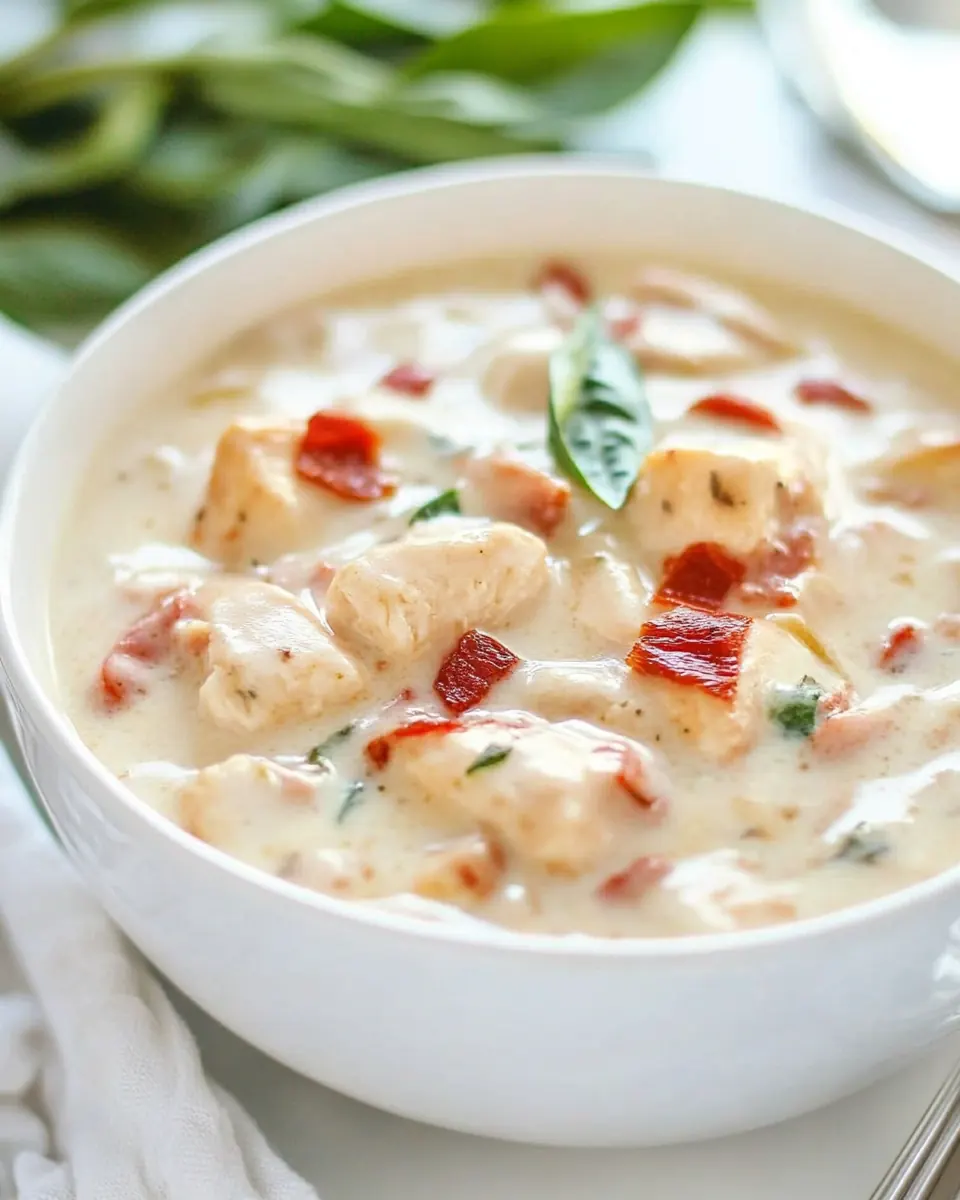
These ingredients are chosen to build a creamy, balanced bowl. The key players work in tandem: the butter and flour form the roux to thicken the broth, the onion and garlic provide the aromatic base, and the chicken broth plus Half and Half create the comforting, rich liquid. Cheese tortellini brings texture and heartiness, while the Parmesan cheese and fresh basil finish the dish with savory brightness.
- 2 tbsp butter: Melted to create a rich base for sautéing aromatics and forming the soup's velvety mouthfeel; contributes a subtle buttery flavor that rounds out the creamier components. Helps brown the chicken slightly when searing and prevents sticking to the pot. Balances acidity and salt to enhance overall flavor complexity.
- 1 lb chicken breasts: Sliced or cubed to provide hearty protein and body to the soup, absorbing seasonings and remaining tender during simmering. Serves as the primary source of substance and pairs well with the creamy broth and pasta. Can be poached in the broth or seared first for added color and flavor.
- salt and pepper to taste: Added sparingly to season the protein and broth, enhancing natural flavors without overpowering the creaminess. Adjusted to personal preference to achieve proper balance between savory and bright notes. Used during cooking and finished at the end to taste.
- 1 large onion diced: Diced finely to build the soup's aromatic base and add subtle sweetness and texture when softened; releases sugars as it cooks to deepen flavor. Sweated in butter early on to create a mellow backdrop for garlic and flour. Contributes body and visual appeal.
- 3 tsp minced garlic: Minced and cooked briefly to provide a fragrant, savory backbone that complements the onion and enriches the broth. Added early to release aromatic oils but cared for to avoid burning and becoming bitter. Enhances the overall depth of flavor in the finished soup.
- 1/4 cup all-purpose flour: Sprinkled and cooked with the butter and aromatics to thicken and stabilize the soup, creating a roux that yields a silky consistency. Allows the broth and dairy to bind, preventing separation and giving the soup a light, creamy body. Toasted briefly to remove raw flour taste.
- 4 cup low-sodium chicken broth: Poured in as the primary liquid to build the soup's savory foundation and to poach the chicken; provides a mild, salty base that supports the creamy elements. Low-sodium allows control over final seasoning while contributing chicken flavor. Simmered to meld flavors and reduce slightly for concentration.
- 1 cup Half and Half: Stirred in to impart rich creaminess and smooth texture while balancing the savory broth and cheese; prevents heaviness when incorporated gradually. Adds a delicate dairy sweetness and helps create a luxurious mouthfeel without overpowering other ingredients. Gently heated to avoid curdling.
- 9 oz cheese tortellini: Folded in near the end to add tender, pasta-backed substance and a pleasing chew that complements the creamy broth; cooks quickly and absorbs flavors. Provides comforting starchiness and heartiness typical of Italian-inspired soups. Ensures the soup becomes more filling and satisfying.
- 1 tsp crushed red pepper flakes: Sprinkled cautiously to introduce a subtle kick and warmth that cuts through the richness, adjustable to taste for mild heat. Enhances complexity and lifts the overall flavor profile without dominating. Pairs well with creamy and cheesy elements to prevent palate fatigue.
- fresh basil for garnish: Chopped or torn and used as a bright, herbaceous garnish to add fresh aroma and a pop of color that lightens the dish. Provides a contrasting fresh note against the rich, creamy soup and complements basil-friendly flavors. Added just before serving to retain fragrance and texture.
- shredded Parmesan cheese: Sprinkled grated over bowls to contribute nutty, salty richness and an umami finish that deepens the soup's flavor. Melts slightly into the hot broth and ties together the pasta, chicken, and cream for a cohesive, savory finish. Used generously to taste for added depth.
How to Make Chicken Alfredo Soup
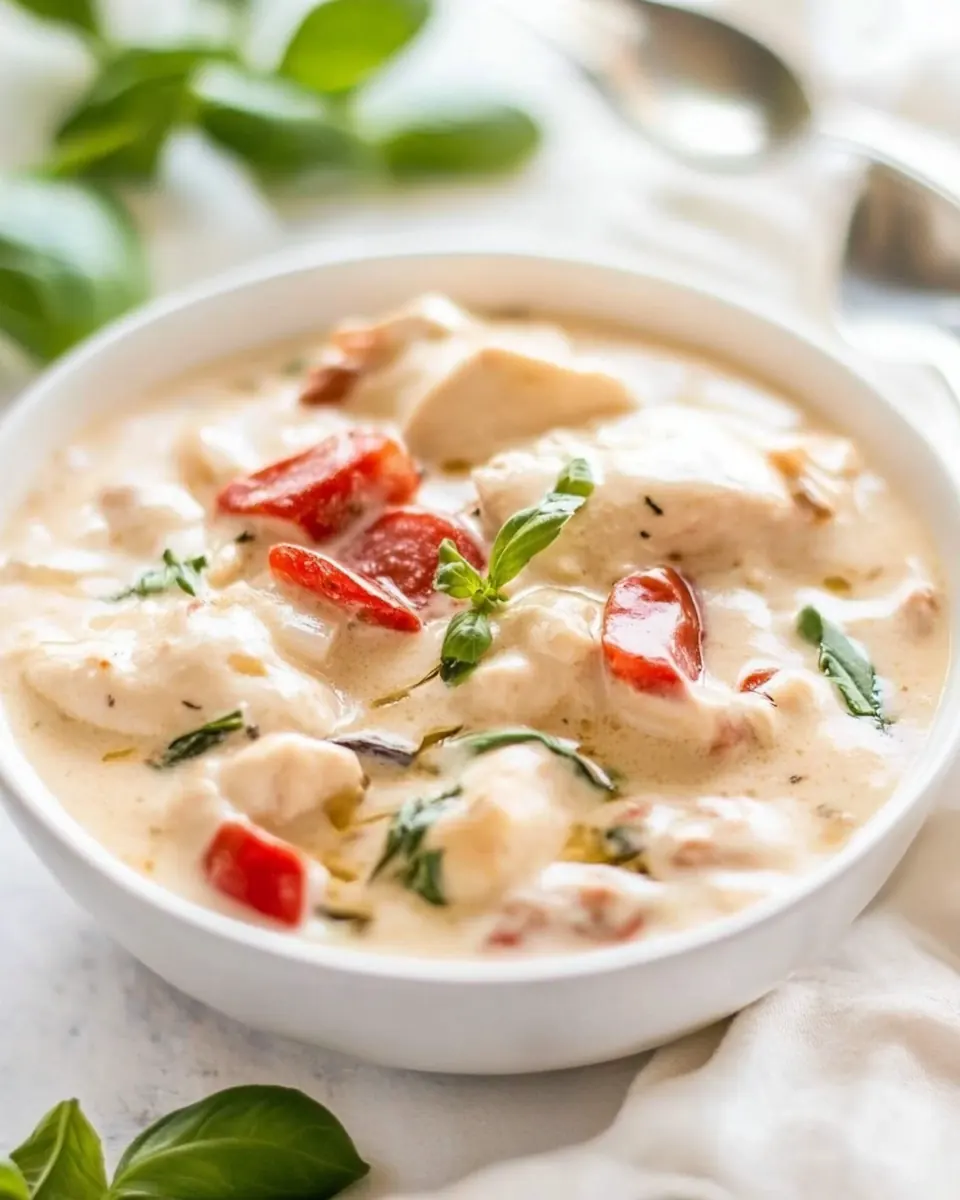
These steps are straightforward, but the trick is paying attention to sensory cues. I like to move deliberately through each phase so the aromatics develop, the roux cooks properly, and the final texture is rich and silky. Follow the cues below and you will end up with a bowl that feels both comforting and refined.
- In a hot skillet add olive oil and cook chicken for 6 minutes on each side, or until cooked through. Season with salt and pepper and set aside to cool.: The scent of searing chicken should be savory and slightly caramelized, a deep golden crust forming on the surface. You will hear a satisfying sizzle when the meat hits the pan, signaling the Maillard reaction which creates complex flavor. Let the chicken rest so its juices redistribute, keeping it moist when diced. A common mistake is moving the chicken too soon, which prevents proper browning and causes sticking. If your pan steams rather than sizzles, raise the heat slightly to encourage browning.
- Melt butter in a large pot over medium-high heat. Sauté onion until translucent (about 2 min). Add garlic and cook until fragrant. Add flour and whisk 2-3 minutes, until golden. Add chicken broth and half/half. Let simmer 15 minutes, until thickened.: The butter should foam gently and smell rich, the onion becoming glossy and sweet as it softens. When you add the garlic , a warm, savory perfume will rise quickly; cook it only briefly to prevent bitterness. Whisking in the flour creates a roux that should turn a light golden hue and smell toasty, which guarantees the raw flour flavor is gone. Pour in the chicken broth slowly while whisking to avoid lumps, then stir in the Half and Half for a creamy body. As the mixture simmers, watch for a gentle bubbling and a thicker coat on the spoon, which tells you it is ready. If the soup becomes too thick, add a splash of broth to loosen it, and if it tastes floury, simmer a bit longer to cook it through.
- Add tortellini to pot and cook 10 minutes, until al dente. Add diced chicken and season with crushed red pepper flakes, salt, and pepper. Garnish with basil. Serve warm.: When the tortellini goes into the simmering liquid, you will see them bob and expand slightly as they hydrate. The broth will hug their surface, and the kitchen fills with a rich, cheesy aroma. Test one after about 8 minutes to check for al dente, a tender center with a slight chew. Overcooking makes them fall apart and turn gluey, so err on the firm side. Stir gently to prevent sticking, and keep the heat at a lively simmer rather than a rolling boil to protect their shape.
- Add diced chicken and season with crushed red pepper flakes, salt, and pepper: Folding the warm, diced chicken back into the pot warms it through without drying it out, and the residual juices mingle with the broth for added depth. The tiny pops of heat from the crushed red pepper flakes will lift the creamy base, creating a pleasant contrast. Taste carefully and adjust the salt and pepper , since the Parmesan cheese can also add salt. A frequent slip is over seasoning early; always do a final check once all components are combined.
- Garnish with basil. Serve warm: Fresh basil should be added at the last moment so its bright herbal aroma remains vivid. Tear or chiffonade the leaves and sprinkle over bowls; visually, the green contrasts beautifully with the pale broth and the pasta. Serve immediately while steam rises and the broth is luxuriously warm. If you wait too long, the pasta will continue to absorb liquid and the basil will wilt, so time this step close to plating.
Recipe Notes about Chicken Alfredo Soup
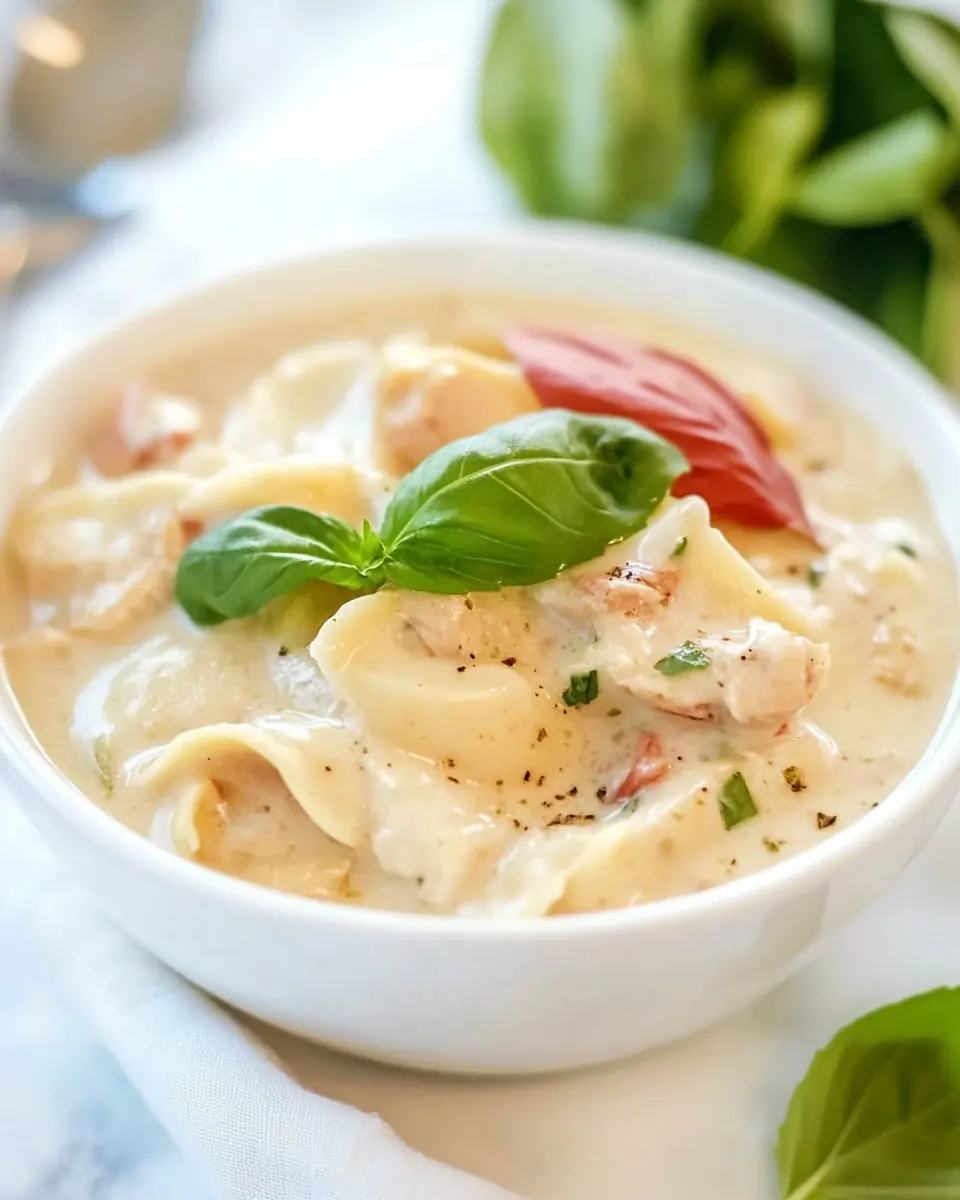
This section captures tricks and clarifications I use every time I make Chicken Alfredo Soup. These notes keep the texture perfect and help you recover from common missteps. Keep them nearby while cooking.
- Brown the chicken well: A caramelized exterior adds depth, so don’t crowd the skillet and give each side space to sear.
- Cook the roux properly: Let the flour toast for a few minutes in the butter to avoid a raw taste, stirring constantly to prevent burning.
- Control the heat: Maintain a gentle simmer when the tortellini cooks to keep them intact and prevent the soup from reducing too quickly.
- Adjust salt at the end: Since the Parmesan cheese and broth contain sodium, taste near the end to avoid over salting early on.
- Fresh basil at the finish: Add the basil right before serving to preserve its bright aroma and color.
Serving This Chicken Alfredo Soup
This soup is versatile, cozy, and appropriate for many occasions, from a casual family dinner to a comforting dish during colder months. Below are serving ideas, pairings, and storage notes to help you present it beautifully and keep leftovers at their best.
- Lunch or dinner: Serve the soup with a small green salad for a lighter meal or heartier bread for a more filling dinner.
- Occasions: This works wonderfully for winter evenings and nights when you crave something warm and comforting, or as a simple main at a relaxed dinner party.
- Side dishes: A crisp salad with a tangy vinaigrette or roasted vegetables contrasts the creamy broth nicely and adds freshness to the plate.
- Presentation: Ladle the soup into warmed bowls, top with shredded Parmesan cheese and torn basil leaves, and serve immediately for best texture and aroma.
- Storage: Cool quickly, then refrigerate in an airtight container for up to three days; the tortellini will absorb some liquid, so stir in a splash of chicken broth when reheating to refresh the consistency.
- Freezing: The dairy and pasta can change texture when frozen, so I recommend refrigerating rather than freezing, or freezing only the base broth and adding fresh tortellini when reheating.
FAQ
Conclusion
This Chicken Alfredo Soup stands out because it combines a silky, comforting broth with tender chicken and cheesy tortellini for a bowl that feels special yet is simple to prepare. Give it a try on a cool evening when you want a satisfying meal without a lot of fuss. I hope it becomes one of your dependable recipes, bringing warmth and a bit of indulgence to your weeknight rotations.
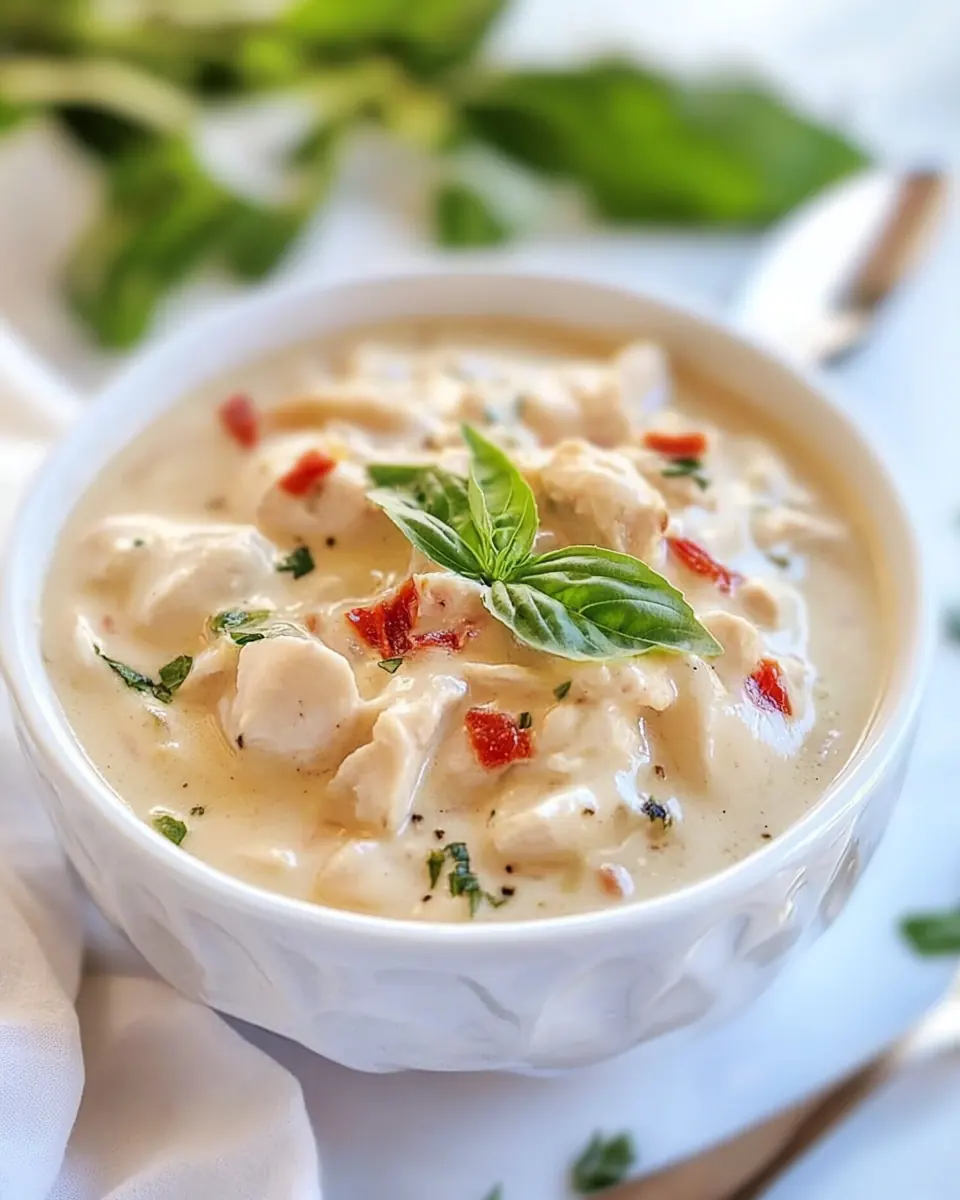
Chicken Alfredo Soup
Ingredients
Equipment
Method
- In a hot skillet add olive oil and cook chicken for 6 minutes on each side, or until cooked through. Season with salt and pepper and set aside to cool.: The scent of searing chicken should be savory and slightly caramelized, a deep golden crust forming on the surface. You will hear a satisfying sizzle when the meat hits the pan, signaling the Maillard reaction which creates complex flavor. Let the chicken rest so its juices redistribute, keeping it moist when diced. A common mistake is moving the chicken too soon, which prevents proper browning and causes sticking. If your pan steams rather than sizzles, raise the heat slightly to encourage browning.
- Melt butter in a large pot over medium-high heat. Sauté onion until translucent (about 2 min). Add garlic and cook until fragrant. Add flour and whisk 2-3 minutes, until golden. Add chicken broth and half/half. Let simmer 15 minutes, until thickened.: The butter should foam gently and smell rich, the onion becoming glossy and sweet as it softens. When you add the garlic , a warm, savory perfume will rise quickly; cook it only briefly to prevent bitterness. Whisking in the flour creates a roux that should turn a light golden hue and smell toasty, which guarantees the raw flour flavor is gone. Pour in the chicken broth slowly while whisking to avoid lumps, then stir in the Half and Half for a creamy body. As the mixture simmers, watch for a gentle bubbling and a thicker coat on the spoon, which tells you it is ready. If the soup becomes too thick, add a splash of broth to loosen it, and if it tastes floury, simmer a bit longer to cook it through.
- Add tortellini to pot and cook 10 minutes, until al dente. Add diced chicken and season with crushed red pepper flakes, salt, and pepper. Garnish with basil. Serve warm.: When the tortellini goes into the simmering liquid, you will see them bob and expand slightly as they hydrate. The broth will hug their surface, and the kitchen fills with a rich, cheesy aroma. Test one after about 8 minutes to check for al dente, a tender center with a slight chew. Overcooking makes them fall apart and turn gluey, so err on the firm side. Stir gently to prevent sticking, and keep the heat at a lively simmer rather than a rolling boil to protect their shape.
- Add diced chicken and season with crushed red pepper flakes, salt, and pepper: Folding the warm, diced chicken back into the pot warms it through without drying it out, and the residual juices mingle with the broth for added depth. The tiny pops of heat from the crushed red pepper flakes will lift the creamy base, creating a pleasant contrast. Taste carefully and adjust the salt and pepper , since the Parmesan cheese can also add salt. A frequent slip is over seasoning early; always do a final check once all components are combined.
- Garnish with basil. Serve warm: Fresh basil should be added at the last moment so its bright herbal aroma remains vivid. Tear or chiffonade the leaves and sprinkle over bowls; visually, the green contrasts beautifully with the pale broth and the pasta. Serve immediately while steam rises and the broth is luxuriously warm. If you wait too long, the pasta will continue to absorb liquid and the basil will wilt, so time this step close to plating.
Notes
- Brown the chicken well: A caramelized exterior adds depth, so don’t crowd the skillet and give each side space to sear.
- Cook the roux properly: Let the flour toast for a few minutes in the butter to avoid a raw taste, stirring constantly to prevent burning.
- Control the heat: Maintain a gentle simmer when the tortellini cooks to keep them intact and prevent the soup from reducing too quickly.
- Adjust salt at the end: Since the Parmesan cheese and broth contain sodium, taste near the end to avoid over salting early on.
- Fresh basil at the finish: Add the basil right before serving to preserve its bright aroma and color.