Lobster Mac and Cheese
Lobster Mac and Cheese has always been my indulgent answer to celebrations when I want something comforting that still feels a little fancy. The first time I made it for friends, I remember the warm, cheesy aroma that filled the kitchen and the hush that fell as everyone took their first bite. I had been nervous about balancing the delicate sweetness of lobster with a rich, creamy cheese sauce, but the result felt like a hug and a fireworks display at once. After that night, it became my go to for special weeknights when I wanted to impress without fuss.
Over the years I learned a few tricks that keep the texture perfect, and I love how Lobster Mac and Cheese travels across seasons, from cozy winter dinners to relaxed summer potlucks. I usually chop the lobster meat into bite sized pieces so every forkful has a sweet pop of seafood amid the velvety cheddar and stretchy mozzarella. I also pay close attention to the sauce thickness, because it is the backbone of the dish; too thin and the casserole turns soupy, too thick and it feels pasty. Finding that comforting balance is part science, part patience, and totally worth it.
Recipe Snapshot
50 mins
15 mins
35 mins
Medium
650 kcal
American
Gluten-Free, Low FODMAP
Dinner
9×13″ casserole dish, Pasta pot, Sauce pan, Measuring Cups and Spoons, Box grater, Non-stick spray
The Magic of This Lobster Mac and Cheese
Comfort with a Touch of Luxury
I adore how Lobster Mac and Cheese gives you that classic comfort food feel while elevating it with sweet, tender lobster. When I serve this, people immediately sense it is something special, but it still invites seconds and casual conversation.
Textural Contrast That Wows
The creamy, silky cheese sauce paired with a crisp, buttery topping creates a delightful contrast. I always aim for a crunchy breadcrumb layer so each spoonful has a little give before you reach the gooey center.
Highly Adaptable for Gatherings
This casserole scales easily for crowds, and I love that you can prepare most components ahead of time. I often assemble it early and bake just before guests arrive, which keeps the kitchen calm and the flavors fresh.
Reliable, Familiar Techniques
I rely on classic methods: a roux to thicken the sauce, gentle simmering to marry dairy and seasoning, and a final blast in the oven for browning. These simple steps consistently produce a rich, smooth sauce that clings to elbow macaroni.
Balanced Flavor Profile
With sharp cheddar, creamy mozzarella, and a touch of Parmesan, the sauce is layered and savory without overpowering the lobster. I love how the onion and garlic powders add depth without dominating the profile.
Lobster Mac and Cheese Ingredients
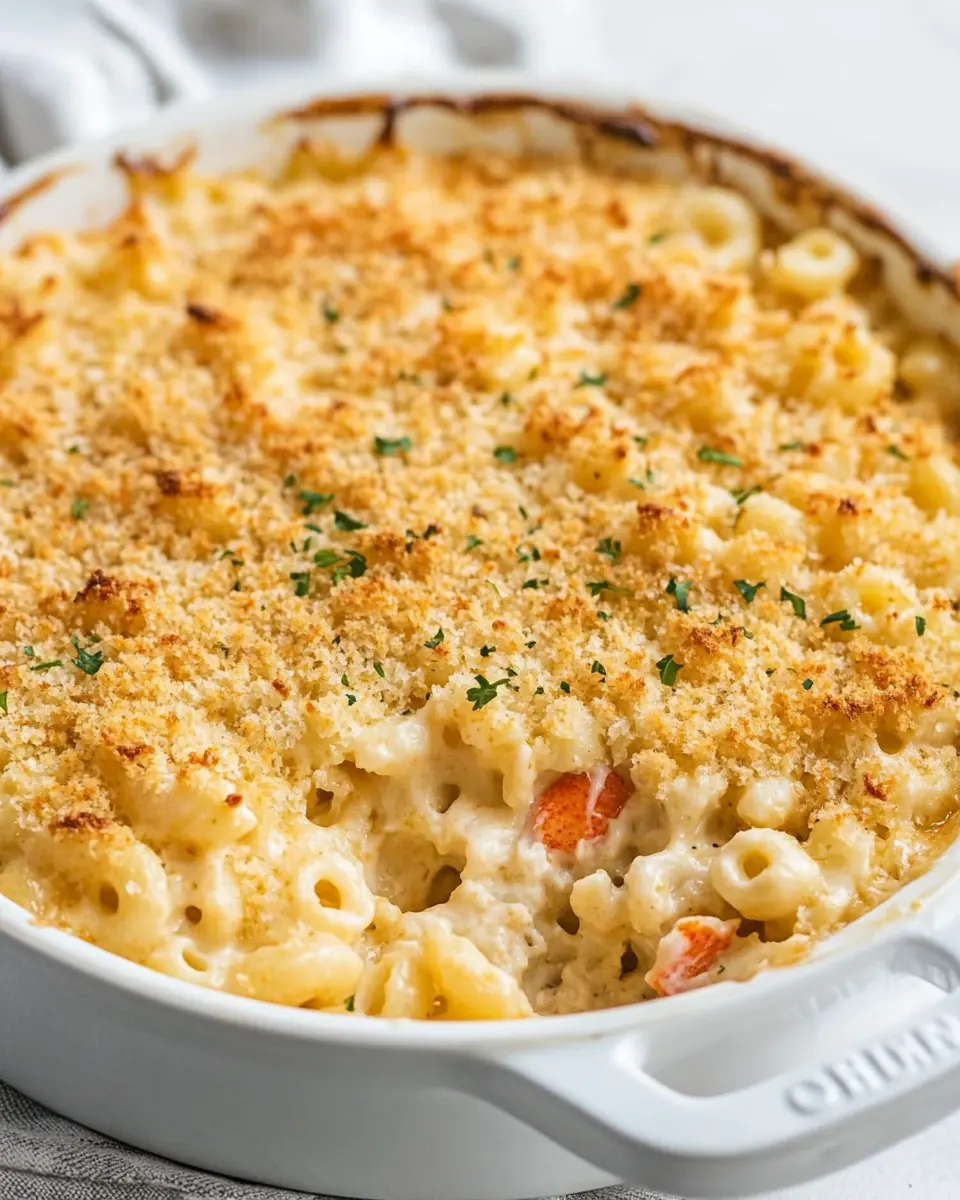
I believe the right ingredients should harmonize, each playing a clear role. Here the key players are the sweet lobster and the trio of cheeses, supported by a silky dairy base and a crunchy breadcrumb topping. The base ingredients create a creamy canvas, while the cheeses build flavor and the crumbs add texture.
- 16 ounces lobster meat cooked, chopped, about 2 cups: Cooked and chopped to provide rich lobster flavor and tender meat throughout the dish; adds luxurious seafood taste and protein that elevates classic mac and cheese into a special occasion entree. Retains delicate sweetness when gently folded in at the end to prevent overcooking and preserve texture.
- 16 ounces elbow macaroni: Boiled until al dente to form the pasta base that holds the creamy cheese sauce; provides chewy, comforting body and soaks up flavors. Choose elbow macaroni for its curves and hollow centers which trap sauce for every bite.
- 4 tablespoons salted butter: Melted to create a flavorful fat base for the roux and to enrich the sauce with a silky mouthfeel; contributes buttery depth that complements both cheese and lobster. Use salted butter to season the sauce from the start and help build a smooth emulsion.
- 1/3 cup all-purpose flour: Whisked into melted butter to make the roux, which thickens the sauce and gives it structure; provides a light, floury backbone for a stable, velvety cheese mixture. Cook briefly to remove raw flour taste without browning, ensuring a pale, smooth béchamel.
- 1 teaspoon onion powder: Sprinkled into the roux for concentrated onion flavor without adding moisture; offers savory aromatic notes that enhance the overall savory profile. Use powdered form for consistent dispersion and subtle depth in each spoonful.
- 1 teaspoon garlic powder: Added to the seasoning blend to give warm, savory garlic notes without fresh garlic texture; supports the cheesy sauce with an underlying aromatic element. Powdered garlic ensures even distribution and avoids burning in the roux.
- 1/2 teaspoon dry mustard powder: Stirred into the sauce for a sharp, tangy background that brightens cheeses and cuts richness; dry mustard powder helps emulsify and emphasize the cheese flavor. Use sparingly to avoid overpowering the delicate lobster.
- 1/2 teaspoon salt: Seasoned into the sauce and pasta water to enhance all flavors and balance the richness; provides essential baseline seasoning for the dish. Adjust to taste, remembering cheeses and butter also contribute salt.
- 1/4 teaspoon black pepper: Sprinkled into the sauce to introduce mild heat and a hint of sharpness; black pepper rounds out the seasoning and contrasts the creamy elements. Freshly ground pepper is preferred for the brightest flavor.
- 1/2 cup half and half: Poured in gradually to add creaminess and lighten the sauce while contributing a slightly richer fat content; half and half helps create a luxuriously smooth texture without being too heavy. Combine with milk for a balanced, velvety béchamel.
- 2 3/4 cups milk: Added with half and half to build the sauce body and provide a tender, milky base; milk thins the roux to proper consistency and allows cheeses to melt evenly. Use whole or low-fat milk depending on desired richness, stirring constantly to avoid scorching.
- 2 cups sharp cheddar cheese shredded: Shredded and melted into the béchamel to deliver sharp, tangy cheesiness and meltability; cheddar provides primary flavor and body for the mac and cheese. Opt for freshly shredded to ensure smooth melting and creamier texture.
- 1 1/4 cups mozzarella shredded: Layered into the sauce for gooey stretch and mild, milky flavor that enhances mouthfeel; mozzarella contributes melt and pull without overwhelming other cheeses. Use low-moisture, shredded mozzarella to avoid excess water in the sauce.
- 1/2 cup Parmesan cheese shredded: Sprinkled into the mixture to add nutty, salty complexity and umami; Parmesan deepens flavor and aids in achieving a savory, gratin-like finish. Finely shredded Parmesan melts into the sauce and complements both cheddar and lobster.
- 1 1/2 cup Italian style bread crumbs: Tossed with melted butter to create a crunchy topping that contrasts the creamy interior; Italian–style bread crumbs bring herbed flavor and crisp texture when baked. Use evenly for a golden, toasted crust that adds visual appeal and crunch.
- 4 tablespoons melted butter: Poured over breadcrumbs to bind and brown the topping, enriching crispness and buttery flavor; melted butter helps breadcrumbs toast evenly and adds richness. Ensure crumbs are well-coated to achieve uniform browning in the oven.
- 2 tablespoons Parmesan cheese grated: Sprinkled on top for an extra burst of salty, umami-savory finish and to amplify the breadcrumb topping; grated Parmesan crisps slightly when baked and intensifies flavor. Use finely grated form to distribute evenly without clumping.
- 1 teaspoon chopped fresh parsley or 1/2 teaspoon dried parsley: Chopped or measured dried to add a fresh herbaceous note and bright color that complements seafood and cheese; parsley provides a mild, slightly peppery finish and visual contrast. Use fresh chopped parsley if available for best aroma and appearance.
Step by Step Instructions for Lobster Mac and Cheese
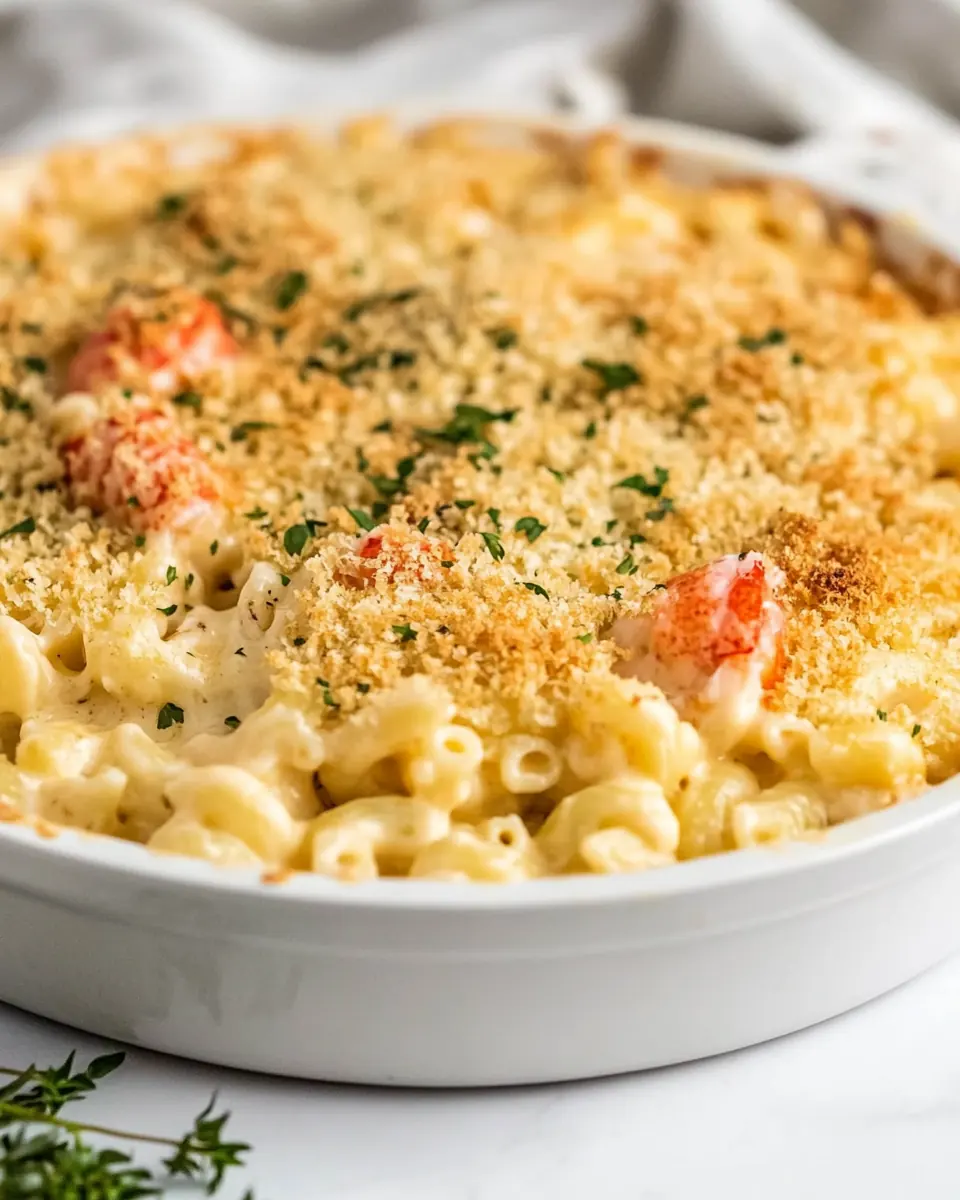
These instructions take you from initial prep to the bubbling, golden finished casserole. I’ll walk you through sensory cues and common pitfalls so the sauce turns out silky and the topping crisps perfectly. Keep tasting and pay attention to texture more than strict times.
- Preheat the oven to 400 degrees Fahrenheit. Grease a 9×13 inch pan and set aside.: You should feel the warmth rising from the oven as it comes to temperature, and the smell of clean heat will be faint but noticeable. Preheating ensures the casserole begins to bake immediately for even browning on the topping, so do not skip this step. A common mistake is putting the dish into a not fully heated oven, which leads to uneven baking and a soggy topping. Make sure the pan is evenly greased so the casserole releases easily after baking.
- Combine topping ingredients in a small bowl. Set aside.: As you mix the Italian style bread crumbs , melted butter, and grated Parmesan cheese , you will notice the crumbs take on a glossy, cohesive look. This binding helps them brown uniformly when baked. If the crumbs feel dry, a touch more melted butter will help, but avoid making them greasy. A mistake to avoid is prepping the topping too far in advance in a humid kitchen, which can make crumbs lose their crunch.
- Cook pasta to al dente according to package directions. Drain and run under cold water and set aside.: The pasta should be tender but still offer slight resistance when bitten, not mushy. Rinsing with cool water stops the cooking instantly and firms the texture, which prevents overcooking in the oven. Be careful not to over rinse if you want sauce adhesion; you want the pasta damp, not soaked. Overcooking the elbow macaroni is a frequent error that results in a gluey final texture.
- While pasta is cooking, melt butter over medium heat in a saucepan. Stir in onion powder, garlic powder, dried mustard, salt, and pepper. Add in flour and whisk to combine it.: As the butter melts and the spices bloom, you will smell a toasty aromatic note that hints at depth in the sauce. When you add the flour , whisk constantly to make a smooth roux; it should look pale and glossy, not lumpy or browned. If the roux darkens you will change the flavor profile, so keep heat moderate. A common pitfall is not whisking enough, which allows lumps to form when liquids are added.
- Slowly add half and half, then milk while whisking to combine. The mixture will be very thick at first but will smooth out as you continue adding liquid.: Add liquids in a steady stream and whisk vigorously, and you will see the roux transform into a silky, opaque mixture. Initially the texture may be thick and slightly pasty, but continue whisking as the volume increases. If you add cold milk too quickly you risk small lumps, so temper by adding gradually. One error is pouring all liquid at once, which often traps tiny flour bits that are hard to smooth out later.
- Once all of the liquid is added, bring the mixture to a boil. Reduce heat and simmer for 1 to 2 minutes or until thickened while whisking constantly.: When the sauce comes to a gentle boil you will see it thicken and coat the back of a spoon with a glossy film. Simmering briefly cooks the flour and concentrates flavor, yielding a smooth mouthfeel. Keep whisking to prevent scorching on the bottom, and watch for tiny bubbles as a cue to reduce heat. If you skip simmering, the sauce may taste pasty or raw.
- Remove from heat and stir in the cheeses, whisking until the sauce is smooth and melted.: Off the heat, add the shredded cheddar , mozzarella , and Parmesan so they melt gently into the warm sauce without becoming grainy. You will feel the sauce go from viscous to luxuriously smooth as the cheeses incorporate. Overheating during this stage can cause the cheese to separate and become oily, so patience is key. A common mistake is returning the pan to high heat, which ruins the texture.
- Combine the sauce and the pasta. Gently stir in half of the lobster meat.: As you fold the sauce into the elbow macaroni , notice how the noodles glisten and the sauce clings to each curve. Gently incorporating half the lobster meat ensures even distribution while preserving tender pieces. Be gentle so the meat stays in chunks; rough stirring can shred it too finely. Overmixing will also cause the pasta to break down and the dish to lose structure.
- Pour the mixture into the prepared pan and spread out evenly.: You should hear a soft, reassuring sound as the sauce settles into the pan and the surface smooths under the back of a spatula. Spreading it evenly promotes uniform baking and bubbling. Avoid pressing hard, which can compact the casserole and make the top dense. Uneven spreading leads to parts that overbrown or remain underbaked.
- Add remaining lobster meat on top and then sprinkle with the topping mixture.: Placing the reserved lobster on top showcases its texture after baking, and sprinkling the buttery crumb mixture creates that golden crust. The crumbs should glisten and sit loosely atop the sauce so heat circulates and crisps them. A mistake is pressing the crumbs into the surface, which prevents them from getting crisp and results in a steamed, soggy top.
- Bake at 400 degrees Fahrenheit in preheated oven for 18-20 minutes or until bubbly and topping is browned.: In the oven you will hear a soft bubbling and then see the edges gently simmer, with the crumbs turning golden and fragrant. The aroma of toasted Parmesan and butter will be a reliable signal the bake is nearly done. If the topping browns too fast, tent loosely with foil to avoid burning while the center finishes. A common misstep is removing the dish too early, leaving a lukewarm center that has not fully set.
Expert Tips about Lobster Mac and Cheese
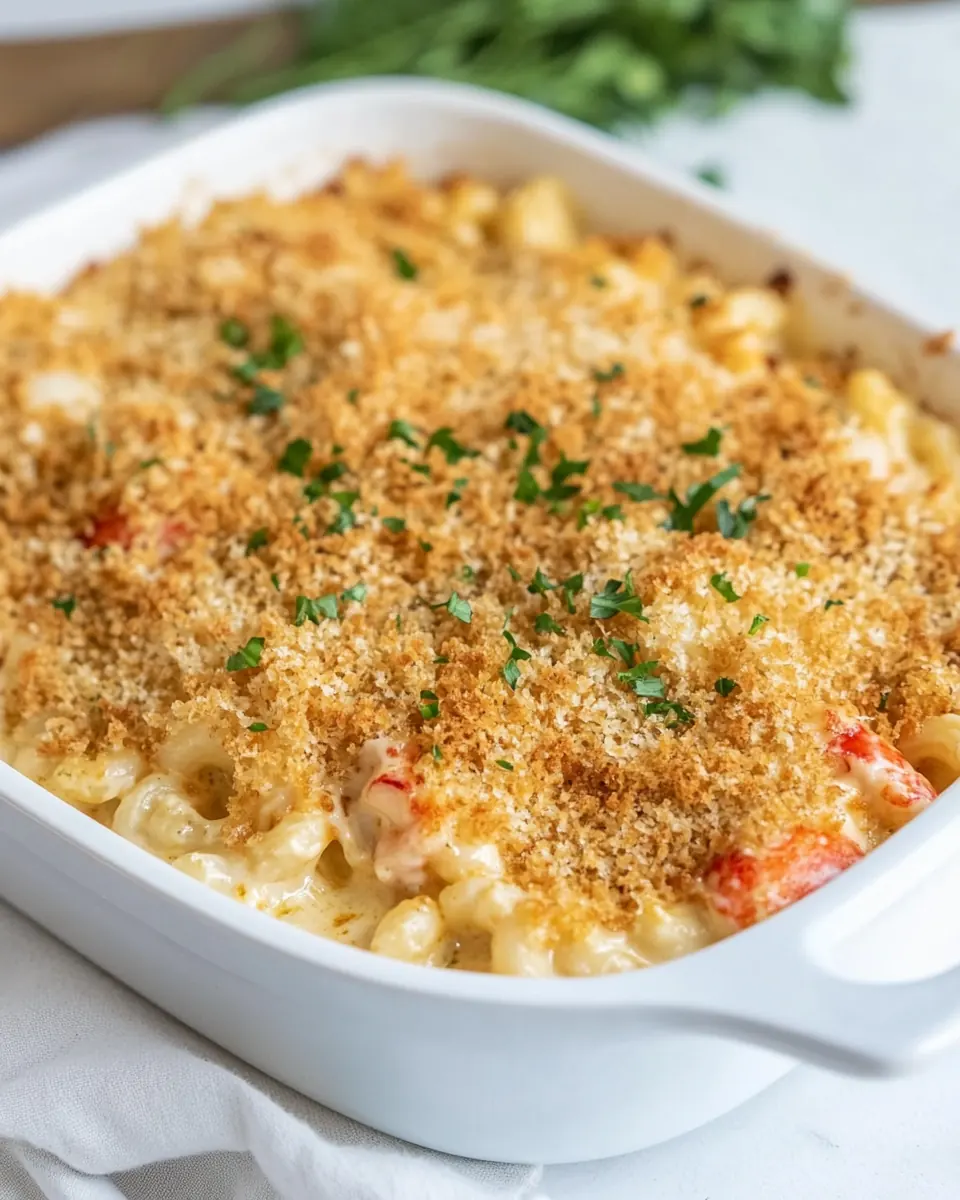
I like to share tips that save time and ensure the best texture and flavor for your casserole. These pointers come from repeated testing and the small adjustments that matter most. Use them as checkpoints while you cook so the final dish shines.
- Choose quality lobster: If possible, use cooked, fresh lobster meat or well handled frozen cooked lobster for the sweetest flavor. Avoid packed lobster in heavy brines, which can impart an off taste. Pat the meat dry before chopping to maintain sauce consistency.
- Grate your cheeses fresh: Pre shredded cheeses often contain anti caking agents that affect melt quality. Freshly shredding yields a smoother, silkier sauce and helps the cheddar and mozzarella blend seamlessly.
- Warm the milk: Bringing the milk close to warm before adding to the roux helps prevent lumps and speeds incorporation. Cold liquid shocked into a hot roux is a common cause of clogged textures, so tempering is a small extra step that pays off.
- Watch the heat when melting cheese: Remove the sauce from direct heat before adding cheeses to avoid graininess and separation. Gentle residual warmth melts the cheese slowly and preserves a glossy finish.
- Crisp the topping properly: Toss breadcrumbs with melted butter until evenly moistened so they brown uniformly. If crumbs are dry they may toast unevenly, and if too greasy they will clump and steam instead of crisping.
- Rest briefly after baking: Let the casserole sit for 5 to 10 minutes before serving so the sauce sets slightly and slices hold shape. Serving too hot can make portions runny and hot enough to scald mouths.
What to Serve Alongside Lobster Mac and Cheese
This dish is rich and celebratory, so I like pairing it with lighter sides and crisp textures to balance the meal. Think fresh, acidic, and crunchy accompaniments that refresh the palate between creamy bites. It suits a range of occasions from an intimate dinner to a festive gathering.
- Simple green salad with vinaigrette: A crisp salad dressed in a bright vinaigrette cuts through the richness and adds refreshing acidity.
- Steamed green vegetables: Lightly steamed asparagus or green beans provide a clean, vegetal counterpoint and a pop of color on the plate.
- Citrus wedges or a lemony side: A squeeze of lemon over the serving brightens the lobster and ties the flavors together without overpowering them.
- Lightly roasted cherry tomatoes: Their sweet acidity and roast char complement the creamy cheese sauce and offer a warm contrast.
- Occasion ideas: Serve for special weekend dinners, holiday winter gatherings, or casual celebrations where you want to impress effortlessly.
- Storage tips: Refrigerate leftovers in an airtight container for up to 4 days, and reheat gently in an oven at 350 degrees Fahrenheit until warmed through. Avoid freezing if possible, since the dairy texture changes on thawing.
- Seasonal pairings: In winter choose hearty greens and roasted roots, while in warmer months opt for crisp salads and citrus accents to keep the meal bright.
FAQ
Conclusion
Lobster Mac and Cheese stands out because it balances decadent creamy sauce, melty cheeses, and sweet tender lobster with a crisp, buttery topping. Give it a try the next time you want comfort food that feels celebratory, and don’t be afraid to make the dish your own with the techniques and tips in this guide. It’s forgiving, crowd pleasing, and a guaranteed way to make any meal feel a little more special.
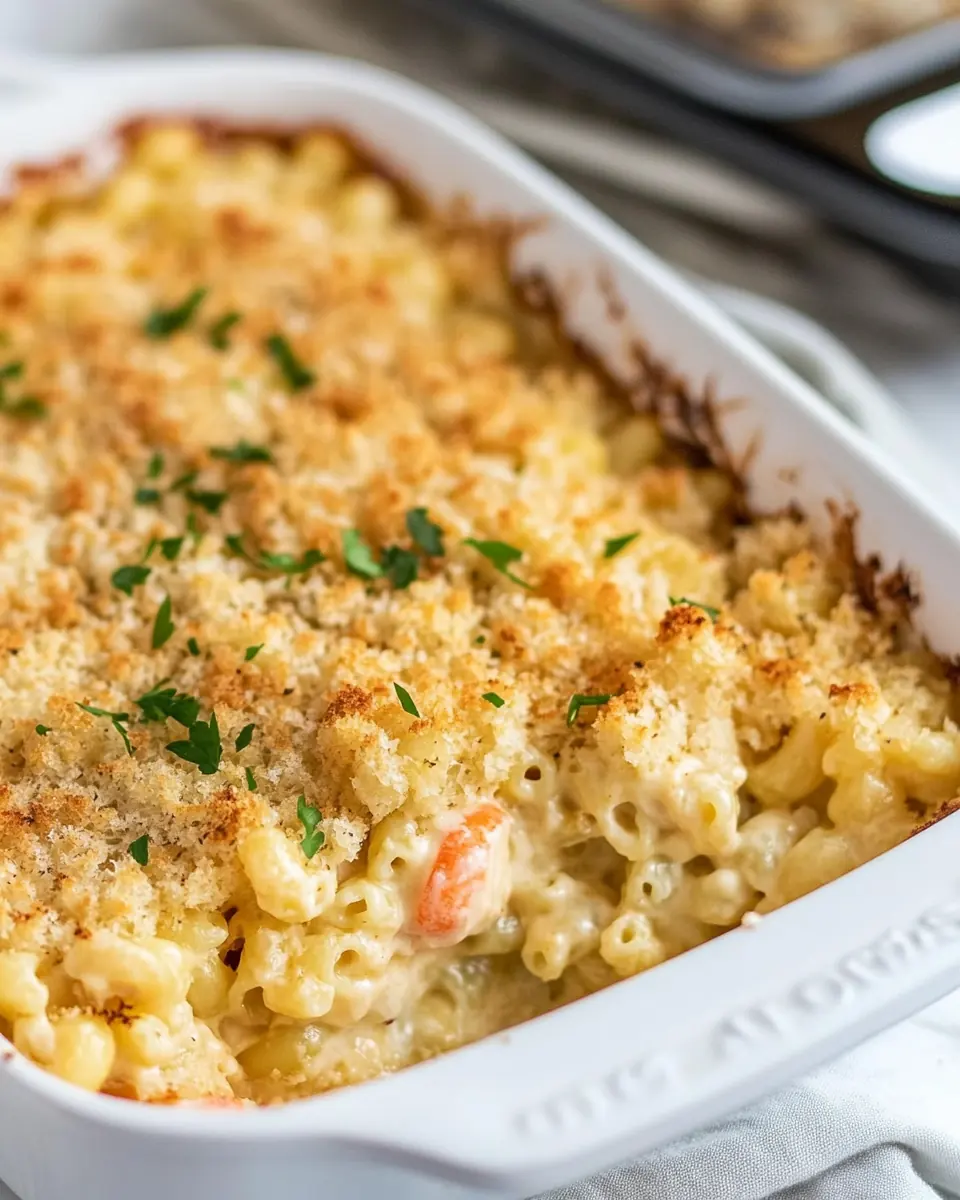
Lobster Mac and Cheese
Ingredients
Equipment
Method
- Preheat the oven to 400 degrees Fahrenheit. Grease a 9×13 inch pan and set aside.: You should feel the warmth rising from the oven as it comes to temperature, and the smell of clean heat will be faint but noticeable. Preheating ensures the casserole begins to bake immediately for even browning on the topping, so do not skip this step. A common mistake is putting the dish into a not fully heated oven, which leads to uneven baking and a soggy topping. Make sure the pan is evenly greased so the casserole releases easily after baking.
- Combine topping ingredients in a small bowl. Set aside.: As you mix the Italian style bread crumbs , melted butter, and grated Parmesan cheese , you will notice the crumbs take on a glossy, cohesive look. This binding helps them brown uniformly when baked. If the crumbs feel dry, a touch more melted butter will help, but avoid making them greasy. A mistake to avoid is prepping the topping too far in advance in a humid kitchen, which can make crumbs lose their crunch.
- Cook pasta to al dente according to package directions. Drain and run under cold water and set aside.: The pasta should be tender but still offer slight resistance when bitten, not mushy. Rinsing with cool water stops the cooking instantly and firms the texture, which prevents overcooking in the oven. Be careful not to over rinse if you want sauce adhesion; you want the pasta damp, not soaked. Overcooking the elbow macaroni is a frequent error that results in a gluey final texture.
- While pasta is cooking, melt butter over medium heat in a saucepan. Stir in onion powder, garlic powder, dried mustard, salt, and pepper. Add in flour and whisk to combine it.: As the butter melts and the spices bloom, you will smell a toasty aromatic note that hints at depth in the sauce. When you add the flour , whisk constantly to make a smooth roux; it should look pale and glossy, not lumpy or browned. If the roux darkens you will change the flavor profile, so keep heat moderate. A common pitfall is not whisking enough, which allows lumps to form when liquids are added.
- Slowly add half and half, then milk while whisking to combine. The mixture will be very thick at first but will smooth out as you continue adding liquid.: Add liquids in a steady stream and whisk vigorously, and you will see the roux transform into a silky, opaque mixture. Initially the texture may be thick and slightly pasty, but continue whisking as the volume increases. If you add cold milk too quickly you risk small lumps, so temper by adding gradually. One error is pouring all liquid at once, which often traps tiny flour bits that are hard to smooth out later.
- Once all of the liquid is added, bring the mixture to a boil. Reduce heat and simmer for 1 to 2 minutes or until thickened while whisking constantly.: When the sauce comes to a gentle boil you will see it thicken and coat the back of a spoon with a glossy film. Simmering briefly cooks the flour and concentrates flavor, yielding a smooth mouthfeel. Keep whisking to prevent scorching on the bottom, and watch for tiny bubbles as a cue to reduce heat. If you skip simmering, the sauce may taste pasty or raw.
- Remove from heat and stir in the cheeses, whisking until the sauce is smooth and melted.: Off the heat, add the shredded cheddar , mozzarella , and Parmesan so they melt gently into the warm sauce without becoming grainy. You will feel the sauce go from viscous to luxuriously smooth as the cheeses incorporate. Overheating during this stage can cause the cheese to separate and become oily, so patience is key. A common mistake is returning the pan to high heat, which ruins the texture.
- Combine the sauce and the pasta. Gently stir in half of the lobster meat.: As you fold the sauce into the elbow macaroni , notice how the noodles glisten and the sauce clings to each curve. Gently incorporating half the lobster meat ensures even distribution while preserving tender pieces. Be gentle so the meat stays in chunks; rough stirring can shred it too finely. Overmixing will also cause the pasta to break down and the dish to lose structure.
- Pour the mixture into the prepared pan and spread out evenly.: You should hear a soft, reassuring sound as the sauce settles into the pan and the surface smooths under the back of a spatula. Spreading it evenly promotes uniform baking and bubbling. Avoid pressing hard, which can compact the casserole and make the top dense. Uneven spreading leads to parts that overbrown or remain underbaked.
- Add remaining lobster meat on top and then sprinkle with the topping mixture.: Placing the reserved lobster on top showcases its texture after baking, and sprinkling the buttery crumb mixture creates that golden crust. The crumbs should glisten and sit loosely atop the sauce so heat circulates and crisps them. A mistake is pressing the crumbs into the surface, which prevents them from getting crisp and results in a steamed, soggy top.
- Bake at 400 degrees Fahrenheit in preheated oven for 18-20 minutes or until bubbly and topping is browned.: In the oven you will hear a soft bubbling and then see the edges gently simmer, with the crumbs turning golden and fragrant. The aroma of toasted Parmesan and butter will be a reliable signal the bake is nearly done. If the topping browns too fast, tent loosely with foil to avoid burning while the center finishes. A common misstep is removing the dish too early, leaving a lukewarm center that has not fully set.
Notes
- Choose quality lobster: If possible, use cooked, fresh lobster meat or well handled frozen cooked lobster for the sweetest flavor. Avoid packed lobster in heavy brines, which can impart an off taste. Pat the meat dry before chopping to maintain sauce consistency.
- Grate your cheeses fresh: Pre shredded cheeses often contain anti caking agents that affect melt quality. Freshly shredding yields a smoother, silkier sauce and helps the cheddar and mozzarella blend seamlessly.
- Warm the milk: Bringing the milk close to warm before adding to the roux helps prevent lumps and speeds incorporation. Cold liquid shocked into a hot roux is a common cause of clogged textures, so tempering is a small extra step that pays off.
- Watch the heat when melting cheese: Remove the sauce from direct heat before adding cheeses to avoid graininess and separation. Gentle residual warmth melts the cheese slowly and preserves a glossy finish.
- Crisp the topping properly: Toss breadcrumbs with melted butter until evenly moistened so they brown uniformly. If crumbs are dry they may toast unevenly, and if too greasy they will clump and steam instead of crisping.
- Rest briefly after baking: Let the casserole sit for 5 to 10 minutes before serving so the sauce sets slightly and slices hold shape. Serving too hot can make portions runny and hot enough to scald mouths.