Chicken Gnocchi Soup
Chicken Gnocchi Soup is the kind of bowl I reach for when the weather leans cold and conversation slows to a cozy murmur around the table.
I remember the first time I made this soup on a snowed in evening, the house smelling like garlic and browned sausage while the hum of the kettle kept rhythm in the background. I chopped, stirred, and tasted, and the result felt like a warm sweater for the stomach, something you want to linger over with a spoon. There is a comfort to the pillowy gnocchi swimming in a slightly thickened broth, punctuated by the savory bite of chicken and the umami from a parmesan cheese rind. Each spoonful brings a mix of textures and familiar flavors that make everyone at the table slow down and smile.
Over the years I tweaked tiny details, like using a slurry to create a gentle creaminess without thickeners that feel heavy, and adding a handful of fresh spinach right at the end so it wilts without losing its bright color. The sausage gives a rustic, seasoned note, and the sundried tomatoes add a hint of concentrated sweetness that balances the savory base. I love how this recipe scales easily, yet always feels intentionally cooked, not rushed. When guests arrive unexpectedly, this is the recipe I rely on because it feels indulgent but stays uncomplicated.
Recipe Snapshot
45 mins
10 mins
35 mins
Medium
350 kcal
Italian
Gluten-Free, Low FODMAP
Soups
Dutch Oven, Large pot
The Magic of This Chicken Gnocchi Soup
Comforting Texture
I adore how Chicken Gnocchi Soup combines soft, pillowy gnocchi with a slightly thickened broth. The contrast between tender chicken and the dumpling like pieces makes every spoonful memorable. You get a luscious mouthfeel that whispers cozy, but never becomes heavy.
Layered Savory Flavor
This recipe builds flavor in stages. Browning the sausage releases caramelized aromatics, sautéing the shallot and garlic deepens the base, and a parmesan cheese rind simmered in the broth adds a subtle, salty depth. I find that these little steps create a soup that tastes remarkably complex for the time it takes.
Simple Techniques, Big Rewards
I’m a fan of techniques that reward patience. Making a slurry with flour and half and half thickens the soup gently, giving it a velvety body without turning it gluey. Stirring slowly as you add it prevents lumps and keeps the texture smooth, which is a small effort that pays off massively.
Flexible and Family Friendly
One reason I keep this in my dinner rotation is versatility. You can swap gnocchi types, or skip the parmesan rind if you do not have one, and the soup still sings. It’s forgiving enough for weeknight cooks, but satisfying enough for a weekend meal when company drops by.
Fresh Finish
The final handful of fresh spinach and grated parmesan cheese brighten the bowl and make it feel finished. I always add herbs at the end, the aroma lifts the entire pot and makes everyone at the table take notice.
Chicken Gnocchi Soup Shopping List
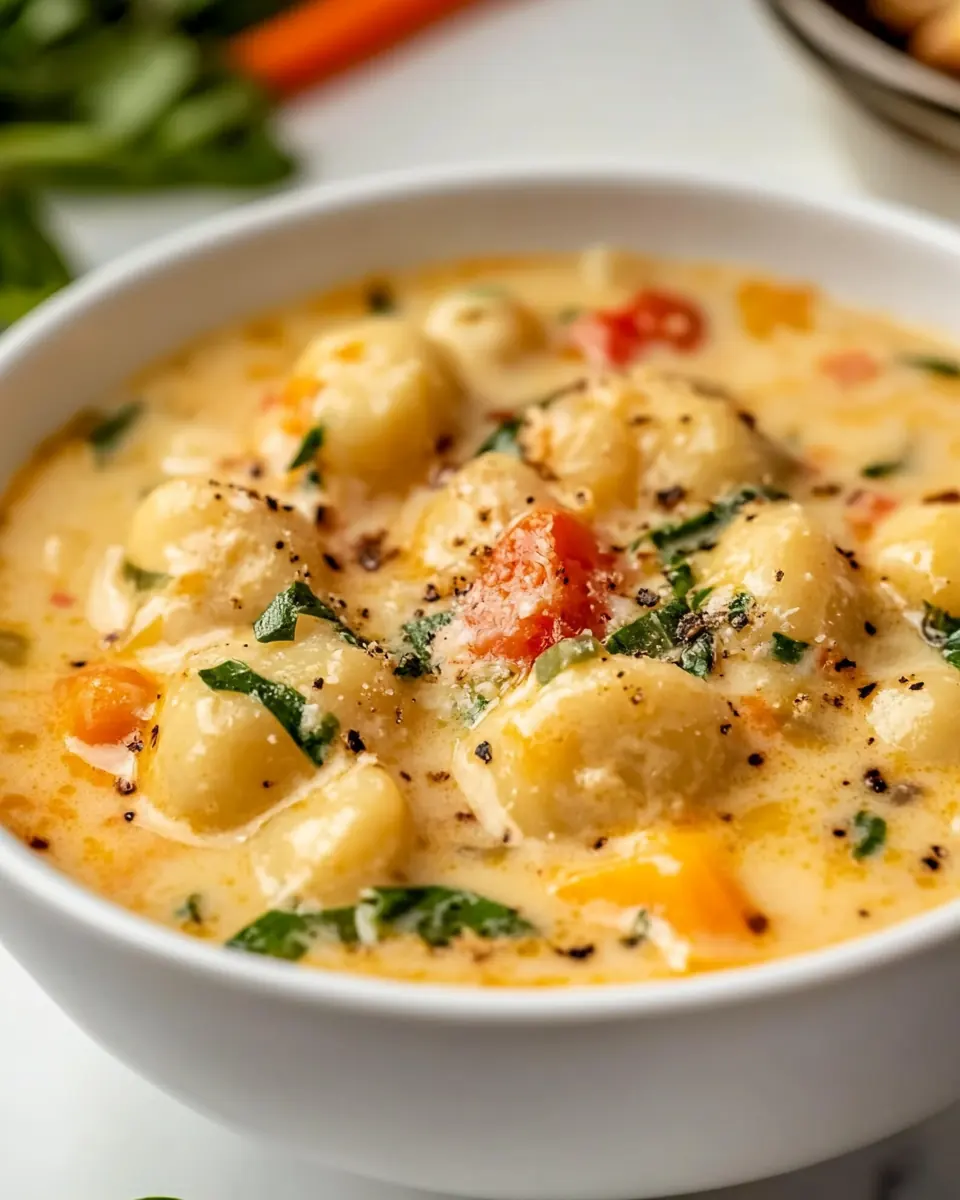
These ingredients are chosen to build a bowl that balances creamy texture and savory depth. The key players are the chicken for body, the sausage for seasoning, the parmesan cheese rind for umami, and the gnocchi for soft, comforting bites. Together they create layers of flavor and satisfying contrast.
- 3 tablespoons all purpose flour, or gluten-free flour mix: Thickening: helps create a smooth, velvety base for the soup by cooking with fat to form a roux that thickens liquids and adds body and slight toasty flavor; can be substituted with a gluten–free flour mix without changing technique.
- 1/4 cup half and half: Enriching: adds creaminess and a gentle dairy richness to the broth, tempering acidity and creating a silky mouthfeel when stirred in near the end of cooking.
- 1 cup cold water, divided: Hydrating: provides liquid to dissolve the flour and adjust soup consistency; using cold water helps prevent clumping when making a slurry or tempering hot liquids.
- 7 ounces sweet Italian chicken sausage, removed from casings: Flavoring protein: brings savory, spiced taste and texture when cooked and crumbled into the soup; removing casings ensures even distribution and a tender bite.
- Olive oil spray: Cooking spray: prevents sticking and reduces added oil when browning sausage or sautéing aromatics, allowing for a lightly greased pan with minimal calories.
- 5 cups reduced sodium chicken broth: Soup base: supplies the primary savory liquid and seasoning backbone for the recipe, contributing depth and a mild saltiness while allowing other ingredients to shine.
- 1 large shallot, diced: Aromatic: imparts a sweet, mild onion flavor and delicate texture when diced and sautéed, enhancing overall savory complexity without overpowering the soup.
- 6 garlic cloves, minced: Aromatic seasoning: delivers pungent, savory depth and a warm, garlicky bite when minced and briefly cooked to release oils and fragrance into the soup.
- 2 teaspoons tomato paste: Concentrated umami: boosts savory complexity and color with a small, intense hit of tomato flavor; stirring it into aromatics helps mellow its acidity.
- 1 pound boneless skinless chicken breast: Lean protein: provides substantial, tender meat when simmered in the broth; shredding or dicing cooked breast integrates protein and soaks up surrounding flavors.
- 1 parmesan cheese rind: Umami enhancer: infuses the broth with savory, nutty notes as it simmers; adding a rind imparts deep Parmesan flavor without extra cheese shavings.
- 1/3 cups undried tomatoes in oil, drained and chopped: Briny richness: contributes concentrated tomato flavor and a silky texture from the oil, offering bursts of savory-sweet tang when chopped and added sparingly.
- 1/2 teaspoon dried Italian seasoning: Herbal seasoning: lends Mediterranean herb notes and gentle aromatic background, balancing tomato and cheese flavors while requiring no fresh herbs.
- 16 ounce package gnocchi, or gluten-free gnocchi: Starch: absorbs flavors and provides pillowy texture, making the soup heartier and more satisfying when cooked through; a gluten–free gnocchi can be used if needed.
- 4 cups fresh baby spinach leaves, rough chopped: Greens: adds freshness, color, and a slight earthy bite; rough chopping helps the leaves wilt evenly into the hot soup for added nutrition and texture.
- 1/4 cup parmesan cheese, grated: Finishing cheese: rounds out flavors with salty, nutty Parmesan brightness when grated over the finished soup, enhancing richness and mouthfeel.
- 2 tbsp fresh basil, for garnish (optional): Fresh herb garnish: offers a bright, peppery-sweet basil aroma and visual appeal when sprinkled on top, elevating the soup with a final fresh note.
Putting Together Chicken Gnocchi Soup
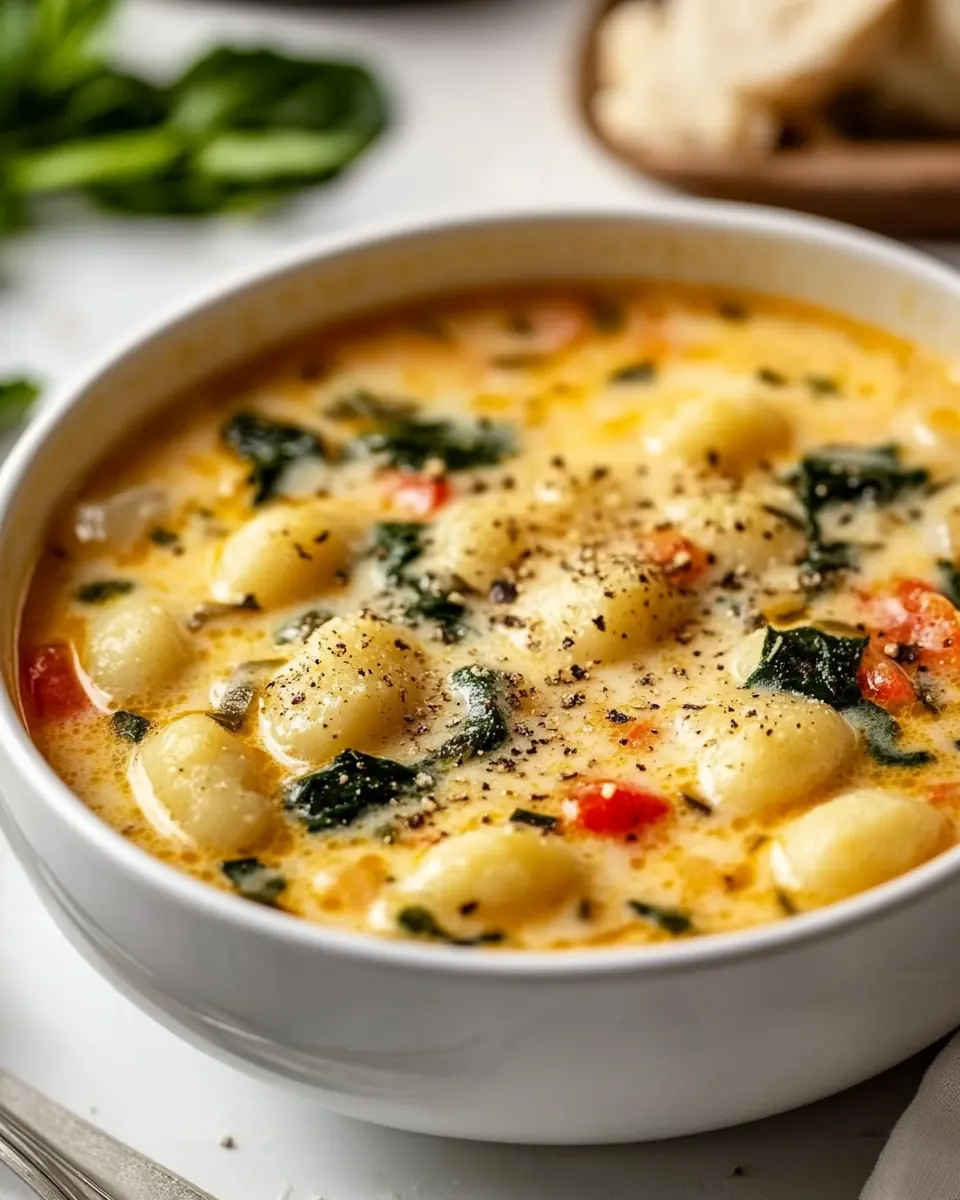
Bringing this soup together is a satisfying process where small, attentive steps create big flavor. I like to move deliberately, tasting and watching for visual cues like browning and when the gnocchi float. Follow the sequence and you will be rewarded with a bowl that feels both homey and well considered.
- Create a slurry by combining 1/2 cup of the cold water, half and half and flour in a small bowl and whisk until well blended. Set aside.: The first sensory cue you notice is the slurry becoming glossy and smooth, with no visible flour granules, which signals it is ready to thicken the soup evenly. This matters because adding a lumpy slurry to a hot pot will produce an inconsistent texture, so whisk until silky and slightly viscous. If the slurry seems too stiff, add a teaspoon of cold water to loosen it, and if you see any specks, press the mixture through a fine mesh for assurance. A common mistake is using warm liquid here, which causes flour to clump, so always start cold and keep it aside until the right moment.
- Heat a large pot or Dutch oven over medium heat and spray with oil then add the sausage. Cook the sausage, breaking up with a wooden spoon as it cooks, until no longer pink and slightly browned.: Listen for a steady sizzle as the sausage hits the hot surface, and watch the bits develop a golden brown, which adds caramelized savory notes to the soup. Browning is essential because it creates flavor compounds that enrich the broth. Break the sausage into small pieces so more surface area can brown. If the sausage steams instead of browns, the pan is overcrowded or not hot enough; work in batches or raise the heat slightly to get good color.
- Add the shallots and garlic and cook until soft, 3 minutes. Add the tomato paste and chicken breast.: As the shallot softens, it will become translucent and release a gentle sweetness, and the garlic will aromatize the pot with heady, savory notes. Stir in the tomato paste and let it toast for a bit, its scent turning deeper and slightly caramelized, which amplifies umami. Nestle the chicken into the aromatics so it starts absorbing those flavors. Don’t let the garlic brown aggressively, because that introduces bitterness; soften it briefly before adding the paste and chicken .
- Pour the remaining 1/2 cup water and chicken broth, parmesan rind, sundried tomatoes, Italian seasoning and bring to a boil. Partially cover and simmer on low until vegetables are soft and the chicken shreds easily, about 25 minutes.: The pot will transition from noisy boiling to a gentle simmer where savory steam rises and the aromas meld into a unified scent. The parmesan cheese rind slowly releases deep, salty undertones into the broth, and the sundried tomatoes impart concentrated sweetness. Simmering gently allows connective tissues in the chicken to loosen so it shreds tenderly. If the boil is too aggressive, you risk reducing the liquid too quickly and concentrating salt, so maintain a patient simmer.
- Remove the chicken and set aside, shred with 2 forks.: When you lift the chicken out, it should yield under the forks with minimal resistance and steam will rise carrying rich, savory perfume. Shredding gives you bite sized pieces that distribute evenly in the bowl. If the meat resists shredding, it needs a few more minutes simmering; avoid shredding tough or undercooked meat as it will dry out in the soup.
- Return the chicken to the pot then slowly stir in slurry, stirring well as you add and bring it back to a boil.: As you add the slurry in a thin stream, the liquid will gradually thicken and take on a glossy sheen, coating the back of a spoon, which is the correct consistency. This matters because a sudden thickening can make clumps, so pour slowly while whisking or stirring to integrate smoothly. If you notice small lumps forming, remove a ladle of hot liquid, whisk in the slurry off heat, then return it to the pot to rescue the texture.
- Add the gnocchi, spinach, parmesan cheese and basil; cook according to package directions for the gnocchi, or until they start to float to the top and soup thickens. Adjust salt and pepper to taste, discard parmesan cheese rind and serve.: The gnocchi will begin to bob and float, a visual cue they are nearly done, and the soup will smell richer as the parmesan cheese melts into it. The spinach will wilt instantly, turning a vivid green and adding a fresh, slightly sweet taste. Taste and season carefully, because the sausage and parmesan cheese already contribute saltiness. Avoid overcooking the gnocchi, which makes them mushy, and be sure to remove the rind before serving to prevent an unpleasant chew.
Variations to Try
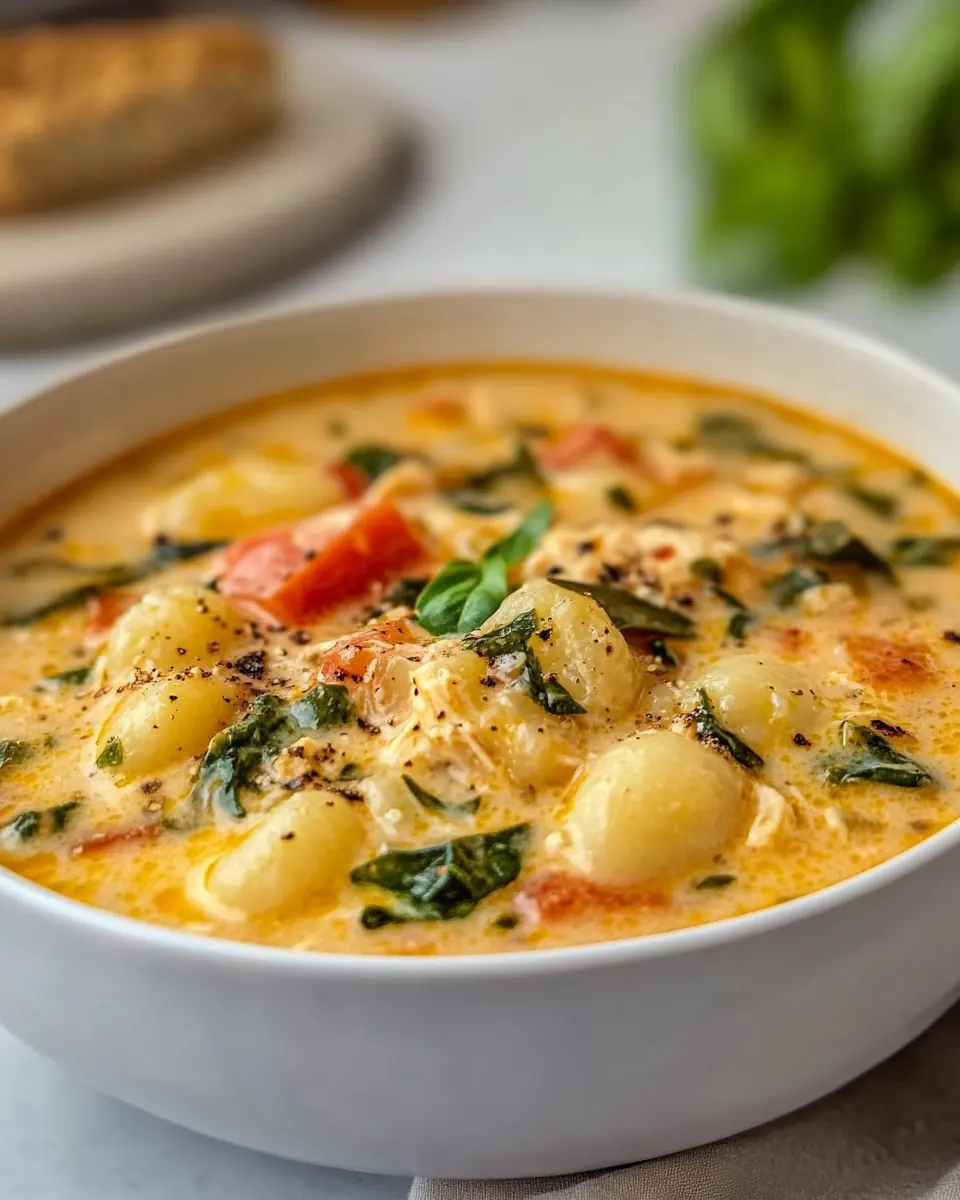
I often change small elements depending on what I have on hand, and each variation keeps the spirit of Chicken Gnocchi Soup intact. Below are helpful ideas to adapt the recipe for different tastes and occasions.
- Swap the sausage for a milder or spicier chicken sausage depending on how much heat you want, this alters the seasoning profile and keeps preparation identical.
- Use gluten free gnocchi if you need a gluten free bowl, they cook the same way but read the package for timing to avoid overcooking.
- Skip the parmesan rind if unavailable, but compensate with a touch more grated parmesan cheese at the end to boost savory notes.
- Add extra greens such as more baby spinach or hearty greens, adding them at the end maintains texture and color.
- Reduce sodium by using low sodium or homemade broth, and taste before adding any additional salt because the sausage and parmesan cheese add saltiness.
Accompaniments for Chicken Gnocchi Soup
This soup pairs well with simple sides and versatile serving styles. Below are ways I like to present it for weeknight dinners, casual gatherings, and colder seasonal meals.
- Crusty bread is an ideal side, perfect for dipping and sopping up the silky broth, especially when you want a rustic, hands on meal.
- Simple green salad with a light vinaigrette balances the richness of the soup and adds a crisp contrast for a balanced dinner.
- Family style bowl serving lets everyone ladle their preferred portion, great for cozy nights where sharing is part of the comfort.
- Storage tip store leftover soup in airtight containers in the refrigerator for up to three days, reheat gently to avoid breaking down the gnocchi too much.
- Seasonal pairing serve in winter for a warming main, or early spring nights when you want something hearty but bright with fresh basil garnish.
FAQ
Conclusion
This Chicken Gnocchi Soup shines because it balances pillowy gnocchi, tender shredded chicken, and a savory, slightly creamy broth that feels like a hug in a bowl. I encourage you to give it a try on a chilly evening, because the layered flavors and simple techniques reward patience and make for a deeply satisfying meal. When you serve it, notice how small steps like browning and a parmesan rind transform the pot, and enjoy the warmth it brings to your table.
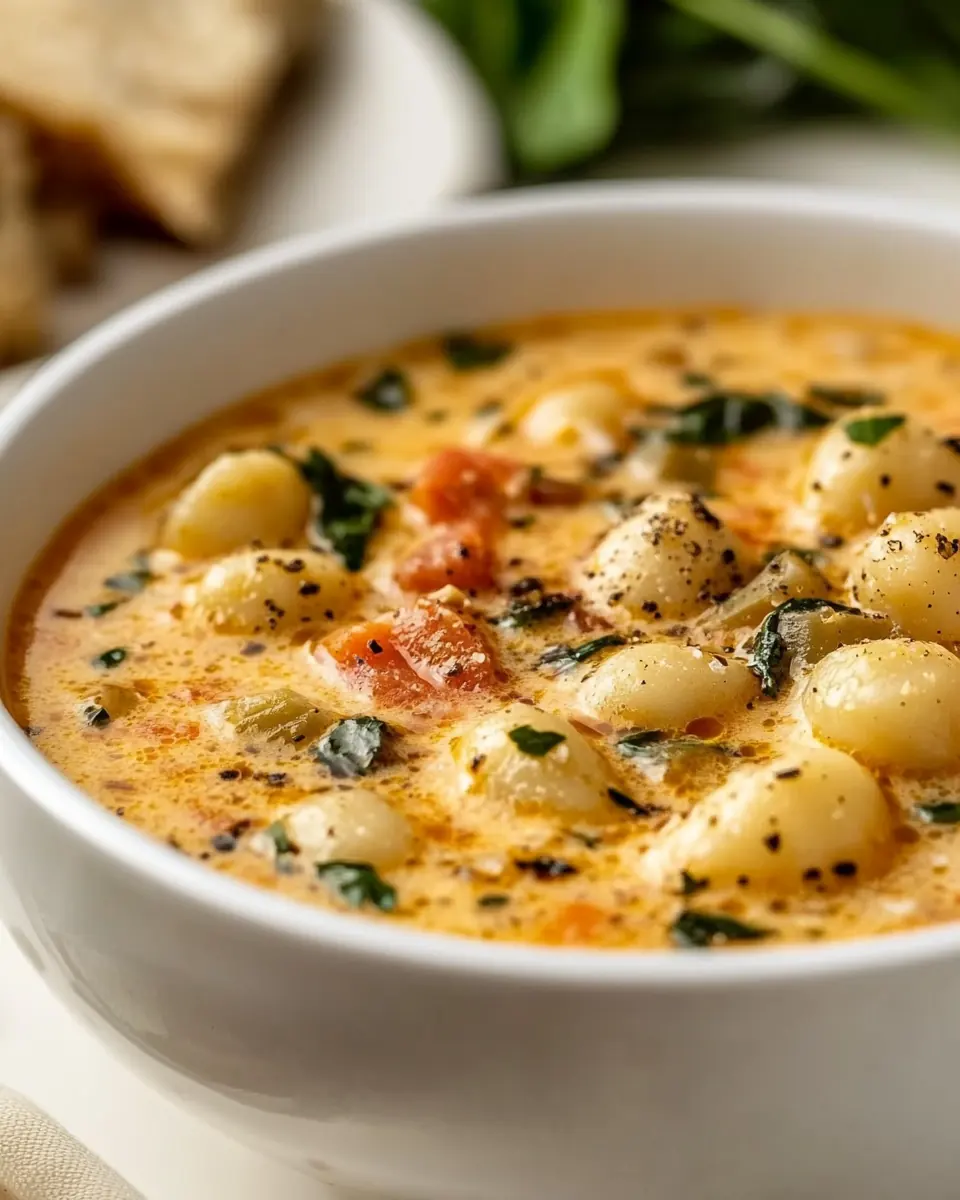
Chicken Gnocchi Soup
Ingredients
Equipment
Method
- Create a slurry by combining 1/2 cup of the cold water, half and half and flour in a small bowl and whisk until well blended. Set aside.: The first sensory cue you notice is the slurry becoming glossy and smooth, with no visible flour granules, which signals it is ready to thicken the soup evenly. This matters because adding a lumpy slurry to a hot pot will produce an inconsistent texture, so whisk until silky and slightly viscous. If the slurry seems too stiff, add a teaspoon of cold water to loosen it, and if you see any specks, press the mixture through a fine mesh for assurance. A common mistake is using warm liquid here, which causes flour to clump, so always start cold and keep it aside until the right moment.
- Heat a large pot or Dutch oven over medium heat and spray with oil then add the sausage. Cook the sausage, breaking up with a wooden spoon as it cooks, until no longer pink and slightly browned.: Listen for a steady sizzle as the sausage hits the hot surface, and watch the bits develop a golden brown, which adds caramelized savory notes to the soup. Browning is essential because it creates flavor compounds that enrich the broth. Break the sausage into small pieces so more surface area can brown. If the sausage steams instead of browns, the pan is overcrowded or not hot enough; work in batches or raise the heat slightly to get good color.
- Add the shallots and garlic and cook until soft, 3 minutes. Add the tomato paste and chicken breast.: As the shallot softens, it will become translucent and release a gentle sweetness, and the garlic will aromatize the pot with heady, savory notes. Stir in the tomato paste and let it toast for a bit, its scent turning deeper and slightly caramelized, which amplifies umami. Nestle the chicken into the aromatics so it starts absorbing those flavors. Don’t let the garlic brown aggressively, because that introduces bitterness; soften it briefly before adding the paste and chicken .
- Pour the remaining 1/2 cup water and chicken broth, parmesan rind, sundried tomatoes, Italian seasoning and bring to a boil. Partially cover and simmer on low until vegetables are soft and the chicken shreds easily, about 25 minutes.: The pot will transition from noisy boiling to a gentle simmer where savory steam rises and the aromas meld into a unified scent. The parmesan cheese rind slowly releases deep, salty undertones into the broth, and the sundried tomatoes impart concentrated sweetness. Simmering gently allows connective tissues in the chicken to loosen so it shreds tenderly. If the boil is too aggressive, you risk reducing the liquid too quickly and concentrating salt, so maintain a patient simmer.
- Remove the chicken and set aside, shred with 2 forks.: When you lift the chicken out, it should yield under the forks with minimal resistance and steam will rise carrying rich, savory perfume. Shredding gives you bite sized pieces that distribute evenly in the bowl. If the meat resists shredding, it needs a few more minutes simmering; avoid shredding tough or undercooked meat as it will dry out in the soup.
- Return the chicken to the pot then slowly stir in slurry, stirring well as you add and bring it back to a boil.: As you add the slurry in a thin stream, the liquid will gradually thicken and take on a glossy sheen, coating the back of a spoon, which is the correct consistency. This matters because a sudden thickening can make clumps, so pour slowly while whisking or stirring to integrate smoothly. If you notice small lumps forming, remove a ladle of hot liquid, whisk in the slurry off heat, then return it to the pot to rescue the texture.
- Add the gnocchi, spinach, parmesan cheese and basil; cook according to package directions for the gnocchi, or until they start to float to the top and soup thickens. Adjust salt and pepper to taste, discard parmesan cheese rind and serve.: The gnocchi will begin to bob and float, a visual cue they are nearly done, and the soup will smell richer as the parmesan cheese melts into it. The spinach will wilt instantly, turning a vivid green and adding a fresh, slightly sweet taste. Taste and season carefully, because the sausage and parmesan cheese already contribute saltiness. Avoid overcooking the gnocchi, which makes them mushy, and be sure to remove the rind before serving to prevent an unpleasant chew.
Notes
- Swap the sausage for a milder or spicier chicken sausage depending on how much heat you want, this alters the seasoning profile and keeps preparation identical.
- Use gluten free gnocchi if you need a gluten free bowl, they cook the same way but read the package for timing to avoid overcooking.
- Skip the parmesan rind if unavailable, but compensate with a touch more grated parmesan cheese at the end to boost savory notes.
- Add extra greens such as more baby spinach or hearty greens, adding them at the end maintains texture and color.
- Reduce sodium by using low sodium or homemade broth, and taste before adding any additional salt because the sausage and parmesan cheese add saltiness.