Chocolate Coconut Easter Cake
Chocolate Coconut Easter Cake arrived at my kitchen table on a bright spring morning, dusted with little candy eggs and already half gone before I had a chance to take a proper photograph. I remember carrying the warm pan in, feeling the weight of the batter settle into a familiar, comforting thickness, and thinking how chocolate and coconut together always make celebrations feel a little more indulgent. I tend to bake when the house smells like something worth celebrating, and this cake does exactly that.
Baking this cake has become my go to for family gatherings, because it is forgiving and festive. The crumb is tender but sturdy enough to hold a rich, tangy cream cheese frosting, and the toasted coconut adds a toasty, nutty counterpoint to the deep chocolate notes. I often find myself slicing a sliver early, just to confirm that the texture is right, and then a second piece disappears before I know it.
Recipe Snapshot
1 hr 20 mins
30 mins
50 mins
Medium
350 kcal
American
Gluten-Free, Low FODMAP
Desserts
9 x 13 inch baking pan, Nonstick skillet, Mixing bowls, Whisk, Hand mixer or stand mixer
Why This Chocolate Coconut Easter Cake Works
It is reliably festive
I love how Chocolate Coconut Easter Cake looks on a table, it announces the occasion without being fussy. The colorful cadbury mini eggs on top give it an instant celebratory feel, and the cake itself can be made ahead, which is invaluable when you have guests.
Textural contrast that sings
The combination of tender crumb and creamy frosting with toasted coconut creates layers of texture. When I bite into a forkful I get soft chocolate sponge, smooth cream cheese, and crisped, golden coconut that gives each mouthful a pleasant chew.
Simple techniques, big payoff
I appreciate recipes that let you shine without complicated steps. The mixing method is straightforward, and the use of hot coffee or water intensifies the chocolate without extra work. I always tell friends that a reliable cake is as much about timing and temperature as it is about ingredients.
Flexible and forgiving
This cake is very forgiving if you need to swap yogurt for sour cream, or if you need to keep it chilled because of the cream cheese frosting. I often make it a day ahead, and it always tastes better after the flavors have settled overnight.
Perfect for spring gatherings
With its bright candy topping and toasted coconut, the cake feels like a spring ritual. I serve it at brunches, casual dinners, or as the finale to a holiday meal, and it always gets compliments for being both nostalgic and fresh.
Shopping List for Chocolate Coconut Easter Cake
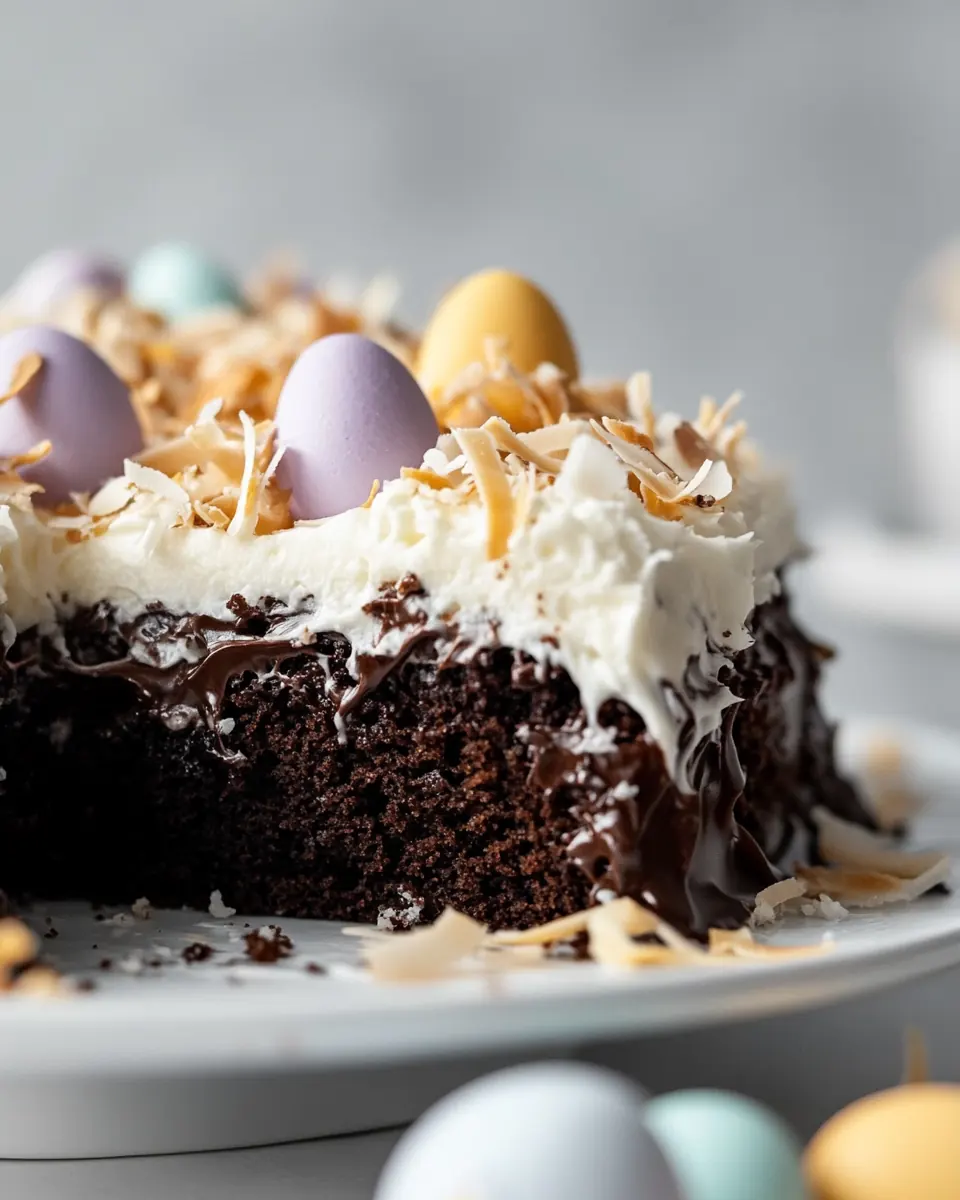
These ingredients form a balanced, celebratory cake where each element plays a clear role. The dry staples build structure, dairy and oil contribute moisture and tenderness, and the flavor players like cocoa powder and vanilla extract give personality. The toasted coconut and candy topping finish the cake with texture and visual charm.
- 3 cups all-purpose flour: Provide structure and bulk to the cake batter, forming the crumb and supporting rise when combined with leaveners; sift or whisk to remove lumps and ensure even mixing for a tender texture.
- 2 1/2 cups granulated sugar: Add sweetness and tenderize the crumb while aiding browning; cream with wet ingredients to incorporate air and help create a moist, flavorful cake base.
- 1/2 cup cocoa powder: Contribute deep chocolate flavor and color while absorbing liquids to maintain a rich, tender crumb; sift before mixing to prevent clumps and ensure even distribution.
- 1 1/2 teaspoons baking powder: Help leaven the cake by releasing carbon dioxide when heated, contributing to a light texture; measure accurately and combine thoroughly with dry ingredients.
- 2 teaspoons baking soda: React with acidic components to create lift and a softer crumb, balancing the baking powder for proper rise; incorporate into the dry mix for even activation.
- 1 teaspoon salt: Enhance overall flavor balance by moderating sweetness and strengthening gluten slightly; dissolve into liquids to ensure even seasoning throughout the batter.
- 1/2 cup plain greek yogurt (or sour cream): Provide moisture, richness, and slight tang that reacts with baking soda for lift; whisk or briefly beat to ensure smooth integration without curdling.
- 1 cup buttermilk: Add acidity and moisture that react with baking soda to help leaven the cake and contribute a tender, slightly tangy crumb; ensure room temperature for even mixing.
- 3/4 cups vegetable oil: Contribute fat for tenderness, moisture, and a softer mouthfeel while helping suspend cocoa and dry ingredients; gently combine to create an emulsified batter.
- 2 large eggs: Provide structure, richness, and emulsification to the cake while aiding in aeration when beaten; bring to room temperature to blend evenly into the batter.
- 1 tablespoon vanilla extract: Impart sweet aromatic flavor and enhance other flavors in the cake; add with wet ingredients to disperse evenly and round out the profile.
- 1 1/4 cups hot coffee or water: Thin the batter and intensify chocolate notes if using coffee, or provide moisture if using hot water; pour gradually to avoid over-thinning the batter.
- 2 cups shredded, sweetened coconut: Add chewy texture and a strong coconut flavor that complements the chocolate; fold in toward the end to maintain shredded integrity and distribute evenly.
- 8 ounces cream cheese, softened: Supply creamy tang and stability to the frosting while contributing smoothness and moisture; beat until fully softened for a lump-free, spreadable consistency.
- 1/2 cup unsalted butter, softened: Provide a rich, buttery base for the frosting, contributing to smooth texture and flavor; ensure softened to room temperature for proper creaming with cream cheese.
- 2 cups powdered sugar: Sweeten and thicken the frosting to a spreadable consistency while providing stability; sift to remove lumps and add gradually to reach desired sweetness and texture.
- 2 teaspoons vanilla extract: Enhance vanilla flavor in the frosting and unify other ingredients with a warm, familiar aroma; add while creaming to evenly infuse the frosting.
- 1/4 teaspoon coconut extract (optional): Introduce a concentrated coconut aroma for emphasis if desired, providing a bright, tropical note; use sparingly to avoid overpowering the frosting's balance.
- 1 bag cadbury mini eggs, for topping: Provide colorful, crunchy decoration and a festive finishing touch, adding sweetness and visual appeal to the cake; scatter on top just before serving to maintain texture.
Making Chocolate Coconut Easter Cake
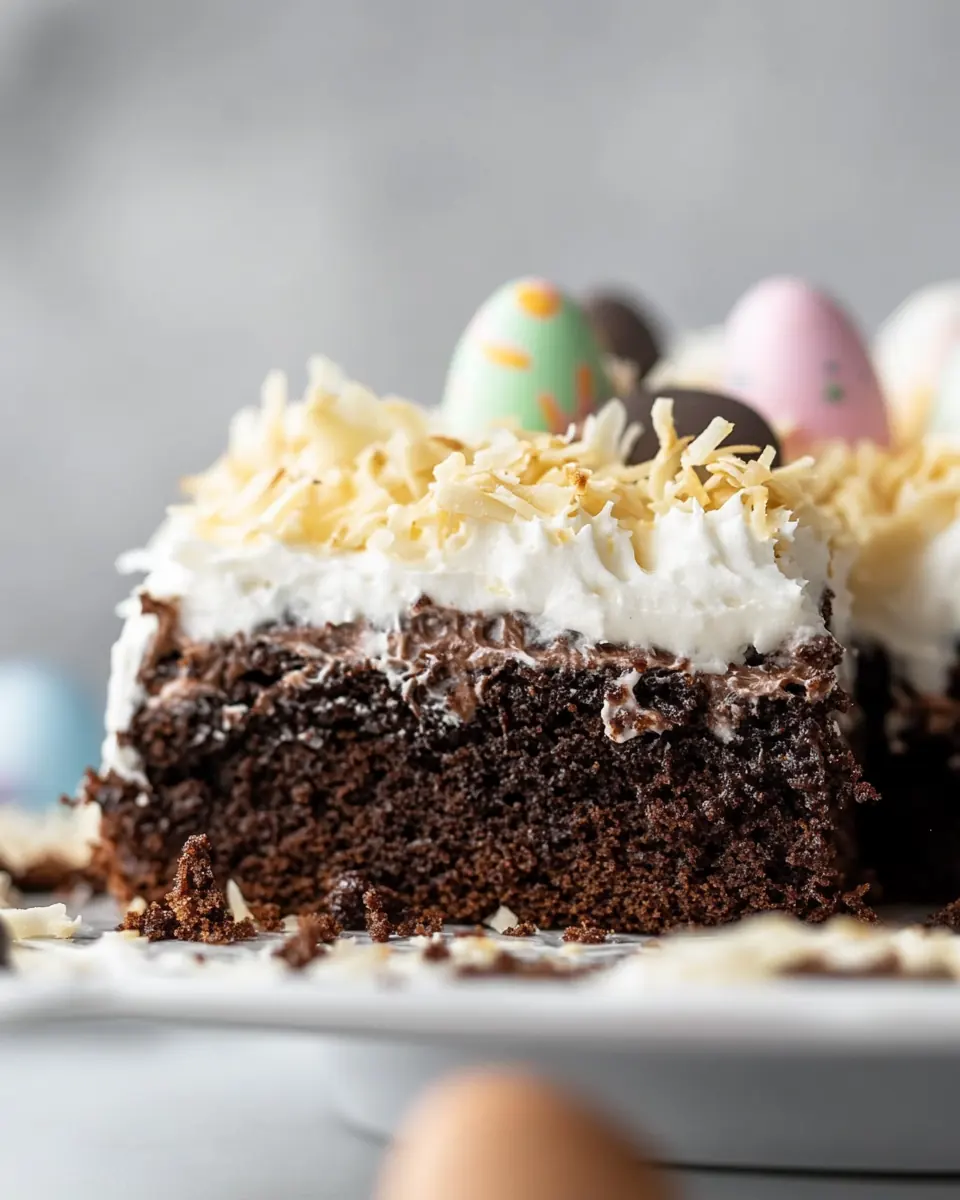
This is the part where the batter comes together and the cake transforms into something you will be proud to bring to a table. The steps are straightforward, but attention to texture, temperature, and timing makes all the difference. Keep an eye on the oven and trust your senses as the cake bakes and the coconut toasts.
- Preheat the oven to 350 degrees F. Spray a 9 x 13 inch baking pan with nonstick baking spray.: The kitchen will smell faintly warm and expectant as the oven comes to temperature, an important cue that your baking environment is ready. Preheating ensures the cake rises evenly, because immediate heat activates the leavening. If you skip preheating the cake can bake unevenly, with a dense center and overbaked edges. Common troubleshooting here is not confirming the oven reads correctly, so I keep an oven thermometer nearby to verify the actual temperature. Also coat the pan well so the cake releases cleanly, otherwise you risk tearing the crumb when you remove it.
- In a bowl, whisk together the flour, sugar, cocoa, baking powder, soda and salt.: As you whisk, the dry mixture will smell like cocoa and warm sugar, and you will notice it become evenly colored and airy, which helps with distribution of the leavening. Whisking also breaks up any lumps in the cocoa powder , preventing streaks of dry powder in the batter. The why here is that even dry ingredients prevent pockets of concentrated leavening or salt in the baked cake. A mistake to avoid is under mixing the dry ingredients, which can leave dense pockets, or over mixing once liquid is added, which toughens the crumb.
- In a large bowl, whisk together the yogurt, buttermilk and vegetable oil. Whisk in each egg 1 at a time. Whisk in the vanilla extract.: The wet bowl will look silky, and you will feel the mixture thicken slightly as eggs are incorporated. Adding eggs one at a time helps them emulsify with the oil and dairy, producing a smooth, cohesive batter. This technique matters because proper emulsification prevents separation and gives a uniform crumb. A common error is adding all the eggs at once, which can cause curdling or uneven distribution. If curdling occurs, whisk vigorously and the batter usually comes back together, but avoid heavy handed stirring which can develop gluten.
- Add half of the dry ingredients to the wet ingredients and whisk until combined. Whisk in the hot coffee. Whisk in the remaining dry ingredients.: When you add the dry mix, the batter will thicken, and after the hot coffee it will loosen and smell intensely chocolatey as the heat blooms the cocoa. Adding dry ingredients in stages avoids over mixing and ensures a tender texture. The hot liquid also helps dissolve sugar and intensify cocoa flavor, contributing to a deep, even color. A frequent mistake is mixing too vigorously at this stage, which creates a dense, tough cake. Stop mixing as soon as the streaks vanish to keep the crumb light.
- Pour the batter in the 9 x 13 dish. Bake for 50 to 55 minutes, or until set and a tester inserted in the center comes out clean. Let the cake cool completely before frosting.: As the cake bakes you will notice the top turn from glossy to matte and edges pull slightly away from the pan. The oven fills with a rich chocolate aroma, and you may hear a soft settling sound as steam escapes. That tester reading is the most reliable indicator of doneness, more so than color alone. Letting the cake cool completely is essential because warm cake will make the frosting slide. One common issue is opening the oven too often, which can cause uneven rising, so resist frequent peeks. If the cake browns too quickly while still unset, tent it with foil and continue baking.
- Place the coconut in a nonstick skillet over medium-low heat. Cook, stirring often, until the coconut is toasted and golden brown. Set aside.: Toasting the coconut produces a nutty scent and a golden color, and you will see small crisp edges form on each shred. The toasty aroma is an excellent sign the sugars in the coconut are caramelizing, creating depth that contrasts the sweet frosting. Stir continually because coconut can go from perfect to burnt in moments, and remove it from heat slightly before you think it is done since carryover will finish the job. A typical mistake is leaving it unattended, which leads to bitter burnt flakes.
- Beat the cream cheese and butter together until creamy. Beat in the sugar until combined. Beat in the vanilla extract and coconut extract. Frost the cooled cake! Sprinkle on the toasted and press so it gently adheres to the frosting. Top the cake with the cadbury mini eggs.: The frosting should be glossy and smooth, with a tangy aroma from the cream cheese . When you beat cream cheese and butter , the mixture will lighten in color and texture, and slowly incorporating powdered sugar yields a silky spreadable frosting. The coconut adds a crunchy, toasted note, and pressing it lightly ensures it stays put. If your frosting is too soft, chill it briefly; if too stiff, beat in a touch of cream. A common slip is trying to frost a warm cake, which melts the frosting and results in a messy surface, so always confirm the cake is fully cool.
- I like to keep the cake in the fridge because of the cream cheese frosting, plus we love cold cake.: Chilling the assembled cake firms the frosting and helps flavors meld, offering a clean slice and a refreshing texture contrast between the cool frosting and the tender crumb. Keep it covered to avoid absorbing fridge odors, and remove it a little before serving if you prefer a less firm frosting. A common issue is storing it at room temperature for too long, which risks spoilage because of the cream cheese , so refrigeration is the safer choice for more than a couple of hours.
How to Switch It Up
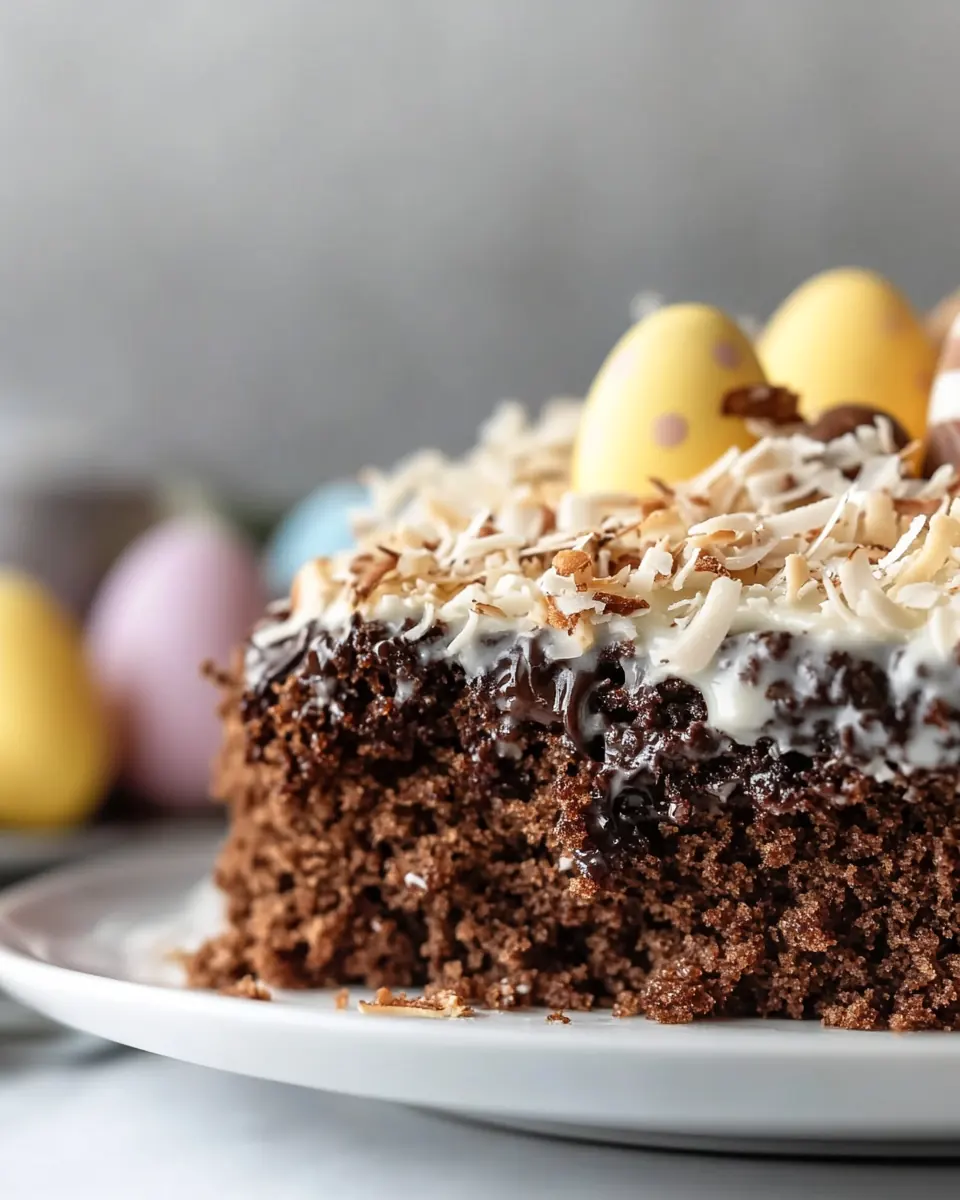
If you want to vary the cake without changing its spirit, small adjustments can yield big differences. Below are creative but reliable ways to shift texture, intensity, and presentation while keeping the core recipe intact.
- Boost the chocolate intensity by using brewed strong hot coffee instead of water to bloom the cocoa powder, which deepens the chocolate flavor without adding a coffee taste.
- Make it less sweet by slightly reducing the granulated sugar by up to one quarter cup, then taste the batter if you like before baking to ensure balance.
- Enhance coconut flavor by adding the optional small amount of coconut extract to the frosting very sparingly, since a little goes a long way.
- Keep it extra moist by brushing the cooled cake with a simple syrup made from equal parts sugar and water, which adds moisture and a subtle sheen.
- Decorative variation swap the cadbury mini eggs for chopped toasted nuts or a scattering of shredded toasted coconut if you prefer a monochrome presentation.
Side Dish Ideas for Chocolate Coconut Easter Cake
This cake stands well on its own, but pairing it thoughtfully can elevate a gathering. Consider accompaniments that contrast texture and temperature, and think about occasions and storage so the dessert fits smoothly into your menu.
- Serve with coffee or tea, especially lightly sweetened drinks that balance the richness of the cake and complement the chocolate notes.
- Offer fresh berries on the side for a bright, tart contrast to the sweet frosting and toasted coconut.
- Bring it to brunch alongside simple scrambled eggs and fruit for a festive weekend spread where dessert doubles as celebratory bakery style treat.
- For holiday dinners, pair slices with a creamy, unsweetened whipped topping spooned lightly to offset sweetness and add an airy contrast.
- Storage tips: Keep the assembled cake covered in the fridge for up to three days, and let it sit at room temperature for 15 to 30 minutes before serving for best texture.
- Seasonal pairings include spring citrus garnishes and a light pot of mint tea to refresh the palate after a rich slice.
FAQ
Conclusion
This cake stands out because it balances rich chocolate, tangy cream cheese frosting, and toasty coconut for a festive, textural experience. I hope you feel encouraged to try it at your next spring gathering or holiday table, because it is forgiving, celebratory, and reliably loved by a crowd. Give it a go, enjoy the process of toasting coconut and frosting a cooled cake, and savor the way each bite pairs creamy and crunchy elements together in a way that feels both nostalgic and fresh.
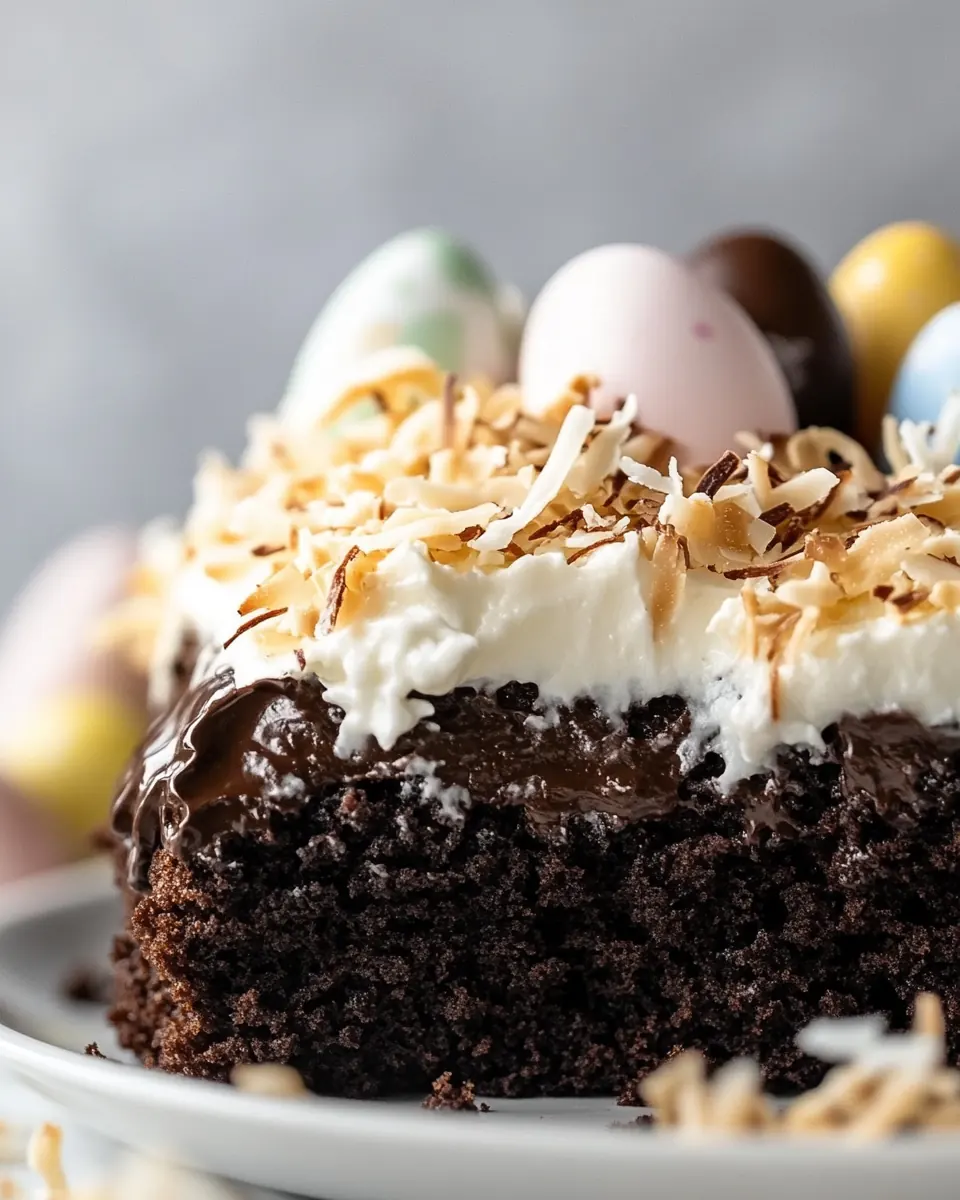
Chocolate Coconut Easter Cake
Ingredients
Equipment
Method
- Preheat the oven to 350 degrees F. Spray a 9 x 13 inch baking pan with nonstick baking spray.: The kitchen will smell faintly warm and expectant as the oven comes to temperature, an important cue that your baking environment is ready. Preheating ensures the cake rises evenly, because immediate heat activates the leavening. If you skip preheating the cake can bake unevenly, with a dense center and overbaked edges. Common troubleshooting here is not confirming the oven reads correctly, so I keep an oven thermometer nearby to verify the actual temperature. Also coat the pan well so the cake releases cleanly, otherwise you risk tearing the crumb when you remove it.
- In a bowl, whisk together the flour, sugar, cocoa, baking powder, soda and salt.: As you whisk, the dry mixture will smell like cocoa and warm sugar, and you will notice it become evenly colored and airy, which helps with distribution of the leavening. Whisking also breaks up any lumps in the cocoa powder , preventing streaks of dry powder in the batter. The why here is that even dry ingredients prevent pockets of concentrated leavening or salt in the baked cake. A mistake to avoid is under mixing the dry ingredients, which can leave dense pockets, or over mixing once liquid is added, which toughens the crumb.
- In a large bowl, whisk together the yogurt, buttermilk and vegetable oil. Whisk in each egg 1 at a time. Whisk in the vanilla extract.: The wet bowl will look silky, and you will feel the mixture thicken slightly as eggs are incorporated. Adding eggs one at a time helps them emulsify with the oil and dairy, producing a smooth, cohesive batter. This technique matters because proper emulsification prevents separation and gives a uniform crumb. A common error is adding all the eggs at once, which can cause curdling or uneven distribution. If curdling occurs, whisk vigorously and the batter usually comes back together, but avoid heavy handed stirring which can develop gluten.
- Add half of the dry ingredients to the wet ingredients and whisk until combined. Whisk in the hot coffee. Whisk in the remaining dry ingredients.: When you add the dry mix, the batter will thicken, and after the hot coffee it will loosen and smell intensely chocolatey as the heat blooms the cocoa. Adding dry ingredients in stages avoids over mixing and ensures a tender texture. The hot liquid also helps dissolve sugar and intensify cocoa flavor, contributing to a deep, even color. A frequent mistake is mixing too vigorously at this stage, which creates a dense, tough cake. Stop mixing as soon as the streaks vanish to keep the crumb light.
- Pour the batter in the 9 x 13 dish. Bake for 50 to 55 minutes, or until set and a tester inserted in the center comes out clean. Let the cake cool completely before frosting.: As the cake bakes you will notice the top turn from glossy to matte and edges pull slightly away from the pan. The oven fills with a rich chocolate aroma, and you may hear a soft settling sound as steam escapes. That tester reading is the most reliable indicator of doneness, more so than color alone. Letting the cake cool completely is essential because warm cake will make the frosting slide. One common issue is opening the oven too often, which can cause uneven rising, so resist frequent peeks. If the cake browns too quickly while still unset, tent it with foil and continue baking.
- Place the coconut in a nonstick skillet over medium-low heat. Cook, stirring often, until the coconut is toasted and golden brown. Set aside.: Toasting the coconut produces a nutty scent and a golden color, and you will see small crisp edges form on each shred. The toasty aroma is an excellent sign the sugars in the coconut are caramelizing, creating depth that contrasts the sweet frosting. Stir continually because coconut can go from perfect to burnt in moments, and remove it from heat slightly before you think it is done since carryover will finish the job. A typical mistake is leaving it unattended, which leads to bitter burnt flakes.
- Beat the cream cheese and butter together until creamy. Beat in the sugar until combined. Beat in the vanilla extract and coconut extract. Frost the cooled cake! Sprinkle on the toasted and press so it gently adheres to the frosting. Top the cake with the cadbury mini eggs.: The frosting should be glossy and smooth, with a tangy aroma from the cream cheese . When you beat cream cheese and butter , the mixture will lighten in color and texture, and slowly incorporating powdered sugar yields a silky spreadable frosting. The coconut adds a crunchy, toasted note, and pressing it lightly ensures it stays put. If your frosting is too soft, chill it briefly; if too stiff, beat in a touch of cream. A common slip is trying to frost a warm cake, which melts the frosting and results in a messy surface, so always confirm the cake is fully cool.
- I like to keep the cake in the fridge because of the cream cheese frosting, plus we love cold cake.: Chilling the assembled cake firms the frosting and helps flavors meld, offering a clean slice and a refreshing texture contrast between the cool frosting and the tender crumb. Keep it covered to avoid absorbing fridge odors, and remove it a little before serving if you prefer a less firm frosting. A common issue is storing it at room temperature for too long, which risks spoilage because of the cream cheese , so refrigeration is the safer choice for more than a couple of hours.
Notes
- Boost the chocolate intensity by using brewed strong hot coffee instead of water to bloom the cocoa powder, which deepens the chocolate flavor without adding a coffee taste.
- Make it less sweet by slightly reducing the granulated sugar by up to one quarter cup, then taste the batter if you like before baking to ensure balance.
- Enhance coconut flavor by adding the optional small amount of coconut extract to the frosting very sparingly, since a little goes a long way.
- Keep it extra moist by brushing the cooled cake with a simple syrup made from equal parts sugar and water, which adds moisture and a subtle sheen.
- Decorative variation swap the cadbury mini eggs for chopped toasted nuts or a scattering of shredded toasted coconut if you prefer a monochrome presentation.