Preheat the oven to 350 degrees F. Spray a 9 x 13 inch baking pan with nonstick baking spray.: The kitchen will smell faintly warm and expectant as the oven comes to temperature, an important cue that your baking environment is ready. Preheating ensures the cake rises evenly, because immediate heat activates the leavening. If you skip preheating the cake can bake unevenly, with a dense center and overbaked edges. Common troubleshooting here is not confirming the oven reads correctly, so I keep an oven thermometer nearby to verify the actual temperature. Also coat the pan well so the cake releases cleanly, otherwise you risk tearing the crumb when you remove it.
In a bowl, whisk together the flour, sugar, cocoa, baking powder, soda and salt.: As you whisk, the dry mixture will smell like cocoa and warm sugar, and you will notice it become evenly colored and airy, which helps with distribution of the leavening. Whisking also breaks up any lumps in the cocoa powder , preventing streaks of dry powder in the batter. The why here is that even dry ingredients prevent pockets of concentrated leavening or salt in the baked cake. A mistake to avoid is under mixing the dry ingredients, which can leave dense pockets, or over mixing once liquid is added, which toughens the crumb.
In a large bowl, whisk together the yogurt, buttermilk and vegetable oil. Whisk in each egg 1 at a time. Whisk in the vanilla extract.: The wet bowl will look silky, and you will feel the mixture thicken slightly as eggs are incorporated. Adding eggs one at a time helps them emulsify with the oil and dairy, producing a smooth, cohesive batter. This technique matters because proper emulsification prevents separation and gives a uniform crumb. A common error is adding all the eggs at once, which can cause curdling or uneven distribution. If curdling occurs, whisk vigorously and the batter usually comes back together, but avoid heavy handed stirring which can develop gluten.
Add half of the dry ingredients to the wet ingredients and whisk until combined. Whisk in the hot coffee. Whisk in the remaining dry ingredients.: When you add the dry mix, the batter will thicken, and after the hot coffee it will loosen and smell intensely chocolatey as the heat blooms the cocoa. Adding dry ingredients in stages avoids over mixing and ensures a tender texture. The hot liquid also helps dissolve sugar and intensify cocoa flavor, contributing to a deep, even color. A frequent mistake is mixing too vigorously at this stage, which creates a dense, tough cake. Stop mixing as soon as the streaks vanish to keep the crumb light.
Pour the batter in the 9 x 13 dish. Bake for 50 to 55 minutes, or until set and a tester inserted in the center comes out clean. Let the cake cool completely before frosting.: As the cake bakes you will notice the top turn from glossy to matte and edges pull slightly away from the pan. The oven fills with a rich chocolate aroma, and you may hear a soft settling sound as steam escapes. That tester reading is the most reliable indicator of doneness, more so than color alone. Letting the cake cool completely is essential because warm cake will make the frosting slide. One common issue is opening the oven too often, which can cause uneven rising, so resist frequent peeks. If the cake browns too quickly while still unset, tent it with foil and continue baking.
Place the coconut in a nonstick skillet over medium-low heat. Cook, stirring often, until the coconut is toasted and golden brown. Set aside.: Toasting the coconut produces a nutty scent and a golden color, and you will see small crisp edges form on each shred. The toasty aroma is an excellent sign the sugars in the coconut are caramelizing, creating depth that contrasts the sweet frosting. Stir continually because coconut can go from perfect to burnt in moments, and remove it from heat slightly before you think it is done since carryover will finish the job. A typical mistake is leaving it unattended, which leads to bitter burnt flakes.
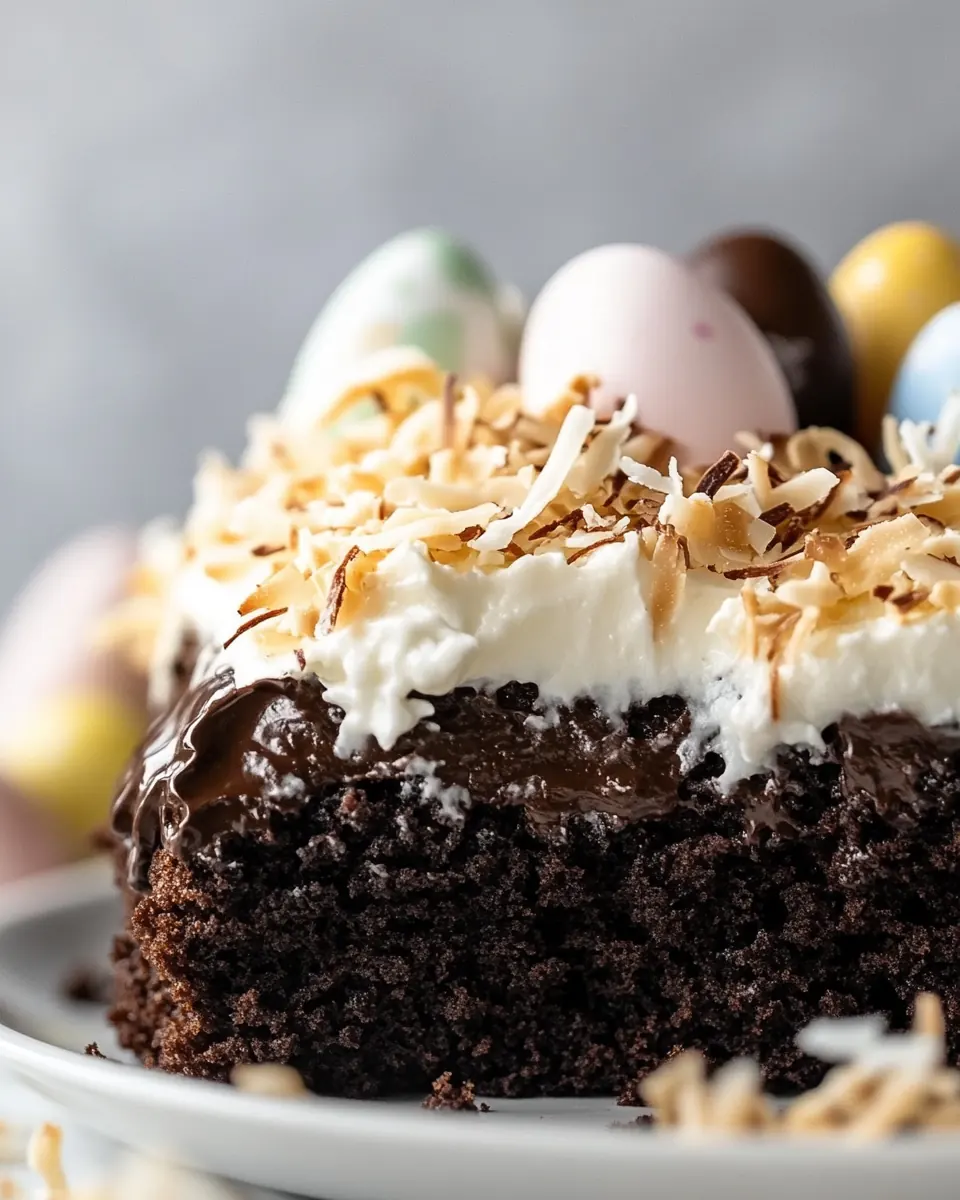
Beat the cream cheese and butter together until creamy. Beat in the sugar until combined. Beat in the vanilla extract and coconut extract. Frost the cooled cake! Sprinkle on the toasted and press so it gently adheres to the frosting. Top the cake with the cadbury mini eggs.: The frosting should be glossy and smooth, with a tangy aroma from the cream cheese . When you beat cream cheese and butter , the mixture will lighten in color and texture, and slowly incorporating powdered sugar yields a silky spreadable frosting. The coconut adds a crunchy, toasted note, and pressing it lightly ensures it stays put. If your frosting is too soft, chill it briefly; if too stiff, beat in a touch of cream. A common slip is trying to frost a warm cake, which melts the frosting and results in a messy surface, so always confirm the cake is fully cool.
I like to keep the cake in the fridge because of the cream cheese frosting, plus we love cold cake.: Chilling the assembled cake firms the frosting and helps flavors meld, offering a clean slice and a refreshing texture contrast between the cool frosting and the tender crumb. Keep it covered to avoid absorbing fridge odors, and remove it a little before serving if you prefer a less firm frosting. A common issue is storing it at room temperature for too long, which risks spoilage because of the cream cheese , so refrigeration is the safer choice for more than a couple of hours.