Creamy Chicken and Rice Soup
Creamy Chicken and Rice Soup is the kind of bowl I reach for when the day has been long and the house needs a little comfort. The first time I made this, I was returning from a rain soaked errand, and the warm aroma of sautéed onion and celery filling the kitchen felt like an instant welcome home. That memory sticks with me, because this soup balances simple pantry staples with a silky, indulgent finish that somehow still feels honest and homey.
Over the years I have tweaked the rhythm of making it, learning how the timing of the rice matters, and why adding the heavy whipping cream just before the simmer finishes keeps the texture lush rather than curdled. I often make a double batch when friends come by, because it travels well to a neighbor or a friend who needs a lift. The way the flavors deepen as it sits for a few minutes makes it forgiving, and I enjoy that relaxed pace of ladling it into bowls, topping it with a grind of salt and pepper, then watching steam curl into the air.
When I want company for an easy weeknight supper, I serve bowls of this with crusty bread and a simple green salad, letting the soup be the warm center of the table. Sometimes I swap the cut of the chicken for bite sized pieces or strips depending on what I have on hand, and each choice changes the mouthfeel in a nice way. Overall, making Creamy Chicken and Rice Soup feels like a small, reliable ritual that makes ordinary evenings feel a touch cozier.
Recipe Snapshot
45 mins
15 mins
30 mins
Medium
450 kcal
American
Gluten-Free, Low FODMAP
Soups
Soup pot, Spoon
Why This Creamy Chicken and Rice Soup Is a Winner
Comfort in a Bowl
I love Creamy Chicken and Rice Soup because it offers immediate warmth and satisfaction. The combination of tender chicken and creamy broth gives you a meal that nourishes both body and mood, perfect for evenings when you want something familiar yet substantial.
Simple Ingredients, Big Payoff
What I appreciate is how a handful of everyday items like carrots, celery, and garlic transform into a layered, flavorful base. The recipe turns pantry staples into something that tastes thoughtful, without needing specialty groceries or long prep.
Flexible and Forgiving
I’ve found that Creamy Chicken and Rice Soup is forgiving with timing and portions. If the rice soaks up too much broth, you can always loosen the soup later. If the chicken varies in size, visual cues will tell you when it is done. That flexibility makes it a go to for busy nights.
Texture that Comforts
The creamy finish from the heavy whipping cream gives a silky mouthfeel that contrasts nicely with the tender grains of rice and bite sized chicken. That balance is why I return to this recipe whenever I want something both soothing and satisfying.
Feeds a Crowd or a Few
Finally, I adore how scaleable this recipe is. It serves a small family or can be doubled to fill larger bowls for guests. The flavors hold up well when reheated, though I prefer it fresh. That versatility is a major reason this dish has earned a regular spot in my rotation.
What You Need for Creamy Chicken and Rice Soup
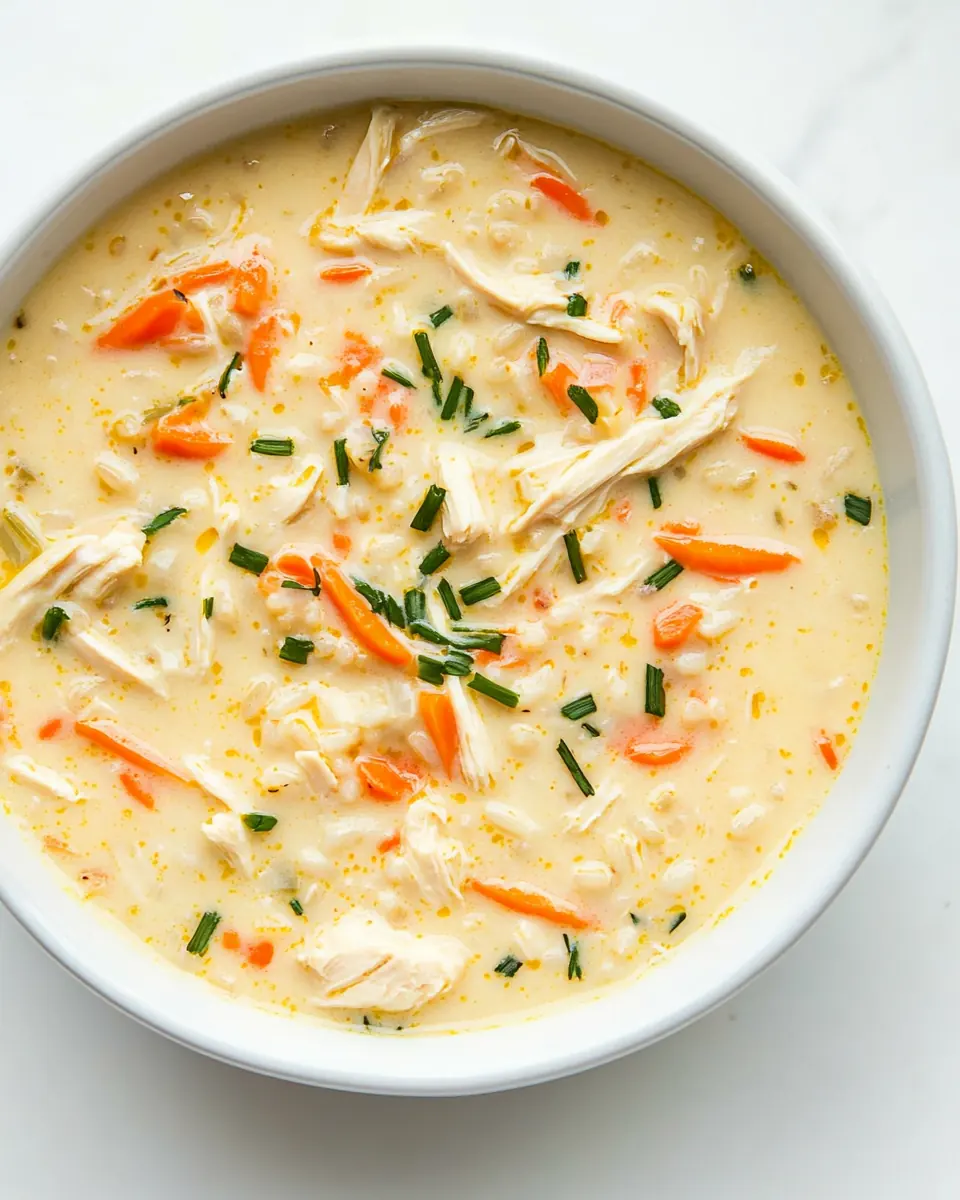
These ingredients are deliberately straightforward, each playing a clear role. The vegetables build a savory backbone, the flour thickens the broth, and the heavy whipping cream finishes the soup with a velvety texture. The rice absorbs flavor and body, while the chicken brings heartiness. Together they create a comforting harmony that is greater than the sum of its parts.
- 1 tablespoon olive oil: Sauté in a hot pan to build a fragrant oil base that helps soften aromatics and prevent sticking; contributes a subtle fruity richness and carries flavors throughout the soup.
- 1 stick celery chopped finely: Chop finely to provide tender texture and mild vegetal sweetness; softens during cooking to add body and a delicate aromatic backbone to the broth.
- 2 medium carrots peeled & chopped finely: Peel and chop finely to add a sweet, earthy flavor and slight texture contrast; releases natural sugars when cooked that deepen the soup's overall taste.
- 1/2 medium onion chopped: Chop to create a savory aromatic foundation; softens and melds with other aromatics to enrich the broth and contribute balanced oniony depth.
- 3 cloves garlic minced: Mince to release pungent, savory oils that add bright, aromatic lift; disperses quickly in cooking to enhance overall flavor complexity without overpowering.
- 3 tablespoons flour: Whisk into fat to make a roux that thickens the broth; cooks briefly to remove raw flour taste and creates a smooth, slightly glossy texture for the soup.
- 4 cups chicken broth: Simmer as the primary liquid to develop savory depth and dilute concentrated flavors; acts as the main cooking medium for rice and chicken while providing seasoned stock base.
- 1/4 teaspoon Italian seasoning: Sprinkle to infuse a blend of dried herbs that adds an herby, slightly peppery Mediterranean note; enhances overall flavor harmony without fresh herb prep.
- 3/4 cup uncooked white jasmine rice: Rinse and add uncooked to absorb liquid and become tender; provides comforting starchiness and helps thicken and bulk the soup as it cooks.
- 1 cup heavy whipping cream: Stir in toward the end to create a rich, silky creaminess that mellows acidity and smooths the broth; adds calories and a luxurious mouthfeel.
- 1 pound uncooked chicken breasts cut into bite-size pieces/strips: Cut into bite–size pieces to cook through evenly and contribute hearty protein and texture; absorbs surrounding flavors and keeps the soup satisfying.
- Salt & pepper to taste: Season to taste at the end to balance and enhance all flavors; adjusts saltiness and brightness while pepper adds mild heat and complexity.
Cooking Method for Creamy Chicken and Rice Soup
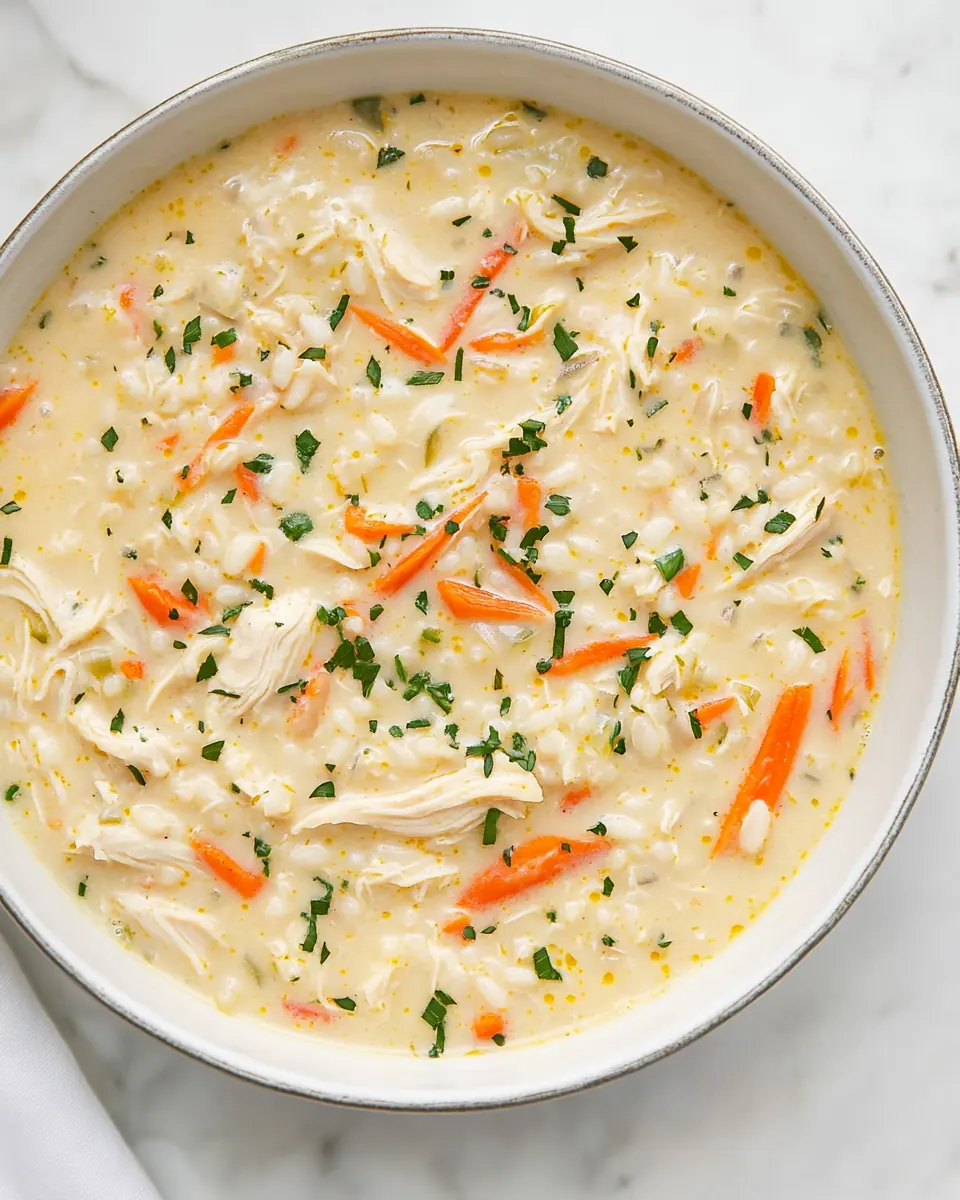
These directions guide you through a straightforward stovetop approach that emphasizes sensory cues and timing. Follow the visual and aromatic signs as you go, and you will come away with a creamy, balanced soup. I recommend staying nearby during the simmer, since rice and cream require gentle handling.
- Add the olive oil, celery, carrots, and onion to a soup pot over medium-high heat. Sauté for 5-7 minutes, stirring occasionally.: You should hear a soft sizzle and see the vegetables soften and start to glisten, the onion turning translucent and the edges of the carrots and celery giving off a faint sheen. This step builds the soup's flavor base by coaxing out natural sugars and creating mild caramelization, which deepens the overall profile. Pause and breathe in the developing aroma, it will smell sweet and savory. Stir every so often to prevent the vegetables from sticking and browning unevenly. A common misstep is cranking the heat too high, which browns the vegetables too quickly and brings bitterness, so keep the temperature steady and patient.
- Stir in the garlic and flour and cook for about a minute.: At this point the minced garlic should become fragrant, releasing a warm, inviting scent that fills the kitchen. The flour will coat the softened vegetables and start absorbing the fat, creating a roux like base that will thicken the broth. You will notice the mixture tighten slightly and take on a toasted, nutty scent as the flour cooks out its raw edge. Work quickly but carefully, as garlic can go from golden to bitter in moments. Avoid skipping the brief flour cook time, because an undercooked flour taste can linger in the finished soup.
- Slowly pour in the broth and stir/scrape up the browned bits from the bottom of the pot until the flour has dissolved.: As you add the chicken broth , you will see the mixture loosen and steam rise, carrying the combined aromas. Use a spoon to scrape any fond off the bottom, those browned bits are concentrated flavor boosters that will dissolve into the liquid. A steady pour prevents lumps from forming, and stirring until the flour integrates ensures a smooth texture. Listen for a gentle simmer forming as the broth warms. If lumps persist, whisk gently; if the broth is too cool it will take longer for the flour to incorporate, so keep the heat moderate.
- Stir in the Italian seasoning, rice, and cream. Increase the heat to high, and once the soup comes to a gentle boil, give it a good stir, then reduce the heat so it's simmering and cover the pot with the lid slightly ajar. Simmer the soup for 10 minutes. I stir it every now and then to prevent the rice from sticking to the bottom of the pot.: When the Italian seasoning , rice , and heavy whipping cream join the pot, the aroma shifts, becoming creamier with herbaceous notes. Bringing the soup to a gentle boil wakes the rice and starts hydration, but you then reduce to a simmer so the grains cook evenly without breaking apart. The lid slightly ajar allows steam to release slowly, controlling the liquid level. Overly vigorous boiling will agitate the rice and can make it release excess starch, resulting in a gluey texture, so maintain a calm simmer. Stir occasionally to keep the rice from adhering to the pot's base and to check consistency. Expect the broth to thicken as the rice swells and the cream melds in.
- Add in the chicken and cook for another 7-10 minutes or until the chicken and rice are both cooked. Season with salt & pepper as needed. This soup will soak up the broth FAST. You may need to add more chicken broth if you prefer a less thick soup, and you'll definitely have to add broth to leftovers. Cook the rice separately if you don't plan on eating it right away.: Once the bite sized chicken pieces enter the simmering pot, you'll notice tiny ribbons of protein turning from translucent to opaque, signaling progress. The soup should bubble softly and smell richly savory, the cream smoothing the broth. Cooking for 7 to 10 minutes usually brings both the chicken and the rice to doneness, but confirm visually that the chicken pieces are opaque throughout and tender. Taste and add salt and pepper incrementally; seasoning at the end lets you calibrate for the broth's salt level. Be mindful that the rice will absorb liquid rapidly, thickening the soup, so if you prefer a looser consistency, add warmed chicken broth as needed. A typical error here is overcooking the rice, which can become mushy; if you expect leftovers, cook the rice separately and add it to bowls when serving.
Ways to Adapt This Recipe
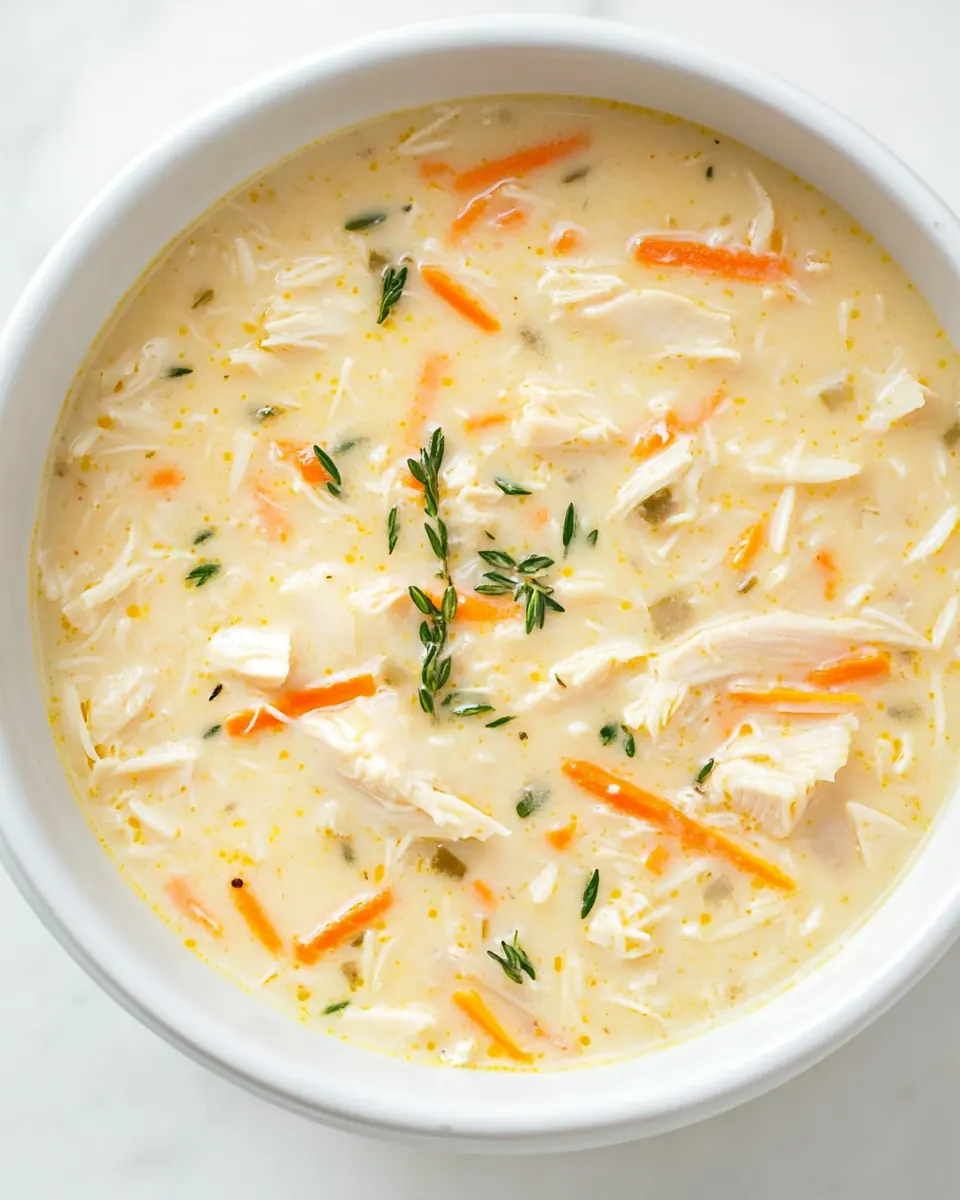
This recipe adapts well to what you have on hand, and small changes can tailor texture and richness. Below are practical, tested ways to adjust the soup for different preferences and situations.
- Reduce the cream for a lighter finish. If you want a less rich soup, you can lower the heavy whipping cream slightly, but be aware the texture will be thinner and less silky, and there is a greater chance of separation if the soup is reheated quickly.
- Cook rice separately for make ahead meals. Preparing the rice in advance and adding it to bowls just before serving prevents the soup from thickening in the fridge, making reheating straightforward and preserving the rice texture.
- Adjust rice amount for texture. Increasing or decreasing the rice will change body and chew, so tweak the 3 quarter cup up or down to reach your preferred heartiness, remembering rice will absorb additional liquid over time.
- Use homemade or high quality broth. A flavorful chicken broth elevates the whole pot, so if you can use homemade or a richer store bought variety, the soup will taste deeper with less added seasoning.
- Slice chicken differently for variety. Turning the chicken into strips versus bite sized pieces changes the mouthfeel, offering a slightly different texture that can feel more substantial when served over rice.
- Serve with warmed broth on hand. Keep extra warmed chicken broth ready to thin the soup when reheating leftovers, as rice will thicken the pot considerably after sitting.
Perfect Matches for Creamy Chicken and Rice Soup
This soup pairs beautifully with simple sides and occasions where warmth and comfort matter. Below are thoughtful serving suggestions and contexts that highlight the soup’s strengths.
- Crusty bread for dipping. A warm loaf or slices of rustic bread complement the creamy broth and invite communal, relaxed eating, perfect for a cozy weeknight meal.
- Light green salad for contrast. A bright salad dressed simply with lemon or vinegar brings acidity and crispness that contrast the soup’s richness, making the meal feel balanced for lunch or dinner.
- Lunch or easy dinner occasions. This recipe works well for casual family dinners, a comforting lunch, or when hosting someone in need of a warm meal, offering ease and approachable flavors.
- Storage tips for leftovers. Store soup in an airtight container and keep extra chicken broth on hand to loosen the texture when reheating, since the rice will absorb liquid and thicken the soup.
- Seasonal pairing for winter evenings. The warmth and creaminess make this ideal for chilly weather, offering a satisfying option for winter meals and slow nights at home.
- Serve in warmed bowls. Prewarming bowls keeps the soup hotter longer and enhances the comforting experience, especially on cold days or when serving guests.
FAQ
Conclusion
What makes this recipe special is its ability to convert simple, everyday ingredients into a deeply comforting bowl that soothes and satisfies. The mix of tender chicken, fragrant rice, and a creamy broth creates a texture and flavor balance that feels both indulgent and homely. I encourage you to give it a try on a chilly evening or when you need a reliable, warming meal for family or friends. It comes together with minimal fuss, rewards patience at the stove, and often becomes one of those recipes you make whenever you want to feel cared for.
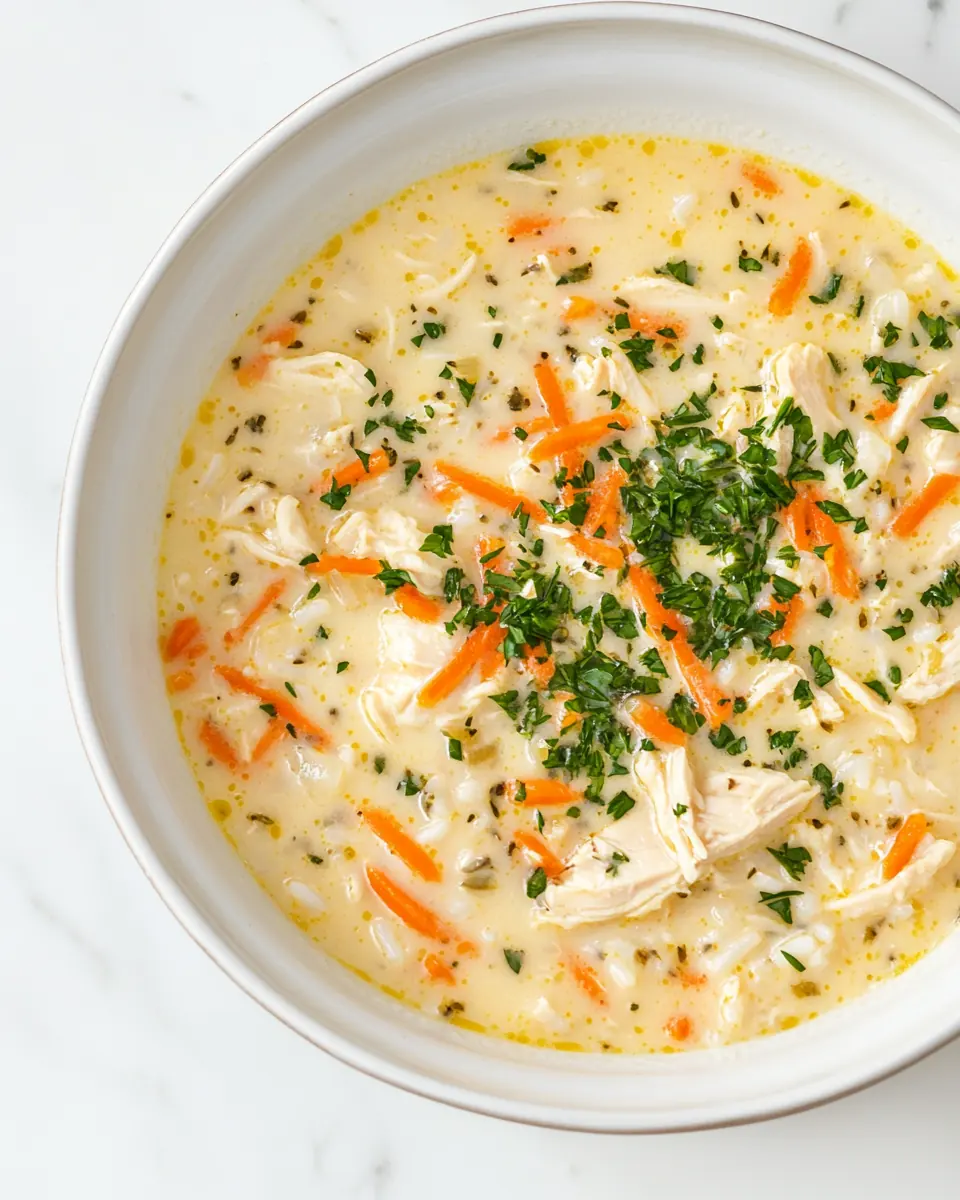
Creamy Chicken and Rice Soup
Ingredients
Equipment
Method
- Add the olive oil, celery, carrots, and onion to a soup pot over medium-high heat. Sauté for 5-7 minutes, stirring occasionally.: You should hear a soft sizzle and see the vegetables soften and start to glisten, the onion turning translucent and the edges of the carrots and celery giving off a faint sheen. This step builds the soup's flavor base by coaxing out natural sugars and creating mild caramelization, which deepens the overall profile. Pause and breathe in the developing aroma, it will smell sweet and savory. Stir every so often to prevent the vegetables from sticking and browning unevenly. A common misstep is cranking the heat too high, which browns the vegetables too quickly and brings bitterness, so keep the temperature steady and patient.
- Stir in the garlic and flour and cook for about a minute.: At this point the minced garlic should become fragrant, releasing a warm, inviting scent that fills the kitchen. The flour will coat the softened vegetables and start absorbing the fat, creating a roux like base that will thicken the broth. You will notice the mixture tighten slightly and take on a toasted, nutty scent as the flour cooks out its raw edge. Work quickly but carefully, as garlic can go from golden to bitter in moments. Avoid skipping the brief flour cook time, because an undercooked flour taste can linger in the finished soup.
- Slowly pour in the broth and stir/scrape up the browned bits from the bottom of the pot until the flour has dissolved.: As you add the chicken broth , you will see the mixture loosen and steam rise, carrying the combined aromas. Use a spoon to scrape any fond off the bottom, those browned bits are concentrated flavor boosters that will dissolve into the liquid. A steady pour prevents lumps from forming, and stirring until the flour integrates ensures a smooth texture. Listen for a gentle simmer forming as the broth warms. If lumps persist, whisk gently; if the broth is too cool it will take longer for the flour to incorporate, so keep the heat moderate.
- Stir in the Italian seasoning, rice, and cream. Increase the heat to high, and once the soup comes to a gentle boil, give it a good stir, then reduce the heat so it's simmering and cover the pot with the lid slightly ajar. Simmer the soup for 10 minutes. I stir it every now and then to prevent the rice from sticking to the bottom of the pot.: When the Italian seasoning , rice , and heavy whipping cream join the pot, the aroma shifts, becoming creamier with herbaceous notes. Bringing the soup to a gentle boil wakes the rice and starts hydration, but you then reduce to a simmer so the grains cook evenly without breaking apart. The lid slightly ajar allows steam to release slowly, controlling the liquid level. Overly vigorous boiling will agitate the rice and can make it release excess starch, resulting in a gluey texture, so maintain a calm simmer. Stir occasionally to keep the rice from adhering to the pot's base and to check consistency. Expect the broth to thicken as the rice swells and the cream melds in.
- Add in the chicken and cook for another 7-10 minutes or until the chicken and rice are both cooked. Season with salt & pepper as needed. This soup will soak up the broth FAST. You may need to add more chicken broth if you prefer a less thick soup, and you'll definitely have to add broth to leftovers. Cook the rice separately if you don't plan on eating it right away.: Once the bite sized chicken pieces enter the simmering pot, you'll notice tiny ribbons of protein turning from translucent to opaque, signaling progress. The soup should bubble softly and smell richly savory, the cream smoothing the broth. Cooking for 7 to 10 minutes usually brings both the chicken and the rice to doneness, but confirm visually that the chicken pieces are opaque throughout and tender. Taste and add salt and pepper incrementally; seasoning at the end lets you calibrate for the broth's salt level. Be mindful that the rice will absorb liquid rapidly, thickening the soup, so if you prefer a looser consistency, add warmed chicken broth as needed. A typical error here is overcooking the rice, which can become mushy; if you expect leftovers, cook the rice separately and add it to bowls when serving.
Notes
- Reduce the cream for a lighter finish. If you want a less rich soup, you can lower the heavy whipping cream slightly, but be aware the texture will be thinner and less silky, and there is a greater chance of separation if the soup is reheated quickly.
- Cook rice separately for make ahead meals. Preparing the rice in advance and adding it to bowls just before serving prevents the soup from thickening in the fridge, making reheating straightforward and preserving the rice texture.
- Adjust rice amount for texture. Increasing or decreasing the rice will change body and chew, so tweak the 3 quarter cup up or down to reach your preferred heartiness, remembering rice will absorb additional liquid over time.
- Use homemade or high quality broth. A flavorful chicken broth elevates the whole pot, so if you can use homemade or a richer store bought variety, the soup will taste deeper with less added seasoning.
- Slice chicken differently for variety. Turning the chicken into strips versus bite sized pieces changes the mouthfeel, offering a slightly different texture that can feel more substantial when served over rice.
- Serve with warmed broth on hand. Keep extra warmed chicken broth ready to thin the soup when reheating leftovers, as rice will thicken the pot considerably after sitting.