Focaccia Bread With Everything Bagel Seasoning
Focaccia Bread With Everything Bagel Seasoning is the kind of loaf I reach for when I want something that tastes bakery fresh but feels totally achievable at home.
My first memory with this bread started on a rainy afternoon, when I had a craving for something both pillowy and crisp. I pulled out a jar of Everything Bagel Seasoning and a generous bottle of extra virgin olive oil, and the kitchen filled with that warm, yeasty smell that always makes me slow down. The process of folding and resting the dough became a small ritual, one that turned the wait into something meditative. I found myself pressing my fingertips into the pliant dough, watching the little dimples hold puddles of oil, and thinking about how simple ingredients like flour and water can produce something so comforting.
Later that week I made the same loaf for neighbors, swapping stories while the focaccia baked. The top browned to a glossy, golden finish, flecked with the savory crunch of everything seasoning. It was crunchy at the edges, tender inside, and soaked up olive oil in the most satisfying way. I love how a single slice can be breakfast one day, an impromptu sandwich the next, or a centerpiece for a casual dinner. Baking this has taught me patience and the joy of small, repeatable acts that elevate a meal.
Recipe Snapshot
5 hr 30 mins
300 mins
30 mins
Hard
250 kcal
Italian
Vegan, Gluten-Free
Dinner
Large mixing bowl, 9×13 baking pan, Wire cooling rack, Thermometer
Why This Focaccia Bread With Everything Bagel Seasoning Is a Winner
Simple but Powerful Flavor
I adore that the flavor profile of Focaccia Bread With Everything Bagel Seasoning is built from tiny, thoughtful details. The coarse sea salt paired with the aromatic Everything Bagel Seasoning gives each bite a contrast of salt, onion, and sesame, making the crumb sing without overwhelming it.
Textural Magic
The combination of a higher hydration water ratio and repeated rest and fold cycles creates those open, airy pockets that make focaccia so irresistible. I’ve learned that gentle handling protects those air bubbles, so the final loaf ends up crisp on top and tender within.
Flexible Timing
One of my favorite reasons to love this recipe is how forgiving the rise times are. You can let the dough gently ferment in the fridge overnight, which deepens flavor, or follow the faster counter rise if you need the bread the same day. That adaptability makes it perfect for both last minute plans and relaxed weekend baking.
Minimal Ingredients, Maximum Impact
The ingredient list is delightfully short, which I always appreciate. Flour, dry yeast, water, sea salt, and olive oil form the backbone, and a modest sprinkle of Everything Bagel Seasoning elevates the whole loaf. It’s proof that great bread doesn’t need fancy additions.
Shareable and Versatile
I love serving this focaccia across occasions. It’s sturdy enough to accompany a hearty soup, yet elegant enough to present with cheeses or a simple salad. Once you bake it, you’ll want to share it, because it invites conversation and lingering at the table.
Ingredients for Focaccia Bread With Everything Bagel Seasoning
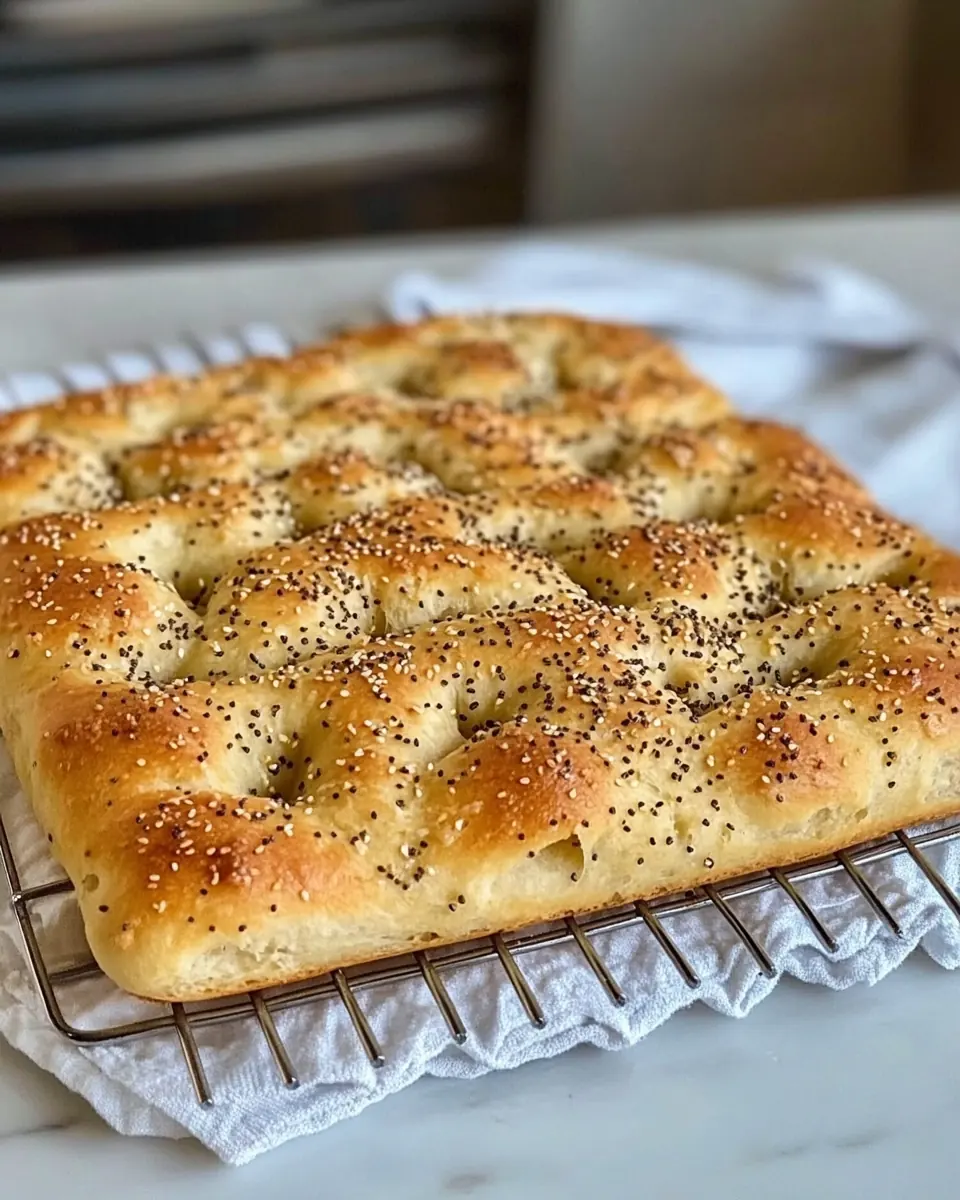
The philosophy behind these ingredients is all about balance and technique. Each component plays a clear role: flour builds structure, water hydrates and creates an open crumb, dry yeast provides lift and flavor, sea salt enhances taste and controls fermentation, and extra virgin olive oil adds richness and tenderness. The Everything Bagel Seasoning is the flourish that gives the focaccia its signature savory crunch. Together, they make a bread that is simple to assemble yet layered in texture and flavor.
- 4 1/2 cups flour (bread or all purpose): Provide structure and gluten development for the dough, giving the focaccia its chewy crumb and ability to trap air during proofing; sift or measure precisely and adjust hydration as needed for dough consistency.
- 1/4 tsp dry yeast: Activate fermentation and leavening gently to create lightness in the focaccia; sprinkle into warm water to bloom briefly before mixing to ensure even rising without overpowering flavor.
- 2 cups water warm, 100 degrees Fahrenheit: Supply warmth and hydration to the dough, creating an environment for yeast activity and proper gluten formation; maintain near 100°F to encourage predictable fermentation without killing the yeast.
- 3/4 tsp sea salt coarse: Enhance overall flavor and strengthen gluten network slightly while balancing sweetness and yeast activity; dissolve into the dough for even seasoning and a pleasant savory finish.
- 3.5 tbsp extra virgin olive oil divided: Add rich flavor and tender crumb while contributing to crust color and mouthfeel; reserve a portion for coating the pan and finishing the baked focaccia to enhance browning and moisture.
- 1 tbsp Everything Bagel Seasoning: Introduce a bold, savory topping flavor profile with seeds and seasonings that complement the bread; sprinkle into the dough or on the surface before baking to create the signature everything bagel taste.
- Additional olive oil, as desired: Provide additional lubrication for hands, the dough surface, and the baking pan to prevent sticking and promote a crisp, golden crust; brush or drizzle as desired before and after baking for optimal texture.
How to Cook Focaccia Bread With Everything Bagel Seasoning
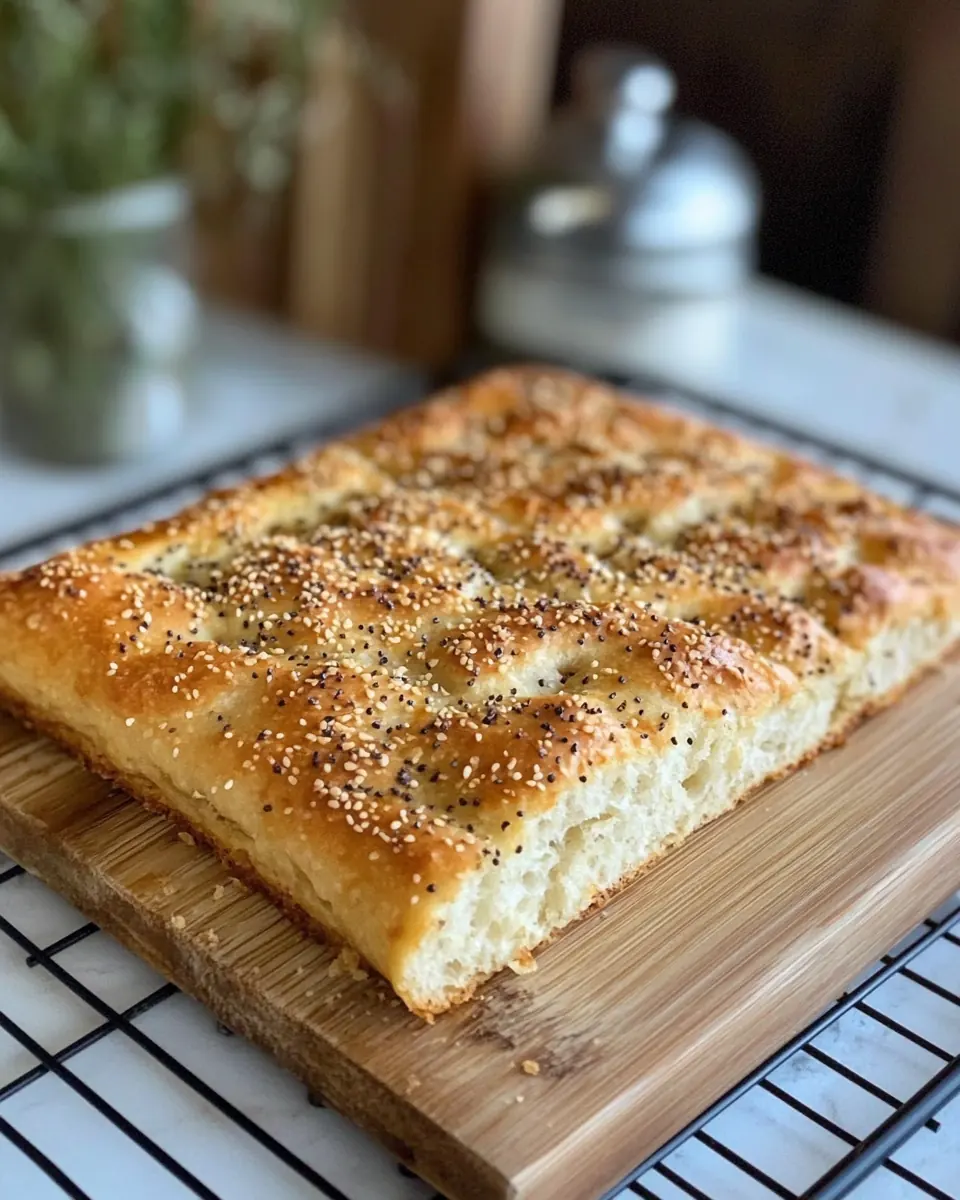
These directions walk you from mixing a shaggy dough to pulling a golden focaccia from the oven. I like to move patiently through the rest and fold cycles, because that rhythm builds texture and flavor. Keep your hands lightly floured and a damp towel nearby for covering the dough during rises.
- In a large mixing bowl, stir together flour and dry yeast. Make a small well in the center of flour mixture and set aside. In a separate bowl, whisk together water and sea salt until salt dissolves into the liquid.: As you mix, pay attention to the way the flour and dry yeast come together, feeling the granular yeast against the softer flour. You should notice a uniform, pale mixture that’s ready to receive liquid, and this is the moment when the dough’s structure is still undeveloped. The smell will be faintly wheaty, and the tactile sensation is dry and powdery, which helps the yeast distribute evenly when liquid is added. Why this matters, I’ve found, is that even distribution prevents pockets of inactive dough and ensures a consistent rise. A troubleshooting tip is to sift clumps if your flour feels lumpy, otherwise the dough may form uneven water pockets. Avoid adding water too quickly here, because it can create sticky patches that are harder to hydrate later.
- Pour salt water mixture and 2 tablespoons olive oil into the flour bowl. Stir with your hands or spatula until a ball forms.: The well acts as a staging area for the liquid, which helps control hydration as you combine ingredients. Visualize a shallow crater in the flour where the water and salt will pool, and this practice encourages gradual incorporation that prevents overly wet spots. Tactile cues include a slight depression that holds the liquid, and you may notice the flour around the rim staying drier for a moment. The reason this technique is useful is that it allows you to manage how quickly the dough picks up moisture, producing a more cohesive ball. If the well collapses under the liquid, wait a few seconds before stirring to let the flour absorb edges evenly. A common mistake is stirring too aggressively, which can lead to a dense start, so be gentle when you begin to incorporate.
- Grease a clean large mixing bowl with 1/2 tablespoon olive oil. Add dough and knead it together by folding each corner into itself for about 1 minute. Cover dough with a damp towel and let it rest for 15 minutes.: The dissolved sea salt creates a uniform saline solution that seasons every part of the dough evenly, and whisking helps speed this along. As you whisk, you’ll see the salt disappear and the liquid take on a slightly briny scent, which is a good sign that it’s ready. This step matters because undissolved salt can sit in clumps and create pockets of overly salty dough, disrupting fermentation in spots. If your salt does not dissolve easily, try slightly warmer water but do not exceed yeast safe temperatures. A troubleshooting pointer is to taste a tiny amount gently to confirm it’s evenly seasoned, but be cautious not to add more salt than specified.
- Knead dough again for one minute. Let the focaccia dough rest again, covered with a damp cloth. Repeat this step one or two more times, for a total of about 45-60 minutes of kneading and resting.: When the warm water and olive oil meet the flour, the mixture should start to clump into a shaggy mass that feels tacky to the touch. The oil helps coat some flour particles, creating tenderness, while the water hydrates the starches and proteins. You’ll notice a change in texture from powdery to sticky, and the aroma becomes faintly yeasty and oiled. This method matters because it sets the hydration baseline for the focaccia’s open crumb. If the dough seems excessively dry, add a teaspoon of water at a time; conversely, if it’s overly wet, resist adding extra flour too quickly, as it can toughen the final crumb. A common misstep here is overmixing; stop once a ball begins to form.
- Cover focaccia with plastic and let the dough rise on the counter for 2 hours, or in the fridge overnight (up to 6 days, according to our fermentation experiment). The dough should be almost double in size.: As you bring the dough together, feel for a cohesive mass that holds shape but remains soft and slightly tacky. The sensory cues are important here, because a properly gathered ball will hold slight indentations and not fall apart. The tactile feeling of elasticity beginning to show is a great indicator that gluten is starting to develop. This matters because proper hydration and initial lumping set up the dough for effective folding and resting. If you encounter sticky clinging dough, lightly oil your hands rather than adding more flour , which can dry out the dough. Avoid forceful kneedings at this stage; gentle gathering preserves air pockets that will expand later.
- Liberally spread 1/2 tablespoon of olive oil on the bottom and sides of a 9×13” baking pan. All areas the focaccia will touch should be covered. Add focaccia dough to the oiled baking pan. Stretch dough, pushing it to fit the shape of the baking pan. It might be hard to stretch the dough to the pans corners. If you're having trouble stretching the dough, cover the dough with a damp cloth and let sit for 10 minutes. That will give the dough time to relax, making it easier to stretch.: Rubbing the bowl with olive oil prevents the dough from sticking as it rises and imparts a subtle richness to the exterior. The sheen of oil on the bowl is a visual cue that the dough will be able to glide as it expands. This step matters because it makes removing the dough easier and preserves the delicate surface texture formed during folding. One troubleshooting tip is to use a pastry brush or your fingers to ensure even coverage, avoiding pooling at the bottom which can make one side overly oily. Do not overoil, as excess fat on the surface can prevent proper crust formation during baking.
- The first rise in the pan. Once the dough is stretched to fit the corners of the baking pan, cover the baking pan with a damp towel and set aside in a warm area for 45 – 60 minutes to rise. A sunny window or oven with just the light on (which will make it ~85 degrees) is perfect.: Folding rather than heavy kneading builds strength while protecting air pockets. As you fold, you should hear soft tearing sounds and feel the dough tighten slightly, indicating gluten alignment. The reason this technique is favored is it gently develops structure without overworking, preserving the open crumb desired in focaccia. Troubleshooting: if the dough resists folding, let it rest for a few minutes to relax the gluten before resuming. Avoid aggressive kneading here because that can result in a tighter, less airy crumb.
- Once the dough rises in the pan, set out a small bowl of water next to the raw focaccia dough. Dimple the dough by dipping your fingertips in water, then dip them in focaccia dough to create small holes. Repeat until focaccia dough is covered with little holes.: During this rest the dough relaxes and absorbs moisture, becoming easier to handle and stretch. You will notice the dough feel softer and more extensible after resting, which is the cue to continue. The sensory change from elastic to more pliable is subtle but meaningful, and the aroma remains quietly yeasty. This rest matters because it reduces tearing during subsequent folds. A common mistake is skipping the rest; this often leads to resistance when stretching and can tear the dough, so be patient and keep the towel damp to prevent a crust from forming.
- Time for the final rise. Once the dough is dimpled, cover with a damp towel and set aside in a warm area (sunny window or oven with the light on) for 45 – 60 minutes to final proof.: A brief round of folding tightens the dough slightly, aligning gluten just enough to trap air in future rises. You may notice a springier response when you press the surface, which is a sign of developing elasticity. This step matters because incremental strengthening ensures a balanced crumb that is neither too dense nor too fragile. If the dough feels overly tight, short rests help relax it. Avoid repeating vigorous kneading cycles; they can overdevelop gluten and make the focaccia chewy instead of tender.
- Finish and bake. After the final proof is complete, preheat the oven to 450 degrees. Top the dough with 1/2 tablespoon of olive oil. Add Everything Bagel Seasoning.: Each rest cycle further hydrates and smooths the dough surface, producing a glossy, cohesive ball. The longer you allow these pauses, the better the texture becomes, as enzymes continue to work slowly. The sensory cues are a slightly sweeter aroma and a silkier feel to the dough. This matters because gradual development yields complex flavor and a light interior. Troubleshooting tip: if the dough forms a skin, rehydrate the towel and gently mist the surface to retain moisture. Do not skip the cover, or you risk a dry crust forming.
- Bake focaccia for 20-30 minutes until the top is golden brown and the internal temperature reads 190 degrees on a thermometer. Transfer focaccia bread to a wired baking rack. Add a drizzle of olive oil if desired.: These cycles build gradual strength while preserving gas pockets, and you’ll see the dough become smoother and more elastic over time. Visually, the dough will take on a satiny sheen and slight spring when poked. This process matters because it replaces intensive kneading with gentle development, producing the open crumb characteristic of great focaccia. A common mistake is rushing through cycles; patience here makes a dramatic difference. If you find the dough extremely sticky, give it brief rests instead of adding flour .
- Cover focaccia with plastic and let the dough rise on the counter for 2 hours, or in the fridge overnight (up to 6 days, according to our fermentation experiment).: During this bulk fermentation the dough should nearly double, developing flavor and gas. You will observe the dough increase in size, and the smell will grow more pronounced and pleasantly yeasty. Refrigerated slow fermentation deepens flavor while controlling activity, which is useful for planning. This matters because fermentation time is where taste complexity is forged. A troubleshooting note: if the dough does not rise as expected, your yeast may be old or the environment too cold; try a warmer spot or verify yeast freshness. Avoid excessive rising which can exhaust the dough and collapse structure.
- Liberally spread 1/2 tablespoon of olive oil on the bottom and sides of a 9×13” baking pan.: Coating the pan ensures the dough will slide out easily and that the edges brown attractively, with small puddles of oil forming in the dimples. The glossy surface is also a visual cue that the focaccia will pick up flavor from the oil during baking. This matters for both texture and presentation, giving crisp edges and a tender crumb. Troubleshooting: if the oil pools too heavily, blot some with a paper towel to avoid soggy spots. Do not skip oiling the sides, or the dough may stick during baking.
- Add focaccia dough to the oiled baking pan.: Place the dough gently into the prepared pan and begin to coax it into shape with oiled hands. The dough should spread gradually without tearing, and you’ll feel it relax into the corners with a light stretch. This matters because uniform contact with the pan creates an even bake and consistent crust. A tip is to let the dough rest if it resists stretching; a 10 minute pause will help. Avoid pulling harshly, which can create thin spots that overbrown.
- Stretch dough, pushing it to fit the shape of the baking pan.: Work from the center outward, letting the dough naturally expand rather than forcing it. You will notice the dough thin in places but remain tender overall, and small pockets of air will be visible under the surface. This stretching matters because it determines the final thickness and crumb structure. Troubleshooting: if the dough springs back, cover and let it rest to relax gluten. Avoid aggressive stretching that tears the dough, which will reduce its ability to trap steam while baking.
- The first rise in the pan.: Once the dough is dressed in the pan, cover with a damp towel and set in a warm spot for 45 to 60 minutes to rise, where it will puff and soften. The visual cue is a noticeably expanded dough that fills more of the pan, and the surface becomes smooth and slightly domed. This first pan rise helps set the final shape and encourages even crumb development. If the rise seems slow, try a warmer area such as an oven with the light on. Avoid overproofing here, which can lead to collapse during baking.
- Once the dough rises in the pan, set out a small bowl of water next to the raw focaccia dough.: Dipping your fingertips in water before dimpling prevents sticking and helps create signature indentations that hold oil and seasoning. The sensation of wet fingers pressing into the dough is pleasing, and the damp touch results in deeper, more uniform dimples. This technique matters because the dimples create pockets for olive oil and seasoning to rest in, enhancing texture and flavor. Troubleshooting: if your fingers drag, rewet them frequently; dried dough will resist forming clean dimples. Resist the urge to over-dimple, which can deflate the dough excessively.
- Dimple the dough by dipping your fingertips in water, then dip them in focaccia dough to create small holes.: As you press, listen for a soft popping sound and watch the dough indent while springing slightly around each hole. The dimples should be shallow but numerous, creating a surface that catches oil. This matters because those little wells become pockets of crispness and flavor after baking. If dimples fill back in, give the dough a few minutes to relax and try again. Avoid pressing too hard, which can push air out and flatten the loaf.
- Repeat until focaccia dough is covered with little holes.: Continue across the surface until you have a patterned, crinkled top that will hold oil and seasoning. The aesthetic is part of the appeal, and the tactile feedback of even dimpling gives you confidence that the loaf will bake evenly. This final texturing step matters for both looks and mouthfeel. Troubleshooting: inconsistent dimples often mean uneven resting; allow a short relax period if needed. Do not skip coverage, or the seasoning will slide off during baking.
- Time for the final rise.: After dimpling, cover with a damp towel and let the dough proof for another 45 to 60 minutes in a warm area, where it will puff slightly and develop a tender surface. You’ll notice the dough look aerated and springy, and the aroma will become more pronounced. This final proof is crucial for oven spring and internal softness. If the dough feels underproofed, allow more time; if overproofed, bake sooner to avoid collapse. Avoid rushing this stage, because insufficient proofing leads to dense crumb.
- Finish and bake.: Preheat the oven to 450 degrees and top the dough with 1/2 tablespoon of olive oil and the Everything Bagel Seasoning before sliding it into the oven, where the heat will set the dimples and crisp the top. The immediate sizzle when the pan hits the oven indicates good oven spring, and within minutes you’ll notice a toasty aroma. This finishing step matters because the high heat creates the ideal contrast between crunchy top and tender interior. Troubleshooting: if your oven runs hot, rotate the pan halfway through to prevent burning. Avoid opening the oven early, as that can reduce oven spring.
- Bake focaccia for 20 to 30 minutes until the top is golden brown and the internal temperature reads 190 degrees on a thermometer.: Look for an even golden color across the surface and slightly darker edges, accompanied by a deep, toasty scent. The internal temperature is the most reliable cue for doneness, confirming that the crumb has set and will be springy when sliced. This precision matters because underbaked focaccia can be gummy inside, while overbaking dries it out. Troubleshooting: if the center browns too quickly, tent loosely with foil. Avoid relying only on time, as oven performance varies.
- Transfer focaccia bread to a wired baking rack.: Cooling on a rack prevents the bottom from steaming and keeps the crust crisp, while the exposed crumb rests and firms. As it cools slightly, the aroma will soften into a warm olive oil scent. This step matters for texture retention and makes slicing cleaner. If you cut while it’s too hot, the crumb may compress, so allow a brief rest. Avoid leaving it in the hot pan, which can trap moisture and make the bottom soggy.
- Add a drizzle of olive oil if desired.: A final drizzle of olive oil enriches the top and enhances aroma, soaking into dimples for extra flavor. The sheen and immediate gloss are inviting, and the first bite will carry layers of oil, salt, and seasoning. This finishing flourish matters because it elevates the sensory experience. Troubleshooting: apply oil sparingly if you prefer a lighter loaf. Avoid heavy drizzling that can weigh the crust down.
Helpful Notes about Focaccia Bread With Everything Bagel Seasoning
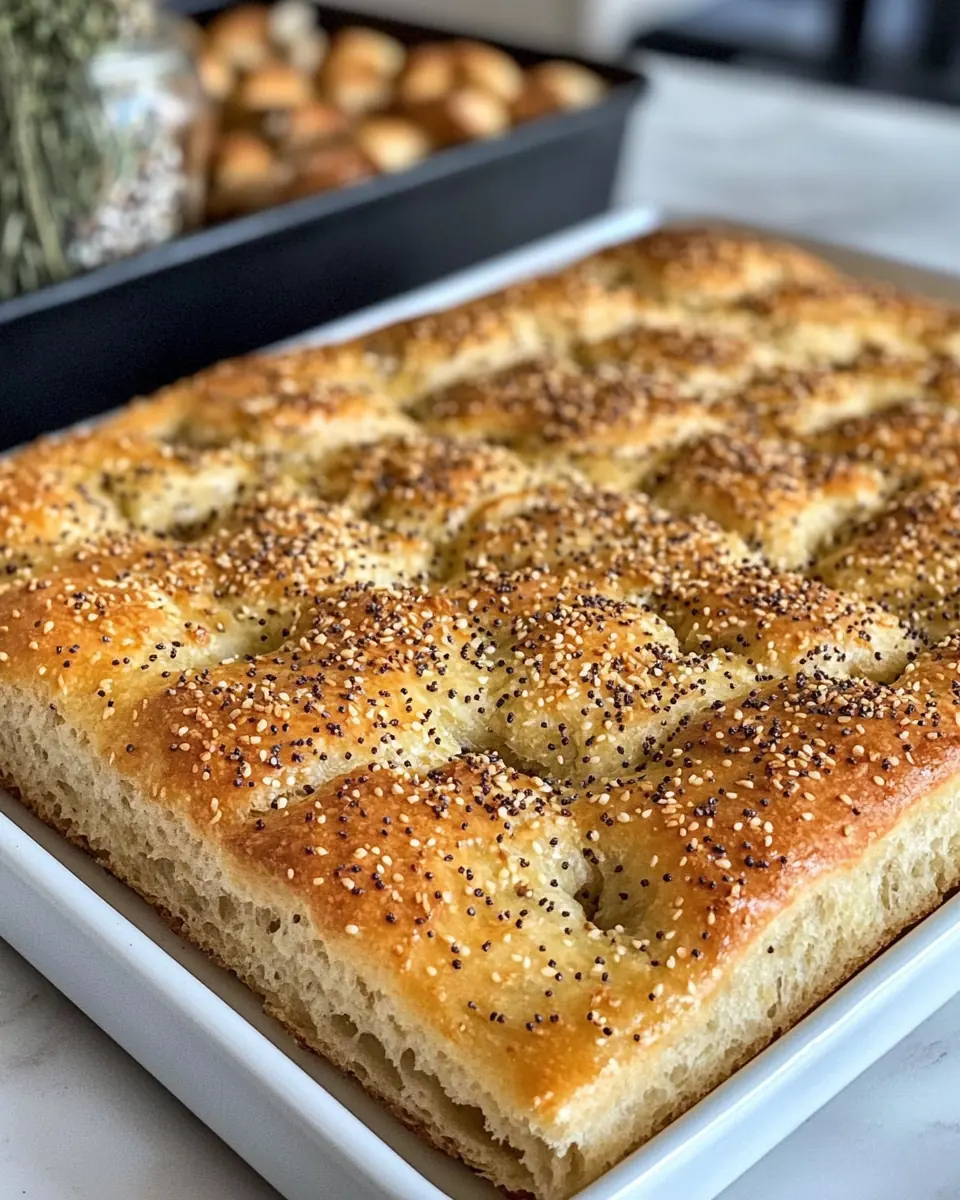
I keep these notes close when I bake focaccia because small adjustments change the outcome dramatically. These tips are drawn from repeated bakes, and each one highlights a practical habit that improves texture or flavor. Read them before you begin so you can plan your timing, tools, and any make ahead steps.
- Make ahead flexibility: You can refrigerate the dough for up to 6 days for slow fermentation, which deepens flavor and lets you bake when convenient.
- Finish with oil: A final drizzle of olive oil after baking intensifies aroma and gives the surface a glossy, inviting sheen that enhances each slice.
- Season confidently: Use the full tablespoon of Everything Bagel Seasoning as directed, and if you love extra crunch, scatter a little more right before baking.
- Control proofing: If your kitchen is cool, give the dough a slightly warmer spot like an oven with the light on to achieve consistent rises.
- Edge crisping: Ensure the pan is well oiled so edges brown evenly and the focaccia releases cleanly after baking.
Serving Options for Focaccia Bread With Everything Bagel Seasoning
This focaccia is wonderfully versatile for many occasions, from casual lunches to special gatherings. Serve it warm to showcase the oil sheen and crunchy seasoning, or slice it cool for sandwiches. The loaf pairs well with simple sides and fits into seasonal menus easily.
- As a side for soups: Warm slices of Focaccia Bread With Everything Bagel Seasoning alongside a hearty bowl for dipping and sopping up broths, making lunches or dinners feel homey.
- Sandwich base: Slice horizontally and use as a rustic sandwich bread. The savory seasoning complements cheeses and roasted vegetables for a satisfying lunch.
- Party platter: Cut into squares for a bread board, served with bowls of olive oil for dipping, and arrange with small accompaniments for a crowd friendly appetizer.
- Breakfast or brunch: Toast a slice lightly and top with soft cheeses or a drizzle of honey for morning guests, using the seasoning to add savory contrast.
- Storage tips: Store cooled focaccia in an airtight container for up to five days, or freeze slices wrapped tightly for longer keeping. Reheat in a warm oven to refresh crust crispness.
- Seasonal pairings: In summer, serve with fresh salads and grilled vegetables; in cooler months, pair with slow cooked stews or roasted root vegetables for comforting meals.
FAQ
Conclusion
This focaccia stands out for its satisfying contrast of crunchy, seasoned top and pillowy, open crumb. Once you try the folding and resting rhythm, you’ll appreciate how simple techniques transform basic ingredients into something special. Give it a go for a relaxed weekend bake or an easy way to impress guests, and enjoy the warm aroma and the way each slice soaks up olive oil and seasoning. Baking this focaccia is an inviting ritual that rewards patience and delivers delicious results every time.
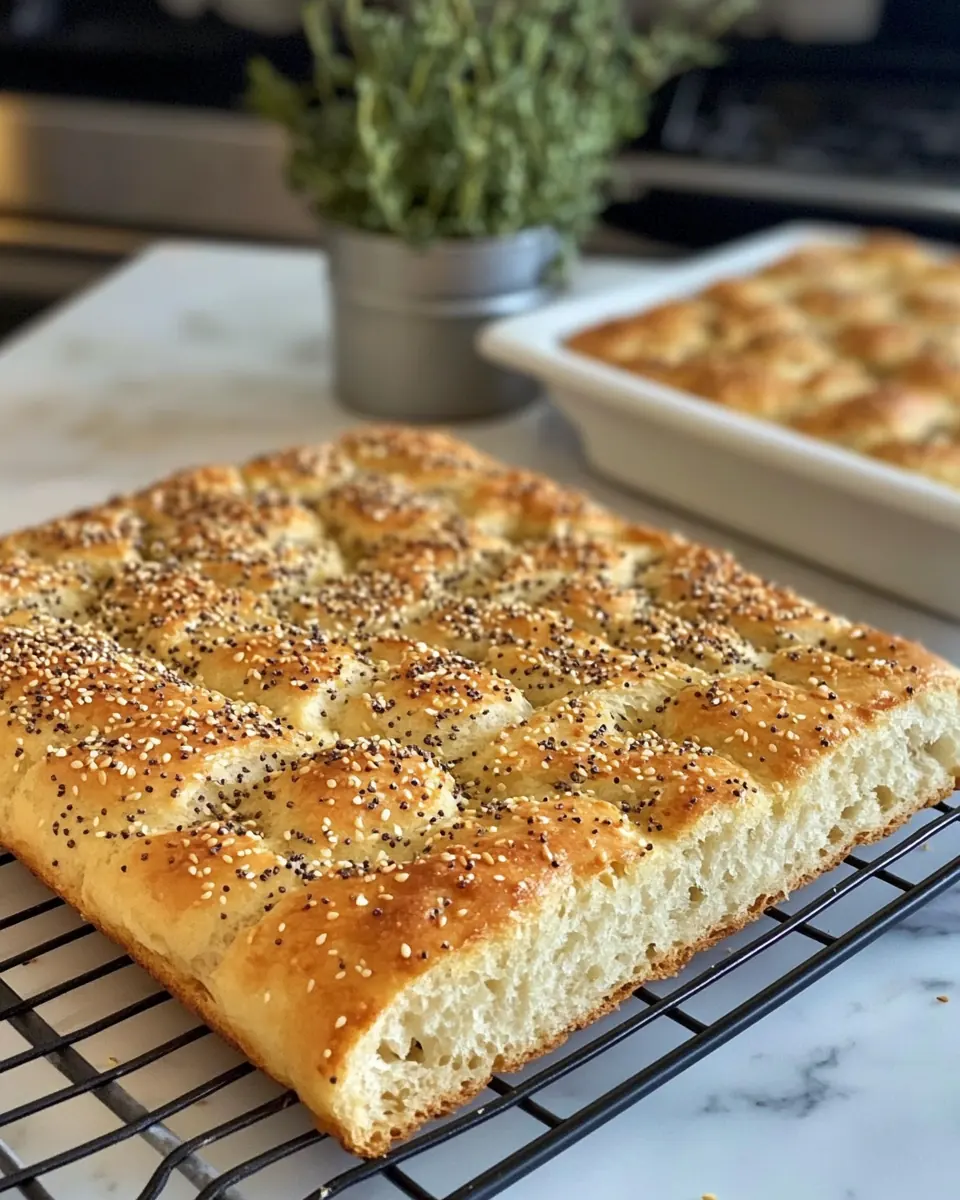
Focaccia Bread With Everything Bagel Seasoning
Ingredients
Equipment
Method
- In a large mixing bowl, stir together flour and dry yeast. Make a small well in the center of flour mixture and set aside. In a separate bowl, whisk together water and sea salt until salt dissolves into the liquid.: As you mix, pay attention to the way the flour and dry yeast come together, feeling the granular yeast against the softer flour. You should notice a uniform, pale mixture that’s ready to receive liquid, and this is the moment when the dough’s structure is still undeveloped. The smell will be faintly wheaty, and the tactile sensation is dry and powdery, which helps the yeast distribute evenly when liquid is added. Why this matters, I’ve found, is that even distribution prevents pockets of inactive dough and ensures a consistent rise. A troubleshooting tip is to sift clumps if your flour feels lumpy, otherwise the dough may form uneven water pockets. Avoid adding water too quickly here, because it can create sticky patches that are harder to hydrate later.
- Pour salt water mixture and 2 tablespoons olive oil into the flour bowl. Stir with your hands or spatula until a ball forms.: The well acts as a staging area for the liquid, which helps control hydration as you combine ingredients. Visualize a shallow crater in the flour where the water and salt will pool, and this practice encourages gradual incorporation that prevents overly wet spots. Tactile cues include a slight depression that holds the liquid, and you may notice the flour around the rim staying drier for a moment. The reason this technique is useful is that it allows you to manage how quickly the dough picks up moisture, producing a more cohesive ball. If the well collapses under the liquid, wait a few seconds before stirring to let the flour absorb edges evenly. A common mistake is stirring too aggressively, which can lead to a dense start, so be gentle when you begin to incorporate.
- Grease a clean large mixing bowl with 1/2 tablespoon olive oil. Add dough and knead it together by folding each corner into itself for about 1 minute. Cover dough with a damp towel and let it rest for 15 minutes.: The dissolved sea salt creates a uniform saline solution that seasons every part of the dough evenly, and whisking helps speed this along. As you whisk, you’ll see the salt disappear and the liquid take on a slightly briny scent, which is a good sign that it’s ready. This step matters because undissolved salt can sit in clumps and create pockets of overly salty dough, disrupting fermentation in spots. If your salt does not dissolve easily, try slightly warmer water but do not exceed yeast safe temperatures. A troubleshooting pointer is to taste a tiny amount gently to confirm it’s evenly seasoned, but be cautious not to add more salt than specified.
- Knead dough again for one minute. Let the focaccia dough rest again, covered with a damp cloth. Repeat this step one or two more times, for a total of about 45-60 minutes of kneading and resting.: When the warm water and olive oil meet the flour, the mixture should start to clump into a shaggy mass that feels tacky to the touch. The oil helps coat some flour particles, creating tenderness, while the water hydrates the starches and proteins. You’ll notice a change in texture from powdery to sticky, and the aroma becomes faintly yeasty and oiled. This method matters because it sets the hydration baseline for the focaccia’s open crumb. If the dough seems excessively dry, add a teaspoon of water at a time; conversely, if it’s overly wet, resist adding extra flour too quickly, as it can toughen the final crumb. A common misstep here is overmixing; stop once a ball begins to form.
- Cover focaccia with plastic and let the dough rise on the counter for 2 hours, or in the fridge overnight (up to 6 days, according to our fermentation experiment). The dough should be almost double in size.: As you bring the dough together, feel for a cohesive mass that holds shape but remains soft and slightly tacky. The sensory cues are important here, because a properly gathered ball will hold slight indentations and not fall apart. The tactile feeling of elasticity beginning to show is a great indicator that gluten is starting to develop. This matters because proper hydration and initial lumping set up the dough for effective folding and resting. If you encounter sticky clinging dough, lightly oil your hands rather than adding more flour , which can dry out the dough. Avoid forceful kneedings at this stage; gentle gathering preserves air pockets that will expand later.
- Liberally spread 1/2 tablespoon of olive oil on the bottom and sides of a 9×13” baking pan. All areas the focaccia will touch should be covered. Add focaccia dough to the oiled baking pan. Stretch dough, pushing it to fit the shape of the baking pan. It might be hard to stretch the dough to the pans corners. If you're having trouble stretching the dough, cover the dough with a damp cloth and let sit for 10 minutes. That will give the dough time to relax, making it easier to stretch.: Rubbing the bowl with olive oil prevents the dough from sticking as it rises and imparts a subtle richness to the exterior. The sheen of oil on the bowl is a visual cue that the dough will be able to glide as it expands. This step matters because it makes removing the dough easier and preserves the delicate surface texture formed during folding. One troubleshooting tip is to use a pastry brush or your fingers to ensure even coverage, avoiding pooling at the bottom which can make one side overly oily. Do not overoil, as excess fat on the surface can prevent proper crust formation during baking.
- The first rise in the pan. Once the dough is stretched to fit the corners of the baking pan, cover the baking pan with a damp towel and set aside in a warm area for 45 – 60 minutes to rise. A sunny window or oven with just the light on (which will make it ~85 degrees) is perfect.: Folding rather than heavy kneading builds strength while protecting air pockets. As you fold, you should hear soft tearing sounds and feel the dough tighten slightly, indicating gluten alignment. The reason this technique is favored is it gently develops structure without overworking, preserving the open crumb desired in focaccia. Troubleshooting: if the dough resists folding, let it rest for a few minutes to relax the gluten before resuming. Avoid aggressive kneading here because that can result in a tighter, less airy crumb.
- Once the dough rises in the pan, set out a small bowl of water next to the raw focaccia dough. Dimple the dough by dipping your fingertips in water, then dip them in focaccia dough to create small holes. Repeat until focaccia dough is covered with little holes.: During this rest the dough relaxes and absorbs moisture, becoming easier to handle and stretch. You will notice the dough feel softer and more extensible after resting, which is the cue to continue. The sensory change from elastic to more pliable is subtle but meaningful, and the aroma remains quietly yeasty. This rest matters because it reduces tearing during subsequent folds. A common mistake is skipping the rest; this often leads to resistance when stretching and can tear the dough, so be patient and keep the towel damp to prevent a crust from forming.
- Time for the final rise. Once the dough is dimpled, cover with a damp towel and set aside in a warm area (sunny window or oven with the light on) for 45 – 60 minutes to final proof.: A brief round of folding tightens the dough slightly, aligning gluten just enough to trap air in future rises. You may notice a springier response when you press the surface, which is a sign of developing elasticity. This step matters because incremental strengthening ensures a balanced crumb that is neither too dense nor too fragile. If the dough feels overly tight, short rests help relax it. Avoid repeating vigorous kneading cycles; they can overdevelop gluten and make the focaccia chewy instead of tender.
- Finish and bake. After the final proof is complete, preheat the oven to 450 degrees. Top the dough with 1/2 tablespoon of olive oil. Add Everything Bagel Seasoning.: Each rest cycle further hydrates and smooths the dough surface, producing a glossy, cohesive ball. The longer you allow these pauses, the better the texture becomes, as enzymes continue to work slowly. The sensory cues are a slightly sweeter aroma and a silkier feel to the dough. This matters because gradual development yields complex flavor and a light interior. Troubleshooting tip: if the dough forms a skin, rehydrate the towel and gently mist the surface to retain moisture. Do not skip the cover, or you risk a dry crust forming.
- Bake focaccia for 20-30 minutes until the top is golden brown and the internal temperature reads 190 degrees on a thermometer. Transfer focaccia bread to a wired baking rack. Add a drizzle of olive oil if desired.: These cycles build gradual strength while preserving gas pockets, and you’ll see the dough become smoother and more elastic over time. Visually, the dough will take on a satiny sheen and slight spring when poked. This process matters because it replaces intensive kneading with gentle development, producing the open crumb characteristic of great focaccia. A common mistake is rushing through cycles; patience here makes a dramatic difference. If you find the dough extremely sticky, give it brief rests instead of adding flour .
- Cover focaccia with plastic and let the dough rise on the counter for 2 hours, or in the fridge overnight (up to 6 days, according to our fermentation experiment).: During this bulk fermentation the dough should nearly double, developing flavor and gas. You will observe the dough increase in size, and the smell will grow more pronounced and pleasantly yeasty. Refrigerated slow fermentation deepens flavor while controlling activity, which is useful for planning. This matters because fermentation time is where taste complexity is forged. A troubleshooting note: if the dough does not rise as expected, your yeast may be old or the environment too cold; try a warmer spot or verify yeast freshness. Avoid excessive rising which can exhaust the dough and collapse structure.
- Liberally spread 1/2 tablespoon of olive oil on the bottom and sides of a 9×13” baking pan.: Coating the pan ensures the dough will slide out easily and that the edges brown attractively, with small puddles of oil forming in the dimples. The glossy surface is also a visual cue that the focaccia will pick up flavor from the oil during baking. This matters for both texture and presentation, giving crisp edges and a tender crumb. Troubleshooting: if the oil pools too heavily, blot some with a paper towel to avoid soggy spots. Do not skip oiling the sides, or the dough may stick during baking.
- Add focaccia dough to the oiled baking pan.: Place the dough gently into the prepared pan and begin to coax it into shape with oiled hands. The dough should spread gradually without tearing, and you’ll feel it relax into the corners with a light stretch. This matters because uniform contact with the pan creates an even bake and consistent crust. A tip is to let the dough rest if it resists stretching; a 10 minute pause will help. Avoid pulling harshly, which can create thin spots that overbrown.
- Stretch dough, pushing it to fit the shape of the baking pan.: Work from the center outward, letting the dough naturally expand rather than forcing it. You will notice the dough thin in places but remain tender overall, and small pockets of air will be visible under the surface. This stretching matters because it determines the final thickness and crumb structure. Troubleshooting: if the dough springs back, cover and let it rest to relax gluten. Avoid aggressive stretching that tears the dough, which will reduce its ability to trap steam while baking.
- The first rise in the pan.: Once the dough is dressed in the pan, cover with a damp towel and set in a warm spot for 45 to 60 minutes to rise, where it will puff and soften. The visual cue is a noticeably expanded dough that fills more of the pan, and the surface becomes smooth and slightly domed. This first pan rise helps set the final shape and encourages even crumb development. If the rise seems slow, try a warmer area such as an oven with the light on. Avoid overproofing here, which can lead to collapse during baking.
- Once the dough rises in the pan, set out a small bowl of water next to the raw focaccia dough.: Dipping your fingertips in water before dimpling prevents sticking and helps create signature indentations that hold oil and seasoning. The sensation of wet fingers pressing into the dough is pleasing, and the damp touch results in deeper, more uniform dimples. This technique matters because the dimples create pockets for olive oil and seasoning to rest in, enhancing texture and flavor. Troubleshooting: if your fingers drag, rewet them frequently; dried dough will resist forming clean dimples. Resist the urge to over-dimple, which can deflate the dough excessively.
- Dimple the dough by dipping your fingertips in water, then dip them in focaccia dough to create small holes.: As you press, listen for a soft popping sound and watch the dough indent while springing slightly around each hole. The dimples should be shallow but numerous, creating a surface that catches oil. This matters because those little wells become pockets of crispness and flavor after baking. If dimples fill back in, give the dough a few minutes to relax and try again. Avoid pressing too hard, which can push air out and flatten the loaf.
- Repeat until focaccia dough is covered with little holes.: Continue across the surface until you have a patterned, crinkled top that will hold oil and seasoning. The aesthetic is part of the appeal, and the tactile feedback of even dimpling gives you confidence that the loaf will bake evenly. This final texturing step matters for both looks and mouthfeel. Troubleshooting: inconsistent dimples often mean uneven resting; allow a short relax period if needed. Do not skip coverage, or the seasoning will slide off during baking.
- Time for the final rise.: After dimpling, cover with a damp towel and let the dough proof for another 45 to 60 minutes in a warm area, where it will puff slightly and develop a tender surface. You’ll notice the dough look aerated and springy, and the aroma will become more pronounced. This final proof is crucial for oven spring and internal softness. If the dough feels underproofed, allow more time; if overproofed, bake sooner to avoid collapse. Avoid rushing this stage, because insufficient proofing leads to dense crumb.
- Finish and bake.: Preheat the oven to 450 degrees and top the dough with 1/2 tablespoon of olive oil and the Everything Bagel Seasoning before sliding it into the oven, where the heat will set the dimples and crisp the top. The immediate sizzle when the pan hits the oven indicates good oven spring, and within minutes you’ll notice a toasty aroma. This finishing step matters because the high heat creates the ideal contrast between crunchy top and tender interior. Troubleshooting: if your oven runs hot, rotate the pan halfway through to prevent burning. Avoid opening the oven early, as that can reduce oven spring.
- Bake focaccia for 20 to 30 minutes until the top is golden brown and the internal temperature reads 190 degrees on a thermometer.: Look for an even golden color across the surface and slightly darker edges, accompanied by a deep, toasty scent. The internal temperature is the most reliable cue for doneness, confirming that the crumb has set and will be springy when sliced. This precision matters because underbaked focaccia can be gummy inside, while overbaking dries it out. Troubleshooting: if the center browns too quickly, tent loosely with foil. Avoid relying only on time, as oven performance varies.
- Transfer focaccia bread to a wired baking rack.: Cooling on a rack prevents the bottom from steaming and keeps the crust crisp, while the exposed crumb rests and firms. As it cools slightly, the aroma will soften into a warm olive oil scent. This step matters for texture retention and makes slicing cleaner. If you cut while it’s too hot, the crumb may compress, so allow a brief rest. Avoid leaving it in the hot pan, which can trap moisture and make the bottom soggy.
- Add a drizzle of olive oil if desired.: A final drizzle of olive oil enriches the top and enhances aroma, soaking into dimples for extra flavor. The sheen and immediate gloss are inviting, and the first bite will carry layers of oil, salt, and seasoning. This finishing flourish matters because it elevates the sensory experience. Troubleshooting: apply oil sparingly if you prefer a lighter loaf. Avoid heavy drizzling that can weigh the crust down.
Notes
- Make ahead flexibility: You can refrigerate the dough for up to 6 days for slow fermentation, which deepens flavor and lets you bake when convenient.
- Finish with oil: A final drizzle of olive oil after baking intensifies aroma and gives the surface a glossy, inviting sheen that enhances each slice.
- Season confidently: Use the full tablespoon of Everything Bagel Seasoning as directed, and if you love extra crunch, scatter a little more right before baking.
- Control proofing: If your kitchen is cool, give the dough a slightly warmer spot like an oven with the light on to achieve consistent rises.
- Edge crisping: Ensure the pan is well oiled so edges brown evenly and the focaccia releases cleanly after baking.