Homemade Brioche Bread Recipe
Homemade Brioche Bread Recipe began for me as a weekend ritual, a way to slow down and celebrate the feel of dough under my hands. The first time I tackled this recipe I remember the warmth of the kitchen, the hum of the stand mixer, and the buttery aroma that filled the room as the dough chilled. Over a few years I learned how the balance of flour, eggs, and butter creates that tender crumb that sighs when you slice it.
Each version I’ve made tells a small story, whether it was a loaf shared with neighbors or a tray of Sicilian buns for unexpected guests. I love that this recipe yields both elegant loaves and playful little rolls, and it taught me patience in the best way possible. When you bake Homemade Brioche Bread Recipe you end up with something that carries both weekend leisure and weekday comfort.
Recipe Snapshot
45 mins
15 mins
30 mins
Medium
250 kcal
French
Gluten-Free, Low FODMAP
Breakfast
Stand Mixer, Hook Attachment, Loaf Pan, Sheet Tray, Parchment Paper, Instant Read Thermometer
Why This Homemade Brioche Bread Recipe Is So Good
Buttery, rich texture that melts on the tongue
I adore how the abundant unsalted butter and eggs turn a simple dough into a tender, pillowy crumb. The fat coats flour proteins so the final slices feel almost luxurious, yet they remain light enough for sandwiches. That contrast between richness and airiness is one reason I return to this recipe again and again.
Versatility for loaves or individual buns
One batch gives you choices, which I find so practical. You can shape the dough into large loaves for toast and sandwiches, or portion it into smaller Sicilian style buns for breakfast spreads. I like having both options ready, depending on whether guests arrive or we need a weekday treat.
Hands on techniques that teach you baking intuition
The process of making a sponge, proofing, and folding in butter helps you learn dough feel. I remember the first time I noticed how the dough changes from sticky to silky as butter incorporates, and that moment stuck with me. Those tactile cues help you bake more confidently every time.
Reliable results with a few simple tricks
Proofing in a warm, slightly-lit oven and chilling the dough to firm the butter are two small steps that make a big difference. They ensure even rise and that signature brioche structure. When I teach this recipe to friends, those tricks are the ones they always thank me for.
Perfect for gifting and sharing
There’s something generous about offering a loaf of freshly baked brioche. The aroma alone opens conversations, and the tender crumb makes it a memorable gift. I often bring a loaf to dinner parties, and people always ask for the recipe, which is a lovely compliment.
Ingredients for Homemade Brioche Bread Recipe
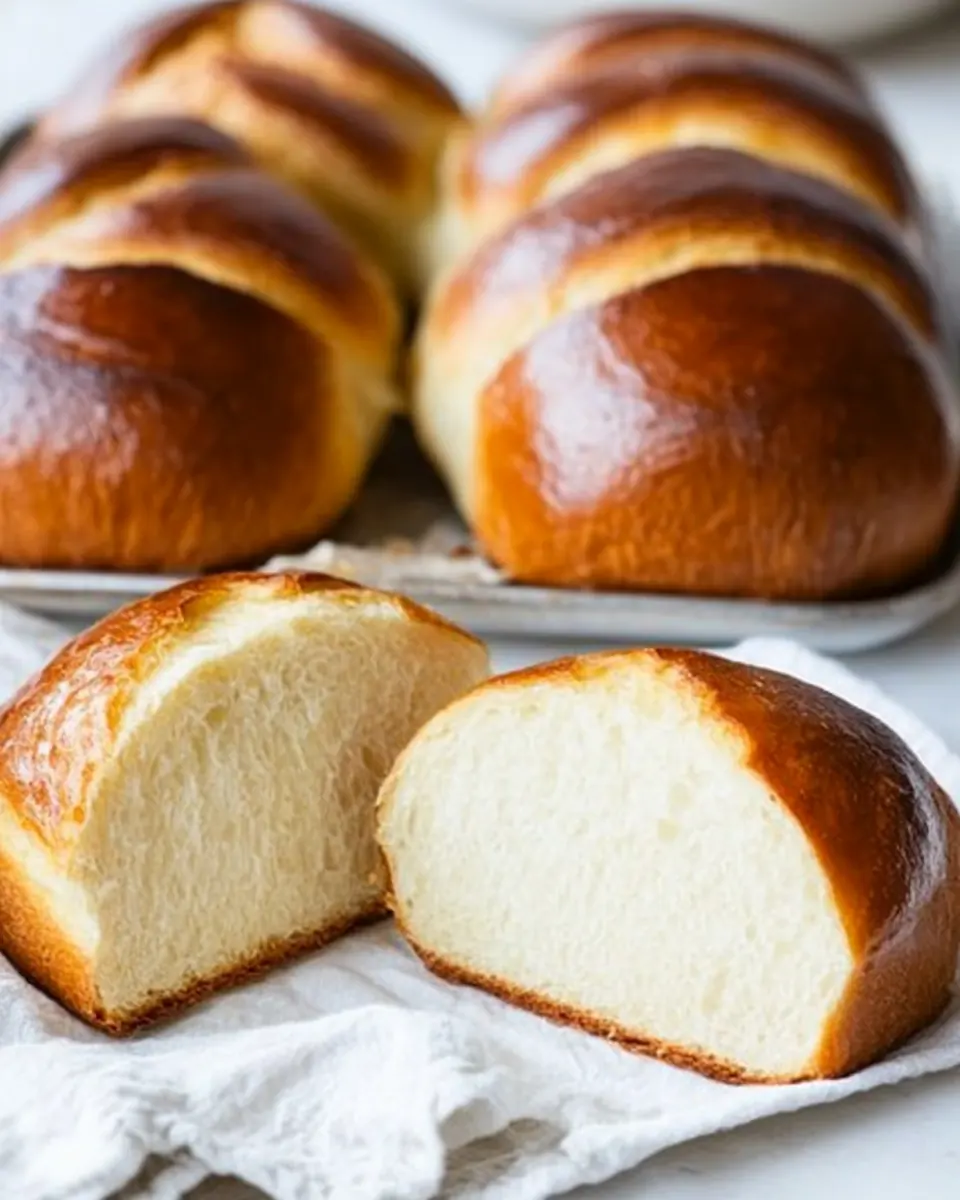
These ingredients form a classic enriched dough that balances structure and richness. The flour provides strength and body, the eggs and milk add tenderness and flavor, and the copious butter creates that signature melt in the mouth texture. Sugar and yeast work together to develop a lightly sweet, airy crumb, while salt rounds out the flavor. Each player has a clear job, and together they produce a brioche that is both soft and flavorful.
- 8 ounces of warm milk, 112° to 116°: Warm and gently heated to 112°–116°F, provides the ideal temperature to activate yeast without killing it. Plays a key role in hydrating flour and creating steam during baking for an open crumb. Helps dissolve sugar and distribute ingredients evenly throughout the dough.
- 1 tablespoon sugar: Sweet and granular, feeds the yeast and contributes to tenderization and browning of the crust. Balances the rich buttery flavor typical of brioche and enhances crust caramelization during baking. Also contributes slight moisture retention for a softer crumb.
- 1 tablespoon + 1 teaspoon active yeast: Active and foamy when proofed, initiates fermentation to produce carbon dioxide for dough rise. Enhances dough leavening speed and improves texture by creating an airy, light crumb structure. Works together with warm milk and sugar to ensure reliable proofing and volume.
- 8 ounces all-purpose flour: Starchy and protein-rich, forms the gluten network when hydrated and kneaded, providing structure to the loaf. Contributes tenderness and allows the dough to trap gases produced by yeast for proper rise. Often used here to blend with larger flour amounts for balanced texture.
- 2 pounds all-purpose flour: Primary structural component in large quantity, supplies most of the gluten and bulk for a strong, elastic dough. Determines final loaf volume and chew, and supports the rich enrichment from eggs and butter. Works with kneading to develop a smooth, extensible dough ideal for brioche.
- 1/3 cups sugar: Sweet and fine-textured, adds additional sweetness and helps tenderize the dough by interfering with gluten formation. Promotes enhanced crust color through caramelization and extends shelf life by retaining moisture. Balances richness from eggs and butter for a well-rounded taste.
- 12 eggs: Rich and emulsifying, provides moisture, color, and richness while contributing lecithin for improved dough cohesion. Adds flavor depth and yields a soft, tender crumb with finer texture. A large number intensifies the brioche’s characteristic richness and luxurious mouthfeel.
- 2 teaspoons sea salt: Salty and mineral-rich, sharpens overall flavor and controls yeast activity for a balanced fermentation rate. Strengthens gluten slightly, improving dough handling and stability during shaping. Ensures the final loaf isn’t overly sweet and enhances other flavors.
- 16 ounces softened unsalted butter: Softened and fatty, creates the tender, flaky layers and rich mouthfeel classic to brioche. Contributes to richness, moistness, and an extended shelf life while coating gluten strands to limit toughness. Incorporated gradually to achieve an even, buttery texture throughout the dough.
- 1 egg whisked with 2 tablespoons whole milk: Beaten to a uniform wash, adds shine and deep golden color to the crust when brushed before baking. Provides a subtle additional fat and milk proteins that promote browning and a slightly richer flavor. Helps toppings adhere and gives the finished loaf a professional appearance.
Putting Together Homemade Brioche Bread Recipe
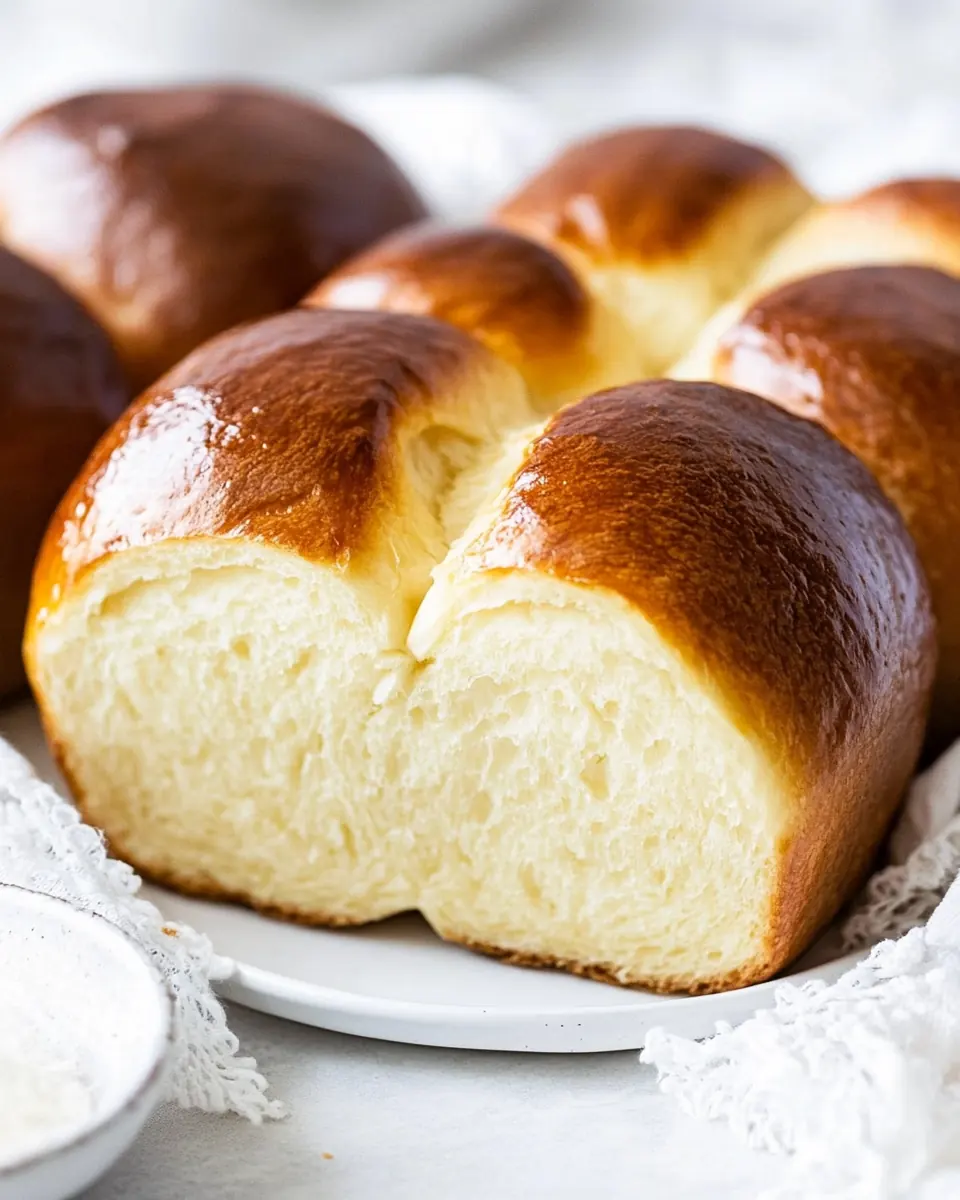
Bringing this dough to life is a multi stage process that rewards patience. I like to pace myself through the sponge, mixing, chilling, shaping, and baking so each step can be felt and adjusted. Follow the sequence and focus on sensory cues to know when each stage is ready.
- Add the milk, 1 tablespoon of sugar, and yeast to the bowl of a stand mixer and whisk just until combined.: The aroma here is subtle and reassuring, a faint milky sweet scent that signals the start. The texture should look homogenous and slightly glossy, and when you tilt the bowl you might see a few surface ripples. This gentle mixing wakes up the yeast without creating friction heat. A common mistake is overmixing which warms the liquid and stresses the yeast, so stop as soon as you have an even mixture.
- Let it sit for 5-7 minutes or until it forms a raft.: You will notice tiny bubbles forming and a foamy cap that indicates active fermentation, and the smell will shift to a mild yeasty perfume. This pause lets the yeast reproduce and build gas, creating a lively sponge. If you rush this, the dough will lack strength, and conversely if you wait too long the foam can collapse, so watch for the raft visual cue.
- Pour in 8 ounces of the flour and mix on low speed with the hook attachment until combined to create a sponge.: The sponge should feel tacky and slightly elastic, with an airy interior and small pockets of gas. You'll hear a low hum from the mixer and see the dough pulling away slightly from the bowl. This stage builds flavor and structure; avoid adding the remaining flour now, because the sponge needs to develop its fermentation character. Overworking here flattens the bubbles and reduces tenderness.
- Wrap the bowl in plastic wrap and proof in the oven with only the oven light on and the door cracked and proof for 60 minutes or until more than doubled in size.: When properly proofed you'll see a dome and the surface will look puffy and slightly domed, with a gentle spring when poked. The warm, humid oven provides consistent conditions without overheating. If you proof too hot the dough can overexpand and collapse later, while too cool a proof leads to dense crumb, so aim for that doubled volume.
- Remove the bowl and plastic wrap and place back onto the stand mixer with the hook attachment and add in 1 egg at a time over low speed until slightly mixed in and the eggs are completely whisked.: As you incorporate eggs one by one the mixture will shift from shaggy to smoother and more cohesive, with a soft sheen. The dough will smell richer and look more yellow as yolks disperse. Adding eggs slowly prevents the mixture from separating and ensures even emulsification. A common error is dumping eggs in too quickly which can make the dough curdle.
- Next, stop the mixer and add in the remaining 2 pounds of flour, 1/3 cup of sugar and salt and mix on low to medium speed until completely combined and smooth.: The dough will begin to develop gluten and will progressively feel more elastic, pulling away from the bowl in a soft mass. You should see a smooth surface and hear a gentle stretching sound as the dough cleans the sides of the bowl. Mixing at the correct speed prevents overdevelopment of gluten which would make the brioche tough, so keep it measured and observant.
- Slowly add in the softened unsalted butter until it is completely mixed in, about 5-7 minutes.: The butter will initially make the dough soft and slightly glossy, then gradually integrate into a silky, supple mass. The aroma intensifies to a warm, rich butteriness and the dough should feel smooth not greasy. This slow incorporation is essential for an even crumb; adding butter too fast leads to lumps and a greasy texture.
- Place in the refrigerator and chill for 30 minutes to harden up the butter.: Cooling firms the butter so the dough can be shaped cleanly, and you will notice a firmer, more manageable texture when you remove it. The chilled dough will feel cool and slightly springy, which makes dividing and rolling far easier. Skipping this chill step often results in sticky, unworkable dough that loses shape while proofing.
- Remove and place the dough onto a clean floured surface and divide the dough into thirds.: You will feel the dough respond under your palms, a soft elasticity that yields but bounces back. Dividing into thirds gives even portions for loaves or multiple shapes. Be careful to use just enough flour to prevent sticking, using too much will dry the surface and interfere with final crumb softness.
- To make loaves of bread, take one of the pieces of dough spread it out to form a rectangle, about 14 x 8 inches, and roll the dough over to form a taught loaf.: As you roll you'll hear a faint squeak of dough against the work surface and feel resistance as air pockets align, creating layered structure inside. A tight, even roll produces a tall loaf with nice stratification. Common mistakes include leaving air pockets or rolling too loosely which gives a flat top and irregular crumb.
- Next, place it in a buttered loaf pan and place a towel over top back in the oven with the light on and the door cracked and proof for a further 45 minutes.: The dough should rise to just above the rim and feel pillowy when touched, with visible expansion. This final proof readies the loaf for baking and sets the internal structure. Overproofing here leads to collapse in the oven, while underproofing will give dense, heavy bread, so aim for a gentle, elastic surface.
- Remove it from the oven and brush the dough with an egg wash of milk and egg and bake at 375° for 30-35 minutes or until it reaches 190°F internally.: The egg wash will develop a glossy, deeply golden crust and a sweet aroma of caramelizing proteins. As it bakes you can hear a soft crackle and smell rich butter and baked egg. Use an instant read thermometer to confirm 190°F, which ensures tender crumb without being underbaked. A typical pitfall is removing it too early, which yields a gummy interior.
- To make individual Sicilian style buns: take about a 1/2 cup-sized amount and roll it up until it’s about the size of a tennis ball and then place it onto a sheet tray lined with parchment paper.: take about a 1/2 cup-sized amount and roll it up until it’s about the size of a tennis ball and then place it onto a sheet tray lined with parchment paper : Rolling these creates a taut surface and a bouncy center that yields a fine crumb after baking; you should feel a smooth skin on each bun. Space them evenly so they can rise and brown uniformly. If you crowd the tray they will bake unevenly and stick together.
- Be sure to save a little of the dough at the end because we are going to make a smaller dough ball to go right on top of the bigger one. It will literally look like a snowman without the middle ball, to put it as simply as possible.: The tiny cap adds a charming silhouette and a slightly different texture on top, and when brushed with egg wash it will catch extra sheen and sugar. Press gently to attach the small ball so it does not separate while baking. A common mistake is making the top too small to adhere, which makes it fall off during bake.
- Brush these brioche buns up with some egg wash, sprinkle on a tad bit more sugar and bake at 375° for 18-20 minutes or until they are golden brown.: In the oven the buns will puff, their surface turning a rich bronze while the sprinkled sugar gives a delicate sparkle. You'll smell a sweet, buttery perfume as they finish. Pull them when the tops are deeply golden to ensure a tender interior, and avoid overbaking which dries out the delicate crumb.
Recipe Variations about Homemade Brioche Bread Recipe
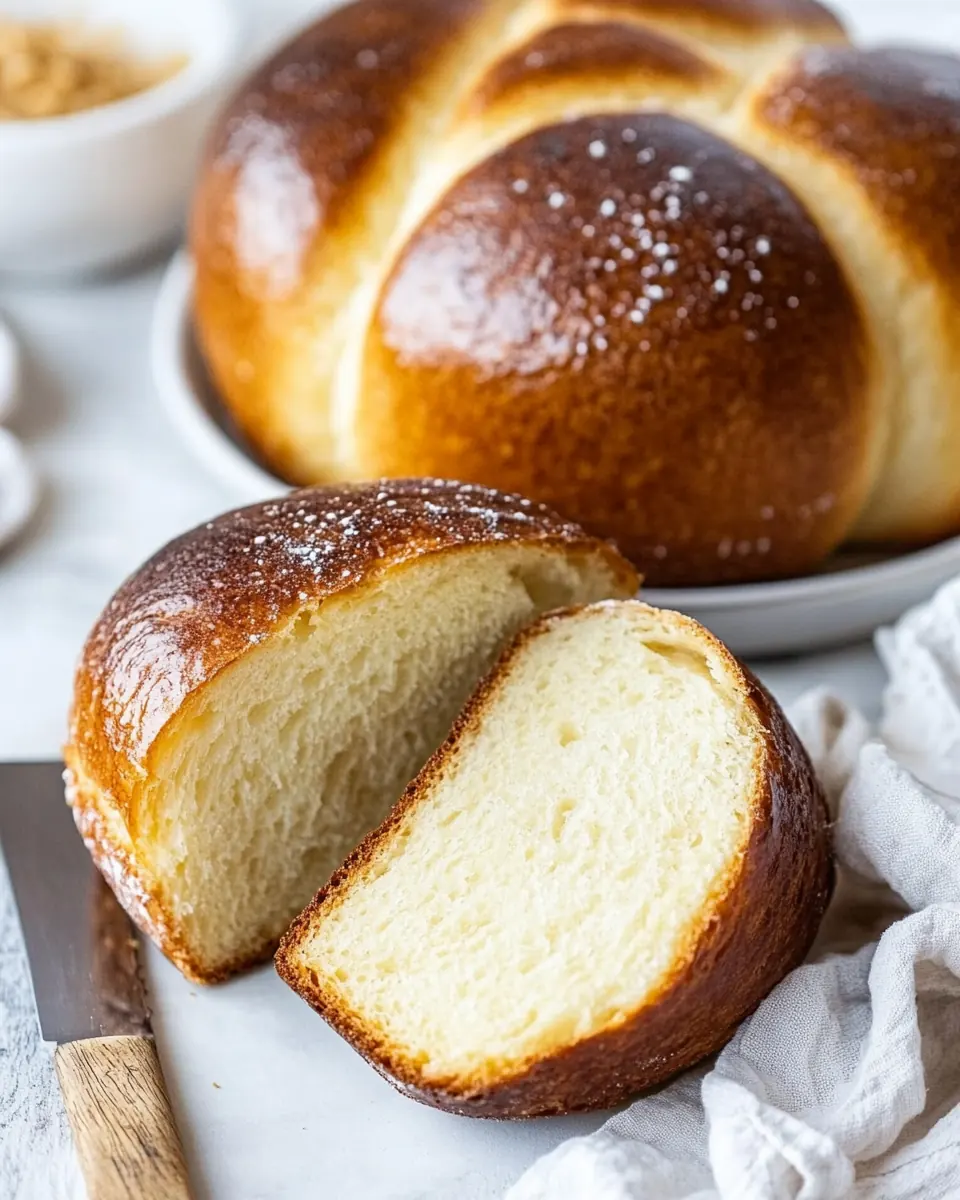
These ideas will help you adapt the dough to different shapes, sweetness levels, and richness. Use them to experiment gently while keeping the core technique intact.
- Swap shapes Keep the dough formula the same and shape into rolls, loaves, or braided loaves to suit the occasion and presentation.
- Adjust richness Add up to an extra pound of softened unsalted butter for a more decadent loaf, understanding it will be stickier to work with.
- Increase sweetness If you prefer a sweeter brioche, add up to an extra quarter cup of sugar, which will also deepen browning.
- Make ahead raw Place assembled loaves in the refrigerator up to two days before baking to slow fermentation and develop flavor.
- Freeze for later Fully baked and cooled loaves freeze well for up to three months; thaw at room temperature before serving.
Pairing Suggestions for Homemade Brioche Bread Recipe
This bread works beautifully across meals and occasions. Below I outline how I like to serve it, plus storage and pairing ideas that highlight its buttery nature.
- Breakfast pairing Slice and toast the brioche gently, then serve with soft spreads or fruit preserves for a luxurious morning.
- Lunch and sandwiches Use thick slices for deli style sandwiches or a decadent grilled cheese for a comforting midday meal.
- Special occasions The glossy loaves or decorative buns are excellent for gatherings, brunches, and holiday mornings where a rich bread feels celebratory.
- Storage tips Keep covered at room temperature for up to four days, refrigerate for up to seven days, or freeze wrapped for up to three months to preserve freshness.
- Seasonal serving ideas In colder months serve warm slices with spiced butter, and in warmer weather pair with fresh fruit and light cheeses for balance.
FAQ
Conclusion
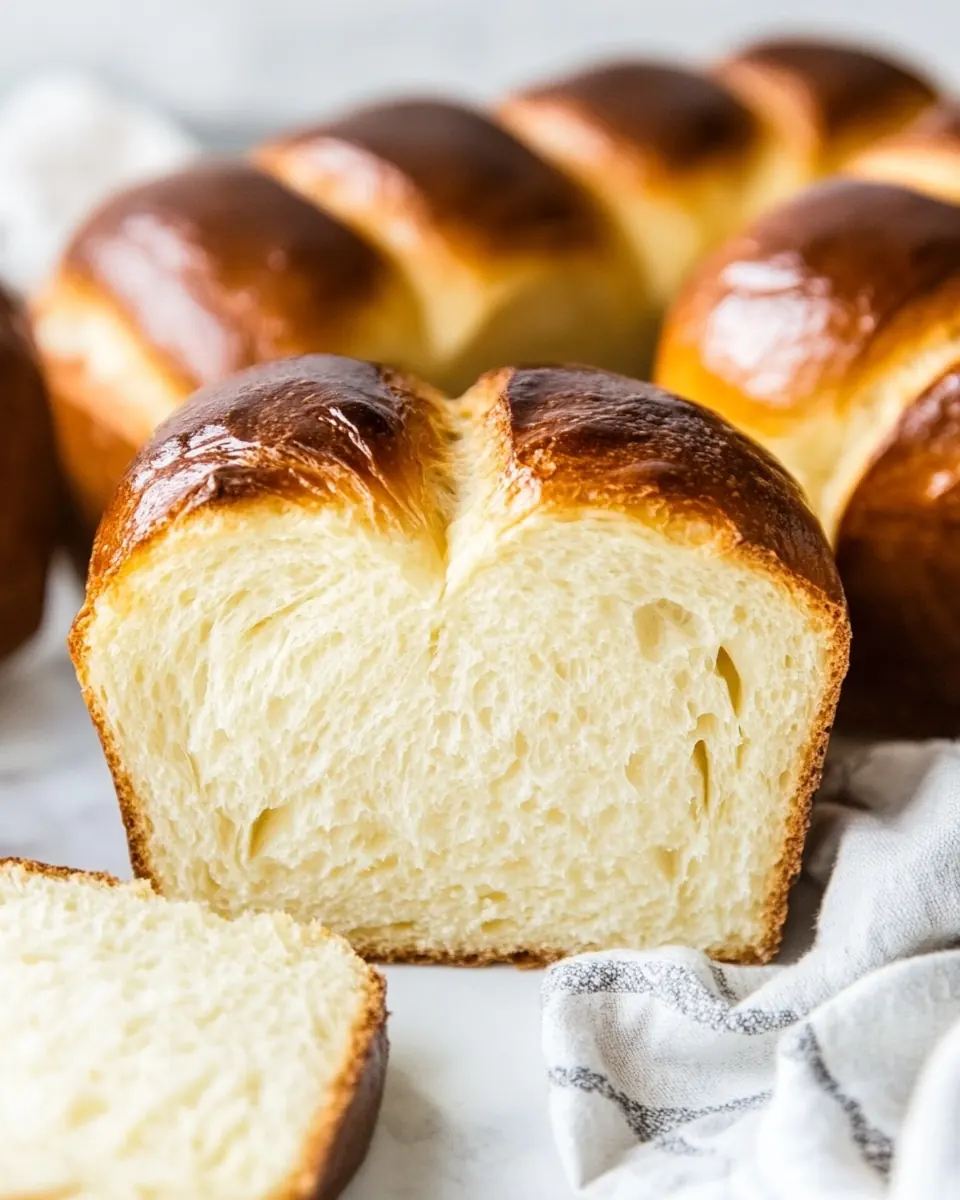
This Homemade Brioche Bread Recipe stands out for its luxurious buttery crumb, versatile shaping options, and the satisfying tactile process of turning a shaggy dough into glossy loaves. Give it a try on a relaxed morning or for a special gathering, and take your time through each stage so you can learn the sensory signals that make brioche successful. When it comes out of the oven, the deep golden crust and tender interior are incredibly rewarding, and sharing a warm slice is one of my favorite moments as a home baker.
Homemade Brioche Bread Recipe
Ingredients
Equipment
Method
- Add the milk, 1 tablespoon of sugar, and yeast to the bowl of a stand mixer and whisk just until combined.: The aroma here is subtle and reassuring, a faint milky sweet scent that signals the start. The texture should look homogenous and slightly glossy, and when you tilt the bowl you might see a few surface ripples. This gentle mixing wakes up the yeast without creating friction heat. A common mistake is overmixing which warms the liquid and stresses the yeast, so stop as soon as you have an even mixture.
- Let it sit for 5-7 minutes or until it forms a raft.: You will notice tiny bubbles forming and a foamy cap that indicates active fermentation, and the smell will shift to a mild yeasty perfume. This pause lets the yeast reproduce and build gas, creating a lively sponge. If you rush this, the dough will lack strength, and conversely if you wait too long the foam can collapse, so watch for the raft visual cue.
- Pour in 8 ounces of the flour and mix on low speed with the hook attachment until combined to create a sponge.: The sponge should feel tacky and slightly elastic, with an airy interior and small pockets of gas. You'll hear a low hum from the mixer and see the dough pulling away slightly from the bowl. This stage builds flavor and structure; avoid adding the remaining flour now, because the sponge needs to develop its fermentation character. Overworking here flattens the bubbles and reduces tenderness.
- Wrap the bowl in plastic wrap and proof in the oven with only the oven light on and the door cracked and proof for 60 minutes or until more than doubled in size.: When properly proofed you'll see a dome and the surface will look puffy and slightly domed, with a gentle spring when poked. The warm, humid oven provides consistent conditions without overheating. If you proof too hot the dough can overexpand and collapse later, while too cool a proof leads to dense crumb, so aim for that doubled volume.
- Remove the bowl and plastic wrap and place back onto the stand mixer with the hook attachment and add in 1 egg at a time over low speed until slightly mixed in and the eggs are completely whisked.: As you incorporate eggs one by one the mixture will shift from shaggy to smoother and more cohesive, with a soft sheen. The dough will smell richer and look more yellow as yolks disperse. Adding eggs slowly prevents the mixture from separating and ensures even emulsification. A common error is dumping eggs in too quickly which can make the dough curdle.
- Next, stop the mixer and add in the remaining 2 pounds of flour, 1/3 cup of sugar and salt and mix on low to medium speed until completely combined and smooth.: The dough will begin to develop gluten and will progressively feel more elastic, pulling away from the bowl in a soft mass. You should see a smooth surface and hear a gentle stretching sound as the dough cleans the sides of the bowl. Mixing at the correct speed prevents overdevelopment of gluten which would make the brioche tough, so keep it measured and observant.
- Slowly add in the softened unsalted butter until it is completely mixed in, about 5-7 minutes.: The butter will initially make the dough soft and slightly glossy, then gradually integrate into a silky, supple mass. The aroma intensifies to a warm, rich butteriness and the dough should feel smooth not greasy. This slow incorporation is essential for an even crumb; adding butter too fast leads to lumps and a greasy texture.
- Place in the refrigerator and chill for 30 minutes to harden up the butter.: Cooling firms the butter so the dough can be shaped cleanly, and you will notice a firmer, more manageable texture when you remove it. The chilled dough will feel cool and slightly springy, which makes dividing and rolling far easier. Skipping this chill step often results in sticky, unworkable dough that loses shape while proofing.
- Remove and place the dough onto a clean floured surface and divide the dough into thirds.: You will feel the dough respond under your palms, a soft elasticity that yields but bounces back. Dividing into thirds gives even portions for loaves or multiple shapes. Be careful to use just enough flour to prevent sticking, using too much will dry the surface and interfere with final crumb softness.
- To make loaves of bread, take one of the pieces of dough spread it out to form a rectangle, about 14 x 8 inches, and roll the dough over to form a taught loaf.: As you roll you'll hear a faint squeak of dough against the work surface and feel resistance as air pockets align, creating layered structure inside. A tight, even roll produces a tall loaf with nice stratification. Common mistakes include leaving air pockets or rolling too loosely which gives a flat top and irregular crumb.
- Next, place it in a buttered loaf pan and place a towel over top back in the oven with the light on and the door cracked and proof for a further 45 minutes.: The dough should rise to just above the rim and feel pillowy when touched, with visible expansion. This final proof readies the loaf for baking and sets the internal structure. Overproofing here leads to collapse in the oven, while underproofing will give dense, heavy bread, so aim for a gentle, elastic surface.
- Remove it from the oven and brush the dough with an egg wash of milk and egg and bake at 375° for 30-35 minutes or until it reaches 190°F internally.: The egg wash will develop a glossy, deeply golden crust and a sweet aroma of caramelizing proteins. As it bakes you can hear a soft crackle and smell rich butter and baked egg. Use an instant read thermometer to confirm 190°F, which ensures tender crumb without being underbaked. A typical pitfall is removing it too early, which yields a gummy interior.
- To make individual Sicilian style buns: take about a 1/2 cup-sized amount and roll it up until it’s about the size of a tennis ball and then place it onto a sheet tray lined with parchment paper.: take about a 1/2 cup-sized amount and roll it up until it’s about the size of a tennis ball and then place it onto a sheet tray lined with parchment paper : Rolling these creates a taut surface and a bouncy center that yields a fine crumb after baking; you should feel a smooth skin on each bun. Space them evenly so they can rise and brown uniformly. If you crowd the tray they will bake unevenly and stick together.
- Be sure to save a little of the dough at the end because we are going to make a smaller dough ball to go right on top of the bigger one. It will literally look like a snowman without the middle ball, to put it as simply as possible.: The tiny cap adds a charming silhouette and a slightly different texture on top, and when brushed with egg wash it will catch extra sheen and sugar. Press gently to attach the small ball so it does not separate while baking. A common mistake is making the top too small to adhere, which makes it fall off during bake.
- Brush these brioche buns up with some egg wash, sprinkle on a tad bit more sugar and bake at 375° for 18-20 minutes or until they are golden brown.: In the oven the buns will puff, their surface turning a rich bronze while the sprinkled sugar gives a delicate sparkle. You'll smell a sweet, buttery perfume as they finish. Pull them when the tops are deeply golden to ensure a tender interior, and avoid overbaking which dries out the delicate crumb.
Notes
- Swap shapes Keep the dough formula the same and shape into rolls, loaves, or braided loaves to suit the occasion and presentation.
- Adjust richness Add up to an extra pound of softened unsalted butter for a more decadent loaf, understanding it will be stickier to work with.
- Increase sweetness If you prefer a sweeter brioche, add up to an extra quarter cup of sugar, which will also deepen browning.
- Make ahead raw Place assembled loaves in the refrigerator up to two days before baking to slow fermentation and develop flavor.
- Freeze for later Fully baked and cooled loaves freeze well for up to three months; thaw at room temperature before serving.