Ice Box Cake with Coconut and Mangos
Ice Box Cake with Coconut and Mangos is the kind of dessert I started making the summer I moved into a tiny apartment with a window that always smelled faintly of the farmer market across the street. I remember grabbing a crate of mangos because they were impossibly sweet that week, and wanting something cool and effortless to show them off. The first time I built this cake I used store bought cookies stacked like little bricks and a cloud of heavy cream whipped until it trembled with peaks, and the result felt like a celebration that required almost no fuss.
Over the years I tweaked the layers, leaned into texture by adding sweetened coconut flakes, and learned that a touch of lime juice wakes everything up. Friends started asking for it at potlucks because it slices beautifully and keeps well in the refrigerator. I love that you can assemble it in under an hour, tuck it away to chill, and then unveil something that tastes like a beachside bakery. This cake has become my go to for hot afternoons when you want something that feels elegant but is really kind to busy schedules.
Recipe Snapshot
21 mins
20 mins
1 mins
Easy
300 kcal
American
Gluten-Free, Low FODMAP
Desserts
Mixer, Mixing bowl, Spatula, Baking sheet, Serving platter
Why This Ice Box Cake with Coconut and Mangos Is a Winner
Light and Refreshing Texture
I adore how Ice Box Cake with Coconut and Mangos relies on whipped heavy cream and cream of coconut to create a silky, cloud like filling. The filling gently soaks the cookies so you end up with layers that are creamy without being heavy, giving each forkful a contrast between soft and slightly cakey textures.
Bright Tropical Flavors
We get an immediate aroma of fresh mangos and toasted coconut flakes, which makes every bite feel sunny. The squeeze of lime juice balances the sweet notes, so the cake never becomes cloying. I often say it tastes like summer in a slice.
Minimal Fuss, Maximum Impact
This recipe is a dream when you want a dessert that looks impressive but does not demand oven babysitting. You assemble, chill, and finish with the toasted coconut flakes and mangos. For gatherings, that freedom to prepare ahead is priceless.
Play of Textures
The crunchy snap of certain cookies against the lush filling and tender mangos is what keeps people coming back for seconds. Toasting the coconut flakes adds nuttiness and a golden color that lifts the whole presentation.
Adaptable and Crowd Friendly
I love that you can scale this recipe easily. It travels well, slices cleanly, and the flavors appeal to a wide range of palates. Whether you are serving family or friends, it reads as special without being finicky.
Ingredients Overview for Ice Box Cake with Coconut and Mangos
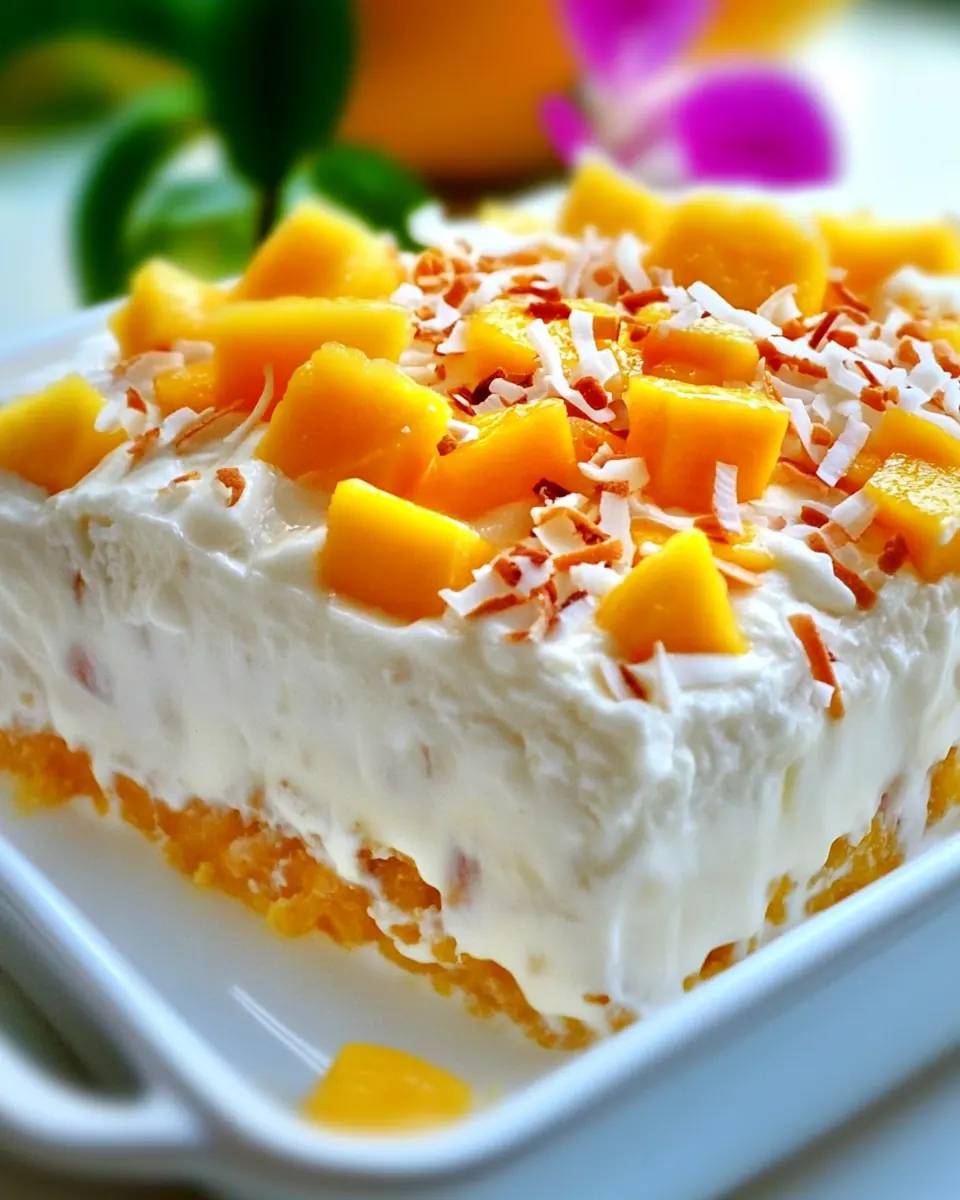
The ingredient philosophy here is simple, bright, and affectionate. I pair a lush, stabilized whipped filling with crisp cookie layers and fresh mangos so each element plays a role. The filling provides creaminess, the cookies create structure, and the toasted coconut flakes give aroma and crunch. A whisper of lime juice sharpens the sweetness and ties the components together.
- 1 1/2 cups cold heavy cream: Whip until soft peaks form and provide the light, airy base for folding and stabilizing the assembled layers of the cake. Add richness and creaminess to balance sweet elements while helping set the texture when chilled.
- 1/2 cup cream of coconut: Sweeten and flavor the cream with concentrated coconut taste, contributing a smooth, syrupy sweetness that infuses each layer. Help bind flavors together and enhance the tropical profile without thinning the whipped cream significantly.
- 40 Coconut Delight Oreo Fudge Cremes: Crush into crumbs or layer whole to provide the primary cookie structure and chocolate-vanilla crunch of the dessert. Contribute sweetness and contrast in texture that soaks slightly from the cream, creating the signature icebox cake layers.
- 1/2 cup sweetened coconut flakes: Toast or fold into the cream to contribute chewy, sweet coconut texture and emphasize the coconut flavor throughout the cake. Add visual interest and a toasty note that contrasts with the creamy and fruity components.
- 2 large mangos: Peel and slice or dice to provide fresh, juicy mango flavor and bright fruitiness that complements the coconut and cream. Offer natural sweetness, vibrant color, and a tender texture that balances the richness of the whipped layers.
- 1 tablespoon lime juice: Squeeze over the mangos to add bright acidity that lifts the overall flavor and balances sweetness from cream and cookies. Enhance fruit brightness and add a subtle citrus note that sharpens the dessert’s finish.
- kosher salt: Season sparingly to enhance and balance all flavors, sharpening the sweetness and rounding out the tropical notes. Use minimal pinches to avoid overt salting while bringing out depth in the cream and fruit.
Step by Step Guide for Ice Box Cake with Coconut and Mangos
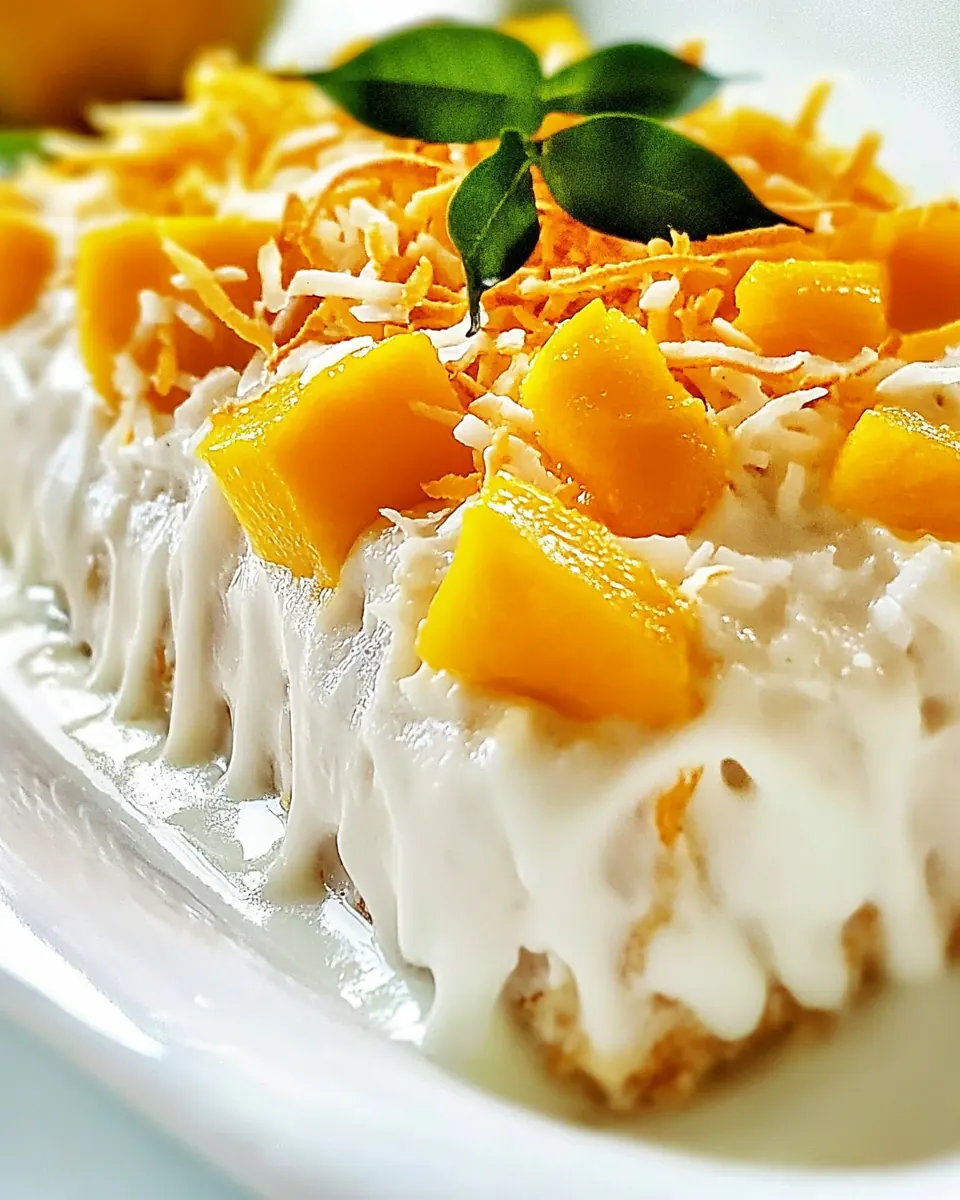
This is a laid back, tactile recipe that rewards attention to texture and timing. You will whisk the filling to peaks, assemble cookie layers deliberately, and toast coconut for contrast. Chill time is essential, so plan ahead and enjoy the hands on parts.
- Beat heavy cream on medium-high speed until stiff peaks form, about 3-5 minutes. Fold in the cream of coconut until just incorporated.: The bowl should feel cool to the touch, and you will hear a change from watery slosh to a thicker whipping sound as the heavy cream aerates. Peaks will hold when you lift the whisk, and the surface will look glossy, slightly satiny. This aeration is what gives the filling lift, so do not under whip, but beware of over whipping which creates a grainy texture and eventually butter. If your cream seems slow to thicken, chill the bowl and whisk for five to ten minutes and try again. A common mistake is rushing on too high a speed, which warms the cream and reduces volume.
- Drop 1 heaping teaspoon of the coconut whipped cream onto each Coconut Delight Oreo Fudge Creme cookie. On a long serving platter, press the cookies together on their sides to form a long log. Cover the log with the remaining coconut whipped cream. Cover with plastic wrap and refrigerate at least 6 hours up to overnight.: Once the heavy cream has reached stiff peaks, the surface will hold shape, and you will add the sweet cream of coconut gently. Use a large spatula, cutting through the center and lifting the mixture to combine so you do not deflate the air you worked for. You want streaks to disappear without over mixing, which would make the filling heavy. The aroma will become distinctly coconut forward and the texture silkier. Watch for separation, which signals over mixing; stop when uniform.
- To toast coconut, spread coconut flakes in a single layer on a baking sheet and bake at 350 degrees until just golden, about 5 minutes. Let cool completely.: The cookies should be at room temperature so the filling adheres rather than sliding. When you place the dollops, you will feel the soft marshmallow like give of the whipped mixture against the cookie surface. Pressing the cookies into a log creates the architecture, and pressing too hard will squeeze out filling. A frequent error is using too much filling per cookie which makes assembly messy and the log unstable.
- When ready to serve, toss mangos with lime juice, sugar and a pinch of salt in a small bowl. Sprinkle the toasted coconut all over the cake, gently pressing to adhere. Top with the mangos.: As you line them up, you will hear a faint click as the edges nestle, and visually the row will look like a textured loaf. Keeping the cookies snug helps the log hold shape while chilling. If they are spaced, the structure will slump. Work steadily so the log is neat, and wipe excess filling to keep edges tidy.
- Cover the log with the remaining coconut whipped cream: Spread the remaining filling with a spatula until the log is fully wrapped, leaving no cookie exposed. The surface should be smooth, with visible swirls from the spatula that will pick up the toasted coconut flakes later. This outer layer protects the cookies and creates the cake like exterior. Take care not to over press, or you will compress the interior layers and lose the light texture.
- Cover with plastic wrap and refrigerate at least 6 hours up to overnight: Chilling is where the magic happens, the cookies soften and absorb moisture from the filling, transforming into tender cake like layers. Refrigeration allows flavors to meld and the structure to firm. If you cut into the log too soon you will see distinct, crunchy cookie centers which is not the desired finish. Plan for the minimum chilling time to ensure clean slices.
- To toast coconut spread coconut flakes in a single layer on a baking sheet and bake at 350 degrees until just golden about 5 minutes: The flakes will darken quickly and release a warm, nutty aroma; watch them closely as they can go from golden to burnt in moments. Once toasted, allow them to cool fully on the sheet to crisp up. Toasting amplifies coconut flavor and adds a pleasant crunch against the smooth filling. A common pitfall is uneven toasting, so shake the pan midway for even color.
- Let cool completely: After toasting, the flakes continue to crisp as they cool and will be easier to handle and press into the cake surface. Cooling also prevents melting of the outer filling when applied, which would create soggy spots. If you attempt to use warm flakes immediately, the texture will suffer and the visual will be less vibrant.
- When ready to serve toss mangos with lime juice sugar and a pinch of salt in a small bowl: The mangos should be ripe but firm, sliced or diced so each piece holds its shape. The lime juice brightens and the pinch of kosher salt deepens sweetness, producing a glossy fruit mixture that smells citrusy and tropical. This step balances sweet and acid, making the fruit taste fresher. Avoid over macerating the fruit or it will release too much juice and make the topping runny.
- Sprinkle the toasted coconut all over the cake gently pressing to adhere: As you press the warm golden flakes, the contrast between the white filling and the toasted edges creates an attractive finish. Press only lightly so the flakes stick without flattening the surface. The aroma will lift immediately and the cake will take on a toasty note. Rushing this step can flake off the toasted coconut and create a messy presentation.
- Top with the mangos: Arrange the fruit so it covers the log attractively, creating color contrast and juicy bites in every slice. The mango topping should sit proudly on the cake, not slide off, and the overall balance should remain stable. If the fruit seems watery, drain slightly before topping to avoid soggy slices. A common mistake is piling fruit too high which hinders neat slicing.
Recipe Notes about Ice Box Cake with Coconut and Mangos
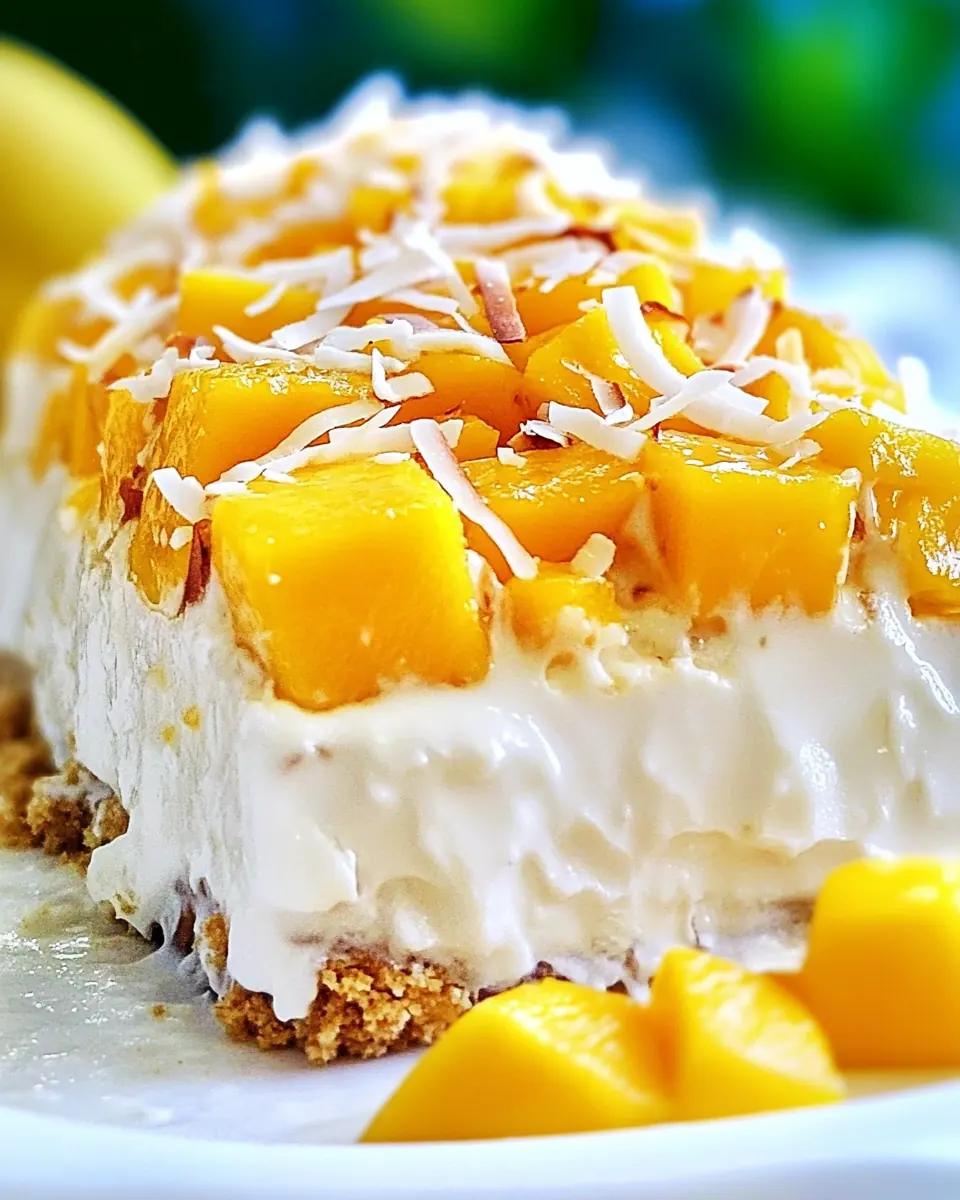
These notes expand the original pointers and address common questions I get when people attempt this at home. I focus on ingredient behavior, texture, and easy fixes so your cake turns out reliably each time.
- Chilling Is Essential: Allow a minimum of six hours in the refrigerator, overnight is ideal, because the cookies need time to absorb moisture from the filling and become cake like. Cutting earlier yields crunchy centers and a messier presentation. If you are short on time, try thinner layering to accelerate absorption, but results will differ.
- Use the Correct Coconut Product: Cream of coconut is sweetened and thick, unlike coconut milk or plain coconut cream, so do not substitute. The sweet, dense texture of cream of coconut stabilizes the filling and contributes signature coconut flavor. If you cannot find it, ask at the store in the mixers aisle for the liquid sweetened version.
- Whipping Technique: Start at medium speed to build structure, then increase to medium high to reach stiff peaks. Over whipping will result in grainy curds and possibly butter formation. If you over whip slightly, you can often rescue the cream by folding in a small amount of fresh unwhipped cream to reintroduce moisture and smoothness.
- Cookie Choice Matters: The specified Coconut Delight Oreo Fudge Cremes give a particular balance of chocolate and coconut. If substituting chocolate wafers, be mindful that thinner cookies absorb differently and may require more layers or adjusted quantities to reach the same height and texture.
- Serving and Slicing: Use a sharp knife warmed briefly under hot water and wiped dry for clean slices. Pressing gently while slicing will help maintain the layered look. If slices are falling apart, return the cake to chill for another hour to firm up.
Perfect Pairings for Ice Box Cake with Coconut and Mangos
This section covers when and how to serve the cake, plus storage and seasonal ideas. Think of these pairings as ways to highlight the tropical character and keep the dessert practical for gatherings.
- Casual Summer Gatherings: Serve slices of Ice Box Cake with Coconut and Mangos at backyard lunches or poolside parties. The cool texture and bright fruit topping make it perfect for hot afternoons when guests appreciate a refreshing finish.
- Brunch or Light Dessert: Present modest slices after a light brunch with fruit salads and chilled drinks. The cake complements citrus and green salads without overwhelming the meal, offering a sweet but airy finale.
- Seasonal Pairings: In summer, pair with more fresh stone fruit or a platter of tropical fruits. In cooler months, keep the recipe for holiday gatherings where its vibrant flavors offer contrast to richer, spicier dishes.
- Storage Tips: Keep the cake tightly wrapped in plastic in the refrigerator for up to three days. To preserve texture, do not freeze once assembled, since the fruit topping will lose quality. If you must prepare ahead, freeze the unassembled cookie log separately, then thaw and finish with toasted coconut flakes and mangos.
- Serving Style: Slice with a warm, dry knife for clean edges and present each slice with a spoonful of extra mango on the side. Garnish with additional toasted coconut flakes for visual contrast and crunch.
- Occasions: This recipe is ideal for outdoor events, potlucks, Ramadan if cooling evening meals are welcome, or anytime you want a dessert that feels celebratory without complex technique.
- Portioning: The recipe yields between six and eight servings depending on slice thickness. For a larger crowd, double the layers and chill in a larger dish, maintaining the same ratio of filling to cookies.
FAQ
Conclusion
This Ice Box Cake with Coconut and Mangos stands out because it combines airy coconut scented filling, tender cookie layers, and bright fresh mango topping into a dessert that feels both elegant and effortless. Give it a try when you want something you can assemble ahead and serve chilled with minimal last minute work. Serve it to friends and family and watch how quickly they come back for seconds, especially on a warm afternoon when the flavors sing together.
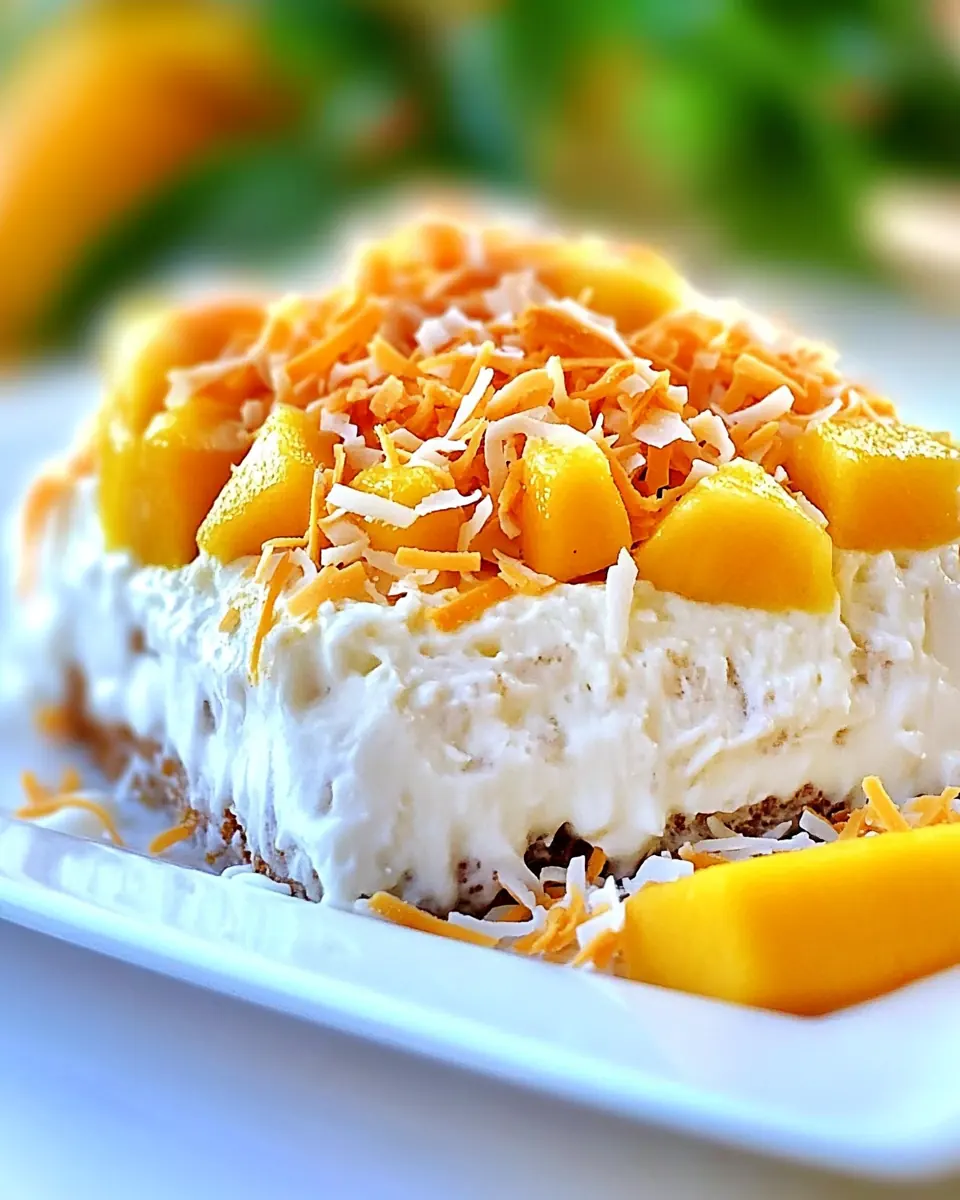
Ice Box Cake with Coconut and Mangos
Ingredients
Equipment
Method
- Beat heavy cream on medium-high speed until stiff peaks form, about 3-5 minutes. Fold in the cream of coconut until just incorporated.: The bowl should feel cool to the touch, and you will hear a change from watery slosh to a thicker whipping sound as the heavy cream aerates. Peaks will hold when you lift the whisk, and the surface will look glossy, slightly satiny. This aeration is what gives the filling lift, so do not under whip, but beware of over whipping which creates a grainy texture and eventually butter. If your cream seems slow to thicken, chill the bowl and whisk for five to ten minutes and try again. A common mistake is rushing on too high a speed, which warms the cream and reduces volume.
- Drop 1 heaping teaspoon of the coconut whipped cream onto each Coconut Delight Oreo Fudge Creme cookie. On a long serving platter, press the cookies together on their sides to form a long log. Cover the log with the remaining coconut whipped cream. Cover with plastic wrap and refrigerate at least 6 hours up to overnight.: Once the heavy cream has reached stiff peaks, the surface will hold shape, and you will add the sweet cream of coconut gently. Use a large spatula, cutting through the center and lifting the mixture to combine so you do not deflate the air you worked for. You want streaks to disappear without over mixing, which would make the filling heavy. The aroma will become distinctly coconut forward and the texture silkier. Watch for separation, which signals over mixing; stop when uniform.
- To toast coconut, spread coconut flakes in a single layer on a baking sheet and bake at 350 degrees until just golden, about 5 minutes. Let cool completely.: The cookies should be at room temperature so the filling adheres rather than sliding. When you place the dollops, you will feel the soft marshmallow like give of the whipped mixture against the cookie surface. Pressing the cookies into a log creates the architecture, and pressing too hard will squeeze out filling. A frequent error is using too much filling per cookie which makes assembly messy and the log unstable.
- When ready to serve, toss mangos with lime juice, sugar and a pinch of salt in a small bowl. Sprinkle the toasted coconut all over the cake, gently pressing to adhere. Top with the mangos.: As you line them up, you will hear a faint click as the edges nestle, and visually the row will look like a textured loaf. Keeping the cookies snug helps the log hold shape while chilling. If they are spaced, the structure will slump. Work steadily so the log is neat, and wipe excess filling to keep edges tidy.
- Cover the log with the remaining coconut whipped cream: Spread the remaining filling with a spatula until the log is fully wrapped, leaving no cookie exposed. The surface should be smooth, with visible swirls from the spatula that will pick up the toasted coconut flakes later. This outer layer protects the cookies and creates the cake like exterior. Take care not to over press, or you will compress the interior layers and lose the light texture.
- Cover with plastic wrap and refrigerate at least 6 hours up to overnight: Chilling is where the magic happens, the cookies soften and absorb moisture from the filling, transforming into tender cake like layers. Refrigeration allows flavors to meld and the structure to firm. If you cut into the log too soon you will see distinct, crunchy cookie centers which is not the desired finish. Plan for the minimum chilling time to ensure clean slices.
- To toast coconut spread coconut flakes in a single layer on a baking sheet and bake at 350 degrees until just golden about 5 minutes: The flakes will darken quickly and release a warm, nutty aroma; watch them closely as they can go from golden to burnt in moments. Once toasted, allow them to cool fully on the sheet to crisp up. Toasting amplifies coconut flavor and adds a pleasant crunch against the smooth filling. A common pitfall is uneven toasting, so shake the pan midway for even color.
- Let cool completely: After toasting, the flakes continue to crisp as they cool and will be easier to handle and press into the cake surface. Cooling also prevents melting of the outer filling when applied, which would create soggy spots. If you attempt to use warm flakes immediately, the texture will suffer and the visual will be less vibrant.
- When ready to serve toss mangos with lime juice sugar and a pinch of salt in a small bowl: The mangos should be ripe but firm, sliced or diced so each piece holds its shape. The lime juice brightens and the pinch of kosher salt deepens sweetness, producing a glossy fruit mixture that smells citrusy and tropical. This step balances sweet and acid, making the fruit taste fresher. Avoid over macerating the fruit or it will release too much juice and make the topping runny.
- Sprinkle the toasted coconut all over the cake gently pressing to adhere: As you press the warm golden flakes, the contrast between the white filling and the toasted edges creates an attractive finish. Press only lightly so the flakes stick without flattening the surface. The aroma will lift immediately and the cake will take on a toasty note. Rushing this step can flake off the toasted coconut and create a messy presentation.
- Top with the mangos: Arrange the fruit so it covers the log attractively, creating color contrast and juicy bites in every slice. The mango topping should sit proudly on the cake, not slide off, and the overall balance should remain stable. If the fruit seems watery, drain slightly before topping to avoid soggy slices. A common mistake is piling fruit too high which hinders neat slicing.
Notes
- Chilling Is Essential: Allow a minimum of six hours in the refrigerator, overnight is ideal, because the cookies need time to absorb moisture from the filling and become cake like. Cutting earlier yields crunchy centers and a messier presentation. If you are short on time, try thinner layering to accelerate absorption, but results will differ.
- Use the Correct Coconut Product: Cream of coconut is sweetened and thick, unlike coconut milk or plain coconut cream, so do not substitute. The sweet, dense texture of cream of coconut stabilizes the filling and contributes signature coconut flavor. If you cannot find it, ask at the store in the mixers aisle for the liquid sweetened version.
- Whipping Technique: Start at medium speed to build structure, then increase to medium high to reach stiff peaks. Over whipping will result in grainy curds and possibly butter formation. If you over whip slightly, you can often rescue the cream by folding in a small amount of fresh unwhipped cream to reintroduce moisture and smoothness.
- Cookie Choice Matters: The specified Coconut Delight Oreo Fudge Cremes give a particular balance of chocolate and coconut. If substituting chocolate wafers, be mindful that thinner cookies absorb differently and may require more layers or adjusted quantities to reach the same height and texture.
- Serving and Slicing: Use a sharp knife warmed briefly under hot water and wiped dry for clean slices. Pressing gently while slicing will help maintain the layered look. If slices are falling apart, return the cake to chill for another hour to firm up.