Beat heavy cream on medium-high speed until stiff peaks form, about 3-5 minutes. Fold in the cream of coconut until just incorporated.: The bowl should feel cool to the touch, and you will hear a change from watery slosh to a thicker whipping sound as the heavy cream aerates. Peaks will hold when you lift the whisk, and the surface will look glossy, slightly satiny. This aeration is what gives the filling lift, so do not under whip, but beware of over whipping which creates a grainy texture and eventually butter. If your cream seems slow to thicken, chill the bowl and whisk for five to ten minutes and try again. A common mistake is rushing on too high a speed, which warms the cream and reduces volume.
Drop 1 heaping teaspoon of the coconut whipped cream onto each Coconut Delight Oreo Fudge Creme cookie. On a long serving platter, press the cookies together on their sides to form a long log. Cover the log with the remaining coconut whipped cream. Cover with plastic wrap and refrigerate at least 6 hours up to overnight.: Once the heavy cream has reached stiff peaks, the surface will hold shape, and you will add the sweet cream of coconut gently. Use a large spatula, cutting through the center and lifting the mixture to combine so you do not deflate the air you worked for. You want streaks to disappear without over mixing, which would make the filling heavy. The aroma will become distinctly coconut forward and the texture silkier. Watch for separation, which signals over mixing; stop when uniform.
To toast coconut, spread coconut flakes in a single layer on a baking sheet and bake at 350 degrees until just golden, about 5 minutes. Let cool completely.: The cookies should be at room temperature so the filling adheres rather than sliding. When you place the dollops, you will feel the soft marshmallow like give of the whipped mixture against the cookie surface. Pressing the cookies into a log creates the architecture, and pressing too hard will squeeze out filling. A frequent error is using too much filling per cookie which makes assembly messy and the log unstable.
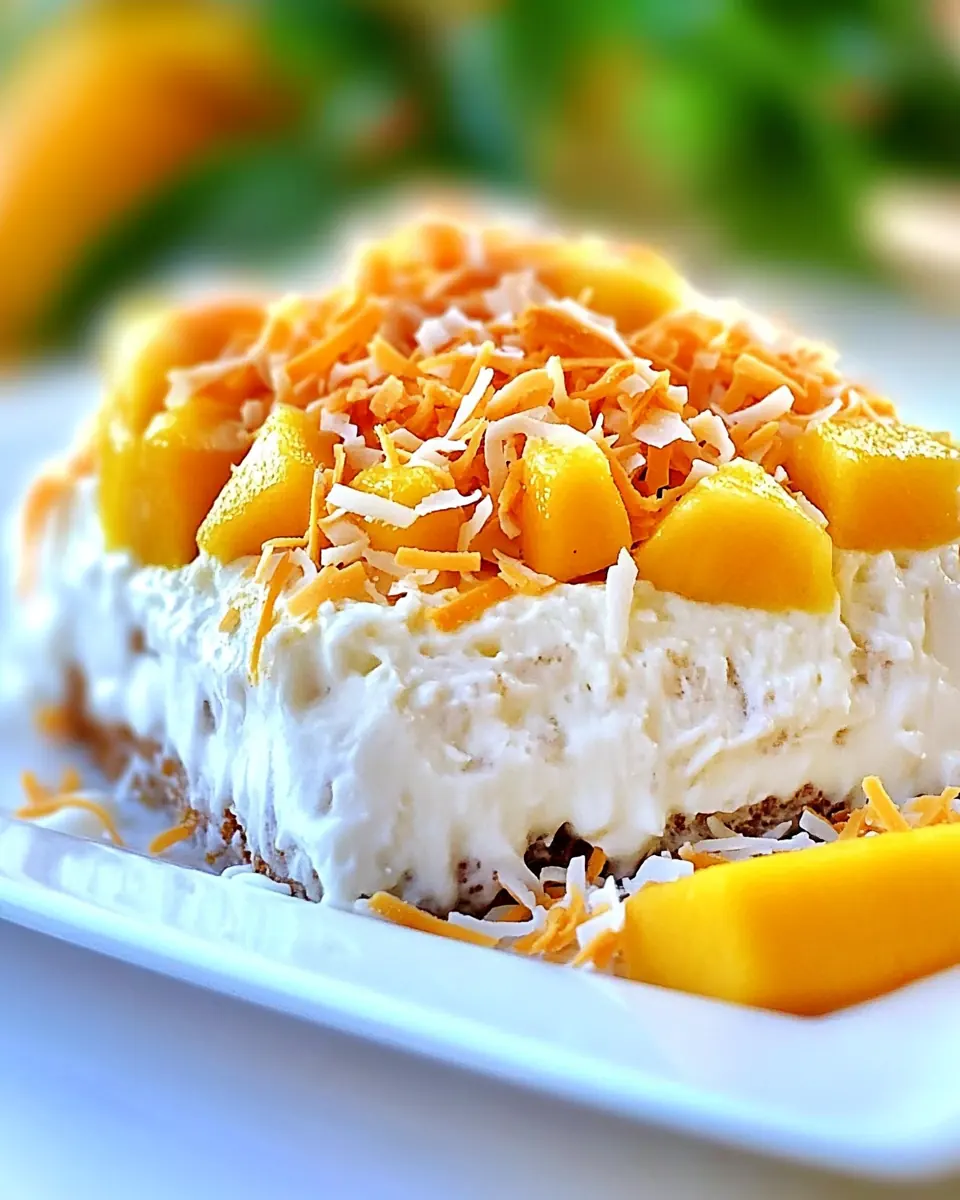
When ready to serve, toss mangos with lime juice, sugar and a pinch of salt in a small bowl. Sprinkle the toasted coconut all over the cake, gently pressing to adhere. Top with the mangos.: As you line them up, you will hear a faint click as the edges nestle, and visually the row will look like a textured loaf. Keeping the cookies snug helps the log hold shape while chilling. If they are spaced, the structure will slump. Work steadily so the log is neat, and wipe excess filling to keep edges tidy.
Cover the log with the remaining coconut whipped cream: Spread the remaining filling with a spatula until the log is fully wrapped, leaving no cookie exposed. The surface should be smooth, with visible swirls from the spatula that will pick up the toasted coconut flakes later. This outer layer protects the cookies and creates the cake like exterior. Take care not to over press, or you will compress the interior layers and lose the light texture.
Cover with plastic wrap and refrigerate at least 6 hours up to overnight: Chilling is where the magic happens, the cookies soften and absorb moisture from the filling, transforming into tender cake like layers. Refrigeration allows flavors to meld and the structure to firm. If you cut into the log too soon you will see distinct, crunchy cookie centers which is not the desired finish. Plan for the minimum chilling time to ensure clean slices.
To toast coconut spread coconut flakes in a single layer on a baking sheet and bake at 350 degrees until just golden about 5 minutes: The flakes will darken quickly and release a warm, nutty aroma; watch them closely as they can go from golden to burnt in moments. Once toasted, allow them to cool fully on the sheet to crisp up. Toasting amplifies coconut flavor and adds a pleasant crunch against the smooth filling. A common pitfall is uneven toasting, so shake the pan midway for even color.
Let cool completely: After toasting, the flakes continue to crisp as they cool and will be easier to handle and press into the cake surface. Cooling also prevents melting of the outer filling when applied, which would create soggy spots. If you attempt to use warm flakes immediately, the texture will suffer and the visual will be less vibrant.
When ready to serve toss mangos with lime juice sugar and a pinch of salt in a small bowl: The mangos should be ripe but firm, sliced or diced so each piece holds its shape. The lime juice brightens and the pinch of kosher salt deepens sweetness, producing a glossy fruit mixture that smells citrusy and tropical. This step balances sweet and acid, making the fruit taste fresher. Avoid over macerating the fruit or it will release too much juice and make the topping runny.
Sprinkle the toasted coconut all over the cake gently pressing to adhere: As you press the warm golden flakes, the contrast between the white filling and the toasted edges creates an attractive finish. Press only lightly so the flakes stick without flattening the surface. The aroma will lift immediately and the cake will take on a toasty note. Rushing this step can flake off the toasted coconut and create a messy presentation.
Top with the mangos: Arrange the fruit so it covers the log attractively, creating color contrast and juicy bites in every slice. The mango topping should sit proudly on the cake, not slide off, and the overall balance should remain stable. If the fruit seems watery, drain slightly before topping to avoid soggy slices. A common mistake is piling fruit too high which hinders neat slicing.