Lemon Cream Cheese Crumb Cake
Lemon Cream Cheese Crumb Cake became one of my go to treats the first time I baked it for a spring brunch with friends, and that first bite still makes me smile.
I remember pulling the warm pan from the oven, the kitchen filling with a bright citrus perfume that cut through the buttery scent of crumbs, while a few guests hovered near the counter with mugs in hand. I chatted with my neighbor about gardening, and between stories we kept sampling little squares, praising the cream cheese layer that felt almost like a soft, tangy cloud against the tender cake. That afternoon taught me how a simple, focused set of ingredients can make a dessert that feels celebratory and approachable at once.
Over the years I tweaked quantities and timing, learning when to stop mixing and when to let the cake cool fully so slices hold their shape. I also learned that using fresh lemons for both zest and juice is worth the extra effort, it brightens the flavor without overpowering the gentle sweetness. I hope this version helps you make the same kind of warm memory at your table.
Recipe Snapshot
60 mins
25 mins
35 mins
Medium
320 kcal
American
Gluten-Free, Low FODMAP
Desserts
Mixing bowl, Whisk, 13 x 9 baking pan, Offset spatula
Why This Lemon Cream Cheese Crumb Cake Shines
Bright citrus balance
I love how Lemon Cream Cheese Crumb Cake walks a fine line between sweet and tart. The fresh lemon zest and lemon juice cut through the richness of the cream cheese, so each bite wakes up your palate. When I bake this, the aroma alone convinces guests to sit down and eat right away.
Layered textures
There are three distinct textures to enjoy here, the tender cake layer, the silky cream cheese middle, and the crunchy crumb topping made from butter and flour. I find those contrasts keep the cake interesting slice after slice, and they make it feel special without complicated technique.
Make ahead friendly
I often prepare parts in advance, and the components hold up well. The crumb topping can be made earlier and chilled, and the cake is easy to reheat gently. For gatherings, this flexibility is a major reason I reach for this recipe when I need something that travels well and stays fresh.
Simple pantry ingredients
The recipe uses approachable staples like all purpose flour, granulated sugar, and eggs. You do not need exotic pantry staples, which is freeing when life is busy. That simplicity makes this cake a reliable choice for both weekday treats and weekend brunches.
Comfort with a lift
Finally, the recipe is comfort baking with brightness. The cream cheese layer gives that comforting, slightly tangy mouthfeel while the lemon keeps it light. Every time I bring this cake to a gathering people ask for the recipe, and I think that says a lot about its crowd pleasing nature.
Ingredients Overview for Lemon Cream Cheese Crumb Cake
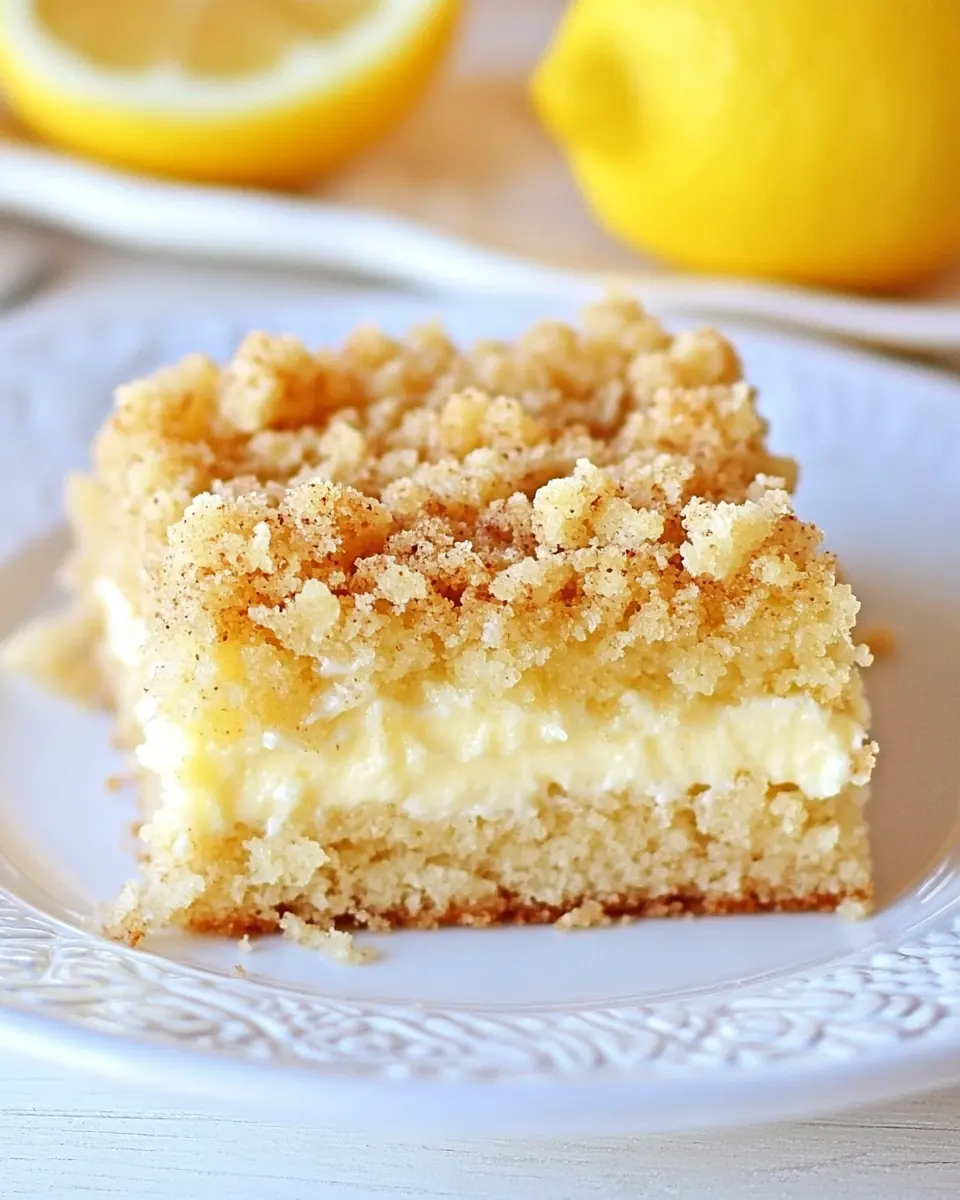
These ingredients form the backbone of a nostalgic, bright dessert. The dry and wet players in the cake layer create a tender crumb, while the separate cheesecake filling gives a tangy, creamy counterpoint. The crumb topping uses simple butter and flour to add texture and buttery crunch. Together, the cake, cream cheese, and crumb balance each other so the finished slices are moist, flavorful, and easy to serve to a crowd.
- 1.5 cup all-purpose flour: Provide structure and bulk to the cake batter, creating a tender crumb when properly mixed and measured. Combine with leavening agents to form the cake's framework and absorb liquids for balanced texture.
- 1/2 cup granulated sugar: Add sweetness and help tenderize the crumb, dissolving into the batter to create an even, sweet base. Work with fats and eggs to promote browning and moistness during baking.
- 2 teaspoons baking powder: Leaven the cake by producing carbon dioxide when reacting with wet ingredients, contributing to rise and lightness. Distribute evenly to ensure consistent lift and crumb throughout the cake.
- 1/4 teaspoon baking soda: React with acidic components to enhance leavening and contribute slight tenderness; used sparingly to avoid off flavors. Helps fine-tune rise and texture in combination with baking powder.
- 1/4 teaspoons salt: Season and enhance overall flavor balance by subtly amplifying sweetness and reducing any flat or metallic notes. Small quantity prevents over-salting while supporting other flavors.
- 3/4 cup buttermilk or sour milk: Provide acidity and moisture, tenderizing the crumb and reacting with leaveners for lift; sour milk mimics buttermilk acidity. Contribute to a moist, slightly tangy cake base that complements the cream cheese filling.
- 1 teaspoon vanilla extract: Impart aromatic sweetness and depth, rounding out flavors and enhancing the lemon and cream cheese notes. Small quantity elevates overall flavor complexity without overpowering other ingredients.
- 1/3 cup vegetable oil: Contribute fat for tenderness and moistness, creating a delicate crumb and aiding in emulsification with eggs. Neutral flavor keeps lemon and cream cheese profiles prominent.
- 2 large eggs: Bind ingredients together, provide structure, and enrich the batter with protein and fat for a finer crumb. Help incorporate air when beaten, assisting leavening and moisture retention.
- 2 tablespoons fresh lemon zest: Deliver bright citrus aroma and concentrated lemon flavor, enhancing freshness and complementing the cream cheese. Finely grated zest disperses oil-soluble flavor compounds throughout the batter.
- 2 tablespoons fresh lemon juice: Add tangy acidity and fresh citrus juice to balance sweetness and brighten the overall flavor profile. Liquid lemon juice also interacts with leavening and the cream cheese filling for harmony.
- 8 oz . brick of cream cheese softened to room temperature: Create a rich, tangy filling with creamy texture and body that contrasts the crumb; softened to ensure smooth blending. Supply fat and flavor that anchor the cake's luscious center.
- 1 large egg: Enrich and stabilize the cream cheese filling by adding additional binder and richness; beaten with the cream cheese for smoothness. Contribute to a firmer, sliceable filling with extra structure.
- 1/3 cup granulated sugar: Sweeten the cream cheese layer to balance tang and create a dessert-appropriate filling; dissolve into the filling for uniform sweetness. Work with vanilla and lemon to build a cohesive flavor profile.
- 1/2 teaspoon vanilla extract: Enhance the sweet filling with aromatic warmth and depth, rounding out tangy and citrus notes. Small amount intensifies other flavors without competing with lemon zest.
- 1 tablespoon lemon zest: Provide a subtle burst of lemon oil and concentrated citrus aroma within the filling, reinforcing the cake's lemon motif. Use finely grated zest to avoid bitter pith while maximizing flavor.
- 1/4 cup unsalted butter melted, cooled to room temperature: Add richness and moisture to the crumb topping or filling while aiding in binding dry ingredients when cooled. Melted butter imparts a tender, slightly crisp texture once baked.
- 1/3 cup granulated sugar: Sweeten and help form a crumbly streusel when combined with flour and butter, offering crunchy contrast to the soft cake and filling. Layer additive sugar contributes caramelization and texture.
- 1/4 teaspoons salt: Balance sweetness and enhance flavor depth in the crumb topping or streusel with a small amount of seasoning. Prevents blandness and supports the overall flavor profile without overpowering sweetness.
- 2/3 cup all-purpose flour: Provide body and crisp texture to the crumb topping or streusel when combined with butter and sugar; contributes to a golden, crumbly finish. The flour absorbs fats and creates the characteristic crumb structure.
Putting Together Lemon Cream Cheese Crumb Cake
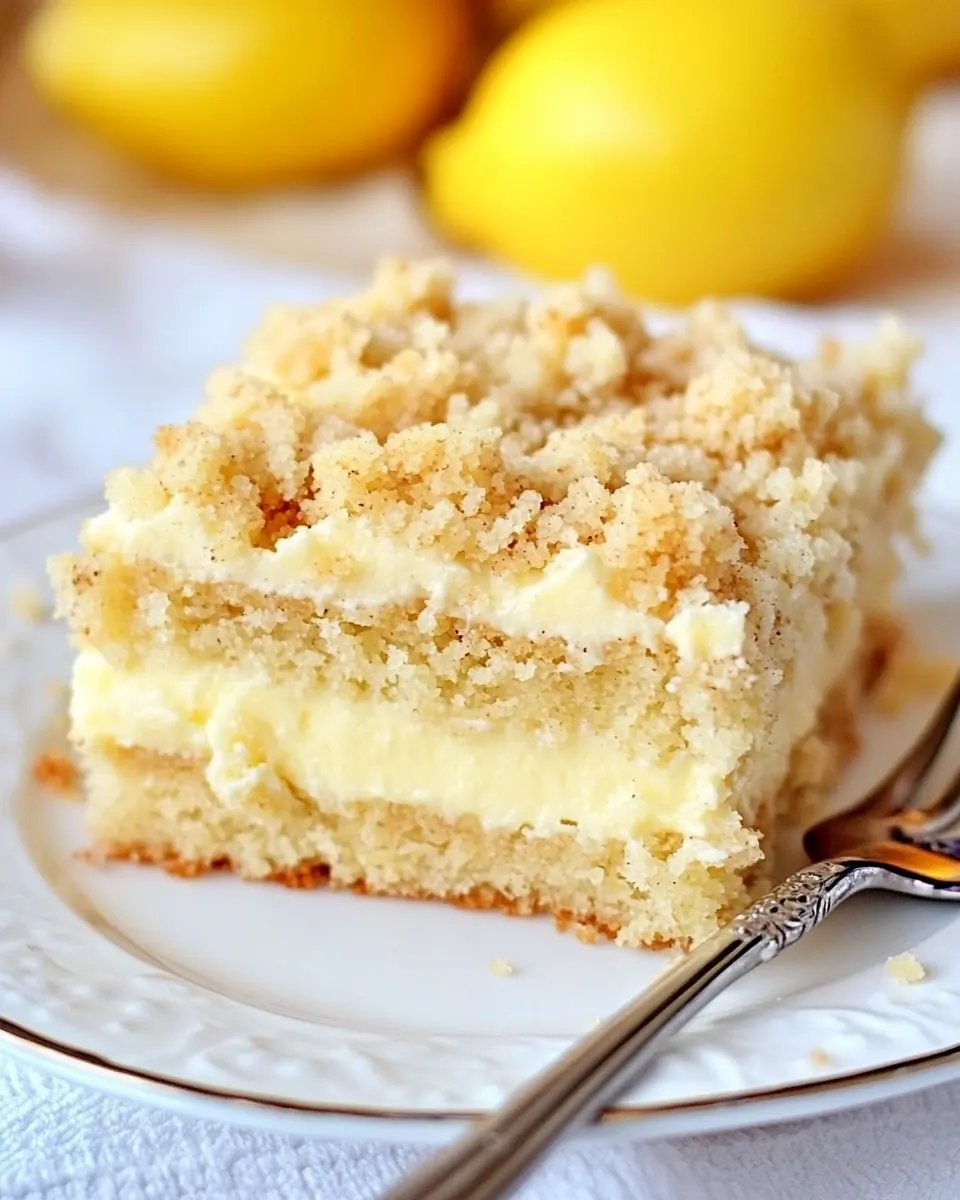
Bringing this cake together is comforting and rhythmic, and the steps build layers of aroma and texture. I like to work in stations so the cake layer, cream cheese filling, and crumb topping each get the attention they deserve. Below I expand each instruction so you know what to watch for at every stage.
- Preheat oven to 350 degrees F.: You will notice the oven warming and a steady hum as it reaches temperature, which ensures even baking. Preheating matters because an immediate and consistent heat helps the cake rise properly and sets the crumb structure. A common mistake is starting with a cold oven, which can lead to uneven rise and dense texture. Watch for the oven indicator; if your oven runs hot or cold, an oven thermometer helps confirm the true temperature. As it preheats, gather your pans and line or grease them so you can move smoothly to the next step without losing time.
- Grease a 13" x 9" baking pan. Set aside.: Greasing provides a release and prevents sticking, and you will feel the smooth glide of a ribbon of butter or the sheen of oil when you coat the pan. This is more than routine, it protects your crumb and keeps edges clean. One pitfall is over greasing which can cause the bottom crust to fry slightly, so a thin even coat is best. After greasing, place the pan on a flat surface near your mixing bowls so you can pour the batter in immediately when ready.
- In a large mixing bowl, whisk together the dry ingredients (flour, sugar, baking powder, baking soda and salt).: As you whisk you will see pale, uniform flour and sugar ribbons, the leaveners dispersing evenly. This step avoids pockets of baking powder which can cause uneven rise and metallic pockets of flavor. A frequent error is adding wet ingredients to an unwhisked dry mix, producing streaks in the batter; thorough whisking prevents that. Use a roomy bowl to avoid spills and whisk until everything looks homogenous, giving you a predictable base to incorporate the wet components.
- In another mixing bowl, whisk the wet ingredients (buttermilk, vanilla, eggs, oil, lemon zest and lemon juice).: The mixture will look glossy and slightly frothy, with bright flecks of lemon zest suspended in the liquid. Whisking emulsifies the oil into the eggs and buttermilk, creating a smooth mixture that blends cleanly into the dry ingredients. If you skip adequate whisking, the oil may not integrate and you could get uneven pockets of fat in the cake. Make sure eggs are room temperature for best emulsion, and whisk until the texture is unified and fragrant with lemon.
- Add the wet ingredients to the dry ingredients and whisk until smooth.: When you pour the wet into the dry, you will hear a soft splash and watch the batter come together, turning from powdery to glossy. The goal is a smooth batter with no visible streaks of flour, but avoid overmixing which tightens gluten and yields a tough crumb. A common mistake is vigorous beating; instead use steady, gentle strokes until just combined and the batter flows slowly off your whisk in ribbons. The final batter should be slightly thick but pourable, smelling of citrus and sugar.
- Spread the cake layer in the prepared pan.: As you spread, the batter will settle into corners and smooth into an even layer, and the surface should look uniform and slightly glossy. Evenness matters because it dictates how the cream cheese layer sits and how evenly the cake bakes. One misstep is leaving the batter thicker on one side, producing uneven bake and a lopsided cream cheese placement. Use an offset spatula to create an even bed, tapping the pan lightly on the counter to release any air bubbles.
- In a medium mixing bowl, beat cream cheese until creamy.: The cream cheese will transform from lumpy and cool to silky and smooth, with a satiny sheen as air is incorporated. Properly softened cream cheese whips easily and prevents lumps in the filling. If you try to beat cold cream cheese, you will get clumps and a grainy texture. If lumps appear, pause and let it warm slightly or beat gently until smooth, scraping the bowl to ensure uniformity.
- Add vanilla, sugar and zest and mix in well.: As the sugar dissolves into the cream cheese , the mixture will lighten and smell beautifully fragrant with lemon and vanilla. This melding creates a balanced filling that is not overly sweet. A common mistake is under dissolving sugar, leaving a grainy mouthfeel; beat long enough so the surface looks smooth and the aroma is even. Taste a tiny bit to ensure the balance is right before adding the egg.
- Add egg and mix in well.: After adding the egg the filling should take on a silkier, more cohesive texture and a slight sheen, indicating proper binding. The egg helps the cheesecake layer set without turning rubbery. Adding a cold egg to a warm or too thin mixture can cause curdling, so ensure ingredients are similar temperatures. Beat until the filling is uniform and glossy, with no streaks of egg white or yolk visible.
- Drop spoonfuls of the cheesecake batter on the cake layer and gently spread with the back of the spoon. Try to keep it about 1/4" away from the edge.: As you dollop and spread, you will see soft islands of filling perched on the cake, and keeping them slightly in from the edge prevents the filling from running down during baking. This visual placement creates a nice framed crumb border. A typical slip is pushing the filling to the very edge, which can cause leakage and an uneven top. Work gently and leave a margin so the cheesecake puffs and settles neatly inside the cake layer.
- In a medium mixing bowl, stir with a fork melted butter, sugar, salt and flour. Stir until the mixture resembles coarse crumbs.: The transformation is tactile, from separate bits to a sandy coarse mixture that clumps between your fingers when squeezed. These crumbs will toast and crisp in the oven, adding contrast to the creamy middle. Overworking the mixture produces a paste rather than crumbs, so stop as soon as coarse granules form. If the mixture feels greasy, the butter was too hot; let it cool slightly and stir again to form proper crumbs.
- Sprinkle the crumb topping over the cream cheese layer.: As you scatter crumbs, you will enjoy the visual of golden pieces blanketing the filling. Even coverage ensures each bite has some crunchy top. Pressing down is unnecessary and can compact crumbs, robbing them of crispness. A common error is piling crumbs too thickly in one area; aim for a uniform layer so browning is consistent across the pan.
- Bake the cake for 33 to 37 minutes, or until the edges are golden brown, the crumb topping is golden and the cream cheese layer looks slightly puffed up. It will go down as the cake cools.: During baking the kitchen will fill with butter and lemon scent, and you may see gentle bubbling at the edges. Look for golden edges and a set center with just a whisper of jiggle, that indicates the right doneness. Overbaking dries the filling and cake, while underbaking leaves a raw center; aiming for that slight wobble prevents both issues. If the topping browns too quickly, tent loosely with foil to allow the center to finish.
- Cool the cake completely in the pan before serving.: Cooling lets the cream cheese layer set and the cake firm up, making clean slices easier to achieve. As it cools you will notice the center sink slightly, which is normal and expected. Cutting warm can result in messy slices and the filling may run; patience here preserves presentation. For best results, cool to room temperature then chill briefly if you want firmer slices before cutting.
Customization Ideas
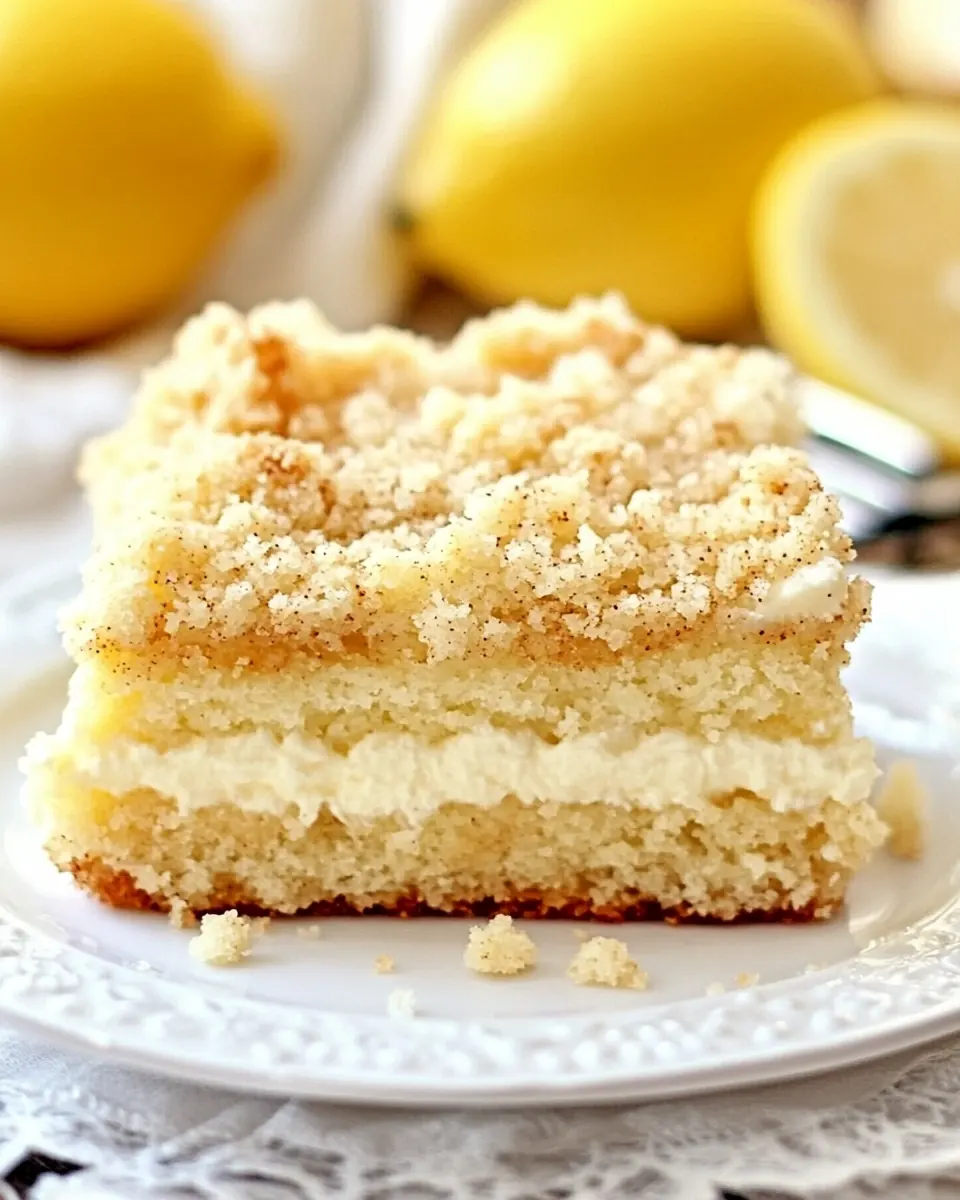
This cake is adaptable without changing its soul. Below are idea focused tips to gently alter texture, presentation, and flavor while preserving the classic balance between the cake, the cream cheese, and the crumb.
- Switch citrus accents Swap part of the lemon zest with orange zest for a rounder, sweeter aroma that plays nicely with the cream cheese.
- Texture tweak Fold a tablespoon of sour cream into the cake batter to add richness and make the crumb extra tender without changing flavor drastically.
- Gold crust Sprinkle a light dusting of fine sugar over the crumb topping before baking to encourage a crisper, slightly glazed surface.
- Snack size Bake in an 8 inch square pan for a thicker cake and cream cheese layer, adjust bake time and test for the same slight jiggle in the center.
- Presentation lift After cooling, grate a small amount of fresh zest over the top for a fresh aroma and a bright visual contrast.
- Make ahead crumbs Prepare the crumb topping a day ahead and keep chilled, this speeds assembly and deepens the toasted butter flavor when baked.
Best Served With
This cake works in many settings, from casual coffee breaks to brunch gatherings. Its bright, tart notes pair with creamy or warm accompaniments, and it stores well for sharing. Below I outline serving styles, occasions, and storage thoughts in detail so you can present the cake beautifully.
- Classic brunch pairing Serve slices with a pot of coffee or strong black tea, the bitterness balances the cake’s sweetness and highlights the lemon notes, making it ideal for spring brunches with friends.
- Afternoon tea Plate small squares with light finger sandwiches and fresh fruit, the cake’s texture complements delicate bites and makes for an elegant tea spread.
- Casual dessert Offer the cake at family dinners as a light finish, it is rich yet bright and satisfies sweet cravings without feeling heavy, perfect for a relaxed after meal moment.
- Occasion ideas This recipe fits spring gatherings, baby showers, and holiday brunches; its fresh profile is particularly lovely in warmer months and for celebratory daytime events.
- Storage tips Store covered at room temperature for up to one day, then refrigerate to keep the cream cheese layer stable for up to three days. For longer storage, wrap tightly and freeze slices for up to one month, thaw in the fridge.
- Serving temperature I prefer slightly chilled slices for neat presentation, but you can bring it to room temperature for a creamier mouthfeel, which softens the cream cheese for a luscious bite.
FAQ
Conclusion
This cake shines because it pairs a tender, lemon scented cake with a silky, tangy cream cheese layer and a crunchy, buttery crumb topping. It is both familiar and bright, an easy recipe that feels special enough for guests and relaxed enough for a weekday treat. Give it a try the next time you want a dessert that offers contrast in texture and a lively citrus note, and enjoy the way it brings people together with simple, delicious ingredients.
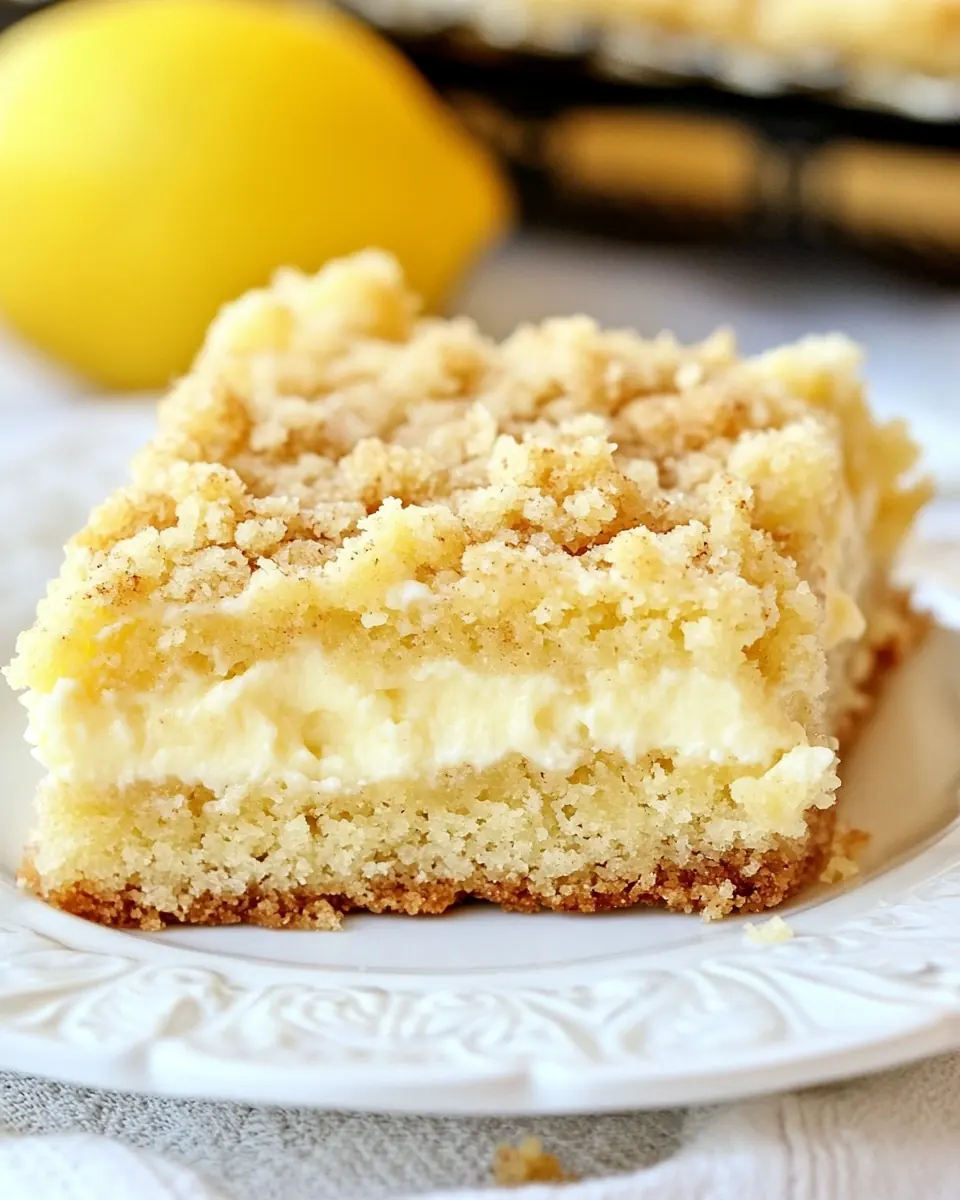
Lemon Cream Cheese Crumb Cake
Ingredients
Equipment
Method
- Preheat oven to 350 degrees F.: You will notice the oven warming and a steady hum as it reaches temperature, which ensures even baking. Preheating matters because an immediate and consistent heat helps the cake rise properly and sets the crumb structure. A common mistake is starting with a cold oven, which can lead to uneven rise and dense texture. Watch for the oven indicator; if your oven runs hot or cold, an oven thermometer helps confirm the true temperature. As it preheats, gather your pans and line or grease them so you can move smoothly to the next step without losing time.
- Grease a 13" x 9" baking pan. Set aside.: Greasing provides a release and prevents sticking, and you will feel the smooth glide of a ribbon of butter or the sheen of oil when you coat the pan. This is more than routine, it protects your crumb and keeps edges clean. One pitfall is over greasing which can cause the bottom crust to fry slightly, so a thin even coat is best. After greasing, place the pan on a flat surface near your mixing bowls so you can pour the batter in immediately when ready.
- In a large mixing bowl, whisk together the dry ingredients (flour, sugar, baking powder, baking soda and salt).: As you whisk you will see pale, uniform flour and sugar ribbons, the leaveners dispersing evenly. This step avoids pockets of baking powder which can cause uneven rise and metallic pockets of flavor. A frequent error is adding wet ingredients to an unwhisked dry mix, producing streaks in the batter; thorough whisking prevents that. Use a roomy bowl to avoid spills and whisk until everything looks homogenous, giving you a predictable base to incorporate the wet components.
- In another mixing bowl, whisk the wet ingredients (buttermilk, vanilla, eggs, oil, lemon zest and lemon juice).: The mixture will look glossy and slightly frothy, with bright flecks of lemon zest suspended in the liquid. Whisking emulsifies the oil into the eggs and buttermilk, creating a smooth mixture that blends cleanly into the dry ingredients. If you skip adequate whisking, the oil may not integrate and you could get uneven pockets of fat in the cake. Make sure eggs are room temperature for best emulsion, and whisk until the texture is unified and fragrant with lemon.
- Add the wet ingredients to the dry ingredients and whisk until smooth.: When you pour the wet into the dry, you will hear a soft splash and watch the batter come together, turning from powdery to glossy. The goal is a smooth batter with no visible streaks of flour, but avoid overmixing which tightens gluten and yields a tough crumb. A common mistake is vigorous beating; instead use steady, gentle strokes until just combined and the batter flows slowly off your whisk in ribbons. The final batter should be slightly thick but pourable, smelling of citrus and sugar.
- Spread the cake layer in the prepared pan.: As you spread, the batter will settle into corners and smooth into an even layer, and the surface should look uniform and slightly glossy. Evenness matters because it dictates how the cream cheese layer sits and how evenly the cake bakes. One misstep is leaving the batter thicker on one side, producing uneven bake and a lopsided cream cheese placement. Use an offset spatula to create an even bed, tapping the pan lightly on the counter to release any air bubbles.
- In a medium mixing bowl, beat cream cheese until creamy.: The cream cheese will transform from lumpy and cool to silky and smooth, with a satiny sheen as air is incorporated. Properly softened cream cheese whips easily and prevents lumps in the filling. If you try to beat cold cream cheese, you will get clumps and a grainy texture. If lumps appear, pause and let it warm slightly or beat gently until smooth, scraping the bowl to ensure uniformity.
- Add vanilla, sugar and zest and mix in well.: As the sugar dissolves into the cream cheese , the mixture will lighten and smell beautifully fragrant with lemon and vanilla. This melding creates a balanced filling that is not overly sweet. A common mistake is under dissolving sugar, leaving a grainy mouthfeel; beat long enough so the surface looks smooth and the aroma is even. Taste a tiny bit to ensure the balance is right before adding the egg.
- Add egg and mix in well.: After adding the egg the filling should take on a silkier, more cohesive texture and a slight sheen, indicating proper binding. The egg helps the cheesecake layer set without turning rubbery. Adding a cold egg to a warm or too thin mixture can cause curdling, so ensure ingredients are similar temperatures. Beat until the filling is uniform and glossy, with no streaks of egg white or yolk visible.
- Drop spoonfuls of the cheesecake batter on the cake layer and gently spread with the back of the spoon. Try to keep it about 1/4" away from the edge.: As you dollop and spread, you will see soft islands of filling perched on the cake, and keeping them slightly in from the edge prevents the filling from running down during baking. This visual placement creates a nice framed crumb border. A typical slip is pushing the filling to the very edge, which can cause leakage and an uneven top. Work gently and leave a margin so the cheesecake puffs and settles neatly inside the cake layer.
- In a medium mixing bowl, stir with a fork melted butter, sugar, salt and flour. Stir until the mixture resembles coarse crumbs.: The transformation is tactile, from separate bits to a sandy coarse mixture that clumps between your fingers when squeezed. These crumbs will toast and crisp in the oven, adding contrast to the creamy middle. Overworking the mixture produces a paste rather than crumbs, so stop as soon as coarse granules form. If the mixture feels greasy, the butter was too hot; let it cool slightly and stir again to form proper crumbs.
- Sprinkle the crumb topping over the cream cheese layer.: As you scatter crumbs, you will enjoy the visual of golden pieces blanketing the filling. Even coverage ensures each bite has some crunchy top. Pressing down is unnecessary and can compact crumbs, robbing them of crispness. A common error is piling crumbs too thickly in one area; aim for a uniform layer so browning is consistent across the pan.
- Bake the cake for 33 to 37 minutes, or until the edges are golden brown, the crumb topping is golden and the cream cheese layer looks slightly puffed up. It will go down as the cake cools.: During baking the kitchen will fill with butter and lemon scent, and you may see gentle bubbling at the edges. Look for golden edges and a set center with just a whisper of jiggle, that indicates the right doneness. Overbaking dries the filling and cake, while underbaking leaves a raw center; aiming for that slight wobble prevents both issues. If the topping browns too quickly, tent loosely with foil to allow the center to finish.
- Cool the cake completely in the pan before serving.: Cooling lets the cream cheese layer set and the cake firm up, making clean slices easier to achieve. As it cools you will notice the center sink slightly, which is normal and expected. Cutting warm can result in messy slices and the filling may run; patience here preserves presentation. For best results, cool to room temperature then chill briefly if you want firmer slices before cutting.
Notes
- Switch citrus accents Swap part of the lemon zest with orange zest for a rounder, sweeter aroma that plays nicely with the cream cheese.
- Texture tweak Fold a tablespoon of sour cream into the cake batter to add richness and make the crumb extra tender without changing flavor drastically.
- Gold crust Sprinkle a light dusting of fine sugar over the crumb topping before baking to encourage a crisper, slightly glazed surface.
- Snack size Bake in an 8 inch square pan for a thicker cake and cream cheese layer, adjust bake time and test for the same slight jiggle in the center.
- Presentation lift After cooling, grate a small amount of fresh zest over the top for a fresh aroma and a bright visual contrast.
- Make ahead crumbs Prepare the crumb topping a day ahead and keep chilled, this speeds assembly and deepens the toasted butter flavor when baked.