Preheat oven to 350 degrees F.: You will notice the oven warming and a steady hum as it reaches temperature, which ensures even baking. Preheating matters because an immediate and consistent heat helps the cake rise properly and sets the crumb structure. A common mistake is starting with a cold oven, which can lead to uneven rise and dense texture. Watch for the oven indicator; if your oven runs hot or cold, an oven thermometer helps confirm the true temperature. As it preheats, gather your pans and line or grease them so you can move smoothly to the next step without losing time.
Grease a 13" x 9" baking pan. Set aside.: Greasing provides a release and prevents sticking, and you will feel the smooth glide of a ribbon of butter or the sheen of oil when you coat the pan. This is more than routine, it protects your crumb and keeps edges clean. One pitfall is over greasing which can cause the bottom crust to fry slightly, so a thin even coat is best. After greasing, place the pan on a flat surface near your mixing bowls so you can pour the batter in immediately when ready.
In a large mixing bowl, whisk together the dry ingredients (flour, sugar, baking powder, baking soda and salt).: As you whisk you will see pale, uniform flour and sugar ribbons, the leaveners dispersing evenly. This step avoids pockets of baking powder which can cause uneven rise and metallic pockets of flavor. A frequent error is adding wet ingredients to an unwhisked dry mix, producing streaks in the batter; thorough whisking prevents that. Use a roomy bowl to avoid spills and whisk until everything looks homogenous, giving you a predictable base to incorporate the wet components.
In another mixing bowl, whisk the wet ingredients (buttermilk, vanilla, eggs, oil, lemon zest and lemon juice).: The mixture will look glossy and slightly frothy, with bright flecks of lemon zest suspended in the liquid. Whisking emulsifies the oil into the eggs and buttermilk, creating a smooth mixture that blends cleanly into the dry ingredients. If you skip adequate whisking, the oil may not integrate and you could get uneven pockets of fat in the cake. Make sure eggs are room temperature for best emulsion, and whisk until the texture is unified and fragrant with lemon.
Add the wet ingredients to the dry ingredients and whisk until smooth.: When you pour the wet into the dry, you will hear a soft splash and watch the batter come together, turning from powdery to glossy. The goal is a smooth batter with no visible streaks of flour, but avoid overmixing which tightens gluten and yields a tough crumb. A common mistake is vigorous beating; instead use steady, gentle strokes until just combined and the batter flows slowly off your whisk in ribbons. The final batter should be slightly thick but pourable, smelling of citrus and sugar.
Spread the cake layer in the prepared pan.: As you spread, the batter will settle into corners and smooth into an even layer, and the surface should look uniform and slightly glossy. Evenness matters because it dictates how the cream cheese layer sits and how evenly the cake bakes. One misstep is leaving the batter thicker on one side, producing uneven bake and a lopsided cream cheese placement. Use an offset spatula to create an even bed, tapping the pan lightly on the counter to release any air bubbles.
In a medium mixing bowl, beat cream cheese until creamy.: The cream cheese will transform from lumpy and cool to silky and smooth, with a satiny sheen as air is incorporated. Properly softened cream cheese whips easily and prevents lumps in the filling. If you try to beat cold cream cheese, you will get clumps and a grainy texture. If lumps appear, pause and let it warm slightly or beat gently until smooth, scraping the bowl to ensure uniformity.
Add vanilla, sugar and zest and mix in well.: As the sugar dissolves into the cream cheese , the mixture will lighten and smell beautifully fragrant with lemon and vanilla. This melding creates a balanced filling that is not overly sweet. A common mistake is under dissolving sugar, leaving a grainy mouthfeel; beat long enough so the surface looks smooth and the aroma is even. Taste a tiny bit to ensure the balance is right before adding the egg.
Add egg and mix in well.: After adding the egg the filling should take on a silkier, more cohesive texture and a slight sheen, indicating proper binding. The egg helps the cheesecake layer set without turning rubbery. Adding a cold egg to a warm or too thin mixture can cause curdling, so ensure ingredients are similar temperatures. Beat until the filling is uniform and glossy, with no streaks of egg white or yolk visible.
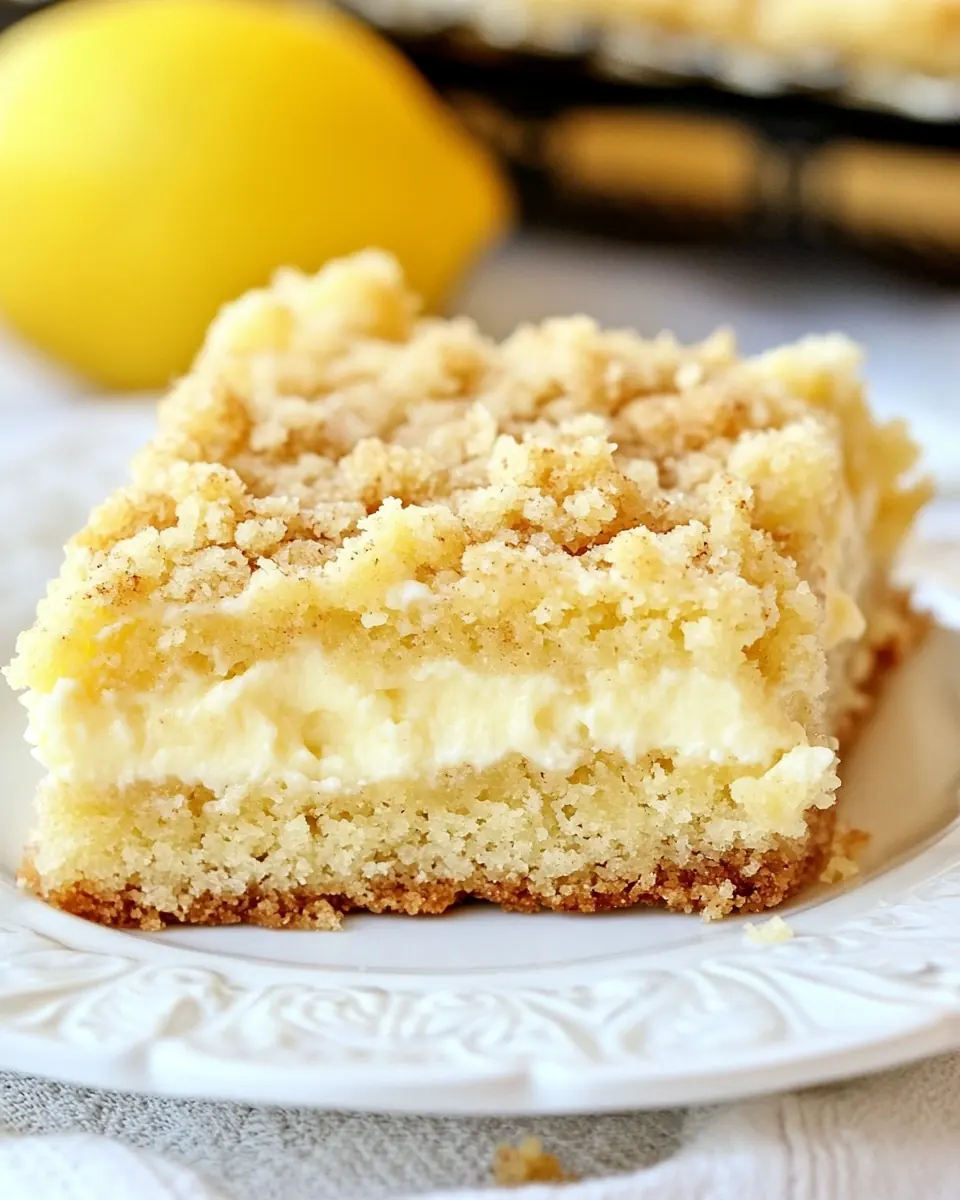
Drop spoonfuls of the cheesecake batter on the cake layer and gently spread with the back of the spoon. Try to keep it about 1/4" away from the edge.: As you dollop and spread, you will see soft islands of filling perched on the cake, and keeping them slightly in from the edge prevents the filling from running down during baking. This visual placement creates a nice framed crumb border. A typical slip is pushing the filling to the very edge, which can cause leakage and an uneven top. Work gently and leave a margin so the cheesecake puffs and settles neatly inside the cake layer.
In a medium mixing bowl, stir with a fork melted butter, sugar, salt and flour. Stir until the mixture resembles coarse crumbs.: The transformation is tactile, from separate bits to a sandy coarse mixture that clumps between your fingers when squeezed. These crumbs will toast and crisp in the oven, adding contrast to the creamy middle. Overworking the mixture produces a paste rather than crumbs, so stop as soon as coarse granules form. If the mixture feels greasy, the butter was too hot; let it cool slightly and stir again to form proper crumbs.
Sprinkle the crumb topping over the cream cheese layer.: As you scatter crumbs, you will enjoy the visual of golden pieces blanketing the filling. Even coverage ensures each bite has some crunchy top. Pressing down is unnecessary and can compact crumbs, robbing them of crispness. A common error is piling crumbs too thickly in one area; aim for a uniform layer so browning is consistent across the pan.
Bake the cake for 33 to 37 minutes, or until the edges are golden brown, the crumb topping is golden and the cream cheese layer looks slightly puffed up. It will go down as the cake cools.: During baking the kitchen will fill with butter and lemon scent, and you may see gentle bubbling at the edges. Look for golden edges and a set center with just a whisper of jiggle, that indicates the right doneness. Overbaking dries the filling and cake, while underbaking leaves a raw center; aiming for that slight wobble prevents both issues. If the topping browns too quickly, tent loosely with foil to allow the center to finish.
Cool the cake completely in the pan before serving.: Cooling lets the cream cheese layer set and the cake firm up, making clean slices easier to achieve. As it cools you will notice the center sink slightly, which is normal and expected. Cutting warm can result in messy slices and the filling may run; patience here preserves presentation. For best results, cool to room temperature then chill briefly if you want firmer slices before cutting.