Lemon Meringue Cheesecake
Lemon Meringue Cheesecake is one of those desserts that makes me pause, grin, and secretly plan for leftovers before the first slice is even cut. The first time I made this I was chasing a memory from my grandmother’s kitchen, where citrus and creamy textures always seemed to find a way to show up at the table. I remember zesting lemons at midnight, the bright oils perfuming the air while I hummed along to a record player. That evening taught me how a balanced lemon note can lift a rich, creamy dessert into something bright and memorable.
Over the years I’ve adjusted the method to make the process less intimidating, while preserving the theatrical finish of a toasted meringue crown. I love that the crunchy crumb base gives way to a velvety cream cheese layer studded with lemon brightness, finished by a glossy, cloudlike meringue that browns in minutes. It makes me feel like I can host a small celebration any day of the week, without needing a pastry degree.
When I serve Lemon Meringue Cheesecake at gatherings, people always ask about the water bath and the careful cooling. Those steps feel like secrets, but they are simply patient techniques that reward you with a crack free, silky center. I’ll never tire of how the tart lemon curd pushes through the creamy body, or the satisfying snap when you press into the crust made of buttery vanilla wafer cookies. This recipe gives you those moments, and a few kitchen stories to tell.
Recipe Snapshot
2 hr 30 mins
60 mins
90 mins
Hard
350 kcal
American
Gluten-Free, Low FODMAP
Desserts
Kitchen Scale(optional), 9-inch Springform Pan, Food Processor, Hand Mixer, Stand Mixer
Why This Lemon Meringue Cheesecake Works
Bright Citrus Versus Rich Cream
I love how the vivid tang of lemon cuts the richness of the cream cheese, creating a dessert that tastes both indulgent and fresh. The contrast ensures every bite feels layered and complex rather than cloying.
Texture Play That Steals the Show
The interplay of textures is why I keep making this. A crunchy vanilla wafer cookies crust gives way to a dense yet silky filling, and the billowy meringue adds an ethereal lift. That combination keeps each bite interesting.
Technique With a Rewarding Payoff
Using a water bath and gentle cooling is kitchen discipline that pays off with a smooth, crack free surface. I enjoy this part because it feels like caring for the cheesecake as it transforms, and the result is reliably impressive.
Visual Drama, Minimal Fuss
The toasted meringue looks like a showstopper, yet it only needs a few minutes at high heat. I like recipes that give dramatic results without requiring endless steps, and this one delivers that theater.
Flexible for Gatherings
This dessert scales well and keeps its charm when made a day ahead, which is why I often prepare it for celebrations. The flavors actually meld and improve after a chill, making it a hostess favorite.
Ingredients You’ll Need for Lemon Meringue Cheesecake
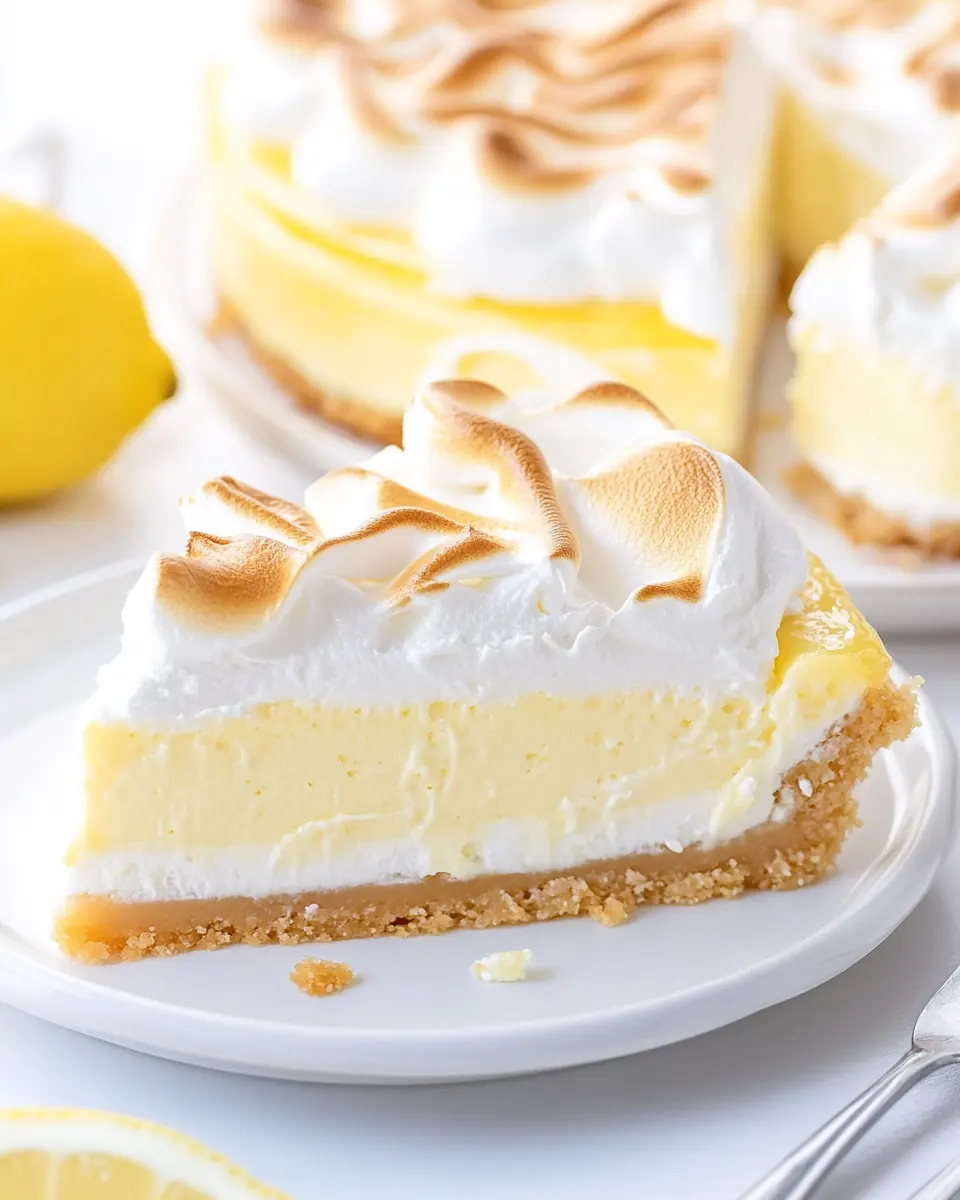
These ingredients were chosen to harmonize structure, flavor, and texture. The crust provides a buttery, slightly sweet base, the filling blends creamy richness with bright lemon notes, and the meringue adds lift and visual drama. The key players are the crumbly vanilla wafer cookies and salted butter for the base, the trio of cream cheese, honey vanilla Greek yogurt, and eggs for the filling, and the simple egg white and sugar meringue to finish. Each item plays a clear role in the final balance.
- 3 cups vanilla wafer cookies 225 grams (about 60 cookies): Crushed finely to form a sturdy, sweet base for the cheesecake crust; provides texture and vanilla flavor that complements the lemon components. Combine with melted butter and press into the pan to create an even, compact foundation that bakes briefly to set. Works as the primary structure holding the filling and meringue layers together.
- 1/3 cup salted butter 75 grams, melted (2/3 stick): Melted and mixed with crushed cookies to bind the crust and add a rich, slightly salty balance to the sweetness. Adds moisture and helps the crust hold its shape once chilled or baked. Use accurate measurement to avoid an overly greasy or crumbly crust.
- 3/4 cup granulated sugar 150 grams: Sprinkled into the cheesecake batter to sweeten and stabilize the filling while balancing the tartness of lemon ingredients. Dissolves into the cream cheese mixture for a smooth, cohesive texture and contributes to browning on any baked surfaces. Adjust carefully to maintain the desired sweetness level.
- 1 1/2 tablespoons lemon zest 3 grams, from about 2 lemons: Finely grated to impart bright citrus aroma and concentrated lemon flavor throughout the filling and garnish. Adds fresh, zesty notes that intensify the lemon profile without adding extra liquid. Use only the flavorful yellow portion to avoid bitterness from pith.
- 24 ounces cream cheese 680 grams, room temperature (3 bricks): Softened at room temperature and beaten until smooth to serve as the rich, creamy base of the cheesecake filling. Supplies structure, tang, and fat that set when chilled or baked, creating the classic dense yet silky texture. Ensure no lumps remain by thoroughly mixing before adding other ingredients.
- 1 cup honey vanilla Greek yogurt 227 grams, room temperature: Added to lighten the filling with a creamy tang and subtle sweetness while contributing a hint of vanilla. Helps produce a slightly lighter, more spoonable texture and enhances overall flavor complexity. Warm to room temperature to blend smoothly into the cream cheese.
- 1/4 cup lemon juice 57 grams, from about 2 lemons: Freshly squeezed and incorporated to provide bright acidity and lemon flavor that balances the rich cream cheese. Contributes liquid to the batter, so combine with other wet ingredients to maintain smooth consistency. Use strained juice to avoid seeds and pulp in the filling.
- 1 teaspoon lemon extract 4 grams: Measured and mixed in for concentrated lemon aroma, boosting the citrus profile without additional acidity. Enhances and rounds out lemon flavor alongside fresh zest and juice; use sparingly to avoid overwhelming other flavors. Adds a consistent, shelf-stable lemon note.
- 4 large eggs 200 grams, room temperature: Beaten in one at a time to incorporate air and lend structure to the cheesecake filling; eggs help set the custard as it cooks. Room–temperature eggs blend more uniformly, preventing curdling and ensuring a smooth texture. Carefully mix to avoid overbeating, which can cause cracks during baking.
- 1/2 cup lemon curd 170 grams, store-bought or homemade: Swirled into or layered within the filling to intensify lemon flavor and add a glossy, sweet-tart component. Provides a concentrated, jelly-like burst of citrus that contrasts with creamy textures and meringue. Use spoonfully to create visible ribbons or a distinct lemon layer.
- 3 large egg whites 105 grams, room temperature: Whisked separately until foamy to prepare for meringue topping, creating volume and a light, airy finish. Eggs whites stabilize with sugar to form glossy peaks that brown attractively when toasted. Ensure whites are free of yolk or fat to achieve maximum volume and stability.
- 1 1/2 teaspoons lemon juice 7 grams: Added to the egg whites to help stabilize the meringue and enhance its tenderness while contributing a hint more acidity. Acidic liquid improves foam stability and prevents graininess when sugar is incorporated. Use precisely to avoid over-acidifying the meringue.
- 1 1/4 cups powdered sugar 140 grams: Gradually incorporated into whipped egg whites to sweeten and stabilize the meringue, yielding glossy, stiff peaks and a smooth texture. Provides structure and resists weeping, allowing the meringue to brown evenly under heat. Sifted powdered sugar ensures no lumps and a fine, silky finish.
Instructions for Lemon Meringue Cheesecake
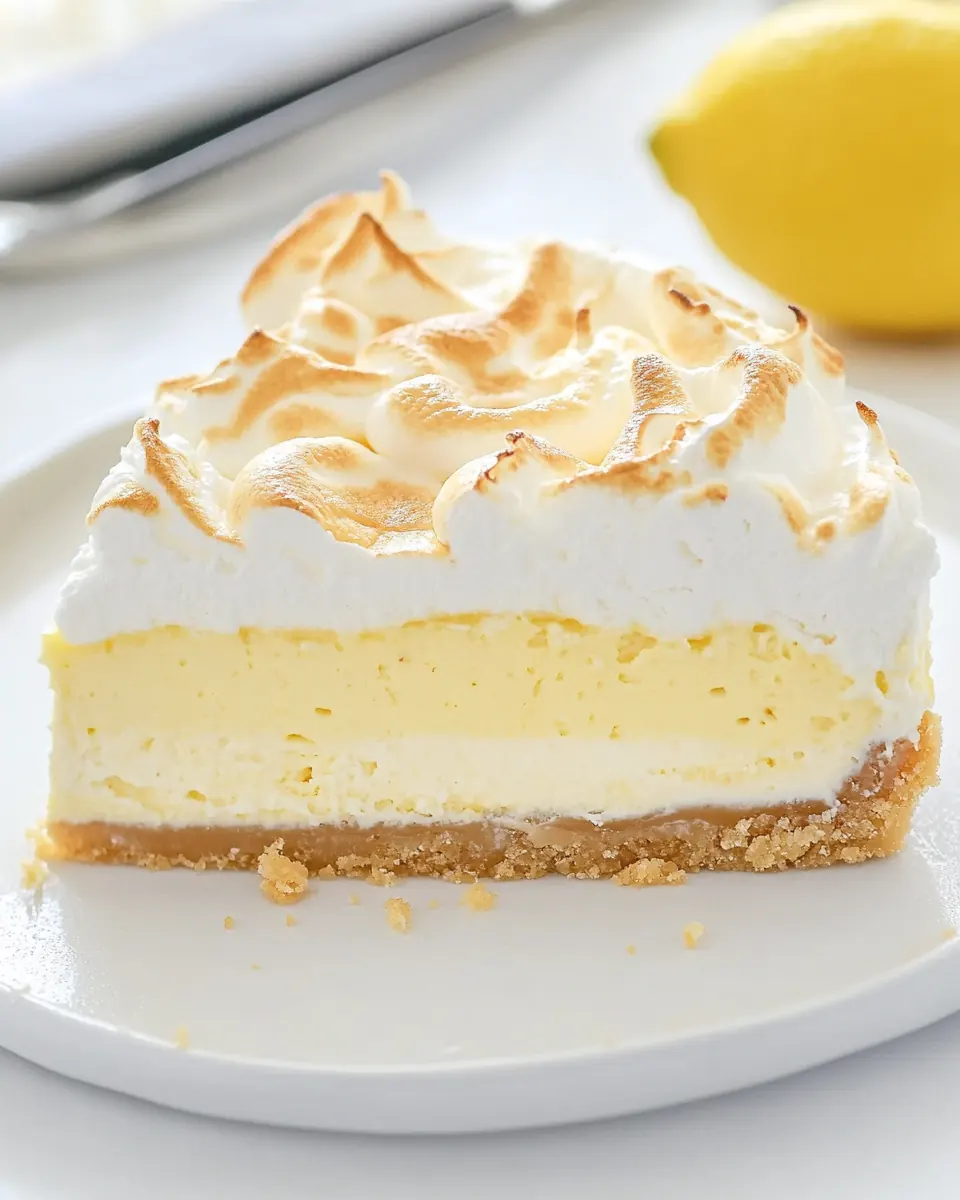
I like to approach these steps with calm and attention, because gentle handling is what keeps this cheesecake smooth and crack free. The directions below follow the original sequence, but I expand on what you should be sensing and watching for as you go. Keep things at room temperature where indicated and give yourself a blissful playlist for the baking and waiting windows.
- Preheat oven to 350°F. Line the bottom of a 9-inch springform pan with parchment paper and spray the bottom and sides with nonstick spray. Set aside.: You should notice the oven beginning to hum as it warms and the air inside becoming steadily warmer. Properly lining the pan ensures an easy release and prevents sticking. One common mistake is skipping the parchment, which can make unmolding messy and might tear the crust when releasing the ring.
- Use a food processor to crush the vanilla wafer cookies to crumbs, about 1 minute.: The sound of the processor will change from a steady grind to a finer whir as the cookies become uniform crumbs, and you will see a sandy texture. Even crumbs compact more reliably and bake evenly; if you leave large pieces they can create weak spots in the crust.
- Add in the salted butter and pulse to combine. You should have a mixture with the consistency of wet sand.: Visually the mixture should transform from dry crumbs to a glossy, sand like clump. The melted salted butter coats each crumb, which helps them bind when pressed into the pan. If the mixture feels too greasy, you likely added too much butter; if it is too dry, the crust will be crumbly.
- Press the crust into the springform pan.: Press firmly so the base becomes compact and even, using the bottom of a measuring cup to smooth it. You want a firm, even layer with no thin spots that would break apart when sliced. If you press unevenly you may bake sections differently leading to textural contrasts.
- Bake the crust for 10-12 minutes, or until it just begins to brown.: The aroma will shift to a toasty, slightly caramelized scent, and the edges should become just a shade darker. This short bake sets the crust so it supports the filling. Baking too long will make the crust overly hard and dry, while underbaking risks a soggy base.
- Reduce the oven to 300°F, remove the crust from the oven, and allow the crust to cool completely.: The oven will settle into a lower, steady warmth, and the cooled crust should feel firm to the touch. Cooling prevents the filling from melting the crust and helps maintain a neat edge. If you pour the filling into a hot crust, the butter can loosen and cause separation.
- While the crust is cooling, prepare a water bath by placing a lint free towel, folded, in the bottom of a roasting or large baking pan. You want a pan large enough for the springform pan to fit comfortably with a little space on all sides.: The towel acts as a cradle that stabilizes the springform pan and keeps it from sliding when the water is added. You'll want a pan that leaves a little breathing room around the springform so steam circulates. Using a pan that is too tight makes it hard to add the water and risks spills.
- Heat 4 cups of water in a kettle until boiling, turn off heat and allow it to set while you assemble the cheesecake.: Steam will rise as you pour the water later, so be careful and keep a steady hand. The hot water will create even heat around the cheesecake, preventing sudden temperature shifts. If you use cold water the bath will cool the cheesecake and could lead to cracking.
- To make the cheesecake, beat together the sugar and lemon zest in a large mixing bowl with a hand or stand mixer until the sugar is fragrant, about 1 minute.: The aroma should intensify as the oils from the zest release into the sugar, perfuming the bowl. This step is small but important because it distributes concentrated citrus scent throughout the filling. Rubbing the zest into the sugar wastes none of the aromatic oils, so skip it and the lemon will feel faint.
- Add in the cream cheese and beat on medium, just until light and fluffy, about 5-7 minutes, depending on the temperature of the cream cheese.: You will see the mixture go from dense and clumpy to smoother and paler, and the sound of the mixer will lighten as the texture softens. Properly softened cream cheese ensures a silky filling; if it is still cold you will see lumps, which means extended beating will incorporate too much air.
- Mix in the greek yogurt, lemon juice, and lemon extract until completely combined, about 2-3 minutes.: The batter will become more fluid and glossy, carrying a bright lemon scent. These ingredients balance fat, acid, and flavor to create a stable, flavorful custard. Failing to fully combine can leave pockets of curdled texture after baking.
- Beat in the eggs, 1 at a time, on low speed, just until combined. Do not overbeat.: You should see the mixture slightly lighten with each egg, and the batter should look homogenous and velvety. Keeping speed low controls air incorporation, which prevents cracks and a cake like rise. Overbeating introduces large bubbles that can burst and leave craters on the surface.
- Wrap the cooled springform pan in aluminum foil and a baking bag, if possible.: This creates a waterproof seal so that the water bath does not seep into the pan and make the crust soggy. Make the foil snug and double wrap the base for safety. A poor seal risks a watery mess and a compromised crust.
- Pour the cheesecake mixture into the prepared crust and gently spread into an even layer. Tap the pan gently several times on the counter to pop any air bubbles.: You will see the batter settle into the crust and small bubbles rise and pop, leaving a smooth top. Eliminating air bubbles helps prevent large holes after baking. If you skip tapping, trapped air can expand and create an uneven surface.
- Put the cheesecake pan on the folded towel in the roasting or large baking pan and place it all in the oven.: The setup should feel stable and balanced, and the cheesecake should sit level. Proper placement ensures even heat distribution from the water bath. If the pan wobbles, the filling can slosh and bake unevenly.
- Carefully pour the hot water into the baking pan, outside the springform pan, until it reaches the middle of the springform pan, at least 1-2 inches. This creates a water bath so that the cheesecake cooks more evenly.: As the water flows you will see steam rise and the oven interior become humid, which softens oven edges and prevents the top from drying. This gentle, surrounding heat produces a creamy texture. Pour too rapidly and you risk splashing water into the cheesecake tin.
- Bake for 75-90 minutes, or until the cheesecake has just a slight wiggle in the middle when the springform pan is moved.: The surface will be set and a little golden at the edges, while the center still shivers slightly, like soft gelatin. This state indicates a properly cooked custard that will continue to set as it cools. Overbaking will dry the center and can cause cracks.
- Shut the oven and turn it off, allowing the cheesecake to continue cooking as it cools for 30 minutes.: The internal temperature will gently drop, finishing the set without shock. You may hear tiny settling sounds as structure firms. Opening the oven too soon causes a temperature change that can lead to collapse or cracking.
- Crack the oven and allow the cheesecake to cool for another 30-45 minutes or until you can comfortably touch the pan without being burnt, before removing it from the oven.: The cooling phase will reduce jiggle and the top will relax into a glossy finish. Slow cooling prevents surface cracks and preserves a silky interior. Rushing this step by chilling immediately can create condensation and sogginess.
- Allow the cheesecake to set for 30-45 minutes at room temperature and then spread the lemon curd gently over the top, leaving a 1/4-1/2 inch of space around the edge of the cake for the meringue to seal it in and then cover with plastic wrap and place in the for at least 4 hours or up to overnight.: The curd should sit like a bright jewel on the filling, glossy and slightly thick. Leaving a border keeps the meringue anchored and prevents the curd from running when heat is applied. If the curd is too warm it may melt into the filling, so ensure it is cool before spreading.
- Once the cheesecake has refrigerated until set, at least 4 hours, prepare the meringue and preheat the oven to 425°F.: The cold, firmed cheesecake contrasts with the hot oven you will use to toast the meringue briefly. Preheating ensures the meringue browns quickly without overcooking the filling. Omitting the chill results in a softer, less stable surface for the meringue to adhere to.
- Prepare the meringue by beating the egg whites and lemon juice together in a large mixing bowl using a hand or stand mixer, until soft peaks form, about 3-4 minutes.: You will see glossy foam forming that grows in volume; it should hold a loose peak when you lift the whisk. The gentle tang of the lemon juice stabilizes the foam and brightens the flavor. If your bowl is not perfectly clean, the whites may fail to whip.
- Gradually add in the sugar, 1/2 cup at a time, beating on high until all the sugar has been added.: As you add sugar the meringue should become shiny and denser, and you will feel more resistance on the whisk. Adding sugar slowly allows it to dissolve and yield a stable, glossy foam. Dumping sugar in at once can weigh down and deflate the foam.
- Once all the sugar has been added, continue beating until stiff peaks form. This can take another 5-10 minutes. You want a meringue that is stiff enough to hold its shape and stick to the bowl without sliding.: The meringue should stand tall and pointy when the whisk is lifted, and it will glisten. A properly whipped meringue gives a billowy texture that toasts beautifully. Underwhipping yields a collapsing finish, while overwhipping makes it dry and grainy.
- Pipe or spread the meringue onto the cheesecake, being sure to place it around the edge of the top so that the curd won’t drip off when heating.: The meringue should cling to the curd and form peaks or swirls that catch the heat and brown attractively. This seal keeps the curd in place and creates a pretty border. If you skimp on the meringue, the curd may bleed when warmed.
- Bake for 3-5 minutes or until golden brown.: Watch closely as the meringue will color quickly, turning from snowy white to toasted gold; the aroma becomes slightly caramelized and toasty. This burst of heat transforms the surface to an attractive finish without cooking the interior further. Leaving it in too long will darken too much and can become bitter.
- Allow to cool for at least 10 minutes before cutting and serving.: After a short rest the cheesecake firms just enough to slice cleanly, and the meringue settles slightly while remaining soft. Cutting too soon can smear the warm curd and compress the meringue, so patience rewards you with tidy slices.
Recipe Tips about Lemon Meringue Cheesecake
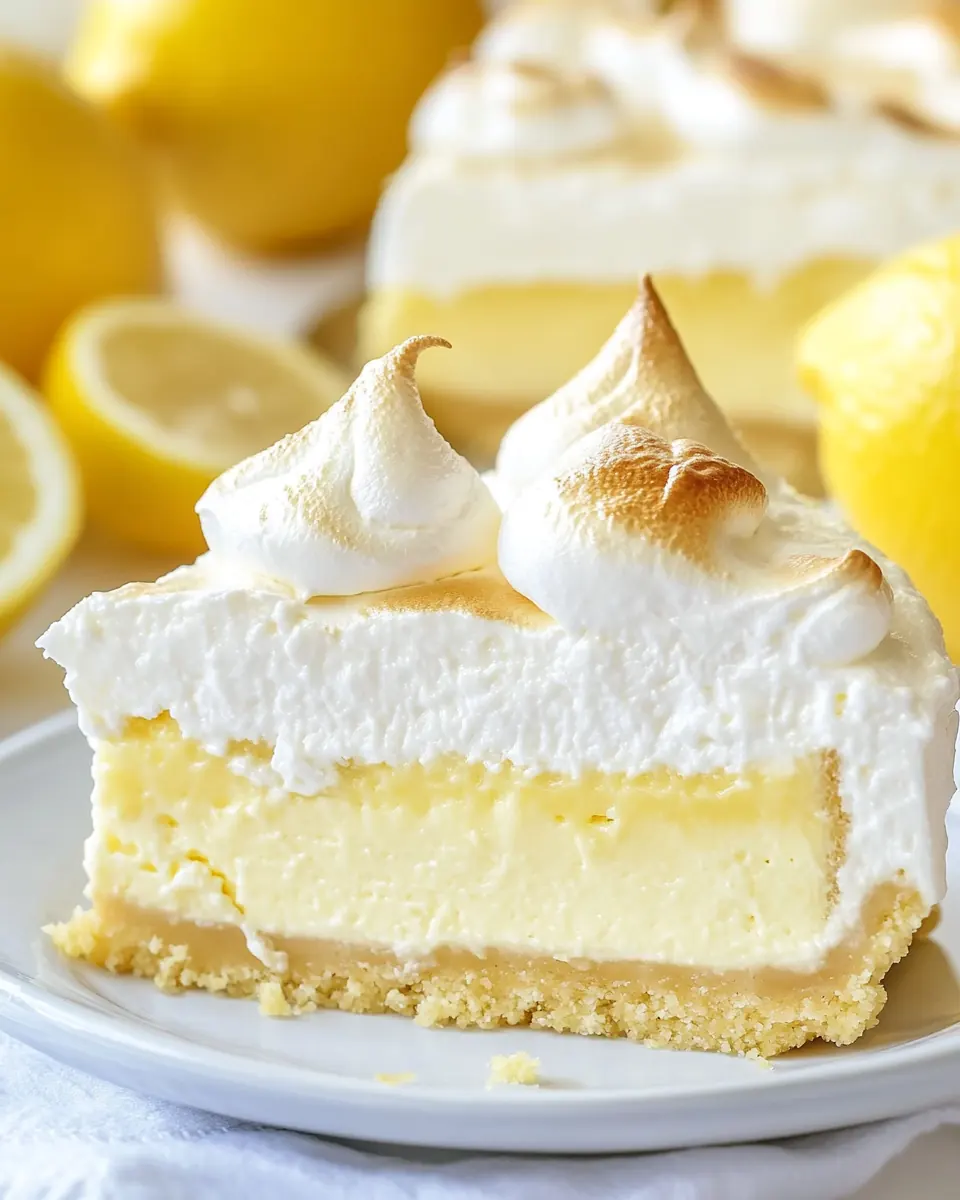
This section collects practical tips I use every time I make this dessert, distilled from trial and error. Follow them to improve texture, flavor, and presentation without guesswork.
- Room temperature ingredients: Let the cream cheese, eggs, and honey vanilla Greek yogurt come to room temperature so they blend smoothly and reduce mixing time.
- Fine crumb texture: Pulse the vanilla wafer cookies to a uniform sand like consistency so the crust presses evenly and bakes consistently.
- Water bath setup: Fold a lint free towel under the springform pan to keep it steady and prevent water entering the pan during baking.
- Gradual sugar addition: Add the powdered sugar to the meringue slowly to ensure it dissolves, resulting in a glossy, stable foam.
- Edge clearance for meringue: Leave a 1/4 to 1/2 inch gap when spreading the curd so the meringue can seal to the cheesecake and prevent leaks.
- Short high heat for browning: Use a preheated oven at 425°F and watch carefully, as the meringue will brown within 3 to 5 minutes.
How to Serve Lemon Meringue Cheesecake
Serving this cheesecake is as much about the moment as it is about the slice. Chill it thoroughly, slice with a hot sharp knife for clean edges, and present with small accents that complement the lemon and meringue.
- Room temperature slices: Allow slices to sit for 10 to 15 minutes before serving so the texture softens slightly and flavors open up.
- Garnish simply: A light dusting of powdered sugar or a thin curl of lemon zest adds visual appeal without competing with the meringue.
- Occasions: This dessert shines at celebrations like birthdays, brunches, and spring gatherings, offering a festive centerpiece that is both elegant and comforting.
- Storage tips: Keep the cheesecake covered in the refrigerator for up to 3 days to preserve the meringue and prevent the curd from drying out.
- Serving size: Cut the cake into even slices to serve 10, and use a sharp knife dipped in hot water and wiped between cuts for neat portions.
- Seasonal pairing: The bright lemon character makes this ideal for spring or early summer menus, pairing well with light teas or coffee.
- Transport guidance: If you need to transport the cheesecake, chill it until very firm and keep it in a level container so the layers remain intact.
FAQ
Conclusion
This Lemon Meringue Cheesecake stands out for its harmonious balance of bright lemon flavor, luxuriously creamy filling, and airy toasted meringue. Give it a try when you want a dessert that looks impressive but is truly achievable at home. I hope you enjoy the ritual of making and sharing it as much as I do, and that it becomes a favorite for spring gatherings and special moments.
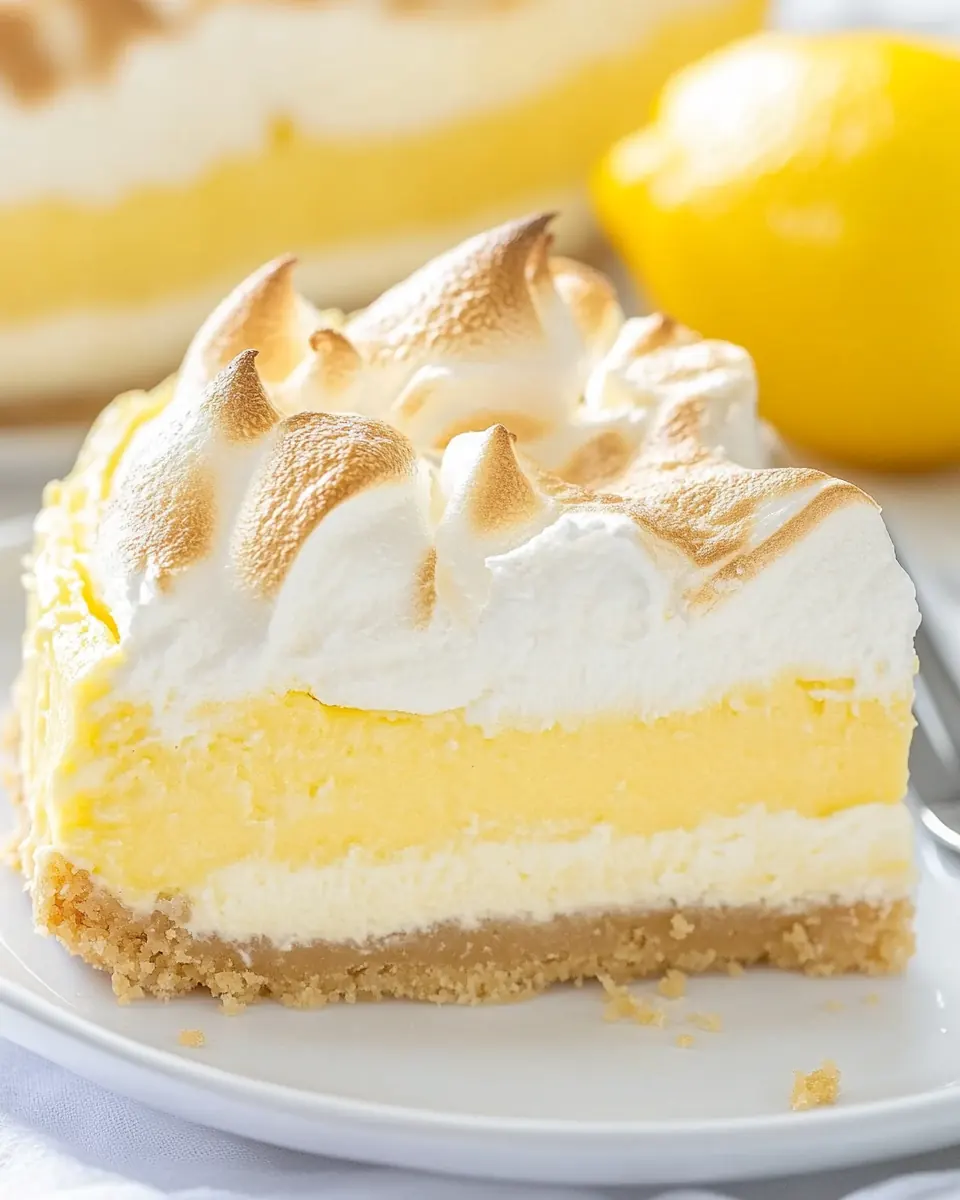
Lemon Meringue Cheesecake
Ingredients
Equipment
Method
- Preheat oven to 350°F. Line the bottom of a 9-inch springform pan with parchment paper and spray the bottom and sides with nonstick spray. Set aside.: You should notice the oven beginning to hum as it warms and the air inside becoming steadily warmer. Properly lining the pan ensures an easy release and prevents sticking. One common mistake is skipping the parchment, which can make unmolding messy and might tear the crust when releasing the ring.
- Use a food processor to crush the vanilla wafer cookies to crumbs, about 1 minute.: The sound of the processor will change from a steady grind to a finer whir as the cookies become uniform crumbs, and you will see a sandy texture. Even crumbs compact more reliably and bake evenly; if you leave large pieces they can create weak spots in the crust.
- Add in the salted butter and pulse to combine. You should have a mixture with the consistency of wet sand.: Visually the mixture should transform from dry crumbs to a glossy, sand like clump. The melted salted butter coats each crumb, which helps them bind when pressed into the pan. If the mixture feels too greasy, you likely added too much butter; if it is too dry, the crust will be crumbly.
- Press the crust into the springform pan.: Press firmly so the base becomes compact and even, using the bottom of a measuring cup to smooth it. You want a firm, even layer with no thin spots that would break apart when sliced. If you press unevenly you may bake sections differently leading to textural contrasts.
- Bake the crust for 10-12 minutes, or until it just begins to brown.: The aroma will shift to a toasty, slightly caramelized scent, and the edges should become just a shade darker. This short bake sets the crust so it supports the filling. Baking too long will make the crust overly hard and dry, while underbaking risks a soggy base.
- Reduce the oven to 300°F, remove the crust from the oven, and allow the crust to cool completely.: The oven will settle into a lower, steady warmth, and the cooled crust should feel firm to the touch. Cooling prevents the filling from melting the crust and helps maintain a neat edge. If you pour the filling into a hot crust, the butter can loosen and cause separation.
- While the crust is cooling, prepare a water bath by placing a lint free towel, folded, in the bottom of a roasting or large baking pan. You want a pan large enough for the springform pan to fit comfortably with a little space on all sides.: The towel acts as a cradle that stabilizes the springform pan and keeps it from sliding when the water is added. You'll want a pan that leaves a little breathing room around the springform so steam circulates. Using a pan that is too tight makes it hard to add the water and risks spills.
- Heat 4 cups of water in a kettle until boiling, turn off heat and allow it to set while you assemble the cheesecake.: Steam will rise as you pour the water later, so be careful and keep a steady hand. The hot water will create even heat around the cheesecake, preventing sudden temperature shifts. If you use cold water the bath will cool the cheesecake and could lead to cracking.
- To make the cheesecake, beat together the sugar and lemon zest in a large mixing bowl with a hand or stand mixer until the sugar is fragrant, about 1 minute.: The aroma should intensify as the oils from the zest release into the sugar, perfuming the bowl. This step is small but important because it distributes concentrated citrus scent throughout the filling. Rubbing the zest into the sugar wastes none of the aromatic oils, so skip it and the lemon will feel faint.
- Add in the cream cheese and beat on medium, just until light and fluffy, about 5-7 minutes, depending on the temperature of the cream cheese.: You will see the mixture go from dense and clumpy to smoother and paler, and the sound of the mixer will lighten as the texture softens. Properly softened cream cheese ensures a silky filling; if it is still cold you will see lumps, which means extended beating will incorporate too much air.
- Mix in the greek yogurt, lemon juice, and lemon extract until completely combined, about 2-3 minutes.: The batter will become more fluid and glossy, carrying a bright lemon scent. These ingredients balance fat, acid, and flavor to create a stable, flavorful custard. Failing to fully combine can leave pockets of curdled texture after baking.
- Beat in the eggs, 1 at a time, on low speed, just until combined. Do not overbeat.: You should see the mixture slightly lighten with each egg, and the batter should look homogenous and velvety. Keeping speed low controls air incorporation, which prevents cracks and a cake like rise. Overbeating introduces large bubbles that can burst and leave craters on the surface.
- Wrap the cooled springform pan in aluminum foil and a baking bag, if possible.: This creates a waterproof seal so that the water bath does not seep into the pan and make the crust soggy. Make the foil snug and double wrap the base for safety. A poor seal risks a watery mess and a compromised crust.
- Pour the cheesecake mixture into the prepared crust and gently spread into an even layer. Tap the pan gently several times on the counter to pop any air bubbles.: You will see the batter settle into the crust and small bubbles rise and pop, leaving a smooth top. Eliminating air bubbles helps prevent large holes after baking. If you skip tapping, trapped air can expand and create an uneven surface.
- Put the cheesecake pan on the folded towel in the roasting or large baking pan and place it all in the oven.: The setup should feel stable and balanced, and the cheesecake should sit level. Proper placement ensures even heat distribution from the water bath. If the pan wobbles, the filling can slosh and bake unevenly.
- Carefully pour the hot water into the baking pan, outside the springform pan, until it reaches the middle of the springform pan, at least 1-2 inches. This creates a water bath so that the cheesecake cooks more evenly.: As the water flows you will see steam rise and the oven interior become humid, which softens oven edges and prevents the top from drying. This gentle, surrounding heat produces a creamy texture. Pour too rapidly and you risk splashing water into the cheesecake tin.
- Bake for 75-90 minutes, or until the cheesecake has just a slight wiggle in the middle when the springform pan is moved.: The surface will be set and a little golden at the edges, while the center still shivers slightly, like soft gelatin. This state indicates a properly cooked custard that will continue to set as it cools. Overbaking will dry the center and can cause cracks.
- Shut the oven and turn it off, allowing the cheesecake to continue cooking as it cools for 30 minutes.: The internal temperature will gently drop, finishing the set without shock. You may hear tiny settling sounds as structure firms. Opening the oven too soon causes a temperature change that can lead to collapse or cracking.
- Crack the oven and allow the cheesecake to cool for another 30-45 minutes or until you can comfortably touch the pan without being burnt, before removing it from the oven.: The cooling phase will reduce jiggle and the top will relax into a glossy finish. Slow cooling prevents surface cracks and preserves a silky interior. Rushing this step by chilling immediately can create condensation and sogginess.
- Allow the cheesecake to set for 30-45 minutes at room temperature and then spread the lemon curd gently over the top, leaving a 1/4-1/2 inch of space around the edge of the cake for the meringue to seal it in and then cover with plastic wrap and place in the for at least 4 hours or up to overnight.: The curd should sit like a bright jewel on the filling, glossy and slightly thick. Leaving a border keeps the meringue anchored and prevents the curd from running when heat is applied. If the curd is too warm it may melt into the filling, so ensure it is cool before spreading.
- Once the cheesecake has refrigerated until set, at least 4 hours, prepare the meringue and preheat the oven to 425°F.: The cold, firmed cheesecake contrasts with the hot oven you will use to toast the meringue briefly. Preheating ensures the meringue browns quickly without overcooking the filling. Omitting the chill results in a softer, less stable surface for the meringue to adhere to.
- Prepare the meringue by beating the egg whites and lemon juice together in a large mixing bowl using a hand or stand mixer, until soft peaks form, about 3-4 minutes.: You will see glossy foam forming that grows in volume; it should hold a loose peak when you lift the whisk. The gentle tang of the lemon juice stabilizes the foam and brightens the flavor. If your bowl is not perfectly clean, the whites may fail to whip.
- Gradually add in the sugar, 1/2 cup at a time, beating on high until all the sugar has been added.: As you add sugar the meringue should become shiny and denser, and you will feel more resistance on the whisk. Adding sugar slowly allows it to dissolve and yield a stable, glossy foam. Dumping sugar in at once can weigh down and deflate the foam.
- Once all the sugar has been added, continue beating until stiff peaks form. This can take another 5-10 minutes. You want a meringue that is stiff enough to hold its shape and stick to the bowl without sliding.: The meringue should stand tall and pointy when the whisk is lifted, and it will glisten. A properly whipped meringue gives a billowy texture that toasts beautifully. Underwhipping yields a collapsing finish, while overwhipping makes it dry and grainy.
- Pipe or spread the meringue onto the cheesecake, being sure to place it around the edge of the top so that the curd won’t drip off when heating.: The meringue should cling to the curd and form peaks or swirls that catch the heat and brown attractively. This seal keeps the curd in place and creates a pretty border. If you skimp on the meringue, the curd may bleed when warmed.
- Bake for 3-5 minutes or until golden brown.: Watch closely as the meringue will color quickly, turning from snowy white to toasted gold; the aroma becomes slightly caramelized and toasty. This burst of heat transforms the surface to an attractive finish without cooking the interior further. Leaving it in too long will darken too much and can become bitter.
- Allow to cool for at least 10 minutes before cutting and serving.: After a short rest the cheesecake firms just enough to slice cleanly, and the meringue settles slightly while remaining soft. Cutting too soon can smear the warm curd and compress the meringue, so patience rewards you with tidy slices.
Notes
- Room temperature ingredients: Let the cream cheese, eggs, and honey vanilla Greek yogurt come to room temperature so they blend smoothly and reduce mixing time.
- Fine crumb texture: Pulse the vanilla wafer cookies to a uniform sand like consistency so the crust presses evenly and bakes consistently.
- Water bath setup: Fold a lint free towel under the springform pan to keep it steady and prevent water entering the pan during baking.
- Gradual sugar addition: Add the powdered sugar to the meringue slowly to ensure it dissolves, resulting in a glossy, stable foam.
- Edge clearance for meringue: Leave a 1/4 to 1/2 inch gap when spreading the curd so the meringue can seal to the cheesecake and prevent leaks.
- Short high heat for browning: Use a preheated oven at 425°F and watch carefully, as the meringue will brown within 3 to 5 minutes.