Rainbow Salad
Rainbow Salad is the kind of dish I reach for on warm afternoons when I want something fresh, colorful, and full of crunch. The first time I tossed this together I was coming back from the farmers market with an armful of bright produce, and I remember how the salad looked like a little celebration in my mixing bowl. Every bite felt lively, and I loved how the textures played off each other, so I kept refining the balance until it became my go to summer side.
I often make Rainbow Salad when friends drop by unexpectedly, because it comes together quickly and always looks deliberate, even when it is thrown together in a hurry. I have a few rituals when assembling it, like slicing the cucumbers thin enough so they still snap, and keeping the mushrooms slightly thicker so they hold their shape. These small choices change the mouthfeel and keep the salad interesting.
On slow weekend mornings I make a big batch, then use the leftovers across the week, adding a scoop to sandwiches or wrapping it in a flatbread. The bright lemon dressing keeps everything tasting fresh, and the olives add a briny note that makes the salad feel complete. If you enjoy meals that are about texture and straightforward flavors, you will find this salad satisfying every time.
Recipe Snapshot
30 mins
30 mins
0 mins
Easy
150 kcal
Mediterranean
Vegan, Gluten-Free
Salads
Mixing bowl, Knife, Cutting board, Small mixing bowl, Whisk
Why Try This Rainbow Salad
Vibrant visual appeal
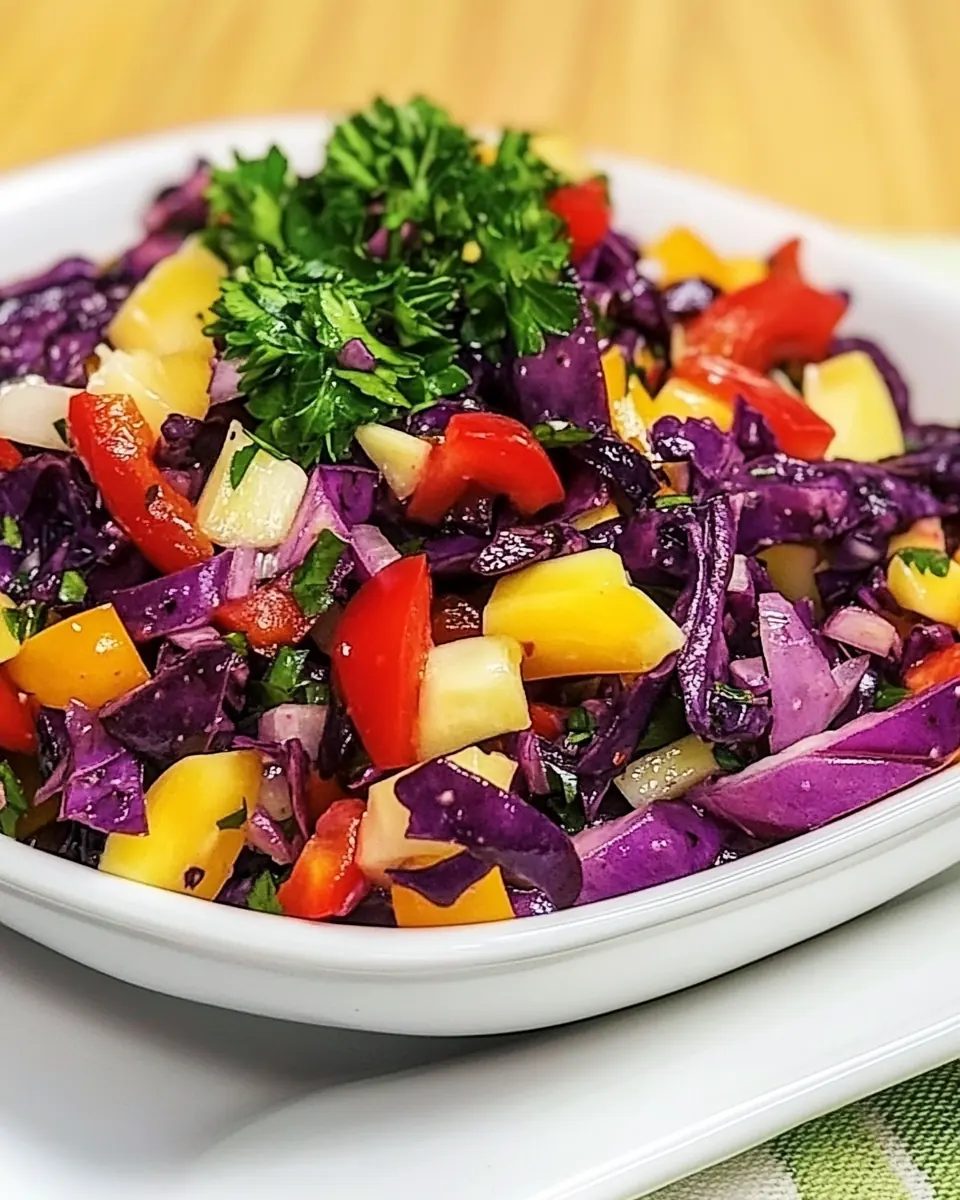
I love how Rainbow Salad brings color to the table. The mix of deep purple red cabbage, bright yellow bell pepper, and ruby tomatoes turns a meal into an event. Food that looks good makes people more excited to eat, and this salad does that effortlessly.
Simple, honest ingredients
We stick to pantry friendly elements like extra virgin olive oil and fresh lemon juice, which allow each vegetable to shine. I appreciate recipes that do not try to mask the produce, and this one celebrates straightforward flavor and crunchy textures.
Fast to assemble
Because most vegetables are served raw, Rainbow Salad is quick to prepare. When I am short on time, I can still make a generous bowl in under half an hour, which makes it perfect for weeknight dinners or last minute entertaining.
Flexible and forgiving
I often tweak quantities based on what I have. If I am low on mushrooms or have extra cucumbers, the salad still sings. That adaptability makes it a recipe I reach for when cleaning out the fridge.
Balanced contrast of flavors
The dressing of lemon juice and extra virgin olive oil brightens the bowl while the Kalamata olives add a savory lift. I love that each forkful has crunchy, juicy, and briny notes that keep you coming back for another bite.
What’s In This Rainbow Salad
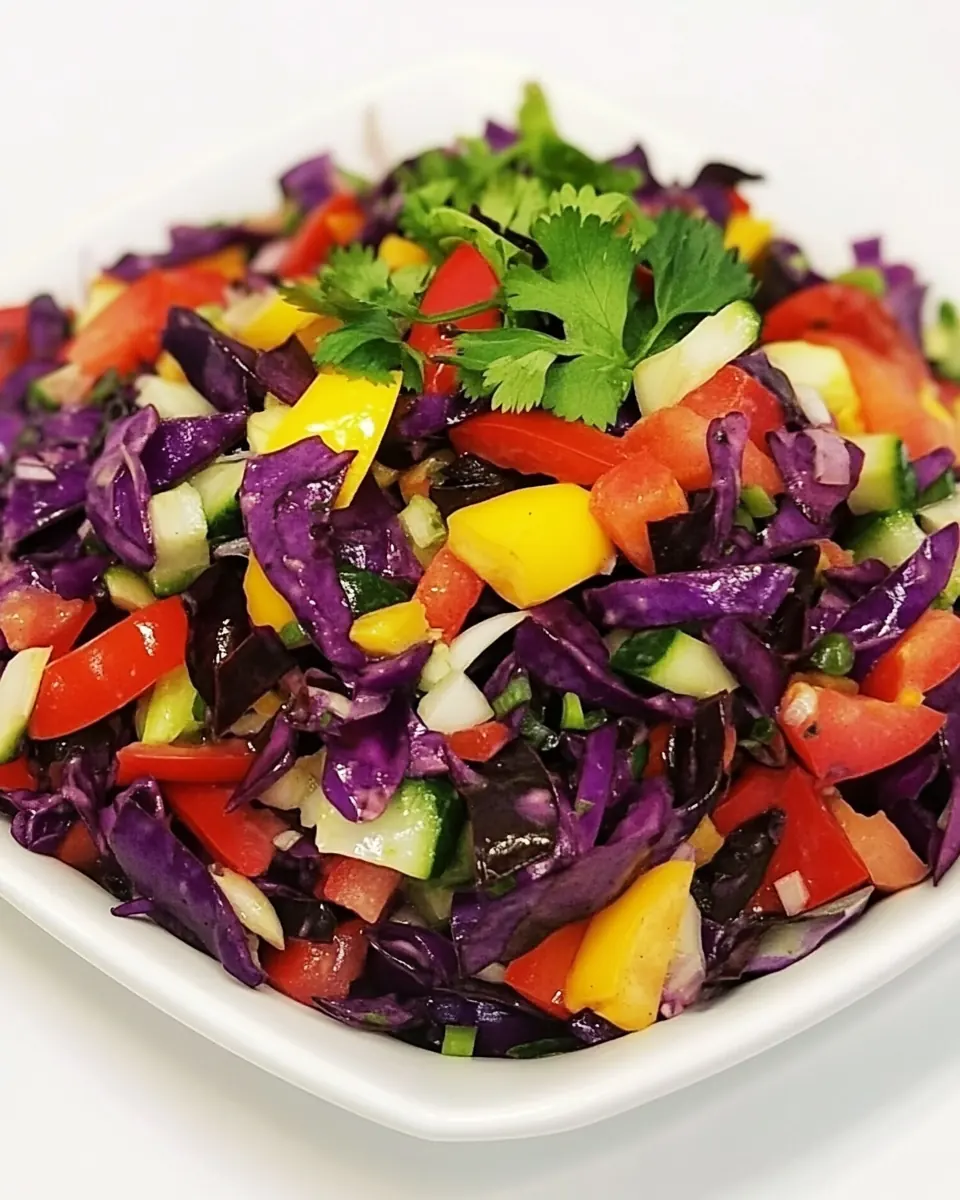
This selection of ingredients follows a simple philosophy: fresh, textural contrast, and bright seasoning. The key players are the crunchy red cabbage and crisp persian cucumbers, which create a sturdy base, while the tomatoes and yellow bell pepper contribute juiciness and sweetness. The white button mushrooms and Kalamata olives provide an earthy and briny counterpoint, and the lemon dressing ties everything together.
- 1/2 small red cabbage, shredded in small pieces: Shredded finely to add a crunchy, slightly peppery base and vibrant purple color that contrasts with other vegetables. Adds fiber and a mild cabbage sweetness that helps balance acidic dressings and salts. Holds dressing well when shredded small, improving texture throughout the salad.
- 3 small ripe tomatoes, diced: Diced evenly to contribute juicy sweetness and bright red color, providing bursts of fresh tomato flavor throughout the salad. Offers acidity and moisture that helps meld other ingredients together while keeping a light, summery profile.
- 1 whole yellow bell pepper, seeded and diced: Seeded and diced to supply sweet, crisp texture and sunny color without excess moisture from seeds. Adds a mild, fruity bell pepper flavor that complements the other vegetables and enhances visual appeal.
- 1 pound persian cucumbers, diced small with skin on: Diced small with skin on to deliver a crisp, hydrating element and subtle cucumber freshness that lightens the salad. Keeps skin for added texture and nutrients while small dice allows even distribution among other components.
- 4 ounces small white button mushrooms, sliced: Sliced thinly to introduce an earthy, savory note and tender bite that contrasts with crunchier vegetables. Brings umami depth and mild mushroom flavor that complements olives and dressing nicely.
- 3/4 cup Kalamata olives, pitted: Pitted to provide briny, rich flavor and chewy texture that enhances savory complexity. Adds Mediterranean salty tang and deep purple color pockets that elevate overall taste.
- 3 tablespoons fresh lemon juice: Squeezed fresh to add bright acidity and citrusy brightness that lifts all components and balances olive saltiness. Provides a clean, zesty tang that acts as the acidic backbone for the dressing.
- 2 tablespoons extra virgin olive oil: Drizzled for a fruity, smooth mouthfeel and to carry flavors, melding lemon juice and salt into a unified dressing. Offers healthy fats and a subtle peppery note when high-quality extra virgin olive oil is used.
- 1/4 teaspoons ea salt, or more to taste: Measured to season the salad with essential savory balance and to enhance all other flavors to taste. Allows control over overall saltiness and can be adjusted after tossing for perfect seasoning.
Putting Together Rainbow Salad
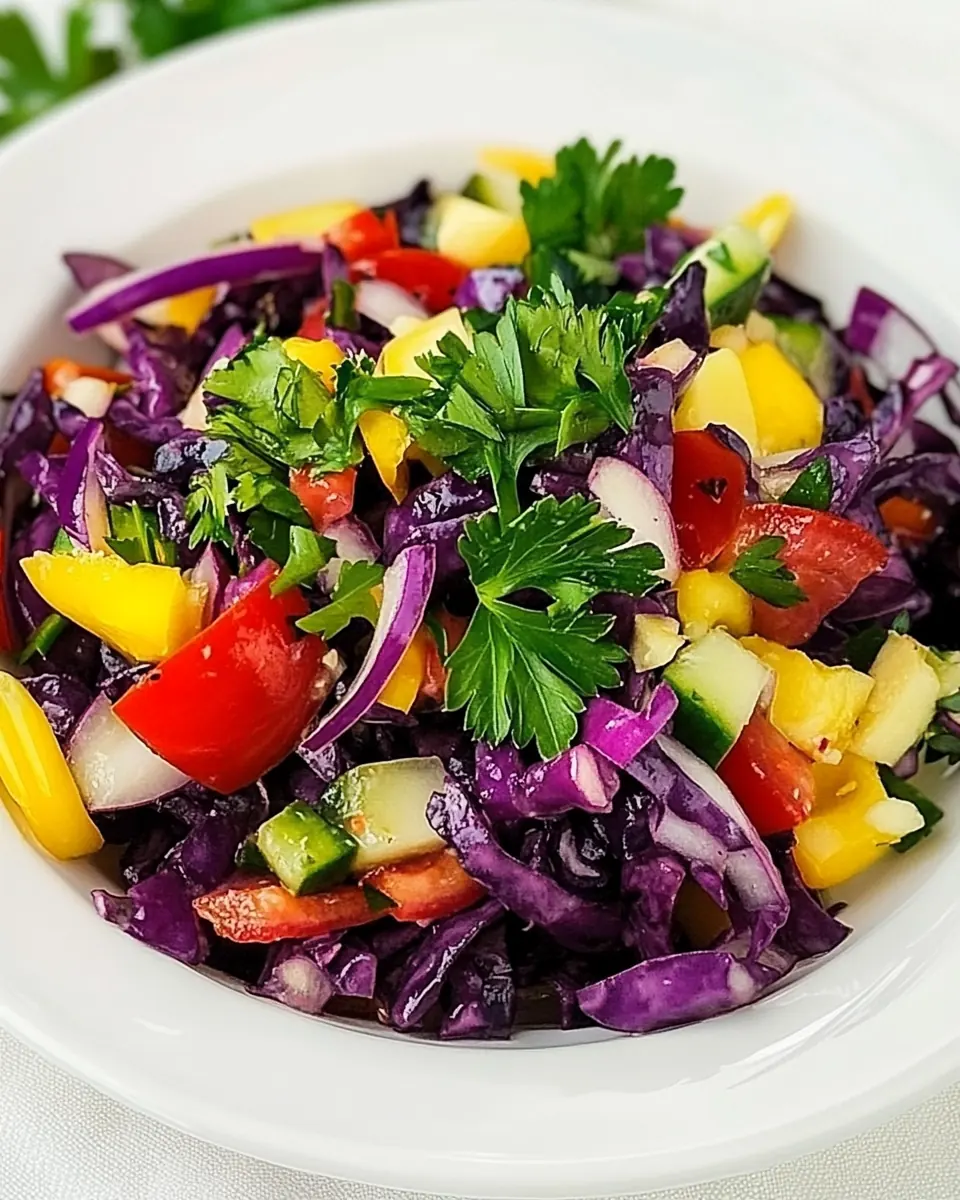
This salad comes together in a few simple moves, and I like to think of assembly as choreography rather than a chore. Below you will find clear steps that match the original directions, expanded with sensory cues, the reason behind each action, and one troubleshooting tip so you get confident results.
- Combine all vegetables in a large mixing bowl and mix well. In a small mixing bowl, combine lemon juice, olive oil and salt. Pour over the chopped vegetables and toss to coat. Serve.: The moment you toss the shredded red cabbage , diced tomatoes , chopped yellow bell pepper , diced persian cucumbers , and sliced white button mushrooms together you will hear a crisp rustle and see a riot of color. Mixing them thoroughly ensures every forkful has a balance of textures and flavors, and it helps the vegetables settle into each other so the dressing can coat them evenly later. Use a spacious bowl so the veggies can move freely, which prevents bruising and uneven distribution. One thing to avoid is crowding the bowl, which can trap moisture and make the salad soggy. If you notice juices pooling at the bottom, that means some pieces are overripe or cut too fine.
- In a small mixing bowl, combine lemon juice, olive oil and salt. Pour over the chopped vegetables and toss to coat. Serve.: When you whisk fresh lemon juice with extra virgin olive oil and salt , you will smell the citrus brighten the oil, and the dressing will take on a glossy sheen. Emulsifying the dressing briefly helps the oil and lemon cling to the vegetables rather than sliding off. The acidity from the lemon lifts the natural sweetness of the tomatoes , and the oil softens the sharpness so the salad tastes rounded. A common error is under mixing, which leaves the dressing separated; whisk until slightly opaque and combined.
- Pour over the chopped vegetables and toss to coat.: As you drizzle the dressing over the bowl, notice how the colors deepen and tiny droplets cling to the vegetable surfaces. Tossing ensures the dressing reaches every nook, and it helps the cabbage and cucumber absorb flavor without getting limp. Use gentle, folding motions rather than smashing, so the pieces keep their shape. If you overhandle the salad it will become watery and wilted, so stop tossing once everything looks glossy and evenly dressed.
- Serve.: When you plate the salad, look for a glossy finish and a balance of colors in each serving. The aroma should be fresh with lemon on the top and a faint olive perfume. Serving right away preserves crispness, but allowing the salad to rest for ten to fifteen minutes lets the flavors meld without sacrificing texture. Avoid leaving the salad at room temperature for too long, especially in heat, as the vegetables will lose their bite and the tomatoes can break down.
- In a small mixing bowl, combine lemon juice, olive oil and salt.: Repeat of the dressing combination is a chance to emphasize technique and timing, since fresh dressing tastes brighter. Whisking the components again highlights the importance of a well emulsified sauce so it clings to the vegetables. Smell the lemon and taste for balance, adjusting salt if needed. A mistake here is preparing the dressing too far in advance, which dulls the citrus notes; make it fresh for the liveliest flavor.
- Pour over the chopped vegetables and toss to coat.: The final toss unites every element, and the sound is a soft joining rustle. Ensure the Kalamata olives are distributed evenly so their briny pockets appear throughout the bowl. If you see puddles of dressing, it means you may have added too much oil; blot excess with a paper towel and toss again gently. Presentation matters, so give the bowl a final visual check before serving.
Make It Your Own
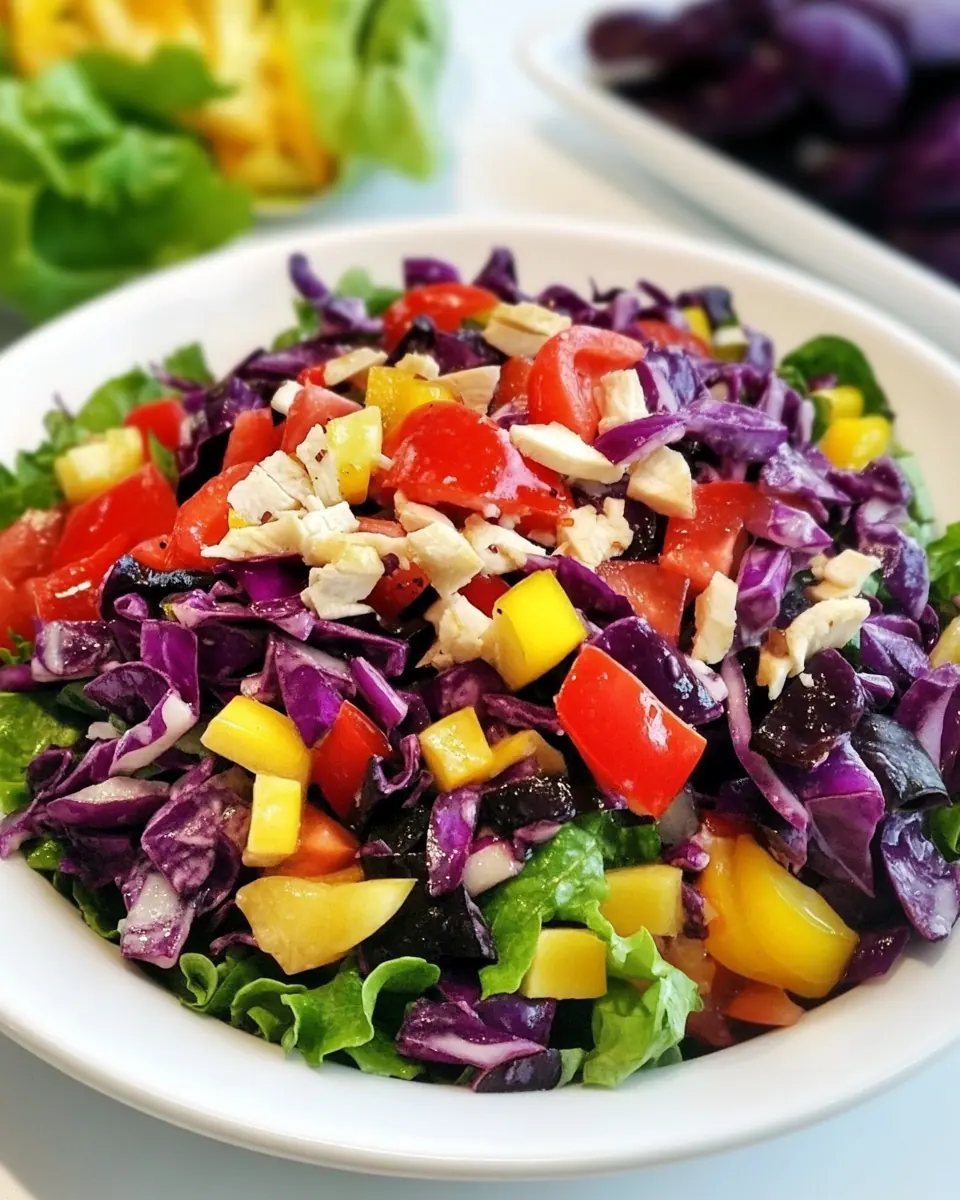
I like offering a few straightforward ways to personalize Rainbow Salad without changing its spirit. Small tweaks can highlight different textures or amplify flavors, and I always encourage experimentation while respecting the listed ingredients.
- Brighten with extra lemon: If you love citrus, add a little more fresh lemon juice at the end for an extra lift. This brings forward the salad s brightness and pairs well with the briny Kalamata olives.
- Toast your olive oil: Warm the extra virgin olive oil briefly with a pinch of salt, then cool and whisk with lemon for a mellow, nutty dressing. This softens the oil s edge and creates a subtler mouthfeel.
- Chill before serving: Let the salad rest in the fridge for ten to fifteen minutes to marry flavors, but serve before it loses its crisp bite. The cold sharpens textures and makes the bowl more refreshing.
- Prep for the week: Store components separately, keeping the dressing and juicy ingredients in a sealed container. When assembled just before serving, the salad stays vibrant longer.
- Balance salt carefully: Because Kalamata olives bring brine, start with the listed salt amount and add more only after tasting. Over salting is an easy misstep that can silence the fresh notes.
Best Served With
Rainbow Salad pairs beautifully with casual meals and special occasions alike. Its bright profile makes it ideal as a refreshing side, and it holds up on warm afternoons when you want something light but satisfying. Below are serving ideas, occasions, and storage tips to help you present the salad at its best.
- As a summer side: Serve alongside grilled vegetables or a simple grain bowl to create a balanced, seasonal plate.
- For lunches: Spoon a portion onto hearty bread or tuck into a wrap for a fresh midday meal.
- Entertaining: Present in a large bowl at gatherings, letting guests help themselves; the colorful presentation makes it a centerpiece.
- Ramadan and special occasions: The salad s lightness and bright flavors make it suitable for breaking fasts or as part of a larger spread.
- Storage tips: Keep dressing separate and store the salad in an airtight container in the fridge for up to three days, tossing fresh before serving.
- Seasonal pairings: This shines in summer when tomatoes and peppers are at their peak, but it also works in early fall when produce is still lively.
FAQ
Conclusion
Rainbow Salad shines because it combines vivid color, satisfying crunch, and vibrant citrus in one effortless bowl. Try it when you need a quick, refreshing side that still feels thoughtful and composed. This salad is forgiving, adaptable, and reliably bright, so I hope you give it a go and make it a regular fixture in your summer meals.
Rainbow Salad
Ingredients
Equipment
Method
- Combine all vegetables in a large mixing bowl and mix well. In a small mixing bowl, combine lemon juice, olive oil and salt. Pour over the chopped vegetables and toss to coat. Serve.: The moment you toss the shredded red cabbage , diced tomatoes , chopped yellow bell pepper , diced persian cucumbers , and sliced white button mushrooms together you will hear a crisp rustle and see a riot of color. Mixing them thoroughly ensures every forkful has a balance of textures and flavors, and it helps the vegetables settle into each other so the dressing can coat them evenly later. Use a spacious bowl so the veggies can move freely, which prevents bruising and uneven distribution. One thing to avoid is crowding the bowl, which can trap moisture and make the salad soggy. If you notice juices pooling at the bottom, that means some pieces are overripe or cut too fine.
- In a small mixing bowl, combine lemon juice, olive oil and salt. Pour over the chopped vegetables and toss to coat. Serve.: When you whisk fresh lemon juice with extra virgin olive oil and salt , you will smell the citrus brighten the oil, and the dressing will take on a glossy sheen. Emulsifying the dressing briefly helps the oil and lemon cling to the vegetables rather than sliding off. The acidity from the lemon lifts the natural sweetness of the tomatoes , and the oil softens the sharpness so the salad tastes rounded. A common error is under mixing, which leaves the dressing separated; whisk until slightly opaque and combined.
- Pour over the chopped vegetables and toss to coat.: As you drizzle the dressing over the bowl, notice how the colors deepen and tiny droplets cling to the vegetable surfaces. Tossing ensures the dressing reaches every nook, and it helps the cabbage and cucumber absorb flavor without getting limp. Use gentle, folding motions rather than smashing, so the pieces keep their shape. If you overhandle the salad it will become watery and wilted, so stop tossing once everything looks glossy and evenly dressed.
- Serve.: When you plate the salad, look for a glossy finish and a balance of colors in each serving. The aroma should be fresh with lemon on the top and a faint olive perfume. Serving right away preserves crispness, but allowing the salad to rest for ten to fifteen minutes lets the flavors meld without sacrificing texture. Avoid leaving the salad at room temperature for too long, especially in heat, as the vegetables will lose their bite and the tomatoes can break down.
- In a small mixing bowl, combine lemon juice, olive oil and salt.: Repeat of the dressing combination is a chance to emphasize technique and timing, since fresh dressing tastes brighter. Whisking the components again highlights the importance of a well emulsified sauce so it clings to the vegetables. Smell the lemon and taste for balance, adjusting salt if needed. A mistake here is preparing the dressing too far in advance, which dulls the citrus notes; make it fresh for the liveliest flavor.
- Pour over the chopped vegetables and toss to coat.: The final toss unites every element, and the sound is a soft joining rustle. Ensure the Kalamata olives are distributed evenly so their briny pockets appear throughout the bowl. If you see puddles of dressing, it means you may have added too much oil; blot excess with a paper towel and toss again gently. Presentation matters, so give the bowl a final visual check before serving.
Notes
- Brighten with extra lemon: If you love citrus, add a little more fresh lemon juice at the end for an extra lift. This brings forward the salad s brightness and pairs well with the briny Kalamata olives.
- Toast your olive oil: Warm the extra virgin olive oil briefly with a pinch of salt, then cool and whisk with lemon for a mellow, nutty dressing. This softens the oil s edge and creates a subtler mouthfeel.
- Chill before serving: Let the salad rest in the fridge for ten to fifteen minutes to marry flavors, but serve before it loses its crisp bite. The cold sharpens textures and makes the bowl more refreshing.
- Prep for the week: Store components separately, keeping the dressing and juicy ingredients in a sealed container. When assembled just before serving, the salad stays vibrant longer.
- Balance salt carefully: Because Kalamata olives bring brine, start with the listed salt amount and add more only after tasting. Over salting is an easy misstep that can silence the fresh notes.