To make the sauce: In a small bowl, whisk together soy sauce, rice vinegar, honey, garlic, ginger and cornstarch. Set aside.: In a small bowl, whisk together soy sauce, rice vinegar, honey, garlic, ginger and cornstarch. Set aside. : The aroma of the minced garlic and ginger will already be noticeable as you whisk, and the glossy sheen of the combined honey and soy sauce signals balance. Why this matters, the pre blended sauce ensures even flavor distribution and prevents clumping of the cornstarch when it hits the hot pan. Sensory cues include a smooth, slightly viscous liquid with fragrant aromatics. Troubleshooting tip, if the cornstarch seems lumpy, whisk vigorously or press through a small mesh; lumps will create uneven texture in the final sauce.
In a large skillet over medium high heat, drizzle olive oil and cook shrimp until it just starts to turn pink, about 3 minutes. Add asparagus and season with a bit of salt and pepper. Cook until tender, about 2 to 3 more minutes.: You will hear a clean, upbeat sizzle as the shrimp hits the hot olive oil , which is the sound of Maillard reaction beginning. The surface should shift from translucent to opaque with a pale pink tone, and the edges may take on a faint golden hue. Adding the cut asparagus introduces a different texture, and you should see bright green stalks that remain snappy rather than wilted. Why this method matters, quick searing locks juices in the shrimp and preserves the vegetal bite of the asparagus . Common mistake, overcrowding the pan will steam the ingredients instead of searing them, so work in a single layer and use a roomy skillet.
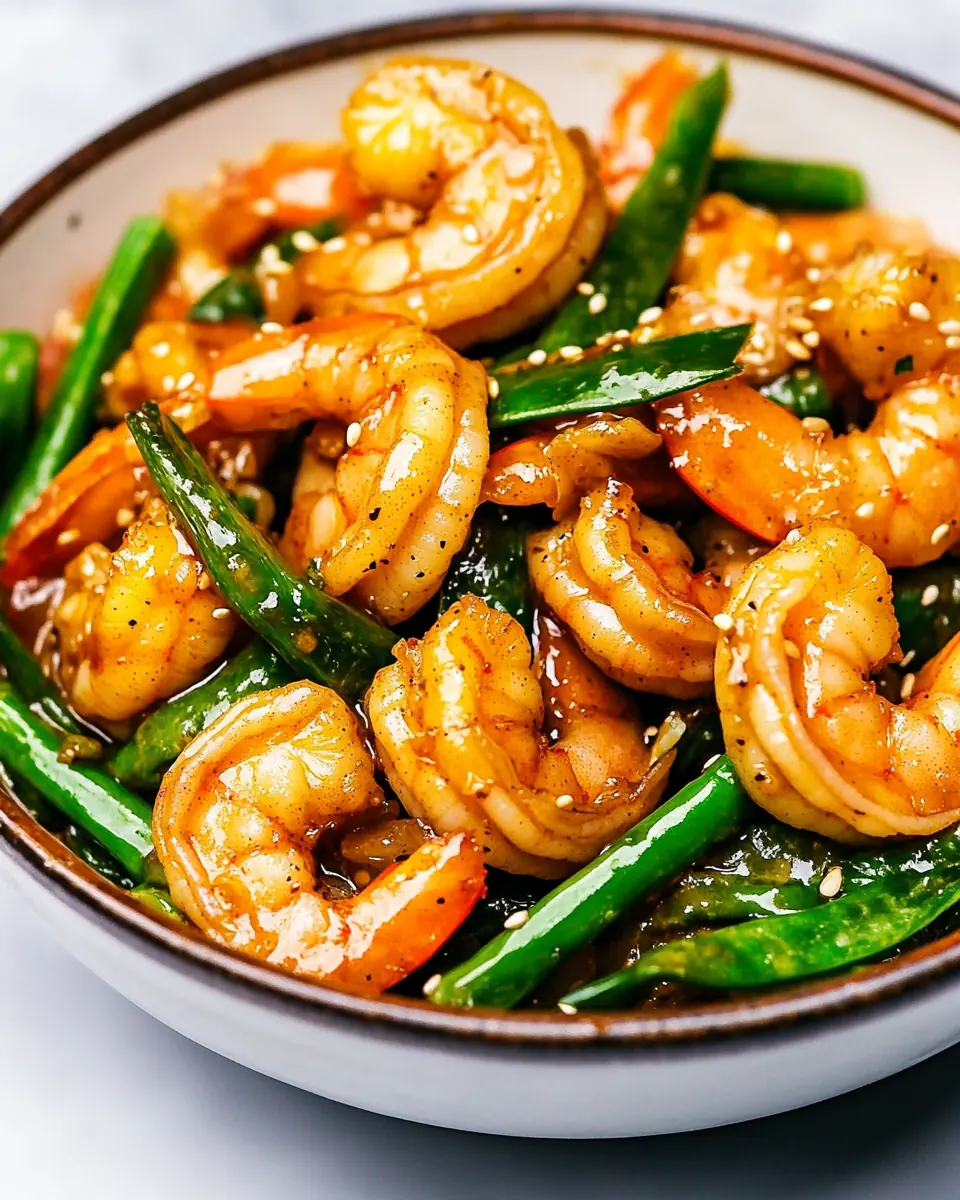
Toss in your sauce and continue to cook until the sauce has thickened and shrimp and asparagus is coated, about 2 to 3 minutes.: When the sauce meets the hot pan, it will hit a rolling shimmer and begin to thicken as the cornstarch activates; watch as it transitions from thin to a clingy glaze that coats the shrimp and asparagus . The scent will intensify with a sweet savory note, and visually you want a shiny coating that pools briefly then adheres. Why this step matters, the glaze is what binds the flavors and gives each bite a balanced hit of umami, acid, and sweetness. Troubleshooting, if the sauce becomes too thick, add a splash of warm water to loosen it; if too thin, let it reduce a little longer, but stir so it does not burn.
Remove from heat and garnish with sesame seeds and black pepper, if desired. Serve immediately and enjoy!: As you take the skillet off the heat, steam will bloom and the final aromas will rise, signaling it is time to plate. A sprinkle of sesame seeds gives visual contrast and a subtle nutty crunch, while cracked black pepper adds a finishing bite. Why finishing off heat matters, residual heat continues to marry the flavors without overcooking the shrimp , preserving a tender texture. Common mistake, letting the food sit in the hot pan will carryover cook the shrimp and can make it tough, so transfer to a warm serving dish promptly.