Bring a large pot of salted water to a boil.: As the water heats, you will hear gentle bubbling that becomes a rolling boil, and the scent is neutral. Salting the water seasons the spaghetti from the inside out, which matters more than you might think because it ensures the noodles are flavorful even before you add the hummus sauce. A common mistake is under-salting, which makes the final dish taste bland, so add enough salt until the water tastes slightly like the sea. If your pot seems to take forever to boil, cover it with a lid to trap heat, then reduce the lid slightly once boiling to prevent overflows.
While the water comes to a boil, heat a grill or grill pan to high heat. Add 2 tablespoons olive oil and toss in the tomatoes and baby bell peppers with a pinch of salt and pepper. Grill the peppers until grill marks appear on both sides, about 3 minutes per side. If using an outdoor grill, place the tomatoes on skewers and grill for 30 seconds per side or until the tomatoes just start to blister. Remove from the heat. Set aside.: You want the surface to be hot so the cherry tomatoes and baby bell peppers blister and char quickly, creating a smoky aroma. Add 2 tablespoons olive oil and toss in the vegetables with a pinch of salt and pepper. High heat promotes caramelization, which produces a faint sweetness and charred edges that contrast with the creamy sauce. Watch the peppers closely as they can go from charred to burnt in moments, and if you see excessive blackening, move them to a cooler part of the pan. If you're using an outdoor grill, skewering the tomatoes helps keep them from rolling into the flames.
Once the water is boiling, boil the pasta until al dente. Just before draining the pasta, reserve at least 1 cup of the cooking water. This is SO important as the water is used to make the sauce. Drain the pasta.: The peppers should sizzle and give off a roasted, slightly sweet scent when they hit the hot surface. You're aiming for blistered skin and tender flesh with visible grill marks. A frequent error is leaving them too long, which makes them collapse and lose their pleasant texture, so flip when you see strong grill stripes. For the cherry tomatoes , grilling for about 30 seconds per side is enough for them to blister and release concentrated juices while still holding shape; long grilling will cause them to burst and lose their freshness.
Add the hummus, pesto, basil and crushed red pepper flakes to a large bowl and whisk to combine. Add 1 cup of pasta water to the hummus mixture and whisk to combine. Add the hot pasta and zucchini, toss well to combine. Allow the noodles to sit five minutes so the sauce has time to thicken.: After grilling, let the vegetables rest slightly. Their residual heat continues to release aromas and the skins relax, which makes them easier to mash or chop later. Resting also prevents the hot vegetables from cooling the pasta too rapidly when combined. One thing to avoid is stacking them while hot, which can trap steam and make textures soggy instead of pleasantly blistered.
Grab half of the blistered tomatoes from earlier. Add them to a bowl and lightly mash with a fork, be careful, they will splatter. Stir in the pine nuts, olives, oregano, balsamic vinegar and remaining 2 tablespoons olive oil. Season with salt and pepper.: Cook the spaghetti so it still has a slight bite, because it will continue to soften when tossed with the warm sauce and vegetables. Just before draining, reserve at least 1 cup of the pasta cooking water . The starchy water is essential because it helps the hummus emulsify into a silky sauce. Many cooks forget to save this water, and then the sauce turns gluey or too thick. If you can, test a strand by tasting for a faint resistance in the center to know it's al dente.
Divide the pasta among bowls and top with the tomato sauce, grilled peppers and the remaining blistered tomatoes. Add a handful of feta. Enjoy warm!: After draining, give the pot a quick shake to remove excess water but do not rinse the spaghetti , as rinsing removes surface starch that helps the sauce cling. The drained pasta should still steam slightly and smell wheaty and warm. A common mistake is over-draining or rinsing, which prevents the sauce from adhering properly and leaves the dish feeling dry.
Add the hummus, pesto, basil and crushed red pepper flakes to a large bowl and whisk to combine.: The act of whisking with a little pasta cooking water releases herb oils and blends emulsifiers in the hummus , transforming a thick paste into a sauce that will coat noodles. The aroma at this stage is herbal and slightly peppery, and the texture should be glossy. If the mixture seems too thick, slowly add more reserved water rather than more oil, because the water helps loosen without diluting flavor. Avoid adding cold water all at once, which can shock the sauce and make it clumpy.
Add 1 cup of pasta water to the hummus mixture and whisk to combine.: The mixture should become smooth and slightly glossy, with a creamy sheen that clings to the whisk. The starch in the water binds with the hummus , creating a velvety emulsion that is key to coating the noodles evenly. A pitfall is adding the water too quickly which can cause separation; add it slowly while whisking to maintain a silky consistency.
Add the hot pasta and zucchini, toss well to combine.: When you drop the steaming spaghetti and spiralized zucchini into the bowl, you will hear a soft hiss and see the sauce cling instantly, creating a glossy coating. Tossing warms the zucchini just enough to become tender while keeping a fresh snap. Overmixing can bruise the zucchini and make it mushy, so toss gently until well combined.
Allow the noodles to sit five minutes so the sauce has time to thicken.: During this short rest, the sauce absorbs into the pasta and the flavors meld; the aroma will deepen and the texture will slightly firm. This waiting step makes a big difference because it gives the mousse like hummus sauce a chance to set around each strand, creating a cohesive bite. Resist the urge to serve immediately or the sauce may feel loose and less integrated.
Grab half of the blistered tomatoes from earlier.: Place them in a bowl and gently mash with a fork, mindful that they can splatter. The act of mashing releases their sweet juices and intensifies flavor. The mashed tomatoes will smell concentrated and bright, and this broken texture creates a rustic, saucy topping. If you over mash, you lose the pleasing textural contrast, so leave some pieces intact for bursts of flavor.
Stir in the pine nuts, olives, oregano, balsamic vinegar and remaining 2 tablespoons olive oil.: These additions build complexity, adding nutty crunch from the pine nuts , briny depth from the kalamata olives , and a tangy lift from the balsamic vinegar . The mixture should glisten and smell savory and herbaceous. Season with salt and pepper to taste; remember that the olives and optional feta cheese add saltiness, so adjust gradually to avoid over-salting.
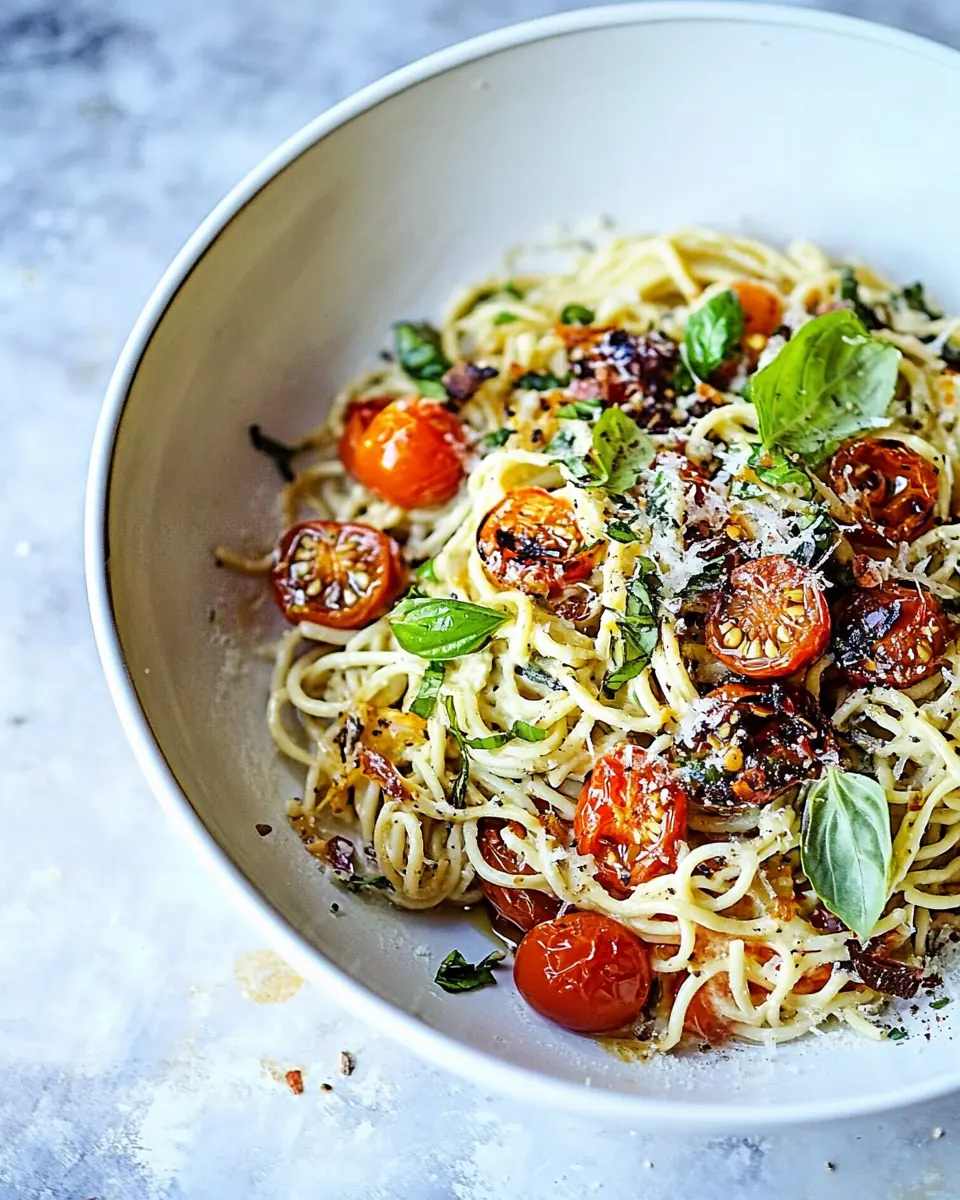
Divide the pasta among bowls and top with the tomato sauce, grilled peppers and the remaining blistered tomatoes.: As you plate, notice the steam carrying basil fragrance and the visual contrast between glossy noodles and roasted vegetables. Add a handful of crumbled feta cheese if using, which will offer a creamy tang against the sweet tomatoes. Serve warm so textures remain distinct; letting it sit too long can make the dish lose its lively contrasts.
Add a handful of feta. Enjoy warm!: The final touch of feta cheese melts slightly into warm spots, lending pockets of creamy saltiness. Bite into a forkful and you should get creamy hummus coating, tender pasta, bursts of blistered tomato , and the crunch of toasted pine nuts . If you find the dish lacks brightness, a tiny drizzle more balsamic vinegar can lift it instantly. Avoid reheating repeatedly, which can change textural contrasts and soften the grilled vegetables too much.