In a small bowl, combine the coconut aminos, honey, rice vinegar, sriracha, and black pepper (sauce ingredients). Stir well and set aside until ready to use.: The moment you whisk these ingredients together you should notice the glossy, syrupy texture of the honey dispersing into the darker coconut aminos, and a fragrant sweet vinegar tang rising. This mix creates the backbone of the final glaze, so getting it well combined ensures even coating later. If the honey is cool and clumps, warm the bowl briefly in your hand or a warm water bath to loosen it, otherwise the sauce may not blend smoothly. A common mistake is skipping this step and trying to combine the ingredients in the hot pan, which can leave uneven sweetness and make caramelization unpredictable.
Heat the avocado oil and sesame oil in a large nonstick skillet over medium-high heat. Allow the oil to heat up for a few minutes before adding the chopped chicken. Use a wooden spoon or rubber spatula to arrange the chicken pieces into a single layer and allow it to brown for a few minutes, stirring occasionally. Add the chopped garlic and continue sautéing for another minute or two, until the garlic is fragrant and the chicken is golden brown.: As the oils warm you should see a shimmer on the surface and a subtle nutty aroma from the toasted sesame oil. The combination lets you brown the chicken quickly without smoking out the pan, and helps develop a flavorful crust. Give the pan a few minutes so the oil is truly hot; adding chicken to a cool pan leads to sticking and lackluster browning. If your pan starts to smoke heavily, lower the heat slightly to avoid burning the oils, which will impart a bitter note.
Pour the sauce into the skillet and allow the mixture to come to a full (but controlled) boil.: You want to hear a steady sizzle as the chicken hits the pan, and visually look for edges turning golden. Spreading pieces into a single layer maximizes contact and fosters caramelization, which boosts flavor. Stirring too often prevents browning, while leaving the pieces without any movement for too long can cause burning; aim for gentle, occasional turning to develop even color.
Cook until much of the liquid has evaporated and you’re left with glazed, caramelized chicken, about 8 to 15 minutes.: When the minced garlic hits the pan you will smell a bright, pungent aroma that enhances the savory profile. Watch closely, because garlic can go from golden to bitter in moments; you want a soft golden tint. If the garlic begins to darken quickly, lower the heat and stir immediately to prevent it from charring and imparting off flavors.
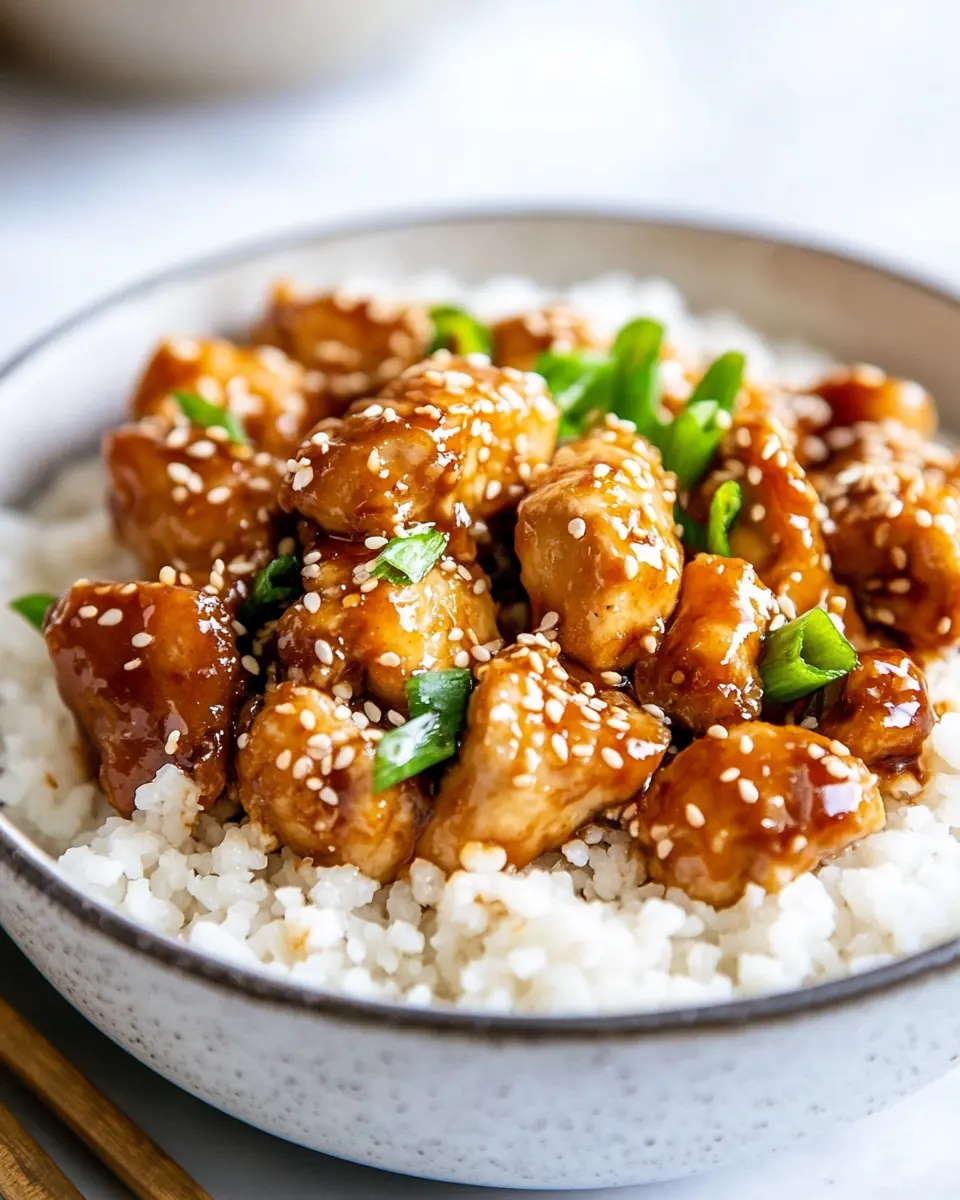
Serve this easy sesame chicken recipe with steamed brown rice, jasmine rice, or white rice, a sprinkle of toasted sesame seeds, and any veggies you enjoy, such as roasted or stir fry asparagus, green beans, or broccoli.: Once the sauce joins the pan the liquids will steam and then bubble actively, releasing a concentrated aroma that blends sweet, savory, and tangy notes. A controlled boil means you see bubbling but can still stir without splattering, which helps the sauce penetrate the chicken . If the heat is too high, the sugars can burn and become bitter, so reduce the flame to maintain an energetic simmer rather than a furious boil.
Cook until much of the liquid has evaporated and you’re left with glazed, caramelized chicken, about 8 to 15 minutes.: During reduction you will watch the sauce thicken and darken, coating the chicken in a glossy sheen. The sound will shift to a lower simmer and occasional popping as moisture escapes. This stage concentrates flavor and builds texture, so be patient. Stir occasionally to ensure even reduction and prevent sticking. The main mistake here is rushing the process by cranking heat, which can lead to burnt sugar and uneven texture; instead, maintain medium to medium-low heat and pay attention to visual cues.
Serve this easy sesame chicken recipe with steamed brown rice, jasmine rice, or white rice, a sprinkle of toasted sesame seeds, and any veggies you enjoy, such as roasted or stir fry asparagus, green beans, or broccoli.: The final assembly is about contrast and balance, presenting glossy chicken over steaming grains with bright green vegetables. Look for a saucy coating that clings to each piece and a steaming bed of rice that soaks up bits of glaze. Heat retained in the rice will meld flavors, while a sprinkle of sesame seeds adds a toasty note. Avoid plating with overly watery vegetables, which can dilute the sauce; keep them crisp tender for the best mouthfeel.