Preheat the oven to 350 degrees Fahrenheit. Line a 9” x 9” baking pan with parchment paper or spray with cooking spray.: You will notice the warm, faint scent of heating metal from the oven as it comes to temperature, which signals that everything is ready for the batter. Properly lining the pan with parchment paper prevents sticking and makes it easy to lift the baked slab out for clean slicing, so take the extra minute to smooth the paper into the corners. A common misstep is underestimating oven accuracy, so if your oven runs cool or hot, use an oven thermometer to check. If the pan is not prepared well the bottom can adhere and break bars when slicing.
Mash the bananas in a large mixing bowl until creamy. Add the almond butter (and pure maple syrup and pure vanilla extract if adding) to the mashed bananas and mix until well combined. Note: If your almond butter is cold or has been sitting in the refrigerator, microwave it for 30 to 60 seconds or until it is very easy to stir.: If your almond butter is cold or has been sitting in the refrigerator, microwave it for 30 to 60 seconds or until it is very easy to stir. : As you mash, you should feel the bananas break down into a smooth, slightly glossy mass, and the aroma of ripe banana will intensify. When you stir in the almond butter it will thicken and create a silky emulsion, which is the glue for the oats. If the almond butter is cold it resists blending, which is why gentle warming makes a dramatic difference, producing a homogeneous texture. Watch for lumps as they lead to uneven pockets in the baked bar. Overmixing at this stage can cause the mixture to become too loose, so stop once it is well combined.
Add the dry ingredients (oats and sea salt) to the mixing bowl and mix until a thick, sticky dough forms.: When the rolled oats hit the wet bowl you will notice the mixture transition from glossy to denser and tacky; that tactile shift is your cue to pause mixing. The sea salt helps highlight flavors and you might catch a faint mineral note when you stir. The dough should cling together when squeezed without crumbling; if it feels too wet the oats may need a minute to absorb, or if too dry add a tablespoon of maple syrup. A mistake to avoid is adding too much liquid to compensate, which can lengthen bake time and produce a soggy interior.
Stir the chopped strawberries to the large bowl.: As you fold in the chopped strawberries , bright red flecks will dot the batter and the aroma will freshen, introducing a lively acidity. Fold gently to distribute the fruit without crushing it into pulp, which preserves small juicy pockets that burst while baking. If strawberries are very juicy blotting them slightly prevents excess moisture from thinning the dough. Overworking this step can turn the batter pink and watery, affecting bake structure.
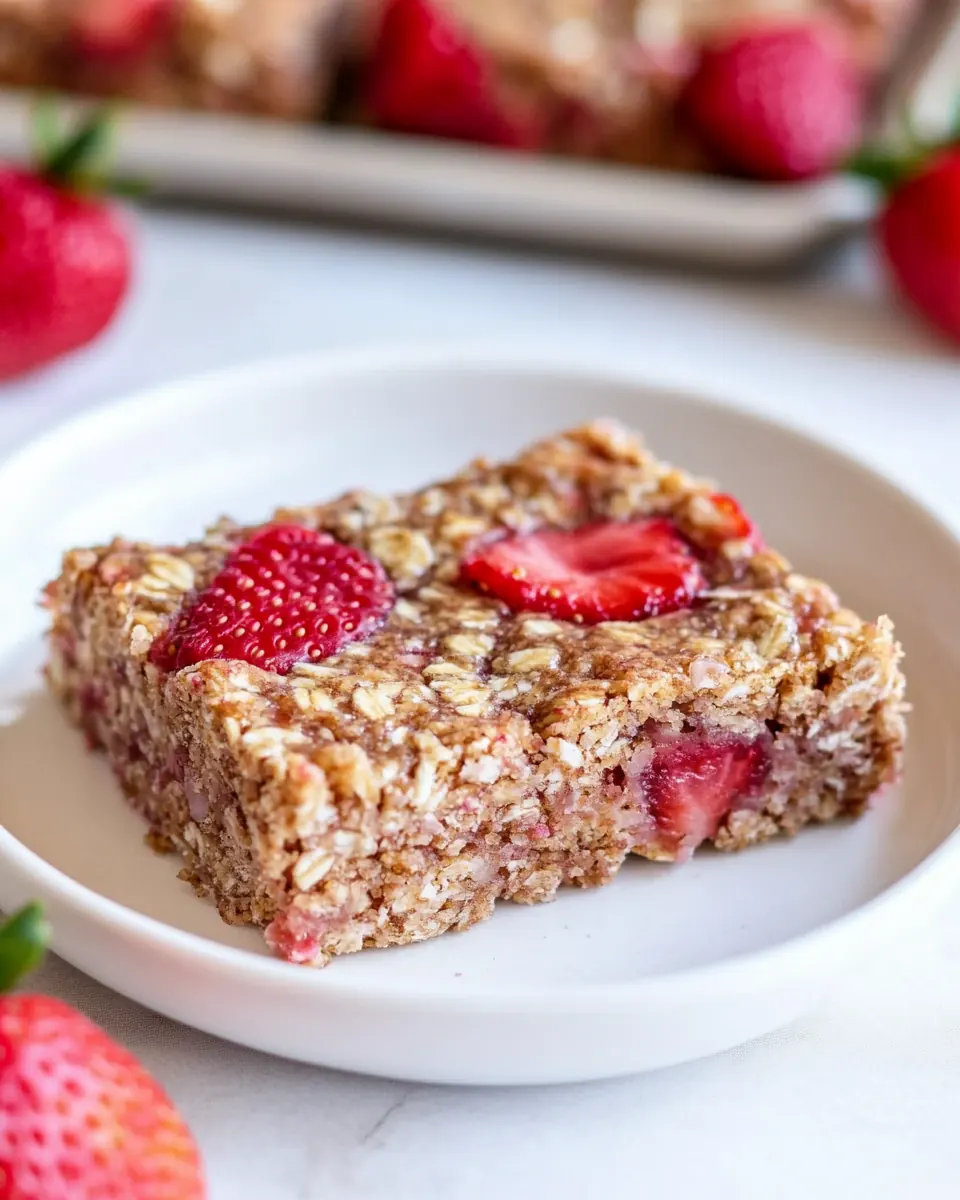
Transfer the oatmeal strawberry mixture to the prepared pan and spread it into an even layer. If you’d like, press extra chopped strawberries into the top of the dough.: Pressing the mixture into the pan gives you a smooth top with even thickness, and if you press extra strawberries on top they create a glossy, attractive finish. Use slightly damp hands or a spatula to smooth without compressing excessively, or the bars will be too dense. Uneven spreading results in inconsistent baking, with thinner edges browning faster than the center, so check thickness visually and adjust as needed.
Bake on the center rack of the preheated oven for 20-25 minutes or until the edges are golden brown and the bars appear set up.: While baking you will smell toasted oats and a warm, sugary perfume from the fruit, signals that the Maillard reactions and gentle caramelization are happening. Look for the edges to take on a light golden hue and for the center to lose its glossy sheen, indicating it is set. If you rely only on time without checking visual cues you might under or over bake; under baked bars will be too soft when cooled, over baked bars can dry out and become crumbly.
Allow the bars to cool to room temperature before slicing with a sharp knife and serving. If the bars are sliced while they are still warm, the slices don’t come out as cleanly but the bars still taste great.: Cooling lets the interior finish setting, and you will notice the aroma calm while the texture firms. A sharp knife gives cleaner edges; warming the blade under hot water and wiping it dry between cuts can help if the bars cling. Cutting while warm is tempting, but expect ragged slices. If you find the bars too sticky after cooling refrigerate briefly to make slicing easier.