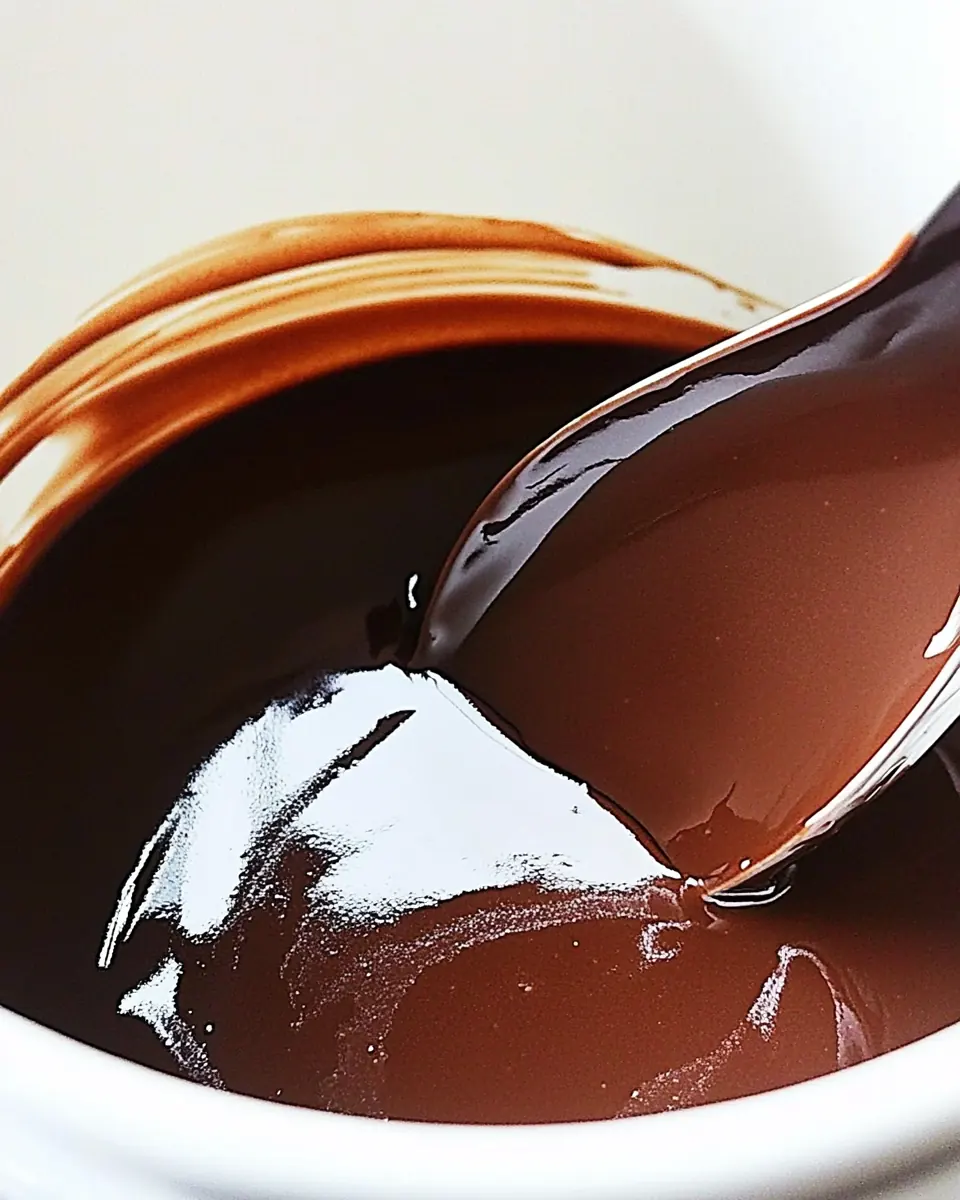
Melt butter in heavy cream in a medium saucepan over medium heat, stirring occasionally.: You will notice the cream begin to shimmer and small bubbles forming at the edges before reaching a gentle simmer, that aroma of warm cream is comforting and signals readiness. Stirring occasionally prevents a skin from forming and distributes heat evenly, which matters because overheated cream can separate. Use medium heat so the mixture warms slowly, and keep your spoon moving every few seconds to avoid hot spots. A common mistake here is letting the mixture come to a full boil, which introduces too much agitation and can lead to grainy texture later. If you see rapid bubbling, pull the pan off the heat for a moment until it calms down, then return to a gentle warm. The visual cue I look for is a uniform glossy surface with steam rising gently, not a rolling boil.
Once butter has melted, stir in chocolate until melted and smooth. Stir in corn syrup, vanilla and cinnamon.: At this point, the chopped semi-sweet chocolate should be added off the heat or with the pan on the lowest setting to encourage controlled melting; you will hear soft settling sounds as larger chunks soften, and the mixture becomes glossy and homogeneous. Use a flexible spatula to fold the chocolate into the warm cream, watching for streaks to disappear which indicates full incorporation. This technique matters because aggressive stirring or high heat can cause the chocolate to seize or separate, producing a grainy finish. If the chocolate seems sluggish, let the pan sit for 30 seconds then stir slowly, that residual heat will finish the job. Avoid adding cold chocolate straight from the fridge without time to acclimate, that temperature shock is a common cause of uneven melting.
Remove from heat and cool to room temperature. Store in an airtight container in the refrigerator for up to 2 weeks. To reuse, heat in the microwave or on the stove.: After the chocolate is smooth, add the corn syrup if you are using it, then the vanilla extract and ground cinnamon if desired; these additions dissolve into the warm ganache, elevating aroma and sheen. You will feel the sauce become silkier as the syrup dissolves, and a quick swirl should produce a mirror like surface. The reason we add these off heat is to preserve volatile aromatics and prevent evaporation of the vanilla, which keeps the flavor bright. One misstep is overheating after these additions, which can dull aromas, so remove from heat before stirring them in. Smell the mixture as you stir, the scent should be rich chocolate with a hint of warm spice when cinnamon is included.
Remove from heat and cool to room temperature.: Once blended, lifting the pan off the burner allows the ganache to stabilize, and you will notice it thicken as it cools, developing a glossy body. Use this time to stir occasionally if you need it pourable for serving soon, or let it sit undisturbed to set firmer for frosting. The cooling process is essential because it forms the proper emulsion and texture, so rushing it can leave the sauce loose or separated. A common troubleshooting move is to whisk gently as it cools to keep everything smooth, especially if you see signs of separation. Visually, the ganache transitions from fluid and reflective to a slightly more viscous, velvety sheen when ready.
Store in an airtight container in the refrigerator for up to 2 weeks.: Chilling the sauce helps it keep and develop a set that is easy to reheat later, and an airtight container prevents flavor transfer and skin formation. When refrigerated, the ganache becomes firm, so plan to bring it back to a gentle warmth before use. Reheating in short bursts in the microwave or over low heat on the stove while stirring will restore the silky texture; avoid high heat to prevent separation. A common mistake is reheating too quickly, which can cause the chocolate to break; instead use low power or a low flame and stir frequently until smooth. Proper storage means you have a ready supply for quick desserts or last minute finishing touches.
To reuse, heat in the microwave or on the stove.: Reheating should be done gently, stirring often to coax the ganache back to a pourable state, and you will see the sauce loosen and shine as it warms. For microwave reheating, use short thirty second bursts at medium power, stirring between each burst to distribute heat and prevent hotspots. On the stovetop, use a double boiler or a very low flame, and a steady stirring motion to bring it back without scorching. The aim is a smooth, glossy consistency with no graininess, which indicates the emulsion is intact. If it looks broken or oily, whisking in a small splash of warm heavy cream can help rebind it. Keep an eye on texture, the right consistency should coat the back of a spoon and glide off in a ribbon.