In a large bowl mix the butter, flour, lemon zest, and sugar. Once smooth and fully combined, press into a 7-inch pan that would fit in your air fryer.: The aroma at this stage is crucial, you should notice the bright lift from the lemon zest and the warm, buttery scent as the butter and white sugar come together. Use a fork or paddle to combine until the mixture holds when pressed, which indicates enough cohesion to form a crust. If the mixture seems crumbly, pressing firmly will help compact it into the pan. Common mistake to avoid, overmixing, which can warm the butter and alter texture; stop once everything is evenly combined.
Transfer the pan to the air fryer and cook for 7-8 minutes at 320 degrees F until golden brown, after that remove it and set it aside.: The tactile step of pressing the crust sets the foundation for an even bake, you should feel the mixture compacting and smoothing under the palm of your hand. Aim for uniform thickness so edges and center brown at the same rate. I often use the bottom of a glass to press the crust flat, it creates a smooth surface. A frequent error is leaving gaps at the corners, which can cause uneven baking later, so be sure to press into every edge.
In a large bowl mix together the eggs, sugar, flour, vanilla, and lemon juice whisk until smooth.: As the crust bakes, watch for a light golden hue and a yeasty, toasty smell, those are your visual and aromatic cues that it is ready. The air fryer circulates heat rapidly, so check near the lower end of the time range to prevent overbrowning. You want a firm but tender base that will hold the filling, not a deeply dark crust. A common slip is leaving it too long, which leads to a bitter edge.
Pour the filling over the baked crust and air fry at 320 degrees F, for 12-14 minutes, or until set.: The filling should become glossy and homogenous, the whisking breaks down the eggs and aerates the mix slightly for an even bake. Smell the bright citrus and the soft sweetness of the white sugar blending with vanilla , it should feel lively but balanced. If you notice lumps from the flour , continue whisking until silky, as lumps can create pockets of dry flour in the baked filling.
The bars will harden more as they cool.: The moment you pour, you will see the filling settle and smooth over the crust, a glossy sheen forming on top. As it bakes, look for the center to lose most of its jiggle with the edges setting first, a slight wobble at the center is fine because it firms as it cools. The aroma will shift from raw egg to a custardy, lemony perfume. One mistake to avoid is baking too long until completely rigid, which yields a dry texture; remove it when it still has a gentle wobble.
Remove from the air fryer and cool on a wire rack. After that refrigerate for a few hours.: Cooling transforms the texture, letting the proteins in the eggs set gently and the filling reach slicing firmness. I let mine rest at room temperature briefly to avoid thermal shock, then move to the refrigerator to finish firming. Rushing to slice while hot can cause the filling to run, so patience here preserves clean slices. A common oversight is cutting too soon, resulting in sloppy pieces.
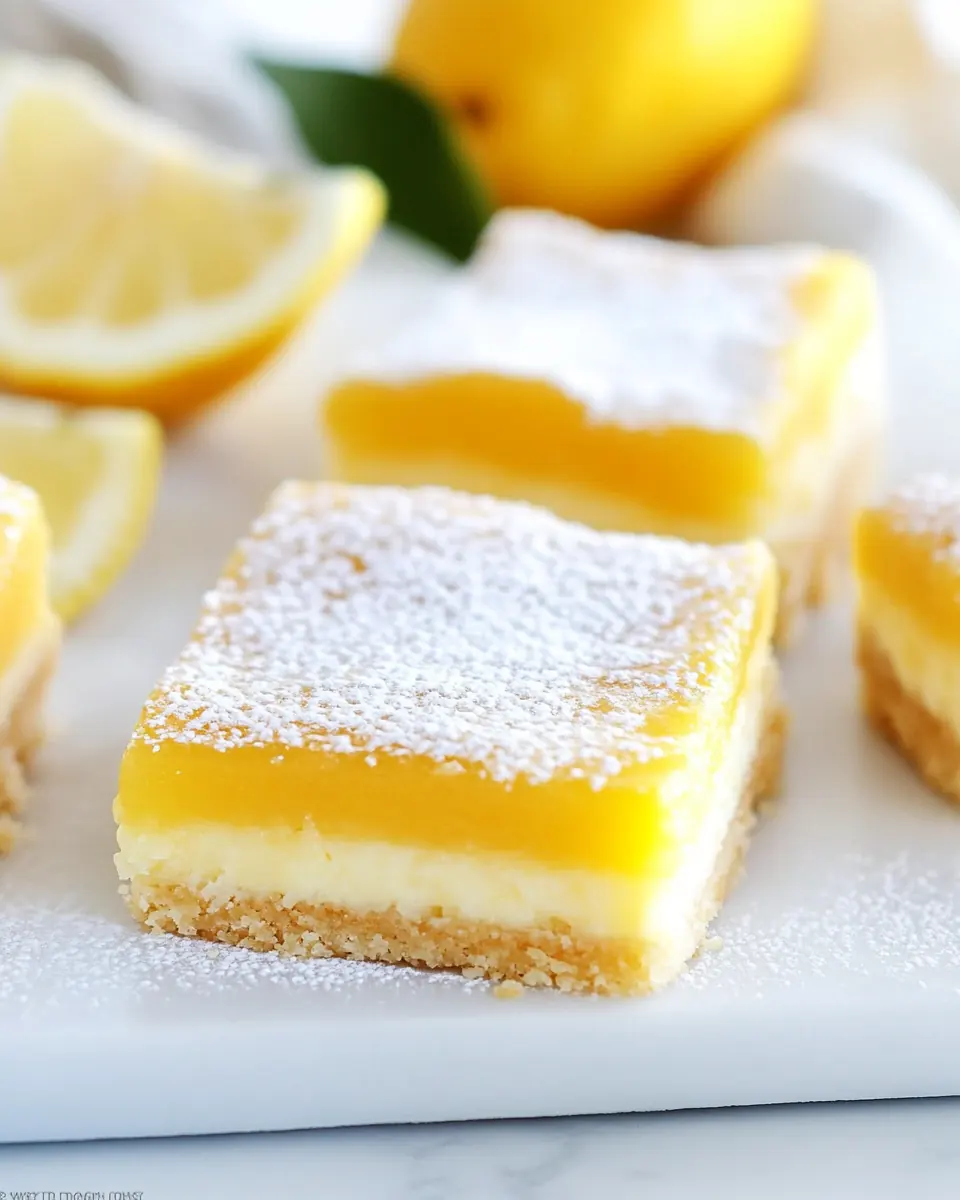
Dust with powdered sugar, slice and serve.: Transferring the pan to a wire rack allows air to circulate and prevents soggy bottoms, you want moisture to dissipate evenly. The surface will lose its high gloss and take on a matte finish as it cools. If condensation forms under the pan, pop on the rack sooner to maintain crust crispness. Avoid stacking warm bars as trapped steam can soften the crust.
After that refrigerate for a few hours: Chilling firms the filling fully and makes slicing neater, the cold encourages clean cuts with minimal crumbling. I usually wait at least two hours, or overnight when planning ahead, which also deepens the flavor as the components settle. Cutting before chilling risks soft, smeared slices, so plan timing accordingly.
Dust with powdered sugar, slice and serve: The final dusting adds a soft contrast to the bright lemon surface and gives a pretty finish, use a fine mesh sieve for an even snow of sugar. When slicing, warm the knife under hot water and dry it between cuts for the cleanest edges. This step is about presentation and flavor balance, a light dusting brightens without excessive sweetness. A common mistake is overloading with powdered sugar , which can overwhelm the lemon and make the bars too sweet.