In a large bowl, combine the halved okra with avocado oil, ensuring each piece is lightly coated.: You will notice the avocado oil sheening on the surface of the okra , which signals even coverage and helps the spices adhere. As you toss, listen for a subtle glide, the pieces moving freely, rather than clumping. This precoat reduces sticking and promotes a golden finish when air fried. A common mistake is adding too much oil which leads to greasy results, so use just enough to lightly coat each pod. The light oil film also helps heat transfer, so the exterior crisps while the interior stays tender. If a few pieces still look dry, gently massage them with your hands to ensure uniformity. Avoid overcrowding your bowl or pressing the pods together, because trapped moisture can steam the okra rather than crisp it.
Season the okra with kosher salt, garlic powder, cumin, coriander, turmeric, and chili powder, then sprinkle with arrowroot powder to coat evenly.: At this point the spices will begin to adhere to the oiled pods, releasing aromas of warm cumin and earthy turmeric . As you sprinkle the arrowroot powder , you will see a dry, dusty layer develop, which is the crisping agent at work. Gently toss so each piece gets an even dusting; you should see a thin, uniform coating, not clumps. Why this matters: the dry coating forms the crisp exterior while the spices toast slightly in the high heat. A typical error is uneven seasoning, leading to pockets of blandness; take the time to mix thoroughly and check each piece visually. If the mixture looks wet in places, add a touch more arrowroot to maintain a dry coat. The scent will shift from raw spice to a toasted perfume as it cooks, so this even distribution sets you up for success.
Arrange the okra in a single layer in the air fryer basket, avoiding overlapping pieces for even cooking.: Visual cues are crucial here, you want every pod to have breathing room so hot air circulates around it. Lay the pieces with cut sides up or down based on preference, but avoid stacking. When arranged properly, you will see individual pods exposed to the air fryer stream, which results in uniform browning. If you crowd the basket, some pieces will steam and remain limp, a common pitfall that undermines the crisp texture. If necessary, cook in batches rather than risk uneven results. The sound you want is occasional light crackling as moisture evaporates, not a wet hiss which would indicate steaming. Spacing also reduces the need for flipping later, though a gentle shake midway helps with color consistency.
Air fry at 400°F for 20 minutes, shaking the basket halfway through.: When the temperature reaches around 400°F , the air fryer generates intense dry heat that quickly browns the arrowroot coating. As it cooks, the aroma will become toasty and warm, and you may notice faint sizzling noises as surface moisture evaporates. Halfway through, shake the basket to turn the pieces, ensuring even contact with hot air; this prevents one side from overbrowning. A frequent mistake is skipping the shake, leading to uneven color. Watch for visual cues: the okra should transition from bright green to a deeper olive with golden edges. If you see excessive smoking, your fryer may be too hot or oil quantity was too high; reduce temperature by a few degrees next time. Timing can vary by appliance, so start checking a few minutes early in subsequent batches to dial in perfect crispness.
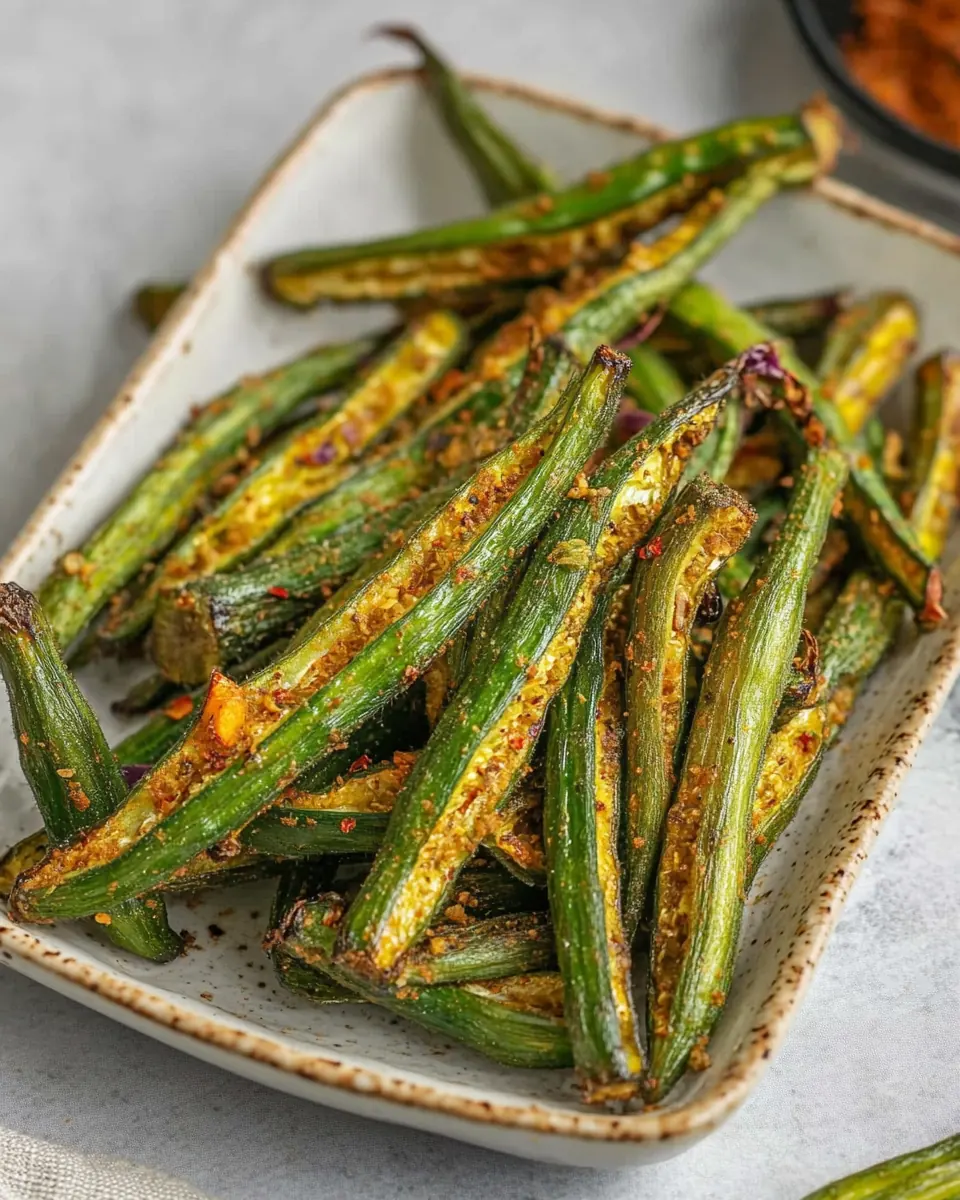
Once the okra is golden brown, remove it from the air fryer and serve immediately.: The moment you take the basket out you will notice crunchy, toasted notes and a warm steam lift off the pods. Serve right away to preserve the crisp exterior; as it cools, the coating will soften. The ideal visual is golden edges with slightly darkened tips and a firm snap when you bite in. Avoid letting it sit on a plate where trapped steam can rehydrate the coating. If you need to hold it momentarily, spread the okra on a wire rack to maintain airflow. A common oversight is plating directly onto a flat surface which causes the bottom to lose its crunch, so keep them elevated until they reach the table. The result should be tender centers and crisp exteriors that deliver both texture and spice.