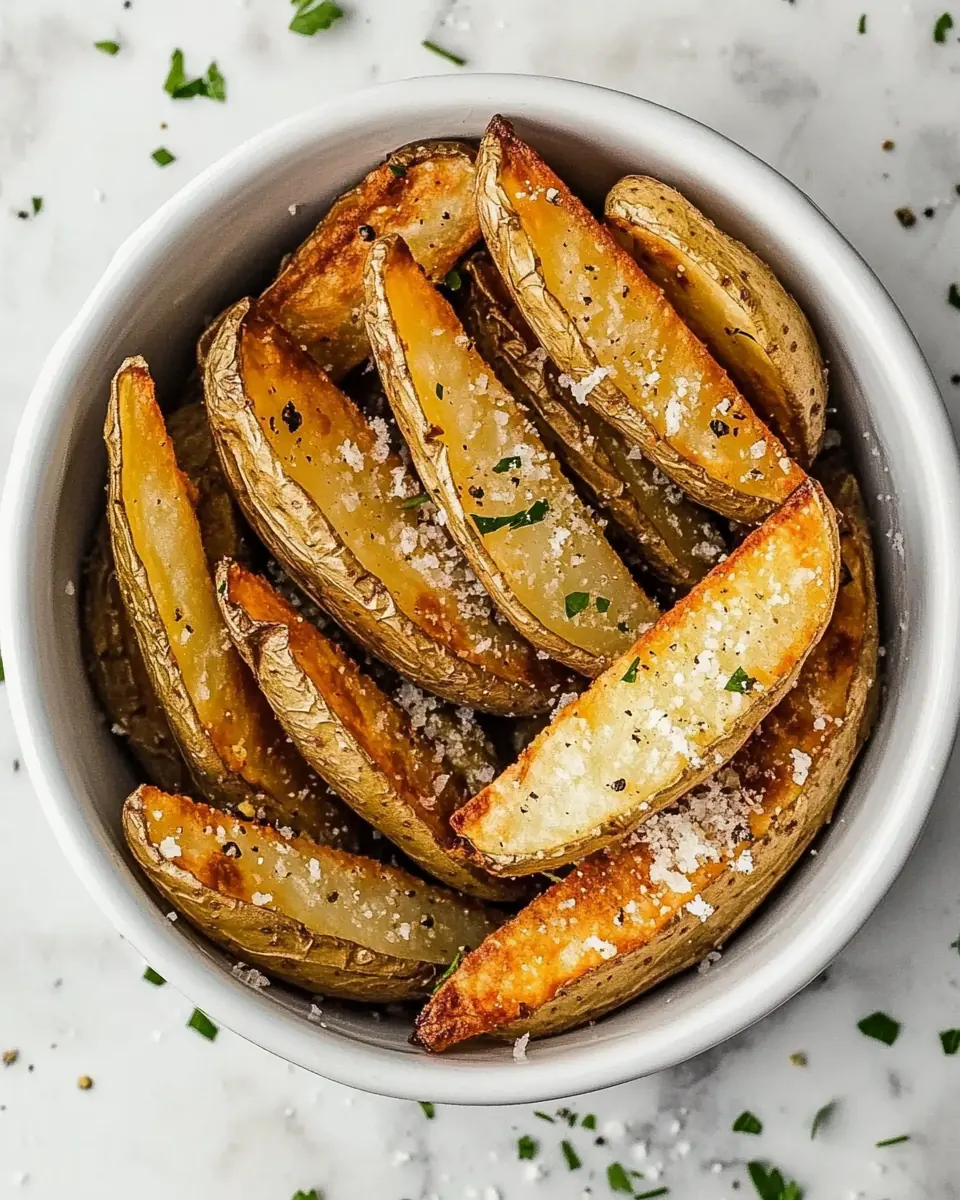
Preheat air fryer to 400 degrees.: When you slide the basket in and the air fryer is fully heated to 400 degrees , you will notice a dry heat that delivers immediate contact browning to the potato surfaces. A properly preheated machine reduces overall cook time and encourages even coloring across wedges. If you start with a cold air fryer, the wedges may absorb more oil as they warm up, leading to soggier edges. A common mistake is skipping preheat, so allow a few minutes for the unit to reach temperature before adding potatoes.
Scrub and rinse potatoes, then thoroughly pat dry. Cut each potato in half then cut each half into 4-6 wedges, evenly sized. Place potatoes in a bowl and cover with boiling water. Allow to soak for 10-30 minutes.: The tactile step of scrubbing removes dirt while leaving the skins intact for extra texture. After cutting, soaking the wedges in hot water gently collapses surface starches, which helps create a crisper exterior when air fried. When you drain them, the wedges should feel cool and slightly tacky rather than slimy. Commonly, people under dry the wedges after soaking which leads to steaming rather than crisping, so blot thoroughly with clean towels.
Drain potatoes and pat dry with paper towels.: At this point your hands will sense the difference between damp and properly dried wedges. Patting dry removes residual moisture that would otherwise prevent browning, because surface water must evaporate before the Maillard reaction can begin. A telltale sign you did this right is that the wedges feel dry to the touch and the oil beads rather than soaks in. The main pitfall here is rushing the drying, causing uneven crisping during cooking.
Whisk together olive oil, garlic powder, paprika, salt and pepper. Drizzle over potatoes and toss to combine. Spray air fryer basket with cooking spray and add enough potatoes that you can spread them apart without touching (you may need to cook them in batches). Sprinkle with parmesan cheese.: Mixing the seasonings into the olive oil lets the spices distribute uniformly so every wedge receives flavor. Tossing by hand ensures the oil makes a thin, even film that promotes browning. When you place the wedges in the basket, arrange them with space between each piece so hot air circulates and crisps every side. If you overcrowd, the wedges steam and turn limp. Once in the basket, the parmesan will begin to melt and cling, building a golden, savory crust as it bakes.
Cook for 10-15 minutes, opening the basket every 5 minutes to give them a shake/toss, until tender and crispy.: You will hear occasional faint crackles and see the edges start to brown after the first few minutes. The periodic shake promotes even exposure to hot air, preventing one side from over browning while the other stays pale. When the wedges reach a deep golden color with slightly blistered edges and yield to a fork with a tender center, they are done. Overcooking will produce dry interiors, while undercooking yields raw centers, so aim for the sensory cues described. A common error is leaving the basket closed the whole time, which can create uneven results, so open carefully and toss at the intervals recommended.